A Bhutanese living tradition
Sowa Rigpa — the Bhutanese-Tibetan traditional medicine, institutionally integrated into the contemporary health system.
Sowa Rigpa — literally 'the science of healing' — is the Bhutanese-Tibetan traditional medicine tradition that has operated continuously in the country for centuries and is institutionally integrated into the contemporary national health system. The National Institute for Traditional Medicine in Thimphu trains the country's amchi (traditional medicine practitioners); over fifty traditional medicine units across the dzongkhags provide free Sowa Rigpa consultation alongside biomedical care; the Bhutanese herbal-and-mineral pharmacopoeia draws on the Himalayan medicinal-plant register at scale.
- Register
- tradition
- Also known as
- Sowa Rigpa, Bhutanese traditional medicine, Bhutanese-Tibetan medicine, Amchi medicine
In short
Sowa Rigpa is Bhutanese-Tibetan traditional medicine. National Institute for Traditional Medicine in Thimphu trains practitioners; over 50 dzongkhag units provide free Sowa Rigpa consultation alongside biomedical care. Himalayan herbal pharmacopoeia. Integrated into the national health system.
The tradition
Sowa Rigpa originated in the broader Tibetan medical tradition with roots in the 7th-century synthesis of the Indian Ayurvedic, the Chinese medical, the Persian-Galenic, and the indigenous Tibetan-Himalayan herbal tradition. The principal codifying text is the Gyud Zhi (the Four Tantras), attributed to Yuthok Yontan Gonpo in the 8th century — a four-volume systematisation of the medical. The Bhutanese tradition is the regional adaptation of the broader tradition; the country's herbal-and-mineral resources differ somewhat from the Tibetan plateau, and the Bhutanese tradition has elaborated the principal pharmacopoeia accordingly across the centuries. The tradition operates on the principle of three humours (lung — wind, tripa — bile, beken — phlegm) and the four constituent elements; diagnosis is principally through pulse-reading at six positions on the wrists, supplemented by urine analysis, observation of complexion and tongue, and patient interview.
The institutional tradition today
The National Institute for Traditional Medicine in Thimphu is the principal institutional centre — established in 1967 by His Majesty the Third Druk Gyalpo as part of the broader national-health, it trains the country's amchi (traditional medicine practitioners) on a multi-year programme covering the Four Tantras curriculum alongside relevant biomedical sciences. Over fifty dzongkhag traditional medicine units operate across the country, providing free Sowa Rigpa consultation alongside biomedical care; patients can access either or both registers without referral. The traditional medicine pharmacy at the Institute produces the principal Bhutanese herbal-and-mineral formulations — over 100 different formulations across the broad therapeutic. The institutional integration of Sowa Rigpa into the contemporary national health system is one of the more distinctive features of the Bhutanese; few other countries operate traditional medicine on a state-funded parity register with biomedical care.
The pharmacopoeia
The Bhutanese Sowa Rigpa pharmacopoeia draws principally on the Himalayan medicinal-plant. Cordyceps sinensis — the high-altitude fungus, traded as a export from the country since the regulated harvest opened in 2004; held in Sowa Rigpa as the principal restorative for systemic vitality. Saffron-and-spice register — including the various Himalayan Crocus species, used in numerous formulations. High-altitude rhododendron, juniper, artemisia — used in the principal herbal formulations and in the medicinal-water (menchu) tradition. Mineral preparations — including processed sulphur, gold, silver, copper, and various stone preparations, prepared through purification processes that distinguish the Sowa Rigpa from less-sophisticated mineral preparations. The principal therapeutic formulations are produced as pills (rilbu) of varying sizes and compositions, named according to their principal ingredient and their indication.
Diagnosis and treatment
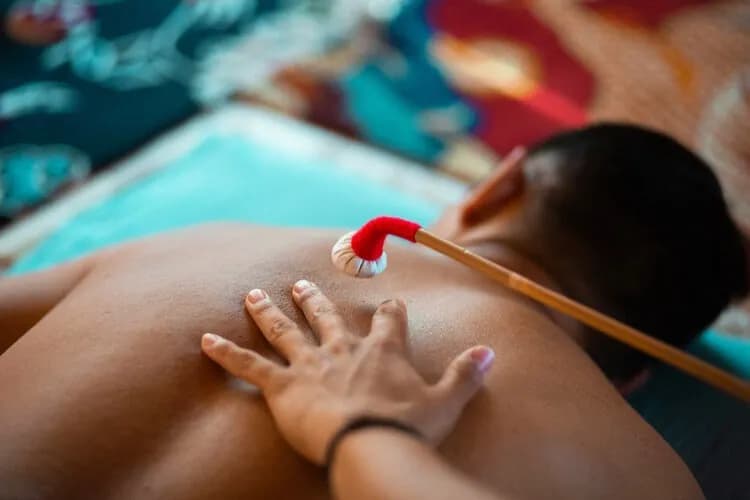
Sowa Rigpa diagnosis is principally through pulse reading — the amchi reads the pulse at six positions on each wrist, corresponding to the principal organ systems; the rhythm, depth, and quality of the pulse at each position reveals the systemic state. Diagnosis is supplemented by urine analysis (colour, smell, sediment), observation of complexion and tongue, and the patient-interview. Treatment principally involves herbal formulations (typically taken as rilbu pills with hot water or tea), supplemented by menchu (the hot stone bath tradition with herbal infusion — see the menchu experience), moxibustion (the heated-herb application to specific acupressure points), and dietary-and-lifestyle prescriptions. The treatment tradition is principally outpatient with multi-day, multi-week, or multi-month protocols depending on the condition.
What a visitor experiences
Sowa Rigpa consultation is available to international visitors at the National Institute for Traditional Medicine in Thimphu (the matched guide arranges) and at several premium lodges that integrate Sowa Rigpa into their wellness register — particularly Bhutan Spirit Sanctuary (which centres Sowa Rigpa in its wellness programme), Six Senses Bhutan (Sowa Rigpa available at the spa), and &Beyond Punakha (occasional Sowa Rigpa programming). The Sowa Rigpa wellness journey is the principal Bhutanese contribution to the international wellness; visitors with serious interest in traditional medicine can structure a 7-10 day itinerary around the consultation-and-treatment context with daily Sowa Rigpa contact. See the Sowa Rigpa wellness retreat journey for the matched-guide structure.
Related ideas
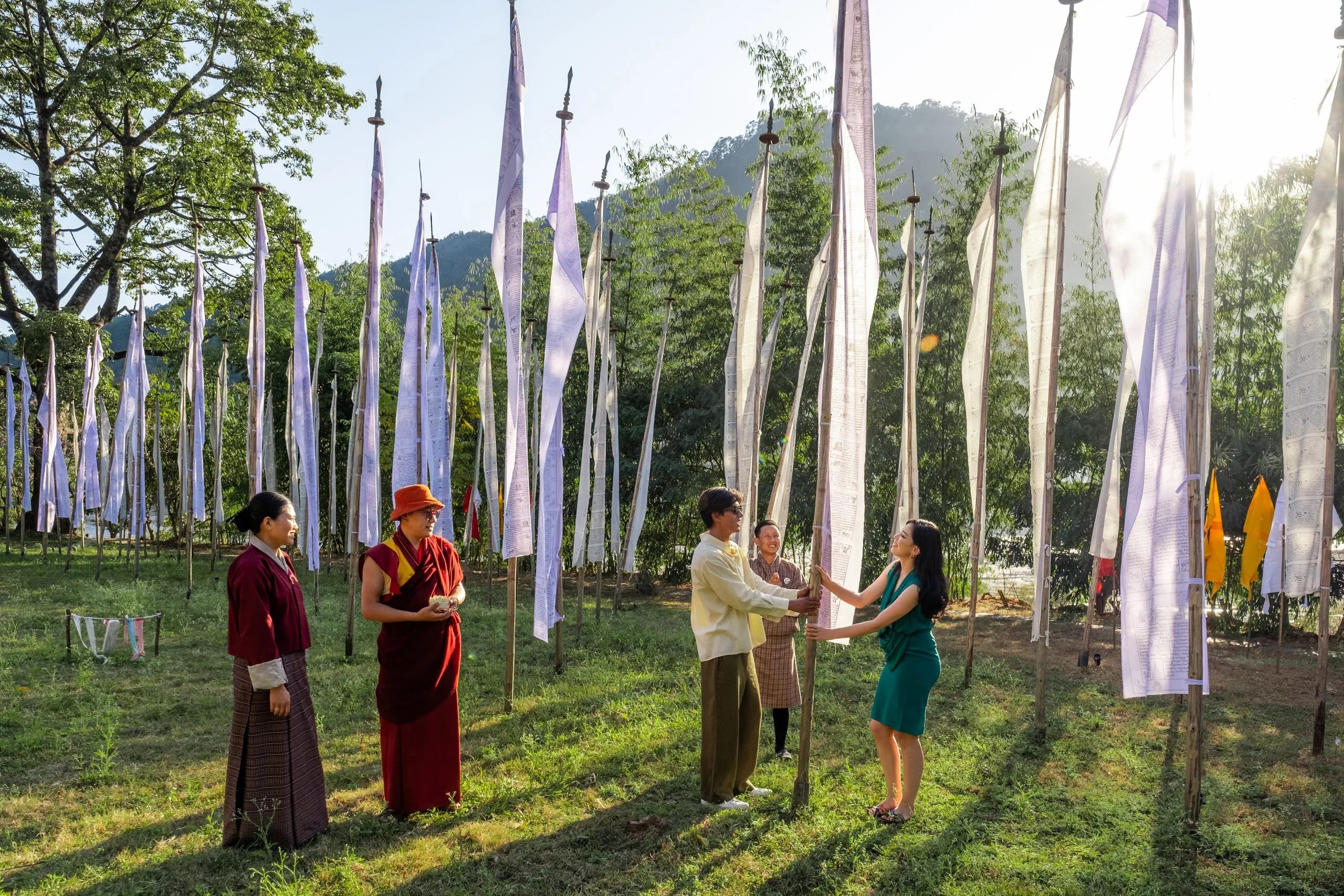 ThemeVajrayana Buddhism — the substance of every dzong, every monastery, every tshechu.Vajrayana Buddhism — the branch of Buddhism that shapes Bhutanese religious life. Drukpa Kagyu, Nyingma, Guru Rinpoche; mantra, mandala, deity yoga.
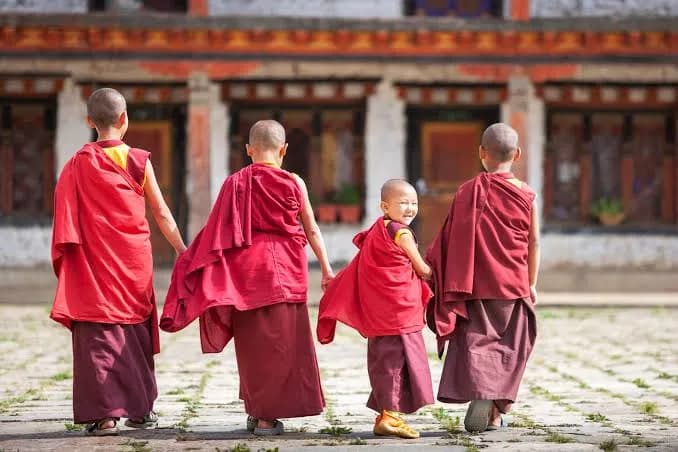 ThemeGross National Happiness — the framework that shapes the country a visitor encounters.Gross National Happiness — the Bhutanese development philosophy articulated by the Fourth Druk Gyalpo at His 1974 coronation as the first of nine guiding goals. Four pillars, nine measurement domains, constitutional grounding.
Journeys built around it
- JourneyTen nights in Bhutan, paced as a restoration.A ten-night Bhutan wellness retreat — Sowa Rigpa, hot stone baths, considered cuisine, the flagship wellness lodges. Luxury and signature tiers.
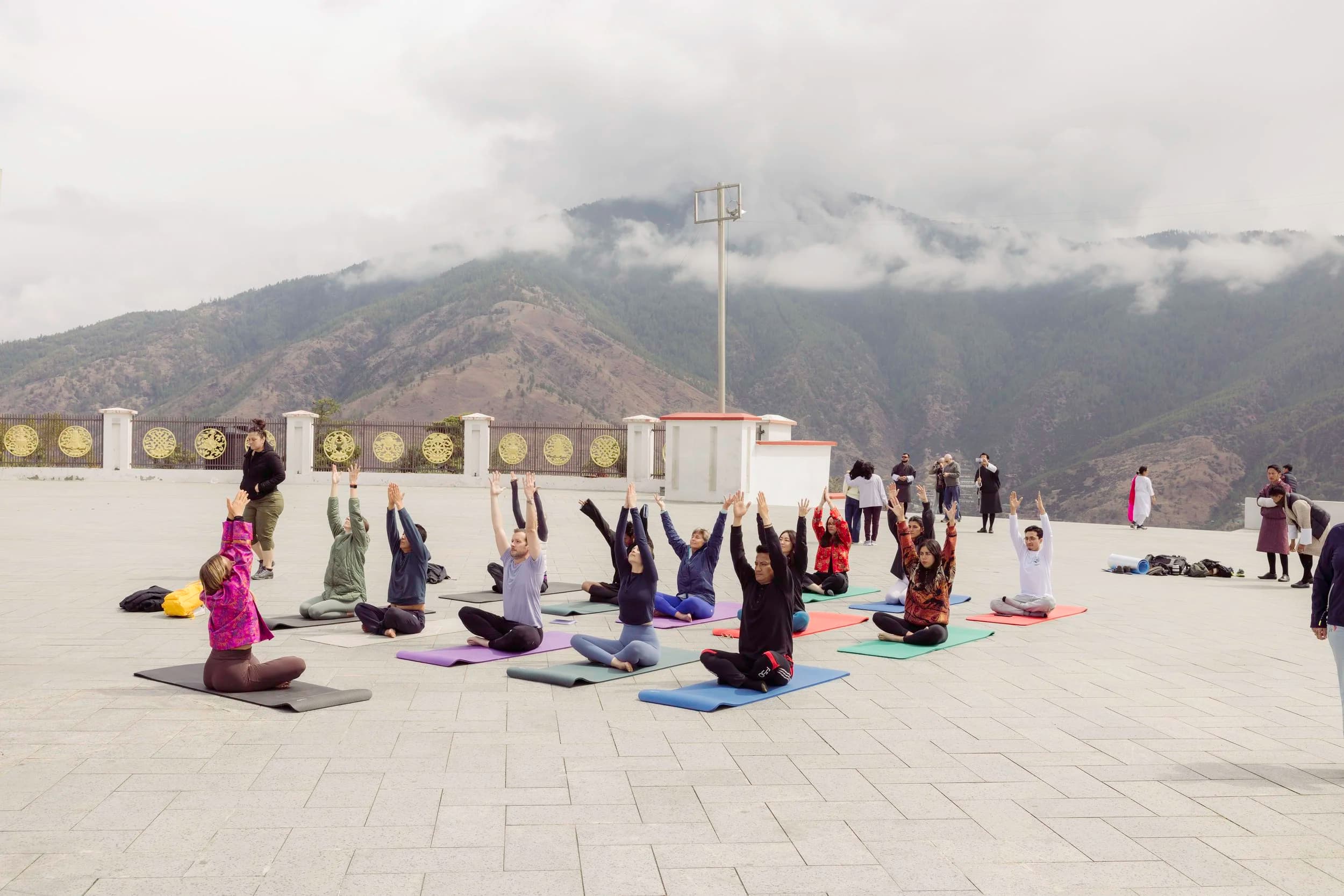 JourneySeven nights with a monastic guide, in the still season.A seven-night Bhutan meditation retreat through Clear-Sky Bhutan (Dec–Feb). Daily sittings with a monastic-trained guide, hot stone baths, no festival noise.
 JourneyThe signature-tier Bhutan journey — private knowledgeable guide, the most considered lodge curation, helicopter or charter between valleys, exclusive-use arrangements where the season allows.The signature-tier Bhutan journey. Private knowledgeable guide, the most considered lodges, helicopter or PC-24 charter, exclusive-use arrangements. By invitation, from USD 14,000.
Journeys that visit Sowa Rigpa
Frequently asked
- Is Sowa Rigpa evidence-based?
- The Bhutanese tradition operates within its own substantial empirical framework — centuries of practitioner observation and refinement, the systematic Gyud Zhi codification. International evidence-based-medicine research is increasingly examining specific Sowa Rigpa formulations; cordyceps and several other principal ingredients have substantial international research support. The broader tradition is best engaged on its own terms — as a traditional medical tradition with its own diagnostic-and-therapeutic framework rather than as a Western-evidence-based equivalent. Bhutanese citizens use both Sowa Rigpa and biomedical care without conflict; the matched guide briefs visitors accordingly.
- Can I get a Sowa Rigpa consultation?
- Yes. The matched guide arranges consultations at the National Institute for Traditional Medicine in Thimphu (typical fee USD 50-100 for international visitors, includes the amchi consultation and initial prescription) and at premium lodges with Sowa Rigpa programming (typically integrated into the lodge wellness register). Allow 60-90 minutes for the principal consultation; the amchi will read the pulse, conduct the interview, and prescribe an initial protocol. For visitors wanting the deeper, multi-day-to-multi-week protocols can be arranged across a longer itinerary.
- Can I bring Sowa Rigpa medicine back home?
- Yes, with some limitations. The principal herbal formulations are available for export and travel without complication; visitors should declare them at customs as traditional herbal medicines. Some specific formulations include cordyceps, which faces export restrictions in some destination countries (particularly USA, EU, UK); the matched guide briefs accordingly. The Institute pharmacy in Thimphu provides the principal export-ready formulations with English-language documentation.
- How does Sowa Rigpa relate to Ayurveda?
- Substantial historical overlap — the 7th-8th century synthesis that produced Sowa Rigpa drew on the Indian Ayurvedic register among other sources. The systems share the principle of constitutional types (vata-pitta-kapha in Ayurveda, lung-tripa-beken in Sowa Rigpa) and substantial herbal common-ground. They differ in specific diagnostic techniques (Sowa Rigpa centres pulse-reading at six positions, Ayurveda has different protocols), in principal pharmacopoeia (Sowa Rigpa centres the Himalayan, Ayurveda the Indian-plain register), and in their overall systematic framework. They are related but distinct traditions.

