A Bhutanese experience
The Bhutanese hot stone bath — menchu, the river-stone soak at the end of a long day.
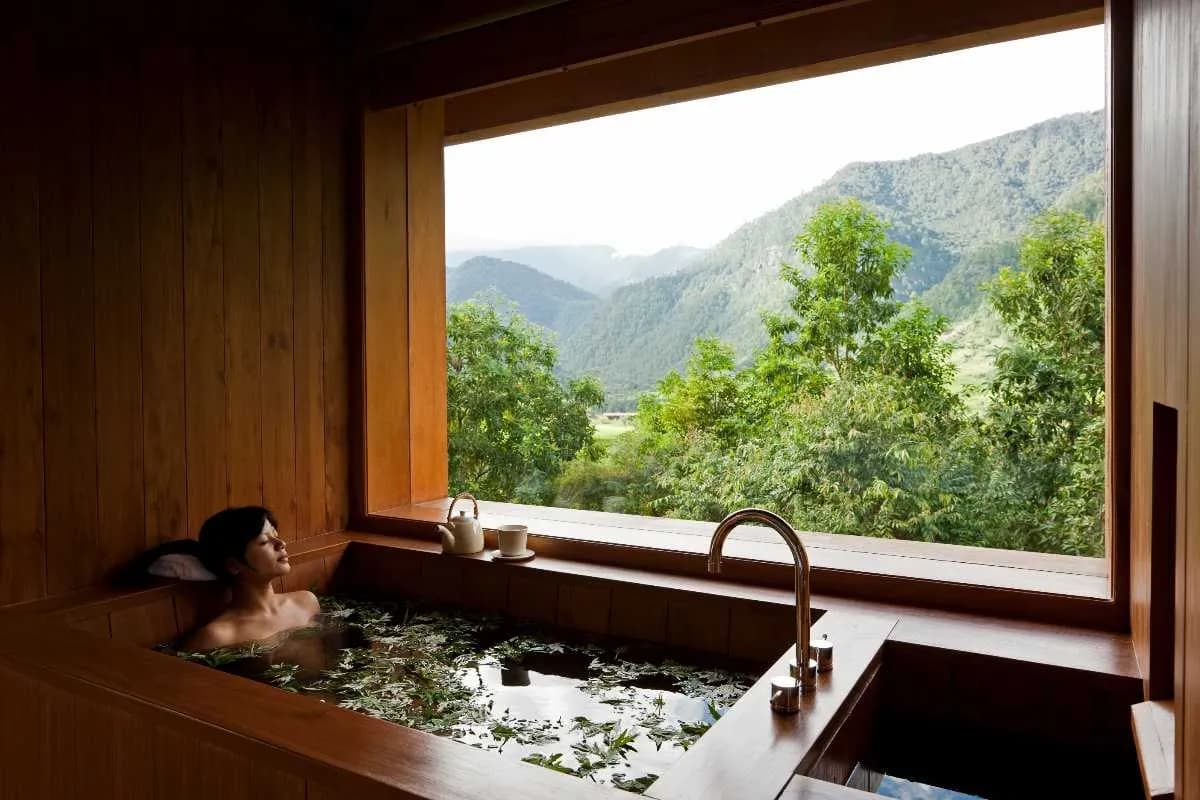
The Bhutanese hot stone bath — menchu in Dzongkha — is the country's canonical bathing tradition, in which river stones are heated red-hot in a wood fire and dropped one by one into a wooden tub of water and aromatic mountain herbs. The mineral content of the river stones, the wood-smoke, the slow heat-release across an hour or more — the menchu is the principal after-trek and after-pilgrimage restorative in the Bhutanese tradition. Now offered at every premium lodge and at heritage farmhouses across the country.
Also known as Menchu · Dotsho · River-stone bath · Hot stone soak
- Duration
- 1-2 hours
- Effort
- easy
- Where
- Premium lodges and heritage farmhouses across all dzongkhags
- Best months
- October · November · December · January · February · March · April
- Register
- wellness
What it is
The menchu is a traditional Bhutanese bathing form built around three elements: a wooden tub (traditionally hand-cut from a single block of pine or hemlock), river stones heated to red-hot in an external wood fire, and an aromatic herb infusion (typically khempa — Artemisia — alongside other mountain herbs depending on the season and the practitioner). The heated stones are dropped into a separate compartment of the tub through a wooden grate; the stones release minerals and heat into the bath water gradually across the hour-long soak. The bather sits in the herb-and-mineral water at body-warm to comfortable-hot temperature, refilling the stones as the water cools. The tradition is centuries old; the menchu is the canonical Bhutanese restorative across a wide cultural register — used after long treks, after pilgrimages, during illness recovery, and as part of the seasonal household rhythm.
The therapeutic register
The Bhutanese tradition attributes substantial therapeutic value to the menchu. The mineral content of the river stones (typically high-silicate, often iron-bearing) is held to address joint pain, muscle fatigue, and post-exertion recovery. The herb infusion — khempa is the principal — is held to address respiratory inflammation, skin conditions, and the general post-travel restoration. The wood-smoke register and the slow heat-release combine to produce a deeply relaxing-but-also-stimulating effect characteristic of the form. The Bhutanese tradition holds the menchu as an essential after-trek practice — most trekkers completing the Chomolhari, Snowman, or Druk Path treks include at least one menchu session at the end of the route. Western evidence-based-medicine research has not extensively examined the menchu's specific therapeutic claims; the cultural-and-experiential context is its own register.
The heritage farmhouse register
More compelling for many visitors is the heritage farmhouse menchu — the traditional family-home, in which the visitor arrives at a Bhutanese farmhouse (typically arranged by the matched guide), the family heats stones in their courtyard wood fire while the visitor is welcomed with butter tea, and the menchu is taken in the family's traditional wooden tub in a covered courtyard or bathhouse. The session is followed by a home-cooked Bhutanese meal — the cultural depth substantially exceeds the lodge, though the spa-and-service finish is correspondingly less polished. The matched guide arranges heritage farmhouse menchu sessions in Paro, Punakha, and Bumthang. The fee is typically in the USD 50-120 range and supports the host family directly.
What a session involves
A typical 90-minute menchu session: the bather arrives at the bathhouse and is offered butter tea and dried-fruit snacks while the stones heat (a process taking 45-60 minutes in advance). The bather changes into a bathrobe and steps into the wooden tub; the attendant adds the first heated stones to the stone compartment, releasing the initial wave of heat and herb. The bather soaks 20-30 minutes, with additional heated stones added as the water cools. The session typically concludes with a head-and-shoulder herb-water rinse and a 15-minute rest period under a warm blanket with a herbal-tea infusion. The matched guide briefs visitors on protocol — most importantly, hydration before and after, and the Bhutanese tradition of not bathing immediately after the menchu (allowing the herb-and-mineral context to penetrate).
Practical
- Where to book
- Premium lodges offer the menchu as part of the spa programme — typically requires 24-hour advance booking. Bhutan Spirit Sanctuary makes the menchu central to its wellness programming. Heritage farmhouse menchu sessions are arranged by the matched guide; typically requires 48-hour advance notice as the host family prepares stones and herbs.
- Best window
- October through April — the cool-to-cold season makes the hot soak particularly restorative. Possible year-round but the deep-winter sessions are the most-acclaimed tradition in the Bhutanese tradition. May-September is workable but less satisfying.
- Health considerations
- The matched guide briefs visitors on cardiovascular protocol — visitors with heart conditions, high blood pressure, or recent surgical procedures should consult with the lodge or guide before booking. Pregnancy and very high altitude (above 4,000m within the prior 48 hours) are also flagged. Most visitors take the menchu without complication; the briefing is standard wellness protocol.
More like this
The wider idea
Journeys that include it
 JourneyTen nights in Bhutan, paced as a restoration.A ten-night Bhutan wellness retreat — Sowa Rigpa, hot stone baths, considered cuisine, the flagship wellness lodges. Luxury and signature tiers.
- JourneySeven nights in Bhutan, on your terms.A private seven-night Bhutan honeymoon for couples flying from Singapore. Bhutanese lodges, a matched guide, transparent all-inclusive pricing.
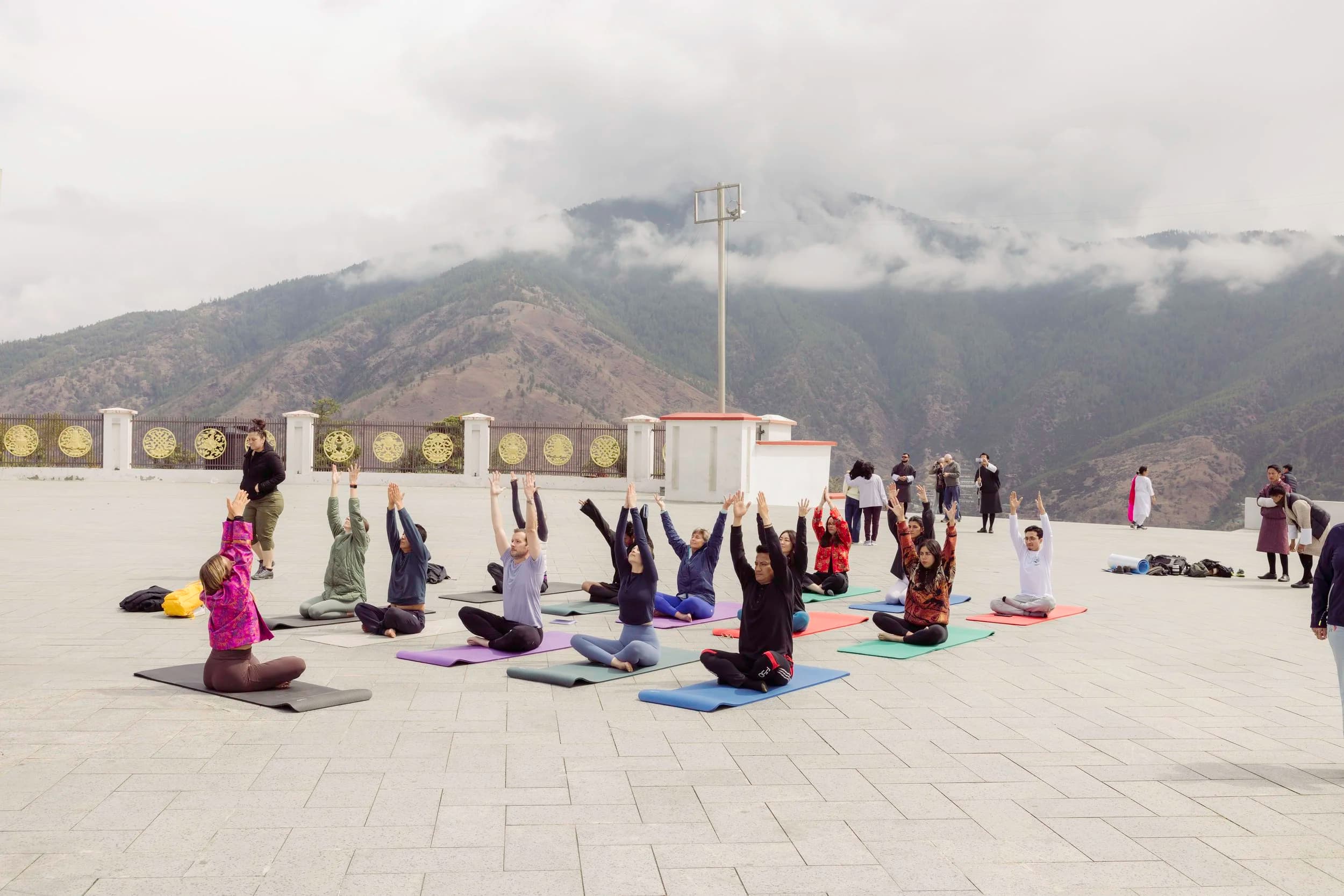 JourneySeven nights with a monastic guide, in the still season.A seven-night Bhutan meditation retreat through Clear-Sky Bhutan (Dec–Feb). Daily sittings with a monastic-trained guide, hot stone baths, no festival noise.
Journeys that visit The Bhutanese hot stone bath
Frequently asked
- How hot is the water?
- Comfortably hot — typically 39-42°C (102-108°F) at the bather's body, hotter near the stone compartment. The attendant adjusts the heat through the session by adding fresh stones; the bather can request cooler or hotter at any point. Not a sauna; the menchu is sustained warmth rather than intense heat.
- Can I take the menchu at the premium lodge or only in a farmhouse?
- Both. The premium-lodge tradition is the more accessible and polished; the heritage farmhouse tradition is culturally deeper. Many visitors combine — a lodge menchu for convenience and a farmhouse menchu for the cultural depth. The matched guide arranges either or both.
- Is the menchu private or shared?
- Private. The menchu tradition is a single-person bath (or a couple in adjacent tubs). The premium-lodge tradition is always private; the heritage farmhouse tradition is private to the visiting party. The cultural tradition is one of restoration and quiet rather than a social bathing tradition.
- What should I wear?
- The Bhutanese tradition is for the bather to wear a light cotton garment in the bath (the lodge or family provides). The matched guide briefs on local protocol; the tradition is modest by Western spa standards. Outdoor courtyard tubs in winter are partially screened; indoor bathhouses are fully private.

