A Bhutanese cultural tradition
Bhutanese music and dance — the folk tradition, the dranyen lute, the contemporary register.
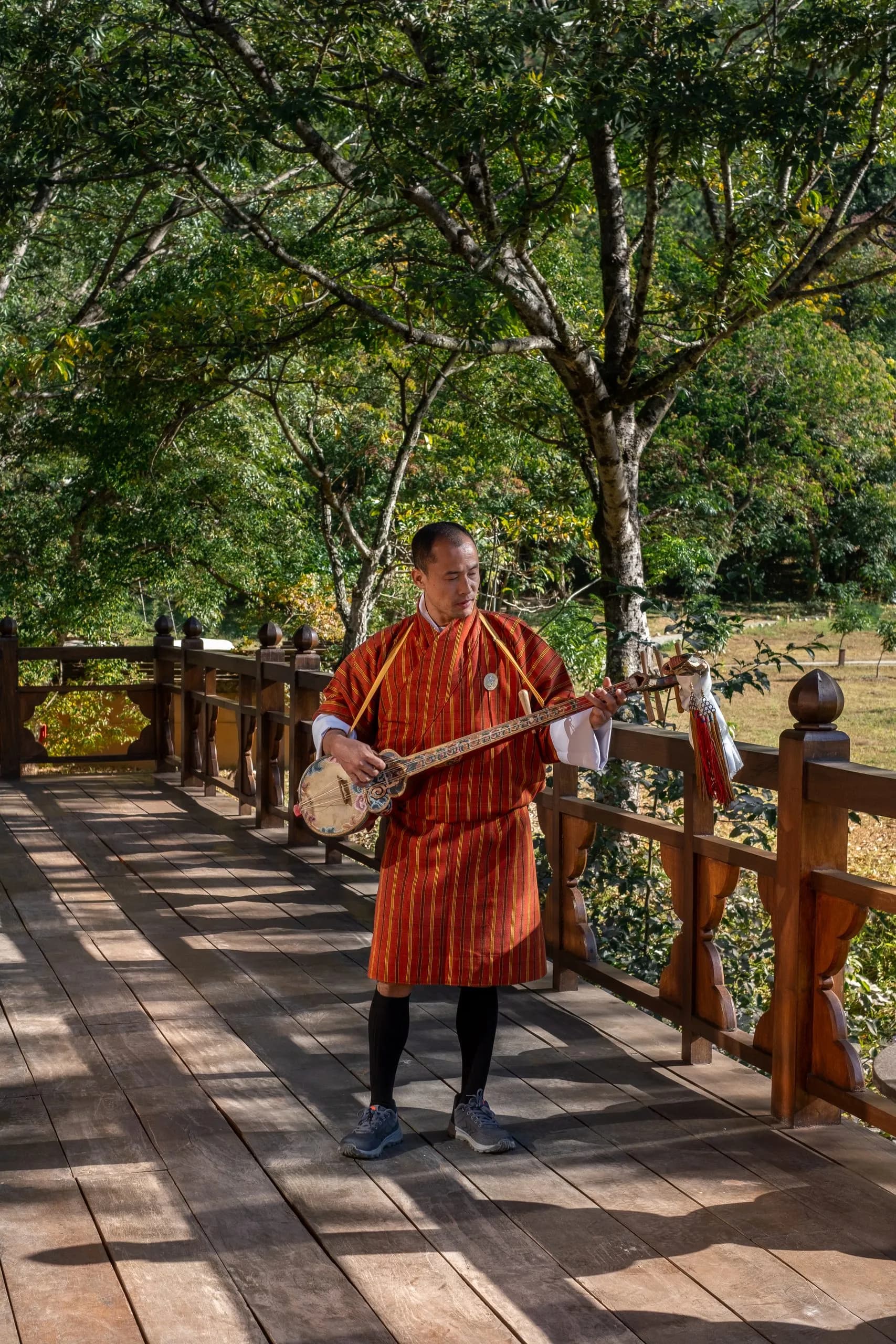
Bhutanese music and dance operate across several registers — the principal cham sacred-mask dance tradition at the tshechu festivals (covered separately at [[cham-mask-dance|the Cham entry]]), the folk-music and folk-dance tradition that operates at village and household level, the contemporary Bhutanese popular-music tradition that has developed across the post-2000 era, and the religious-music tradition (the dungchen long horns, the gyaling oboes, the liturgical drumming). The dranyen — the seven-stringed lute that is the principal Bhutanese folk instrument — is the centrepiece of the folk-music tradition; the principal folk-dance forms operate alongside the sacred cham register at festival celebrations and village gatherings.
- Register
- tradition
- Also known as
- Bhutanese folk music, Bhutanese folk dance, Boe
In short
Bhutanese music and dance operate across the folk (the dranyen lute, the principal folk-dance forms), the contemporary popular-music, and the religious-music tradition (dungchen horns, gyaling oboes, liturgical drumming). Distinct from the sacred cham mask-dance tradition.
The folk-music tradition
Bhutanese folk music — boe — is the principal village-and-household music. The dranyen (seven-stringed plucked lute) is the centrepiece — a hand-carved wooden instrument played principally in the villages and at the cultural gatherings; the dranyen tradition has been transmitted across generations in the master-and-apprentice. The piwang (two-stringed bowed instrument, similar to the Tibetan dranyen) and the lim (Bhutanese flute) are the principal companion folk instruments. Folk songs — the boe tradition includes songs of love, work, religious devotion, the dynastic-and-historical narrative, and the principal everyday-life themes. The matched guide can arrange folk-music sessions at the cultural venues and at the principal homestay locations.
Bhutanese folk dance
Bhutanese folk dance operates principally at the village and household, alongside the sacred cham at the principal tshechus. Zhungdra — the classical Bhutanese folk-dance form, the slow-and-measured context with elaborate hand-and-foot movements; performed at the principal cultural ceremonies and the royal events. Boedra — the faster folk-dance form, more accessible to broader participation, performed at the village celebrations and the cultural gatherings. Regional dance forms — eastern Bhutan has the Drametse Nga Cham regional tradition; the western and central regions have their own folk-dance registers; the Brokpa community in Sakteng has the yak-herding-tradition dances. The matched guide can arrange folk-dance demonstrations at the cultural venues; visitors with serious interest may engage with the dance-learning tradition at the principal cultural institutions.
The religious-music tradition
Religious music operates within the cham mask-dance programmes at the tshechus (see the Cham entry) and at the broader monastic-and-religious. The dungchen — the substantial telescoping long horns, typically 3-4 metres long when fully extended, produce the deep resonant tones that mark the principal religious processions and tshechu programmes. The gyaling — Bhutanese-Tibetan oboes, similar to the Indian shehnai, produce the high-pitched melodic tradition that accompanies the principal cham dances. The drumming tradition — the nga (large drums) and the principal damaru (small hand-drums) provide the rhythmic foundation of the liturgical programme. The monastic music tradition has been transmitted across generations in the master-and-apprentice; the Zhung Dratshang central monk body maintains the principal religious-music training programme.
The contemporary register
Bhutanese contemporary popular music has developed across the post-2000 era. The principal contemporary Bhutanese musicians include the recording artists working across Bhutanese-language pop, rock, and folk-fusion registers; the Bhutanese television and online-streaming registers have developed the contemporary music industry. The Bhutan Music Festival at Thimphu in the autumn window is one of the principal contemporary cultural events. The Bhutanese hip-hop and contemporary-fusion register has developed across the younger-Bhutanese cultural; the bridging of traditional Bhutanese folk instruments with contemporary international musical forms is one of the more interesting contemporary cultural developments. The matched guide briefs visitors on the contemporary music scene where relevant; visitors with serious interest in contemporary Bhutanese culture may attend live-music venues in Thimphu.
Related ideas
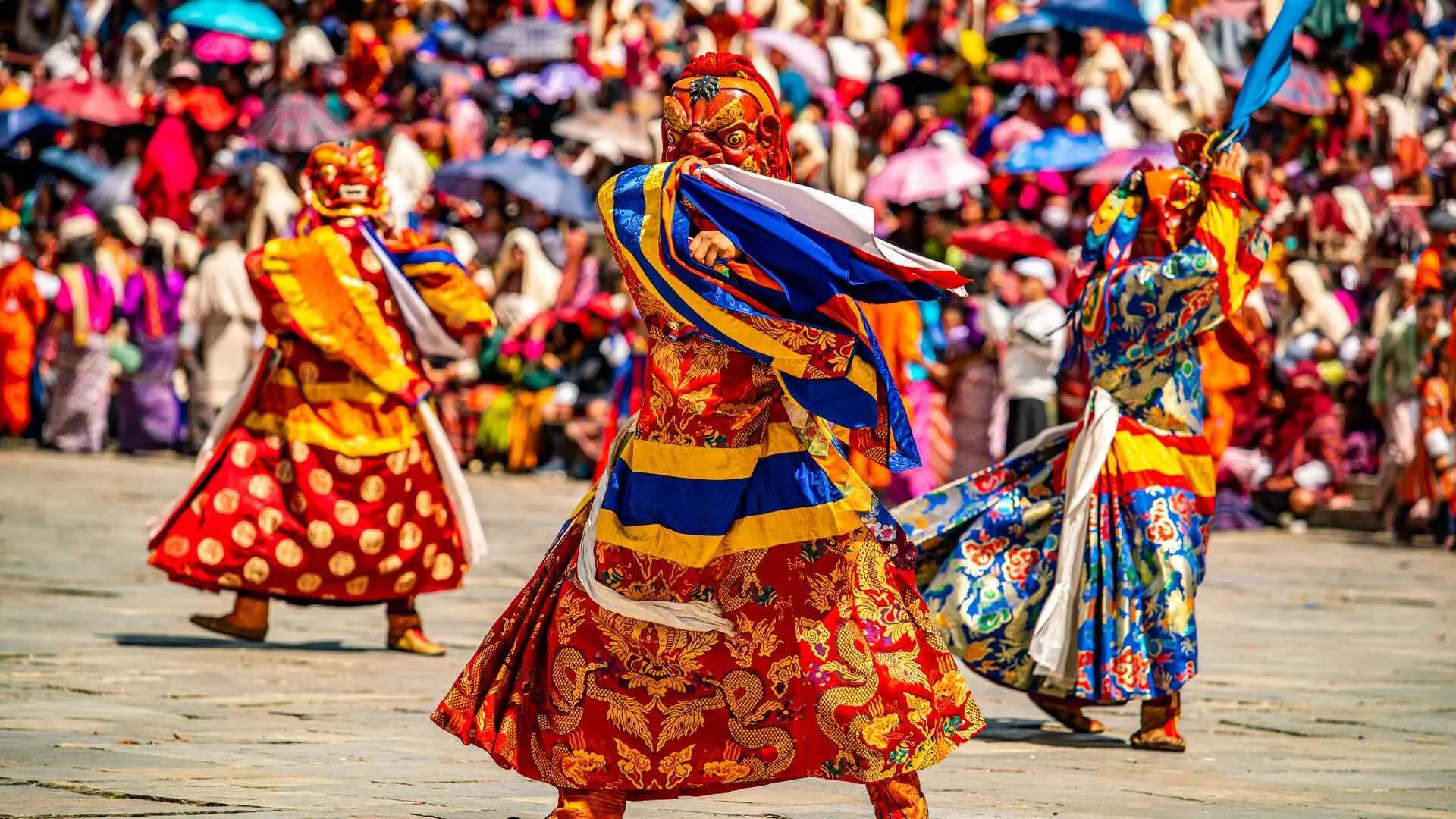 ThemeCham — the sacred mask dance, the principal expression of the tshechu festivals.Cham — the sacred mask dance tradition of Bhutan. The principal expression of the tshechu festivals. Drametse Nga Cham UNESCO Intangible Cultural Heritage 2008.
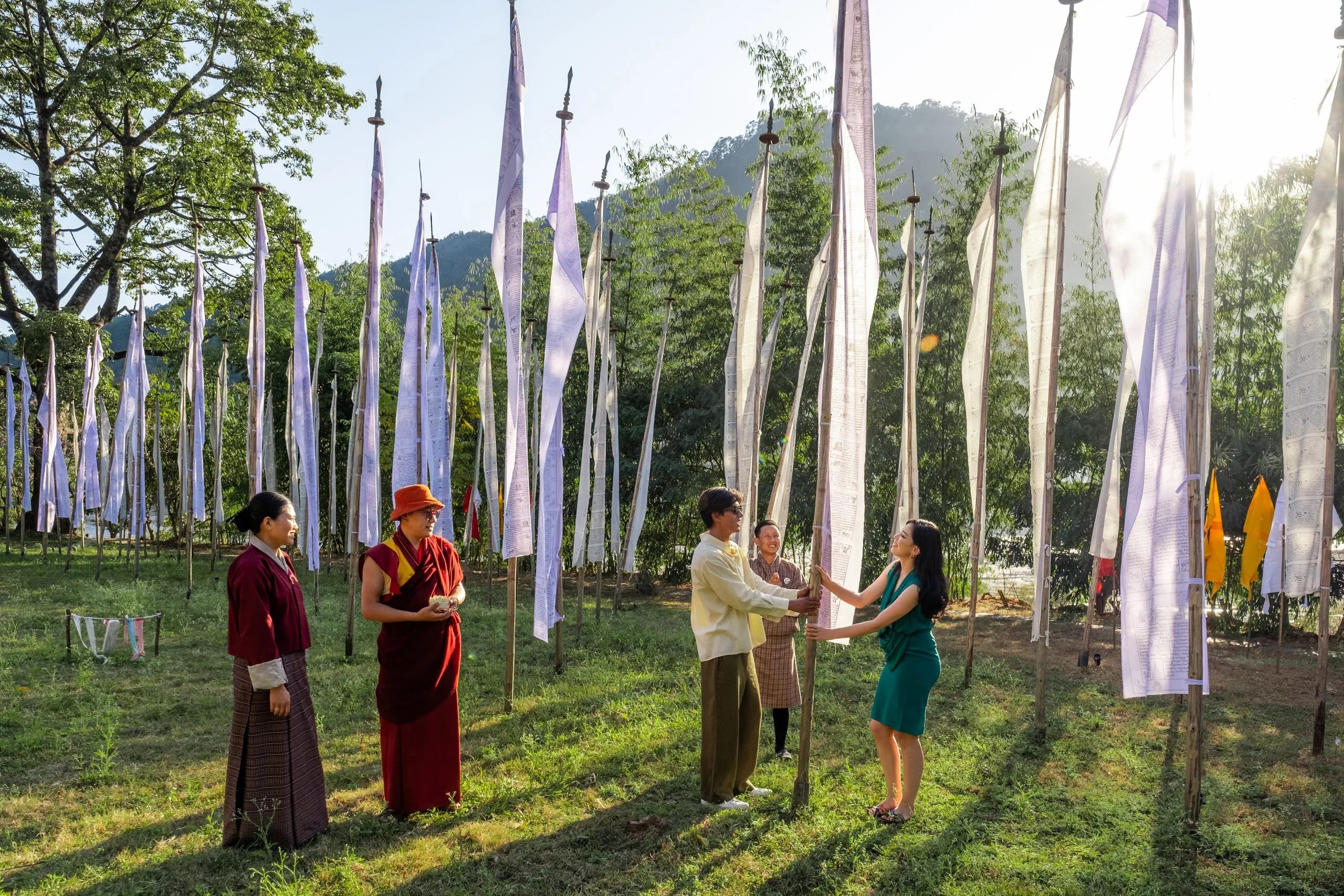 ThemeVajrayana Buddhism — the substance of every dzong, every monastery, every tshechu.Vajrayana Buddhism — the branch of Buddhism that shapes Bhutanese religious life. Drukpa Kagyu, Nyingma, Guru Rinpoche; mantra, mandala, deity yoga.
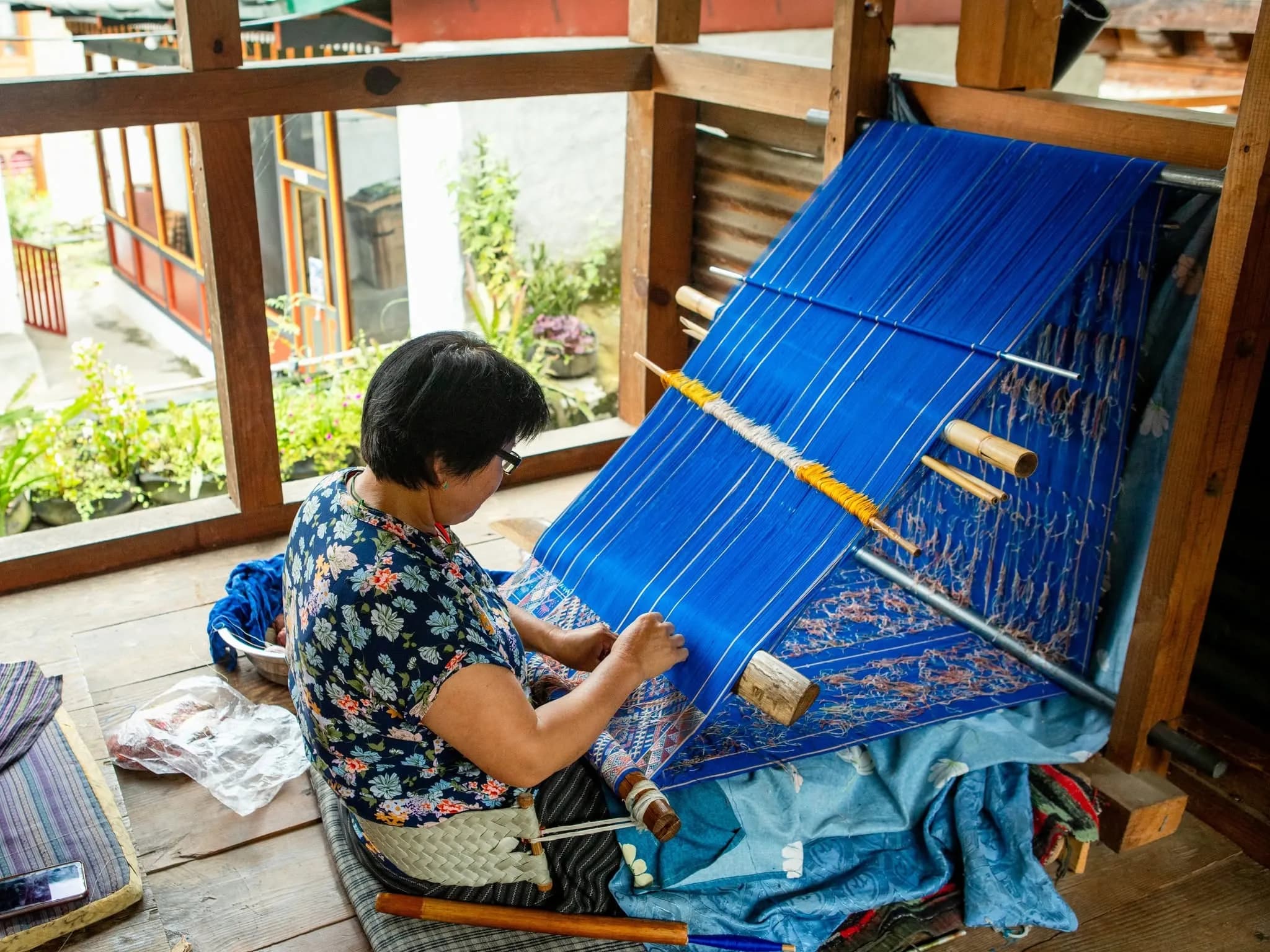 ThemeBhutanese textiles — the weaving tradition that clothes the country and survives largely intact.Bhutanese textiles — kira, gho, kushuthara, the weaving tradition by region. Lhuentse silk, Bumthang yathra wool, Haa wool, the Royal Textile Academy.
Journeys built around it
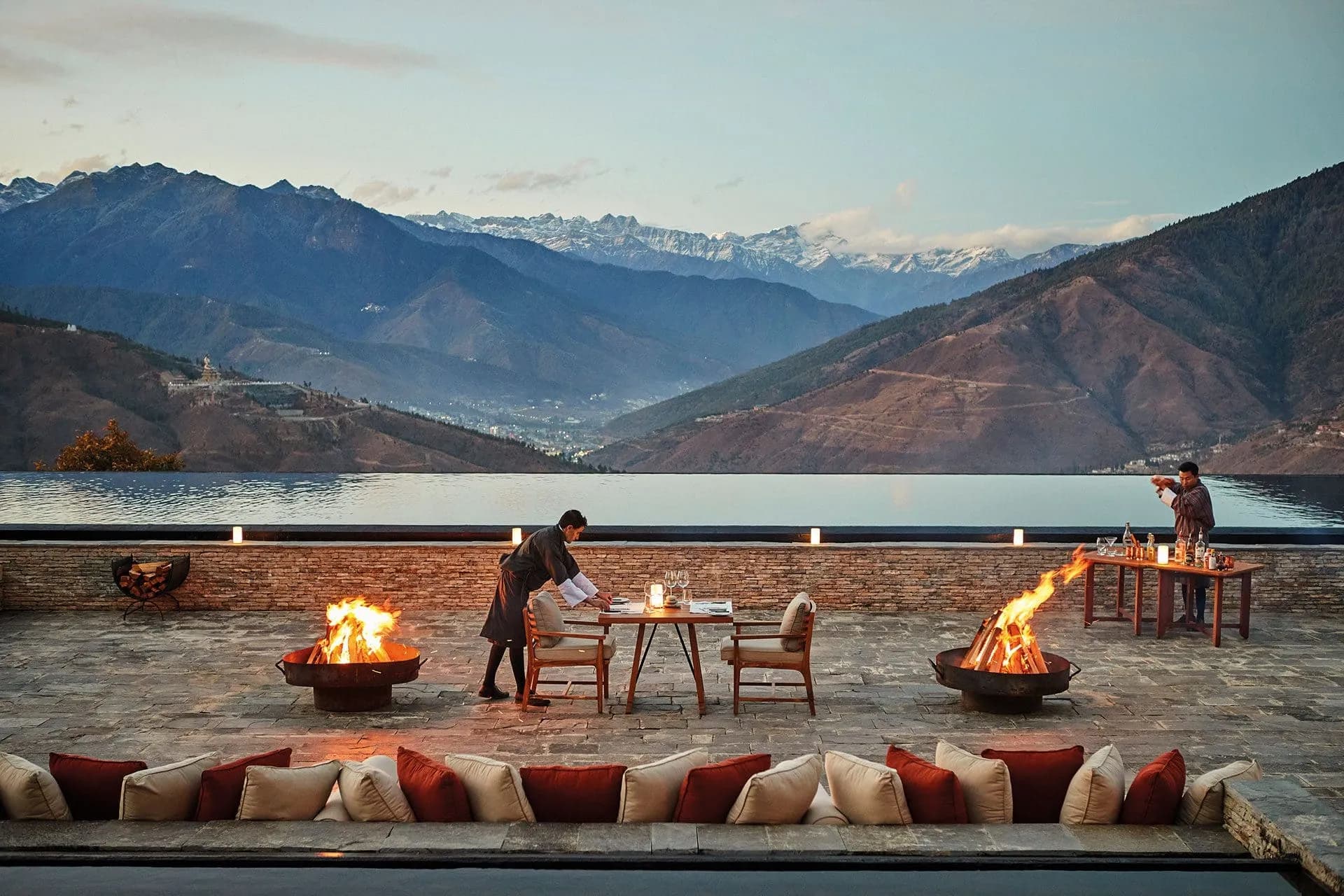 JourneyThe signature-tier Bhutan journey — private knowledgeable guide, the most considered lodge curation, helicopter or charter between valleys, exclusive-use arrangements where the season allows.The signature-tier Bhutan journey. Private knowledgeable guide, the most considered lodges, helicopter or PC-24 charter, exclusive-use arrangements. By invitation, from USD 14,000.
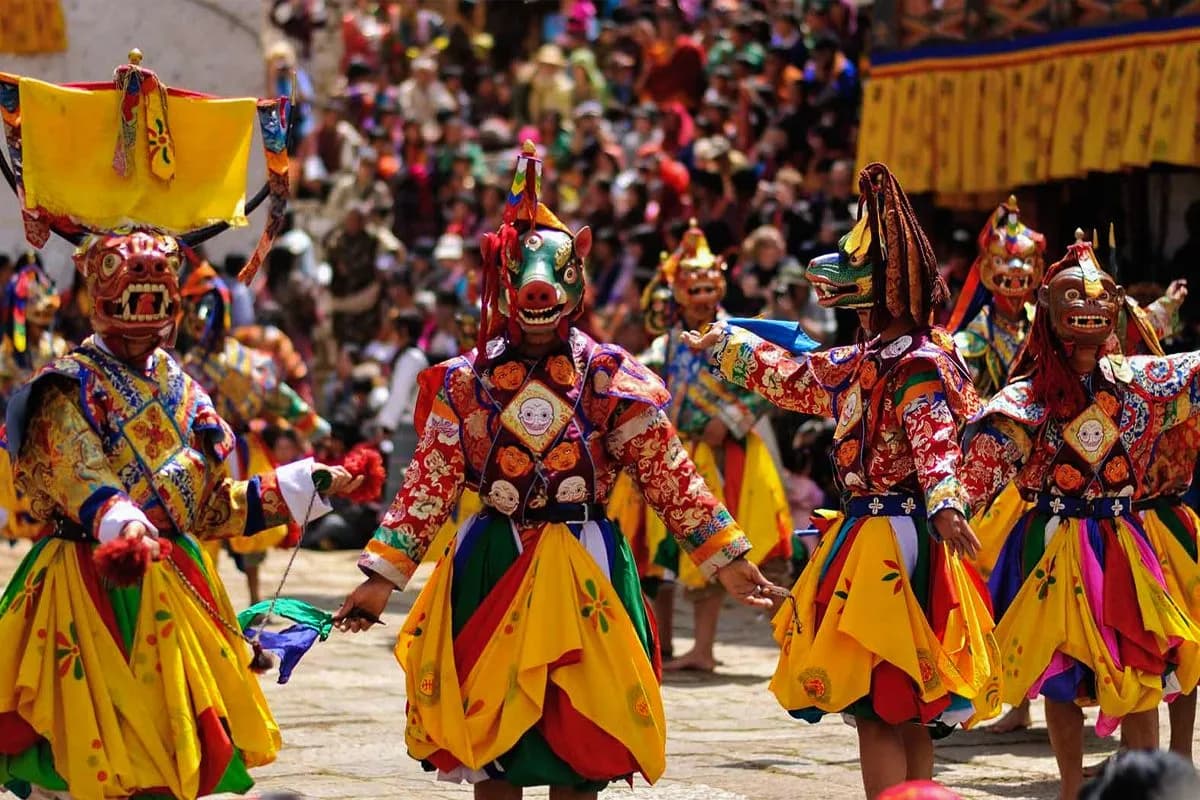 JourneyThimphu Tshechu, read properly.A seven-night Bhutan journey timed to Thimphu Tshechu in autumn — second-tier seating, a culturally fluent guide, Bhutanese lodges.
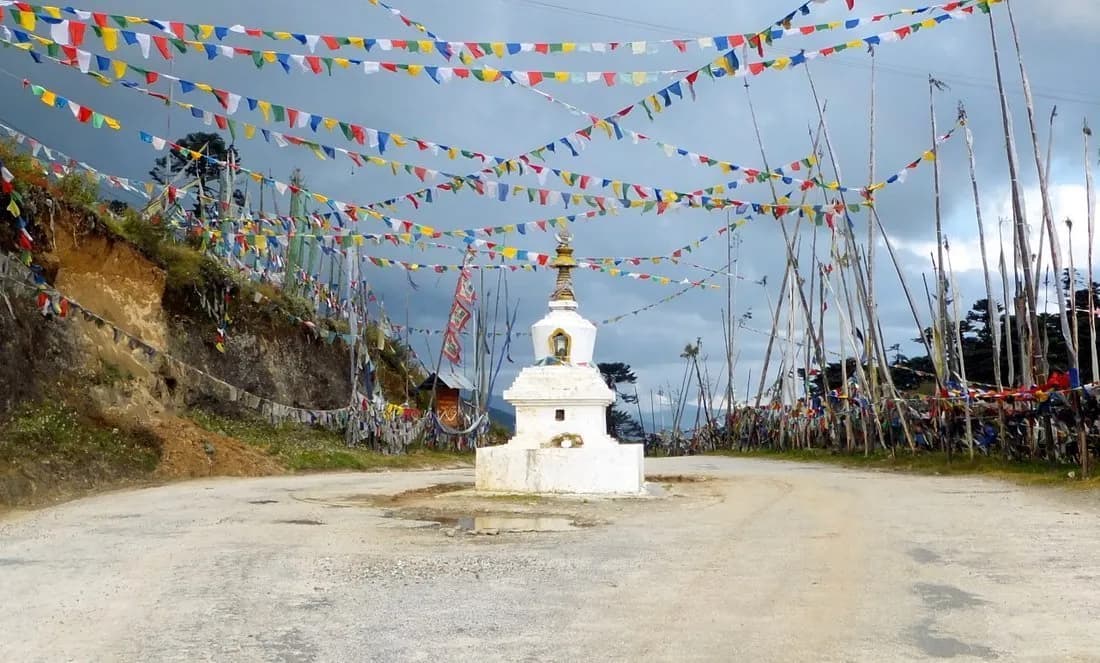 JourneyOctober light, Bhutan, a week.A seven-night Bhutan photography journey in October — Bhutan, golden-hour access at Punakha Dzong, a tripod-friendly guide, and transparent pricing.
Frequently asked
- Can I see folk dance and folk music during my trip?
- Yes. The matched guide arranges folk-music and folk-dance sessions at cultural venues — the Folk Heritage Museum in Thimphu has regular performances; the premium-lodge cultural programming typically includes folk-music sessions; the homestay register often includes family folk-music registers. The tshechu festivals combine sacred cham with folk-music-and-dance registers.
- Can I learn the dranyen?
- Yes, with substantial advance arrangement. The matched guide arranges introductory dranyen sessions through the Royal Academy of Performing Arts in Thimphu and through the principal individual master-instructors. The introductory session typically covers the basic tuning, the principal fingering, and one or two simple folk songs; the dranyen takes substantial years to develop to competence.
- Where can I hear contemporary Bhutanese music?
- Thimphu has the principal contemporary music venues; the Norzin Lam restaurant-and-bar tradition includes live-music nights at several venues. Online streaming services carry contemporary Bhutanese music; the matched guide briefs visitors on the contemporary music scene and the pre-trip listening register where relevant.

