A Bhutanese craft tradition
Bhutanese textiles — the weaving tradition that clothes the country and survives largely intact.
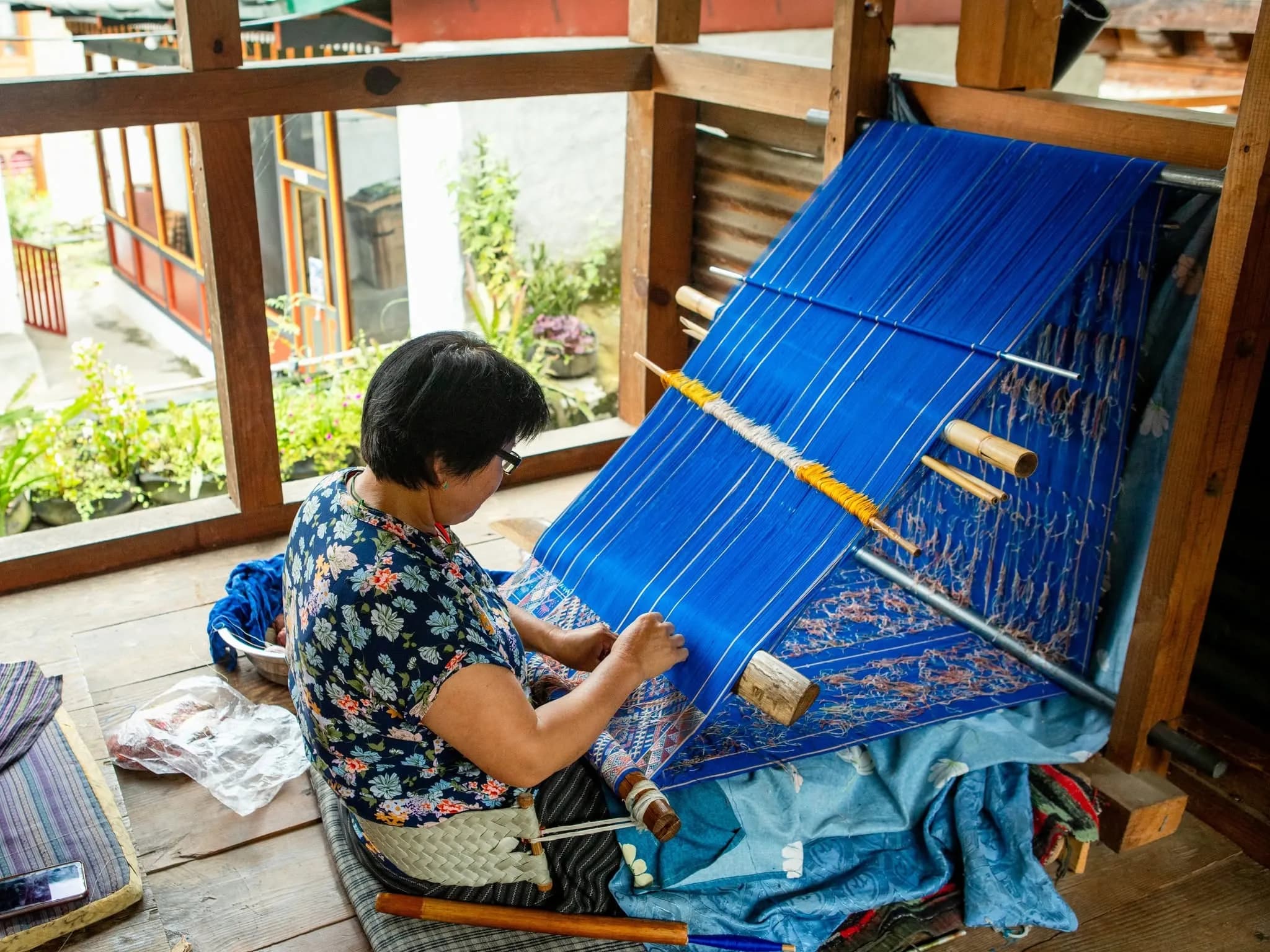
Bhutanese weaving is the country's principal living craft tradition — backstrap and pedal looms in every dzongkhag producing the kira (women's wrap dress), gho (men's robe), and ceremonial silks that constitute the country's national dress. The tradition is alive in a way that craft traditions elsewhere in the Himalaya are increasingly not.
- Register
- craft
- Also known as
- Bhutanese weaving, Bhutanese fabric tradition
In short
Bhutanese textile is the principal living craft tradition — backstrap and pedal looms in every dzongkhag producing the kira (women's wrap), gho (men's robe), and ceremonial silks of national dress. Regional specialities: Lhuentse silk brocade, Bumthang yathra wool, Haa wool, the kushuthara silk-on-silk.
The national dress as wearable textile
The Bhutanese national dress is the textile tradition in everyday operation. Men wear the gho — a knee-length robe wrapped right-over-left, tied at the waist with a coloured belt (kera), with the lower hem ending at the knee and the upper showing the white cuffs of the inner shirt (tego). Women wear the kira — a rectangular ankle-length fabric wrapped around the body, fastened at the shoulders with silver brooches (koma), with a jacket (tego) over and the wonju inner blouse at the cuff and collar. Both are worn as a matter of course at every dzong, every government building, every formal occasion, every festival. The textile is the dress; the dress is the textile.
The regional specialities
Each dzongkhag has its distinctive weaving. Lhuentse (in the east) — the silk-on-silk kushuthara, the most prestigious of all Bhutanese textiles, the formal silk kira worn by Bhutanese women on the most significant occasions; a single kushuthara takes 6-12 months of weaving and can carry the same value as a small house. Bumthang (central) — the woollen yathra, the heavy striped wool textile traditionally used for blankets, jackets, and outer garments in the cold central winters; produced on pedal looms in the Chumey valley. Haa (western) — the lighter wool, used for jackets and the smaller textile items. Pemagatshel and Mongar (eastern) — cotton brocades and the everyday cotton textile. The matched guide knows which valley produces which textile and can arrange direct visits to weaving households in the appropriate dzongkhags.
The weaving technique
Bhutanese weaving uses two principal loom types. The backstrap loom — the older form, used for the kushuthara silk brocades and the most prestigious narrow-width textiles; the weaver sits on the floor with the warp anchored at one end and stretched across her body via a leather strap. The pedal loom — the larger floor loom used for the wider yathra wool textiles and the everyday kira and gho fabrics; produces wider widths and faster output. Both techniques are still practiced in active weaving households across the country; both are visitable in the appropriate dzongkhags as part of a textile-focused journey.
The Royal Textile Academy in Thimphu
The principal cultural-and-educational institution for Bhutanese textile is the Royal Textile Academy in Thimphu — established in 2005 under the patronage of Her Majesty the Queen Mother Sangay Choden Wangchuck. The Academy houses a substantial collection of historical Bhutanese textiles (15th-21st century), runs the principal weaving education programmes, and operates a public museum with rotating exhibitions. The Academy is the natural starting point for any visitor with serious textile interest; the matched guide arranges visits during the morning hours when the educational programme is in operation.
What the textile-interested visitor encounters
On a Bhutanese journey with textile focus: visit to the Royal Textile Academy in Thimphu (1-2 hours); visit to a weaving household in the Bumthang yathra region (half-day); the silk-route visit to Lhuentse (1-2 days, requires the eastern circuit); the kira/gho fitting at a Thimphu tailoring house (visitor wears Bhutanese dress for one day); the textile market at the Centenary Farmers' Market weekend market; and the museum-collection visits at the National Museum in Paro and the Royal Textile Academy. See the seven-night textile tour for the comprehensive itinerary.
Related ideas
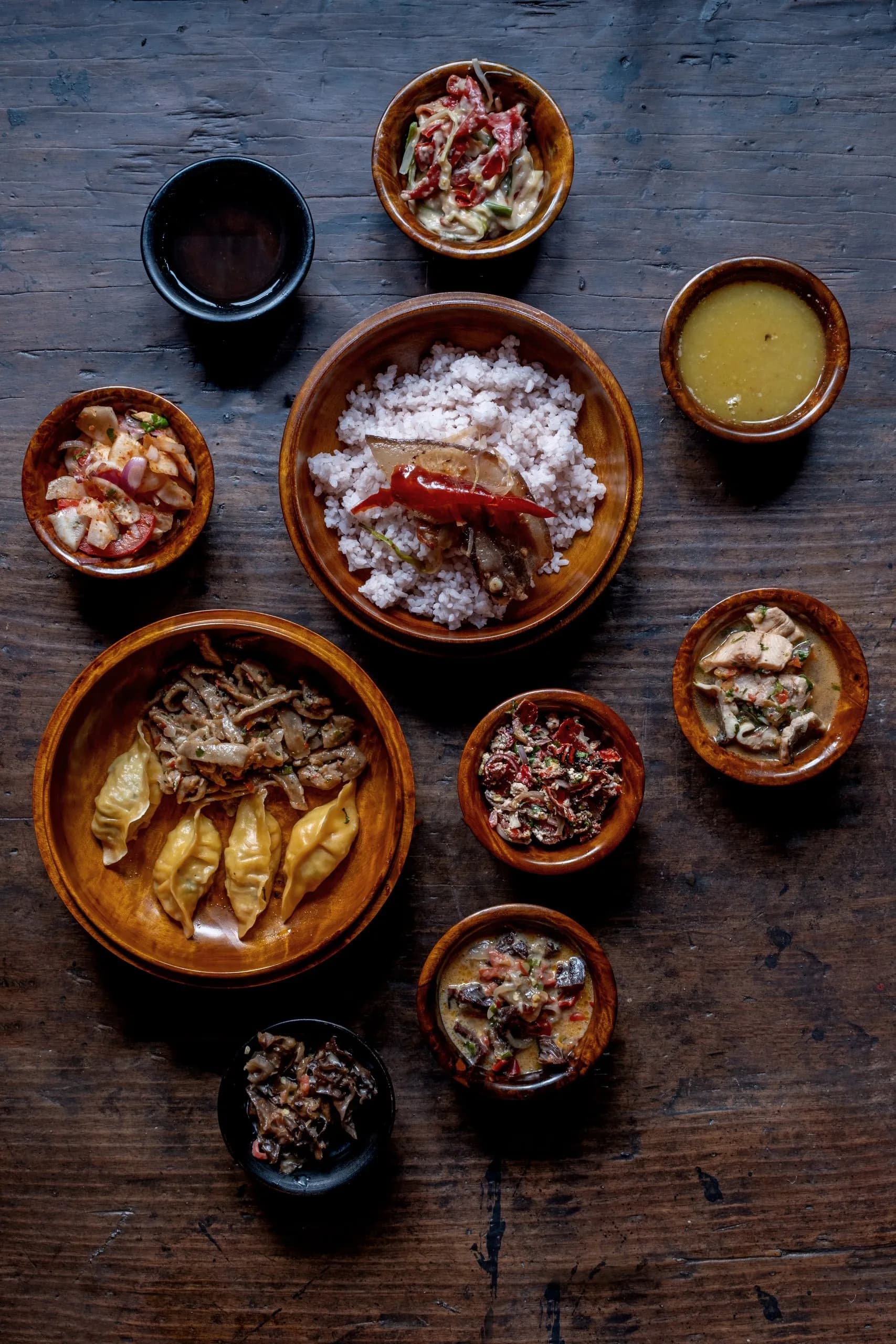 ThemeBhutanese cuisine — the most distinctive Himalayan food, treated as a vegetable rather than a spice.Bhutanese cuisine — ema datshi (chilli cheese), red rice, datshi, yak butter, the four geographic registers. The most distinctive Himalayan cuisine.
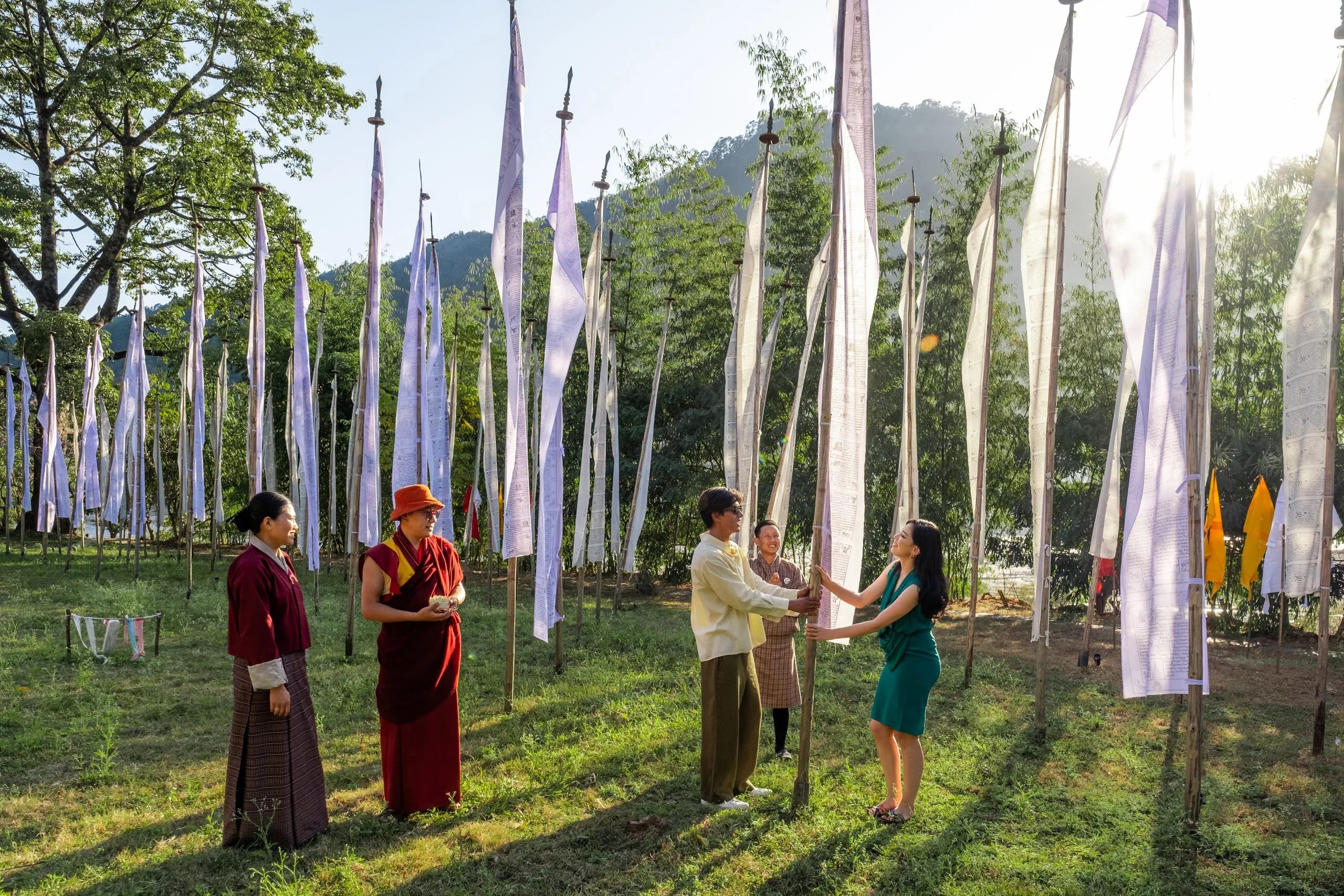 ThemeVajrayana Buddhism — the substance of every dzong, every monastery, every tshechu.Vajrayana Buddhism — the branch of Buddhism that shapes Bhutanese religious life. Drukpa Kagyu, Nyingma, Guru Rinpoche; mantra, mandala, deity yoga.
Journeys built around it
- JourneyBhutan, read through its weaving.A seven-night Bhutan textile tour — Bhutanese workshop visits, master weaver introductions, and a guide who reads cloth the way an art historian reads brushwork.
 JourneyThe signature-tier Bhutan journey — private knowledgeable guide, the most considered lodge curation, helicopter or charter between valleys, exclusive-use arrangements where the season allows.The signature-tier Bhutan journey. Private knowledgeable guide, the most considered lodges, helicopter or PC-24 charter, exclusive-use arrangements. By invitation, from USD 14,000.
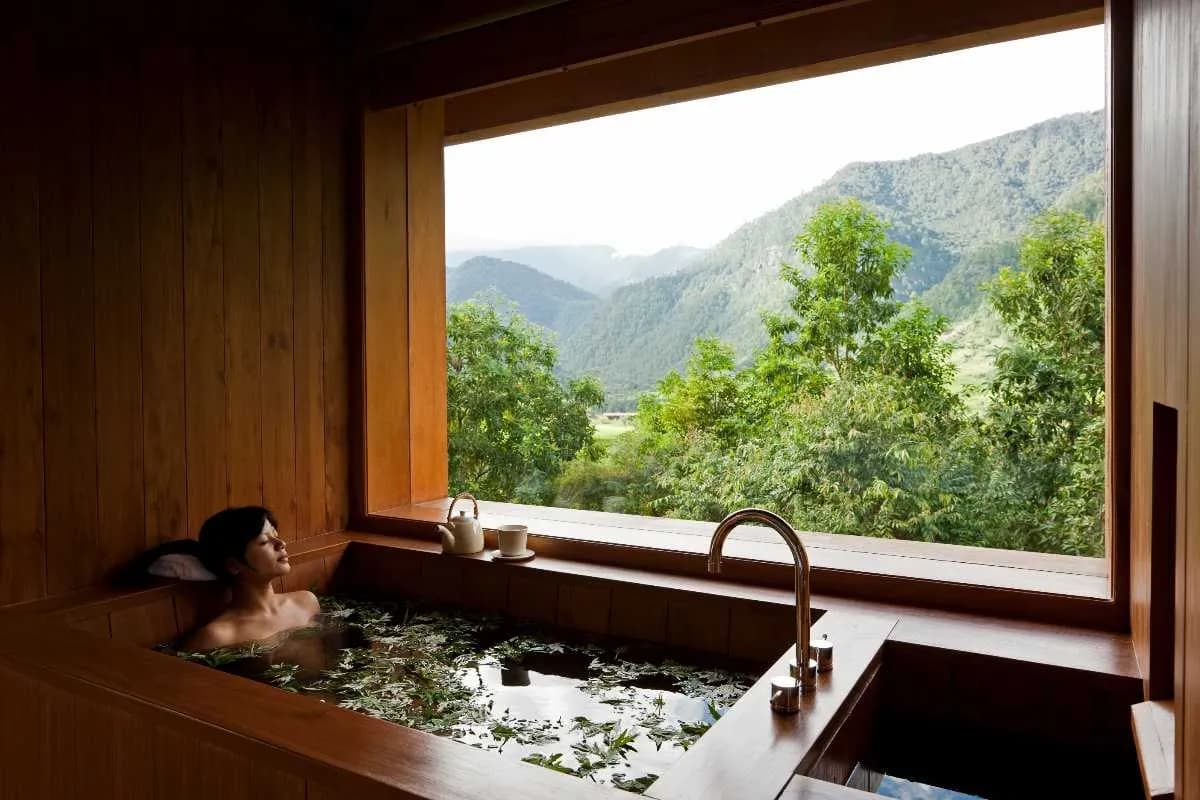 JourneySeven nights in Bhutan, on your terms.A private seven-night Bhutan honeymoon for couples flying from Singapore. Bhutanese lodges, a matched guide, transparent all-inclusive pricing.
Frequently asked
- Can I buy a kira or gho?
- Yes. Modern factory-woven kira and gho are widely available from Thimphu textile shops (USD 50-300). Hand-woven traditional kira from the Lhuentse silk-route is substantially more expensive (USD 500-50,000 for a kushuthara). The matched guide knows the reputable shops and the weaving households open to direct purchase.
- Can I commission a piece?
- Yes. Commissioning a kushuthara silk kira from a Lhuentse weaver typically takes 6-12 months. The matched guide can arrange the introduction during your visit; subsequent communication is by email and the piece is shipped on completion. Premium-tier visitors often commission a piece during the first visit as a gift for a future occasion.
- Is there a weaving workshop I can try?
- Yes — most premium lodges arrange weaving experiences (typically half-day) at local weaving households. The visitor learns the basic backstrap-loom technique; the weaver demonstrates the prestige kushuthara work. Not transformative as a learning experience but rewarding as cultural participation.
- How do I know if a textile is hand-woven vs factory?
- The matched guide handles the authentication — there's a substantial difference in price and craftsmanship; the matched guide knows the reputable houses and the certification framework. For visitors buying without a guide, the Royal Textile Academy gift shop is the safest source.

