A Bhutanese culinary tradition
Bhutanese cuisine — the most distinctive Himalayan food, treated as a vegetable rather than a spice.
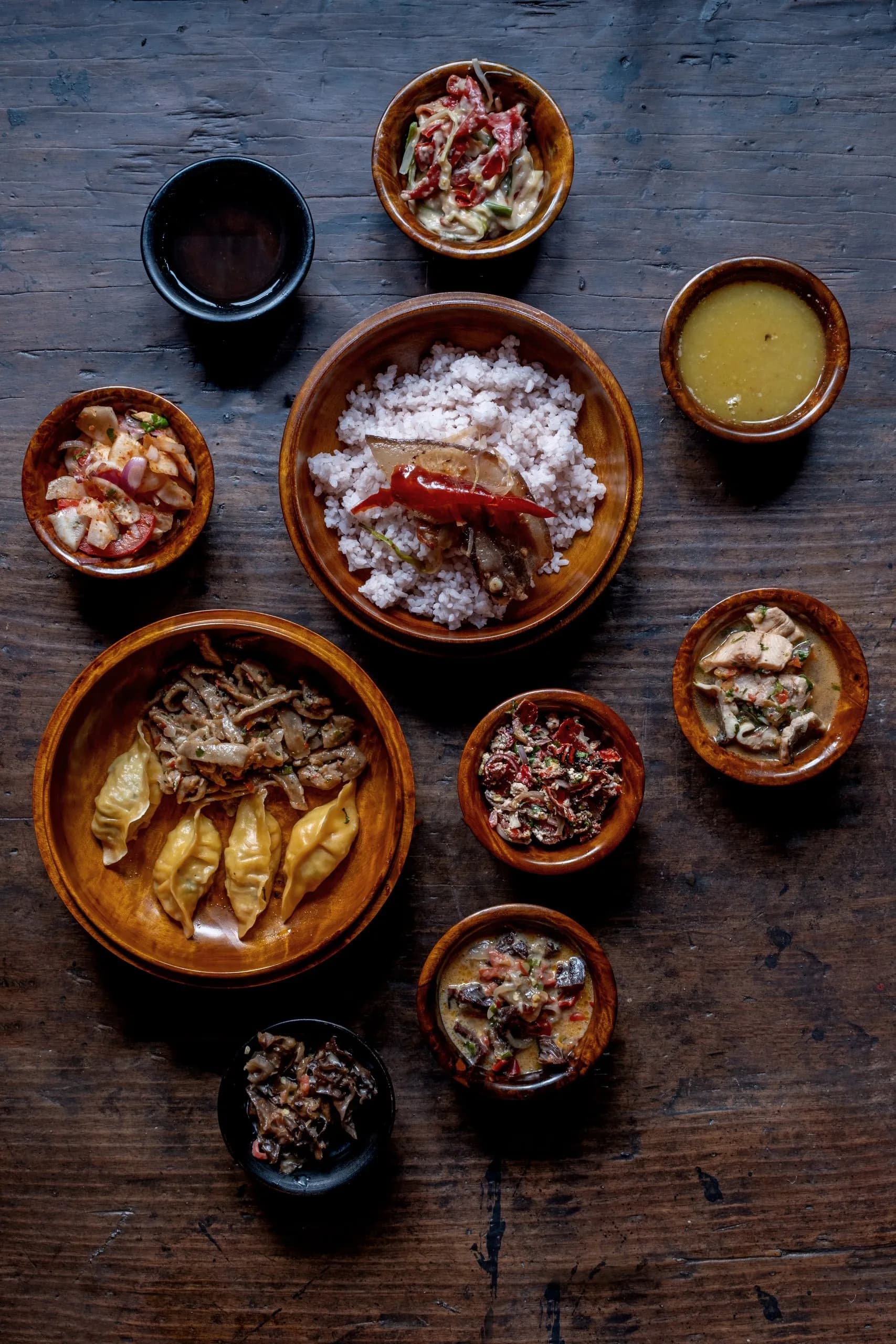
Bhutanese cooking is, by some measure, the most distinctive cuisine in the Himalayan region — separated from its neighbours not by gradual variation but by a few sharp, defining choices. The country eats more chillies per head than almost any other; treats them as a vegetable rather than a spice; pairs them with the soft white local cheese to make the dish a visitor eats first and remembers longest.
- Register
- cuisine
- Also known as
- Bhutanese food, Bhutanese cooking
In short
Bhutanese cuisine treats chillies as a vegetable rather than a spice. The national dish is ema datshi (chillies simmered in soft cheese sauce). Rice is red rice. Dairy is fresh cheese (datshi) and yak butter. Meat is consumed but Bhutan is Buddhist so most is imported. Four geographic registers — highland yak, central valley, eastern, southern.
The defining principles
A working understanding rests on a small number of structural principles. Chilli is a vegetable, not a spice — where Indian and Thai cuisines use chilli as flavouring within a dish, Bhutanese cooking uses chilli as the principal ingredient in many dishes. The national dish, ema datshi, is literally chilli cheese: chillies are the substance, cheese is the binder. Cheese is the dairy mainstay — Bhutan does not cook much with cream or yoghurt in the South Asian; instead the principal dairy is datshi (a soft fresh unaged cheese from cow's milk in the lowlands and yak's milk in the highlands) and chhugo (the hard-dried yak cheese eaten as a chew). Rice is the central staple — particularly the Bhutanese red rice, a short-grain variety with a distinctive reddish hue grown in the central valleys. Meat is consumed but not produced — Bhutan is a Buddhist country; the killing of animals is theologically uncongenial. Most meat is imported from India (pork, beef, mutton) with yak meat being the principal locally-reared exception in the high country.
The signature dishes
Ema datshi (chilli cheese) — the national dish; whole green chillies simmered in a soft cheese sauce, served with red rice. Kewa datshi (potato cheese) — the same principle with potatoes; gentler on the heat for those who find ema datshi formidable. Shamu datshi (mushroom cheese) — particularly fine in the autumn matsutake season. Phaksha paa — pork (often dried, sometimes fresh) with red chillies and white radish; a hearty winter dish. Jasha maru — minced chicken stew with onion, tomato, ginger, and coriander; lighter and more accessible to first-time visitors. Sikam paa — dried pork strips with chilli; a typical village preparation, particularly in winter. Hoentay — the Haa speciality: buckwheat dumplings stuffed with turnip greens, cheese, and other fillings. Puta — buckwheat noodles, particularly associated with Bumthang and the highland Wangdue valleys.
The four geographic registers
Bhutanese cooking varies substantially across the country's geographical zones. Highland (above 3,000m — Phobjikha, the Laya country) — yak butter, yak meat, dried cheese, buckwheat noodles, the hot stone bath as digestive recovery. Central valley (Paro, Thimphu, Punakha, Wangdue, Bumthang) — red rice, ema datshi, the principal restaurant; cow's-milk cheese predominant. Eastern (Trashigang, Mongar, Lhuentse) — more rice-and-pork; some fermented preparations; the Sharchopkha-language. Southern (Phuentsholing, Sarpang, Samdrup Jongkhar) — much more Indian-influenced; daals, parathas, chai; the warmer climate produces different vegetables.
Drinks — ara, suja, ngaja
Ara — the traditional Bhutanese rice-based spirit, distilled at home in many villages; comparable in register to Korean soju or Japanese shochu; served warm in winter. Suja — the traditional Bhutanese butter tea, made with yak butter, salt, and tea; an acquired taste for international visitors but the staple highland breverage. Ngaja — the milky sweet tea offered at the start of most Bhutanese meals; the everyday hospitality drink. Beer (the local Druk 11000) is the principal commercial beer; whisky and wine are imported.
What a visitor encounters across the week
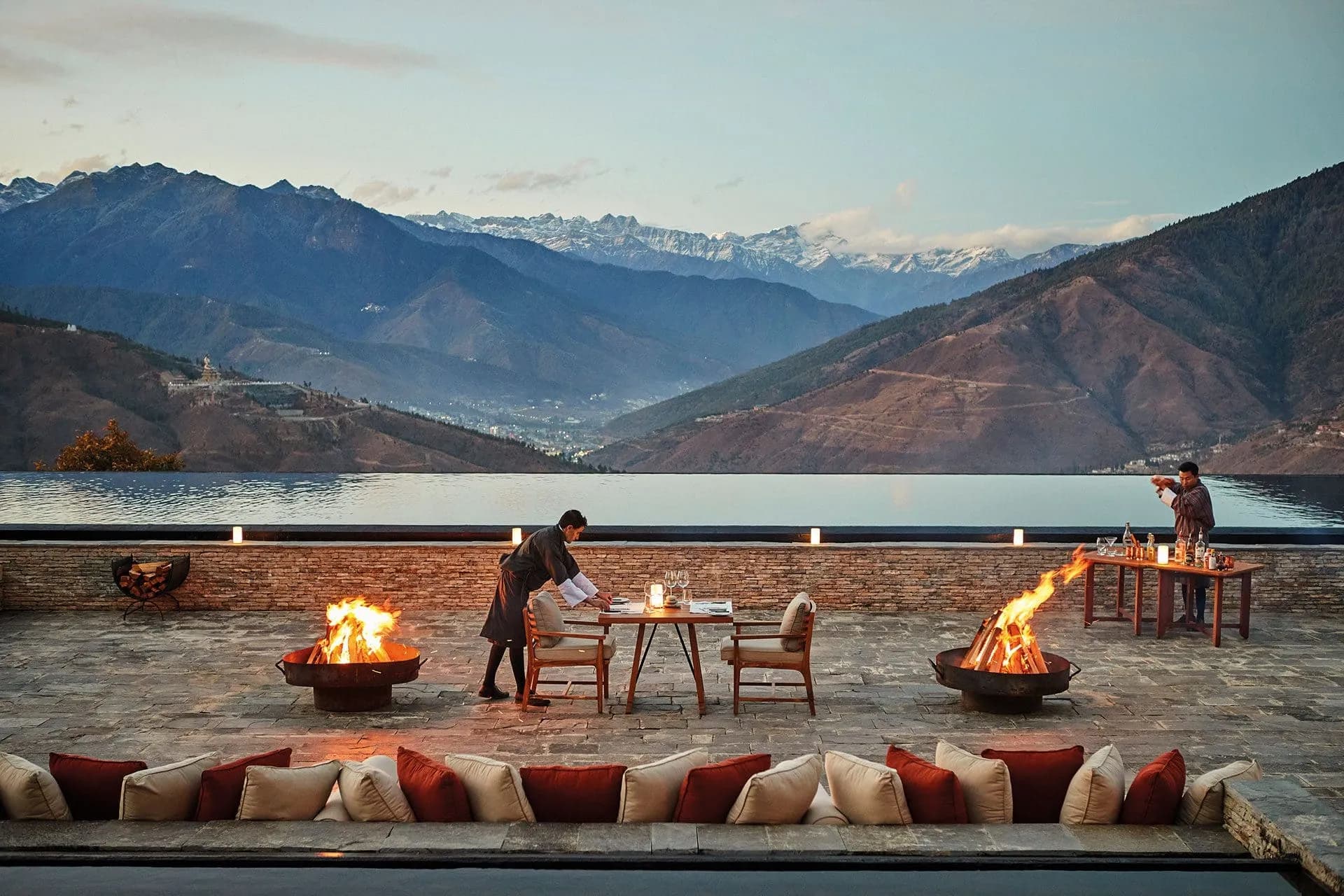
On a typical premium Bhutanese journey, the matched guide briefs the lodges on the visitor's dietary preferences — heat tolerance, vegetarian/vegan, allergies, the preferred mix of Bhutanese and international cuisine. Premium lodges (Amankora, Six Senses, COMO, Spirit Sanctuary) offer Bhutanese cuisine at high register alongside international options. The first ema datshi is the welcome dish; subsequent meals are paced to the visitor's heat tolerance and the regional register of each valley. Outside the premium lodges, the village register at a heritage farmhouse meal is the most direct encounter — the kitchen produces the family's own everyday cooking, and the conversation around the dish is itself the cultural moment.
Related ideas
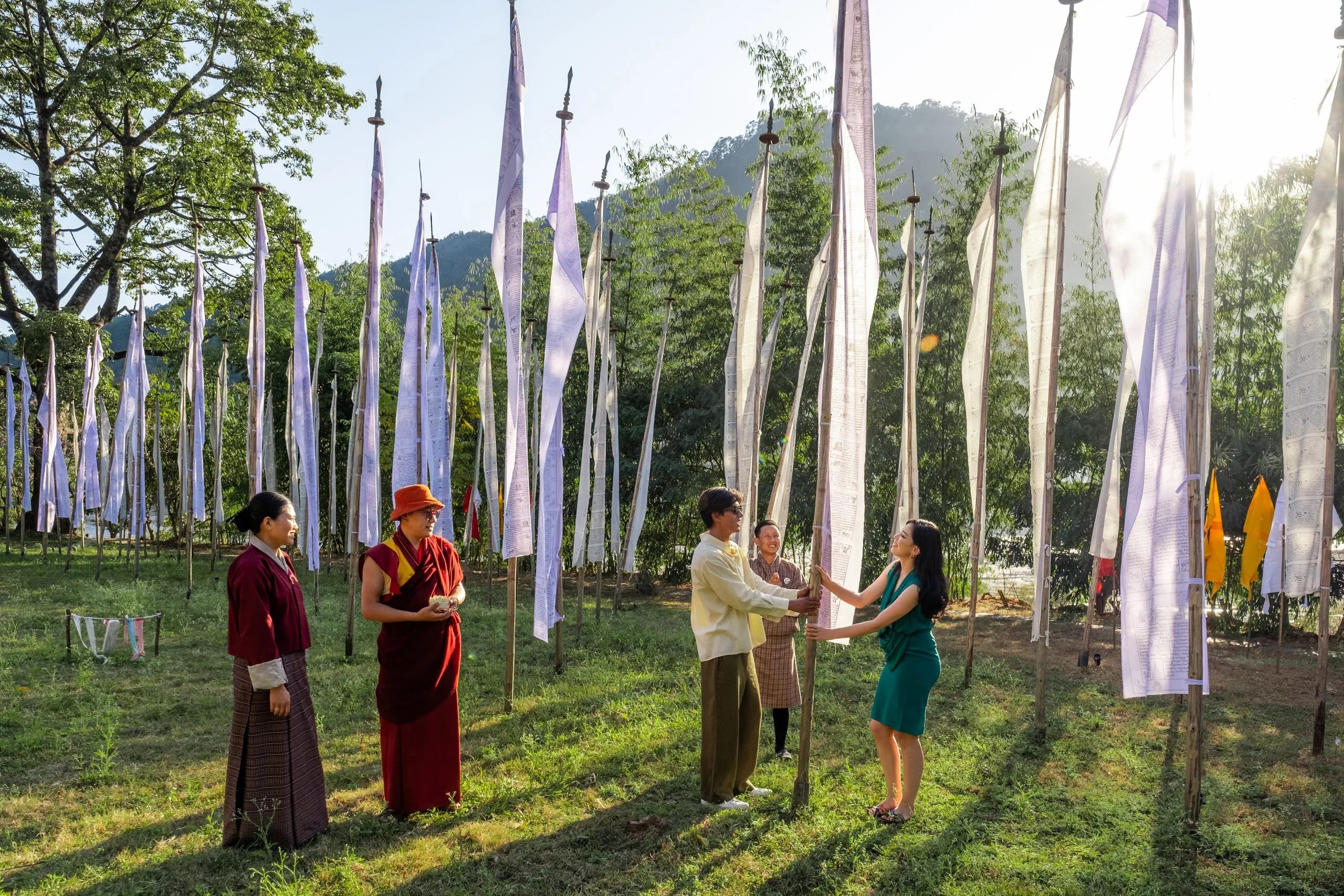 ThemeVajrayana Buddhism — the substance of every dzong, every monastery, every tshechu.Vajrayana Buddhism — the branch of Buddhism that shapes Bhutanese religious life. Drukpa Kagyu, Nyingma, Guru Rinpoche; mantra, mandala, deity yoga.
 ThemeGross National Happiness — the framework that shapes the country a visitor encounters.Gross National Happiness — the Bhutanese development philosophy articulated by the Fourth Druk Gyalpo at His 1974 coronation as the first of nine guiding goals. Four pillars, nine measurement domains, constitutional grounding.
Journeys built around it
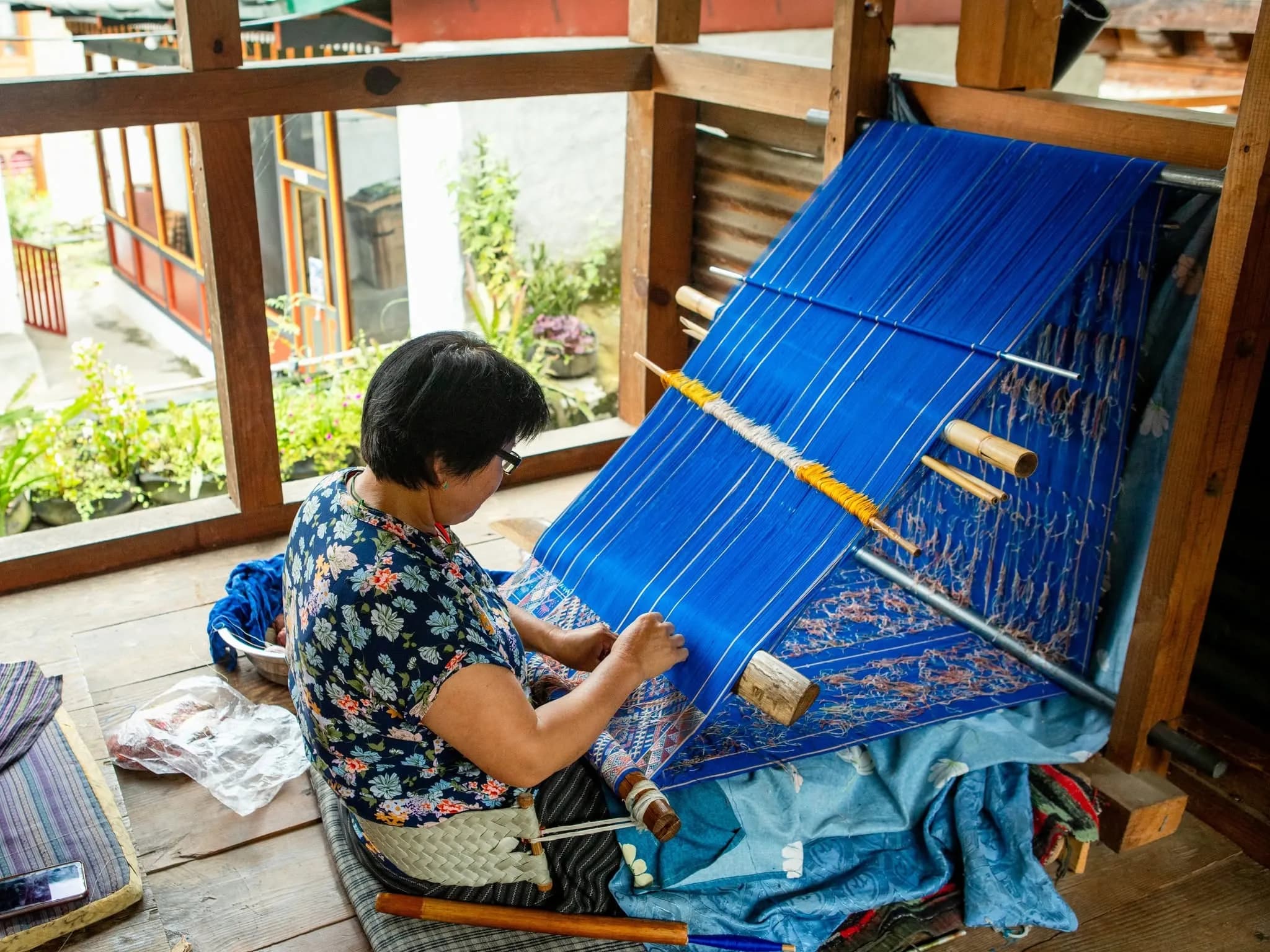 JourneyBhutan, read through its weaving.A seven-night Bhutan textile tour — Bhutanese workshop visits, master weaver introductions, and a guide who reads cloth the way an art historian reads brushwork.
 JourneyTen nights in Bhutan, paced as a restoration.A ten-night Bhutan wellness retreat — Sowa Rigpa, hot stone baths, considered cuisine, the flagship wellness lodges. Luxury and signature tiers.
 JourneyThe signature-tier Bhutan journey — private knowledgeable guide, the most considered lodge curation, helicopter or charter between valleys, exclusive-use arrangements where the season allows.The signature-tier Bhutan journey. Private knowledgeable guide, the most considered lodges, helicopter or PC-24 charter, exclusive-use arrangements. By invitation, from USD 14,000.
Journeys that visit Bhutanese cuisine
Frequently asked
- Is Bhutanese food too spicy for first-time visitors?
- It can be — ema datshi is genuinely hot. The premium lodges adjust the heat register on request. Most visitors find that after two to three days the palate adjusts and the chilli register becomes the most-remembered element of the cuisine. The matched guide briefs the kitchens; the heat is calibrated to the visitor across the week.
- Are there good vegetarian/vegan options?
- Yes — substantially. Bhutanese cuisine is structurally vegetable-and-cheese-heavy; ema datshi is naturally vegetarian; the broader Buddhist register makes vegetarian preparation comfortable. Vegan needs advance briefing because of the dairy emphasis. Premium lodges handle this with a 24-48 hour notice.
- Where does the meat come from?
- Most meat in Bhutan is imported from India — pork, beef, mutton — because of the Buddhist theological discomfort with killing animals. Yak meat in the highlands is the principal locally-reared exception. River fish (brown trout, introduced 20th century) is occasionally available.
- Can I take a Bhutanese cooking class?
- Yes — most premium lodges arrange cooking experiences with the lodge chef on request. For a deeper experience, a heritage-farmhouse meal arranged through the matched guide allows the visitor to participate in the preparation of ema datshi or kewa datshi alongside the family.

