A Bhutanese sacred tradition
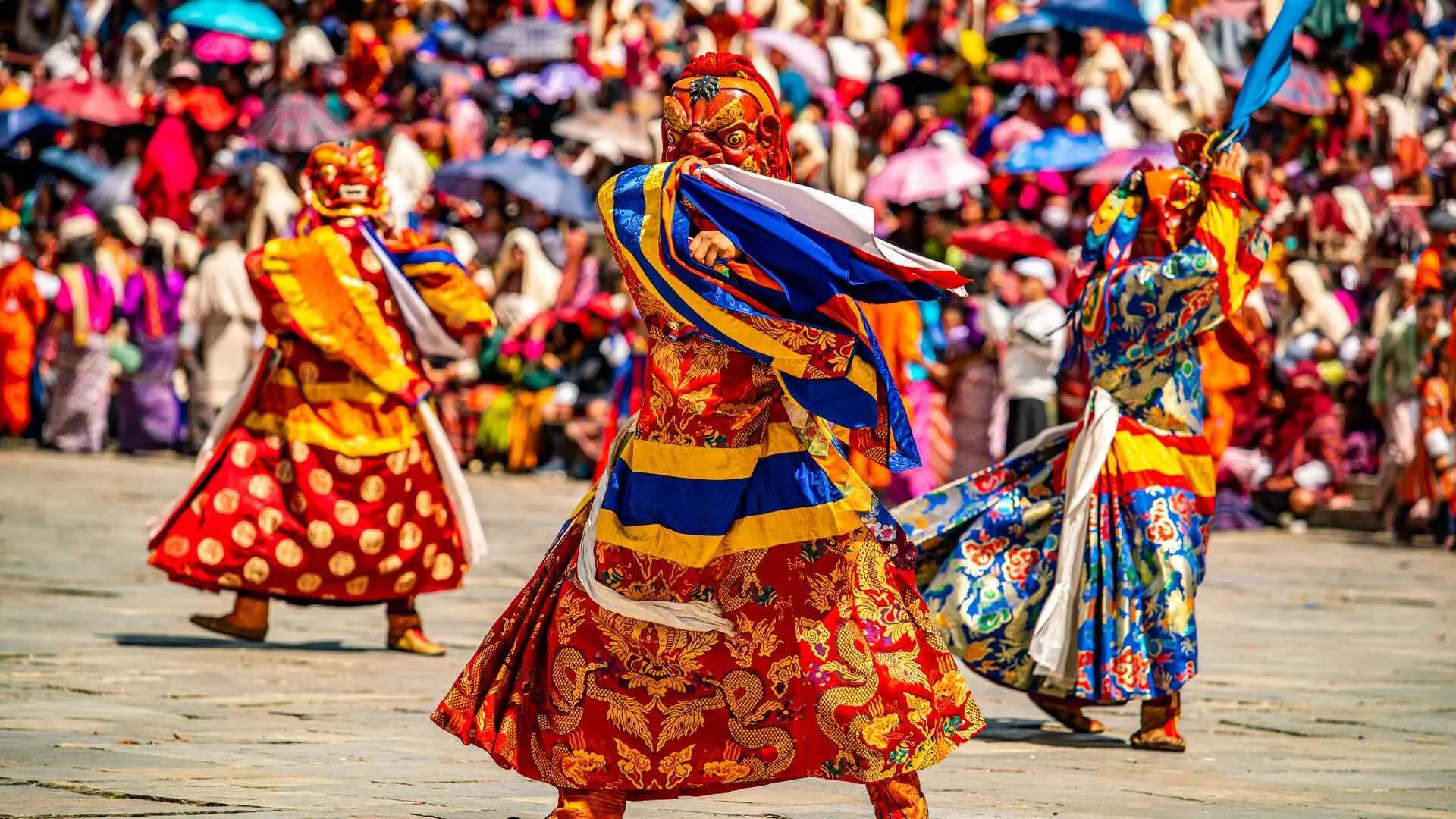
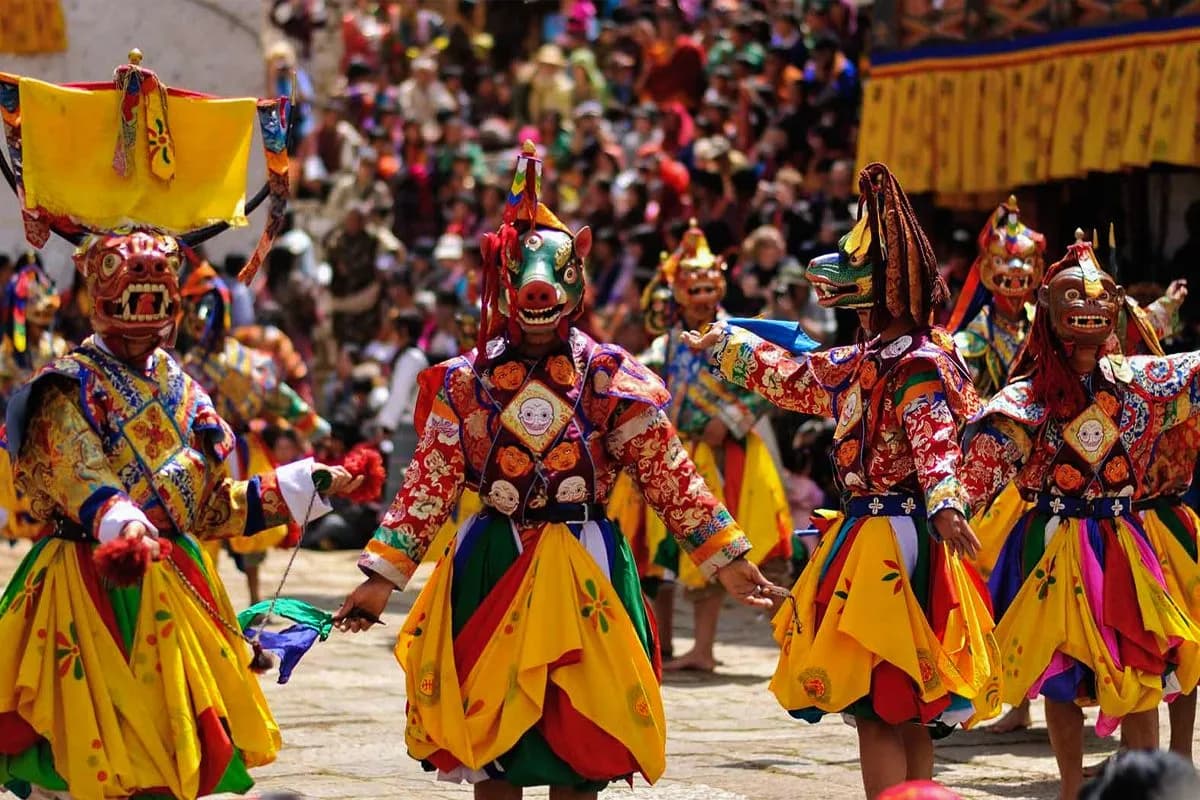
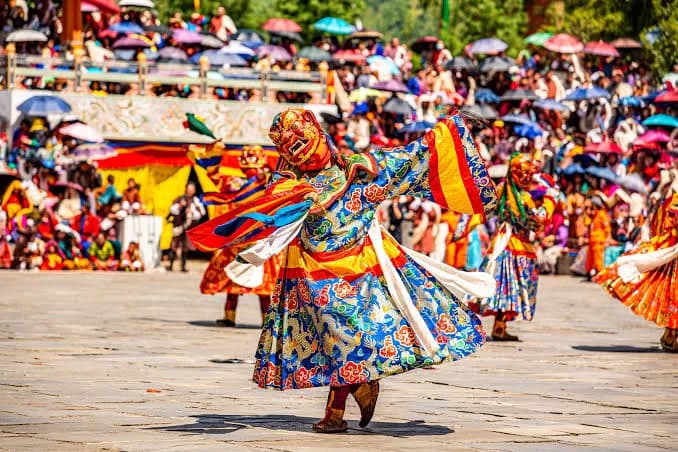
Cham — the sacred mask dance, the principal expression of the tshechu festivals.
Cham is the sacred masked dance tradition that forms the principal expression of every tshechu festival — the costumed monk-dancers in elaborate brocades and substantial papier-mâché masks, moving through the dzong courtyards across multi-day festival programmes. Each dance is a complete ritual liturgy with Vajrayana-Buddhist symbolic content; the visual tradition is one of the most-distinctive and most-photographed cultural images of Bhutan. UNESCO recognised the Drametse Nga Cham as an Intangible Cultural Heritage in 2008.
- Register
- tradition
- Also known as
- Sacred mask dance, Bhutanese cham, Mask dance
In short
Cham is the sacred masked dance tradition — costumed monk-dancers in elaborate brocades and papier-mâché masks performing multi-day ritual liturgies at tshechu festivals. Vajrayana-Buddhist symbolic content. UNESCO Intangible Cultural Heritage (Drametse Nga Cham, 2008).
What cham is
Cham is the formal Vajrayana-Buddhist ritual dance tradition — not a folk dance, not a theatrical performance, but a complete liturgical practice performed by trained monk-dancers (or, in some traditions, laymen attached to the monastic). Each cham is the embodied ritual enactment of specific Buddhist content: the wrathful deities subjugating obstacles, the eight manifestations of Guru Rinpoche, the cosmology of the bardo (the intermediate state after death), the lineage transmission of specific teaching traditions. The dancers are not performers in the Western theatrical sense — they are ritual practitioners performing on behalf of the assembled community, generating merit for participants and observers and dispelling obstacles to the practice and prosperity of the community. The visual register — the masks, the elaborate brocades and silk robes, the rhythmic drums and cymbals — is the public-visible surface of a much-deeper ritual content; the matched guide explains the underlying symbolism for visitors with serious interest.
The principal dances
Several cham dances are foundational to the Bhutanese repertoire. Drametse Nga Cham — the principal Bhutanese cham, originated in the Drametse monastery in eastern Bhutan in the 16th century; UNESCO Intangible Cultural Heritage 2008; features the drums and 16 dancers in elaborate brocades. Guru Tshen Gye — the Eight Manifestations of Guru Rinpoche dance, the visual presentation of the Padmasambhava transmission lineage; the principal devotional dance of every major tshechu. Shinje Cham (Lord of Death dance) — the wrathful-deity dance with the Yama (Lord of Death) and the judgement of the dead, with bardo-cosmology content. Pa Cham — the Hero Dance, originally performed by Pema Lingpa; the wrathful-deity tradition in the Nyingma tradition. Atsara — the clown-dancers in red masks who provide comic relief between the serious dances; the social-satire tradition that punctuates the formal programme. Black Hat Dance — the wrathful-deity tantric dance, performed on the principal day of every tshechu, dispelling obstacles to the dharma.
The dances, one by one
A tshechu is a programme of dances, and the programme differs from one dzong to the next: not every dance below is performed at every festival, and the order changes. These are the dances our festival guides name, with where you are most likely to see them. English spellings vary, and your guide will give you the local name.
Black Hat Dance (Zhana Cham) — the wrathful-deity dance performed on the principal day of every tshechu, dispelling obstacles to the dharma. A drum version is known as Zhanag Nga Cham.
Guru Tshengye — the eight manifestations of Guru Rinpoche, the visual presentation of the Padmasambhava lineage and the principal devotional dance of every major tshechu. Named at Thimphu, Gangtey, Trongsa, Wangdue and Tamshing Phala Choepa.
Drametse Nga Cham — the drum dance of Drametse. It began at Drametse monastery in eastern Bhutan in the 16th century, is danced to drums by sixteen dancers in elaborate brocades, and was inscribed by UNESCO as Intangible Cultural Heritage in 2008. Named at Paro, Punakha, Wangdue, Trongsa, Gangtey and Gom Kora.
Shinje Cham — the Lord of Death dance: Yama and the judgement of the dead, drawing on the Buddhist teaching of the bardo, the state between death and rebirth.
Raksha Mangcham — the dance of the wrathful judgement of the dead, and a speciality of Wangdue Tshechu: sixteen dancers in fierce masks, on the second day. One of the most striking chams in the Bhutanese repertoire.
Pa Cham — the Hero Dance, originally performed by Pema Lingpa; a wrathful-deity dance from the Nyingma tradition.
Shawa Shachi — the dance of the stag and the hounds, on the second day of Thimphu Tshechu.
Pholay Molay — a comic courtship cham, among the opening chams at Paro and on the second day at Thimphu: a light-hearted turn between the wrathful dances.
Tungam — the dance of the wrathful deities that closes the third day of Thimphu Tshechu, followed by the public blessing of the assembled community.
Tercham — a sacred fertility cham held in the small hours of one night of Jambay Lhakhang Drup. Photography is restricted, and many international visitors choose to attend only the daytime chams; your guide will brief you on the schedule and the context.
Mewang — at Jambay Lhakhang Drup, the fire blessing on the second evening: a high arch of dried grass is set alight and the local community runs beneath it for blessing and cleansing. It is a ceremony more than a mask dance, and one of the few Bhutanese festival moments held at night.
Atsara — not a dance but the masked clowns in red masks who move through the crowd with ritual irreverence and give comic relief between the serious dances.
Your guide explains what each dance means as it unfolds, and which are on the programme on the day you attend. Most tshechus permit photography, except during the principal sacred unveilings.
Every cham, by name
The dances above are the ones our festival guides name most often. For the full register, grouped by who performs them (monks, the community, or a particular valley), with what each dance depicts, see The mask dances of Bhutan, by name.
The masks
The cham masks are the principal material artwork of the Bhutanese sacred tradition. Made of papier-mâché over wooden frames, painted in colour-and-symbolism registers, the masks weigh 5-10 kg and restrict the dancer's vision (sight is principally through the mouth opening of the mask). Each mask represents a specific deity, wrathful manifestation, or ritual figure; the dancer is held to embody the represented deity during the dance, transforming the secular performer into the ritual manifestation. The masks are maintained at the monastic level; the principal cham masks at each dzong are typically several hundred years old, restored periodically by specialist mask-makers. The matched guide arranges visits to the dzong cham mask collections at Paro Rinpung Dzong, Thimphu's Tashichho Dzong, and several others.
The tshechu calendar register
Cham dances are the principal expression of the tshechu festivals — the annual Vajrayana-Buddhist festivals held at each dzong on lunar-calendar dates. The principal tshechus are: Paro Tshechu (March-April; 5 days; the largest spring tshechu), Thimphu Tshechu (September-October; 3 days; the largest in the capital), Punakha Tshechu and Drubchen (February-March; the historically-significant winter-capital festival), Wangdue Phodrang Tshechu (September-October), Trongsa Tshechu (December-January), Gangtey Tshechu (October), Jambay Lhakhang Drup (October-November; includes the night-time fire dance and the naked-mewang dance), and Tamshing Phala Choepa (September-October; the Pema Lingpa lineage). The matched guide arranges festival-aligned trips with advance notice (the lunar calendar shifts the Gregorian dates annually; the Department of Tourism publishes the confirmed dates 6-12 months in advance). See the Bhutanese lunar calendar for the date framework.
What a visitor experiences
Attending a Bhutanese tshechu is one of the principal cultural experiences a visitor can have. The dzong courtyard fills with the audience — Bhutanese citizens in their best traditional dress, monks in saffron robes, premium visitors with their matched guides. The dances begin with the musical procession (drums, cymbals, the long telescoping horns); the masked dancers enter and the multi-hour liturgical programme unfolds. The atmosphere is part-religious-part-festival — substantial reverence for the ritual content, alongside the social register of the gathering. The matched guide explains the symbolic content of each dance, arranges good seating (typically the elevated audience register on the dzong courtyard walls), and handles the photography protocol (most tshechus permit photography except during the principal sacred unveilings, when cameras are put away by everyone). For visitors with serious interest in cham, multiple-tshechu itineraries across a season are possible; the matched guide arranges.
Related ideas
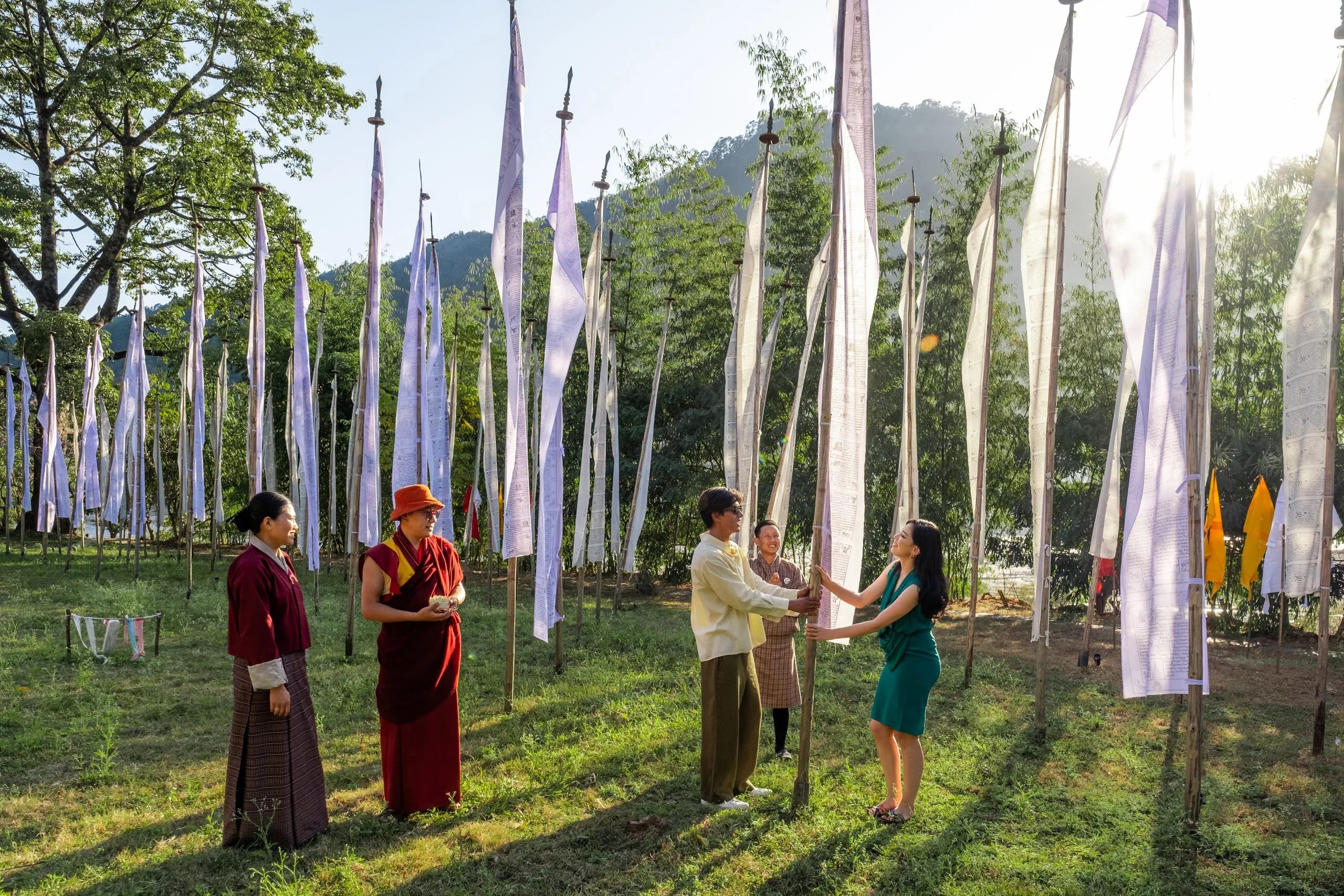 ThemeVajrayana Buddhism — the substance of every dzong, every monastery, every tshechu.Vajrayana Buddhism — the branch of Buddhism that shapes Bhutanese religious life. Drukpa Kagyu, Nyingma, Guru Rinpoche; mantra, mandala, deity yoga.
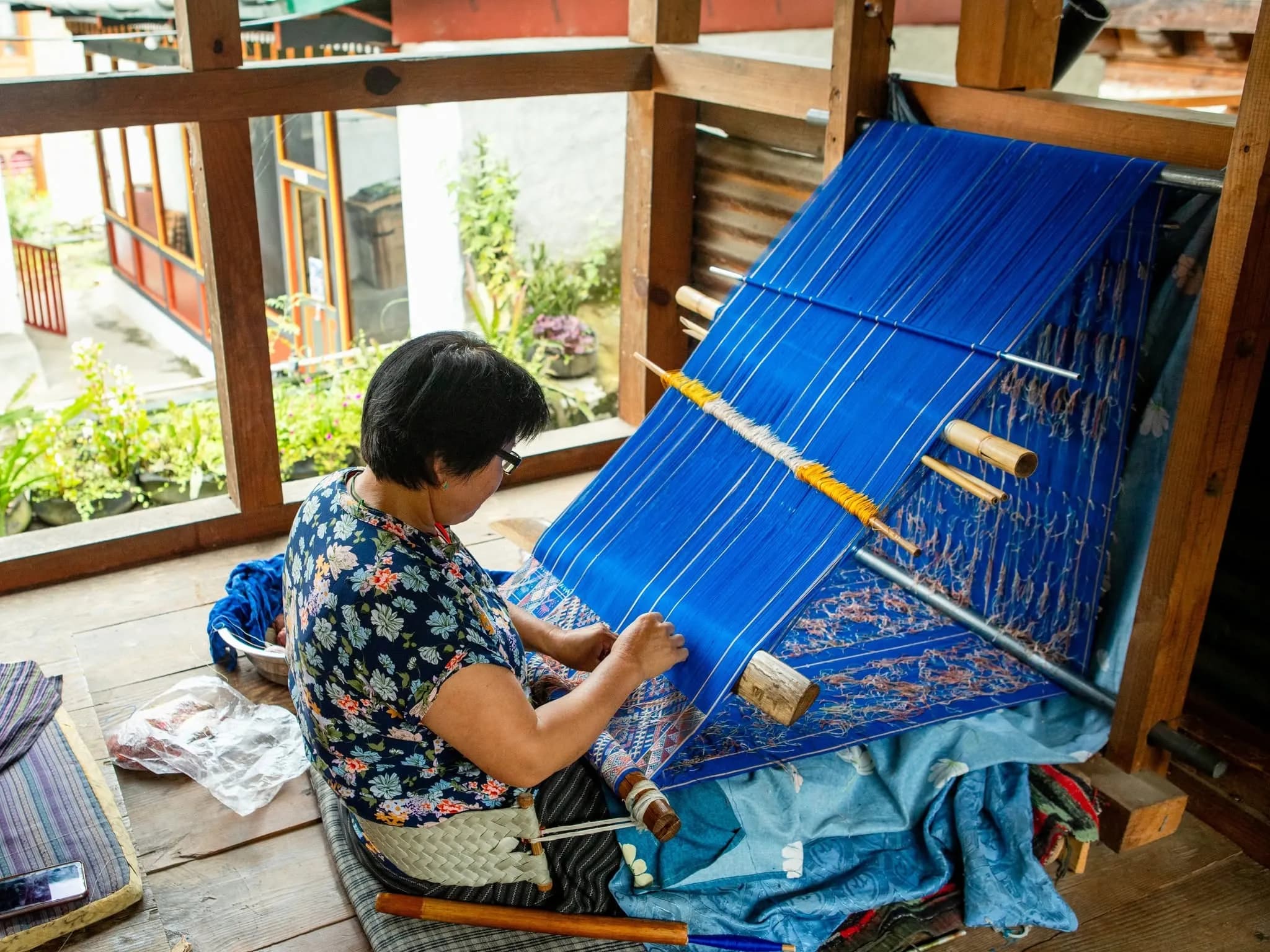 ThemeBhutanese textiles — the weaving tradition that clothes the country and survives largely intact.Bhutanese textiles — kira, gho, kushuthara, the weaving tradition by region. Lhuentse silk, Bumthang yathra wool, Haa wool, the Royal Textile Academy.
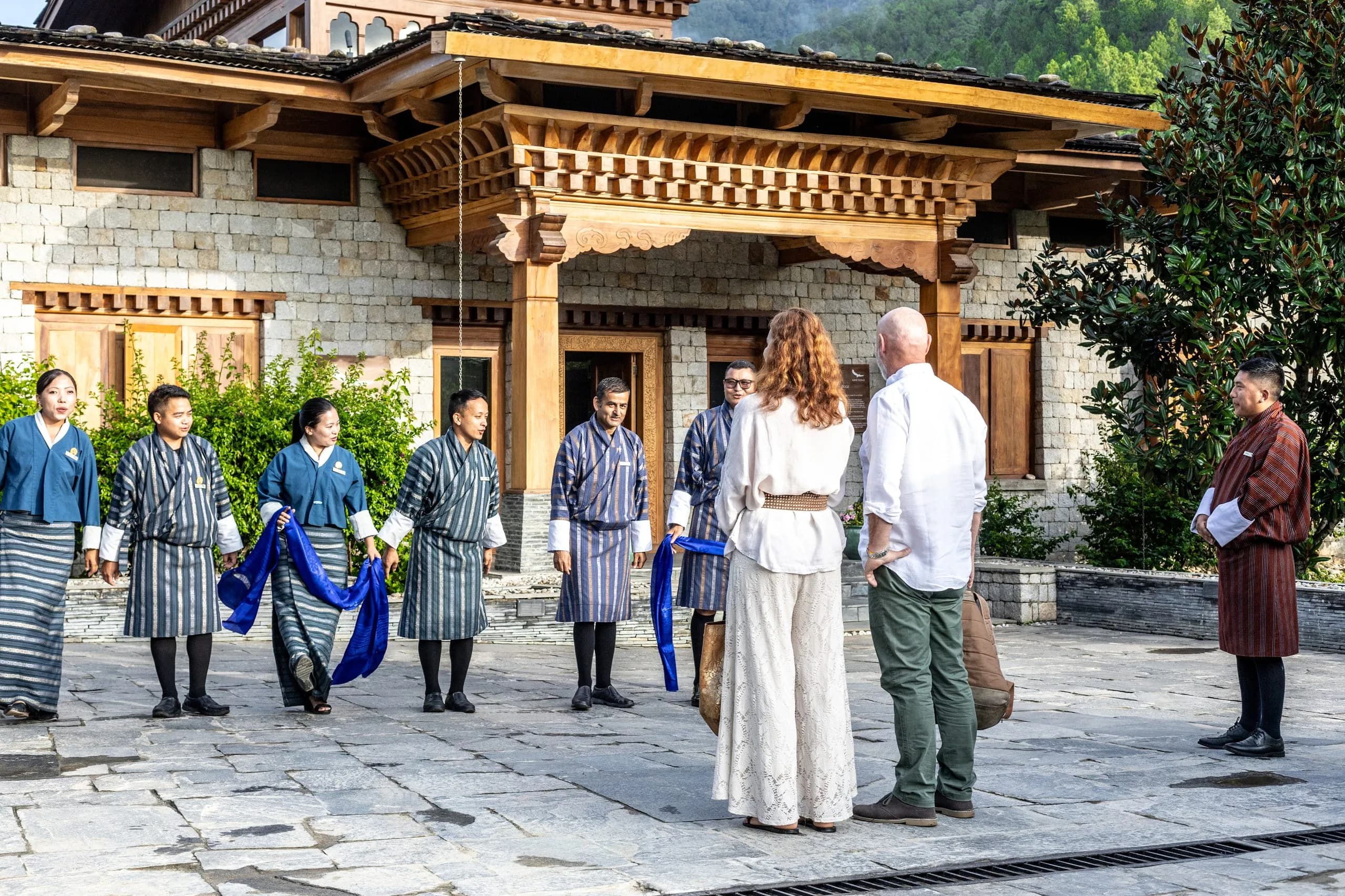 ThemeBhutanese national dress — the gho for men, the kira for women, worn daily across the country.Bhutanese national dress — the gho for men, the kira for women. Daily wear in school, government, religious site. Driglam Namzha etiquette code.
Where to see it
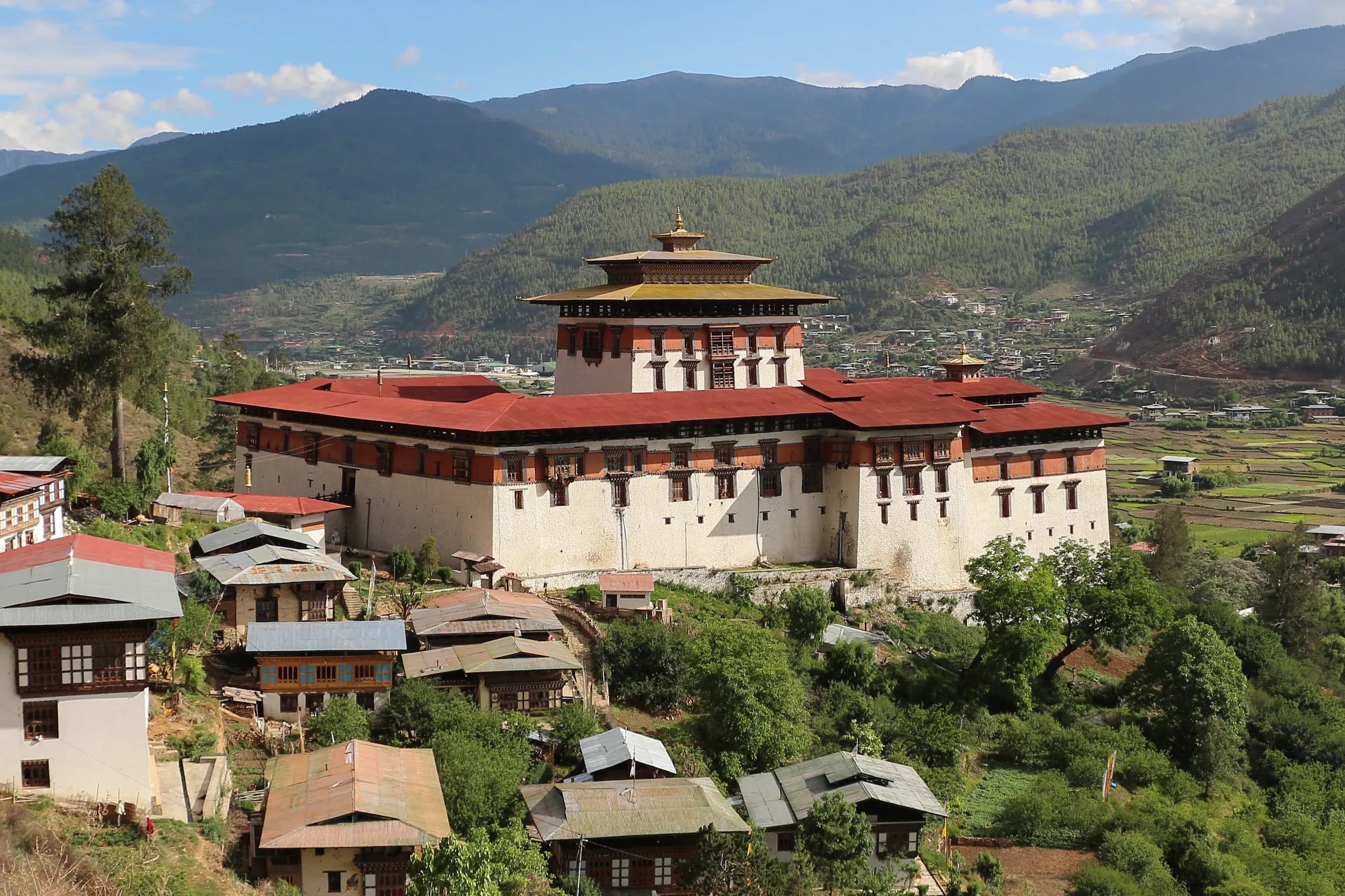 MonumentRinpung Dzong — 'the fortress on a heap of jewels,' the architectural masterpiece of the Paro valley.Rinpung Dzong (Paro Dzong) — the heap of jewels, founded 1644. History, architecture, visiting, the Paro Tshechu venue.
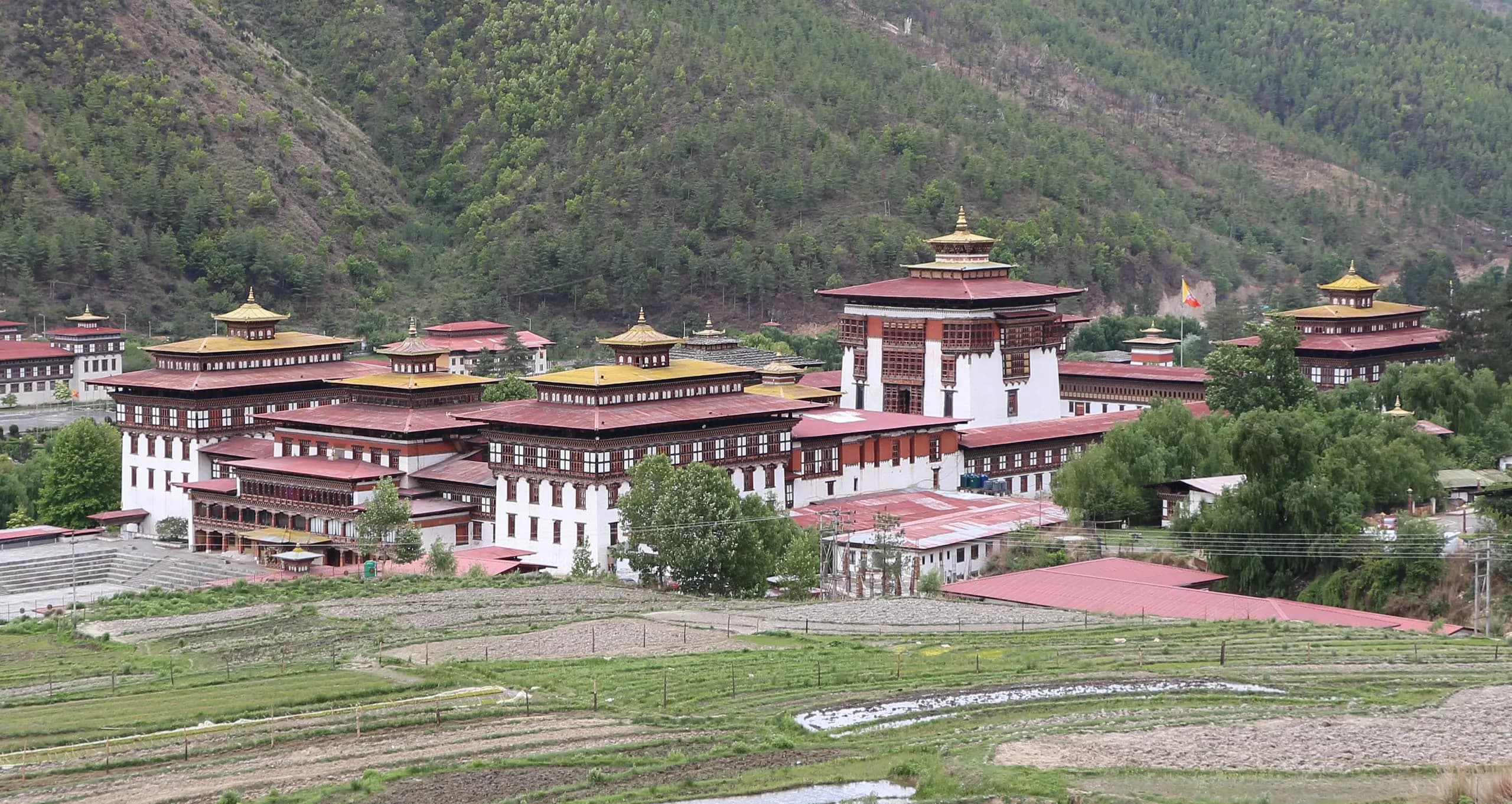 MonumentTashichho Dzong — the fortress of the auspicious religion, at the heart of Thimphu.Tashichho Dzong — the seat of Bhutan's central government and Je Khenpo summer residence in Thimphu. History, architecture, visiting.
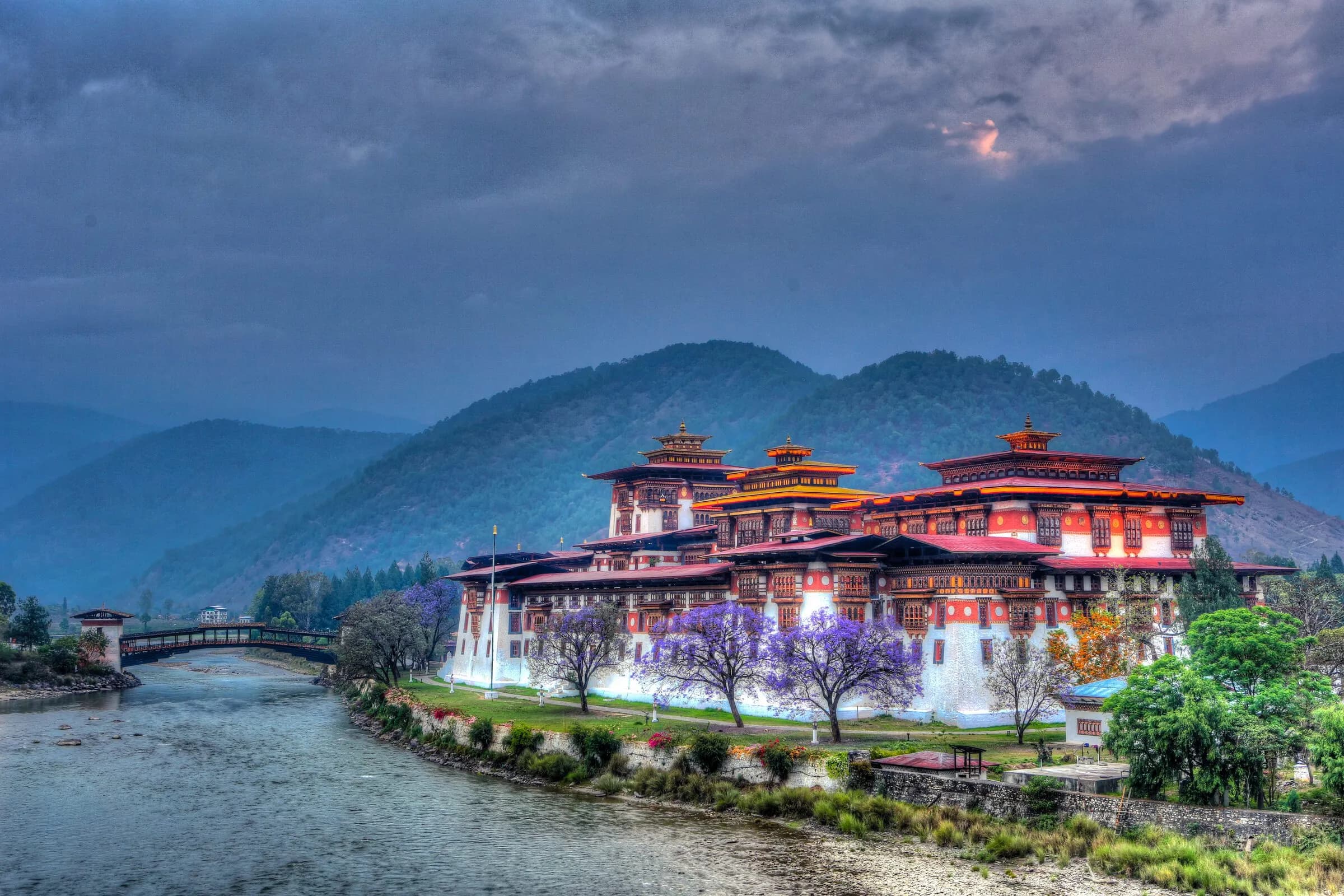 MonumentPunakha Dzong — Pungtang Dechen Phodrang, founded 1638 at the confluence of the father and mother rivers.Punakha Dzong — the Palace of Great Happiness, founded 1638. The history, the architecture, what to expect on a visit.
When it is performed
 FestivalParo Tshechu — five days at Rinpung Dzong, with the pre-dawn thongdrel.Paro Tshechu — the principal spring festival at Rinpung Dzong. This year's dates, the programme, the pre-dawn thongdrel, what to expect for international visitors.
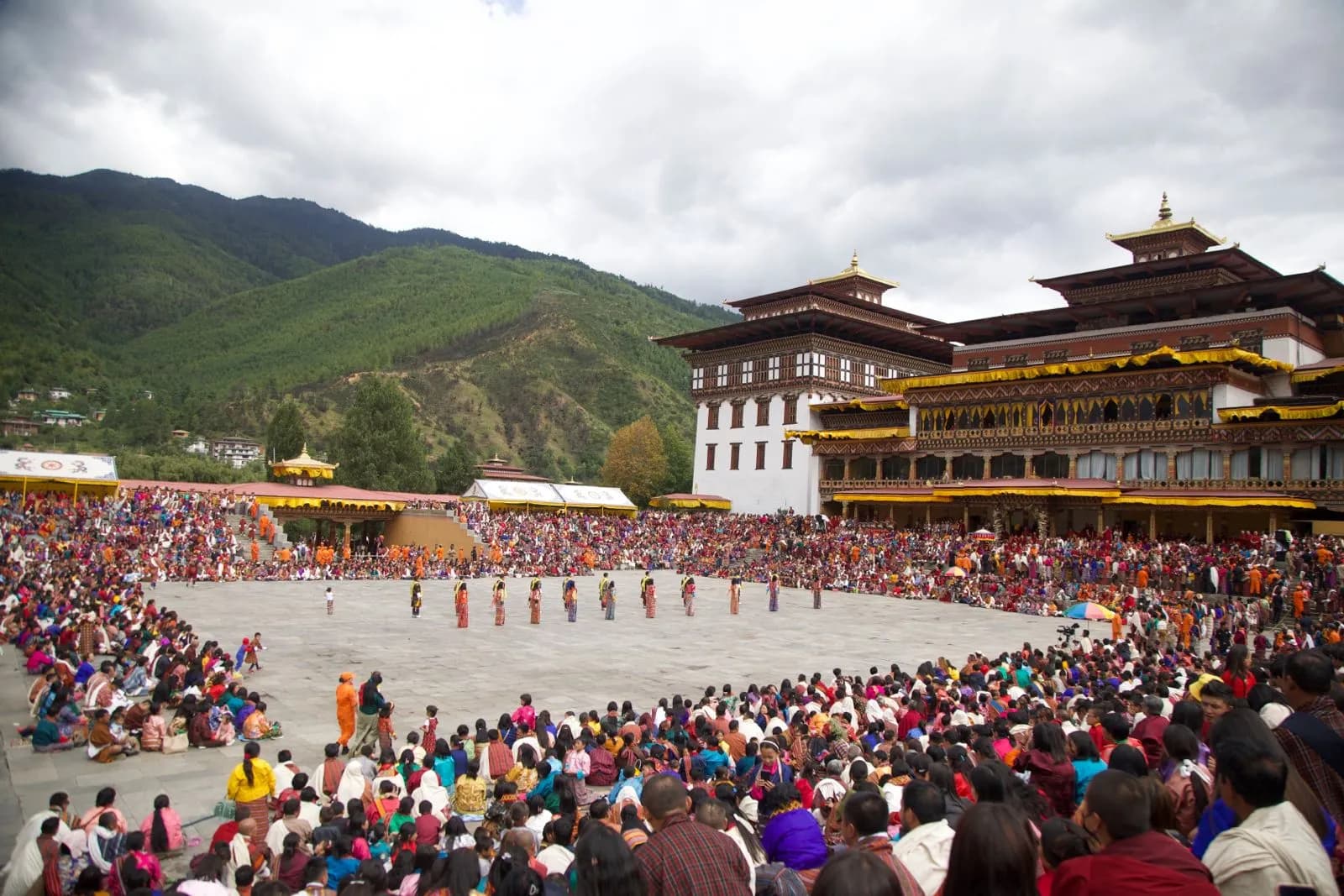 FestivalThimphu Tshechu — three days at Tashichho Dzong, the largest attendance of any Bhutanese festival.Thimphu Tshechu — the autumn festival at Tashichho Dzong, capital of Bhutan. This year's dates, the programme, what to expect as an international visitor.
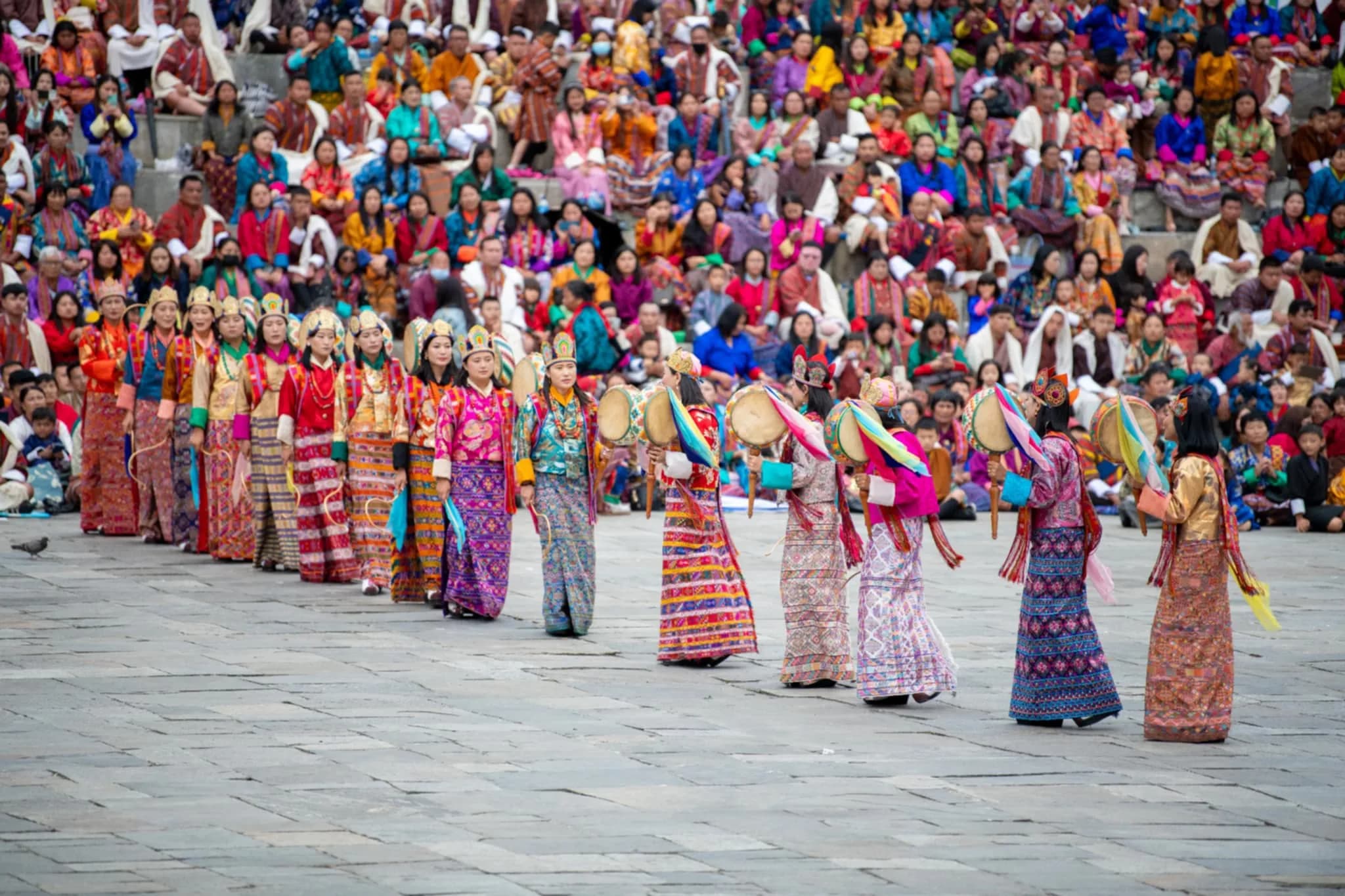 FestivalPunakha Drubchen & Tshechu — the Tibetan-invasion re-enactment, then the chams, at the most beautiful dzong in Bhutan.Punakha Drubchen & Tshechu — the late-winter festival pair at Punakha Dzong, with the Tibetan-invasion re-enactment. Dates, programme, what to expect.
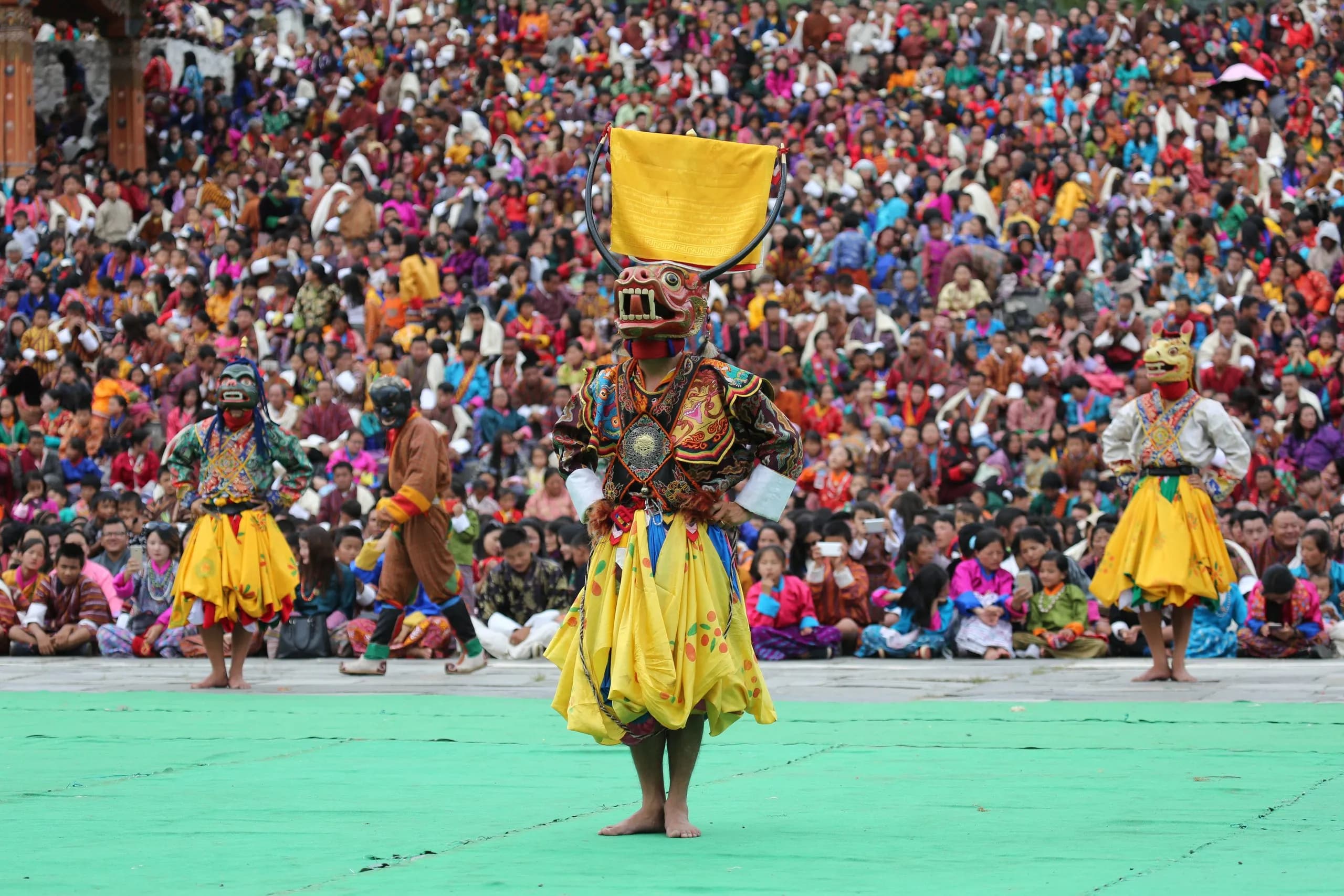 FestivalWangdue Tshechu — three days at Wangdue Phodrang Dzong, the principal autumn festival of central-western Bhutan.Wangdue Tshechu — three days at the rebuilt Wangdue Phodrang Dzong. Dates, programme, what to expect as a visitor.
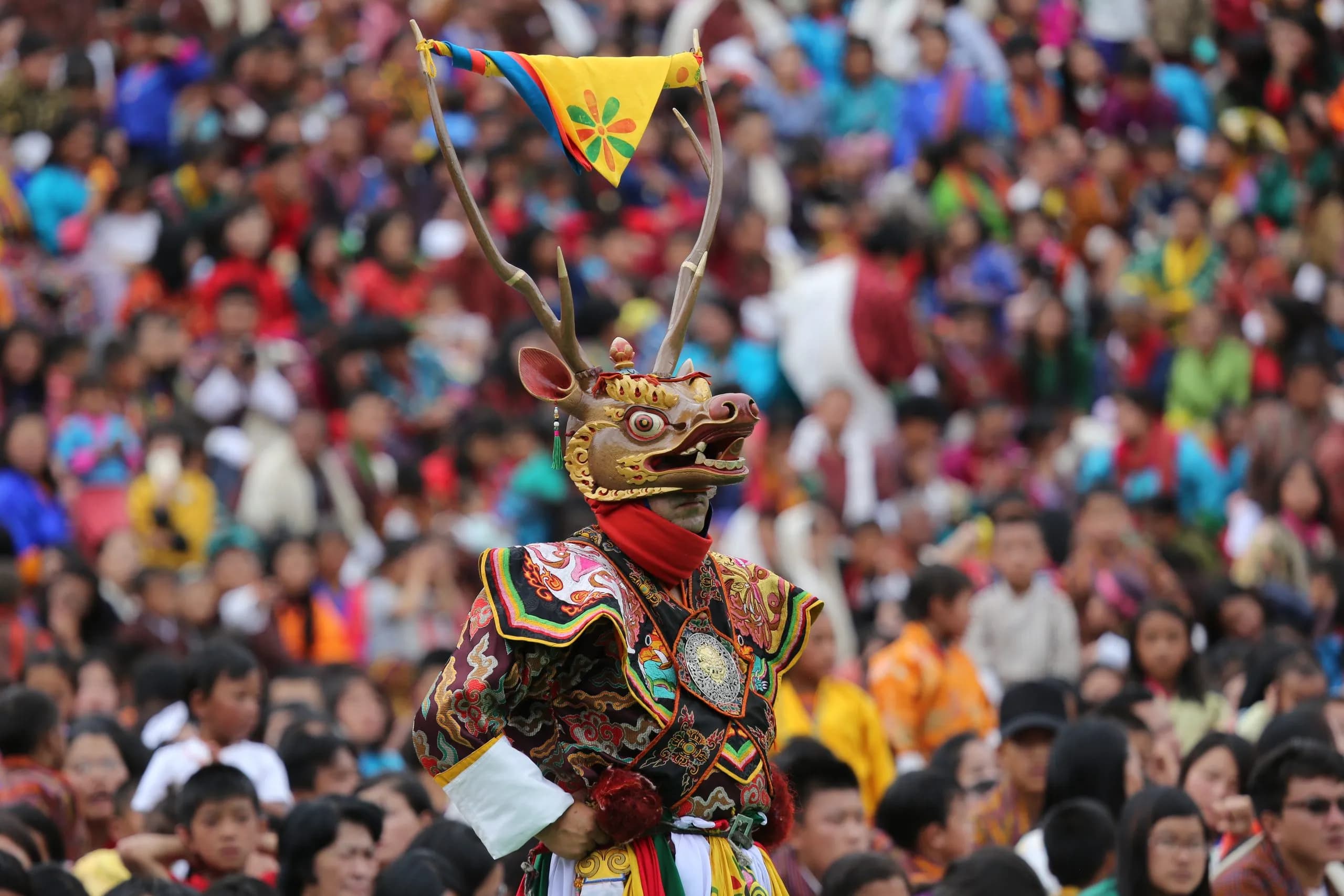 FestivalTamshing Phala Choepa — three days at the 15th-century Tamshing Lhakhang, founded by Pema Lingpa.Tamshing Phala Choepa — three days at the 15th-century Tamshing Lhakhang in Bumthang, founded by the terton Pema Lingpa. Dates, programme, what to expect.
 FestivalJambay Lhakhang Drup — five days in Bumthang, with the Mewang fire ritual.Jambay Lhakhang Drup — five days at Bumthang's oldest temple, including the Mewang fire ritual. Dates, programme, what to expect.
Journeys built around it
- JourneyNine nights for the Paro Tshechu — the festival and the country around it.A nine-night Bhutan itinerary built around the Paro Tshechu — the spring mask-dance festival at Rinpung Dzong, with six days for the wider country.
- JourneyThimphu Tshechu, read properly.A seven-night Bhutan journey timed to Thimphu Tshechu in autumn — second-tier seating, a culturally fluent guide, Bhutanese lodges.
 JourneyOctober light, Bhutan, a week.A seven-night Bhutan photography journey in October — Bhutan, golden-hour access at Punakha Dzong, a tripod-friendly guide, and transparent pricing.
Journeys that visit Cham
Frequently asked
- Can I attend a tshechu as an international visitor?
- Yes — tshechus are open to all, Bhutanese citizens and international visitors alike. The matched guide arranges festival-aligned itineraries, books appropriate seating, and handles the cultural and photographic protocol. The principal tshechus (Paro, Thimphu, Punakha) attract substantial international visitor numbers in their respective windows; the smaller eastern tshechus offer more intimate access at the cost of more travel time.
- Can I photograph the cham dances?
- Generally yes, with restrictions. Most tshechus permit photography of the standard dance programme; major sacred unveilings (the thongdrel — the giant religious tapestry unveiled on the final morning of major tshechus) typically have photography restrictions during the principal unveiling moment. The matched guide briefs on the specific tshechu's protocol; cameras should be put away when the local register signals that the moment is restricted.
- Why do dancers wear masks?
- The masks transform the dancer into the represented deity for the duration of the ritual. The wearer is held in the Bhutanese tradition to embody the deity rather than represent it — the dancer becomes the manifestation of the wrathful protector, the principal deity, or the historical guru. The mask is the ritual instrument of that transformation; the dance is the embodied ritual enactment of the deity's activity in the world.
- Are the dancers actual monks?
- In most cases yes — the principal cham dancers are trained monks attached to the dzong's monastic body, with multi-year training in the dance repertoire. Some dances (the atsara clown dancers, certain folk-cham forms) are performed by laymen attached to the monastic. The matched guide explains the specific tshechu's performer register.

