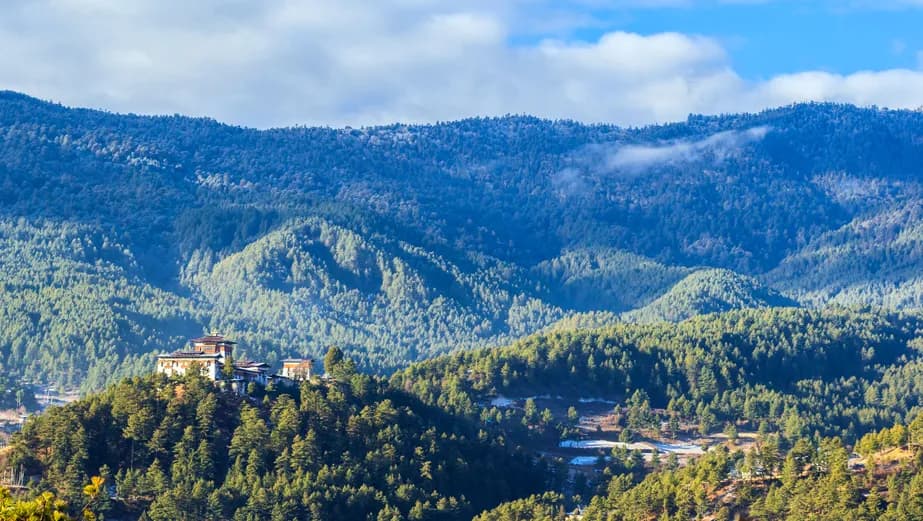
WHEN TO COME, AND WHY
There is no single best time to visit Bhutan — only the right one for what you've come for.
An honest account of the four Bhutanese seasons — what each gives you and what each asks in return — with a gentle word for autumn, when the skies are at their clearest and the great tshechus fill the dzong courtyards. We recommend by what you actually want from the country, not by a calendar's idea of a high season.
7 nights · Luxury tier · from USD 6,000 per traveller
- Nights
- 7
- From
- USD 6,000per traveller
- Tier
- Luxury
- Best season
- Year round
- Suits
- Couple
- Departing
- Worldwide
The short answer, and the longer one
If you want one word, it is autumn — September through November, when the monsoon has cleared the air, the Himalayan horizons sharpen to their finest, the trekking is at its best, and the country's great tshechus draw the valleys together in the dzong courtyards. But the question is better answered the other way round. Bhutan rewards a clear sense of what you have come for, and each of its four seasons offers something the others cannot. Tell us what matters most — the festivals, the mountain views, the high trails, the solitude — and the season chooses itself.
Spring — the rhododendron and the warming valleys (March to May)
Spring carries the rhododendron up the ridges, red giving way to pink and white as you climb the passes, and the valleys warm into long, fair-skied days. It is the second great festival window: the Paro Tshechu, one of the country's three most significant, usually falls between late March and mid-April. The trade-off is haze. As the season lengthens, the air grows softer and the highest peaks slip behind a gentle veil more often than they do in autumn, so the snow horizons are a little less sure. For bloom, blossom and festival warmth, spring is the season; for the sharpest mountains, autumn still has the edge.
Autumn — clear skies, the great tshechus, prime trekking (September to November)
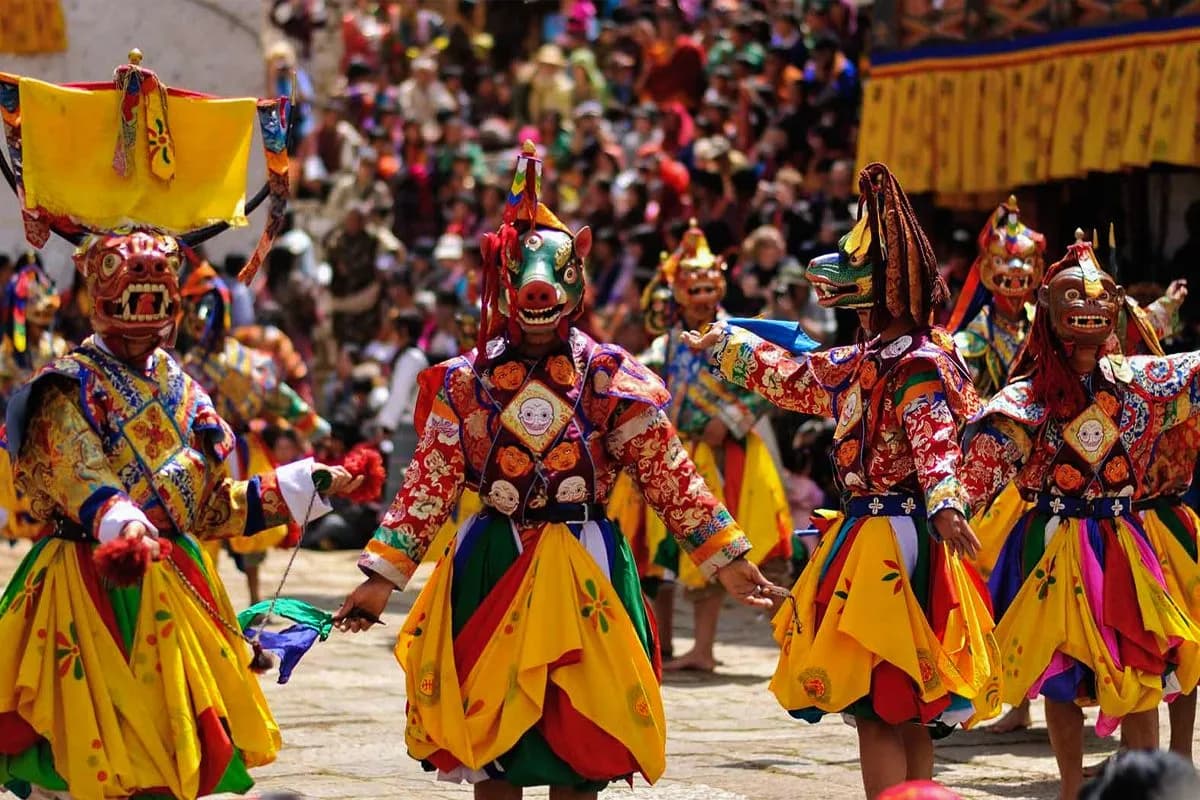
This is the headline season, and deservedly so. The monsoon has washed the sky and the light turns crisp and exact; Chomolhari and the eastern ranges stand out clean on the clear mornings. It is the heart of the festival calendar — the Thimphu Tshechu fills the courtyard of the Tashichho Dzong, and the cham dances read at their most vivid — and it is the prime window for the high trails, from the Druk Path to the longer routes north. The honest caveat is company: autumn is when the most travellers come, the popular dzongs are at their busiest, and the better lodges fill early. Come in autumn for the views, the festivals and the trekking, and let us plan around the season's one real cost, which is that you are not the only one who has chosen it.
Green Bhutan — the lush, quiet monsoon (June to August)
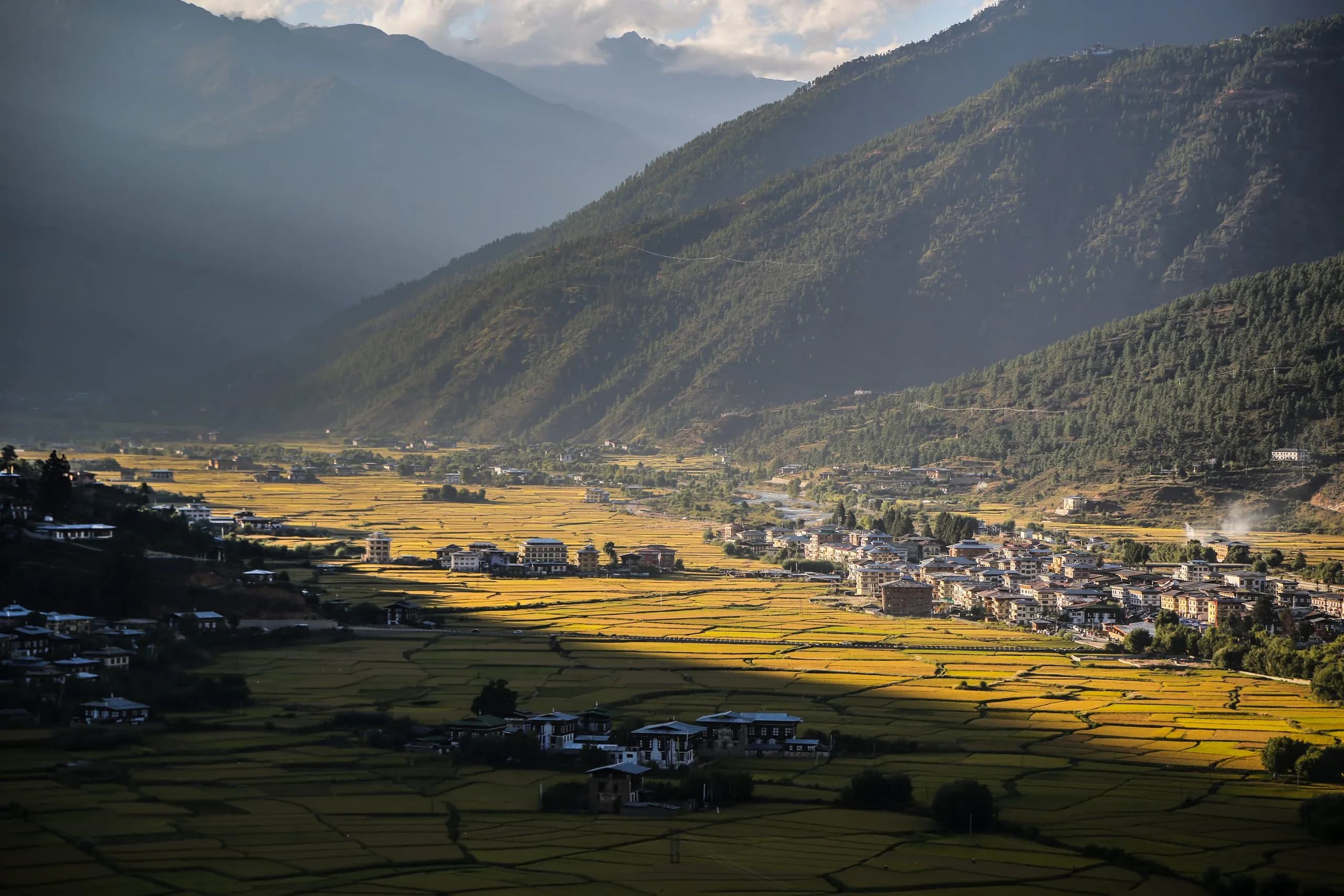
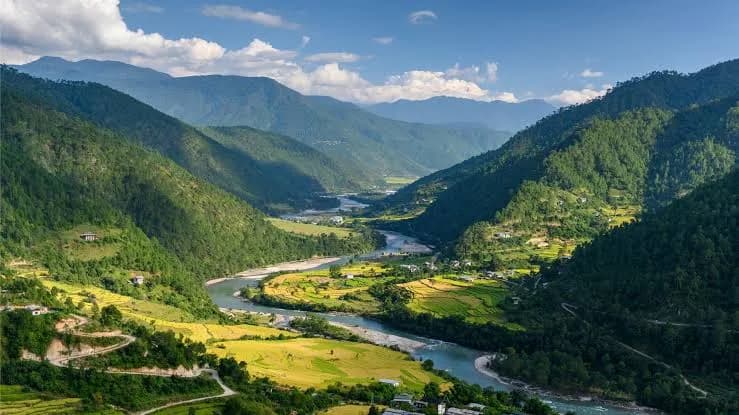
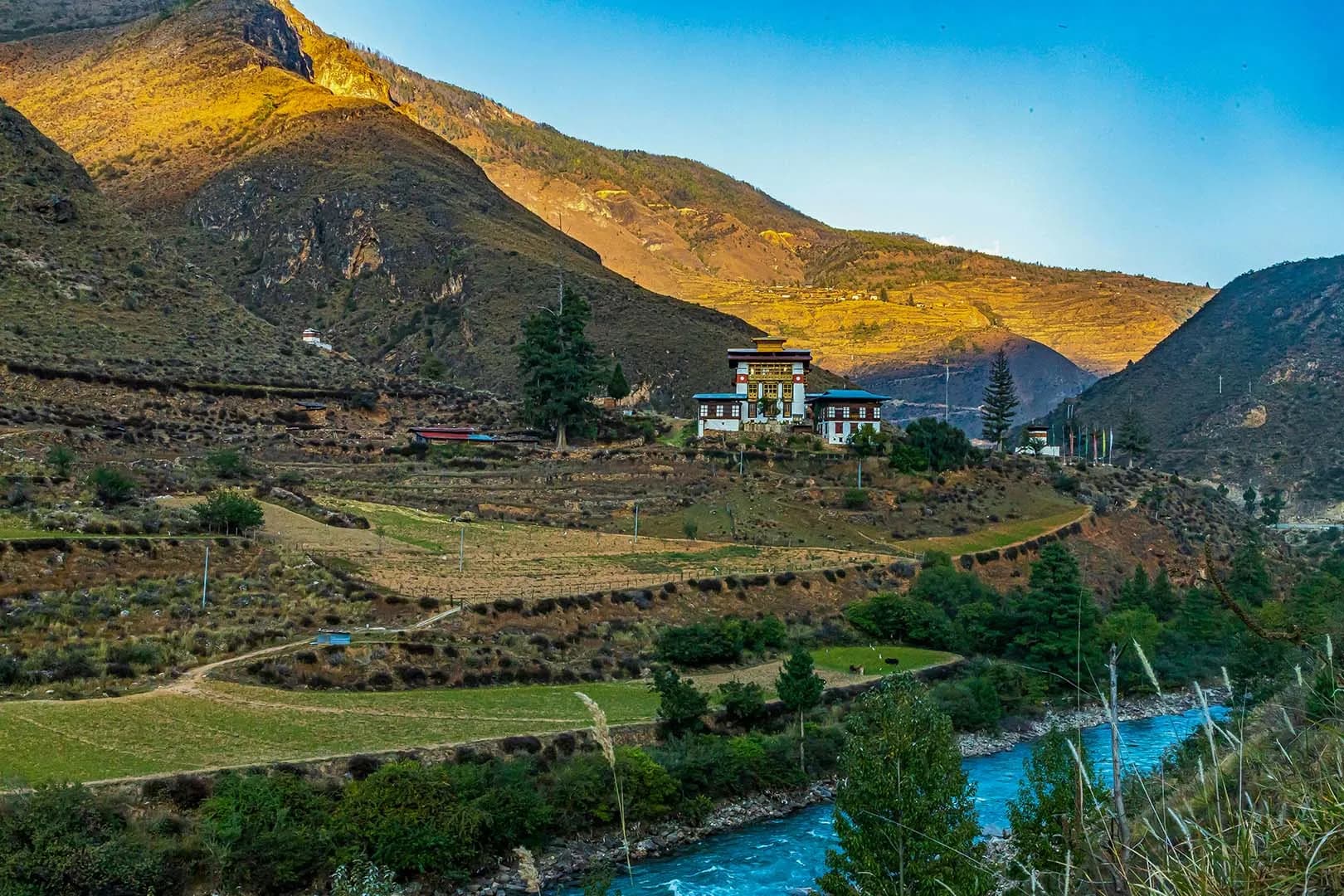
The green months turn the western valleys a green the dry seasons never manage: the rice terraces at Lobesa and along the Pa Chhu flooded, transplanted and lit from within on the bright mornings, the rivers running high and loud at the Punakha confluence. There are far fewer visitors, the great courtyards are nearly yours alone, and the lodges are at their quietest and their most flexible. We will not pretend the rain away — it tends to come in the afternoon, often heavy for an hour and then gone, and the high peaks sit behind cloud more often than not, so this is the season for the near and green rather than the Himalayan horizon. The occasional road delay after heavy overnight rain is part of the bargain, which is why a well-shaped green-season week keeps a little air in it. For solitude, for the valleys at their fullest, and for the gentlest pricing of the year, this is the season that rewards the traveller who knows what they want.
Clear-Sky Bhutan — crisp cold and the wintering cranes (December to February)
Winter brings the clearest mountain views of the year. The air is cold and still, the skies often cloudless for days, and the snow peaks stand close enough to feel. It is the season of the black-necked cranes, which winter in the broad glacial bowl of Phobjikha from late October into February — among the quieter wonders of the Bhutanese year. The days are bright but short and the nights are properly cold; some of the high passes can be snowbound, which puts the loftier treks out of reach, and the eastern reaches grow harder to move through. The western circuit — Paro, Thimphu, Punakha and Gangtey — stays open and walkable throughout. Come in the clear-sky months for the sharpest horizons and the cranes, dressed for the cold and content to keep to the valleys.
So which season is yours?
For the festivals and the cham dances, come in autumn or spring. For the high trekking, autumn first, spring second. For solitude, lush valleys and the gentlest pricing, the green months. For the clearest mountains and the wintering cranes, the clear-sky season. Whatever you choose, the practicalities hold steady across the year: Paro is the only airport, the Sustainable Development Fee is the same in every season, and a thoughtfully paced week asks no more of you than you ask of it. Tell us what you have in mind and we will tell you, honestly, when to come.
The route
A sample shape of the week
DAY 01
Arrival in Paro — the clear-season welcome
Met in the arrivals hall, the short way to the lodge, an unhurried walk along the Pa Chhu in the crisp autumn light; the climb to Taktsang briefed for later in the week.
DAY 02
Across to Thimphu — the capital, slowly
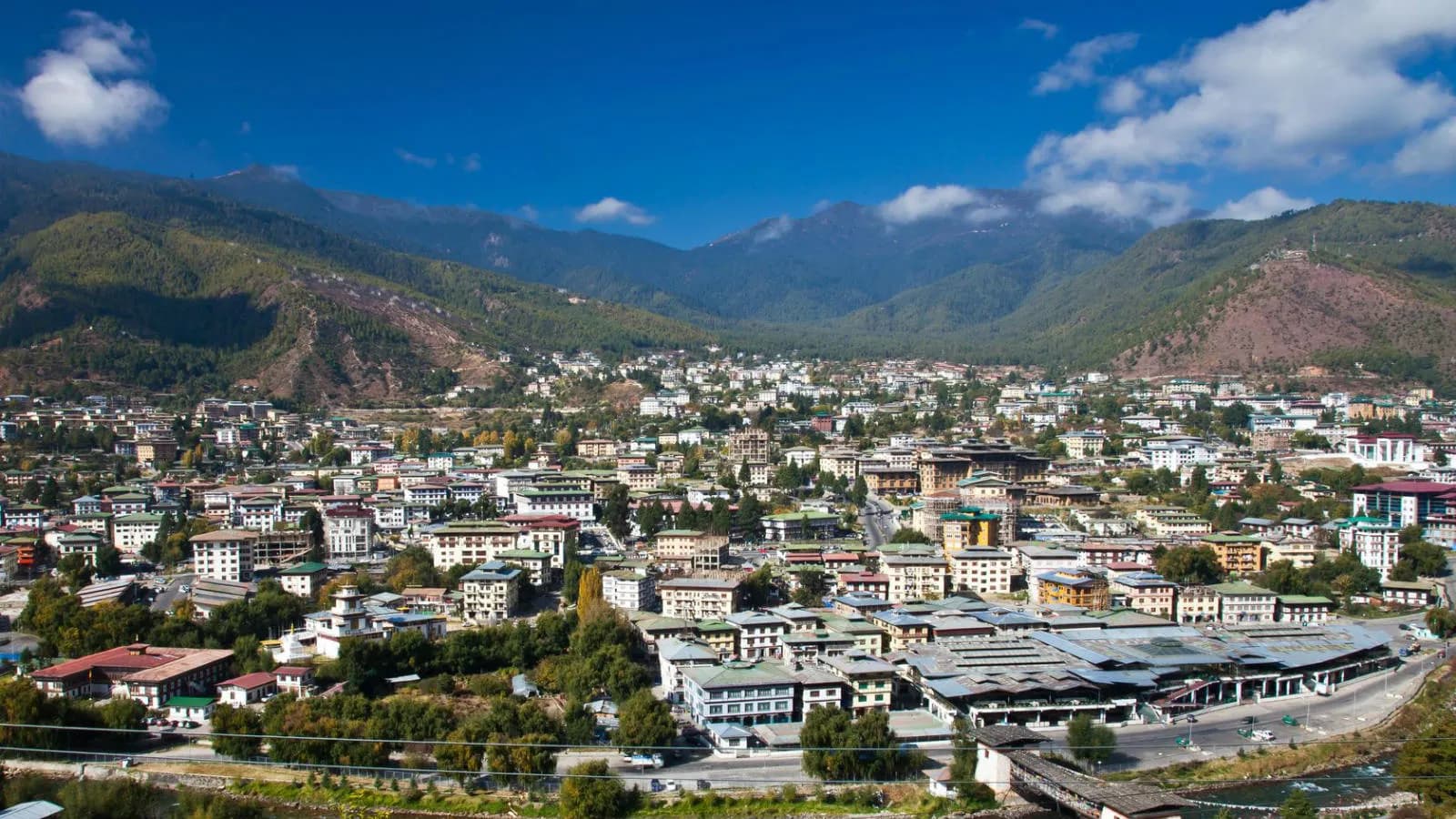
The 54-kilometre drive over to the capital in about an hour and a quarter; the Memorial Chorten in early light, and the Tashichho Dzong courtyard if a tshechu day falls within your dates.
DAY 03
A day in Thimphu — the capital taken at its pace
The Buddha Dordenma above the valley in the clearest part of the morning; the National Textile Museum and the weekend market kept for the afternoon.
DAY 04
Over Dochu La to Punakha — the range stands clear
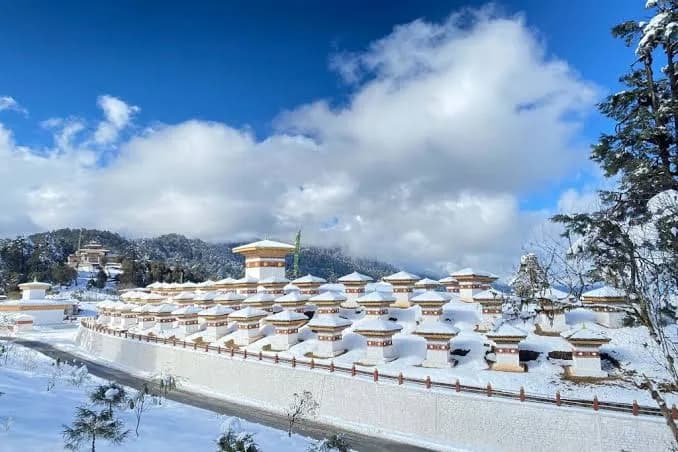
The 75-kilometre crossing in roughly three hours via Dochu La at 3,100 metres, the eastern Himalaya sharp behind the 108 chortens on a clear autumn morning; Punakha Dzong in late-afternoon light at the confluence.
DAY 05
A day in Punakha — paddies, suspension bridge, slow lunch
The terraced rice at Lobesa; Chimi Lhakhang through the fields; a long riverside lunch; the suspension bridge when the wind has dropped.
DAY 06
Back to Paro — ahead of the climb
The return drive over Dochu La with the range in view a second time; Kyichu Lhakhang in the afternoon; an early night with the climb readied by your guide.
DAY 07
The Tiger's Nest, and the way home
Taktsang Palphug at 3,120 metres, the switchbacks paced by your guide; a hot stone bath for the descent before the flight out the following morning.
The day-by-day above is illustrative. The proposal you receive is built around your dates, your pace and your interests, not this template.
Frequently asked
- When is the best time to visit Bhutan?
- Autumn — roughly September to November — is the gentle default: the monsoon has cleared the air for the sharpest Himalayan views of the year, the great tshechus fill the dzong courtyards, and the trekking is at its best. But it depends on what you have come for. Spring (March to May) brings the rhododendron and the Paro Tshechu; the green months (June to August) offer lush valleys and near-empty dzongs; the clear-sky season (December to February) gives the clearest mountains and the wintering cranes. Tell us what matters most and we will tell you when to come.
- What is Bhutan like in the green monsoon months?
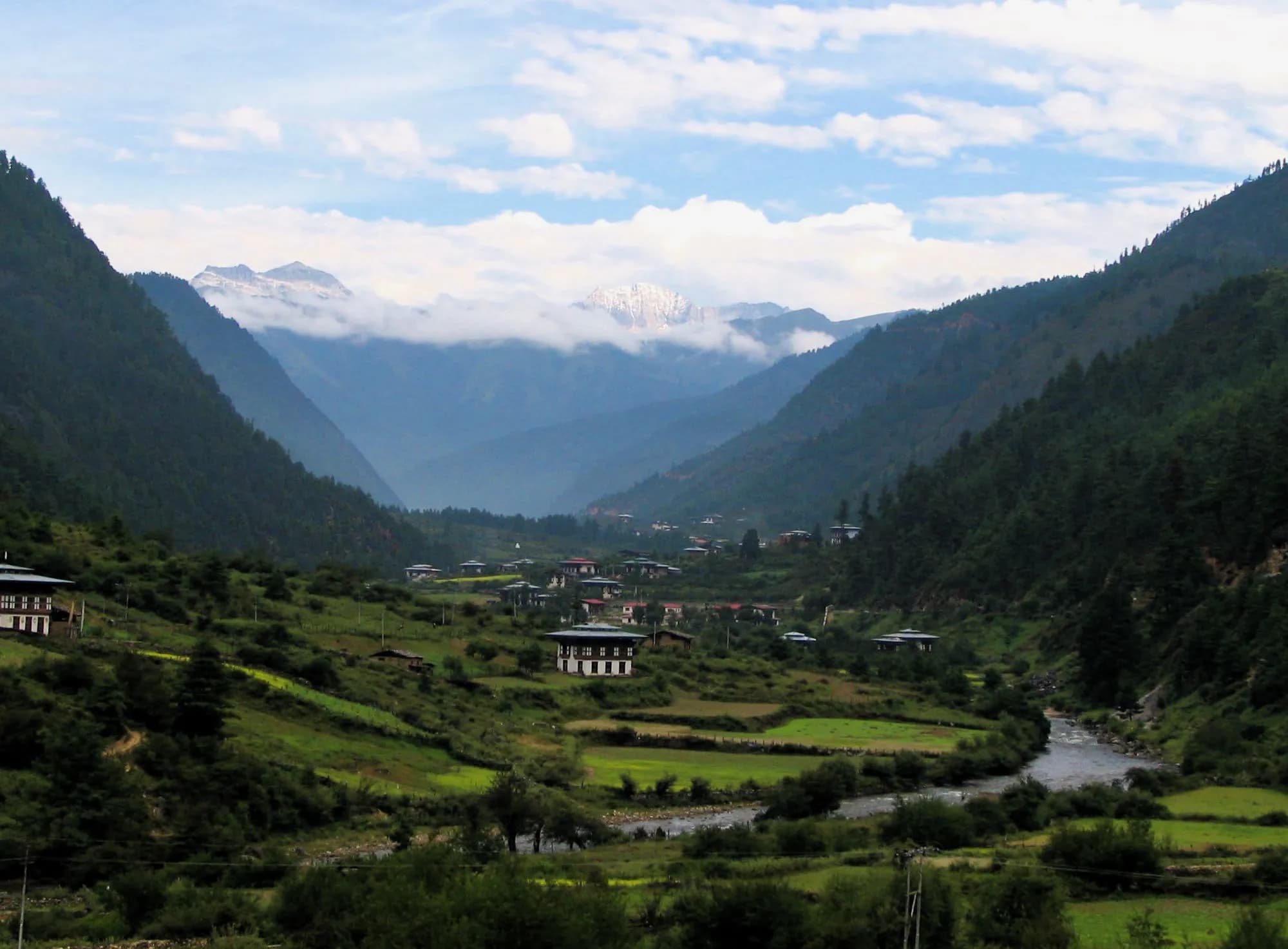
- The green season, June through August, turns the western valleys their fullest — flooded rice terraces lit from within on the bright mornings, the rivers running high at the Punakha confluence, the great courtyards nearly empty, and the lodges at their quietest. The rain tends to arrive in the afternoon, often heavy for an hour and then gone, so we plan the walking and the dzongs for the mornings; the high peaks usually sit behind cloud, making this the season for the near and green rather than the snow horizons. If your heart is set on Himalayan views, autumn or the clear-sky winter is the better window, and we will say so.
- When can I see the black-necked cranes in Bhutan?
- The black-necked cranes winter in the broad glacial valley of Phobjikha, near Gangtey, arriving from late October and staying into February. The clear-sky season — December to February — is the heart of their stay, when the birds are settled on the valley floor and the mountain air is at its clearest. A night over the rim at Gangtey folds naturally into a western-circuit week in those months.
- When are the main festivals, and how do we plan around them?
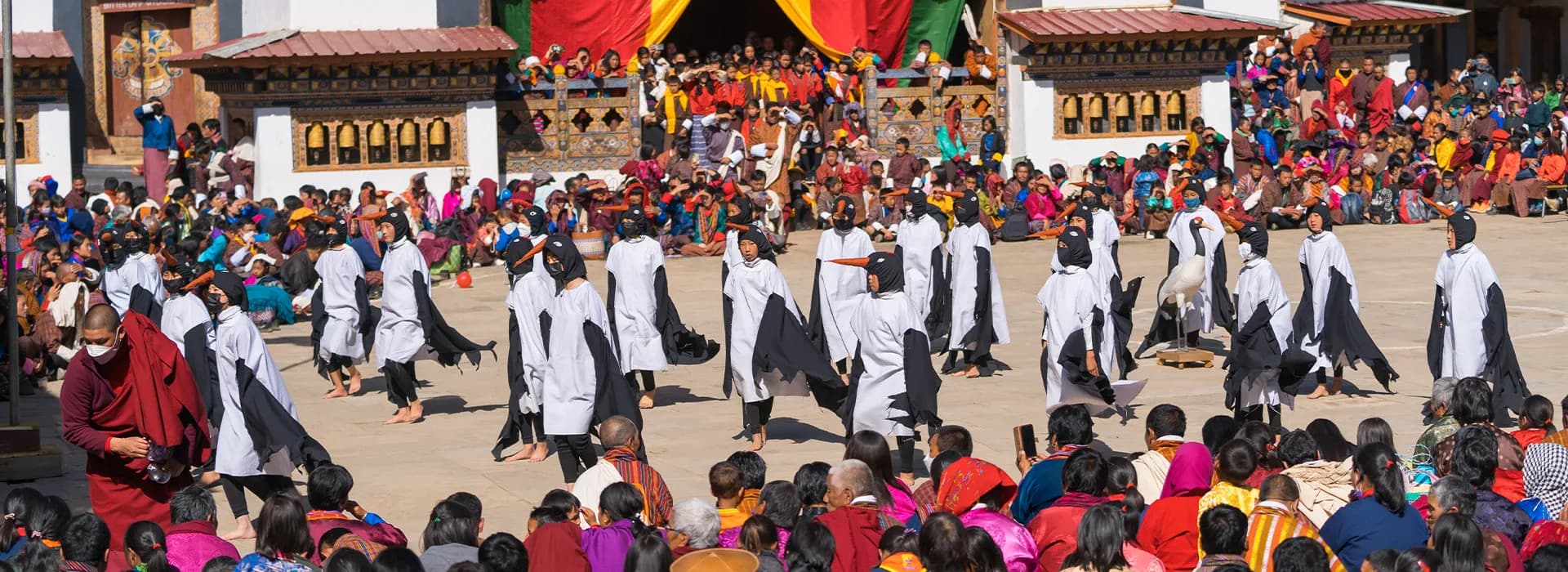
- The tshechus are the great cultural events of the Bhutanese year, and the two best-known fall in the festival seasons: the Paro Tshechu in spring, usually between late March and mid-April, and the Thimphu Tshechu in autumn, in the courtyard of the Tashichho Dzong. The dates follow the Bhutanese lunar calendar and shift from year to year, so in your proposal we will tell you exactly whether your travel dates land within a festival and shape the days accordingly, with seating from where the cham dances read best and a guide who can name each masked figure as it appears.
- What is the Sustainable Development Fee, and does it change with the season?
- No — it is the same all year. The SDF is USD 100 per night for each international adult visitor, set by the Royal Government of Bhutan, and it funds free health care and education for Bhutanese citizens, conservation, and the upkeep of cultural sites. It is included in your transparent price breakdown, with no separate charge to think about, whichever season you choose.
- How does getting to Bhutan work, and is the Paro approach safe in every season?
- Paro is the only airport, served by Drukair (KB) and Bhutan Airlines (B3), typically via Delhi, Kolkata, Kathmandu, Bangkok or Singapore. We advise on the international leg and ticket the Paro flight on your behalf at the prevailing rate. The approach into Paro is a visual one, flown by a small number of certified pilots — difficult, not dangerous — and it operates across the year; in the green and clear-sky months a schedule can occasionally shift with the weather, which is why we keep a little margin around the flying days.
Journeys you might also weigh
- 01Green BhutanA seven-night journey through the western circuit in the green season — Paro, Thimphu, Punakha, and a night over the ridge in Gangtey — when the paddies are flooded and luminous, the rivers run high, and the great courtyards are nearly yours alone.7 nights
from $7,000 - 02The Black-Necked Crane FestivalAn eight-night Bhutan journey built around the Black-Necked Crane Festival at Gangtey on 11 November — the western circuit of Paro, Thimphu, and Punakha on either side of a day spent in the courtyard of Gangtey Goempa, where the rare cranes that winter in the glacial valley are honoured with schoolchildren's dances and the quiet work of their conservation.8 nights
from $8,000 - 03Bhutan Paro TshechuThe Paro Tshechu falls in late March or early April, runs three days at Rinpung Dzong, and culminates in a pre-dawn thongdrel that is the most photographed Bhutanese image of the spring window. Nine nights — three for the festival itself, six for the country in its spring window.9 nights
from $18,000
Begin when you're ready.
A few questions, or a conversation in your own words. A bespoke draft either way.

