THE MONSOON, TAKEN ON ITS OWN TERMS
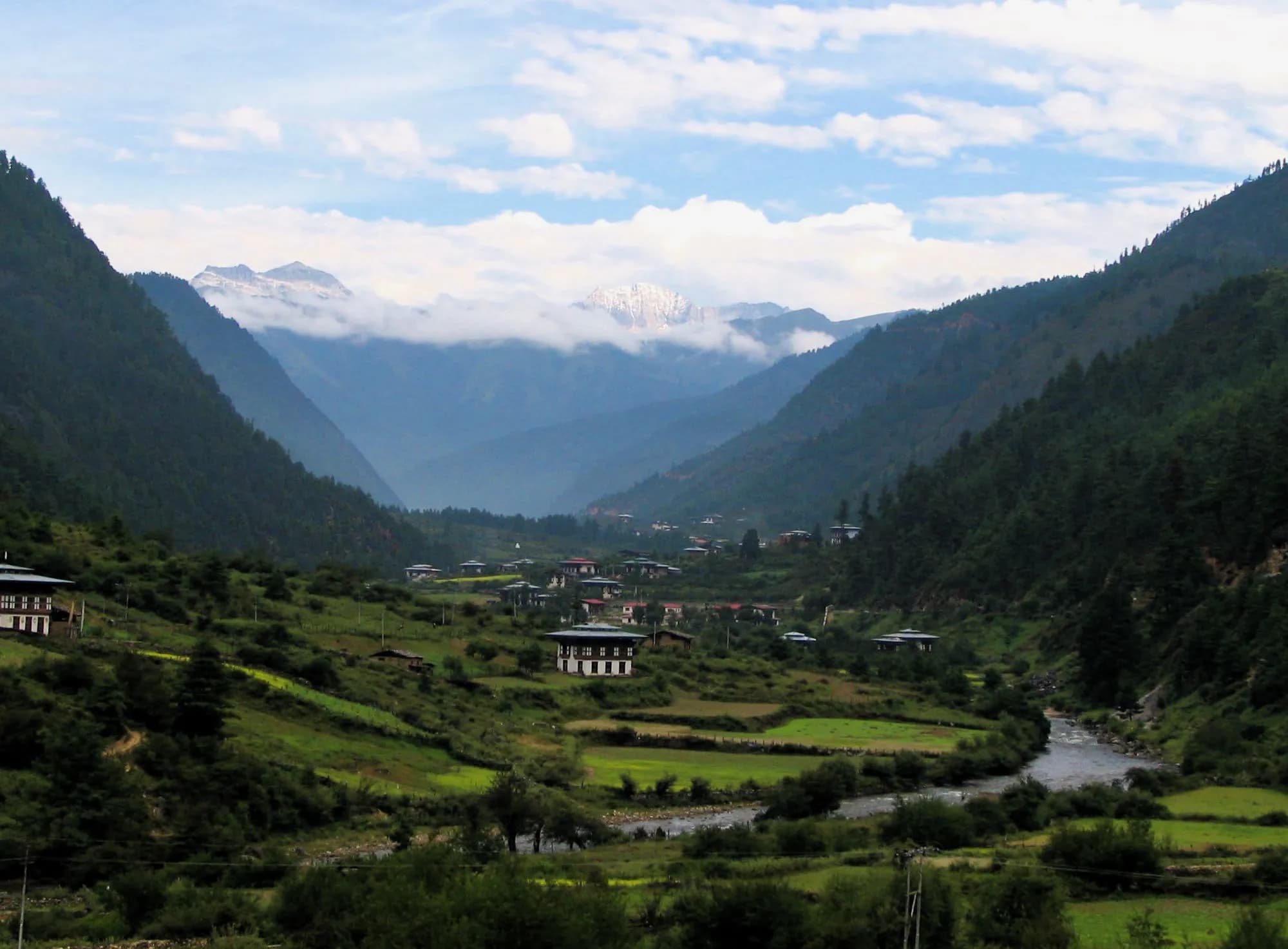
Bhutan in the green months — the valleys at their fullest, the dzongs at their quietest.
A seven-night journey through the western circuit in the green season — Paro, Thimphu, Punakha, and a night over the ridge in Gangtey — when the paddies are flooded and luminous, the rivers run high, and the great courtyards are nearly yours alone.
7 nights · Luxury tier · from USD 7,000 per traveller
- Nights
- 7
- From
- USD 7,000per traveller
- Tier
- Luxury
- Best season
- Green bhutan
- Suits
- Small group
- Departing
- Worldwide
Why the green months reward the traveller who knows what they want
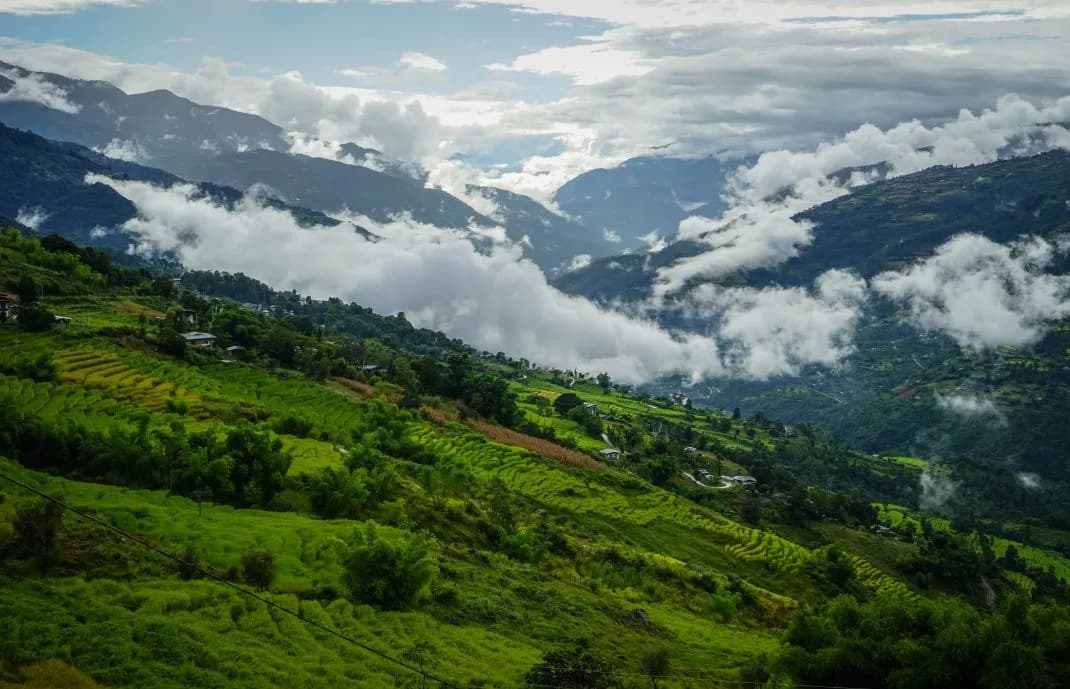
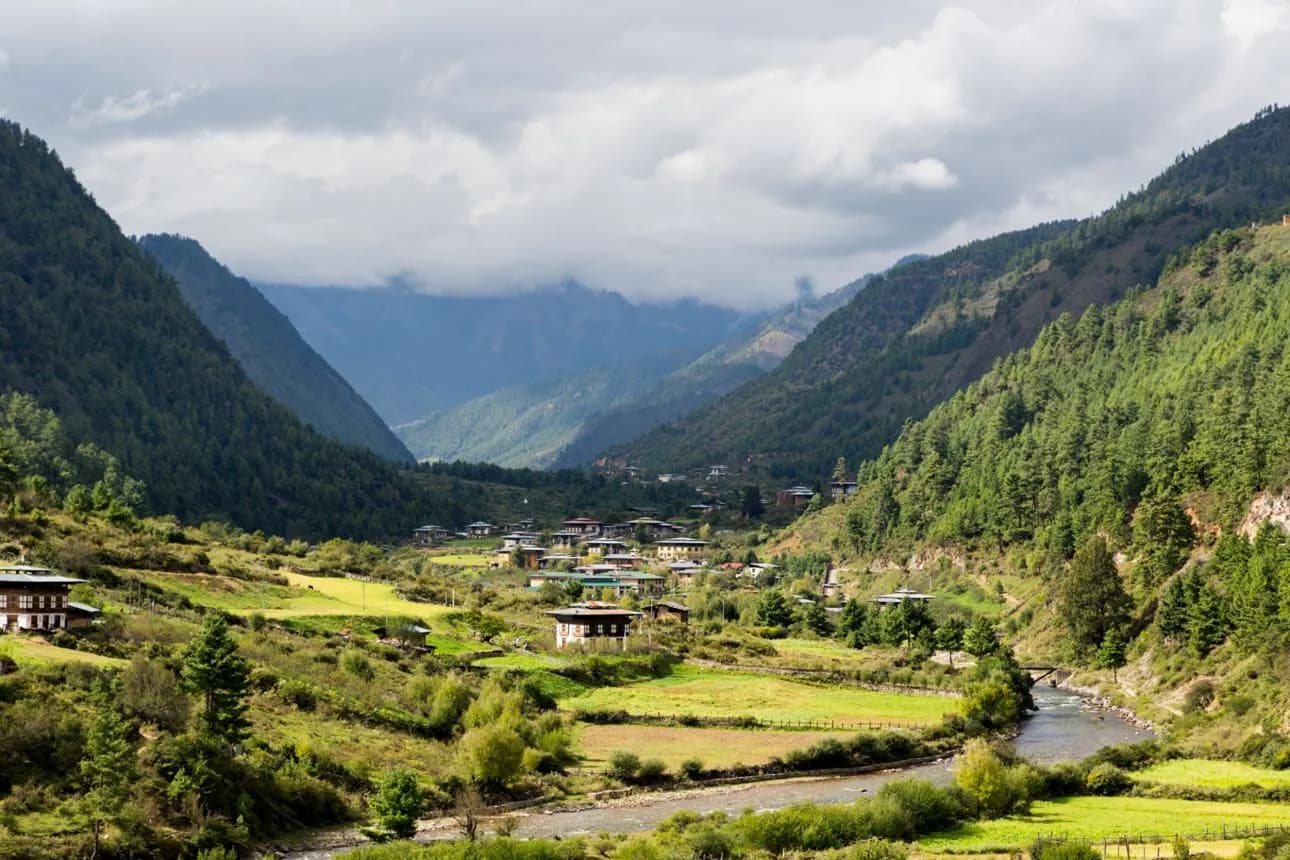
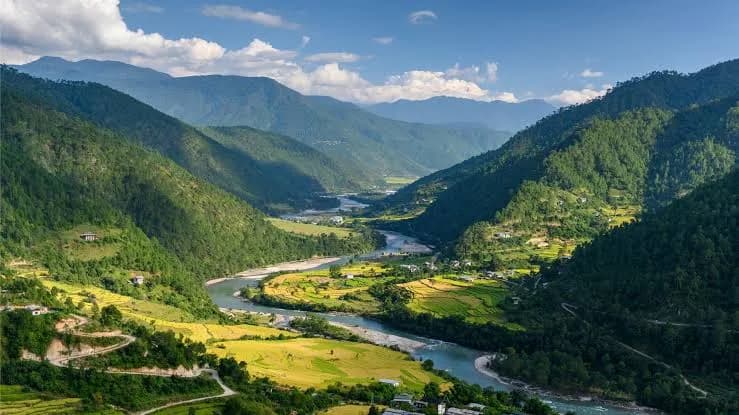
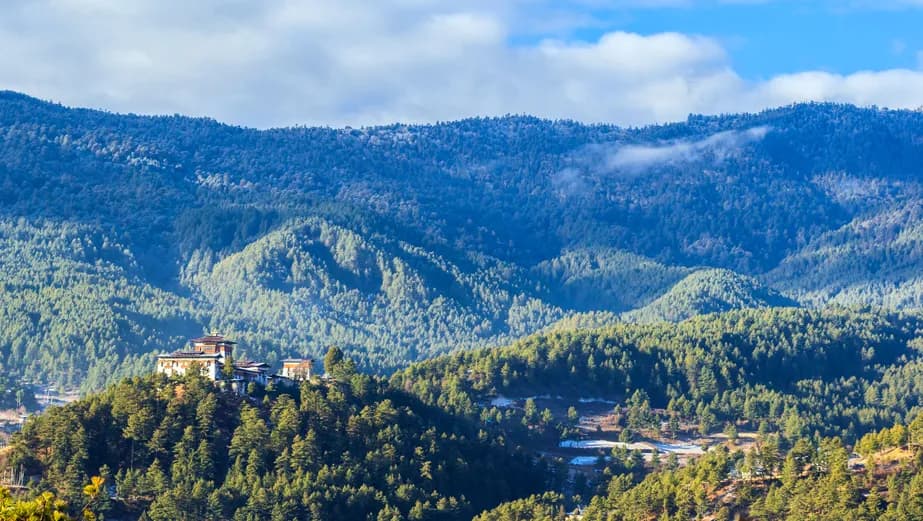
From June through August the western valleys turn a green that the dry seasons never manage — the rice terraces at Lobesa and along the Pa Chhu flooded, transplanted, and lit from within on the bright mornings. The Mo Chhu and Pho Chhu run high and loud at the Punakha confluence; the waterfalls along the Dochu La road are at full force rather than a trickle. And the dzongs that hold a hundred travellers in October hold a handful now. You walk Rinpung Dzong's inner courtyard, or stand in the great assembly hall at Punakha, with the building close to empty and the monks going unhurriedly about the day. This is the case for the green season, and it is a real one.
What the rain actually does — said plainly
We will not pretend the monsoon away. The pattern is mostly bright-to-cloudy mornings and rain that arrives in the afternoon, often heavy for an hour or two and then gone; we build the days around it, putting the walking and the dzongs in the mornings and the long lunches, the lodge, and the hot stone bath in the wetter afternoons. The high peaks — Chomolhari above Paro, Gangkhar Puensum away to the north-east — sit behind cloud more often than not, so this is not the season for Himalayan horizons; it is the season for the near and green, for cloud moving through the valleys and light breaking across a flooded field. Forest trails can be slick, and the lower woodland paths carry leeches in the wet (harmless, easily handled — your guide carries salt and you wear the right socks). The occasional road delay after heavy overnight rain is part of the bargain, which is why the itinerary keeps a little air in it rather than running tight.
How we shape the week
Two nights in Paro for the arrival and Taktsang, two in Thimphu for the capital taken slowly, two over Dochu La in Punakha at the confluence, and one night over the next ridge in Gangtey — the broad glacial bowl of Phobjikha, which in the green months is as quiet and as green as anywhere in the country. You travel as a small group with one Bhutanese guide for the whole arc, matched from a carefully kept network for pace, languages, and the kind of company that makes the wet afternoons their own pleasure rather than a delay. The guide is named in your proposal before you confirm, and we change the match if it does not feel right.
The route
A sample shape of the week
DAY 01
Arrival in Paro — fire lit, bath drawn
Met in the arrivals hall, twenty minutes to the lodge, a gentle walk along the Pa Chhu if the afternoon holds; hot stone bath and an early dinner if it does not.
DAY 02
The Tiger's Nest — early, ahead of the cloud
An early start for Taktsang at 3,120 metres while the morning is clearest; switchbacks paced by your guide; cafeteria lunch; the afternoon at the lodge as the rain comes through.
DAY 03
Across to Thimphu — the capital, slowly
The 54-kilometre drive over to the capital in about an hour and a quarter; the Memorial Chorten in morning light; the National Textile Museum kept for the wetter afternoon.
DAY 04
Over Dochu La to Punakha — waterfalls at full force
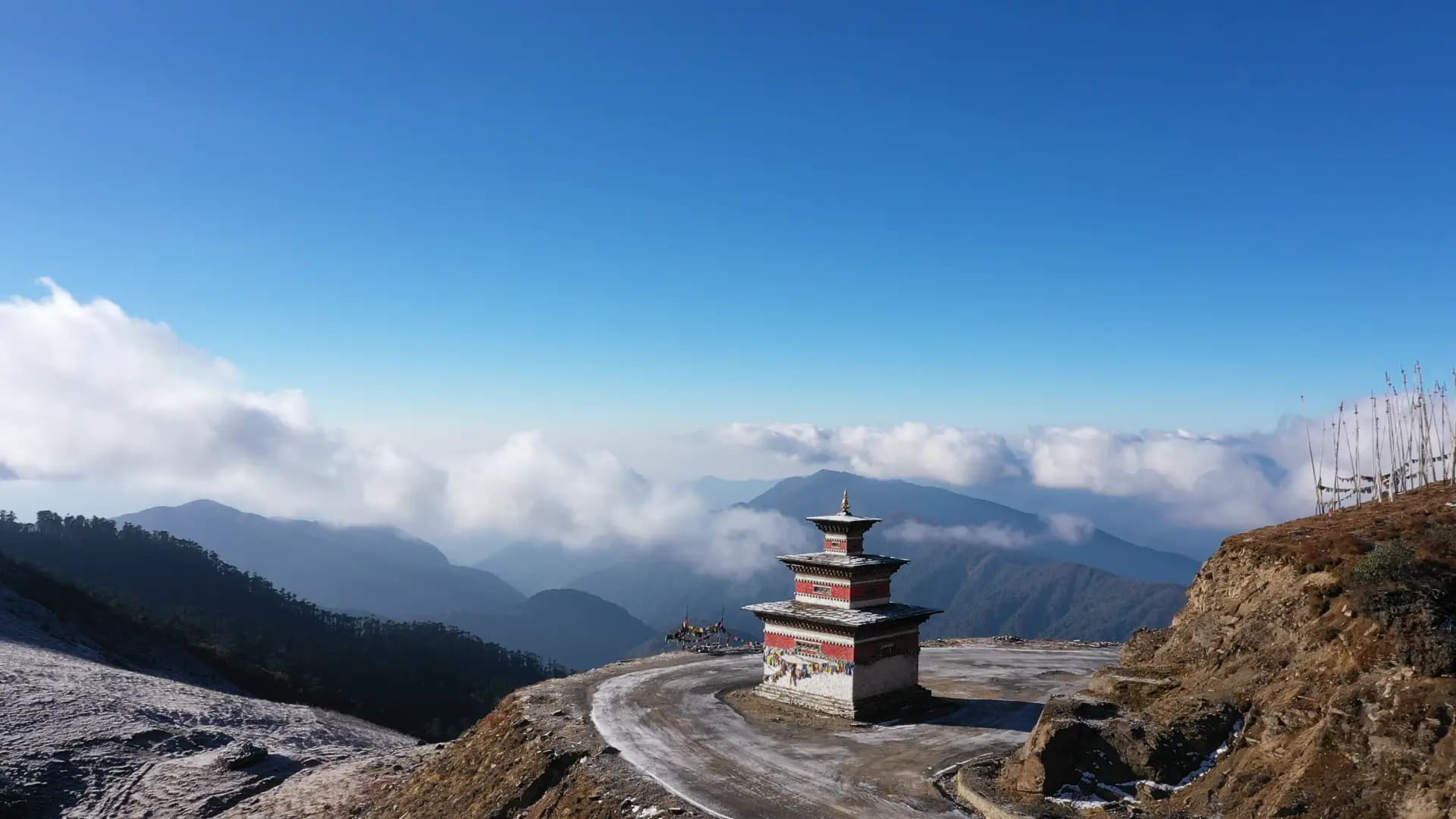
The 75-kilometre crossing in roughly three hours via Dochu La at 3,100 metres; the 108 chortens in cloud, the roadside falls running hard; Punakha Dzong above the high, loud confluence.
DAY 05
A day in Punakha — flooded paddies and the long bridge
The terraced rice at Lobesa at its greenest; Chimi Lhakhang through the fields; a long riverside lunch; the suspension bridge in a dry window if the afternoon gives one.
DAY 06
Over the ridge to Gangtey — Phobjikha at its quietest
The 80-kilometre road on to Gangtey in about three hours; the broad green bowl of Phobjikha; the nature trail through the valley floor; a single quiet night over the rim.
DAY 07
Back to Paro for the flight home
The drive back across the passes with a buffer held for the weather; an unhurried afternoon at the lodge; the guide walks you to the terminal, and the team writes a fortnight on.
The day-by-day above is illustrative. The proposal you receive is built around your dates, your pace and your interests, not this template.
Frequently asked
- Is the green season really worth visiting, or is the rain too much?
- It rewards a particular traveller — the one who wants the valleys at their greenest, the dzongs near-empty, and the lodges at their quietest, and who does not mind trading the Himalayan horizons for cloud moving through the near hills. The rain is mostly an afternoon affair; we plan around it. If your heart is set on snow peaks from Paro, the autumn (September–November) or Clear-Sky Bhutan (December–February) is the better window, and we will say so.
- Can we still climb the Tiger's Nest in the monsoon?
- Yes. We go early, before the afternoon cloud builds, and the temple at 3,120 metres is reached on most days through the green season. The path is steeper underfoot when wet, so the pace is gentle and the footwear matters; your guide reads the morning and we hold the climb to the clearest day of your Paro nights.
- What about leeches and slippery trails?
- On the lower forest paths in the wet, leeches are present — harmless, painless, and easily managed with the right socks and a little salt, which your guide carries. The dzong courtyards, the valley walks, and the towns are unaffected. We keep the forest walking to drier windows and brief you properly beforehand.
- Will weather close Dochu La or hold up the drives?
- The passes stay open through the green season, but heavy overnight rain can occasionally mean a slow start or a brief road delay on the Punakha and Gangtey legs. The itinerary keeps a margin for exactly this, so a delayed morning costs you a slow breakfast rather than a lost day.
- What is the Sustainable Development Fee, and is it included?
- Yes. The SDF is USD 100 per night for each international adult visitor, set by the Royal Government of Bhutan, and it funds free healthcare and education for Bhutanese citizens. It is included in your transparent price breakdown, with no separate charge to think about.
Journeys you might also weigh
- 01The best time to visit BhutanAn honest account of the four Bhutanese seasons — what each gives you and what each asks in return — with a gentle word for autumn, when the skies are at their clearest and the great tshechus fill the dzong courtyards. We recommend by what you actually want from the country, not by a calendar's idea of a high season.7 nights
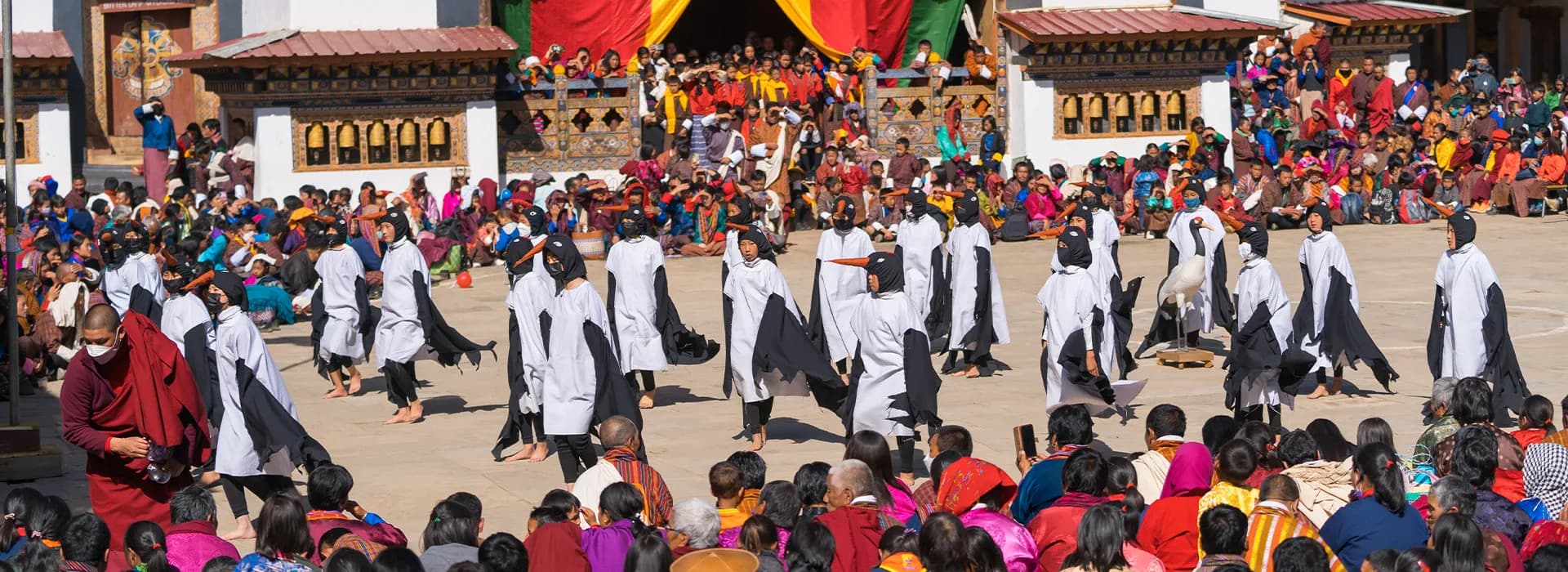
from $6,000 - 02The Black-Necked Crane FestivalAn eight-night Bhutan journey built around the Black-Necked Crane Festival at Gangtey on 11 November — the western circuit of Paro, Thimphu, and Punakha on either side of a day spent in the courtyard of Gangtey Goempa, where the rare cranes that winter in the glacial valley are honoured with schoolchildren's dances and the quiet work of their conservation.8 nights
from $8,000 - 03Bhutan Paro TshechuThe Paro Tshechu falls in late March or early April, runs three days at Rinpung Dzong, and culminates in a pre-dawn thongdrel that is the most photographed Bhutanese image of the spring window. Nine nights — three for the festival itself, six for the country in its spring window.9 nights
from $18,000
Begin when you're ready.
A few questions, or a conversation in your own words. A bespoke draft either way.

