A Bhutanese cultural tradition
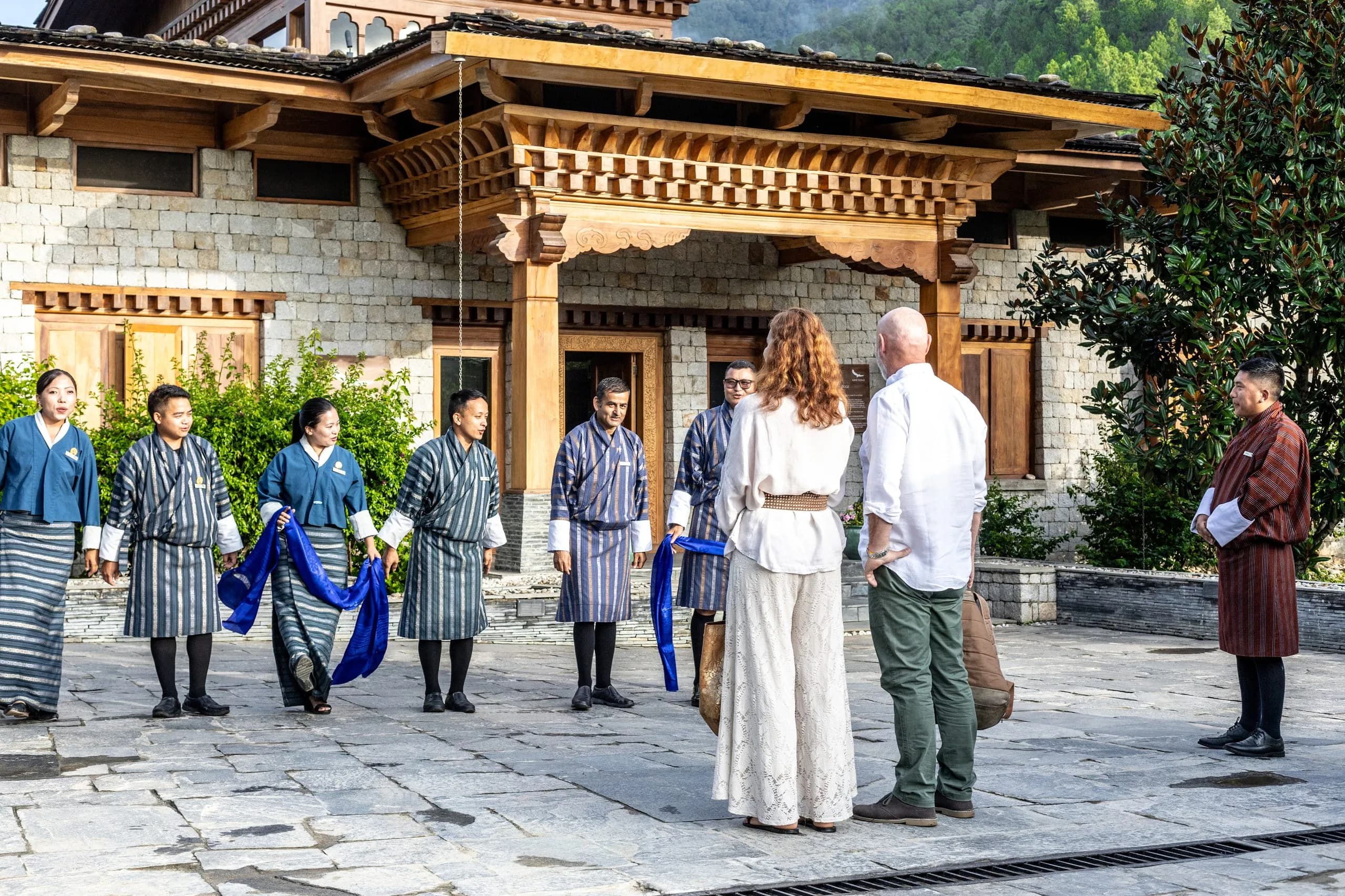
Bhutanese national dress — the gho for men, the kira for women, worn daily across the country.
Bhutanese national dress is one of the most-immediately-visible cultural distinctions a visitor encounters. The gho (men's knee-length wraparound robe) and the kira (women's long wraparound dress with the tego jacket and rachu shoulder-cloth) are not ceremonial or festival-only — they are the daily dress worn by every Bhutanese citizen in school, government office, religious site, and most public settings. The tradition is alive at every scale of contemporary Bhutanese life.
- Register
- tradition
- Also known as
- Gho, Kira, Tego, Driglam Namzha dress
In short
Bhutanese national dress is the gho (men's knee-length wraparound robe with belt) and the kira (women's long wraparound dress with tego jacket + rachu shoulder-cloth). Worn daily by Bhutanese citizens in school, government, religious sites. Mandated by the Driglam Namzha etiquette code (1989). Living tradition, not festival-only.
The gho — men's daily dress
The gho is the men's knee-length wraparound robe that has been the principal Bhutanese male dress for centuries. The garment is a single rectangular piece of fabric, wrapped around the body and folded into the distinctive horizontal pleat at the back, then belted at the waist with the kera (woven cloth belt). The collar is folded back to form the distinctive white-piped opening. The fabric register ranges from everyday cotton-and-wool blends (the workday register) to substantial hand-woven yathra (the Bumthang heavy-wool register) and fine silk (the formal-and-ceremonial context). For formal occasions, the gho is worn with the kabney — a long ceremonial scarf draped over the left shoulder; the colour of the kabney indicates the wearer's rank in the institutional hierarchy (white for ordinary citizens, yellow for His Majesty the Druk Gyalpo and the Je Khenpo, saffron for senior monks, red for senior officials, and so forth). The matched guide explains the kabney register during dzong visits where the colour-coding is publicly visible.
The kira — women's daily dress
The kira is the women's traditional dress — a long rectangular cloth (typically 2.5 by 1.5 metres) wrapped around the body and pinned at the shoulders, worn with the tego (the short fitted jacket) over the top and the wonju (the inner blouse) beneath. The rachu — a narrow embroidered shoulder-cloth — is added for formal occasions, draped over the left shoulder. The kira fabric tradition includes the everyday hand-woven cotton blends and the substantial hand-woven silk-and-cotton brocades; the most-prized kira is the kishuthara, the silk-brocade supplementary-weft form produced principally in the Khoma valley of Lhuentse (taking 6-12 months on the backstrap loom for the finest examples; pricing in the USD 5,000-20,000+ range). The Bhutanese women's wardrobe register typically includes several kira in different fabric weights and decorative registers for different occasions; the daily kira is workaday, the formal kira is substantially more elaborate. See the Bhutanese textile tradition for the weaving.
Driglam Namzha — the etiquette code
The contemporary practice of wearing the national dress in public-administrative settings was formalised in 1989 under His Majesty the Fourth Druk Gyalpo through the Driglam Namzha code — the formal national etiquette framework. The code requires Bhutanese citizens to wear the gho or kira when visiting dzongs, government offices, schools, and religious institutions; the requirement applies during the working day in the relevant institutional settings. The code also includes broader cultural protocols (greetings, religious-site behaviour, hierarchical-courtesy register). The Driglam Namzha was part of His Majesty's broader cultural-preservation; its critics described it as restrictive; its supporters described it as essential to maintaining the cultural that contemporary Bhutan continues to distinguish itself by. The contemporary practice is substantially-internalised — most Bhutanese citizens wear the gho or kira because they prefer to, not because they are compelled. International visitors are not required to wear Bhutanese national dress; the matched guide does not raise the issue unless asked.
What a visitor encounters
Throughout the country, in every setting. The gho-and-kira tradition is what visitors notice first about Bhutanese public life — the daily-wear traditional dress is one of the principal visible distinctions from neighbouring countries where traditional dress is increasingly festival-only. Visitors with serious interest in the textile tradition are encouraged to visit the Royal Textile Academy in Thimphu (the principal institutional centre for the weaving tradition, with both museum and active-workshop registers), the Khoma valley in Lhuentse (the master-weavers' settlement), and to commission a custom-tailored gho or kira from a local tailor (typical lead time 3-7 days; the matched guide arranges). The lodge-and-spa register at several premium lodges also offers gho-and-kira dressing experiences as part of the cultural programme; the matched guide arranges the dressing register for visitors who want to wear the dress for a particular evening or ceremonial occasion.
Related ideas
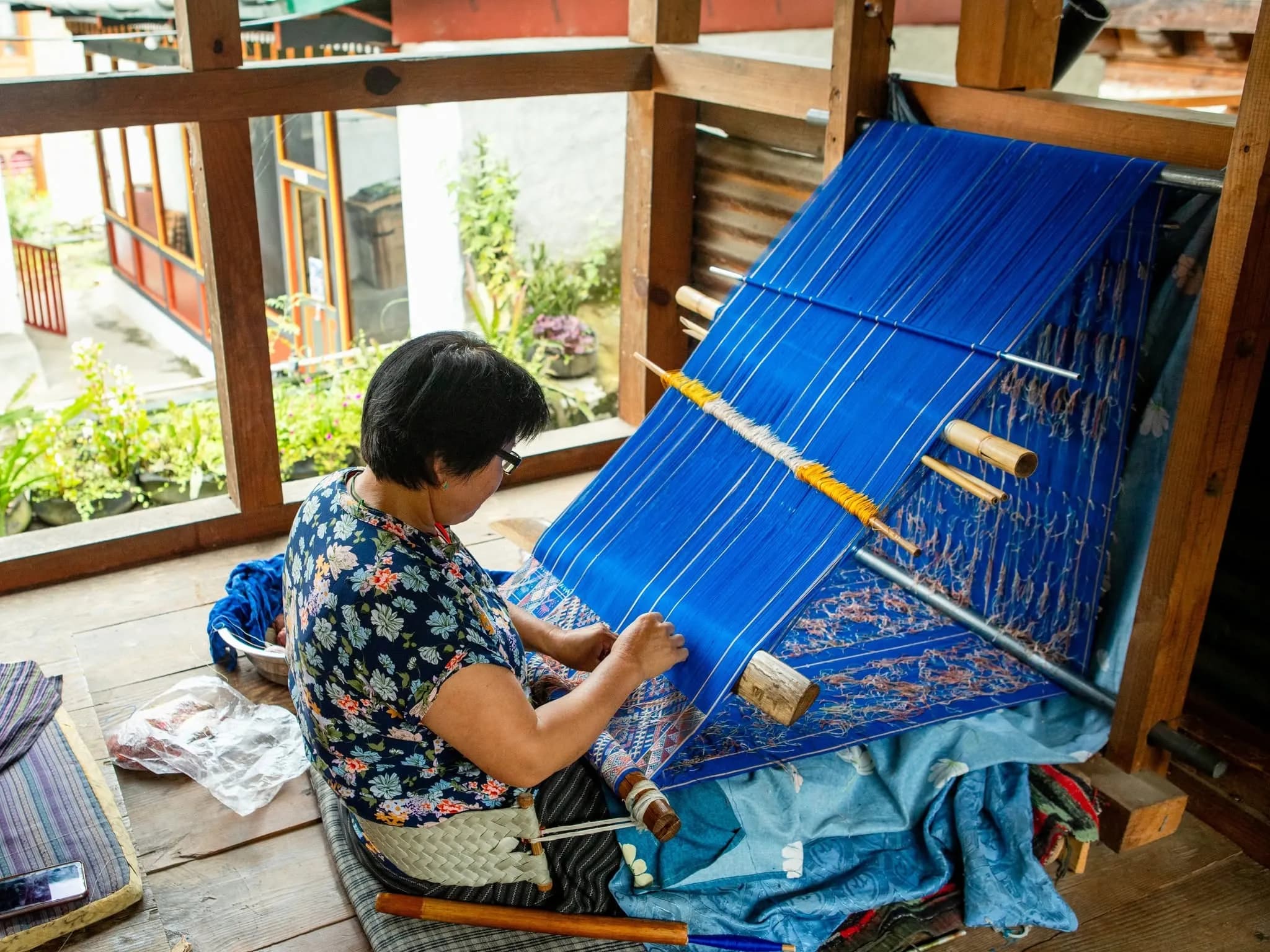 ThemeBhutanese textiles — the weaving tradition that clothes the country and survives largely intact.Bhutanese textiles — kira, gho, kushuthara, the weaving tradition by region. Lhuentse silk, Bumthang yathra wool, Haa wool, the Royal Textile Academy.
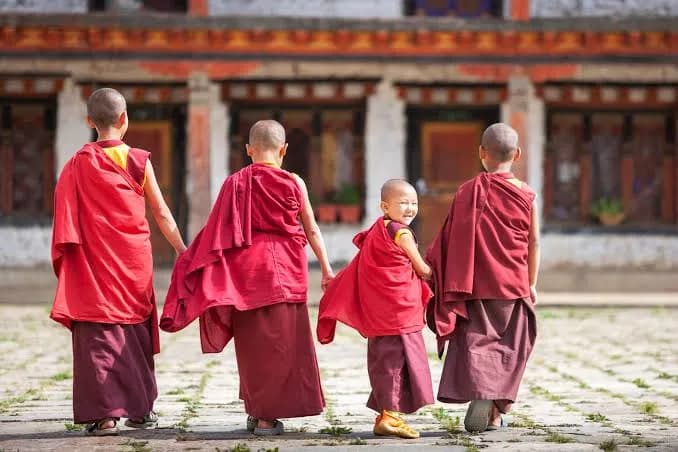 ThemeGross National Happiness — the framework that shapes the country a visitor encounters.Gross National Happiness — the Bhutanese development philosophy articulated by the Fourth Druk Gyalpo at His 1974 coronation as the first of nine guiding goals. Four pillars, nine measurement domains, constitutional grounding.
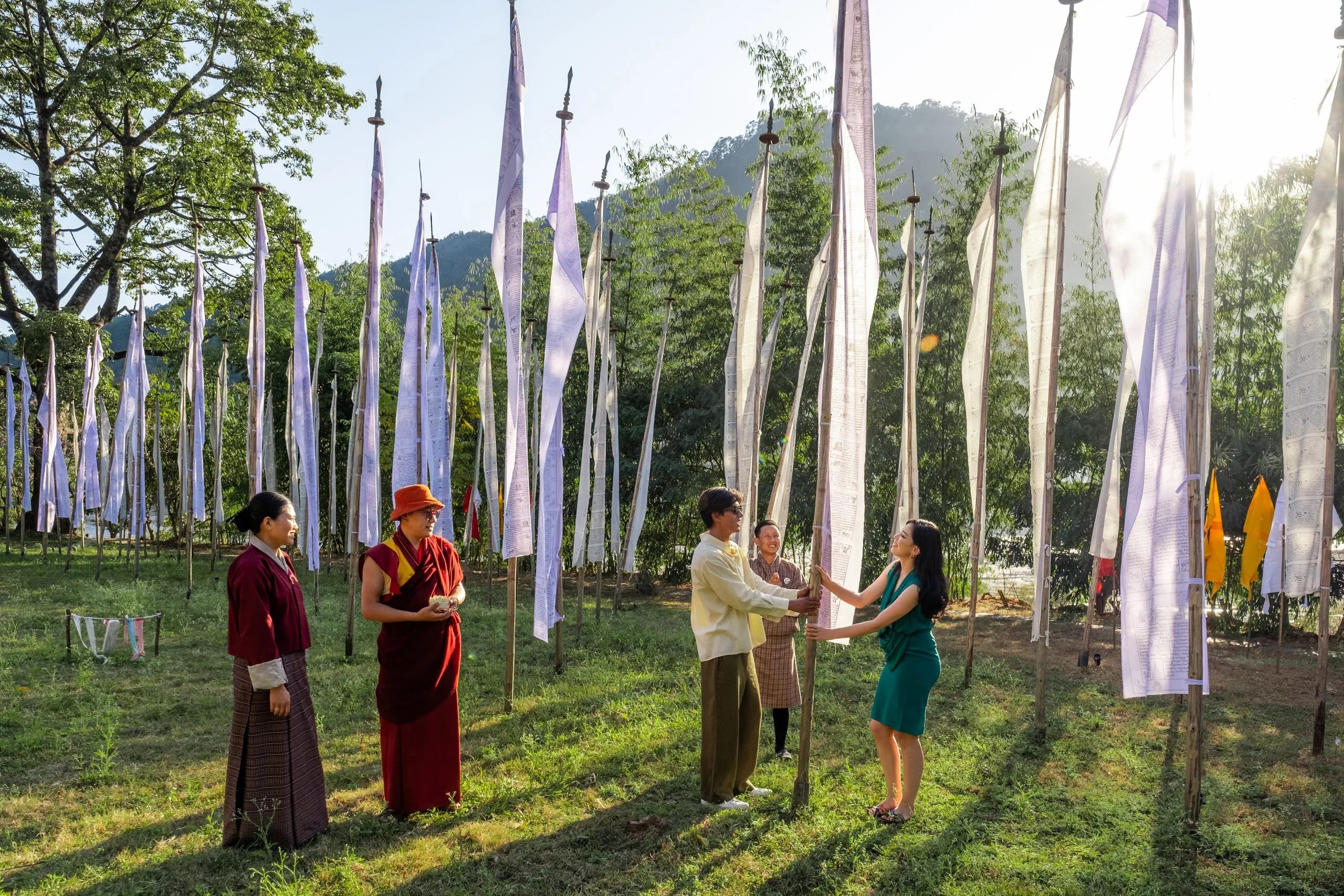 ThemeVajrayana Buddhism — the substance of every dzong, every monastery, every tshechu.Vajrayana Buddhism — the branch of Buddhism that shapes Bhutanese religious life. Drukpa Kagyu, Nyingma, Guru Rinpoche; mantra, mandala, deity yoga.
Where to see it
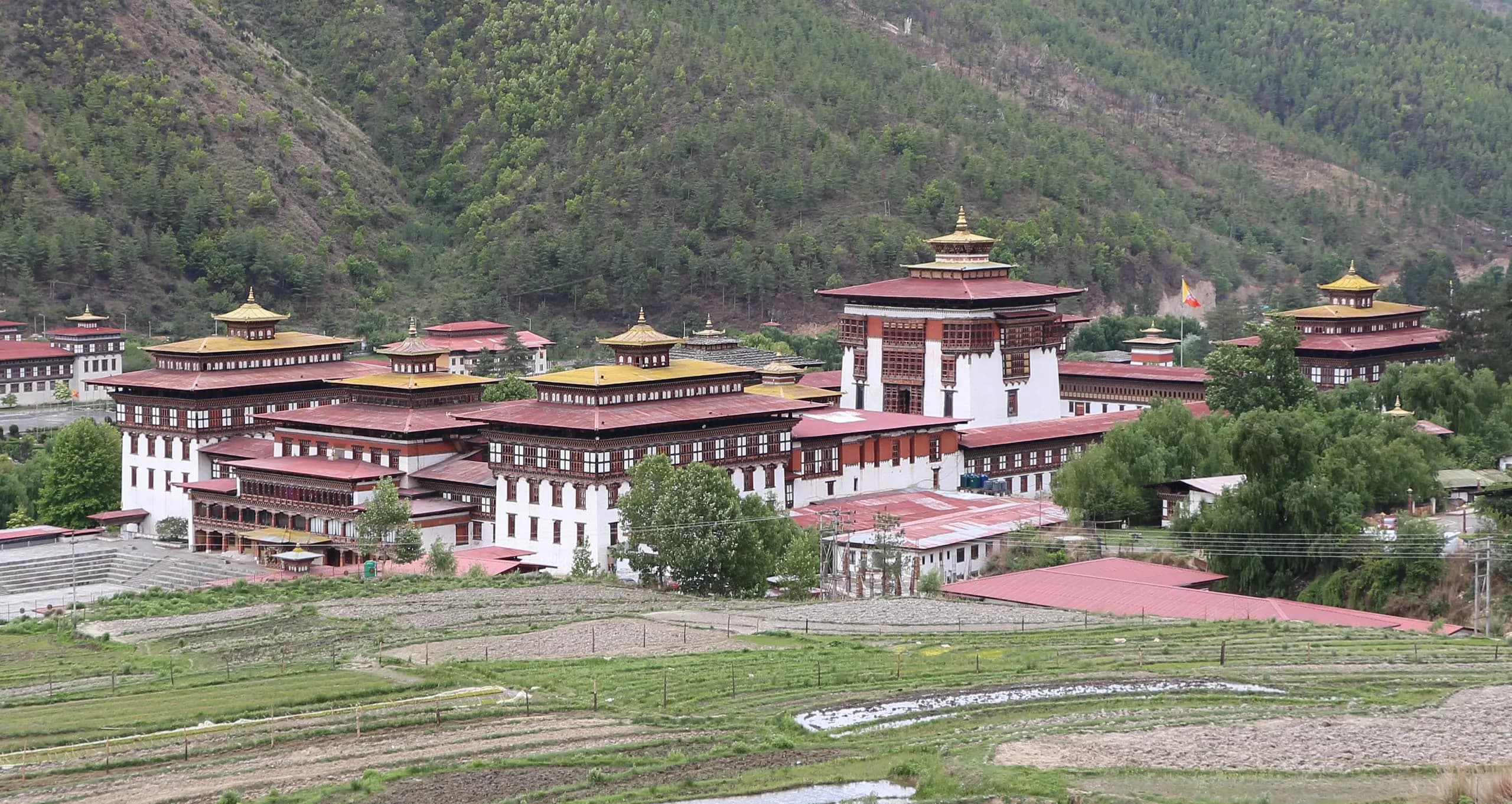
Journeys built around it
- JourneyBhutan, read through its weaving.A seven-night Bhutan textile tour — Bhutanese workshop visits, master weaver introductions, and a guide who reads cloth the way an art historian reads brushwork.
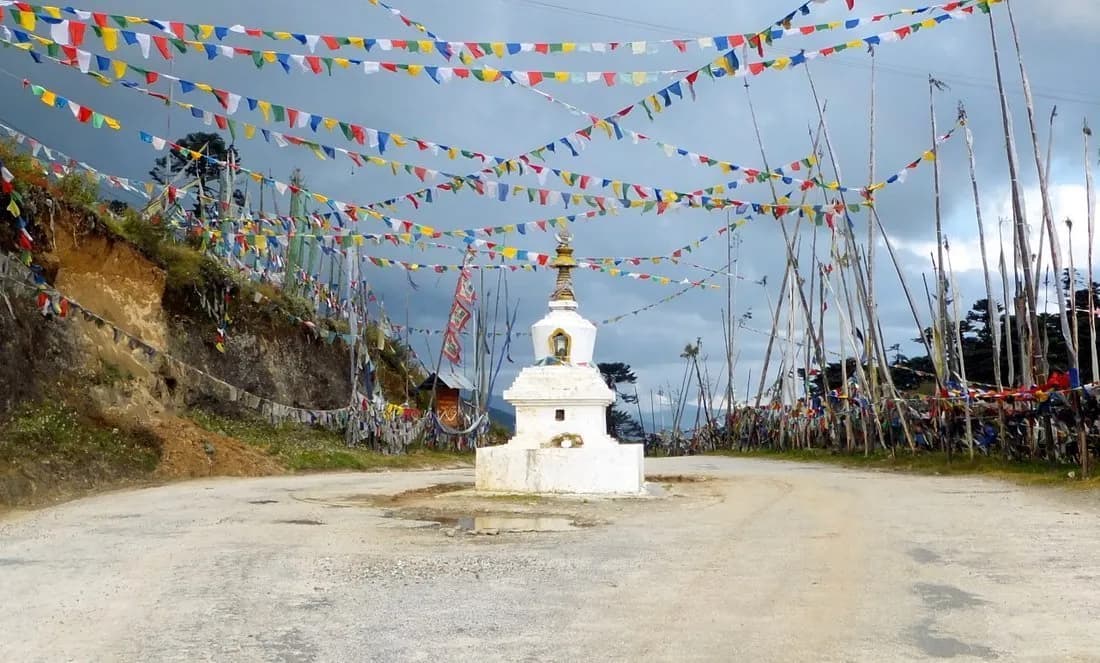 JourneyOctober light, Bhutan, a week.A seven-night Bhutan photography journey in October — Bhutan, golden-hour access at Punakha Dzong, a tripod-friendly guide, and transparent pricing.
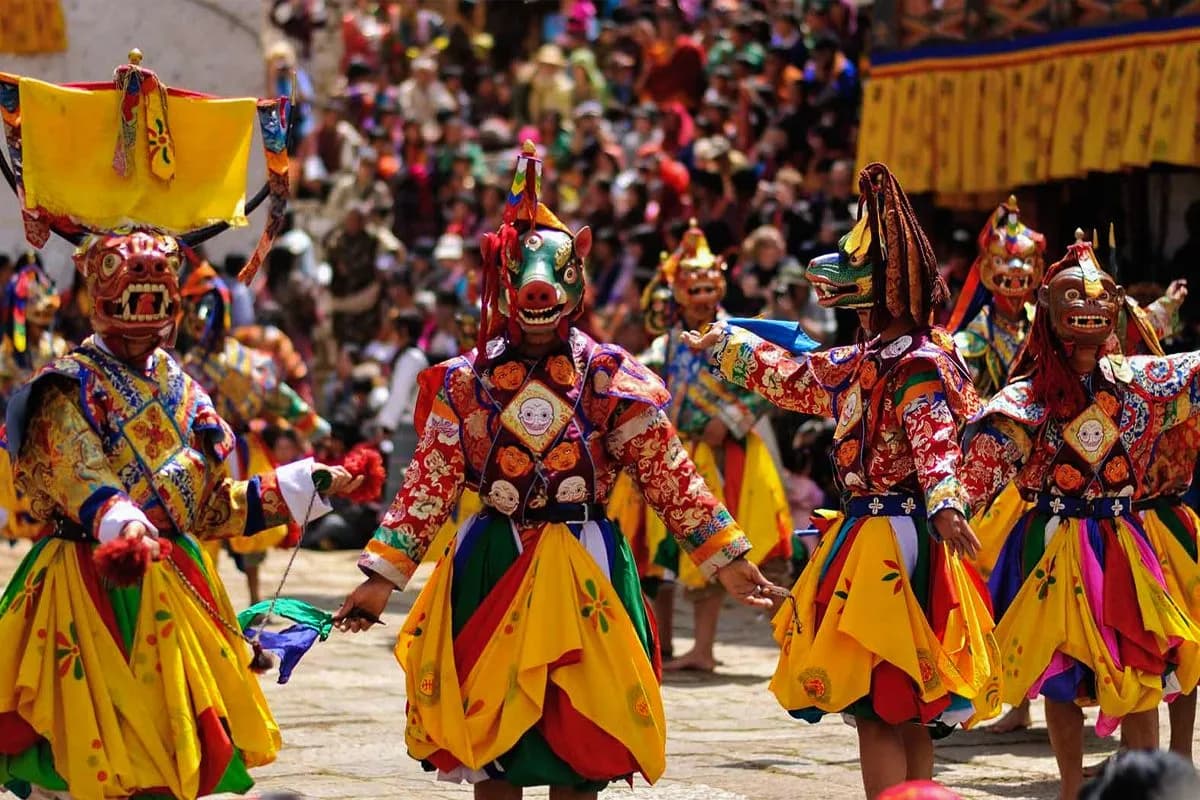 JourneyThimphu Tshechu, read properly.A seven-night Bhutan journey timed to Thimphu Tshechu in autumn — second-tier seating, a culturally fluent guide, Bhutanese lodges.
Journeys that visit Bhutanese national dress
Frequently asked
- Do I need to wear Bhutanese national dress?
- No. International visitors are not required to wear the national dress at any time. The Driglam Namzha applies to Bhutanese citizens in institutional settings. Visitors are asked to dress modestly when visiting dzongs and religious sites (shoulders covered, long trousers or skirts, no hats inside religious buildings) but this is general religious-site protocol, not a national-dress requirement.
- Can I buy a gho or kira to take home?
- Yes. Most Thimphu and Paro tailors will make a custom gho or kira on a 3-7 day lead time. Prices vary substantially by fabric — a standard cotton-blend gho costs USD 80-200; a fine silk gho USD 300-800; a master-weaver kishuthara kira USD 5,000-20,000+. The Royal Textile Academy in Thimphu also has a substantial retail; the matched guide knows the established tailors and weavers.
- What is the kabney for?
- The kabney is the long ceremonial scarf worn over the left shoulder by men on formal occasions (dzong visits, religious ceremonies, weddings, official events). The colour indicates the wearer's institutional rank — white for ordinary citizens, yellow only for His Majesty the Druk Gyalpo and the Je Khenpo, saffron for senior monks, red for the most-senior officials. The colour-coding is a public hierarchy display; the matched guide explains the kabney register during dzong visits where it is visible.

