A Bhutanese cultural-religious framework
The Bhutanese lunar calendar — the framework that sets festival dates and the country's cultural rhythm.
The Bhutanese lunar calendar (Bhutanese: nyitse — 'time-counting') is the cultural-religious framework that organises the country's annual rhythm — the dates of all principal tshechu and drubchen festivals, the auspicious days for important undertakings, the astrologically-significant moments of every year. Distinct from the Tibetan and Indian lunar systems; computed annually by the Bhutanese astrological tradition; sets dates that shift across the Gregorian calendar year to year.
- Register
- institution
- Also known as
- Bhutanese lunar year, Bhutanese astrological calendar, Nyitse
In short
The Bhutanese lunar calendar sets the dates of all principal festivals (tshechus, drubchens) and auspicious days. Distinct from Tibetan + Indian lunar systems. Computed annually by the Bhutanese astrological tradition. Festival dates shift across the Gregorian year.
The structural framework
The Bhutanese lunar calendar operates on a 12-month lunar year with periodic intercalary months (added every 2-3 years to keep the lunar year aligned with the solar year). Each month begins at the new moon and runs to the next new moon; the months are numbered (1st through 12th) rather than named with Bhutanese-specific names. The 15th day of each month is the full moon. Auspicious days are computed according to the position of the moon, the day of the week, and the astrological register of the year (the 60-year cycle combining the 12 animals and the five elements — wood, fire, earth, iron, water — the standard Tibetan-Bhutanese astrological framework).
Festival dates and the lunar register
All principal Bhutanese festivals are dated by the lunar calendar — the Paro Tshechu (11th-15th day of the 2nd lunar month), Thimphu Tshechu (10th-12th day of the 8th lunar month), Punakha Drubchen (5th-7th day of the 1st lunar month), Punakha Tshechu (8th-10th day of the 1st lunar month), Jambay Lhakhang Drup (15th-19th day of the 9th lunar month), and others. The Gregorian equivalents shift year to year — Paro Tshechu typically falls in March or April; Thimphu Tshechu typically in September or October. The Department of Tourism publishes confirmed festival dates 6-12 months in advance; the matched guide handles the date-confirmation tradition for trip planning. See the Paro Tshechu journey and the autumn Thimphu Tshechu journey for the date-aligned journey shapes.
The astrological register
Bhutanese astrology (also known as tsipa or zurkhar) is a substantial cultural-religious tradition with deep historical roots in the Tibetan tradition modified for Bhutanese practice. The astrological tradition operates at every cultural level: marriage dates are typically set in consultation with an astrologer; the timing of new house occupancy, business openings, religious ceremonies, and political announcements is calculated; even the timing of public events (royal weddings, coronations, festival openings) is astrologically determined. For most visitors the tradition operates invisibly — the trip arrival or departure date may be auspicious or otherwise without the visitor knowing; the matched guide occasionally references the register when it bears on the trip's specific moments.
How this affects trip planning
Festival-aligned trips require date confirmation from the Bhutanese lunar calendar's annual computation. The Department of Tourism publishes the confirmed festival dates each year, typically 6-12 months in advance. For trips planned 12-18 months ahead, the dates may not yet be confirmed — the matched guide handles the iterative date-finalisation. Auspicious-day planning is uncommon for international trip dates (the matched guide does not typically suggest re-scheduling around astrological considerations), but visitors planning specific ceremonial moments (renewal-of-vows blessings, private blessing ceremonies) may want to coordinate the dates with the astrological; the matched guide handles this consultation.
Related ideas
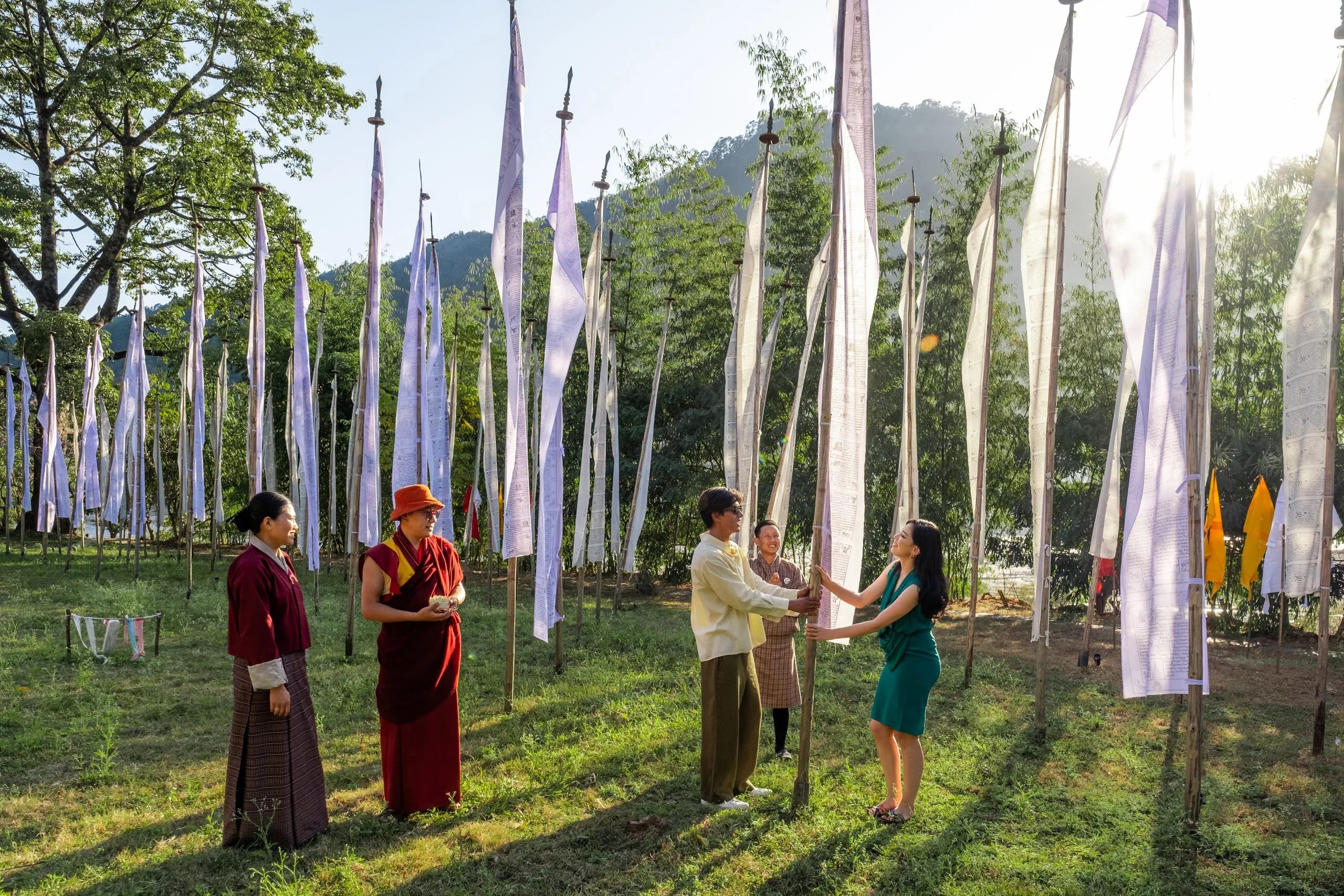 ThemeVajrayana Buddhism — the substance of every dzong, every monastery, every tshechu.Vajrayana Buddhism — the branch of Buddhism that shapes Bhutanese religious life. Drukpa Kagyu, Nyingma, Guru Rinpoche; mantra, mandala, deity yoga.
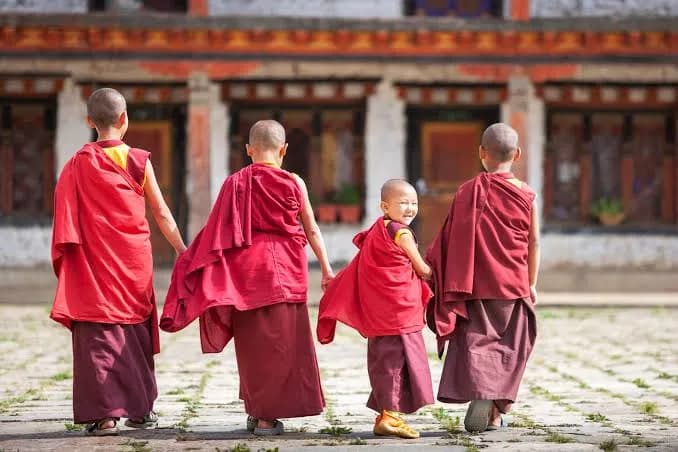 ThemeGross National Happiness — the framework that shapes the country a visitor encounters.Gross National Happiness — the Bhutanese development philosophy articulated by the Fourth Druk Gyalpo at His 1974 coronation as the first of nine guiding goals. Four pillars, nine measurement domains, constitutional grounding.
When it is performed
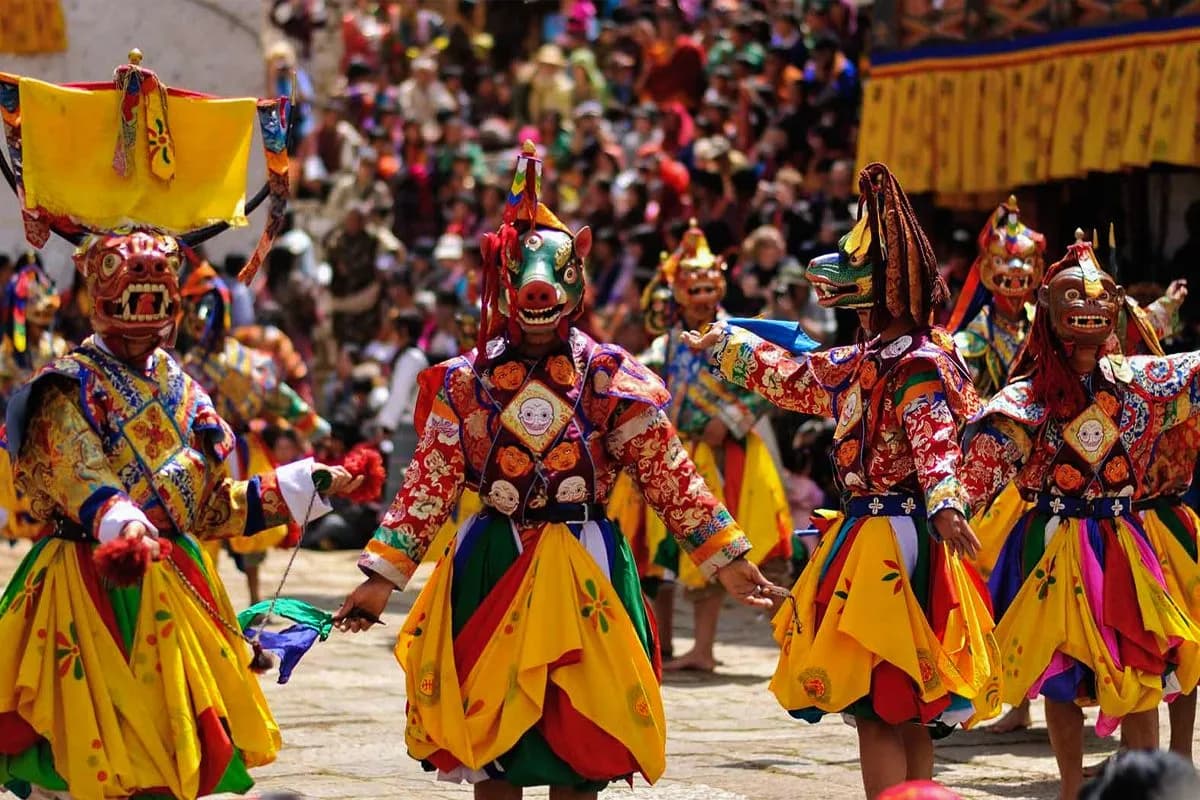 FestivalParo Tshechu — five days at Rinpung Dzong, with the pre-dawn thongdrel.Paro Tshechu — the principal spring festival at Rinpung Dzong. This year's dates, the programme, the pre-dawn thongdrel, what to expect for international visitors.
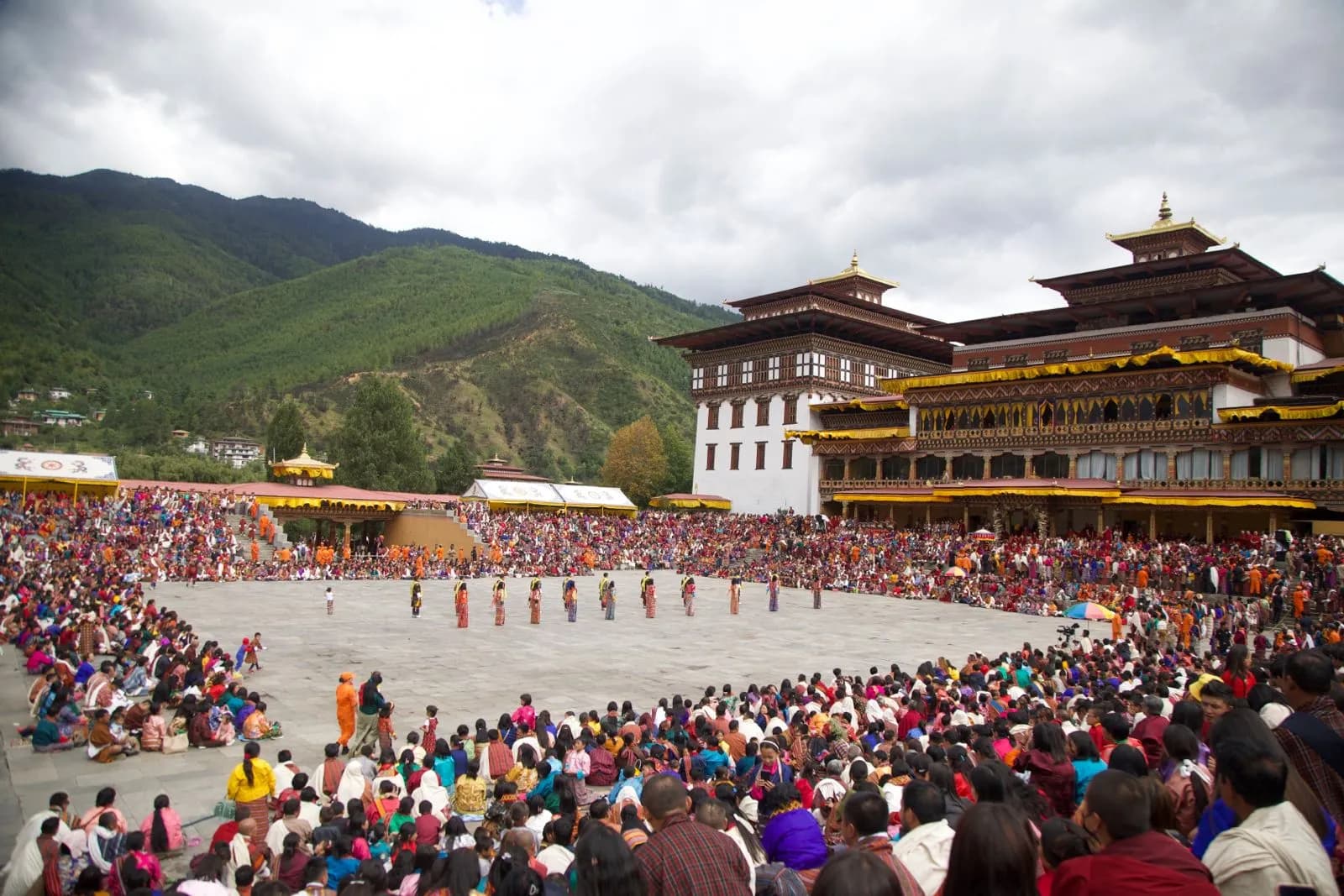 FestivalThimphu Tshechu — three days at Tashichho Dzong, the largest attendance of any Bhutanese festival.Thimphu Tshechu — the autumn festival at Tashichho Dzong, capital of Bhutan. This year's dates, the programme, what to expect as an international visitor.
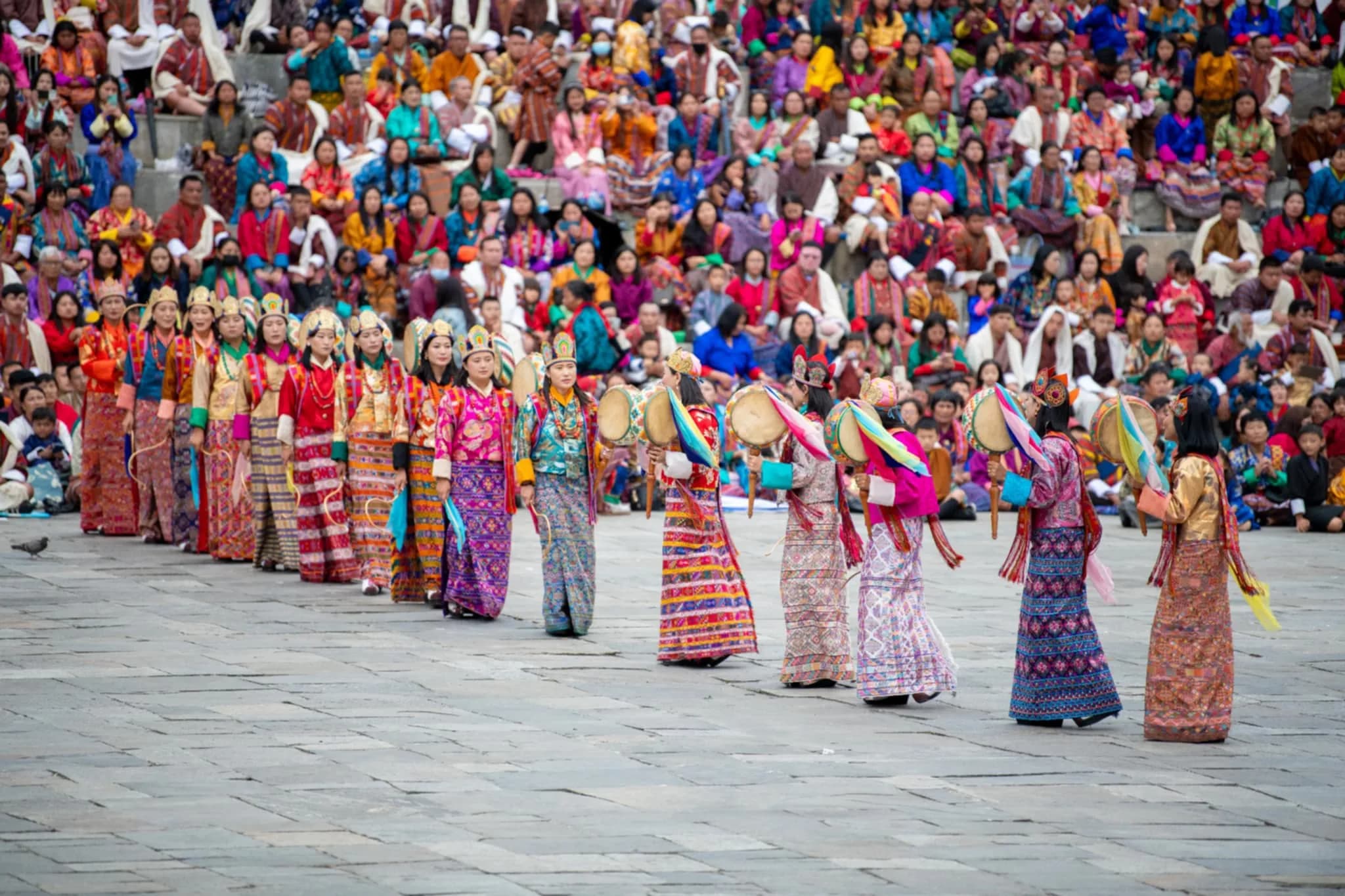 FestivalPunakha Drubchen & Tshechu — the Tibetan-invasion re-enactment, then the chams, at the most beautiful dzong in Bhutan.Punakha Drubchen & Tshechu — the late-winter festival pair at Punakha Dzong, with the Tibetan-invasion re-enactment. Dates, programme, what to expect.
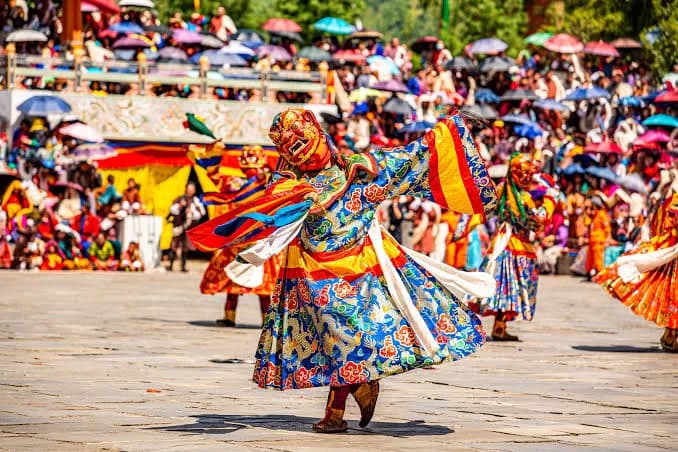 FestivalJambay Lhakhang Drup — five days in Bumthang, with the Mewang fire ritual.Jambay Lhakhang Drup — five days at Bumthang's oldest temple, including the Mewang fire ritual. Dates, programme, what to expect.
Journeys built around it
- JourneyNine nights for the Paro Tshechu — the festival and the country around it.A nine-night Bhutan itinerary built around the Paro Tshechu — the spring mask-dance festival at Rinpung Dzong, with six days for the wider country.
- JourneyThimphu Tshechu, read properly.A seven-night Bhutan journey timed to Thimphu Tshechu in autumn — second-tier seating, a culturally fluent guide, Bhutanese lodges.
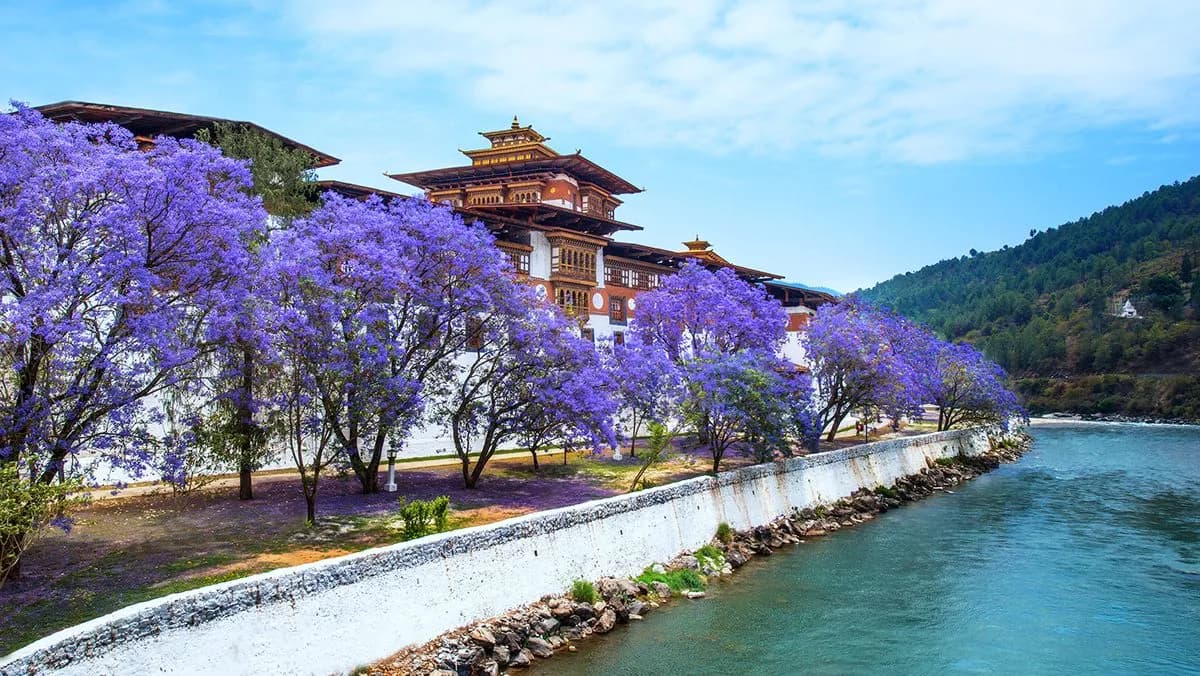 JourneyCherry blossoms over the Pa Chhu — April in Bhutan.A seven-night Bhutan journey in April — cherry blossom and rhododendron on Bhutan, Paro Tshechu if dates align, transparent pricing.
Journeys that visit The Bhutanese lunar calendar
Frequently asked
- Why don't the festival dates match year to year?
- The Bhutanese lunar calendar shifts relative to the Gregorian calendar — the 11th day of the 2nd Bhutanese lunar month falls on a different Gregorian date each year. Paro Tshechu, for instance, has fallen in March in some years and April in others. The Department of Tourism publishes confirmed dates each year.
- Is the Bhutanese calendar the same as Tibetan?
- Closely related but with real differences. Both use the lunar framework with periodic intercalary months and the 60-year animal-element cycle. The Bhutanese calendar has Bhutan-specific adjustments — particular auspicious days, particular festival dates that differ from Tibetan equivalents, particular astrological computations. The two calendars typically run close together but not identical.
- Can I see the calendar published anywhere?
- Yes. The Bhutanese government publishes the annual calendar (with the Gregorian-to-lunar date mapping and the principal cultural-religious days) every December for the following year. The Department of Tourism publishes the festival dates separately, typically 6-12 months in advance. The matched guide provides the trip-specific date framework during the proposal process.

