A Bhutanese cultural tradition
Bhutanese names — chosen by a lama, rich in meaning, and almost never inherited.
Most Bhutanese carry two names and no surname. The names are not passed down from a parent but given a short while after birth by a lama, drawn from the Buddhist tradition — a quality, a deity, a day, a blessing. A visitor notices it within a day: your guide and your driver may share a name, and two people called Dorji are almost certainly not related. It is one of the quietly distinctive things about the country, and one of the first that makes a traveller feel they have arrived somewhere genuinely different.
- Register
- culture
- Also known as
- Bhutanese naming, Bhutanese naming tradition, do Bhutanese have surnames
In short
Most Bhutanese have two given names and no family surname (the royal Wangchuck dynasty is the exception). A child's names are chosen by a lama, usually at the local monastery, from auspicious Buddhist words — Tshering (long life), Dorji (thunderbolt), Pema (lotus), Sonam (merit). Because names are individual rather than inherited, two people who share a name are almost never related, and honorifics such as Dasho, Ashi and Lopen carry the social standing that a surname does not.
A country almost without surnames
The first surprising thing about a Bhutanese name is what it lacks: a family surname. Most Bhutanese carry two given names, and neither is inherited. A child's names are not drawn from the mother or the father; siblings may be given names with nothing in common; and across a lifetime a person's name says nothing about their lineage. The single, deliberate exception is the royal family — His Majesty's line has carried the name Wangchuck as a dynastic surname since the founding of the monarchy in 1907. For everyone else, the name is a personal blessing rather than a thread of descent. The practical consequence is the one a visitor meets first: a shared name in Bhutan implies a shared good wish, not a shared bloodline.
Named by a lama
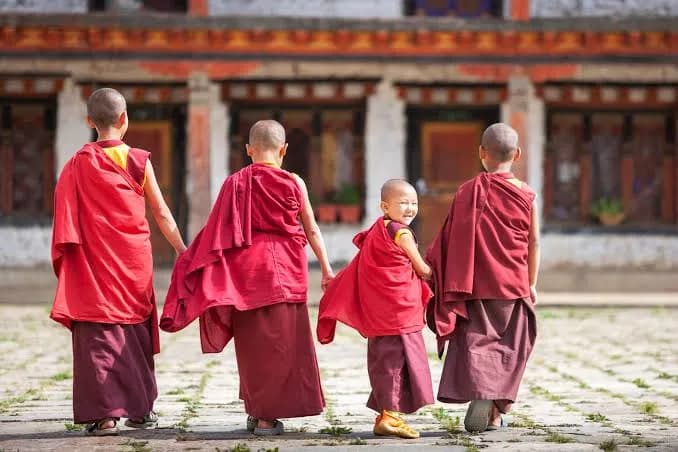
A Bhutanese child is usually named not by the parents but by a lama — at the local lhakhang, or by a respected Rinpoche or trulku whom the family holds in regard. A short while after the birth the parents bring the child, and the lama selects the names: auspicious words from the Buddhist tradition, chosen for their meaning and, often, for the day and the stars under which the child arrived. Many Bhutanese also carry a name tied to the day of the week they were born — Dawa for a Monday child (the moon), Nima for a Sunday child (the sun), and so on through Mingmar, Lhakpa, Phurba, Pasang and Pemba. To be named by a lama is to begin life with a blessing spoken over you; the meaning of the name is not incidental but the whole point of it.
What the names mean
Almost every Bhutanese name is a word with a meaning a Bhutanese would recognise at once. A short reading of the most common: Tshering — long life. Dorji — the vajra, the indestructible thunderbolt. Pema — the lotus. Sonam — merit, good fortune. Karma — action, the law of cause and effect. Tashi — auspicious, a blessing. Dechen — great bliss. Sangay — the Buddha, the awakened. Norbu — the wish-fulfilling jewel. Ugyen — for Orgyen, the land of Guru Rinpoche. Jigme — fearless. Tenzin — holder of the teachings. Yeshey — primordial wisdom. Kelzang — good fortune, the fortunate age. Choden — one of faith. Wangmo — a lady of power. Namgay — victorious. Chimi — deathless. Because the pool of auspicious words is shared, the same beautiful names recur across the country — which is why a single valley may hold a great many people named Sonam or Tshering, each carrying the same good wish independently.
Titles, scarves, and how Bhutanese address one another
Where there is no surname to carry standing, the honorific does the work. Dasho is a title of honour conferred by His Majesty, marked by the red kabney (the ceremonial scarf); a Dasho is addressed as Dasho before the name. Lyonpo is a minister, marked by the orange kabney. Ashi is the honorific for ladies of the royal house. Aum is a respectful 'madam' for a woman of standing; Lopen marks a learned person or a monk-teacher; Lam, Rinpoche, Trulku and Khenpo are religious titles a visitor will hear at monasteries. In ordinary life Bhutanese are warm with kinship words, using them even for people they have just met — an elder may be addressed as one would an aunt or an older brother. A traveller often finds, by the second or third day, that the guide has quietly adopted a kin term for them too.
The royal names
The Wangchuck dynasty is the one Bhutanese family to carry a hereditary surname, taken up at the 1907 founding of the monarchy. The given names of the royal house follow the same auspicious tradition as everyone else's — His Majesty the Fourth Druk Gyalpo Jigme Singye Wangchuck (Jigme, fearless; Singye, the lion), and His Majesty the Fifth Druk Gyalpo Jigme Khesar Namgyel Wangchuck (Namgyel, victorious). Her Majesty Queen Jetsun Pema carries Pema, the lotus. The honorific 'Ashi' precedes the names of the royal ladies in Dzongkha, alongside the English Her Majesty and Their Royal Highnesses. The royal family is held in deep affection across the country, and a visitor will see Their Majesties' portraits — and hear their names spoken with warmth — in every dzong, lodge and home.
What a visitor will notice
The naming tradition is one of the small things that makes the country feel genuinely its own. Your guide and your driver may both be called Tshering, and you will simply learn to tell them apart by manner rather than name. You will meet several people named Dorji over a week and find that none of them are related — without family surnames, a shared name is a shared blessing, not a family tie. Addressing people is easy: a first name is perfectly normal and friendly; for an elder, an official, or a monk, the honorific (Dasho, Aum, Lopen) is the courteous form, and your guide will steer you gently. And if, by the end of the week, your guide has started calling you by a Bhutanese kin term, you have been paid a quiet compliment — the name has become a small thread of belonging, which is, after all, what a Bhutanese name is for.
Related ideas
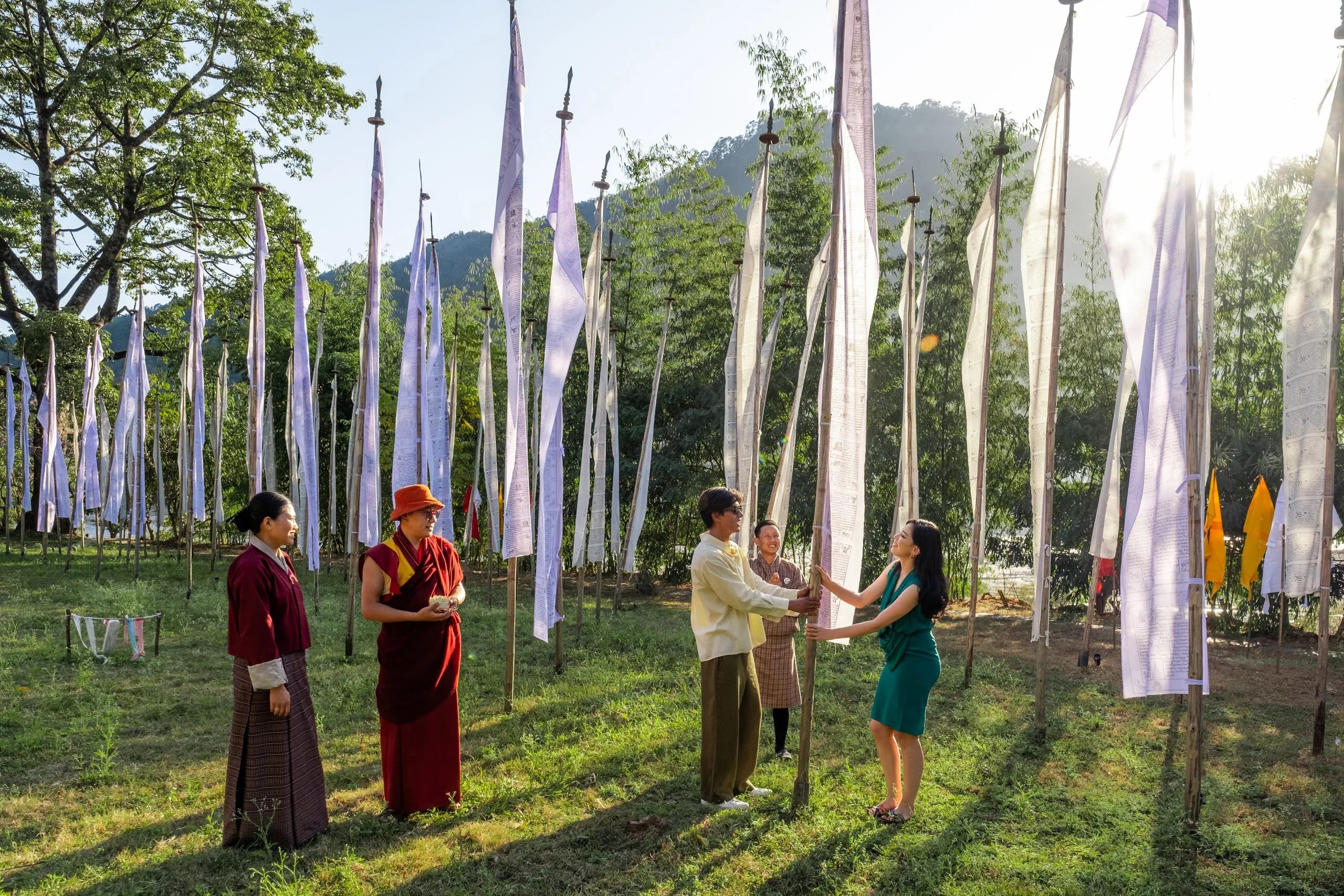 ThemeVajrayana Buddhism — the substance of every dzong, every monastery, every tshechu.Vajrayana Buddhism — the branch of Buddhism that shapes Bhutanese religious life. Drukpa Kagyu, Nyingma, Guru Rinpoche; mantra, mandala, deity yoga.
- ThemeThe Wangchuck dynasty — the hereditary monarchy of Bhutan since 17 December 1907.The Wangchuck dynasty — the hereditary monarchy of Bhutan since 17 December 1907. Five reigning monarchs across five generations. The contemporary state's institutional spine.
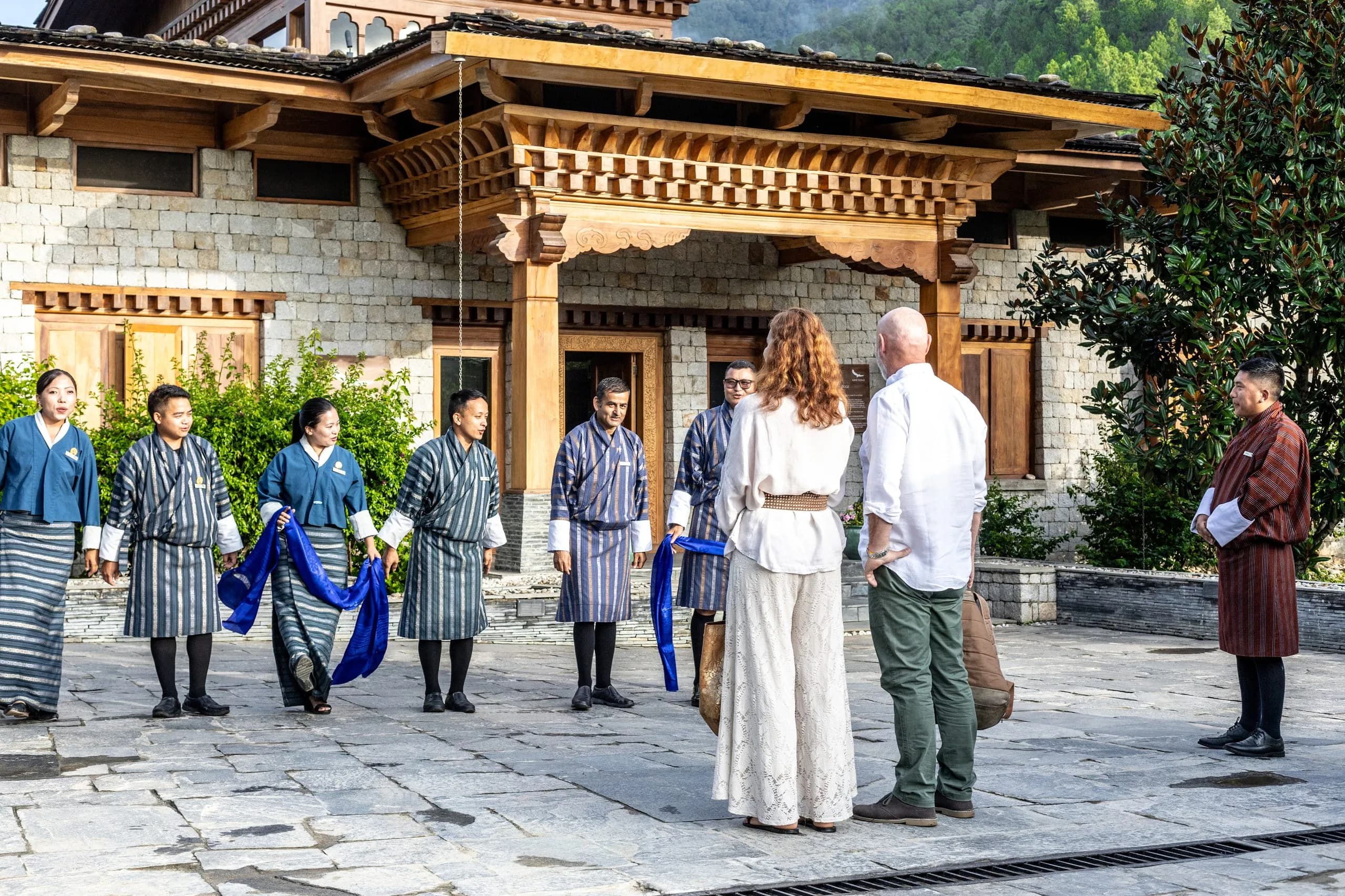 ThemeBhutanese national dress — the gho for men, the kira for women, worn daily across the country.Bhutanese national dress — the gho for men, the kira for women. Daily wear in school, government, religious site. Driglam Namzha etiquette code.
- ThemeThe Bhutanese lunar calendar — the framework that sets festival dates and the country's cultural rhythm.The Bhutanese lunar calendar — the framework that sets festival dates and the country's cultural rhythm. Tshechu, drubchen, auspicious days.
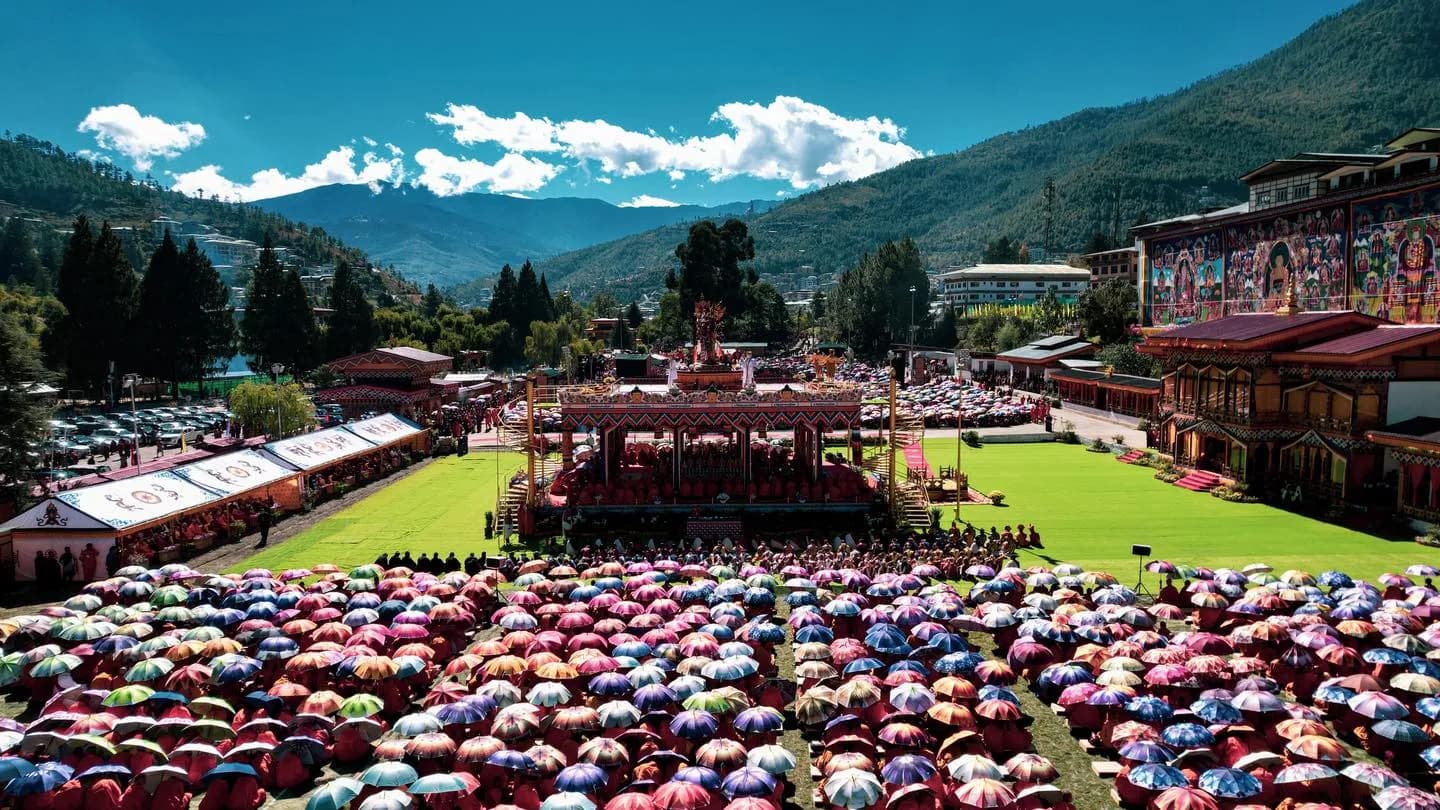 ThemeThe Drukpa Kagyu — the principal Buddhist tradition of Bhutan, the state-religious institutional tradition.The Drukpa Kagyu — the principal Buddhist tradition of Bhutan. State-religious institutional. The Zhabdrung's lineage, the Zhung Dratshang's home tradition.
Journeys built around it
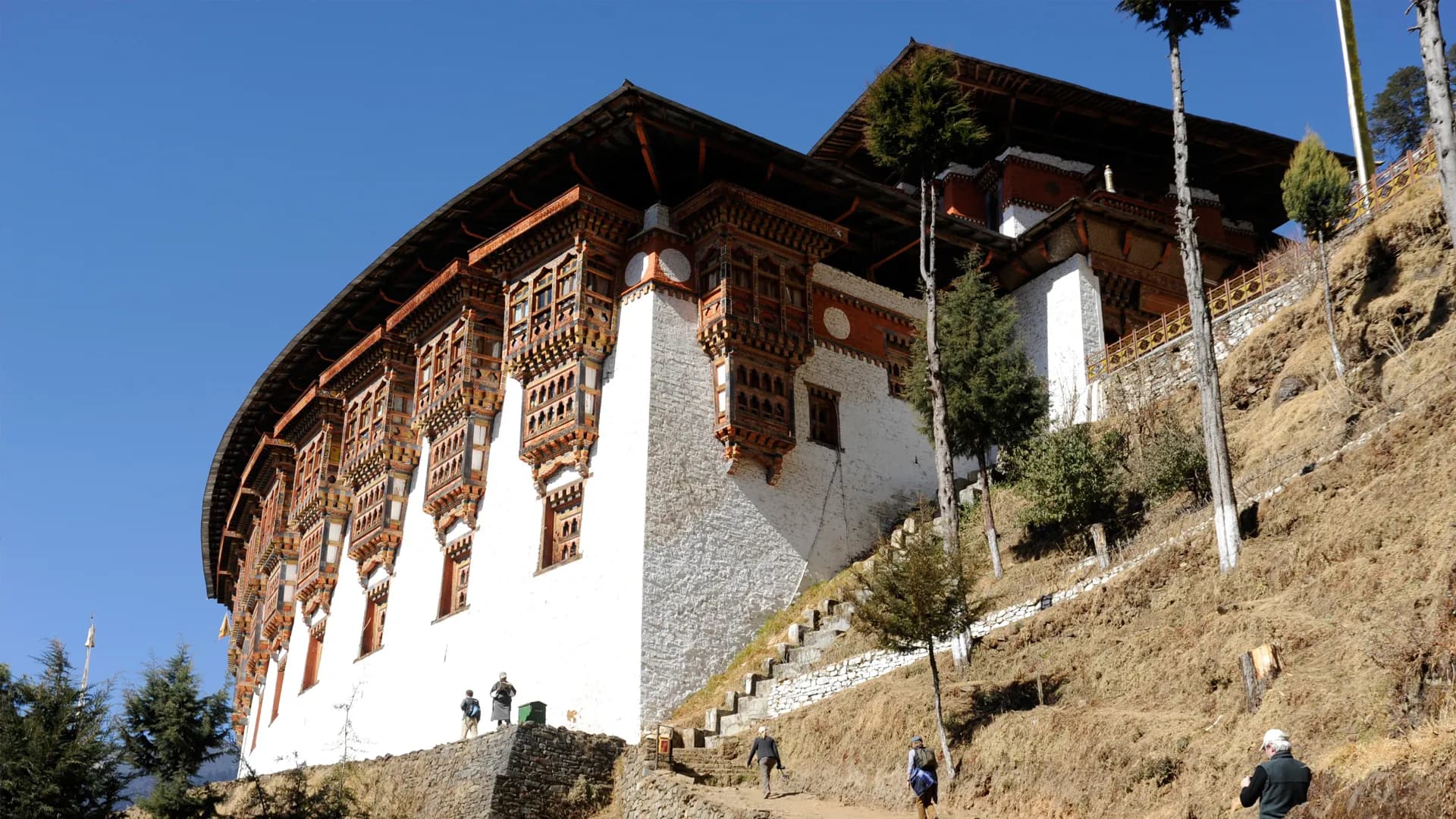 JourneyTen nights for the Buddhist pilgrim — the principal sites, with monastic context.A ten-night Bhutan Buddhist pilgrimage for Asian-Buddhist travellers. Monastic context; matched monastic-trained guide; Bumthang religious circuit.
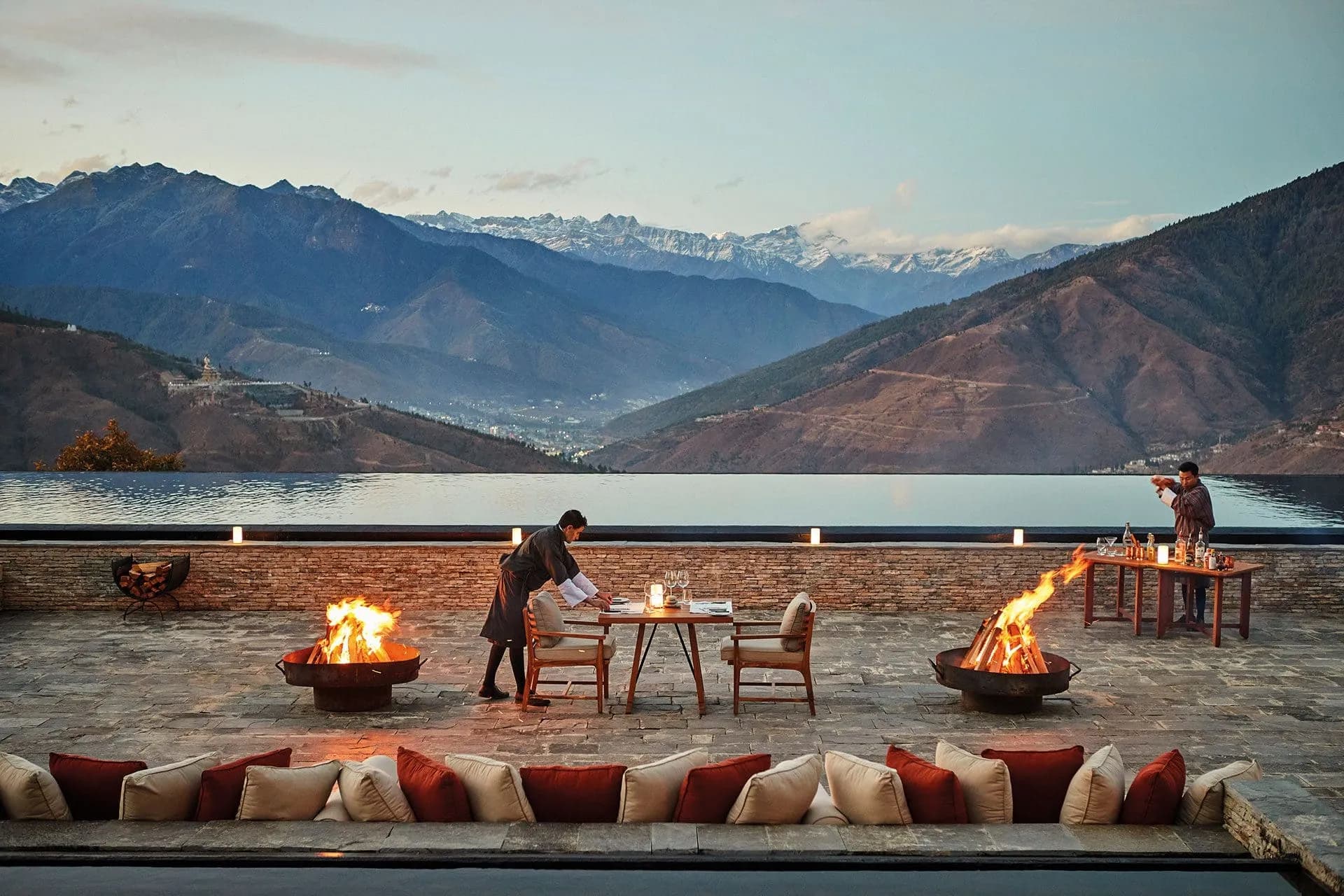 JourneyThe signature-tier Bhutan journey — private knowledgeable guide, the most considered lodge curation, helicopter or charter between valleys, exclusive-use arrangements where the season allows.The signature-tier Bhutan journey. Private knowledgeable guide, the most considered lodges, helicopter or PC-24 charter, exclusive-use arrangements. By invitation, from USD 14,000.
Frequently asked
- Do Bhutanese people have surnames?
- Generally no. Most Bhutanese carry two given names and no inherited family surname; the names are chosen individually for each person rather than passed down. The royal Wangchuck dynasty is the one exception, having carried a dynastic surname since the 1907 founding of the monarchy. For everyone else, a shared name implies a shared blessing, not a shared family.
- Who chooses a Bhutanese child's name?
- Usually a lama, rather than the parents — at the local lhakhang, or a respected Rinpoche or trulku the family holds in regard. A short while after the birth the lama selects auspicious names from the Buddhist tradition, often guided by the day and the stars under which the child was born. The meaning of the name is the point of it: to begin a life with a blessing spoken over it.
- Why do so many Bhutanese share the same names?
- Because the names are drawn from a shared pool of auspicious Buddhist words — long life, merit, the lotus, the thunderbolt — the most beautiful of them recur across the country. A single valley may hold many people named Sonam, Tshering or Dorji, each given the name independently. It also means you cannot read kinship from a name: two people who share one are almost never related.
- Can you tell whether a Bhutanese name is male or female?
- Not always from the first name — many Bhutanese names are carried by both men and women. Some second-name elements lean feminine (names such as Wangmo, Choden, Lhamo or Dema are usually women's), but a great many names are shared across both. When in doubt, it is perfectly fine to ask; Bhutanese take no offence at a courteous question about a name.
- How should I address my Bhutanese guide?
- By first name is normal, friendly and expected. For an elder, an official, or a monk, the honorific is the courteous form — Dasho for a holder of the red scarf, Lyonpo for a minister, Aum for a lady of standing, Lopen for a learned teacher. Your guide will steer you gently on the right form, and will not expect a visitor to know every title.

