A Bhutanese religious tradition
The Drukpa Kagyu — the principal Buddhist tradition of Bhutan, the state-religious institutional tradition.
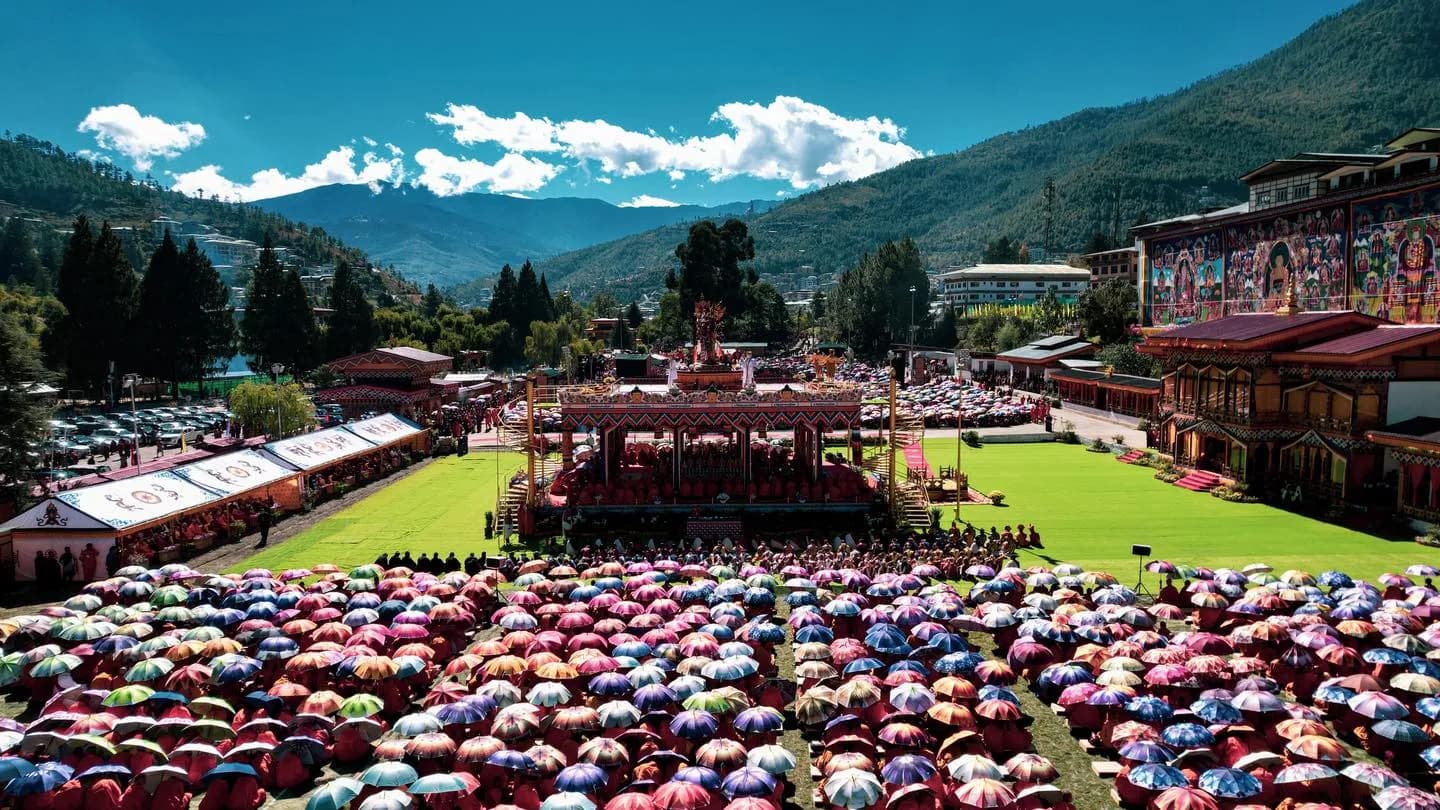
The Drukpa Kagyu is the principal Vajrayana-Buddhist tradition of Bhutan — the dominant institutional tradition through which the country's central monk body (the Zhung Dratshang) operates, the lineage that the Zhabdrung Ngawang Namgyal brought to Bhutan in the 17th century, the foundational ground of the country's name (Druk Yul — the land of the Drukpa). Bhutanese Vajrayana is a combination of the Drukpa Kagyu institutional tradition with the older Nyingma tradition (principally through Guru Rinpoche and Pema Lingpa); the Drukpa is the dominant institutional tradition at the state level.
- Register
- tradition
- Also known as
- Drukpa lineage, Drukpa Kagyu lineage, Bhutanese Drukpa
In short
The Drukpa Kagyu is the principal Vajrayana-Buddhist tradition of Bhutan — the dominant institutional, the lineage the Zhabdrung brought to Bhutan in the 17th century, the foundational ground of the country's name (Druk Yul). Combined with the older Nyingma tradition in Bhutanese practice.
The Drukpa Kagyu lineage
The Drukpa Kagyu is one of the major sub-schools of the Kagyu tradition of Tibetan-Himalayan Vajrayana Buddhism. The lineage was founded by Tsangpa Gyare Yeshe Dorje (1161-1211), the principal Tibetan founder; he is held to have witnessed nine dragons rising from the earth at the site of his principal monastery (Druk Sewa Jangchub Ling), giving the lineage its name (Drukpa — 'of the dragon'). The lineage subsequently established substantial institutional presence in western Tibet, Ladakh, and the eastern Himalayan region. Bhutan's Drukpa Kagyu tradition was established in three principal phases: Phajo Drukgom Zhigpo brought the lineage to Bhutan in the 13th century, establishing the foundational sites at Tango and Cheri Goemba near Thimphu. Subsequent transmission lineages maintained the Bhutanese Drukpa presence through the 14th-16th centuries. The Zhabdrung Ngawang Namgyal consolidated the Drukpa Kagyu as the dominant institutional tradition of Bhutan in the 17th century — establishing the Choesi dual-government system with the Drukpa Kagyu as the central monastic life and the principal dzongs as the institutional anchors. See the Zhabdrung Ngawang Namgyal entry.
The Drukpa and Nyingma combination
Bhutanese Vajrayana practice is the combination of the Drukpa Kagyu institutional tradition with the older Nyingma tradition. Nyingma — the older 'Ancient Translation' school — was established in Bhutan through Guru Rinpoche (Padmasambhava) in the 8th century and elaborated through the terton (treasure-revealer) tradition, particularly Pema Lingpa in the 15th-16th centuries. The Nyingma tradition is the principal lay-and-folk register of Bhutanese religious life — the household altars, the village lhakhangs, the principal pilgrimage sites are typically associated with the Guru Rinpoche-Nyingma. Drukpa Kagyu is the dominant institutional tradition — the Zhung Dratshang (the central monk body), the principal dzong-monastic establishments, the formal state-religious framework. Most Bhutanese citizens engage with both traditions simultaneously — the household Nyingma register and the institutional Drukpa tradition are not separate religious choices but two registers of the same overall practice. See Vajrayana Buddhism for the broader framework.
The institutional tradition today
The Zhung Dratshang — the central monk body — is the principal institutional manifestation of the Drukpa Kagyu in contemporary Bhutan. The body is headed by His Holiness the Je Khenpo (the Chief Abbot), one of the principal religious figures in the country. The Zhung Dratshang operates the central monastic life at Punakha Dzong (winter capital) and Tashichho Dzong (summer capital); the body migrates between the two with the seasonal pattern. The principal regional monk bodies (Rabdeys) operate at the dzongs across the country, each under the central Zhung Dratshang authority. The institutional framework was established by the Zhabdrung in the 17th century and has operated substantially-continuously since, surviving the 1907 transition to the Wangchuck monarchy and the 2008 transition to constitutional democracy. The Drukpa Kagyu's institutional presence is the principal religious-cultural infrastructure of the country.
The principal sites of the Drukpa register
Punakha Dzong — the historical winter capital, the principal Drukpa institutional site, the seat of the Zhung Dratshang in winter; the dzong contains the original sacred relic (the Rangjung Kharsapani) brought by the Zhabdrung from Tibet. Tashichho Dzong (Thimphu) — the summer capital seat of the Zhung Dratshang and the contemporary administrative centre. Tango Goemba and Cheri Goemba — the foundational sites of Bhutanese Drukpa, established by Phajo Drukgom Zhigpo and developed by the Zhabdrung. Gangtey Goemba — the principal Drukpa-Nyingma combination site, the seat of the Gangteng tulku lineage. Drametse Goemba (eastern Bhutan) — the originating monastery of the Drametse Nga Cham. The matched guide arranges pilgrimage-register itineraries that progress through the principal Drukpa sites with contextual register from a knowledgeable Bhutanese guide.
Related ideas
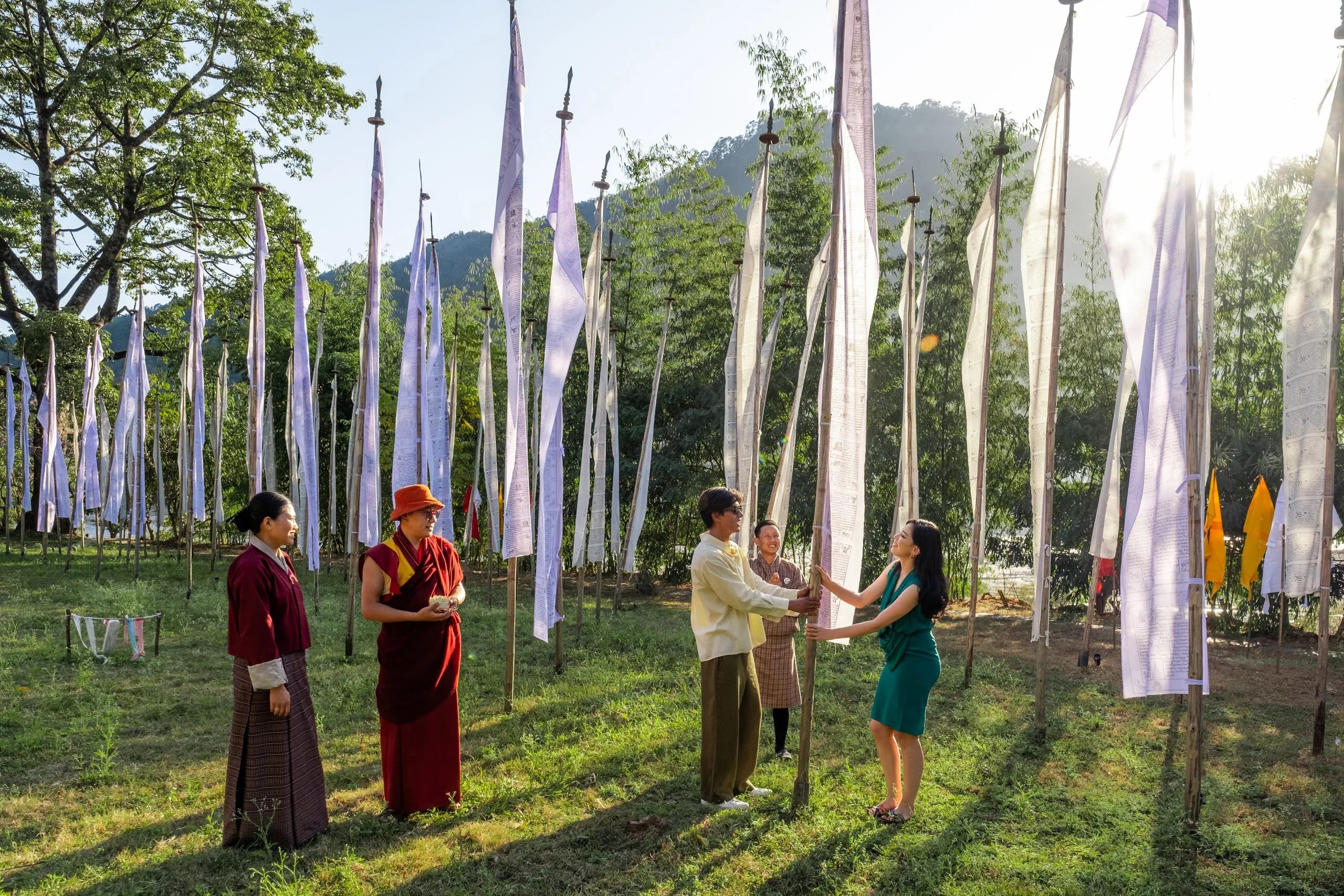 ThemeVajrayana Buddhism — the substance of every dzong, every monastery, every tshechu.Vajrayana Buddhism — the branch of Buddhism that shapes Bhutanese religious life. Drukpa Kagyu, Nyingma, Guru Rinpoche; mantra, mandala, deity yoga.
- ThemeThe Wangchuck dynasty — the hereditary monarchy of Bhutan since 17 December 1907.The Wangchuck dynasty — the hereditary monarchy of Bhutan since 17 December 1907. Five reigning monarchs across five generations. The contemporary state's institutional spine.
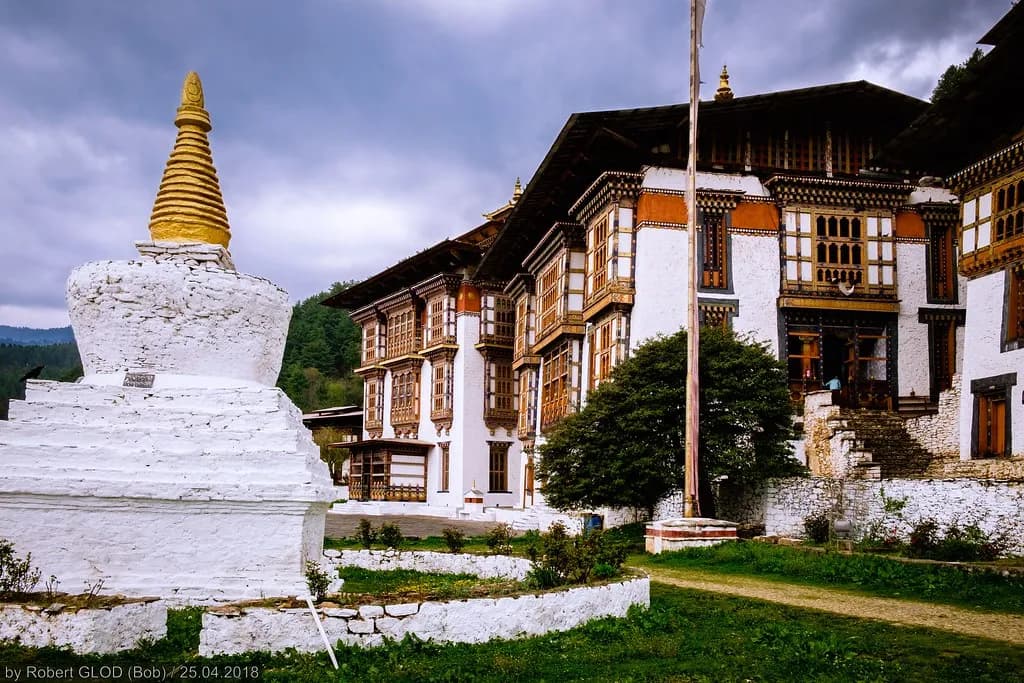
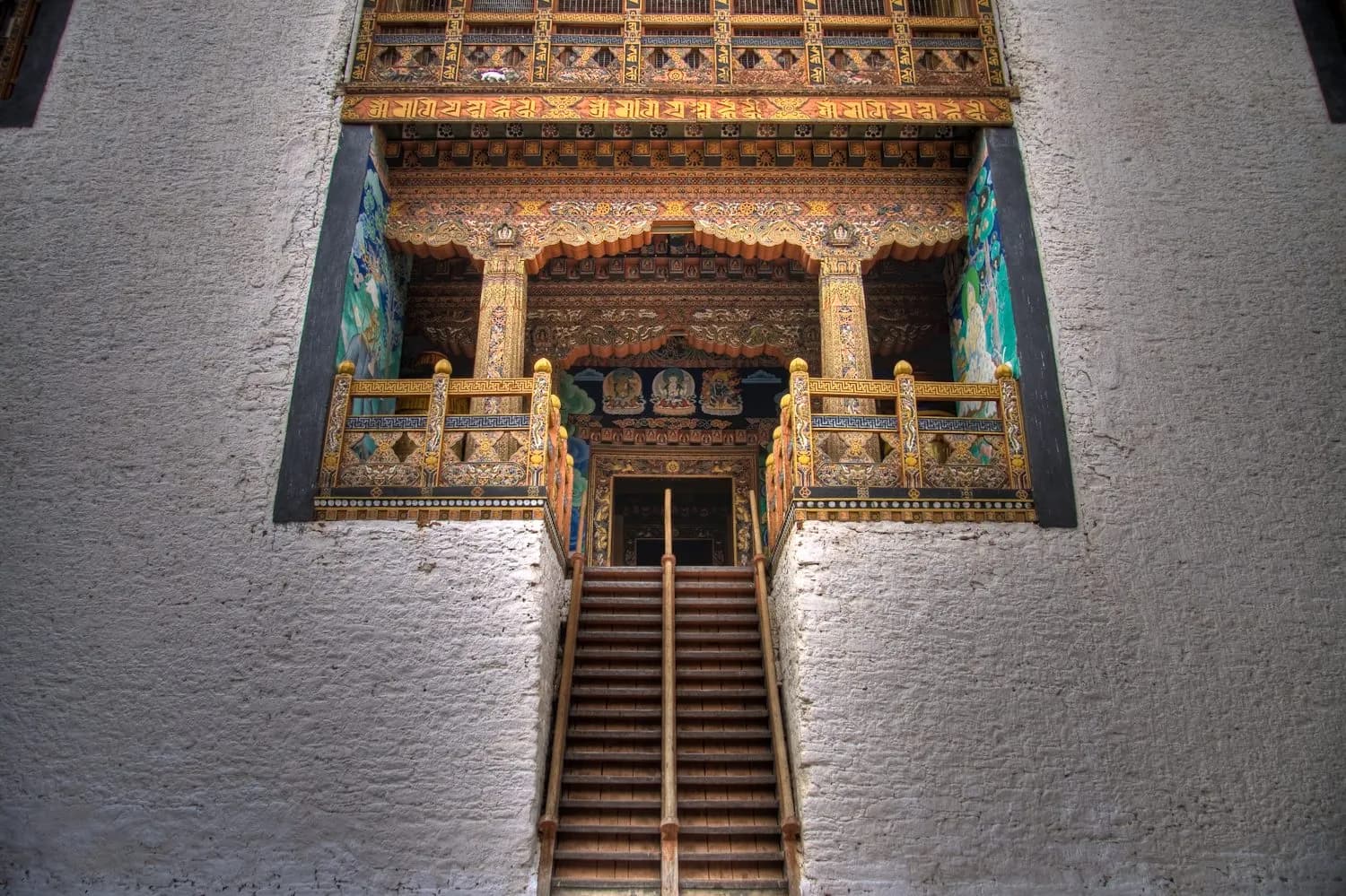 ThemeBhutanese architecture — the dzong, the lhakhang, the vernacular farmhouse register.Bhutanese architecture — the dzong, the lhakhang, the vernacular farmhouse. White-and-wood facade, steep roofs, decorative window frames, the courtyard register.
Where to see it
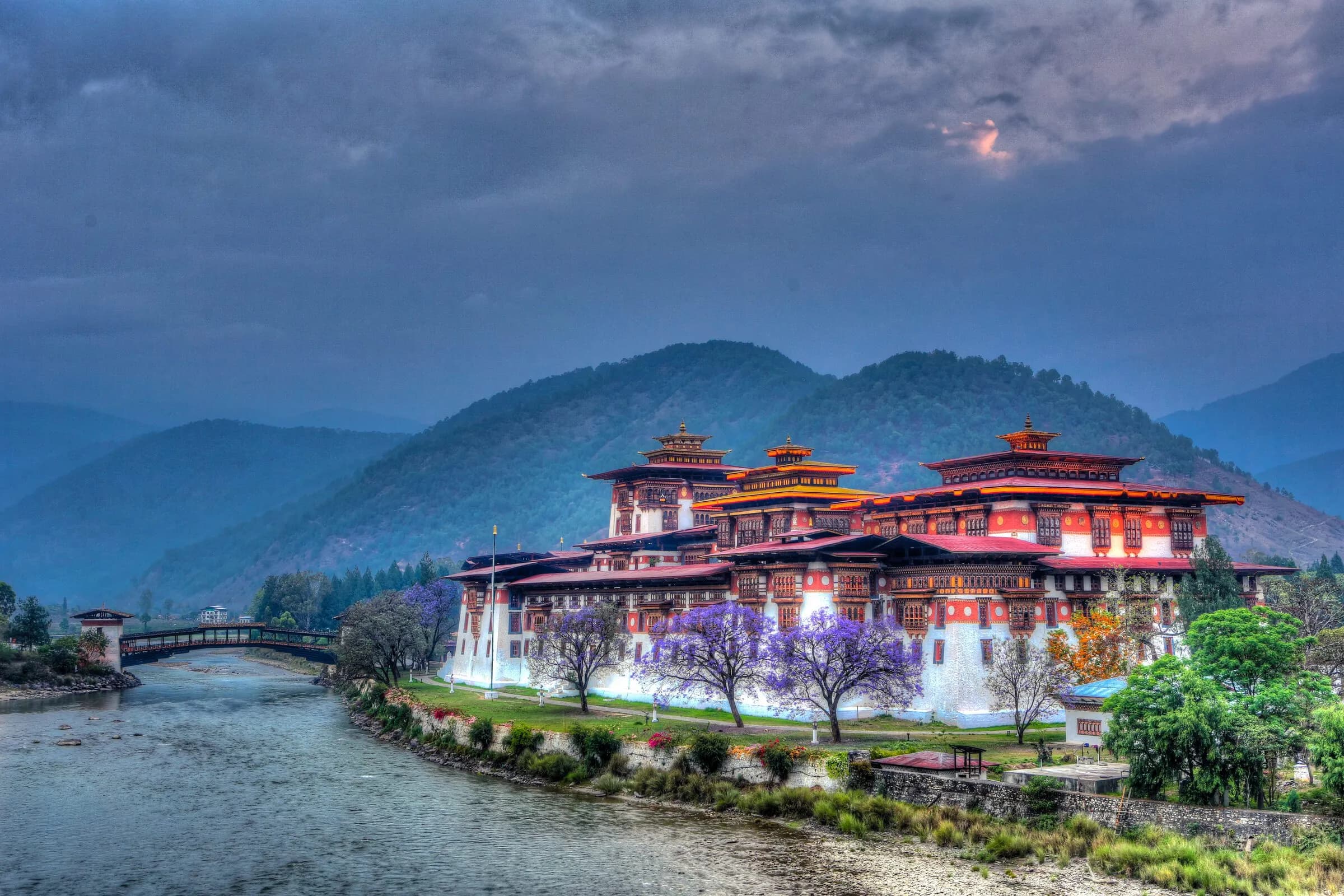 MonumentPunakha Dzong — Pungtang Dechen Phodrang, founded 1638 at the confluence of the father and mother rivers.Punakha Dzong — the Palace of Great Happiness, founded 1638. The history, the architecture, what to expect on a visit.
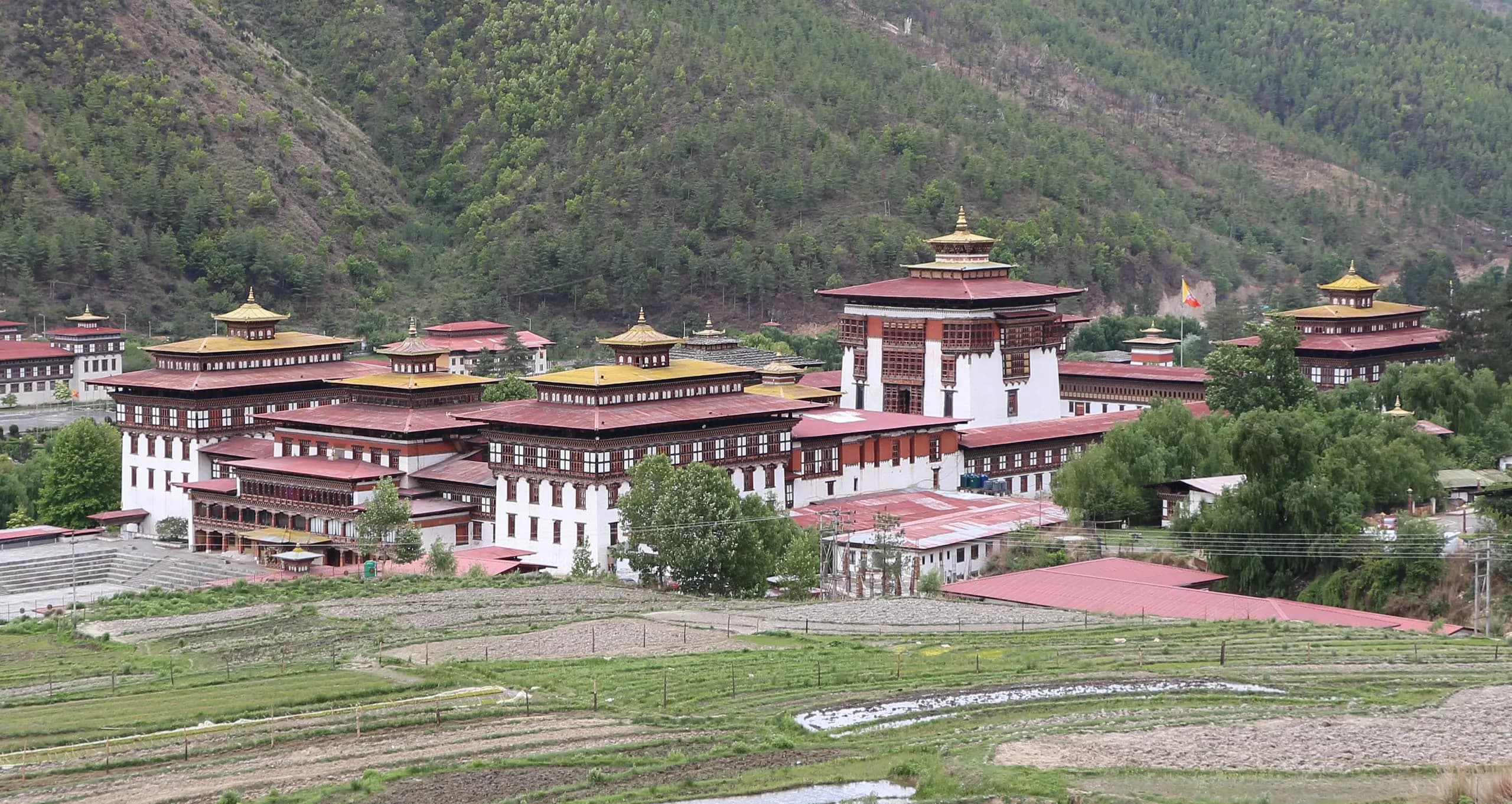 MonumentTashichho Dzong — the fortress of the auspicious religion, at the heart of Thimphu.Tashichho Dzong — the seat of Bhutan's central government and Je Khenpo summer residence in Thimphu. History, architecture, visiting.
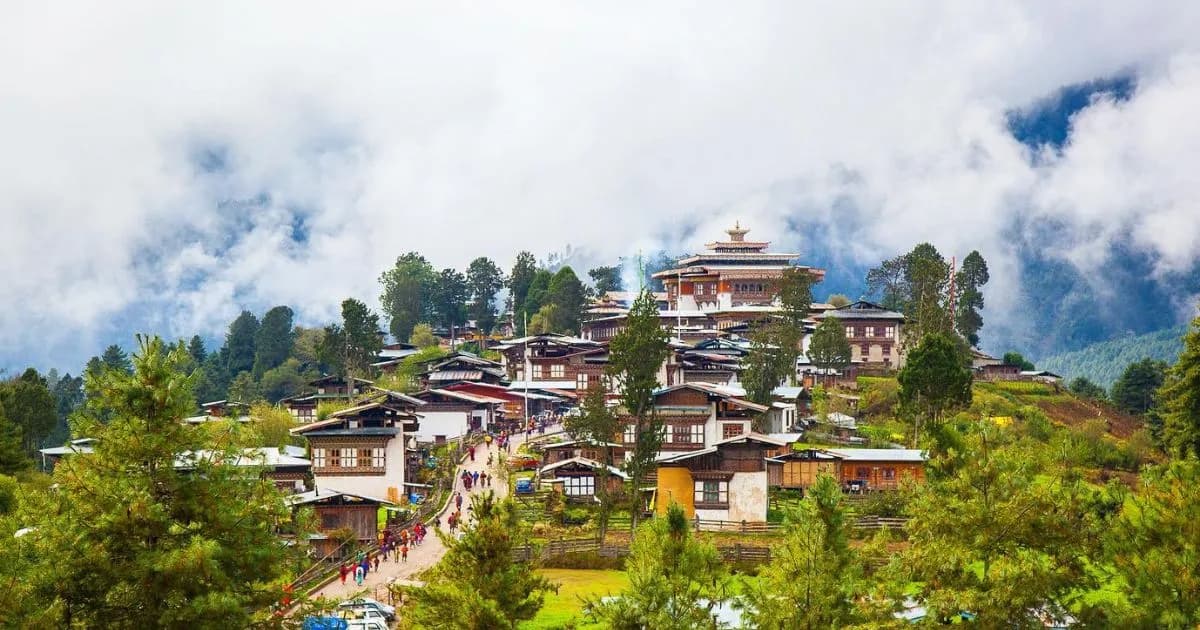 MonumentGangtey Goemba — founded in 1613 by Pema Trinley, grandson of the great terton Pema Lingpa.Gangtey Goemba — the 1613 Nyingma monastery overlooking the Phobjikha valley and the black-necked crane wintering ground.
Journeys built around it
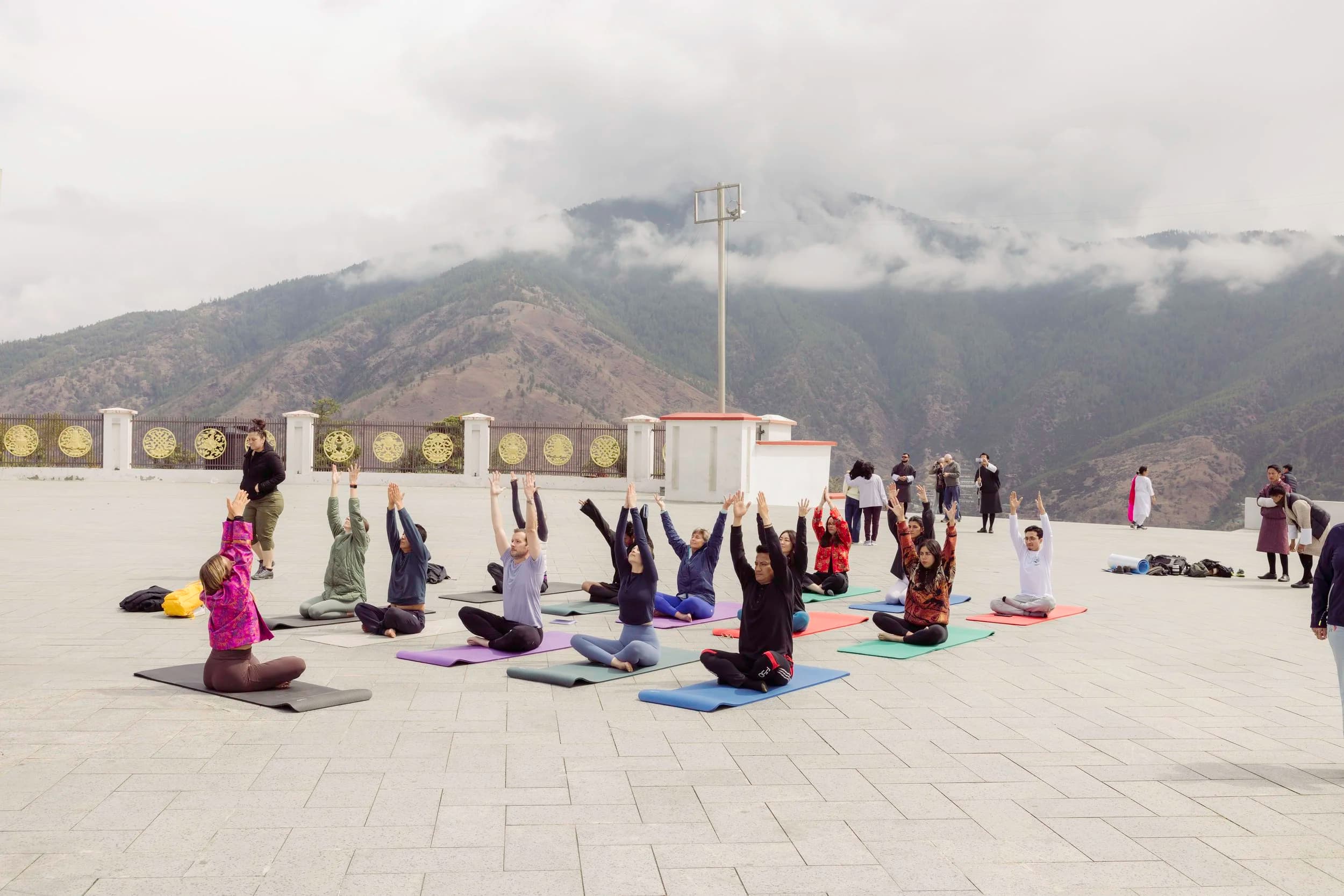 JourneySeven nights with a monastic guide, in the still season.A seven-night Bhutan meditation retreat through Clear-Sky Bhutan (Dec–Feb). Daily sittings with a monastic-trained guide, hot stone baths, no festival noise.
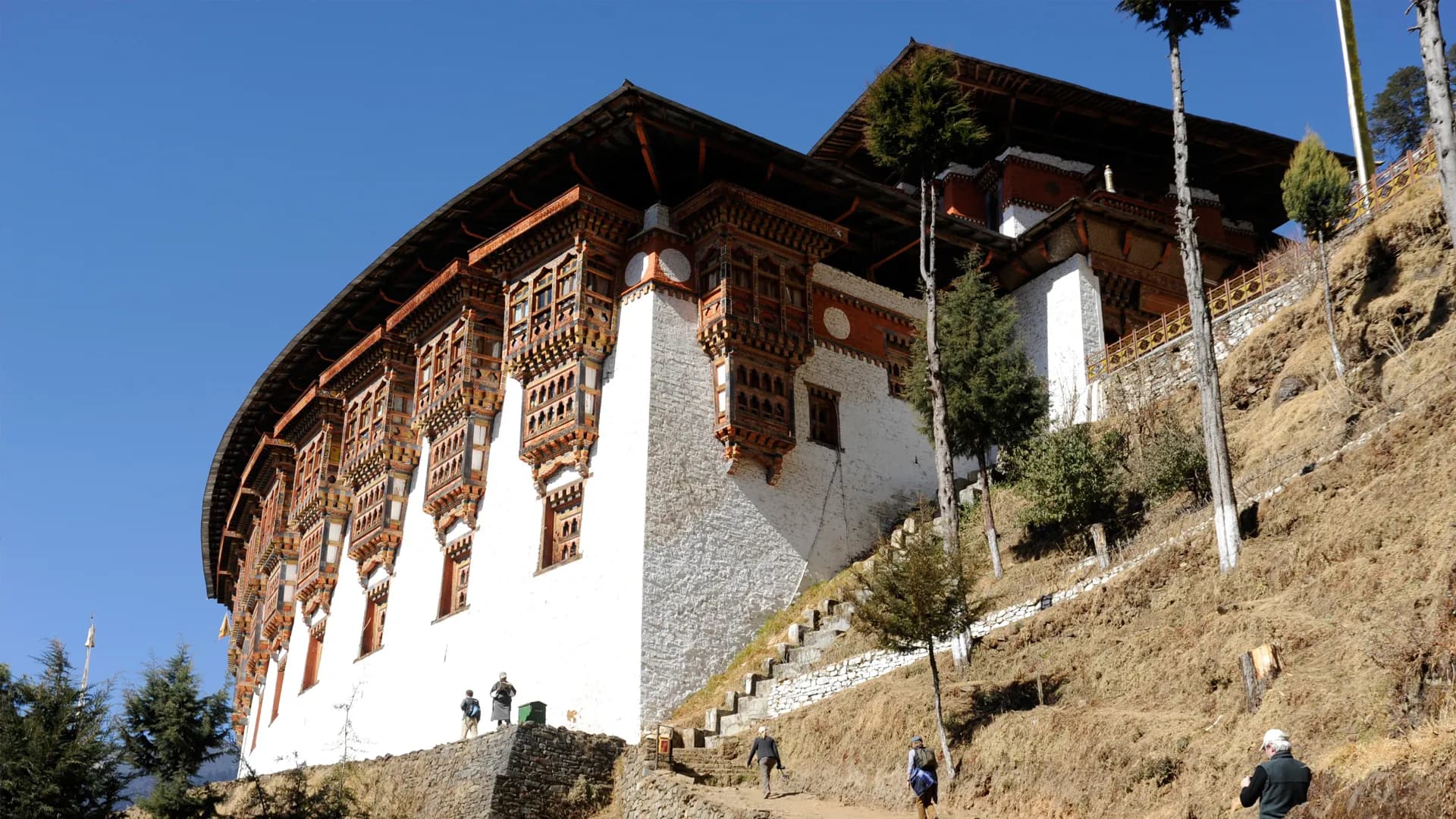 JourneyTen nights for the Buddhist pilgrim — the principal sites, with monastic context.A ten-night Bhutan Buddhist pilgrimage for Asian-Buddhist travellers. Monastic context; matched monastic-trained guide; Bumthang religious circuit.
 JourneyA nine-night Bhutan Buddhist journey for travellers from Thailand, Japan, and Korea — the Vajrayana tradition read comparatively against your own school, the principal monasteries, the knowledgeable monastic-trained matched guide.A nine-night Bhutan Buddhist journey for Thai, Japanese, and Korean travellers. Comparative Vajrayana / Theravada / Tendai / Zen / Seon. Knowledgeable monastic-trained guide.
Journeys that visit The Drukpa Kagyu
Frequently asked
- What is the difference between Drukpa Kagyu and other Tibetan Buddhist schools?
- The Drukpa Kagyu is one of the four major Tibetan-Buddhist lineages (alongside Nyingma, Sakya, and Gelug). All four lineages are Vajrayana traditions with doctrinal overlap; they differ principally in their transmission lineages, their specific teaching emphases, and their institutional registers. Drukpa Kagyu emphasises the Mahamudra meditation tradition; the lineage holds substantial monastic and ritual training but the principal teaching destination is direct experiential realisation. The Drukpa is the dominant institutional tradition of Bhutan, Ladakh, and parts of western Tibet; other regions are dominated by other lineages (Gelug in central Tibet, Sakya in some regions, Nyingma is widespread but less institutionally-dominant).
- Who is the current Je Khenpo?
- His Holiness the Seventieth Je Khenpo (the current Chief Abbot of the Zhung Dratshang) is the principal religious figure in contemporary Bhutan, sharing the head-of-state symbolic register with His Majesty the Druk Gyalpo. The Je Khenpo is appointed for life and exercises substantial authority across the central monk body and the broader Bhutanese religious. The matched guide briefs visitors on the current Je Khenpo and the contemporary religious institutional context where relevant.
- Is the Drukpa tradition active outside Bhutan?
- Yes. The Drukpa Kagyu has substantial international presence — particularly through His Holiness the Gyalwang Drukpa (the supreme head of the international Drukpa lineage, based principally at Druk Amitabha Mountain in Nepal), who maintains substantial institutional presence in Ladakh, Nepal, India, and increasingly worldwide. The Bhutanese Drukpa institutional tradition is distinct from the international Gyalwang Drukpa; the two operate substantially-independently but with doctrinal and historical commonality.

