A Bhutanese experience
Bhutanese cooking class — learn ema datshi, momos, and the home-cooking tradition.
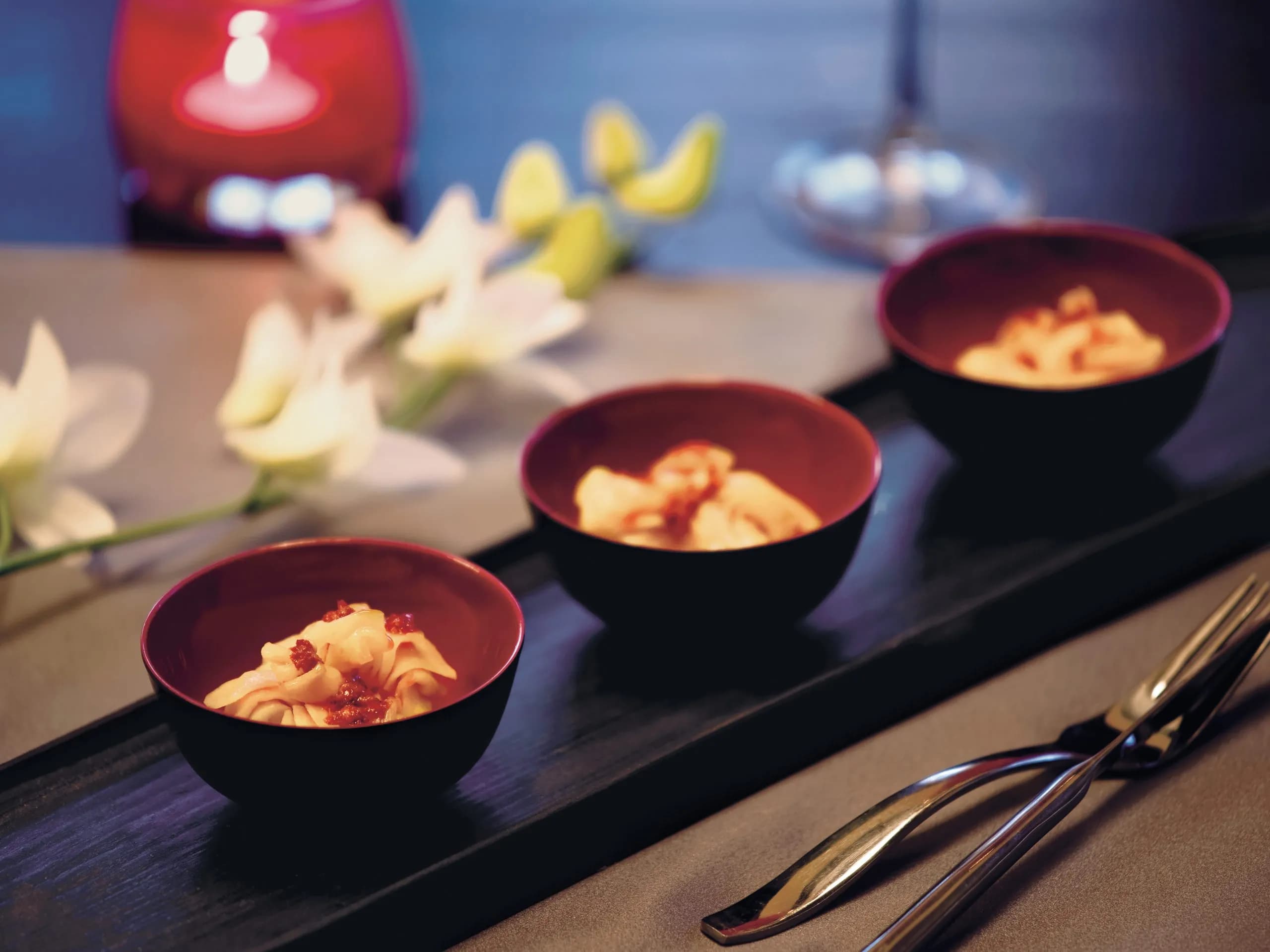
A Bhutanese cooking class is one of the more-accessible cultural experiences a visitor can have — typically taken at a premium lodge or with a host family, the class teaches the principal Bhutanese dishes (ema datshi, the chilli-and-cheese national dish; momos, the Himalayan dumpling tradition; phaksha paa, the pork-and-radish staple; red rice; the butter-tea tradition) alongside the cultural context. The home-cooking tradition is what makes Bhutanese cuisine distinctive; the cooking class is the entry-point.
Also known as Bhutan cooking workshop · Ema datshi class · Bhutanese home cooking
- Duration
- half-day
- Effort
- easy
- Where
- Premium lodges and host-family homes across Paro, Thimphu, Punakha, Bumthang
- Best months
- October · November · December · January · February · March · April · May
- Register
- culture
What the class teaches
A Bhutanese cooking class typically covers the principal dishes across a 3-4 hour session. Ema datshi — the national dish, a chilli-and-cheese stew, with the regional variations (shamu datshi with mushrooms, kewa datshi with potato). Momos — the dumpling tradition, both meat-filled and vegetable-filled, with the dough-rolling-and-folding work. Phaksha paa — the pork-and-radish dish, the protein anchor of Bhutanese home cooking. Red rice — the Bhutanese staple grain, with the cooking technique that produces the characteristic Bhutanese rice texture. Suja — the butter-tea tradition, the principal Bhutanese hot drink, with the churning and the butter-salt-tea balance. The matched guide arranges the class with the appropriate dietary register for the visitor's interests.
Where the class is taken
Premium lodge cooking class — the polished register at Amankora, Six Senses Bhutan, COMO Uma, &Beyond Punakha, and Gangtey Lodge; private kitchen-and-chef arrangement, English-language teaching, post-class meal. Host-family cooking class — the cultural-depth; the matched guide arranges classes with Bhutanese host families in Paro, Punakha, or Bumthang; traditional Bhutanese kitchen, family-context cultural, home-cooked post-class meal. Restaurant cooking class — Thimphu and Paro restaurants run classes as a tourism-friendly; the restaurant-kitchen experience. The host-family option provides the cultural depth; the premium-lodge option provides the polish. Most serious-culinary-interested visitors do both.
The cultural context
Bhutanese home cooking is distinctive from the broader Himalayan tradition. The chilli register — Bhutanese cuisine uses chilli as a vegetable rather than a spice; ema datshi is principally chilli-and-cheese rather than chilli-flavoured. The cheese tradition — the yak-and-cow cheese tradition is the principal protein in vegetarian dishes; the cheese is fresh and substantially different from Western cheese registers. The red rice register — Bhutanese red rice is the principal grain; different from Indian basmati or Chinese rice, with a nutty-and-chewy texture. The chilli-cheese combination is what makes Bhutanese cuisine distinctive; the cooking class is the entry-point for understanding the broader cuisine. See the Bhutanese cuisine theme for the broader.
Practical
- Booking
- The matched guide arranges classes at the appropriate venue; 48-hour advance booking is standard. Dietary preferences (vegetarian, gluten-free, etc.) are readily accommodated with advance notice. The host-family option requires 48-72 hour advance arrangement; the premium-lodge option works on 24-hour notice.
- Fees
- Premium lodge cooking class — typically USD 100-250 per person per session, includes the class, the post-class meal, the cultural. Host-family cooking class — typically USD 60-120 per person, includes the class and the home-cooked meal, with the host-family fee paid directly to the family. Restaurant cooking class — typically USD 40-80 per person.
- Take-home register
- Most cooking classes include a recipe printout in English; the premium-lodge option may include a spice-and-ingredient takeaway pack. The Bhutanese dried-chilli tradition is the principal takeaway for home-cooking continuation; the matched guide arranges customs-and-export documentation where required.
More like this
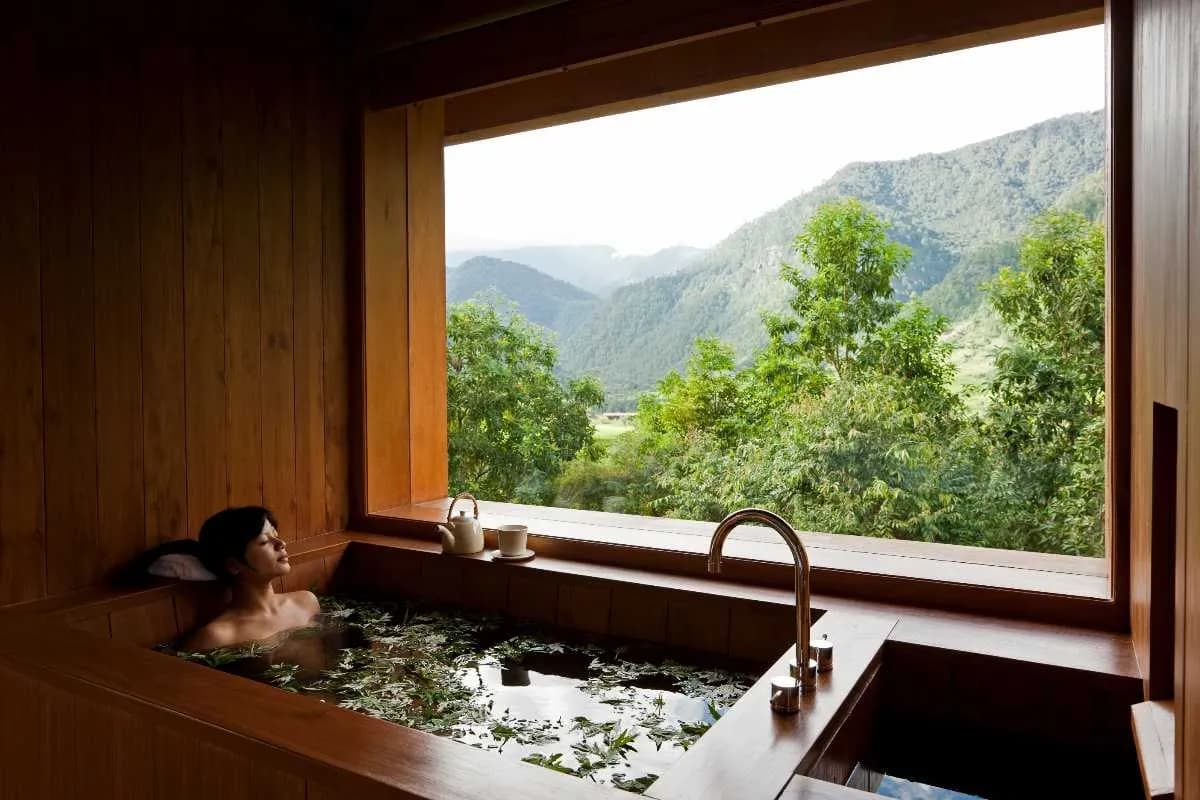 ExperienceThe Bhutanese hot stone bath — menchu, the river-stone soak at the end of a long day.The Bhutanese hot stone bath — menchu, river stones heated in a wood fire and dropped into wooden tub with mountain herbs. Premium-lodge and heritage-farmhouse register.
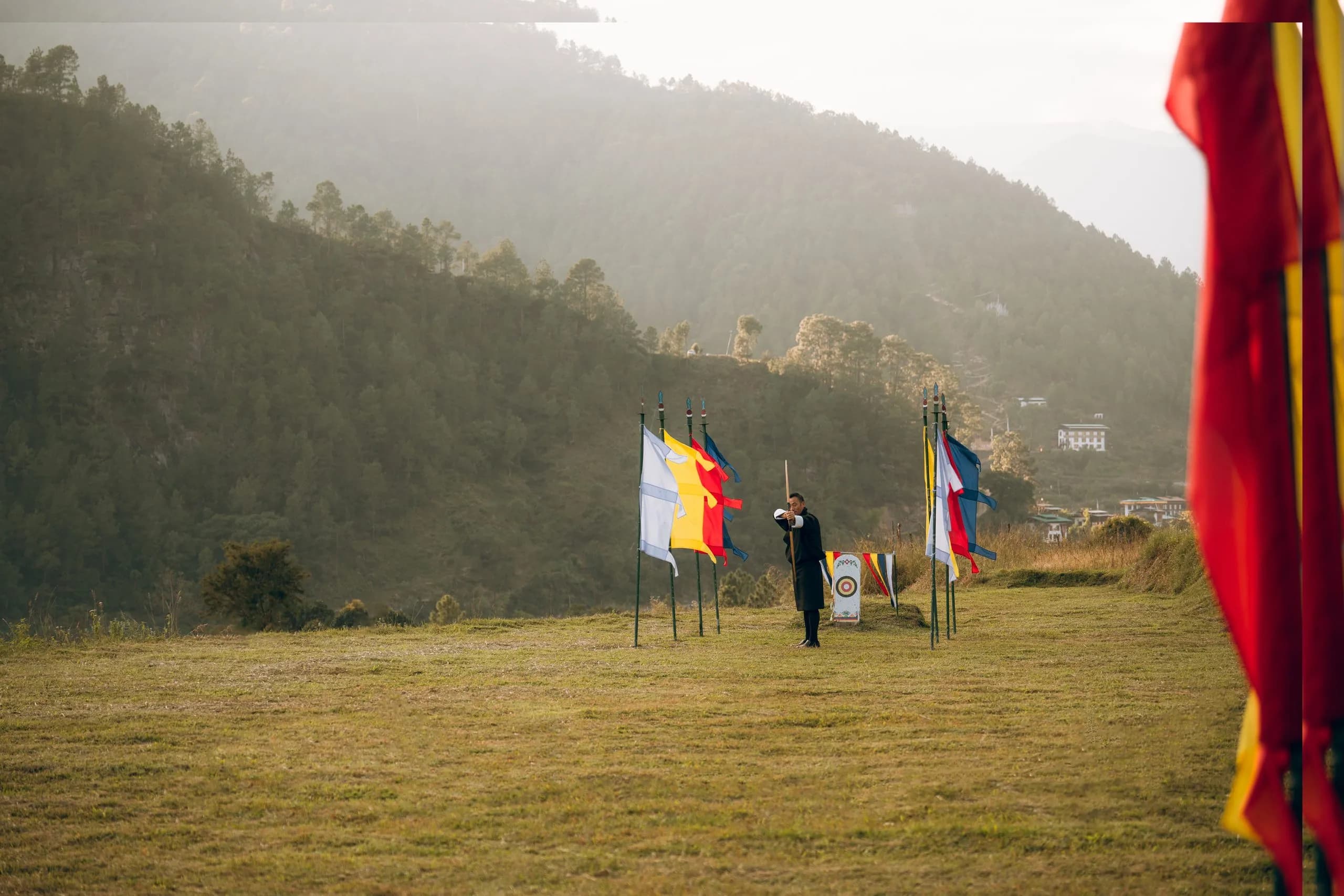 ExperienceBhutanese archery — the national sport, played with song and dance at 145 metres.Bhutanese archery — the national sport. 145-metre target, two registers (traditional bamboo bow + modern compound), song and dance between rounds.
The wider idea
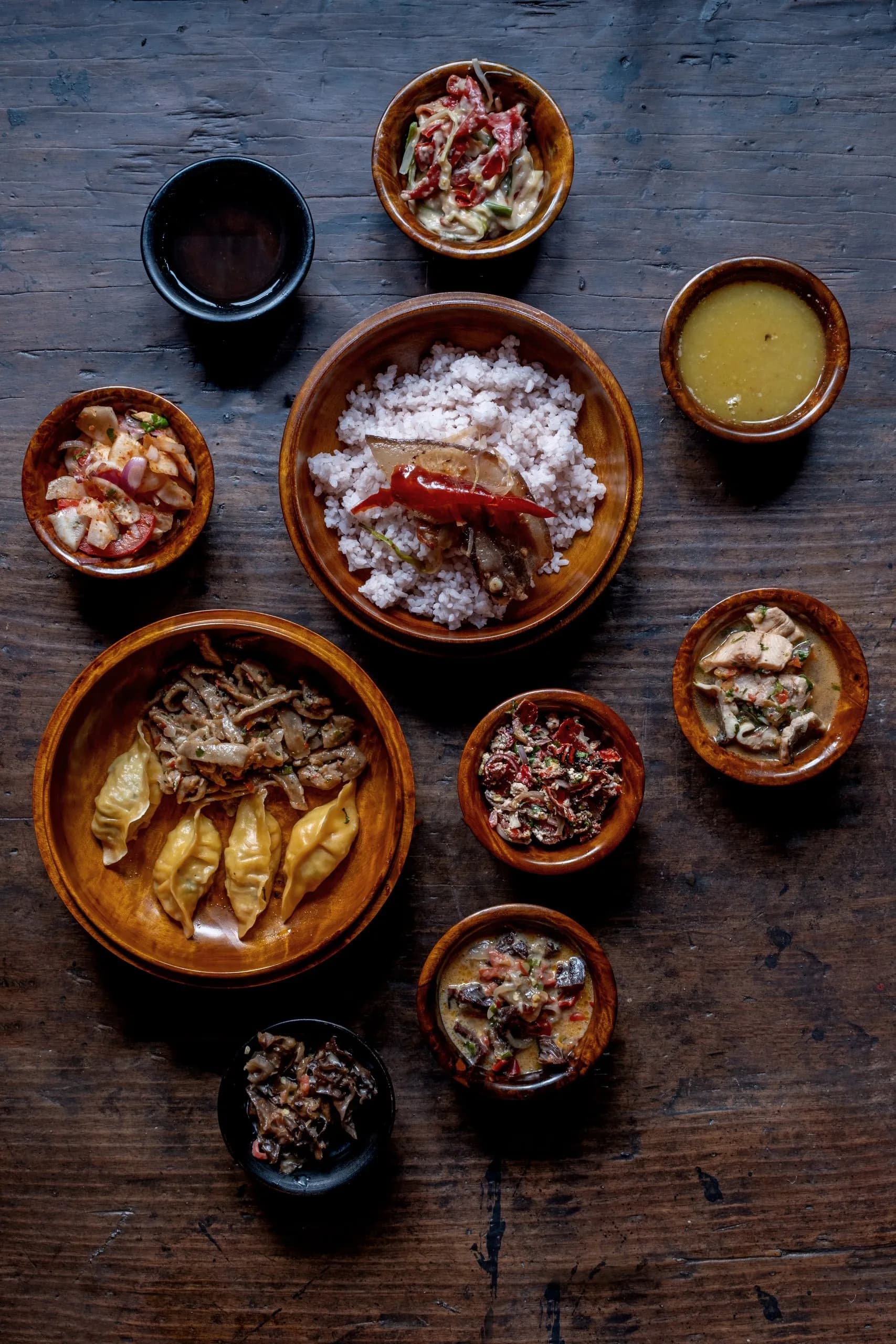 ThemeBhutanese cuisine — the most distinctive Himalayan food, treated as a vegetable rather than a spice.Bhutanese cuisine — ema datshi (chilli cheese), red rice, datshi, yak butter, the four geographic registers. The most distinctive Himalayan cuisine.
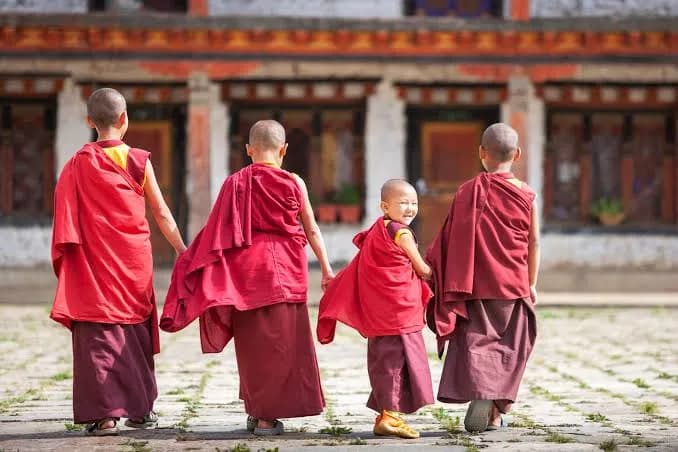 ThemeGross National Happiness — the framework that shapes the country a visitor encounters.Gross National Happiness — the Bhutanese development philosophy articulated by the Fourth Druk Gyalpo at His 1974 coronation as the first of nine guiding goals. Four pillars, nine measurement domains, constitutional grounding.
Journeys that include it
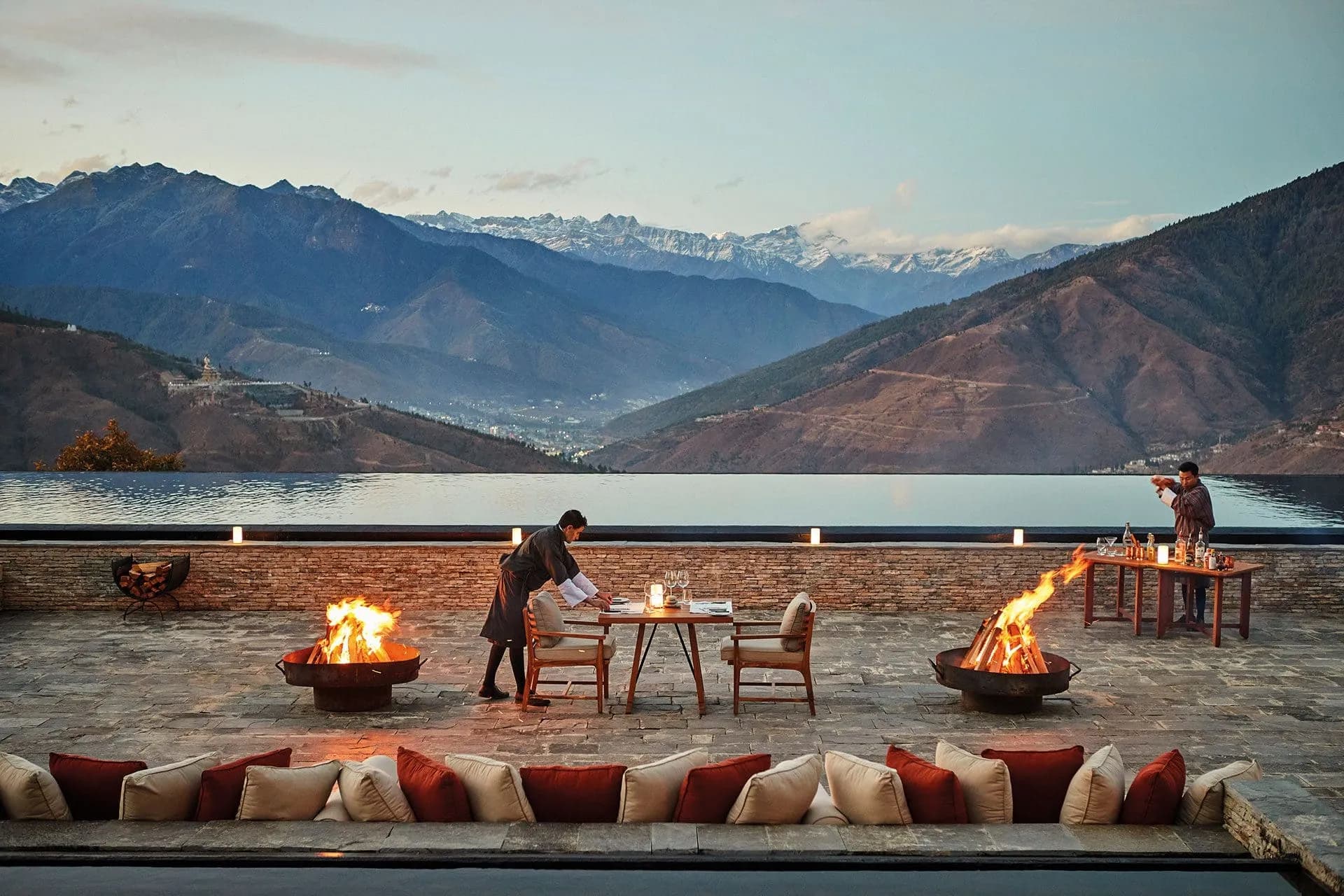 JourneyThe signature-tier Bhutan journey — private knowledgeable guide, the most considered lodge curation, helicopter or charter between valleys, exclusive-use arrangements where the season allows.The signature-tier Bhutan journey. Private knowledgeable guide, the most considered lodges, helicopter or PC-24 charter, exclusive-use arrangements. By invitation, from USD 14,000.
- JourneySeven nights in Bhutan, on your terms.A private seven-night Bhutan honeymoon for couples flying from Singapore. Bhutanese lodges, a matched guide, transparent all-inclusive pricing.
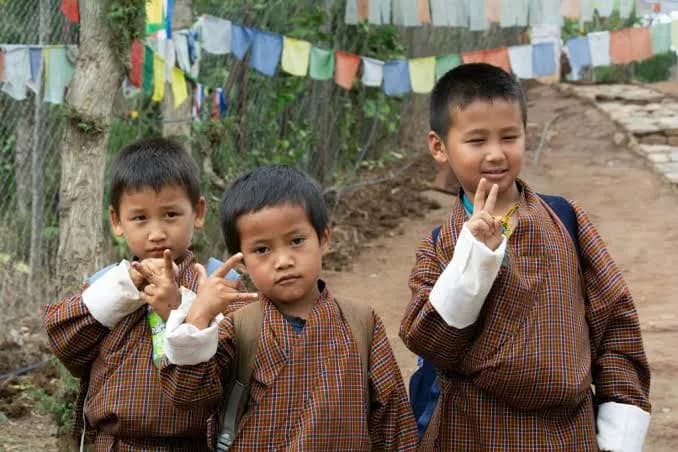 JourneyNine nights in Bhutan, for a family from London.A nine-night Bhutan family trip from London for autumn half-term. Bhutan including Phobjikha; teenager-friendly light treks; matched knowledgeable guide.
Frequently asked
- Will the cooking class be very spicy?
- Adjustable. The Bhutanese home tradition is substantially spicier than most international visitors typically tolerate; the cooking class is taught with the adjustable-chilli tradition so visitors can modify the spice level. Ema datshi can be cooked at mild-to-very-spicy levels; the principal cultural tradition is the chilli-and-cheese combination rather than the absolute spice level.
- Can I learn vegetarian dishes only?
- Yes. Bhutanese cuisine has substantial vegetarian options — the principal ema datshi, kewa datshi, shamu datshi, momos with vegetable filling, the red rice. The Bhutanese cooking tradition is broadly vegetarian-friendly (the Vajrayana-Buddhist register has a substantial vegetarian, particularly during religious observances). The matched guide arranges vegetarian-focused cooking classes.
- Can I bring the recipes home?
- Yes — recipe printouts are standard. The ingredient register can be difficult to replicate precisely outside Bhutan (the Bhutanese cheese is hard to source internationally; the chilli register requires Bhutanese-or-substitute chillies). The matched guide briefs on substitute ingredients for home cooking; Bhutanese cuisine is broadly recreatable internationally with sensible adjustments.

