A Bhutanese nature centre
The Black-Necked Crane Information Centre — the window onto the rare cranes that winter in the Phobjikha valley.
On the edge of the Phobjikha valley's wetland, the Black-Necked Crane Information Centre — run by the Royal Society for the Protection of Nature — is the place to understand and observe the valley's most celebrated visitors: the black-necked cranes that fly down from the Tibetan plateau each winter to roost in the marsh. From late autumn to early spring some hundreds of the rare birds make Phobjikha their season's home, and the Bhutanese revere them. The centre offers spotting scopes, exhibits on the cranes and the valley's ecology, and a viewing gallery over the wetland where the birds gather.
Also known as Crane Centre Phobjikha · RSPN Crane Centre · Gangtey crane centre
- Location
- Phobjikha valley, below Gangtey Goemba, Wangdue Phodrang
- Elevation
- 2,900 m
- Kind
- nature-centre
The cranes of Phobjikha
Each year, as winter closes the high passes of the Tibetan plateau, the black-necked cranes — tall, stately, grey-and-black birds, among the rarest cranes in the world — fly south across the Himalaya to the milder wintering grounds of Bhutan, and the glacial bowl of the Phobjikha valley is their most famous refuge. Some hundreds arrive from late October and stay until early spring, feeding by day in the valley's fields and roosting at night in the central marsh, safe from predators on the open water. They are deeply revered in Bhutan: it is said that on arriving and again on leaving, the cranes circle the Gangtey Goemba three times, as if in homage — and the valley's people, who share the land with them, hold their winter presence as a blessing.
The centre
The Black-Necked Crane Information Centre, run by the Royal Society for the Protection of Nature (RSPN), sits on the valley edge overlooking the wetland where the cranes gather. It is the place to understand them: exhibits explain the cranes' migration, biology, and the conservation work that protects them and the valley's fragile marsh; mounted spotting scopes on the viewing gallery let visitors watch the distant birds without disturbing them; and the staff, who know the season and the valley intimately, point out where the cranes are feeding and roosting on any given day. The centre also tells the broader story of Phobjikha's careful balance — a valley deliberately kept low-impact (electricity was laid underground to protect the cranes' flight paths) so that the birds and the people continue to share it.
The crane festival and the season
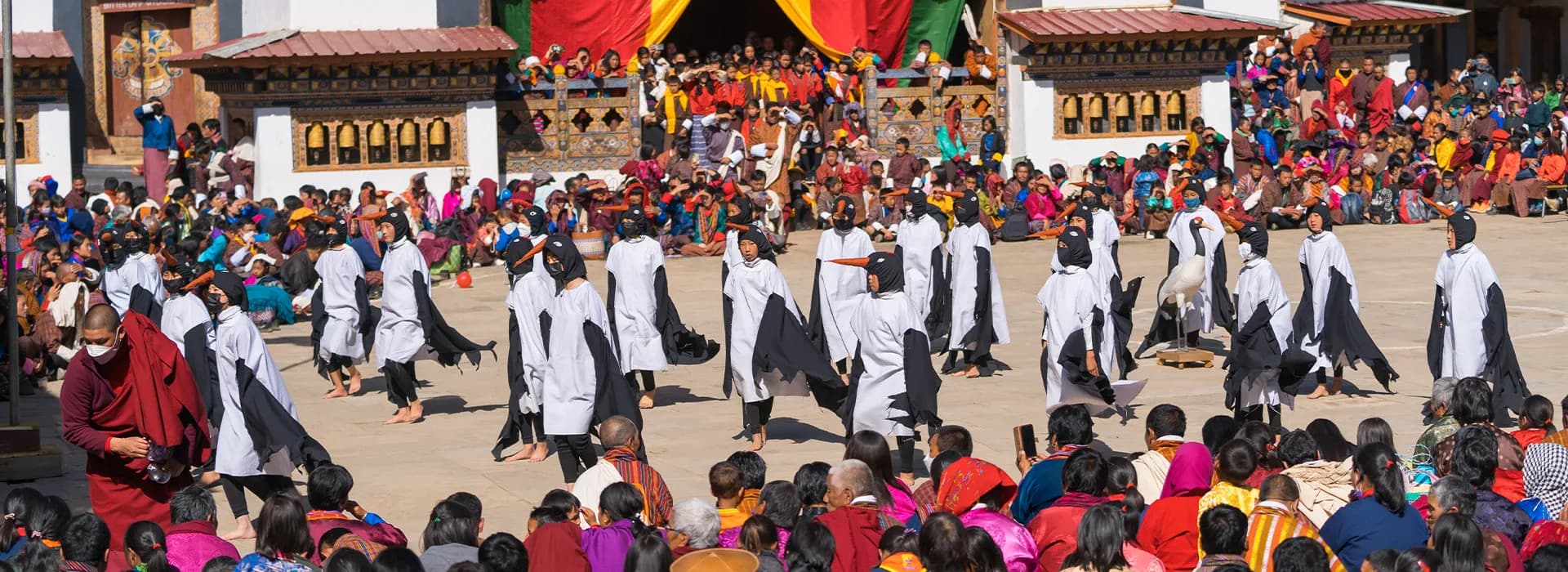
The cranes are the soul of the valley's winter, and they are honoured each year at the Black-Necked Crane Festival, held in the courtyard of Gangtey Goemba in mid-November, when the birds have arrived — a day of folk and masked dances, including a beloved crane dance by local schoolchildren in costume, that celebrates the birds and raises support for their conservation. For a visitor, the crane season (roughly November to February) is the time to come to Phobjikha: the centre, the festival, the valley walks, and the chance to watch the rare birds in their winter home together make one of the most distinctive wildlife experiences in the Himalaya.
Visiting
- Getting there
- The centre is on the edge of the Phobjikha valley below Gangtey Goemba, an easy drive within the valley — part of any Phobjikha day. The matched guide arranges the visit, usually alongside Gangtey Goemba and the valley nature trail.
- Seeing the cranes
- The cranes are present roughly from late October to early March; outside that window the centre's exhibits and scopes remain, but the birds are gone. In season, the mounted scopes on the viewing gallery give the best views without disturbing the birds — the cranes are watched from a respectful distance, never approached. Early morning and late afternoon, as the cranes move between fields and roost, are the most active times. Allow an hour at the centre, more if combining with a valley walk.
- Protocol
- The cranes are protected and easily disturbed; visitors watch only from the centre and designated points, keep their distance and their voices low, and follow the RSPN staff's and the guide's lead. A small entry contribution supports the conservation work. Photography of the distant birds is fine; approaching them is not.
- Best time to visit
- November to February for the cranes, with the mid-November Black-Necked Crane Festival a highlight of the early season. Phobjikha is cold in winter — warm layers are essential — but the crystalline valley light and the presence of the cranes make it the valley's finest season. Outside winter, the centre is still worth a short visit for its exhibits and the valley view.
Festivals held here
Journeys featuring this site
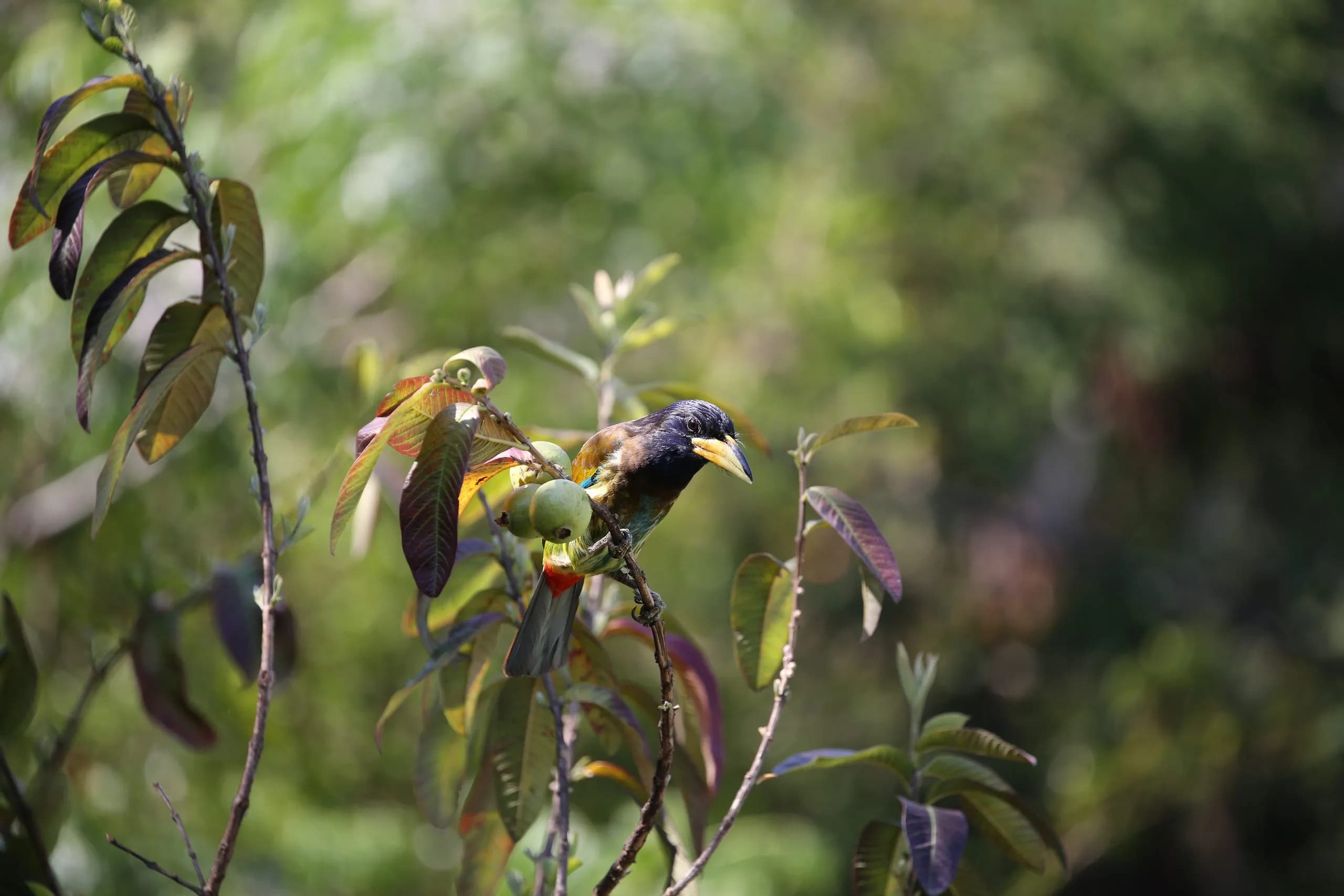 JourneyEight nights for the country's principal endemics — cranes at Phobjikha, the heron on the Punatsangchhu, the hornbills in the broadleaf belt.An eight-night Bhutan birding journey targeting the principal endemics — black-necked cranes at Phobjikha, white-bellied heron, hornbills, the beautiful nuthatch.
 JourneyThe signature-tier Bhutan journey — private knowledgeable guide, the most considered lodge curation, helicopter or charter between valleys, exclusive-use arrangements where the season allows.The signature-tier Bhutan journey. Private knowledgeable guide, the most considered lodges, helicopter or PC-24 charter, exclusive-use arrangements. By invitation, from USD 14,000.
Journeys that visit Black-Necked Crane Information Centre
Frequently asked
- When can I see the black-necked cranes in Phobjikha?
- Roughly from late October to early March, when the cranes winter in the valley after flying down from the Tibetan plateau. The peak and most reliable viewing is November to February. Outside that window the birds have returned north, though the information centre's exhibits and the valley itself remain rewarding year-round.
- What is the Black-Necked Crane Festival?
- An annual celebration held in the courtyard of Gangtey Goemba in mid-November, once the cranes have arrived — a day of folk and masked dances, including a much-loved crane dance performed by local schoolchildren, that honours the birds and raises support for their conservation. Many visitors time their Phobjikha visit to it.
- How close can I get to the cranes?
- Not close — and deliberately so. The cranes are rare and easily disturbed, so they are watched from the information centre's viewing gallery and designated points through mounted spotting scopes, never approached across the wetland. This protects the birds and is part of why they keep returning to Phobjikha. The scopes give excellent views; the guide and RSPN staff help you find the birds.

