A Bhutanese valley walk
The Gangtey Nature Trail — the loved, gentle walk down through the Phobjikha valley.
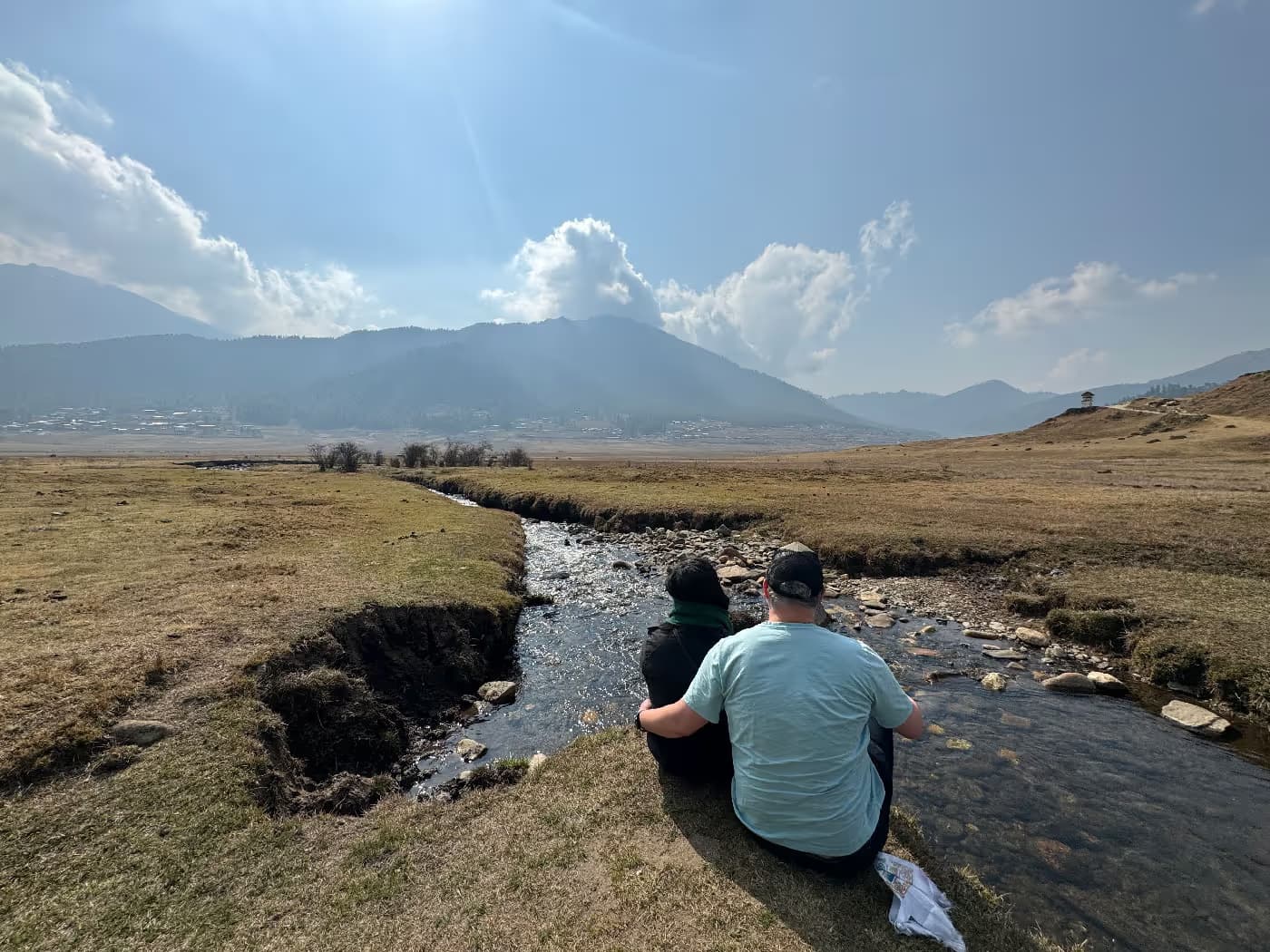
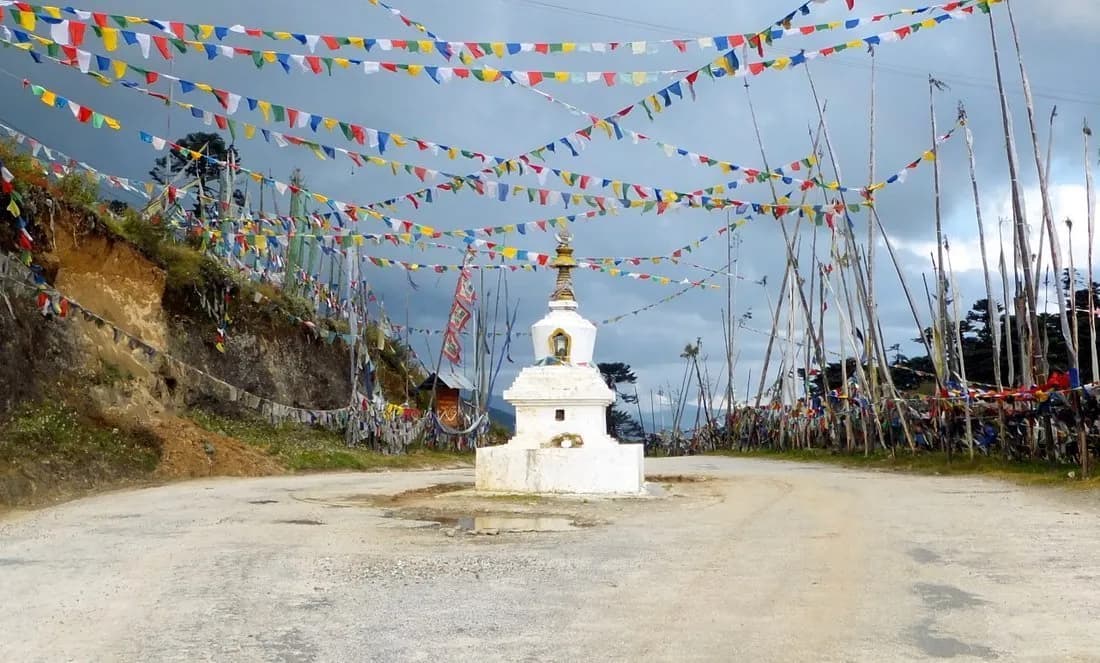
The Gangtey Nature Trail is the classic short walk of the Phobjikha valley — an easy, mostly downhill path that begins near Gangtey Goemba on its hilltop and winds down through pine forest, past a chorten and prayer-flag-strung mani wall, through the village of Semchubara, and out across the open floor of the glacial valley. It takes only an hour and a half or two, and asks little of the legs, but it gives the truest feel of Phobjikha: the wide marsh, the grazing cattle, the dwarf bamboo, and — in winter — the black-necked cranes feeding in the fields. Many visitors call it the most rewarding gentle walk in Bhutan.
Also known as Gangtey Nature Trail · Phobjikha nature trail
- Location
- Phobjikha valley, from Gangtey Goemba, Wangdue Phodrang
- Elevation
- 2,900 m
- Kind
- nature-trail
The walk
The trail begins near Gangtey Goemba, the monastery on its low hill at the head of the valley, and drops gently down the western slope: first through pine forest, past a white chorten and a long mani wall hung with prayer flags, then through the small village of Semchubara with its farmhouses and potato fields, and finally out onto the open floor of the Phobjikha valley near the marsh. It is around four to five kilometres, almost all downhill or level, and takes an hour and a half to two hours at an easy pace — the kind of walk anyone can do, and one of the loveliest ways to spend a morning in the valley. The matched guide arranges for the vehicle to meet the party at the bottom, so the whole walk is downhill.
The valley it crosses
What makes the trail special is the valley itself. Phobjikha is a broad glacial bowl — unusually wide and flat for Bhutan, ringed by forested hills, its floor a marsh of dwarf bamboo and slow water. There are no high passes to climb or summits to reach; the reward is simply the openness, the big sky, the grazing cattle and horses, the farmhouses, and the quiet. In winter the valley becomes the wintering ground of the rare black-necked cranes, and the trail is one of the best places to see them feeding in the fields and to hear their calls carry across the marsh. The valley's deliberate low-impact character — power lines laid underground to protect the cranes' flight, building kept modest — means the walk feels genuinely unspoiled.
Who it suits
Because it is gentle, downhill, and short, the Gangtey Nature Trail suits almost everyone — older travellers, families with children, and anyone who wants the feel of walking in the Bhutanese landscape without the demands of a real trek. It is the ideal complement to the valley's other sights: Gangtey Goemba at the top, the Black-Necked Crane Information Centre on the valley edge, and the marsh itself. A morning's walk down the trail, an afternoon at the crane centre, and a night in one of the valley's lodges make a Phobjikha day that lingers in the memory long after the grander dzongs have blurred together.
Visiting
- Getting there
- The trail starts near Gangtey Goemba at the head of the Phobjikha valley; the matched guide drives the party up to the start and arranges for the vehicle to wait at the bottom, so the walk is entirely downhill. It is part of any Phobjikha day, paired naturally with the goemba and the crane centre.
- The walk itself
- About 4–5 km, mostly downhill or level, 1.5–2 hours at an easy pace. No special fitness or equipment is needed beyond comfortable walking shoes; the path is clear and gentle. Allow a relaxed morning. In winter, the valley is cold — warm layers are essential — but the walk is just as rewarding under crisp skies.
- What to bring
- Walking shoes, a warm layer (the valley is high and cool even in summer, cold in winter), sun protection on bright days, and binoculars in the crane season. The guide carries water and points out the cranes, the birds, and the valley's features along the way.
- Best time to visit
- Year-round for the walk itself, with winter (November–February) the standout for the black-necked cranes, and spring and autumn lovely for clear air and wildflowers. The valley is at its quietest and most luminous on a clear winter morning, cranes calling across the marsh.
Festivals held here
Journeys featuring this site
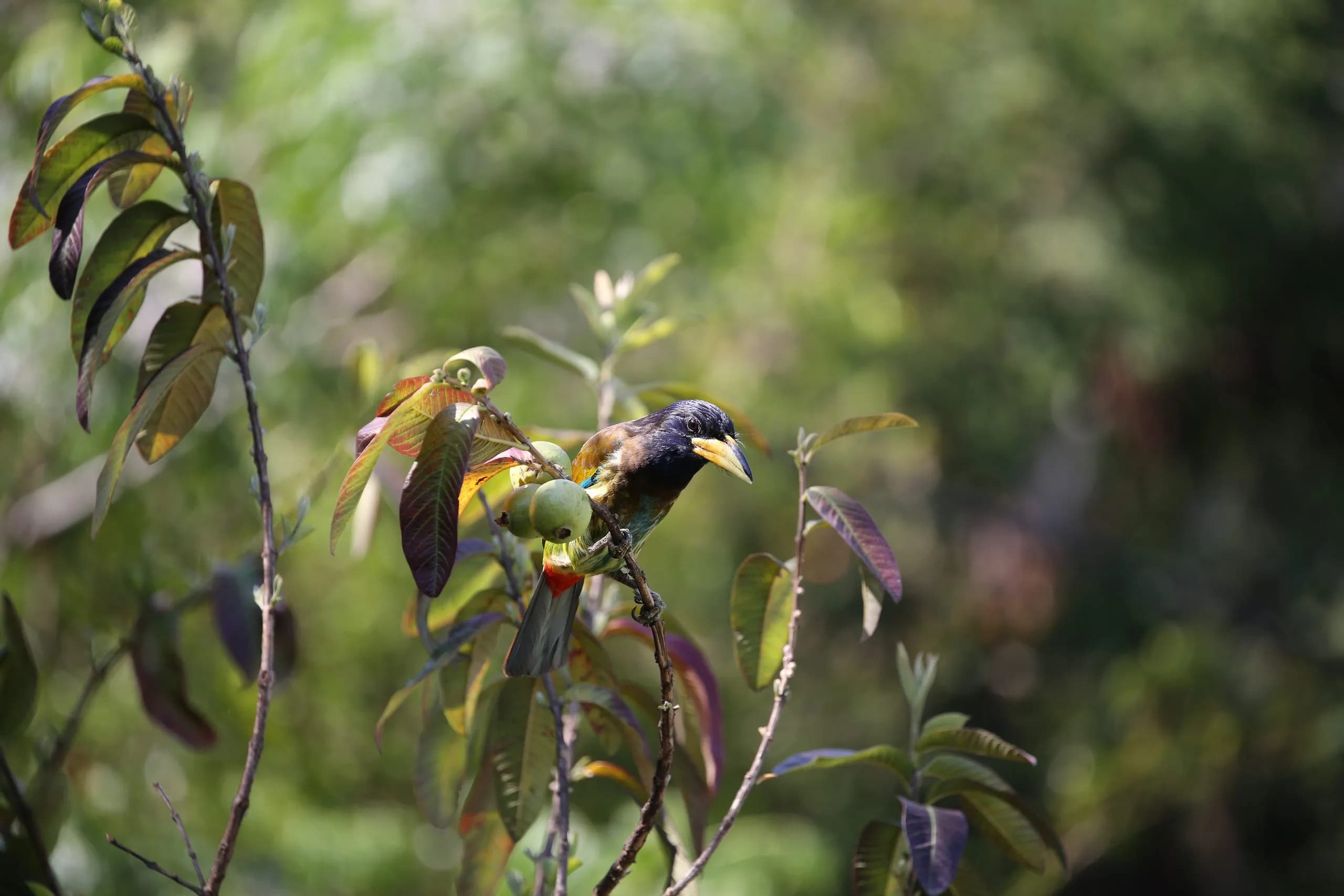 JourneyEight nights for the country's principal endemics — cranes at Phobjikha, the heron on the Punatsangchhu, the hornbills in the broadleaf belt.An eight-night Bhutan birding journey targeting the principal endemics — black-necked cranes at Phobjikha, white-bellied heron, hornbills, the beautiful nuthatch.
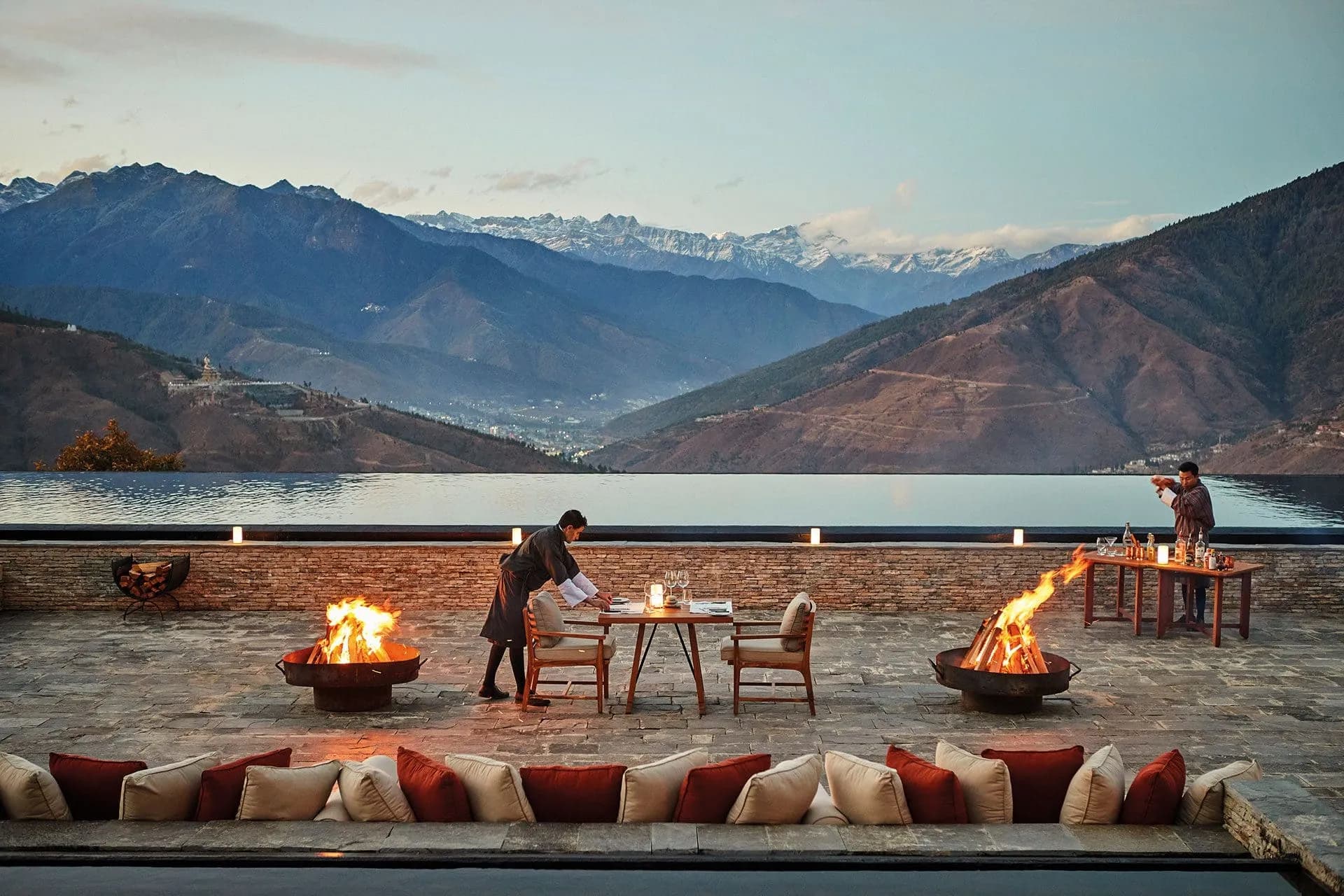 JourneyThe signature-tier Bhutan journey — private knowledgeable guide, the most considered lodge curation, helicopter or charter between valleys, exclusive-use arrangements where the season allows.The signature-tier Bhutan journey. Private knowledgeable guide, the most considered lodges, helicopter or PC-24 charter, exclusive-use arrangements. By invitation, from USD 14,000.
 JourneyOctober light, Bhutan, a week.A seven-night Bhutan photography journey in October — Bhutan, golden-hour access at Punakha Dzong, a tripod-friendly guide, and transparent pricing.
Journeys that visit The Gangtey Nature Trail
Frequently asked
- How difficult is the Gangtey Nature Trail?
- Easy — around 4–5 km, almost entirely downhill or level, taking 1.5–2 hours at a gentle pace. The guide arranges the vehicle to meet you at the bottom so the whole walk is downhill. It suits almost everyone, including older travellers and families with children, and needs nothing more than comfortable walking shoes.
- What will I see on the walk?
- Pine forest, a chorten and a long prayer-flag mani wall, the village of Semchubara with its potato fields and farmhouses, and the wide open floor of the Phobjikha glacial valley with its marsh, grazing cattle, and big sky. In winter (November–February), you may see the rare black-necked cranes feeding in the fields and hear them calling across the valley.
- Is it worth doing in summer when the cranes are gone?
- Yes — the cranes are the winter highlight, but the valley itself is the real reward: the openness, the village life, the unspoiled marsh, and the gentle pleasure of the walk. In spring and autumn the air is clear and the wildflowers are out. The trail is one of the loveliest gentle walks in Bhutan in any season.

