The principal dzong of the Bumthang valleys
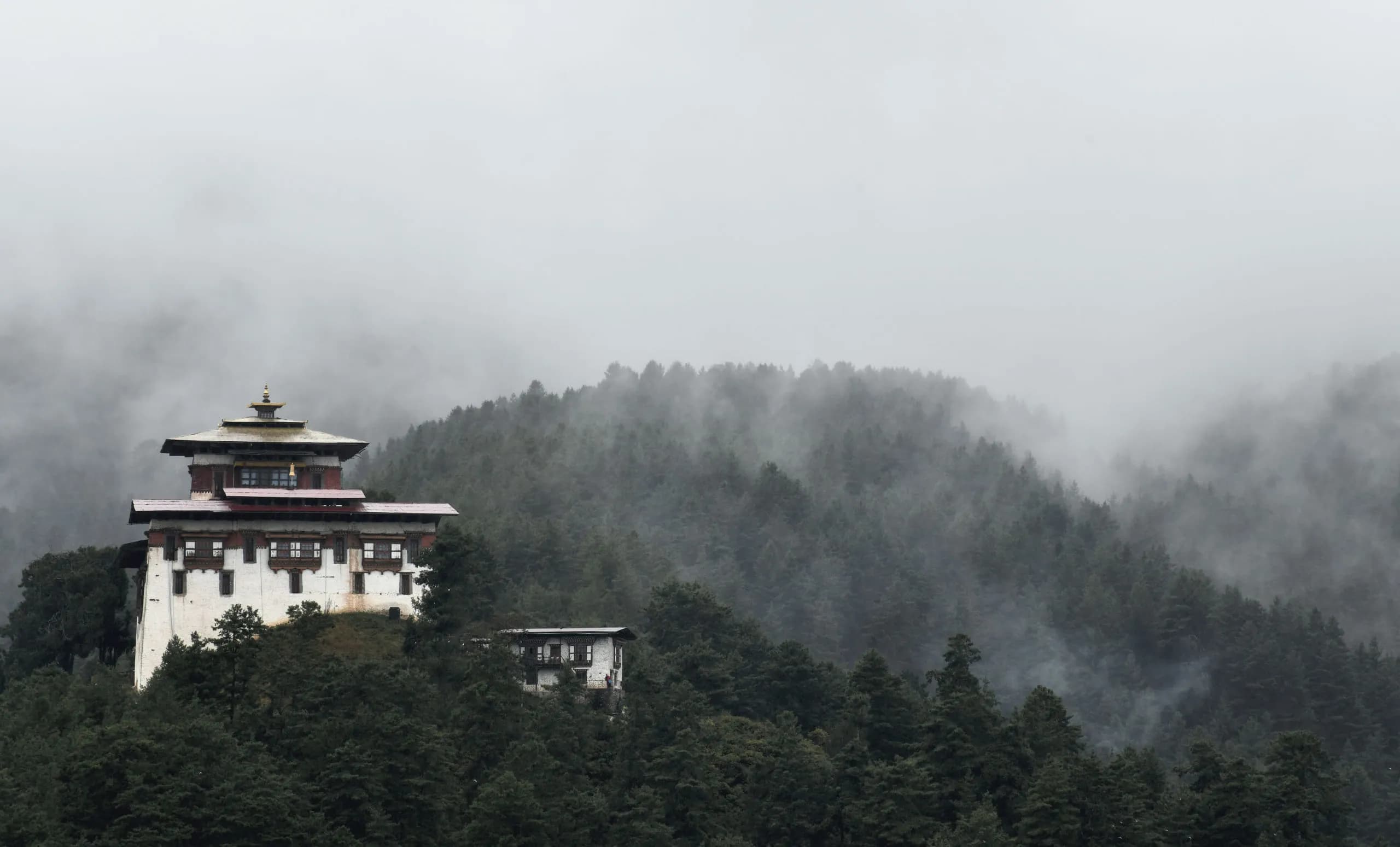
Jakar Dzong — the 'dzong of the white bird,' founded 1549 by the Tibetan master Ngagi Wangchuck.
Jakar Dzong sits on a low ridge above the Chamkhar Chhu in the Choekhor valley of Bumthang at 2,700 metres elevation. Founded in 1549 by Ngagi Wangchuck, a great-grandson of Pema Lingpa, the dzong's name 'Jakar' (white bird) derives from a white-bird omen at the site selection. The dzong is the administrative and monastic centre of Bumthang dzongkhag and a notable architectural example of the Bhutanese fortress tradition.
Also known as Jakar Yugyal Dzong · Castle of the White Bird
- Location
- Choekhor valley, Bumthang, Bumthang
- Founded
- 1549
- Founder
- Ngagi Wangchuck (great-grandson of Pema Lingpa)
- Elevation
- 2,700 m
- Kind
- dzong
The white-bird omen and the founding
The Bhutanese tradition holds that Ngagi Wangchuck, while travelling through the Bumthang valleys in the 16th century, set up camp on the ridge above the Chamkhar Chhu and saw a white bird (jakar) settle on a tree-stump nearby — a sign he took as the location for the new dzong. The dzong was founded in 1549 with the name Jakar Yugyal Dzong ('castle of the white bird, victory in all directions'). Ngagi Wangchuck was a great-grandson of the great Nyingma terton Pema Lingpa, and the dzong's founding was the Nyingma tradition's establishment of its administrative presence in the Bumthang dzongkhag.
The architecture — long, narrow, single-utse
Jakar Dzong is unusual among the Bhutanese dzongs in being substantially elongated rather than rectangular — the ridge it sits on is long and narrow, and the dzong follows the ridge's shape with a single central utse and the administrative and monastic wings stretched along the ridgeline. The total length is approximately 150 metres, but the maximum width is only 30 metres. The architecture is itself a notable variant of the Bhutanese dzong pattern and merits the visit for the architecture alone.
The bumthang circuit and the festival
Jakar Dzong is the administrative centre of Bumthang dzongkhag, which includes the four principal valleys: Choekhor (where the dzong sits), Tang (where Pema Lingpa was born), Ura (the high-pasture community on the southern slope of the Black Mountains), and Chumey (the textile-producing valley). The Jakar Tshechu is held annually at the dzong, typically in late September or early October, alongside the Tamshing Phala Choepa and Tamzhing Phala Choepa festivals at the nearby monasteries. The combined Bumthang autumn festival window is a substantial draw.
Visiting
- Getting there
- Jakar Dzong is 5 minutes by road from Jakar town (the principal town of Bumthang). The dzong sits on a low ridge directly above the town; the approach is by a winding road. Most visitors combine the dzong with the broader Choekhor valley circuit — Jambay Lhakhang, Kurjey Lhakhang, Tamshing Lhakhang — as part of a 2–3 day Bumthang stay.
- Opening hours
- The dzong is open to international visitors from 9 a.m. to 5 p.m. daily, except during major Royal functions. The interior chapels are open with a guide; photography is permitted in the courtyards but prohibited inside the chapels themselves.
- Dress and protocol
- Long trousers or skirts below the knee; shoulders covered. Hats and shoes removed inside the principal lhakhangs. The dzong's distinctive long-narrow architecture means the visit involves substantial walking along the ridge; allow 60–90 minutes for a thorough visit.
- Best time to visit
- Late September through early October catches the Jakar Tshechu and the broader Bumthang autumn festival window. October through November is the clear-sky autumn window. December through February is cold but bright. June through August is monsoon-affected.
Festivals held here
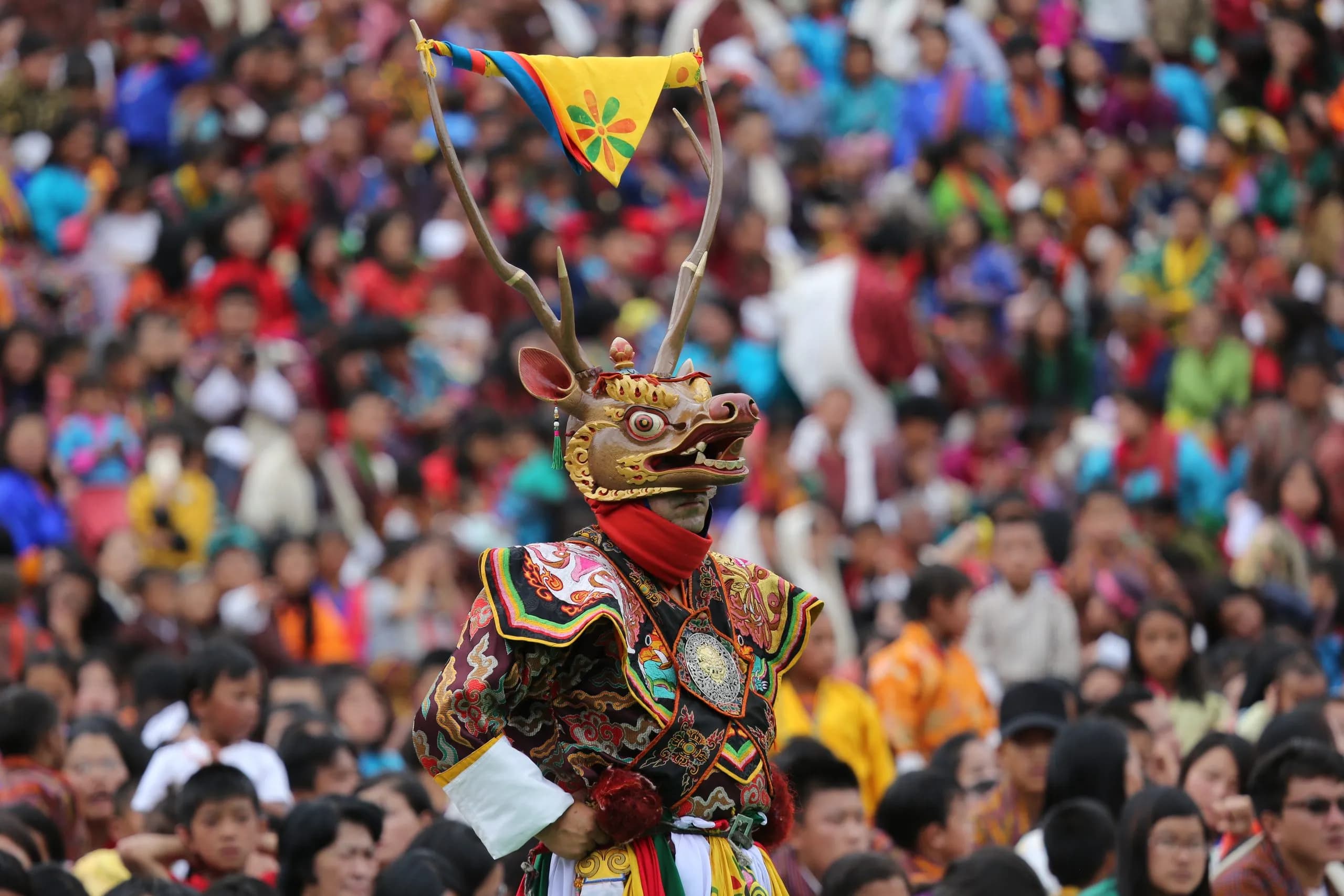 FestivalTamshing Phala Choepa — three days at the 15th-century Tamshing Lhakhang, founded by Pema Lingpa.Tamshing Phala Choepa — three days at the 15th-century Tamshing Lhakhang in Bumthang, founded by the terton Pema Lingpa. Dates, programme, what to expect.
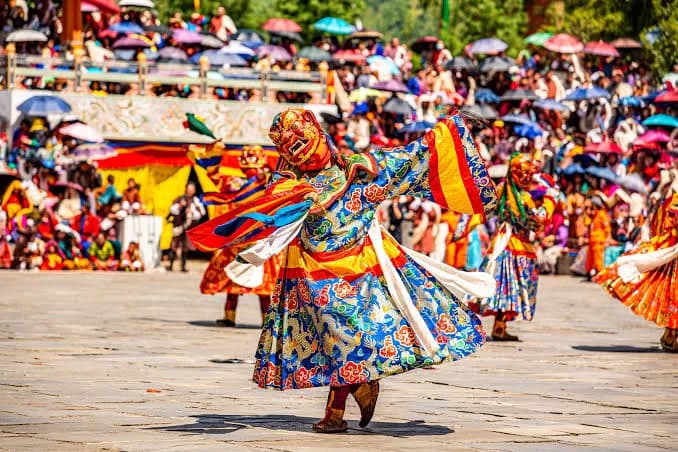 FestivalJambay Lhakhang Drup — five days in Bumthang, with the Mewang fire ritual.Jambay Lhakhang Drup — five days at Bumthang's oldest temple, including the Mewang fire ritual. Dates, programme, what to expect.
Journeys featuring this site
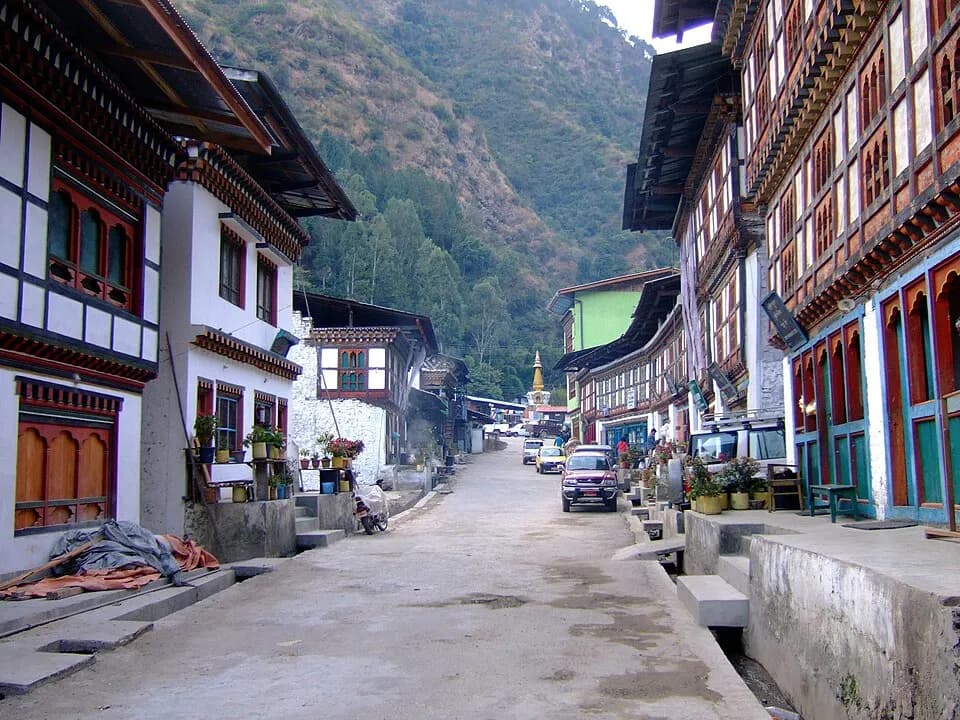 JourneyFourteen nights from Paro to Guwahati — the country as a single arc.A fourteen-night Bhutan east-to-west circuit exiting via Samdrup Jongkhar and Guwahati. The full eastern dzongkhags, the quieter half of the country.
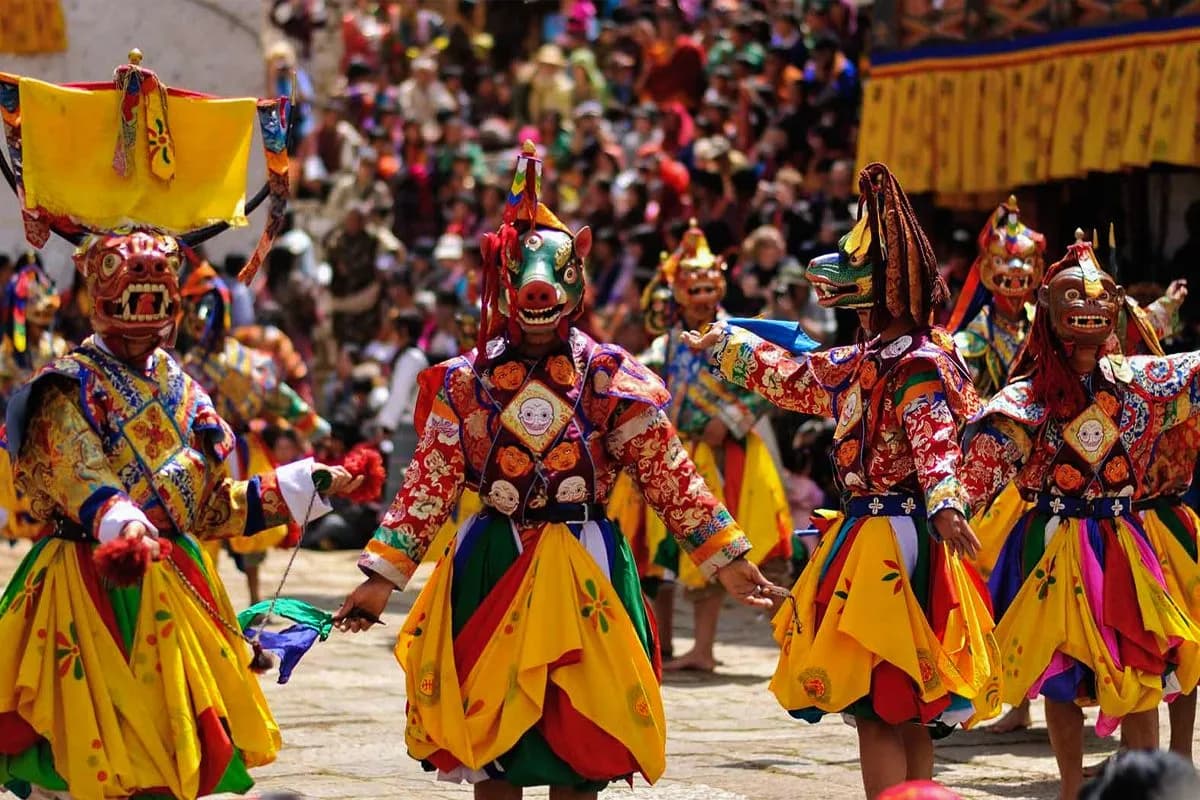 JourneyThimphu Tshechu, read properly.A seven-night Bhutan journey timed to Thimphu Tshechu in autumn — second-tier seating, a culturally fluent guide, Bhutanese lodges.
Journeys that visit Jakar Dzong
Frequently asked
- What does Jakar mean?
- Jakar (also spelled Jachar) means 'white bird' in Dzongkha. The dzong's full name is Jakar Yugyal Dzong — 'castle of the white bird, victory in all directions.' The name refers to a white-bird omen at the dzong's site selection in the 16th century.
- How is Jakar Dzong different from other Bhutanese dzongs?
- Jakar is unusual in being substantially elongated rather than rectangular — the dzong follows the long-narrow ridge it sits on, with a single central utse and the wings stretched along the ridgeline. Total length is approximately 150 metres, but the maximum width is only 30 metres. The architecture is itself a notable variant of the Bhutanese fortress pattern.
- Is there a Tshechu at Jakar Dzong?
- Yes — the Jakar Tshechu is held annually at the dzong, typically in late September or early October. The festival is smaller in international attendance than Paro or Thimphu but draws a substantial Bhutanese register from the four Bumthang valleys.
- How do I get to Bumthang?
- Approximately 9 hours by road from Paro via Thimphu, Punakha, and Trongsa — typically broken across two driving days. There is also a domestic Drukair flight from Paro to Bumthang's Bathpalathang airport (operating in clear-weather windows).
- Where do I stay in Bumthang?
- Amankora Bumthang (in the Choekhor valley, 10 minutes from the dzong), Six Senses Bumthang, Wangdicholing Resort, and Jakar Village Lodge. Lodges are fewer than in Paro or Thimphu; book 6+ months in advance for the autumn festival window.

