A Bhutanese sacred site
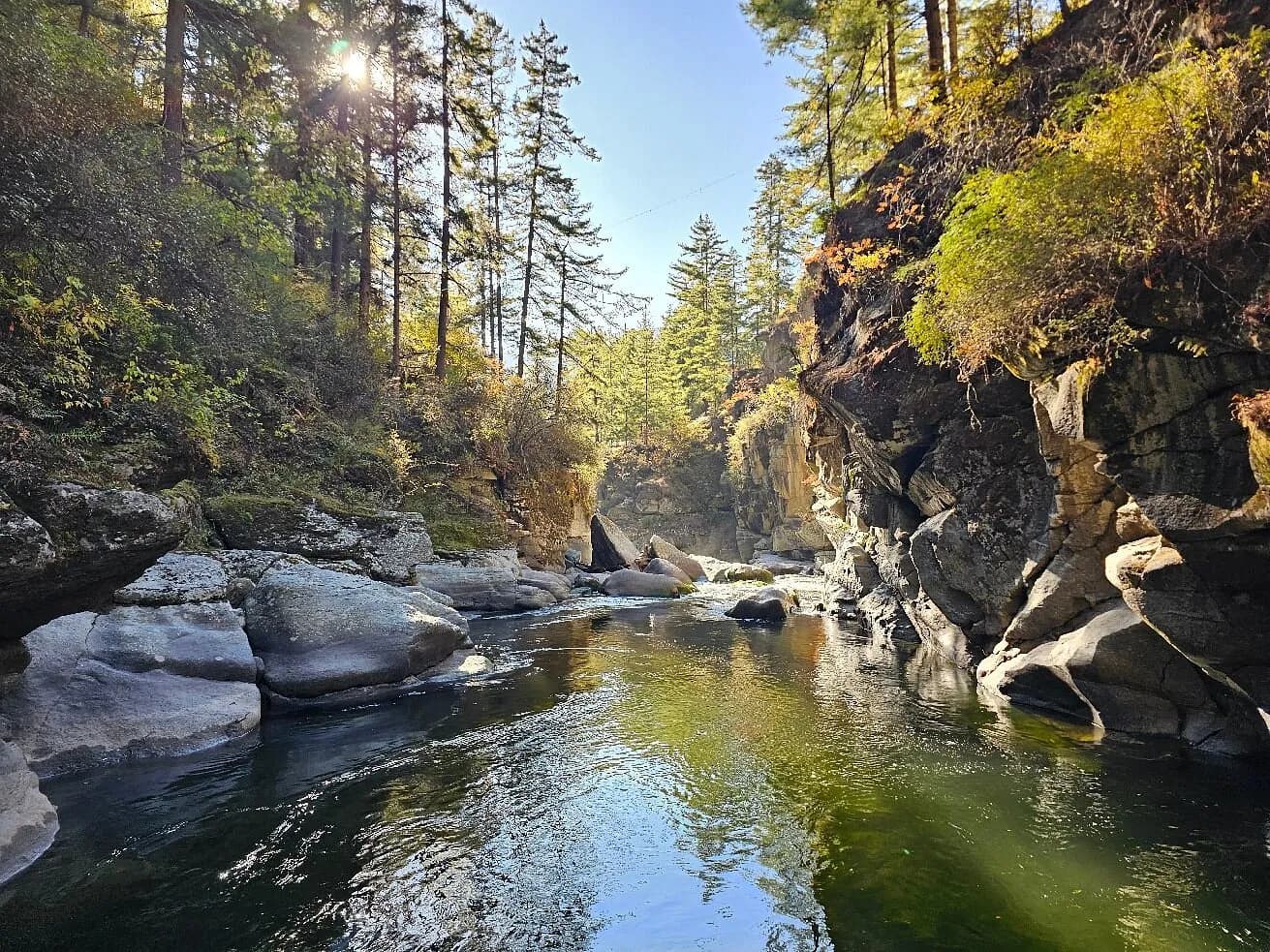
Mebar Tsho — the Burning Lake in the Tang valley, the principal Pema Lingpa pilgrimage site.
Mebar Tsho — literally 'the burning lake' — is one of the most-revered sacred sites in the Bhutanese tradition. The deep pool in the Tang Chhu of Bumthang's Tang valley is the principal location of Pema Lingpa's famous 15th-century 'burning butter lamp' miracle, in which the terton dove into the lake holding a butter lamp, retrieved a hidden treasure, and emerged with the lamp still alight. The site is the principal Pema Lingpa pilgrimage destination in Bhutan; the gorge-and-pool setting in the Tang valley is among the more atmospheric Bhutanese sacred sites.
Also known as Burning Lake · Mebartsho · Mebar Tso
- Location
- Tang valley, eastern Bumthang dzongkhag, Bumthang
- Founder
- Pema Lingpa (15th-16th century terton)
- Elevation
- 2,700 m
- Kind
- sacred-site
The Pema Lingpa miracle
Mebar Tsho is the principal site of one of Pema Lingpa's most-celebrated treasure-revelation miracles. The Bhutanese tradition holds that in the late 15th century, the terton Pema Lingpa (1450-1521) — the principal Bhutanese terton in the Nyingma tradition — came to the Tang valley pool with an assembly of monks and lay devotees. Having identified the pool as a treasure-revelation site through visionary instruction, Pema Lingpa took a butter lamp in his hand, dove into the deep gorge pool, and emerged some time later from the depths bearing a sacred treasure (a religious image and several texts) — and the butter lamp still alight despite the submersion. The miracle gives the lake its name (mebar = burning, tsho = lake) and is the foundational narrative of the site's contemporary religious significance. The Pema Lingpa pilgrimage tradition operates principally around this miracle. See the Pema Lingpa entry.
The pilgrimage register
Mebar Tsho is the principal Pema Lingpa pilgrimage site in contemporary Bhutan. Annual visitor numbers — particularly during the Bhutanese religious-pilgrimage seasons — make the pilgrimage one of the more-active devotional registers in the country. The prayer-flag register along the gorge approach is among the most extensive in Bhutan — multi-coloured prayer flags strung across the gorge above the lake, fluttering in the Tang valley wind. The butter-lamp offering register at the small temple beside the lake — visitors offer butter lamps in commemoration of the miracle. The circumambulation register around the lake's accessible perimeter — devotees perform kora (circumambulation) as devotional practice.
The gorge-and-pool setting
The natural setting of Mebar Tsho is among the most atmospheric Bhutanese sacred sites. The gorge — the Tang Chhu narrows through a rock-walled passage at this point — creates the deep pool that the miracle narrative operates within. The water depth is approximately 6-8 metres at the principal pool; the water is clear with the typical Himalayan-river cold-and-mineral content. The gorge access is via a 20-minute walk from the road-head, on a moderate-gradient trail with gorge views progressively revealing the pool. The visitor protocol includes restrictions on entering the water (this is a sacred site, swimming is not permitted) and the appropriate respect register at the lake margin.
Visiting
- Getting there
- Mebar Tsho is accessed from a road-head approximately 1-1.5 hours east of Bumthang's Jakar town along the Tang valley road. The walk from the road-head to the lake is approximately 20 minutes on a moderate-gradient trail. The matched guide arranges the trailhead transport and accompanies the walk.
- Opening hours
- The site is accessible during daylight hours. There is no fixed opening time as the lake is an outdoor sacred site rather than an indoor temple. The small temple beside the lake operates standard religious-site hours (typically 9am-5pm); the outdoor lake-and-gorge access is more flexible.
- Dress and protocol
- Standard religious-site protocol — modest dress, shoes removed for the small temple, no swimming or water-entering at the sacred lake. The prayer-flag-and-butter-lamp offering tradition operates respectfully; the matched guide briefs visitors on the protocol.
- Best time to visit
- Year-round, with reservations. The autumn (October-November) and spring (March-May) windows give the most pleasant walking conditions and the deepest atmospheric. Winter (December-February) is workable but colder; monsoon (June-September) makes the trail wet-and-slippery and the Tang Chhu substantially higher.
Festivals held here
Journeys featuring this site
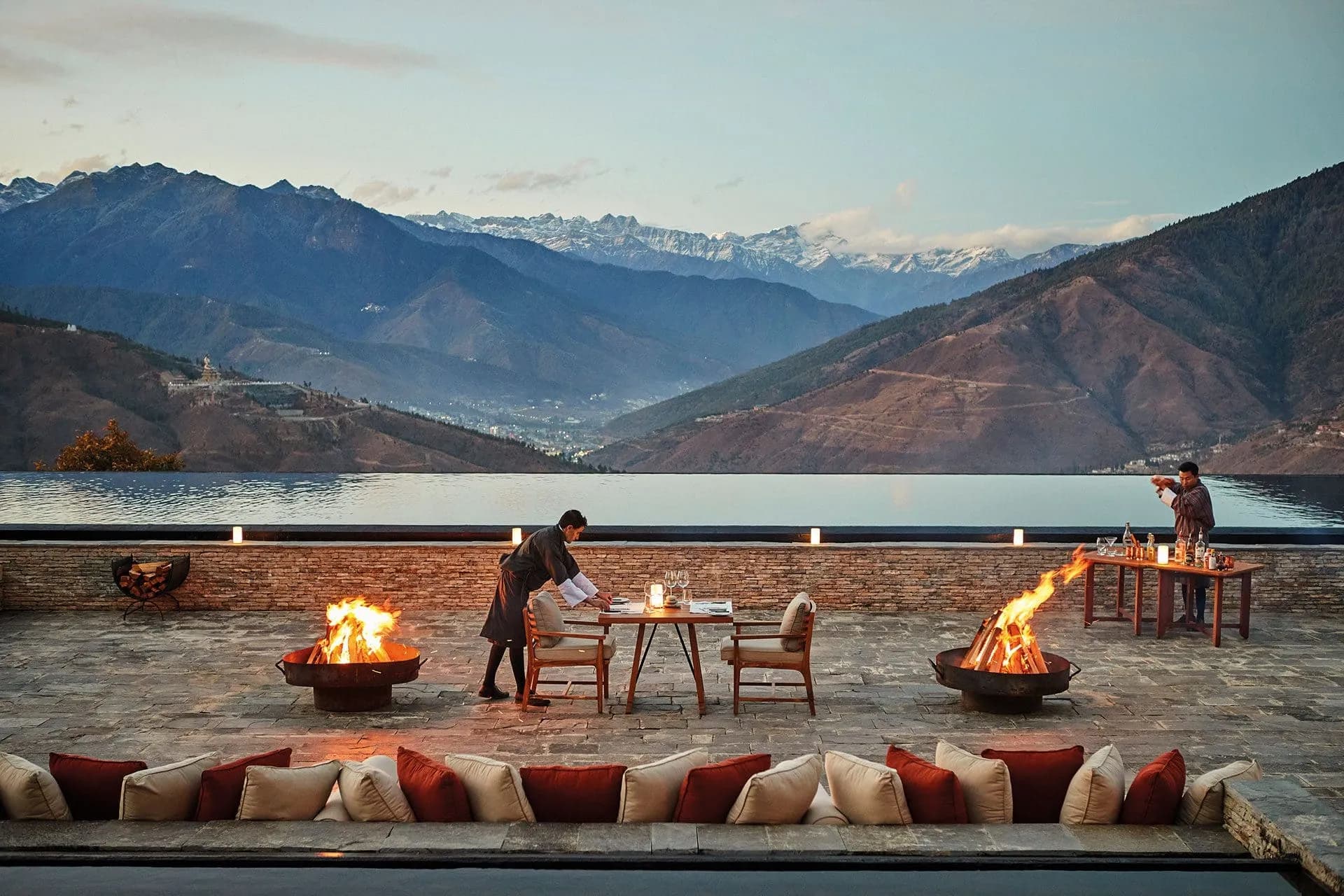 JourneyThe signature-tier Bhutan journey — private knowledgeable guide, the most considered lodge curation, helicopter or charter between valleys, exclusive-use arrangements where the season allows.The signature-tier Bhutan journey. Private knowledgeable guide, the most considered lodges, helicopter or PC-24 charter, exclusive-use arrangements. By invitation, from USD 14,000.
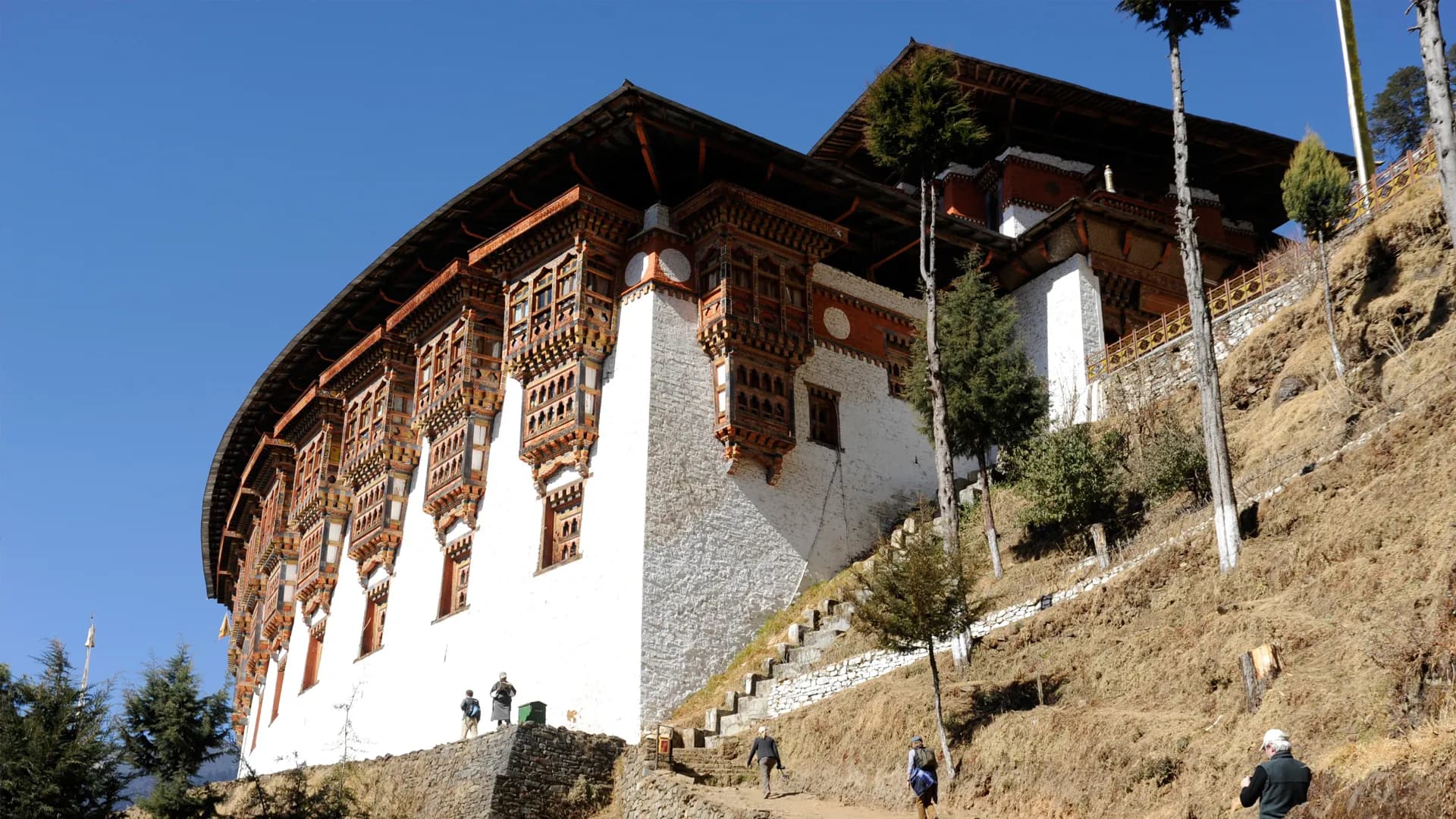 JourneyTen nights for the Buddhist pilgrim — the principal sites, with monastic context.A ten-night Bhutan Buddhist pilgrimage for Asian-Buddhist travellers. Monastic context; matched monastic-trained guide; Bumthang religious circuit.
 JourneyFourteen nights from Paro to Guwahati — the country as a single arc.A fourteen-night Bhutan east-to-west circuit exiting via Samdrup Jongkhar and Guwahati. The full eastern dzongkhags, the quieter half of the country.
Journeys that visit Mebar Tsho
Frequently asked
- Can I see hidden treasure being retrieved from the lake?
- No — the miracle was a single 15th-century event, not an ongoing. The site's significance is principally devotional-and-historical rather than active-miracle. Visitors come to the lake for the Pema Lingpa pilgrimage register and the atmospheric setting; the miracle is the narrative anchor of the site's significance.
- Is Mebar Tsho worth a Bumthang day?
- For visitors with serious interest in the Pema Lingpa register and the Bhutanese sacred-site tradition, yes — the Tang valley pilgrimage to Mebar Tsho is one of the more atmospheric Bhutanese sacred-site experiences. For general cultural visitors, the Tang valley adds approximately half a day to the Bumthang itinerary; the matched guide briefs honestly on the trade-off.
- Can I visit other Pema Lingpa sites in the area?
- Yes — Tamshing Lhakhang (Pema Lingpa's principal monastic seat) is in Bumthang's principal Chamkhar valley; Kunzangdrak Goemba (Pema Lingpa's meditation site) is in the upper Tang valley above Mebar Tsho. The multi-day Pema Lingpa pilgrimage visiting all three sites is a Bhutanese devotional-register option that the matched guide arranges.

