A Bhutanese monastery
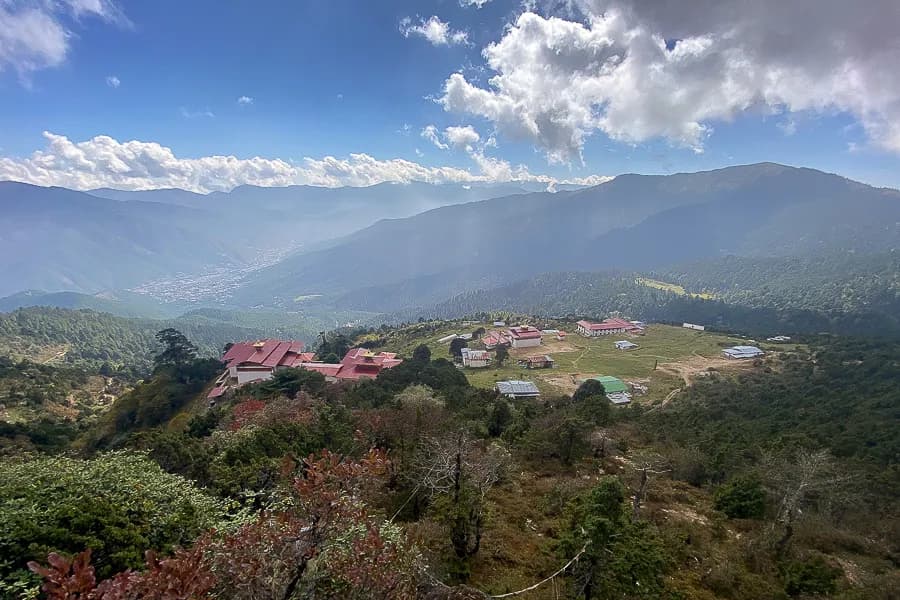
Phajoding Goemba — a cluster of temples and retreats high on the mountain above Thimphu, reached on foot.
High on the mountainside above Thimphu, at around 3,600 metres, Phajoding is a scattered cluster of temples, shrines, and meditation retreats — once among the wealthiest monasteries in the country, named for Phajo Drukgom Zhigpo, the master who brought the Drukpa Kagyu tradition to Bhutan and meditated on this slope. Reached only by a steady climb of several hours through blue-pine and rhododendron forest, it rewards the walker with one of the great views over the Thimphu valley, the quiet of a working retreat far above the city, and the sense of a place where serious practice has been carried on for centuries. It is the capital's classic day hike, and a fine gentle taste of trekking.
Also known as Phajoding · Phajoding Monastery
- Location
- High on the mountain above Thimphu, Thimphu
- Founder
- Named for Phajo Drukgom Zhigpo (13th century)
- Elevation
- 3,600 m
- Kind
- monastery
The high monastery
Phajoding is not a single building but a scattered settlement of temples, shrines, monks' quarters, and meditation huts spread across the steep mountainside high above Thimphu, at around 3,600 metres — well above the city, in the zone where the forest thins towards the alpine. It takes its name from Phajo Drukgom Zhigpo, the 13th-century Tibetan master who carried the Drukpa Kagyu tradition into Bhutan and who is held to have meditated on this slope; the monastery that grew here became, in time, one of the wealthiest and most important in the country. Today, after centuries of use and a period of decline, parts of it have been restored, and it remains a place of monastic education and meditation retreat — a working religious settlement on the mountain, watching over the capital below.
The climb
Phajoding is reached on foot, and the walk is the experience. The path climbs from above Thimphu — usually from near the Sangaygang viewpoint or the motor-road head — up through blue-pine and rhododendron forest, gaining around a thousand metres over several hours of steady ascent. It is a real climb rather than a stroll, but a clear and rewarding one, the city dropping away below as the path rises into cooler, thinner air, with prayer flags and chortens marking the way. For many visitors it is their first taste of walking in the Bhutanese mountains — a day hike that gives the satisfaction and the views of a trek without the commitment of a multi-day expedition.
The view and the descent
The reward at the top is the setting: the temples of Phajoding scattered across the high slope, the deep quiet of the retreat far above the city, and one of the finest views in the region — the whole Thimphu valley laid out far below, the capital small and distant, the surrounding ridges receding into the haze. Energetic walkers can continue higher towards the lakes and meadows of the ridge, or descend a different way; many simply rest at the monastery, take in the view, and return down the way they came. For visitors based in Thimphu who want a day on their feet in the mountains, Phajoding is the classic choice — and a gentle introduction to the high country that the longer treks explore.
Visiting
- Getting there
- The walk to Phajoding usually starts from above Thimphu, near the Sangaygang viewpoint or the road head, and climbs through forest to the monastery — roughly three to four hours up, gaining around a thousand metres, with a quicker descent. The matched guide arranges the start point and walks with the visitor.
- The walk
- A steady forest climb of several hours to around 3,600 metres — a real ascent, suitable for reasonably fit walkers, and a fine taste of mountain walking. Sturdy shoes, water, sun protection, and a warm layer for the top are needed; allow most of a day for the round trip. Some visitors walk up and stay overnight at the monastery's basic guesthouse, descending the next day.
- Altitude and protocol
- At 3,600 metres the air is thin; visitors newly arrived in Bhutan take the climb gently and watch for altitude. Standard monastery protocol applies at the temples — shoulders and knees covered, shoes removed before the shrines, no photography inside, the quiet register of a retreat.
- Best time to visit
- Spring through autumn (March–November) for the most reliable conditions and the spring rhododendron; winter is walkable on clear days but cold and sometimes snowy at the top. Clear mornings give the finest valley views and the best light on the climb.
Journeys featuring this site
 JourneyThe signature-tier Bhutan journey — private knowledgeable guide, the most considered lodge curation, helicopter or charter between valleys, exclusive-use arrangements where the season allows.The signature-tier Bhutan journey. Private knowledgeable guide, the most considered lodges, helicopter or PC-24 charter, exclusive-use arrangements. By invitation, from USD 14,000.
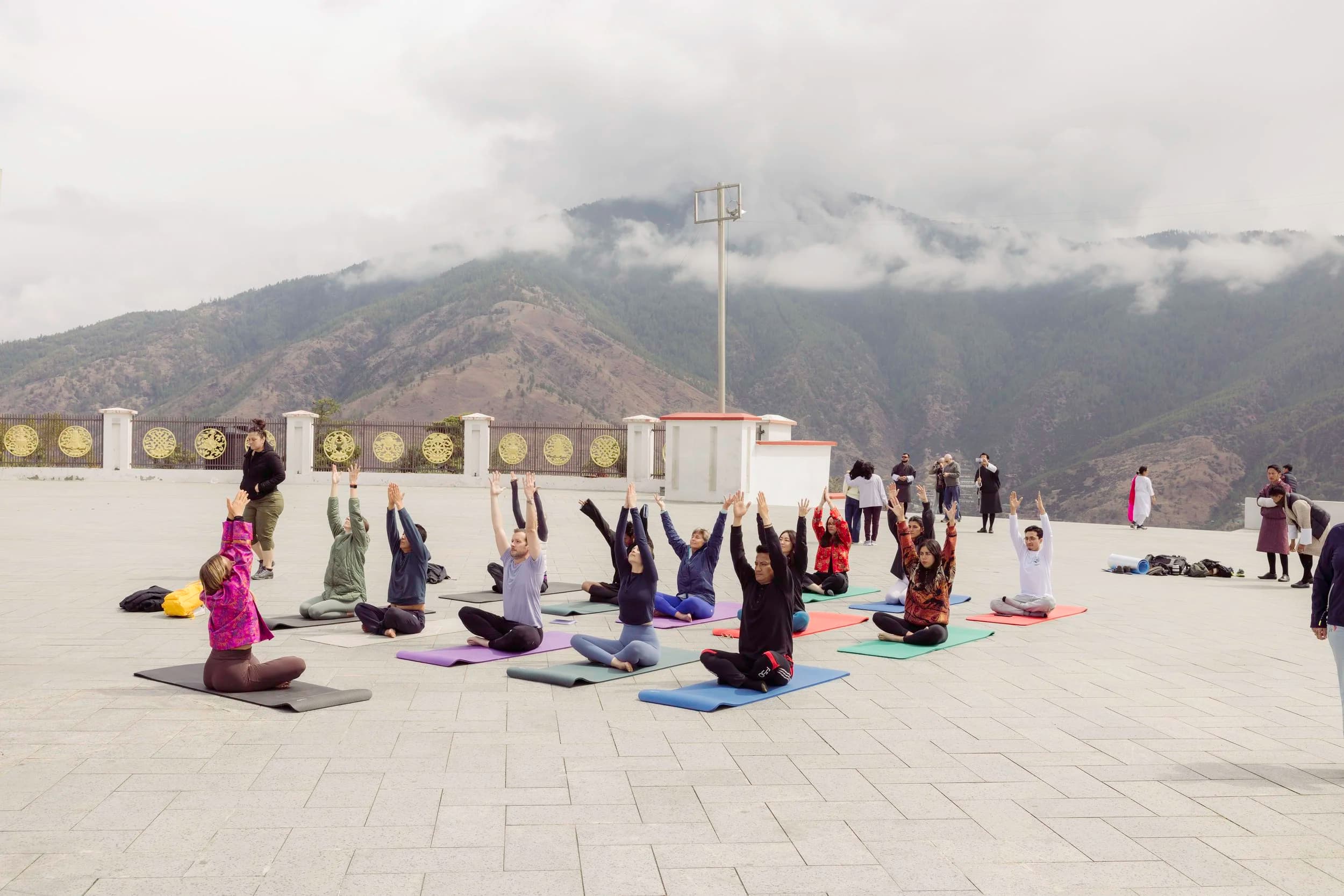 JourneySeven nights with a monastic guide, in the still season.A seven-night Bhutan meditation retreat through Clear-Sky Bhutan (Dec–Feb). Daily sittings with a monastic-trained guide, hot stone baths, no festival noise.
Journeys that visit Phajoding Goemba
Frequently asked
- What is Phajoding?
- A high monastery — really a scattered cluster of temples, shrines, and meditation retreats — on the mountainside above Thimphu at around 3,600 metres, named for Phajo Drukgom Zhigpo, the master who brought the Drukpa Kagyu tradition to Bhutan. Once among the wealthiest monasteries in the country, it remains a place of monastic education and retreat, reached only on foot.
- How hard is the hike to Phajoding?
- A real climb — roughly three to four hours up through forest from above Thimphu, gaining around a thousand metres to 3,600 metres, with a quicker descent. It suits reasonably fit walkers and is Thimphu's classic day hike: the satisfaction and views of a trek without a multi-day commitment. Some walk up and stay overnight at the monastery guesthouse.
- What is the reward at the top?
- The scattered temples of the high monastery, the deep quiet of a retreat far above the city, and one of the finest views in the region — the whole Thimphu valley laid out far below. For visitors who want a day on their feet in the Bhutanese mountains, it is a gentle, rewarding introduction to the high country.

