A Bhutanese monastery
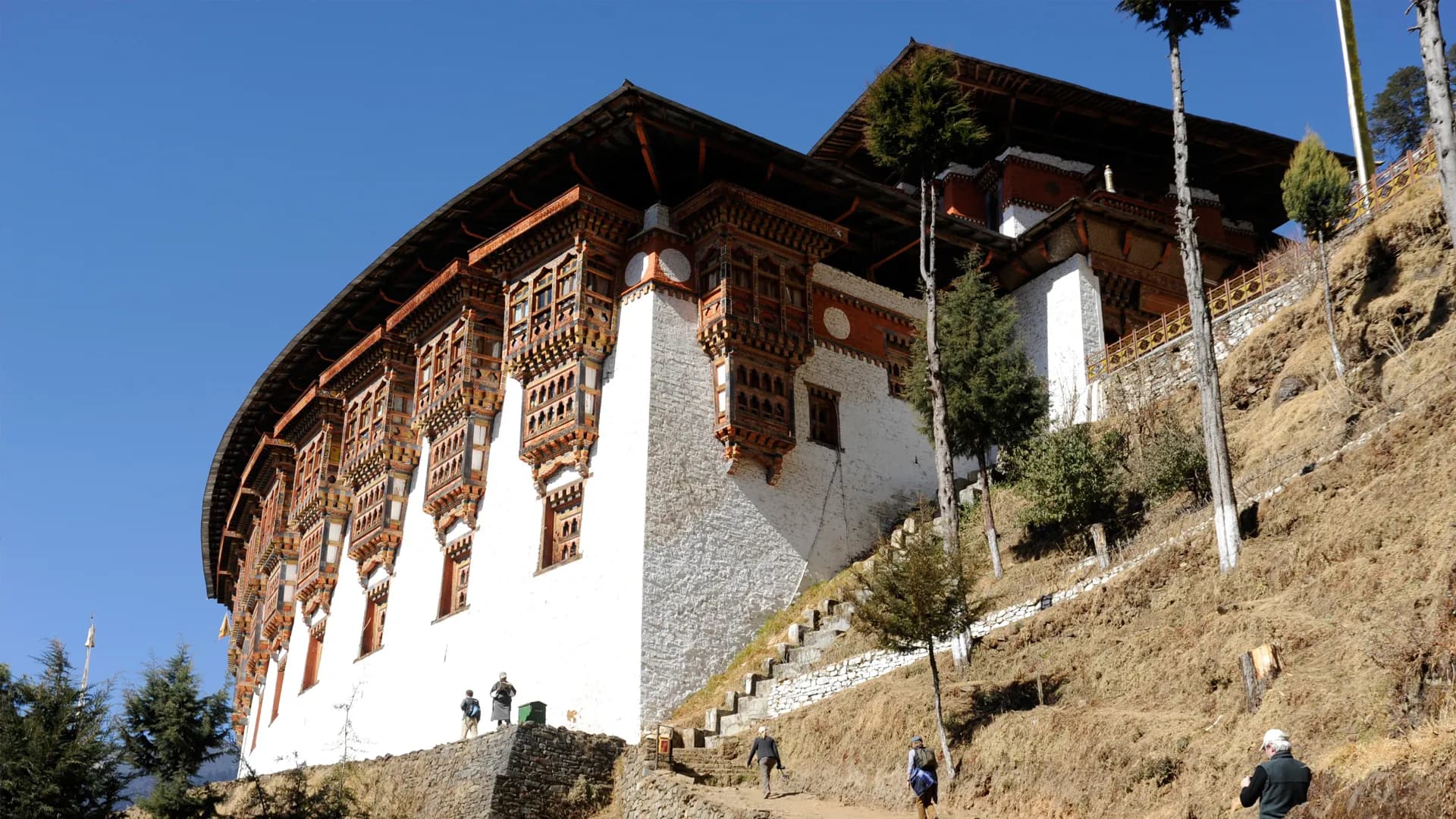
Tango Goemba — the 'horse-head' monastery and seat of higher Buddhist learning above the Thimphu valley.
Tango Goemba stands on a forested spur at the northern head of the Thimphu valley, across the river from Cheri — the principal seat of higher Buddhist study in Bhutan, where monks undertake the long years of philosophical training. Its name means 'horse head', for the self-manifested image of Hayagriva, the horse-headed wrathful form of Chenrezig, around which the monastery grew. Founded in the 13th century by Lama Phajo Drukgom Zhigpo and rebuilt in its present form in the 15th, Tango is reached by a forest climb and carries a particular weight as a place of deep study and of royal retreat.
Also known as Tango Monastery · Tango Goenpa · Tango Cheri Dorden
- Location
- Northern head of the Thimphu valley, near Dodena, Thimphu
- Founded
- 1222
- Founder
- Lama Phajo Drukgom Zhigpo (13th c.); rebuilt 15th c.
- Elevation
- 2,920 m
- Kind
- monastery
The seat of higher learning
Tango is the principal seat of higher Buddhist study in Bhutan — the monastery to which monks come for the long, demanding years of philosophical and scriptural training that form the country's most learned teachers. Where Cheri across the valley is a place of silent meditation retreat, Tango is a place of study: the debate courtyard, the texts, the disciplined formation of the mind. The two together, on opposite sides of the upper Thimphu valley, hold between them the two halves of the monastic path — contemplation and learning. To visit Tango is to glimpse the engine room of Bhutanese Buddhism, where the next generation of khenpos and teachers is shaped.
The horse-head monastery
The name Tango means 'horse head', and it comes from the monastery's central wonder: a self-manifested image of Hayagriva — Tandin in Dzongkha — the horse-headed wrathful emanation of Chenrezig, the bodhisattva of compassion, held to have appeared in the rock of the site. The monastery grew around this sacred presence. It was founded in the 13th century by Lama Phajo Drukgom Zhigpo, the master who brought the Drukpa Kagyu tradition into Bhutan, and rebuilt in its present curved, fortress-like form in the 15th century by his descendants in the line — its distinctive arched façade unlike the usual straight dzong wall.
A place of royal retreat
Tango has a long association with the highest spiritual practice, and with the royal house: it is among the places where members of the royal family have undertaken meditation retreat, withdrawing from public life for periods of seclusion and practice before great undertakings. This connection deepens the monastery's standing — a working centre of the most serious Buddhist study and practice, held in particular regard across the country. For the visitor, it lends Tango an atmosphere of quiet consequence: this is not a sightseeing temple but a living institution at the centre of the country's religious and, at times, its royal life.
Visiting
- Getting there
- Drive to the head of the Thimphu valley near Dodena (about 45 minutes from the city); from the road end a forest path climbs to the monastery — roughly an hour of steady uphill. Tango sits across the valley from Cheri, and the two are often visited together. The matched guide arranges the drive and walks up with the visitor.
- The walk
- A steady forest climb of about an hour, gaining a few hundred metres on a clear path — moderate, suitable for anyone in reasonable walking condition. Sturdy shoes and water are enough; allow 2.5–3 hours for the round walk and the monastery visit, or a full day if combining with Cheri.
- Dress and protocol
- Standard monastery protocol — shoulders and knees covered, shoes and hats removed before the shrines, no photography inside. As a working centre of study (and, at times, of royal retreat), Tango asks a particularly respectful, quiet register; the matched guide indicates which areas are open to visitors.
- Best time to visit
- Spring through autumn (March–November) is the reliable window; winter is walkable but cold at the elevation. Clear mornings give the best light for the climb and the valley views from the spur.
Journeys featuring this site
 JourneyThe signature-tier Bhutan journey — private knowledgeable guide, the most considered lodge curation, helicopter or charter between valleys, exclusive-use arrangements where the season allows.The signature-tier Bhutan journey. Private knowledgeable guide, the most considered lodges, helicopter or PC-24 charter, exclusive-use arrangements. By invitation, from USD 14,000.
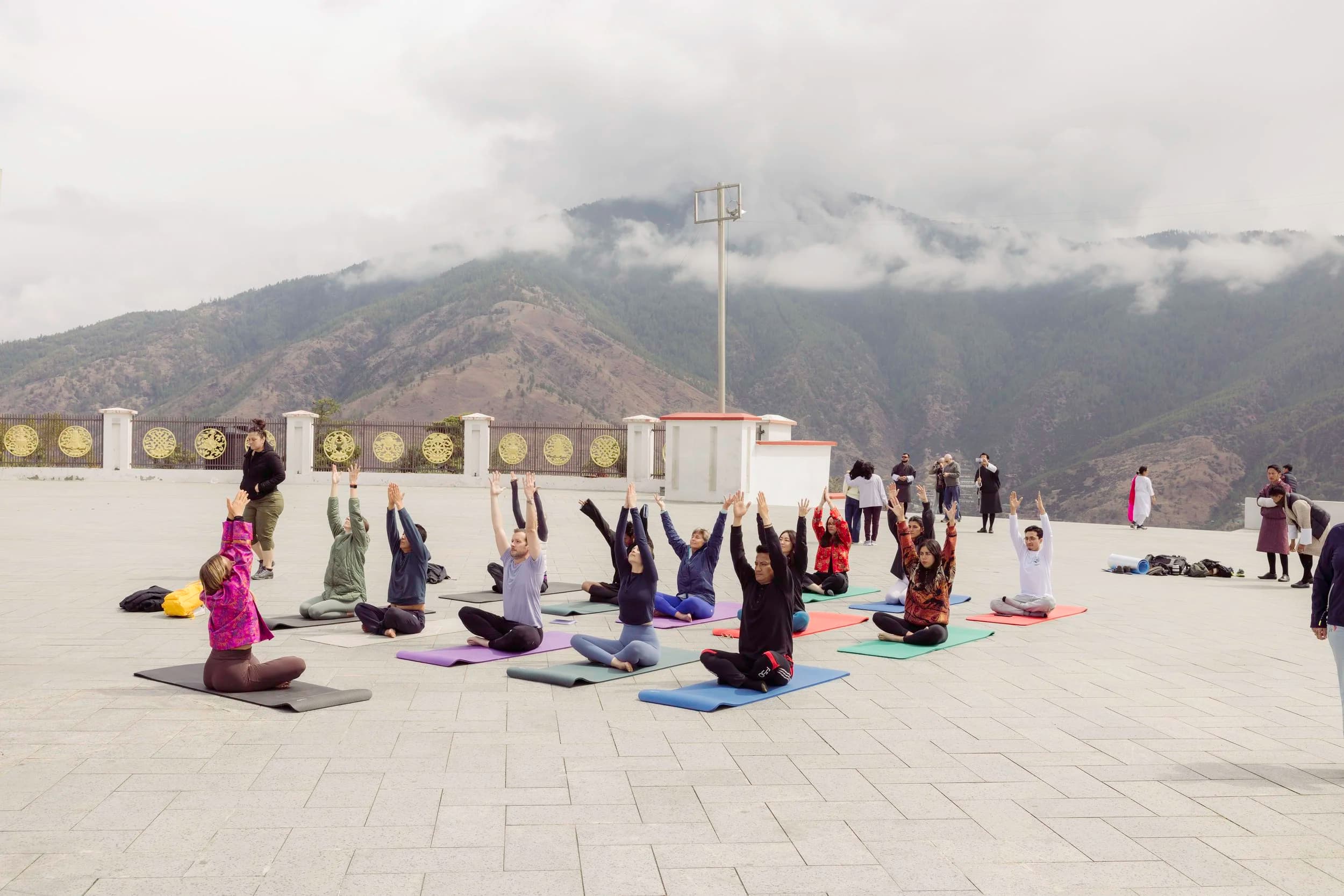 JourneySeven nights with a monastic guide, in the still season.A seven-night Bhutan meditation retreat through Clear-Sky Bhutan (Dec–Feb). Daily sittings with a monastic-trained guide, hot stone baths, no festival noise.
Journeys that visit Tango Goemba
Frequently asked
- What is Tango Goemba known for?
- It is the principal seat of higher Buddhist study in Bhutan — the monastic university where monks undertake the long years of philosophical training that form the country's most learned teachers. It is also the 'horse-head' monastery, named for a self-manifested image of Hayagriva (the horse-headed form of Chenrezig), and it has a long association with royal meditation retreat.
- How is Tango different from Cheri?
- They are a pair on opposite sides of the upper Thimphu valley, holding the two halves of the monastic path: Cheri is a place of silent meditation retreat (where Zhabdrung founded the first monk body in 1620), while Tango is a place of study and debate (the seat of higher learning). Many visitors do both in a single day for the contrast.
- How hard is the walk to Tango?
- A steady forest climb of about an hour from the road end near Dodena, gaining a few hundred metres on a clear path — moderate, fine for anyone in reasonable walking condition, with a downhill return. Allow 2.5–3 hours round trip, or a full day combined with Cheri across the valley.

