The eastern-Bhutan cultural trek
Merak-Sakteng Trek — six days through the Brokpa highland-nomad valleys of eastern Bhutan, opened to international visitors in 2010.
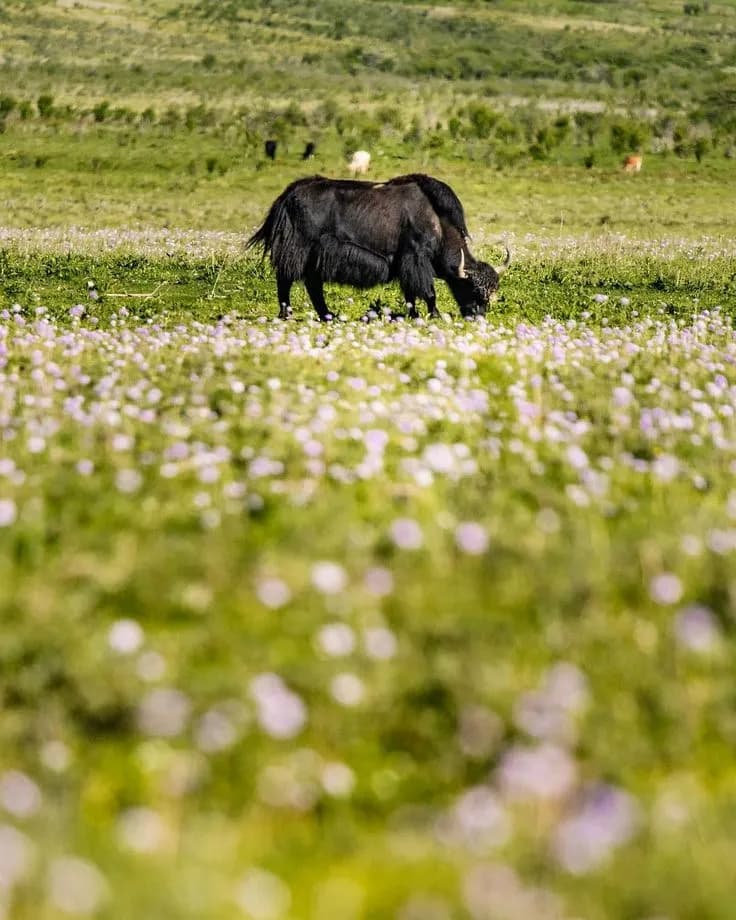
The Merak-Sakteng Trek crosses the Brokpa highland-nomad country of eastern Bhutan in six days — through the Merak and Sakteng valleys of Trashigang dzongkhag, into the Sakteng Wildlife Sanctuary, with the principal cultural-encounter experience of any Bhutanese trek. The route was closed to international visitors until 2010; the Brokpa community continues to live the semi-nomadic yak-herding life that has sustained the eastern Bhutanese highlands for centuries.
- Duration
- 6 days
- Max altitude
- 4,150 m
- Difficulty
- moderate
- Distance
- 75 km
- Region
- Trashigang (eastern Bhutan)
- Trailhead
- Chaling, Trashigang (2,800 m)
- Trail end
- Phongme, Trashigang (2,000 m)
- Best months
- March · April · May · October · November
- Walk type
- trek
The route, in brief
The trek begins at Chaling (a 1.5-hour drive from Trashigang town), climbs through old-growth rhododendron forest to Merak village (3,500m) — the highest of the two principal Brokpa settlements. Two nights at Merak give the trek's first cultural. The route then crosses the Nachung La (4,150m, the trek's highest point) into the Sakteng valley, descends to Sakteng village (3,000m) for two more nights of cultural encounter, and exits via Phongme on the Bhutanese road network. Six days total; the Nachung La pass and the two Brokpa village stays are the trek's principal experiences.
The Brokpa — semi-nomadic yak-herders
The Brokpa are a distinct semi-nomadic community in eastern Bhutan — speakers of a Tshangla-related dialect distinct from western Dzongkha, dressed in their characteristic black-felted gho (the chuba) and the distinctive spider-style red-felt hats with five black-trimmed legs (the tsipee cham). The community migrated from the southern Tibetan plateau approximately 600 years ago, settling in the Merak and Sakteng valleys at 3,000-3,500 metres where yak-herding and barley cultivation sustained the highland economy. The Brokpa tradition is distinct from the western Bhutanese register — older in some ways, more directly Tibetan in influence, and the community is one of the most-preserved highland-nomad communities in the broader Himalayan region.
The Sakteng Wildlife Sanctuary
The trek passes through the Sakteng Wildlife Sanctuary — a 740 km² Royal Government-protected area in eastern Bhutan, home to the red panda, the Himalayan musk deer, the snow leopard (rarely seen), and the legendary migoi (the Himalayan yeti-equivalent, held by the Bhutanese tradition to inhabit the high forests of the sanctuary). The forest is principally old-growth rhododendron (spectacular in March-April bloom), fir, and hemlock; the trail follows traditional Brokpa migration routes that the community has used for centuries. The sanctuary's status was upgraded in 2003 to formally protect the broader Brokpa traditional-use landscape.
Day by day
- Day 1
Chaling to Merak
3,500 m · 14 km · 7 h walking
Climb through rhododendron forest from Chaling; reach Merak village by mid-afternoon.
- Day 2
Merak — rest and cultural day
3,500 m
Village stay; visits to Brokpa houses; the Merak lhakhang; traditional dance in the evening.
- Day 3
Merak to Miksa Teng via Nachung La
4,150 m · 15 km · 7 h walking
Climb to Nachung La (4,150m); descend to Miksa Teng camp.
- Day 4
Miksa Teng to Sakteng
3,000 m · 15 km · 7 h walking
Descent through old-growth rhododendron forest to Sakteng village.
- Day 5
Sakteng — rest and cultural day
3,000 m
Village stay; the Sakteng lhakhang; the Sakteng Wildlife Sanctuary briefing.
- Day 6
Sakteng to Phongme
2,000 m · 16 km · 7 h walking
Final descent through forest to Phongme; vehicle pickup for Trashigang.
Before you go
- Season
- March-May catches the spring rhododendron bloom — the principal photographic season in the Sakteng Wildlife Sanctuary. October-November catches the autumn clear-sky window and the Brokpa post-harvest community. June-September is monsoon (substantial rain in eastern Bhutan; the trail is muddy); December-February the Nachung La is snow-affected.
- Fitness
- Moderate. Maximum altitude 4,150m; daily distances 14-16 km on well-defined trail through the rhododendron forest. The principal challenge is altitude (Days 1-4 above 3,000m); the cultural-rest days at Merak and Sakteng are designed for acclimatisation as much as cultural encounter.
- Cultural protocol — Brokpa community
- The Brokpa community welcomes visitors with substantial warmth. Modest dress (shoulders and knees covered) is the local norm; small gifts (basic supplies, fruit, simple toys for children) are appreciated. Photography of village life is welcomed if asked; the principal photographic tradition is the Brokpa dress, the spider-style hats, and the yak-herding economy. The Brokpa traditional dances (performed in the evening at Merak and Sakteng if the community is hosting) are some of the most distinctive in the Bhutanese cultural register.
- Getting there
- Trashigang is approximately 2-3 days of driving from Paro via Thimphu, Bumthang, Mongar — typically broken across the trip. There is also a domestic Drukair flight from Paro to Yongphula (the Trashigang airport, operating in clear-weather windows). Most trekkers fly into Yongphula at the start of the trek and drive out via Mongar and the central-valley route.
Festivals nearby
Journeys around this trek
Frequently asked
- Is the Merak-Sakteng Trek difficult?
- Moderate. Maximum altitude 4,150m; daily distances 14-16 km on well-defined trail. The principal challenge is altitude (Days 1-4 above 3,000m). Pre-trek conditioning over 6-8 weeks is the typical preparation; prior multi-day trekking experience is helpful but not essential.
- How is the Brokpa community different from the western Bhutanese?
- Substantially. The Brokpa speak a Tshangla-related dialect distinct from western Dzongkha, dress in distinctive black-felted gho and spider-style red-felt hats, and continue to live the semi-nomadic yak-herding economy that has sustained the eastern highlands for 600 years. The community is one of the most-preserved highland-nomad communities in the broader Himalayan region.
- What about the migoi (yeti)?
- The migoi is held by the Bhutanese tradition to inhabit the high forests of the Sakteng Wildlife Sanctuary; the Royal Government formally protects the migoi as a culturally-significant species. Sightings are extremely rare; the village elders at Merak and Sakteng have stories to tell that the visitor is welcome to ask about. The migoi tradition is cultural and folkloric rather than zoological.
- Should I combine the trek with anything else?
- Yes — the eastern-Bhutan circuit is richer with the broader cultural visit. Common combination: fly into Yongphula → Merak-Sakteng Trek (6 days) → 1-2 days in Trashigang and Trashiyangtse (the chorten-kora stupa, Gom Kora Lhakhang) → drive back via Mongar, Bumthang, Trongsa to the western valleys. The full eastern circuit is 12-14 days.
- When did the Merak-Sakteng region open to international visitors?
- Royal Government formally opened the Merak-Sakteng region to international tourism in 2010, with structured access through the Sakteng Wildlife Sanctuary's visitor protocols. International visitor numbers remain small — perhaps 200-300 trekkers per year — and the Brokpa community's interaction with international visitors remains relatively novel, which gives the cultural-encounter a depth the more-established western trekking routes don't always carry.

