A Bhutanese experience
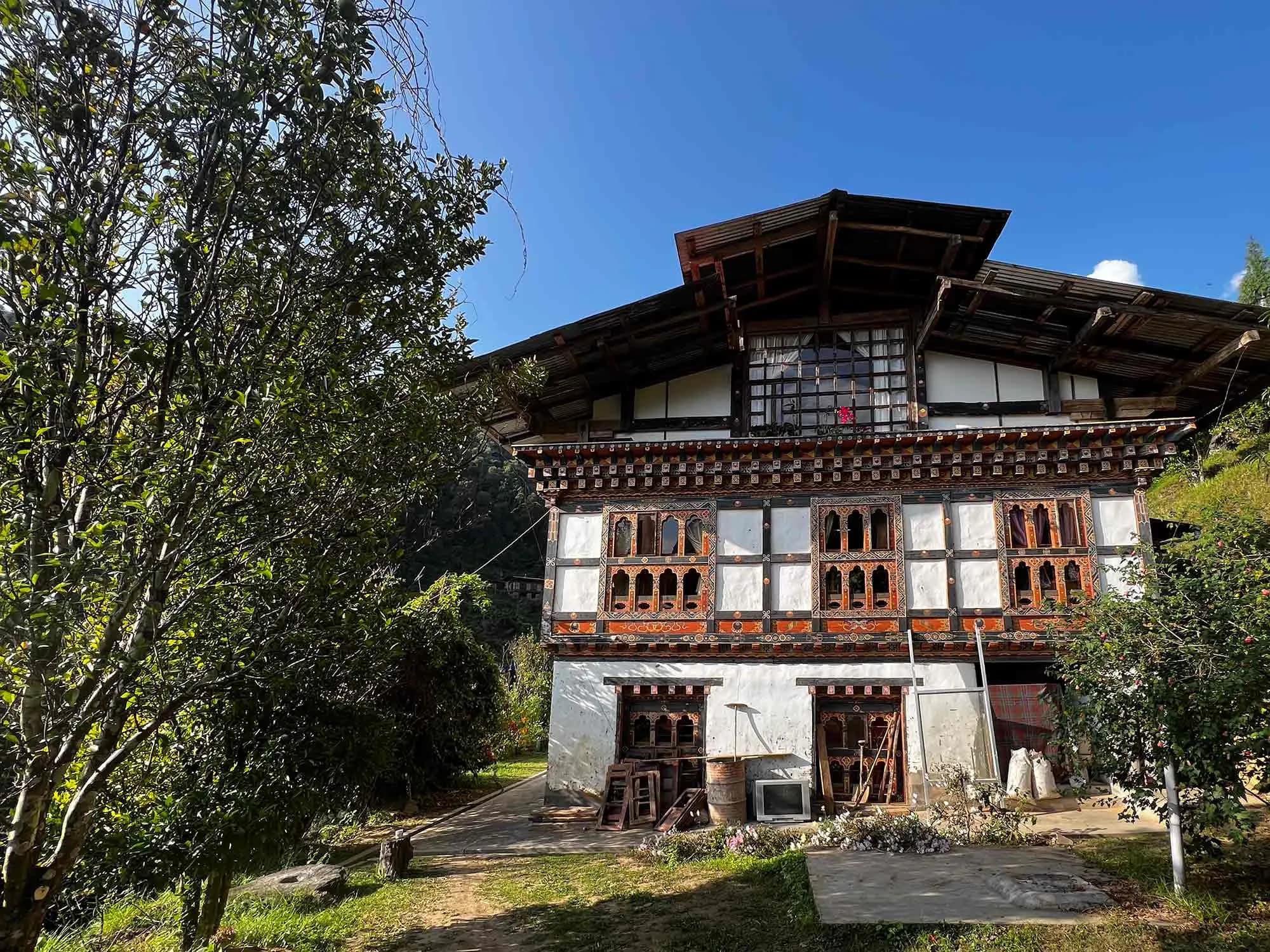
Bhutanese homestay — staying with a host family in a traditional Bhutanese farmhouse.
A Bhutanese homestay is one of the more cultural-depth experiences available — staying overnight (or for several nights) with a Bhutanese host family in their traditional farmhouse, sharing meals, observing the household rhythm, and engaging with the Bhutanese hospitality. The matched guide arranges homestays across the principal dzongkhags; the experience provides cultural depth that the premium-lodge tradition does not access. Typically combined with the principal lodge stays rather than replacing them — a 1-2 night homestay segment within a 7-10 night trip is the typical pattern.
Also known as Bhutan homestay · Farmhouse stay · Heritage farmhouse
- Duration
- 1-3 nights
- Effort
- easy
- Where
- Paro, Punakha, Bumthang, and other principal dzongkhags
- Best months
- October · November · December · January · February · March · April · May
- Register
- culture
What a homestay is
A Bhutanese homestay is overnight (or multi-night) accommodation in a Bhutanese host family's traditional farmhouse. The host family welcomes the visitor as a guest, shares the household — the morning butter-tea-and-zaow (puffed rice) breakfast, the family-cooked Bhutanese meals (ema datshi, momos, the principal home-cooked register), the household altar-and-religious, the principal evening conversation around the bukhari (wood-burning stove). Accommodation is typically in a private room within the household, with traditional Bhutanese bedding and the heritage-farmhouse architectural. Bathing is typically through the menchu (hot stone bath) offered by the family — see the hot stone bath experience. The cultural depth is the principal; the accommodation comfort is more modest than the premium-lodge tradition but the cultural experience is one of the principal Bhutanese trip elements.
Where homestays operate
The matched guide arranges homestays across the principal dzongkhags. Paro valley — a heritage-farmhouse network including some of the more well-established homestay families; typical convenient access to the principal Paro sights. Punakha valley — a Mo Chhu valley homestay network with substantial agricultural-and-cultural; the heritage farmhouses in the rice-and-fruit-growing. Bumthang valleys — the central-Bhutanese heritage, with older farmhouses and the deeper religious-pilgrimage context. Phobjikha — high-altitude valley homestays during the winter crane season. Eastern dzongkhags — homestay options in Mongar, Trashigang, and Lhuentse for visitors on the eastern circuit. The matched guide briefs visitors on the options and arranges the family coordination.
What to expect
The arrival ritual — the host family typically welcomes the visitor with butter tea and traditional Bhutanese snacks; the introduction-and-cultural-orientation conversation follows. The meal ritual — Bhutanese home-cooking, typically ema datshi as the central dish alongside the broader (momos, phaksha paa, the vegetable curries, red rice); the matched guide briefs the family on the visitor's dietary preferences in advance. The evening ritual — typically around the bukhari with conversation, often the cultural-and-religious-tradition discussion that the matched guide and the family enable. The morning ritual — early breakfast (typically butter tea, the puffed-rice zaow, sometimes a bukhari-cooked egg), then the day programme. The overall tradition is one of the deeper Bhutanese cultural experiences; visitors should approach the experience with cultural openness.
The cultural depth
Homestays provide cultural depth that the premium-lodge tradition does not access. The Bhutanese family register — the household altar, the agricultural-and-rural, the children-and-grandparents context that operates in the traditional Bhutanese household — is essentially only accessible through the homestay experience. The conversations with the host family, the observation of the household practices, the integration into the cultural for one or several days — all combine to provide what visitors describe as one of the principal cultural-deep registers of the trip. The matched guide briefs visitors carefully on the cultural protocol and ensures the host-and-guest context operates respectfully on both sides.
Practical
- Booking
- The matched guide arranges homestays with substantial advance arrangement — typically 30-60 days advance for the most-established homestay families. The host-family coordination (dietary preferences, room preparation, the cultural-orientation) requires advance communication.
- Fees
- Homestay fees typically USD 50-150 per person per night, full-board (meals included), with the fee paid principally to the host family directly. The arrangement supports the family economically and is part of the sustainable-tourism tradition that contemporary Bhutan operates within. The matched guide handles the payment.
- What to bring
- A small gift for the host family — flowers, a small token from the visitor's country, or fruits-and-treats are appropriate. The matched guide briefs visitors on the culturally-appropriate gift. The accommodation provides bedding and basic toiletries; visitors should bring personal-care items as for any travel. Warm clothing is essential for the bukhari-evening tradition.
More like this
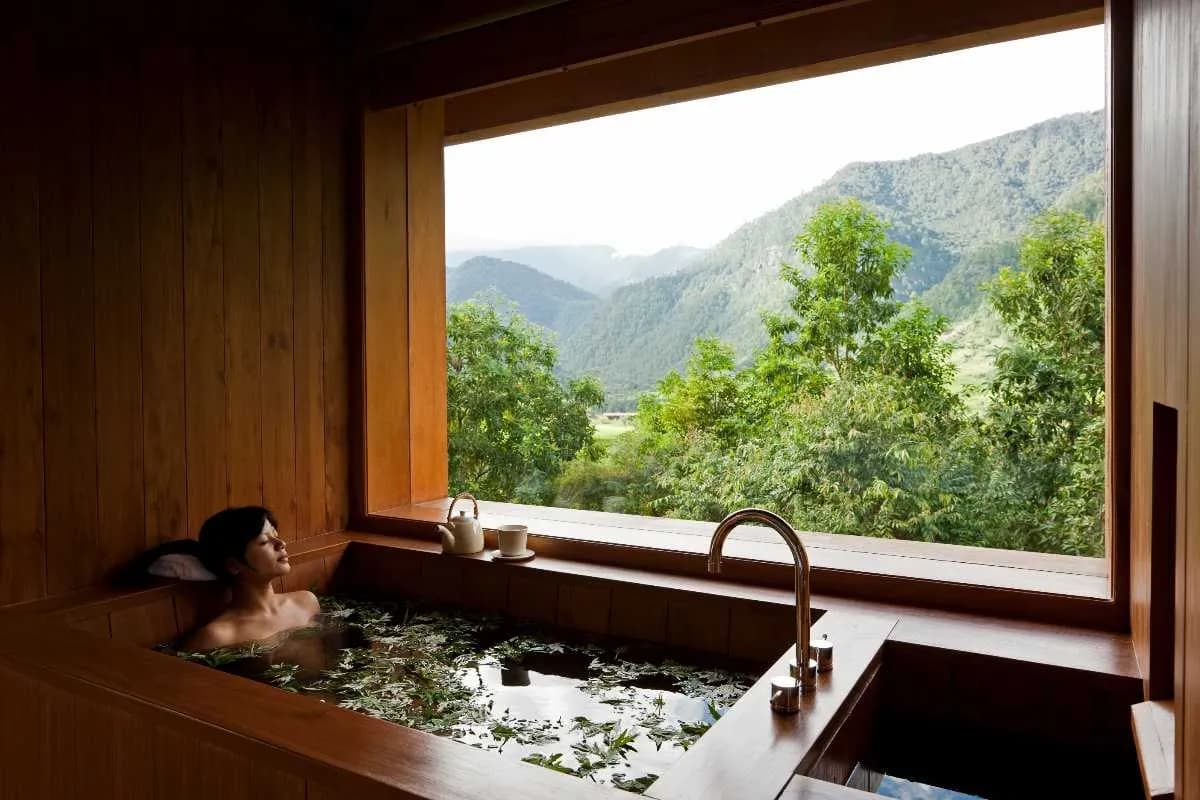 ExperienceThe Bhutanese hot stone bath — menchu, the river-stone soak at the end of a long day.The Bhutanese hot stone bath — menchu, river stones heated in a wood fire and dropped into wooden tub with mountain herbs. Premium-lodge and heritage-farmhouse register.
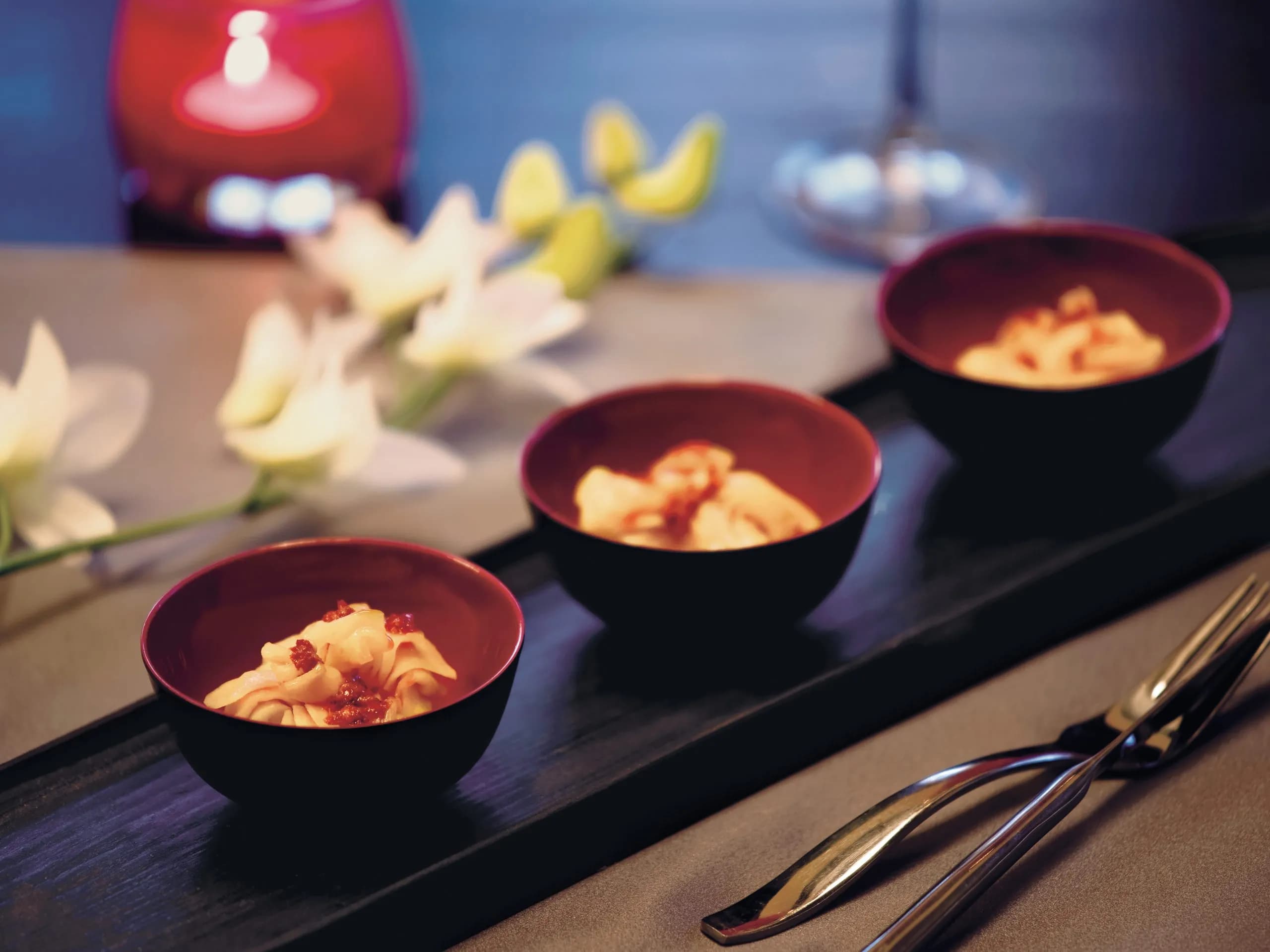 ExperienceBhutanese cooking class — learn ema datshi, momos, and the home-cooking tradition.Bhutanese cooking class — learn ema datshi, momos, phaksha paa, red rice. Premium lodge or host-family. The Bhutanese home-cooking tradition.
The wider idea
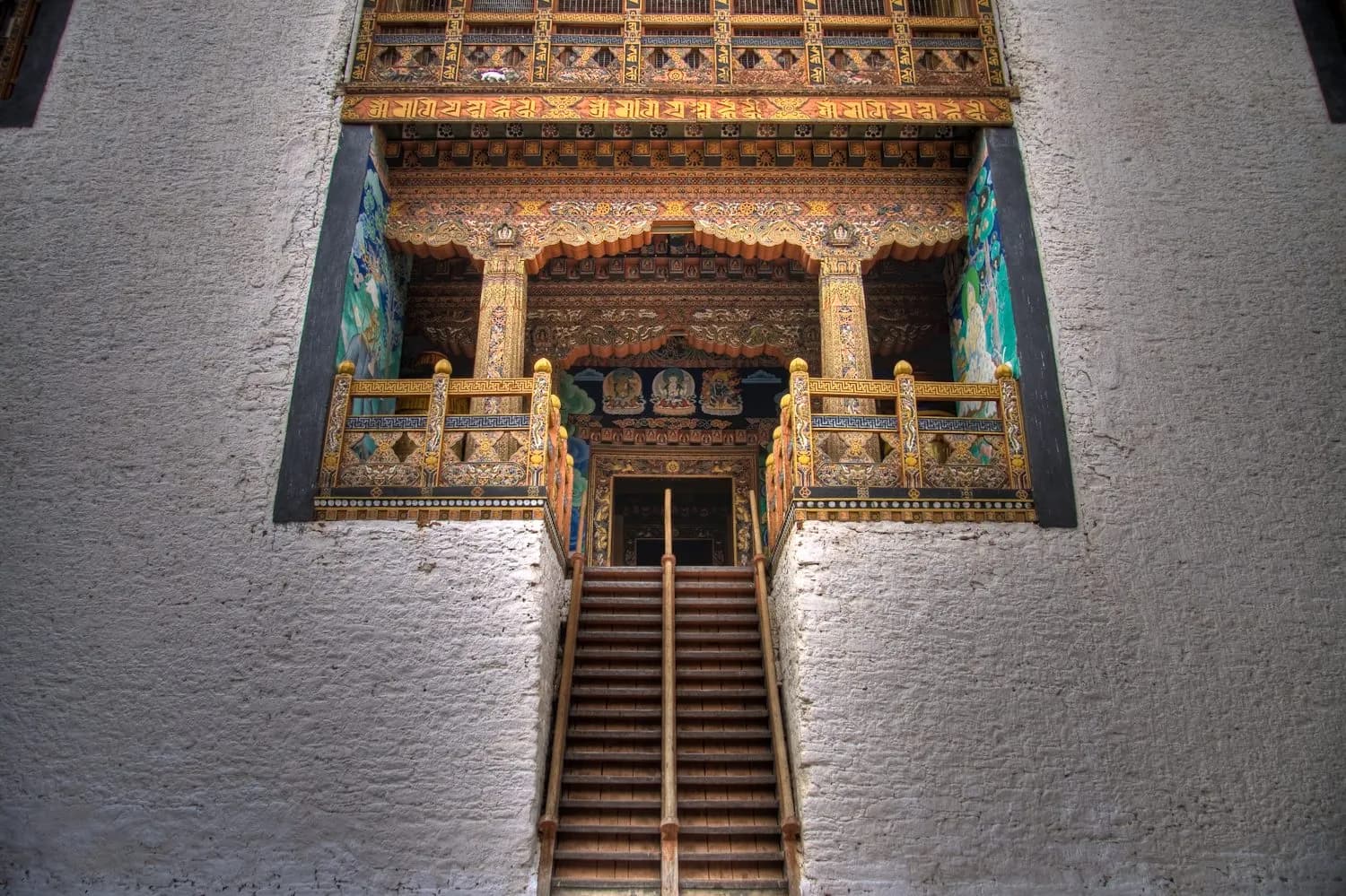 ThemeBhutanese architecture — the dzong, the lhakhang, the vernacular farmhouse register.Bhutanese architecture — the dzong, the lhakhang, the vernacular farmhouse. White-and-wood facade, steep roofs, decorative window frames, the courtyard register.
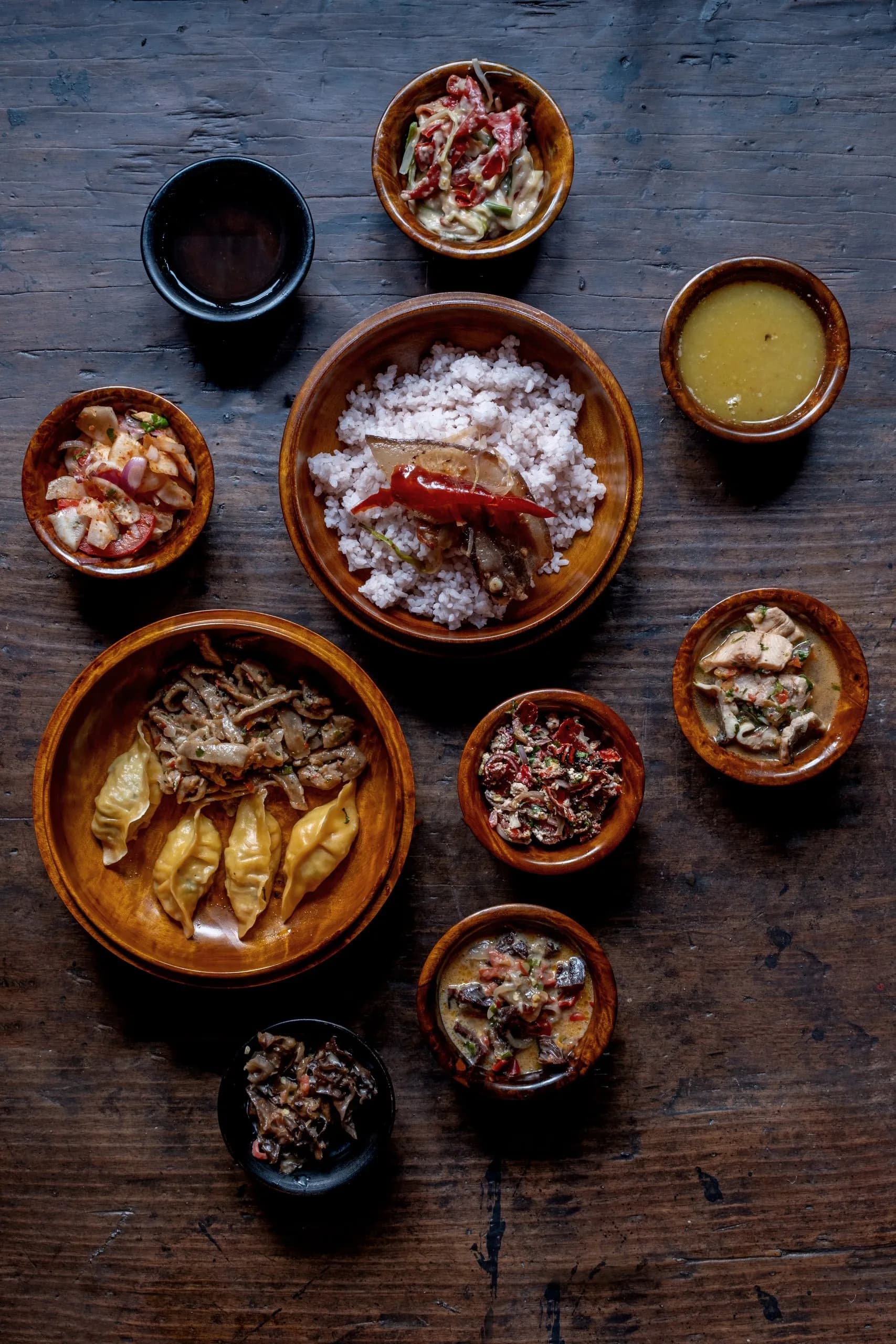 ThemeBhutanese cuisine — the most distinctive Himalayan food, treated as a vegetable rather than a spice.Bhutanese cuisine — ema datshi (chilli cheese), red rice, datshi, yak butter, the four geographic registers. The most distinctive Himalayan cuisine.
Journeys that include it
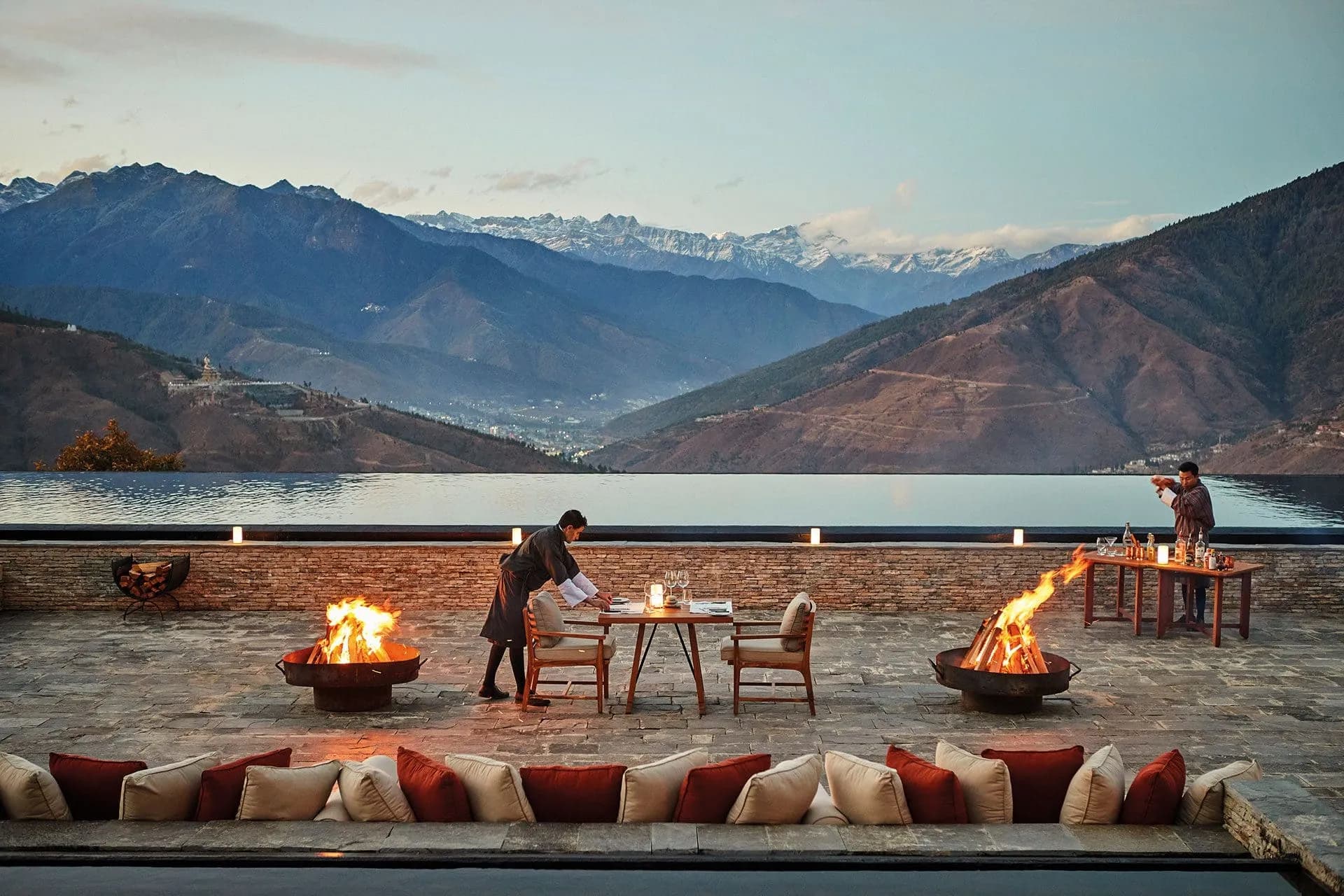 JourneyThe signature-tier Bhutan journey — private knowledgeable guide, the most considered lodge curation, helicopter or charter between valleys, exclusive-use arrangements where the season allows.The signature-tier Bhutan journey. Private knowledgeable guide, the most considered lodges, helicopter or PC-24 charter, exclusive-use arrangements. By invitation, from USD 14,000.
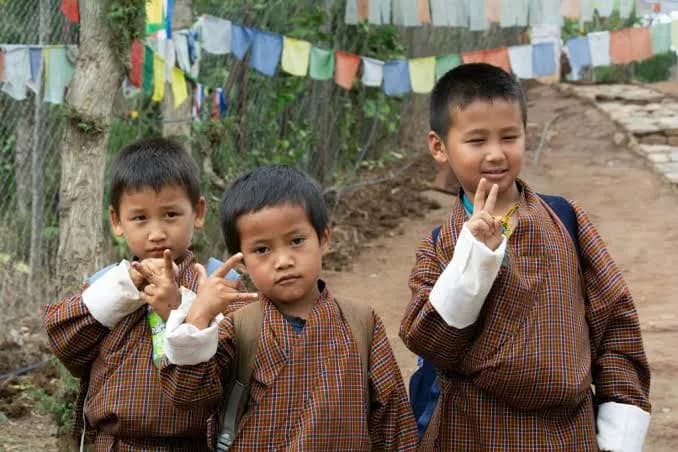 JourneyNine nights in Bhutan, for a family from London.A nine-night Bhutan family trip from London for autumn half-term. Bhutan including Phobjikha; teenager-friendly light treks; matched knowledgeable guide.
- JourneySeven nights in Bhutan, on your terms.A private seven-night Bhutan honeymoon for couples flying from Singapore. Bhutanese lodges, a matched guide, transparent all-inclusive pricing.
Journeys that visit Bhutanese homestay
Frequently asked
- How does a homestay compare to a premium lodge?
- Substantially different registers. Premium lodge — polished service, contemporary luxury comfort, sophisticated wellness, international standard. Homestay — modest accommodation, traditional Bhutanese, cultural depth, family-and-rural integration. Most visitors do both — a 1-2 night homestay segment within a premium-lodge-anchored trip provides cultural depth that the lodge register alone does not access. The matched guide briefs on the trade-off and structures the appropriate combination.
- Will the host family speak English?
- Varies. The most-established homestay families typically have English speakers (often the younger family members); the matched guide accompanies the visitor through the language-bridging and ensures the conversation operates well. Some less-established homestay families operate principally in Dzongkha or the local language; the matched guide handles the translation register.
- Is the homestay suitable for families with young children?
- Yes, with consideration. Bhutanese host families typically welcome multi-generational visitors; the child-friendly homestays have younger-family integration and child-appropriate cultural. The matched guide briefs the host family on the family-and-children context in advance and ensures the match works on both sides.

