Planning your Bhutan journey
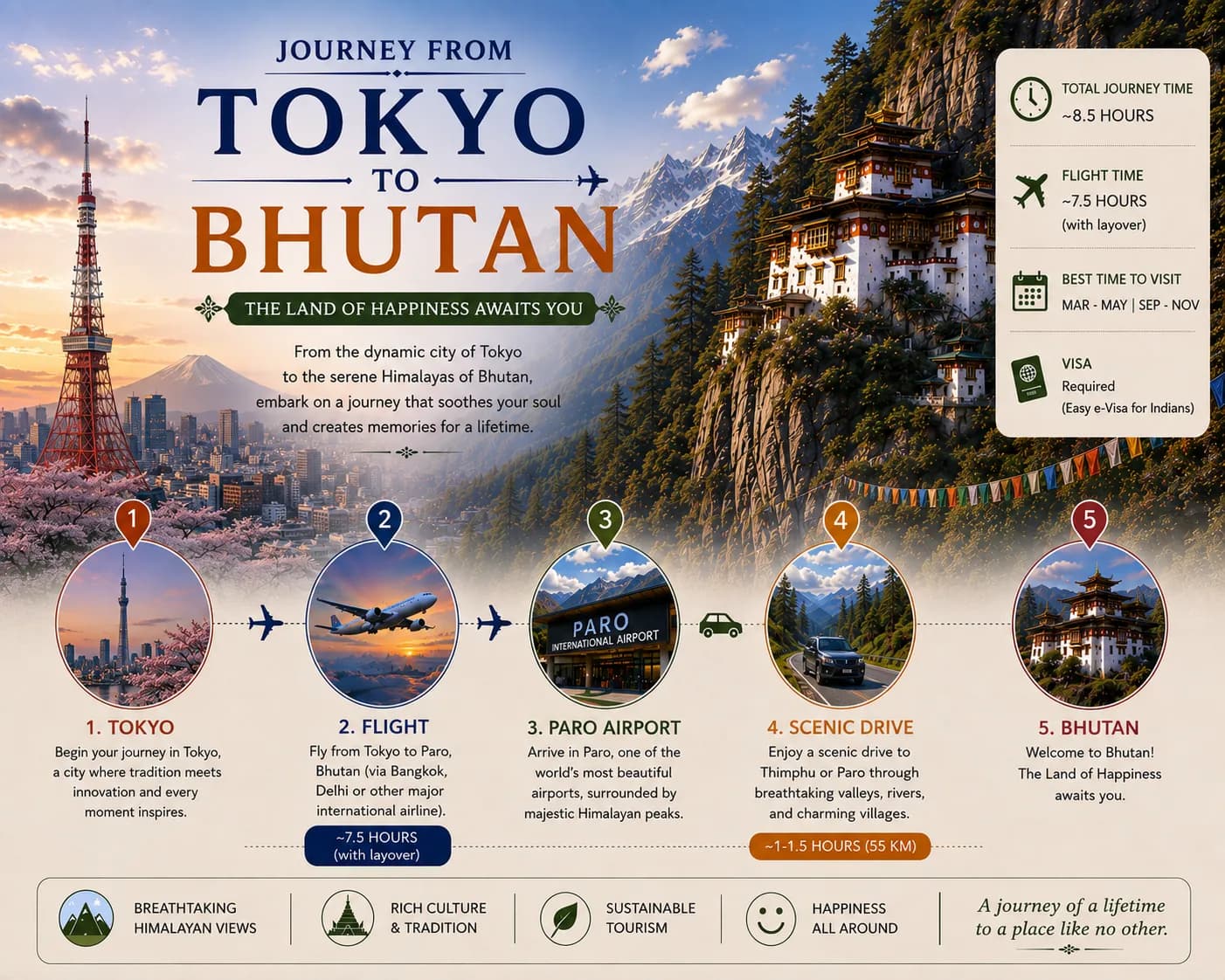
Bhutan from Tokyo — no direct service; the clean route is via Bangkok on JAL or Thai, with a Japanese-fluent matched guide held on request.
There is no direct Drukair or Bhutan Airlines service from Tokyo to Paro. The recommended routing for Tokyo-based travellers is via Bangkok — Japan Airlines, ANA, or Thai Airways into BKK with an overnight, then the daily Drukair BKK–PBH morning rotation. The matched-guide network includes three guides with working Japanese (basic to conversational), held on request. Total transit time around 18 hours including the Bangkok overnight.
- Register
- transport
The short answer
No direct service from Tokyo to Paro. The clean route is NRT/HND–BKK on JAL, ANA, or Thai Airways (~7 hours), a 1-night Bangkok overnight to reset, then the daily Drukair BKK–PBH morning rotation (~4 hours). Total transit ~18 hours including the overnight. Singapore is a secondary option (Sun-Sat Drukair direct, structured Singapore stopover possible). The matched-guide network includes three guides with working Japanese; we hold one for Japanese-speaking principals where the request reads that way.
Why Bangkok is the recommended Tokyo hub
Three reasons. (1) Daily Drukair frequency: Drukair (KB) operates BKK–PBH daily on a morning departure, which means the Bhutan trip can start any day of the week — important for the Japanese traveller who may be working around a kaisha or family-business schedule that doesn't align cleanly with the Drukair Singapore Sun-Sat rhythm. (2) Strong NRT/HND–BKK capacity: Japan Airlines (JL), ANA (NH), and Thai Airways (TG) all operate multiple daily Tokyo–Bangkok flights (~7 hours each way), with substantial premium-cabin availability. Japanese carriers' service tradition is among the world's best and many Tokyo principals prefer to begin the trip on a Japanese-flagged carrier. (3) No transit-visa friction: Thailand offers visa-on-arrival or visa-free entry to Japanese passport-holders. The Bangkok hub does not carry the transit-visa complications the Indian hubs (Delhi, Kolkata, Mumbai) impose on non-Indian-passport-holders. The standard shape is NRT/HND–BKK in the late afternoon or evening, 1-night Bangkok overnight, BKK–PBH morning departure.
The 1-night Bangkok stopover — essential for the long-haul shape
Unlike the Hong Kong or Singapore travel pattern (where the inbound leg into Bangkok is ~3 hours and a same-day connection sometimes works), the Tokyo–Bangkok leg is a 7-hour overnight or daytime sector. A same-day connection from the Tokyo evening flight to the next-morning Drukair leaves only ~5–6 hours of recovery, which is structurally inadequate for the Paro Airport visual approach landing — the most distinctive arrival in Asia and one that rewards the rested traveller substantially more than the fatigued one. The 1-night Bangkok overnight is the recommended pattern. Bangkok lodges we work with: Mandarin Oriental Bangkok (Riverside, JP-language concierge on request), The Siam (Dusit, Bill Bensley-designed), Capella Bangkok (Riverside, contemporary), The Sukhothai (Sathorn, classical Thai), COMO Metropolitan (Sathorn, contemporary), and Aman Bangkok (Nai Lert Park, opened 2024). The Mandarin Oriental and Aman both maintain JP-fluent concierge teams suited to Japanese principals.
Singapore as the alternative — the Sun-Sat constraint
Singapore is the secondary routing for Tokyo-based travellers. The route is NRT/HND–SIN on Japan Airlines, ANA, or Singapore Airlines (~7 hours), then the Drukair SIN–PBH Sun-only rotation. Constraints: (1) the trip dates must fit a 6-night or 13-night block on the Sunday arrival rhythm; the daily Bangkok flexibility is lost. (2) The total transit time is similar to the Bangkok route (~18 hours including the Singapore overnight). (3) Singapore transit visa-free for Japanese passport-holders, so no visa friction either way. Choose Singapore over Bangkok when: the dates fit Sun–Sat; you want a structured Singapore stopover (Raffles, Capella, Six Senses Maxwell, The Mandala); you have a Singapore Airlines loyalty preference; you prefer the Singapore cultural register over the Bangkok one. Choose Bangkok over Singapore when: the dates don't fit Sun–Sat; you want the daily-departure flexibility; you prefer the Bangkok cultural; you fly JAL or ANA and prefer the Japanese-carrier first leg into Bangkok.
The Japanese-fluent matched guide
The closed network includes three Bhutanese guides with working Japanese — basic to conversational. The most experienced of the three has guided Japanese principals for over a decade and holds JLPT-level conversational fluency suited to a working consultation about Bhutanese Buddhism, the local cuisine, or the trip's pacing. The other two carry basic-conversational Japanese suitable for the cultural moments where the language sympathy matters. For Japanese-speaking principals, we typically hold the most-experienced Japanese-fluent guide unless the dates or the specific match read otherwise; the matched guide is named in the proposal before you confirm, with the matching rationale explained. For Japanese principals comfortable in English, the wider guide network is available and the cultural match expands accordingly. Either tradition is held with the same care.
The Bhutan-Japan cultural register — what matters
The Bhutanese Vajrayana tradition (Drukpa Kagyu through the Zhabdrung lineage) is different from the Japanese Buddhist register (Zen and Pure Land predominant, with the Tendai and Shingon esoteric lineages closer to the Bhutanese tradition). For Japanese travellers with substantial Buddhist background, the comparative reading is among the principal cultural rewards of the trip — the matched guide is calibrated to speak across the two traditions where the conversation goes that way. Cuisine register: the Bhutanese ema datshi (the chilli-cheese national dish) is different from the Japanese palate but well-tolerated by most Japanese travellers; the matched lodge chefs can prepare parallel dishes (clear soups, plain rice, grilled fish, seasonal vegetables) where the dietary register asks. Etiquette overlap: the Bhutanese register of removing shoes inside lhakhangs and dzongs, of not pointing at altar images, of quiet observation in monastic settings — all map cleanly onto Japanese cultural training and require less briefing than for some other origin markets.
Booking lead time and the Tokyo–Bhutan rhythm
For the standard 6-to-10-night Bhutan trip via Bangkok, comfortable lead time is 8 to 10 weeks for autumn (mid-October to late November) and spring (March to May) windows. For the Paro Tshechu (late March) and Thimphu Tshechu (late September) windows, 4 to 6 months. For Clear-Sky Bhutan (December to February), 6 to 8 weeks. Japanese travellers often have constrained working calendars (Golden Week early May, Obon mid-August, year-end New Year early January) that align with elevated Bhutan demand from other Asian markets; we typically advise booking 4 to 6 months ahead for these windows. The NRT/HND–BKK segment is rarely the constraint; the Drukair BKK–PBH segment and the Bhutan lodge availability are the principal lead-time drivers.
Practical
- Direct Tokyo–Bhutan service
- None
- Recommended routing
- NRT/HND → BKK (1-night overnight) → PBH on daily Drukair morning
- NRT/HND–BKK carriers
- Japan Airlines (JL), ANA (NH), Thai Airways (TG) — multiple daily
- NRT/HND–BKK flight time
- ~7 hours each way
- Bangkok overnight
- Essential — same-day connection not recommended
- Total NRT/HND → PBH transit
- ~18 hours including 1-night Bangkok overnight
- Secondary routing
- NRT/HND → SIN (~7h) → PBH on Drukair Sun-only
- Japanese-fluent guide
- Three in the network — held on request for JP-speaking principals
- Thailand transit visa
- Visa-on-arrival or visa-free for Japanese passport-holders
- Indian hubs (Delhi/Kolkata/Mumbai)
- Not recommended — India transit visa required
Journeys it informs
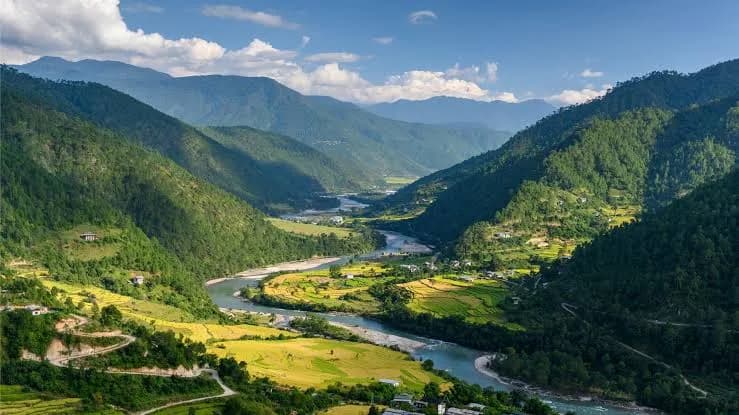
 JourneyBhutan, slowly. From Tokyo.A seven-night Bhutan journey from Tokyo — slow Bhutan pace, monastic mornings, hot stone baths, a Japanese-fluent guide when available.
 JourneySeven nights in Bhutan, for the traveller who has done Kyoto.A seven-night Bhutan journey for travellers who have done Japan and want the next-step Asian-Buddhist destination. Tokyo departure; cultural depth.
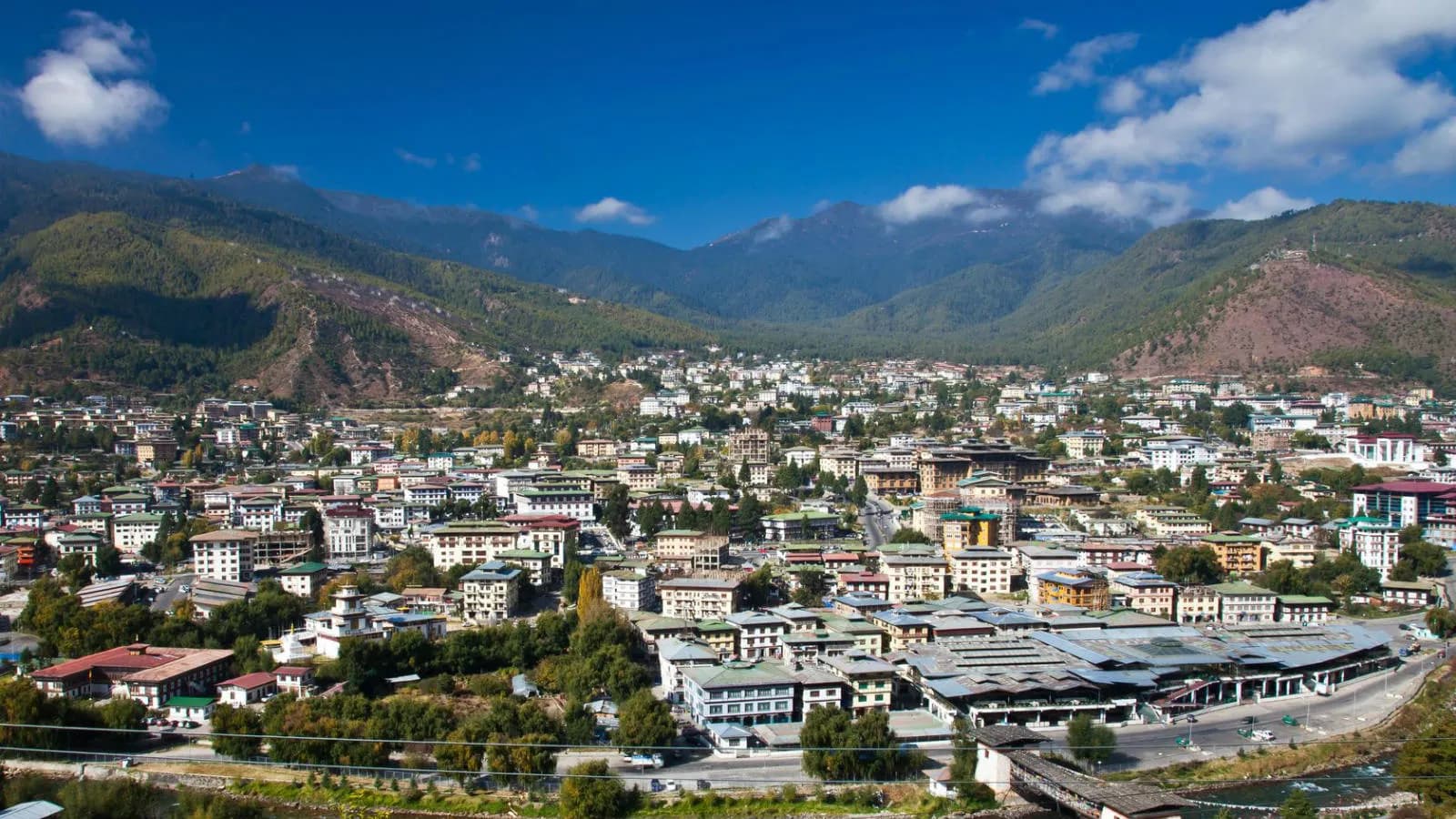 JourneySeven nights in Bhutan, on the easiest premium connection in Asia.A seven-night Bhutan trip for couples flying from Bangkok. Direct Drukair flight; Bhutanese lodges; transparent all-inclusive pricing.
Frequently asked
- Is there a direct flight from Tokyo to Bhutan?
- Not currently. Drukair (KB) and Bhutan Airlines (B3) do not operate direct Tokyo–Paro service. Tokyo-based travellers route via a hub — Bangkok is the recommended option (Japan Airlines, ANA, or Thai Airways into BKK, 1-night overnight, then daily Drukair BKK–PBH morning). Singapore is the alternative (NRT/HND–SIN on JAL/ANA/SQ, then Sun-Sat Drukair direct from Singapore).
- Can I have a Japanese-speaking guide in Bhutan?
- Yes — the closed network includes three Bhutanese guides with working Japanese (basic to conversational). The most experienced of the three has guided Japanese principals for over a decade. We hold the Japanese-fluent matched guide on request when the dates allow; the matched guide is named in the proposal before you confirm, with the matching rationale explained. For Japanese principals comfortable in English, the wider guide network is available.
- How long is the total transit time from Tokyo?
- Around 18 hours including the 1-night Bangkok overnight. Specifically: NRT/HND–BKK ~7 hours (typically a 17:00–18:00 Tokyo departure arriving Bangkok 22:00–23:00 local); ~8 hours in Bangkok (lodge, rest); BKK–PBH ~4 hours (06:30–07:00 departure, late-morning Paro arrival). The Bangkok overnight is essential — a same-day connection from the Tokyo evening flight to the morning Drukair leaves only ~6 hours of recovery, which is structurally inadequate.
- JAL, ANA, or Thai Airways — which do you recommend?
- All three are reliable; the choice comes down to (a) loyalty programme preference (JAL Mileage Bank vs. ANA Mileage Club vs. Star Alliance), (b) departure airport (JAL and ANA both operate from NRT and HND; Thai Airways predominantly from NRT), and (c) cabin preference (JAL and ANA both offer substantial first-class and business-class on the NRT–BKK leg; Thai Airways' Royal First and Royal Silk are also strong). For Japanese principals who prefer the Japanese-carrier register the full way, JAL or ANA NRT/HND–BKK with Drukair BKK–PBH is the natural pairing. The Drukair leg is itself a Bhutanese-flagged carrier.
- Can I combine the Bhutan trip with a Bangkok or Thailand stay?
- Yes — the Bangkok overnight can extend to a structured 2-to-4-night Thailand stay either side of the Bhutan trip. Bangkok itself (city, restaurant scene, the Grand Palace and Wat Pho for the cultural), Chiang Mai (the northern temples, the cool-season Doi Suthep walk), or the southern islands (Krabi, Phuket, Koh Samui) all combine naturally with Bhutan. The Tokyo–Bangkok–Bhutan trip is a 12-to-16-night shape; we can introduce our partner Thailand curators for the considered Thailand portion.
- Why not transit via Delhi or Kolkata?
- India requires a transit visa for non-Indian-passport-holders on certain itineraries even when remaining airside (not leaving the airport). The e-TV (e-Tourist Visa) process is online but not instant, and the airline / immigration interpretation of 'transit' versus 'arrival' varies. For Japanese passport-holders, the e-TV process is available but adds time and uncertainty that the Bangkok or Singapore hub does not carry. We recommend Japanese travellers route via Bangkok or Singapore rather than the Indian hubs.
- What is the best time of year for a Tokyo–Bhutan trip?
- Autumn (mid-October to late November) is the principal window — clear skies, low monsoon residue, the Himalayan range visible from Dochu La on clear mornings. Spring (March through May) catches the jacaranda and the rhododendron, plus the Paro Tshechu if dates align. Clear-Sky Bhutan (December through February) is the second autumn window — colder, even clearer, the lodges' fires lit by 4 p.m. We typically advise against deep monsoon (July and August) for the Tiger's Nest climb. Japanese travellers often align with Golden Week (early May) for the cherry-blossom shoulder or with the autumn equinox period (mid-October), both of which are rewarding windows.

