Among the safest premium destinations in Asia
Is Bhutan safe to visit? — the honest answer with the specifics.
Bhutan is among the safest premium-tourism destinations in Asia and is consistently rated at the highest tier on international safety indices. The US State Department lists Bhutan at Level 1 (the safest tier — 'exercise normal precautions') alongside countries like Iceland and Switzerland. Below: the specific safety considerations — crime, road safety, altitude, medical infrastructure, natural-hazard exposure, and solo-female-traveller safety — that visitors weigh.
- Register
- logistics
The short answer
Yes — Bhutan is among the safest premium destinations in Asia. US State Department Level 1 advisory (the safest tier). Very low violent crime, very low petty crime, considered tourism framework with matched-guide accompaniment throughout. The practical risks are altitude (for the Tiger's Nest climb and the Dochu La pass), road safety on the mountain roads (managed by experienced Bhutanese drivers), and the limited medical evacuation infrastructure (managed via Drukair / regional hospitals).
The headline safety rating
The US State Department travel advisory for Bhutan is Level 1: Exercise Normal Precautions — the safest tier on the four-level US State Department scale. Level 1 is the same tier as Iceland, Switzerland, Japan, and Singapore. Bhutan has held the Level 1 rating consistently across the past decade. The UK Foreign Office, Australian Government, and Canadian Government issue comparable low-concern advisories for Bhutan. Bhutan does not appear on any 'dangerous countries' lists. The principal international risk indices — the Global Peace Index, the Numbeo Safety Index, the World Risk Index — all rank Bhutan in the safest tier. For solo female travellers specifically: Bhutan ranks among the top 10 safest solo-female-travel destinations in Asia across multiple international travel-safety rankings.
Crime — very low
Bhutan has the lowest crime rates in the South Asian region. The 2023 Royal Bhutan Police statistics show: - Violent crime against international visitors: negligible (under 5 reported incidents per year across the ~200,000 international visitors) - Petty theft from international visitors: rare (under 50 reported incidents per year) - Scams targeting visitors: rare - Pickpocketing: rare; most-reported in the Thimphu Centenary Farmers' Market and the Paro tshechu crowd - Sexual harassment of international visitors: very rare; the Bhutanese cultural protocol protects international visitors at the lodge level and through the matched-guide accompaniment The cultural reasons for the low-crime framework: small population (~750,000), strong community-based law enforcement framework, Royal Government framework around visitor protection, Buddhist cultural framework of non-violence, licensed-operator framework that keeps visitors within the knowledgeable guide / lodge framework throughout the visit.
Road safety — managed by experienced Bhutanese drivers
Bhutan's mountain roads are the principal practical safety concern for international visitors. The principal Bhutan roads — Paro-Thimphu (54 km), Thimphu-Punakha via Dochu La (75 km, 3,100m pass), Punakha-Phobjikha (80 km) — are single-lane mountain roads with curves, cliff drops, and weather-affected sections (monsoon June-August the principal risk window). The Bhutanese licensed-operator framework addresses the road-safety risk via experienced Bhutanese drivers — 10+ years' experience on the principal routes, familiar with the specific curves and the weather-affected sections. The experienced driver is part of the premium-tier hosting framework; not assigned at random. Vehicle safety: premium-tier visitors are transported in maintained vehicles — Toyota Hilux, Innova, Land Cruiser, larger vans for group trips. Seatbelt protocol respected. insurance in place via the licensed-operator framework. For concerned visitors: the Royal Bhutan Police maintains the principal roads at high standard relative to the Himalayan region; road-traffic incidents involving international visitors are very rare.
Altitude — the principal physical risk
Bhutan's altitude exposure is the principal physical risk for international visitors. The principal altitudes: - Paro: 2,250 m - Thimphu: 2,320 m - Dochu La pass: 3,100 m (20-40 minute exposure on the Thimphu-Punakha drive) - Punakha: 1,280 m (warm valley; altitude relief) - Phobjikha: 2,900 m - Tiger's Nest climb: 3,120 m (4-6 hour exposure) - Bumthang: 2,600-3,100 m Most travellers experience mild altitude symptoms (mild headache, shortness of breath, mild fatigue) at 2,500m+. Serious altitude sickness (HACE — High Altitude Cerebral Edema; HAPE — High Altitude Pulmonary Edema) is very rare at the principal Bhutanese altitudes — these occur above 4,000m typically. For the Snowman Trek (5,320m max altitude) and the Chomolhari Trek (4,950m max), the serious-altitude-illness risk becomes material; the matched trek guide carries oxygen, Diamox, and the emergency-evacuation framework. For considered visitors: see bhutan-altitude-and-acclimatisation for the detailed altitude planning framework.
Medical infrastructure
Bhutan's medical infrastructure is adequate for most routine medical needs and serious for truly serious medical events. Routine care: Royal Government provides free healthcare to all (including international visitors at cost-recovery rates). The principal hospital is JDWNRH (Jigme Dorji Wangchuck National Referral Hospital) in Thimphu — ~500 beds, comprehensive specialties, senior medical staff. District hospitals in each of the 20 dzongkhags provide primary and secondary care. Serious cases: For serious medical events that exceed the Bhutanese in-country capacity, the standard recourse is medical evacuation via Drukair to Bangkok (4-hour flight; Bangkok Adventist Hospital or Bumrungrad International) or Delhi (Apollo Hospital). The evacuation framework is coordinated by the lodge concierge and the matched-guide network; standard timing 4-8 hours from the incident to the evacuation flight departure. Recommended insurance: Pre-arranged international medical insurance with evacuation coverage is strongly recommended for all international visitors. Principal insurers we work with: Global Rescue, International SOS, MedJet, AXA Schengen. Premiums start at ~USD 100-200 per trip for comprehensive coverage.
Natural-hazard exposure
Earthquakes: Bhutan sits in the seismically-active Himalayan region. 2009 Mongar earthquake (6.1 magnitude) caused structural damage but limited casualties; most subsequent seismic events have been mild. The risk to international visitors present is low. Monsoon flooding: Monsoon season (June-August) brings landslides on the mountain roads and river flooding in the southern districts. Most tourism avoids the monsoon window; premium-tier itineraries are rare in this period. Glacial Lake Outburst Floods (GLOFs): A specific Himalayan risk — glacial lakes in the northern Bhutanese high country pose flood risk to the downstream valleys (Punakha, Wangdue Phodrang). Royal Government maintains monitoring; risk to tourism present is low. Forest fires: Winter (December-February) forest fires occur occasionally; risk to tourism very low. Wildlife: Bhutan has tigers, snow leopards, bears (Himalayan brown bear, Asian black bear), leopards. Encounters with these at tourism sites extremely rare. Much more likely encounters: monkeys (Assamese macaque), yaks (high altitude only), wild dogs in the southern districts.
Solo female traveller safety — excellent
Bhutan ranks among the top 10 safest solo-female Asian destinations across the principal international travel-safety rankings. Why Bhutan is excellent for solo female travellers: - Licensed-operator framework: Every female visitor is accompanied by the matched guide throughout the trip — no solo navigation through public spaces. - Cultural framework: Bhutanese cultural protocol respects female visitors at the lodge, the temple, the market. Harassment very rare. - Lodge-side female-focused arrangements: Lodges maintain female-friendly accommodations — ground-floor villas for privacy, female-staff lodge teams where the visitor prefers. - Matched guide tier: Several female knowledgeable guides in the Bhutanese network; available on request. - Royal Government framework: Royal Bhutan Police monitors visitor safety; incidents investigated promptly. For considered planning: see bhutan-solo-female-travel for the dedicated guide.
Practical
- US State Department advisory
- Level 1: Exercise Normal Precautions (safest tier)
- UK FCDO advisory
- Low concern
- Crime rate
- Among the lowest in South Asia
- Violent crime against international visitors
- <5 incidents/year (out of ~200,000 visitors)
- Principal physical risk
- Altitude (Dochu La 3,100m + Tiger's Nest 3,120m)
- Principal road risk
- Mountain roads, monsoon landslides (managed by experienced drivers)
- Principal hospital
- JDWNRH (Jigme Dorji Wangchuck National Referral Hospital), Thimphu
- Medical evacuation
- Via Drukair to Bangkok (4h) or Delhi
- Recommended insurance
- International medical insurance with evacuation coverage (Global Rescue, International SOS, MedJet, AXA)
- Solo female traveller safety
- Top 10 safest in Asia rankings
- Emergency numbers
- Police: 113. Fire: 110. Medical: 112. Lodge concierge: first contact
Journeys it informs
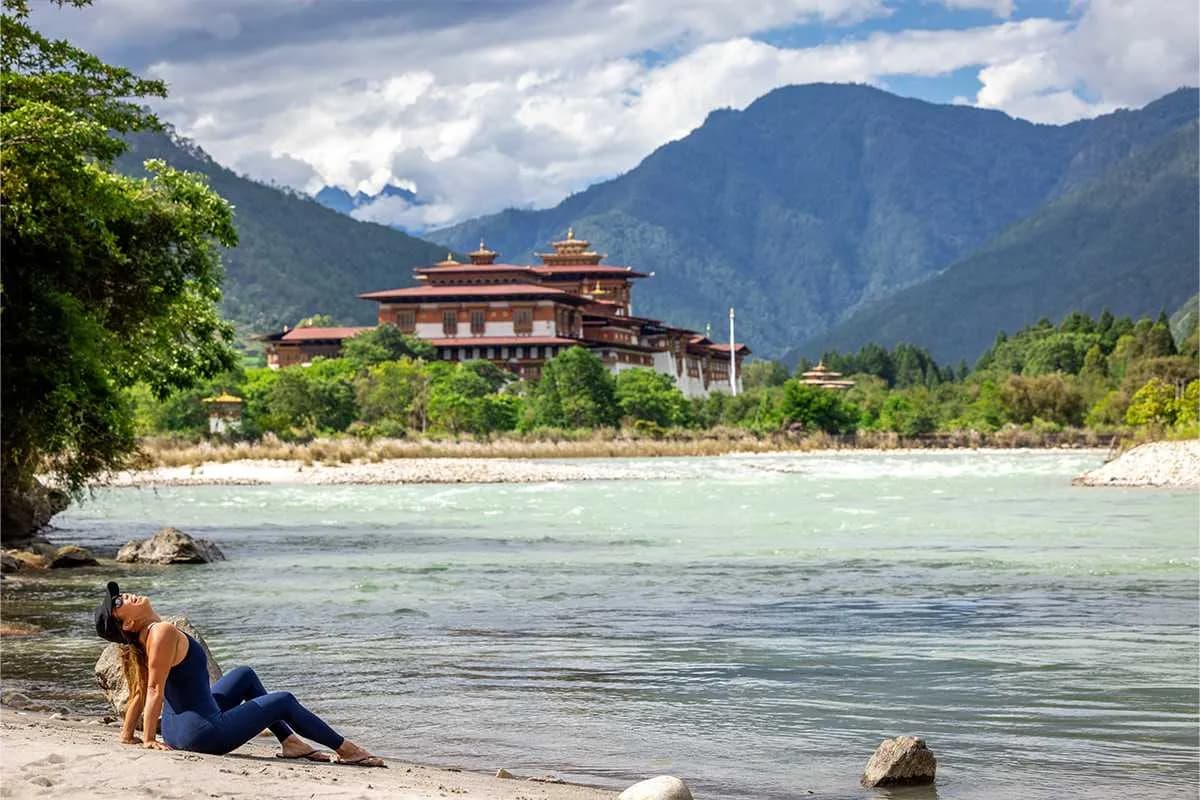 JourneySeven nights in Bhutan, on your own, in one of the safest countries to travel.A private seven-night Bhutan trip for women travelling solo from London. Matched female guide; cultural depth; the country's strong safety record.
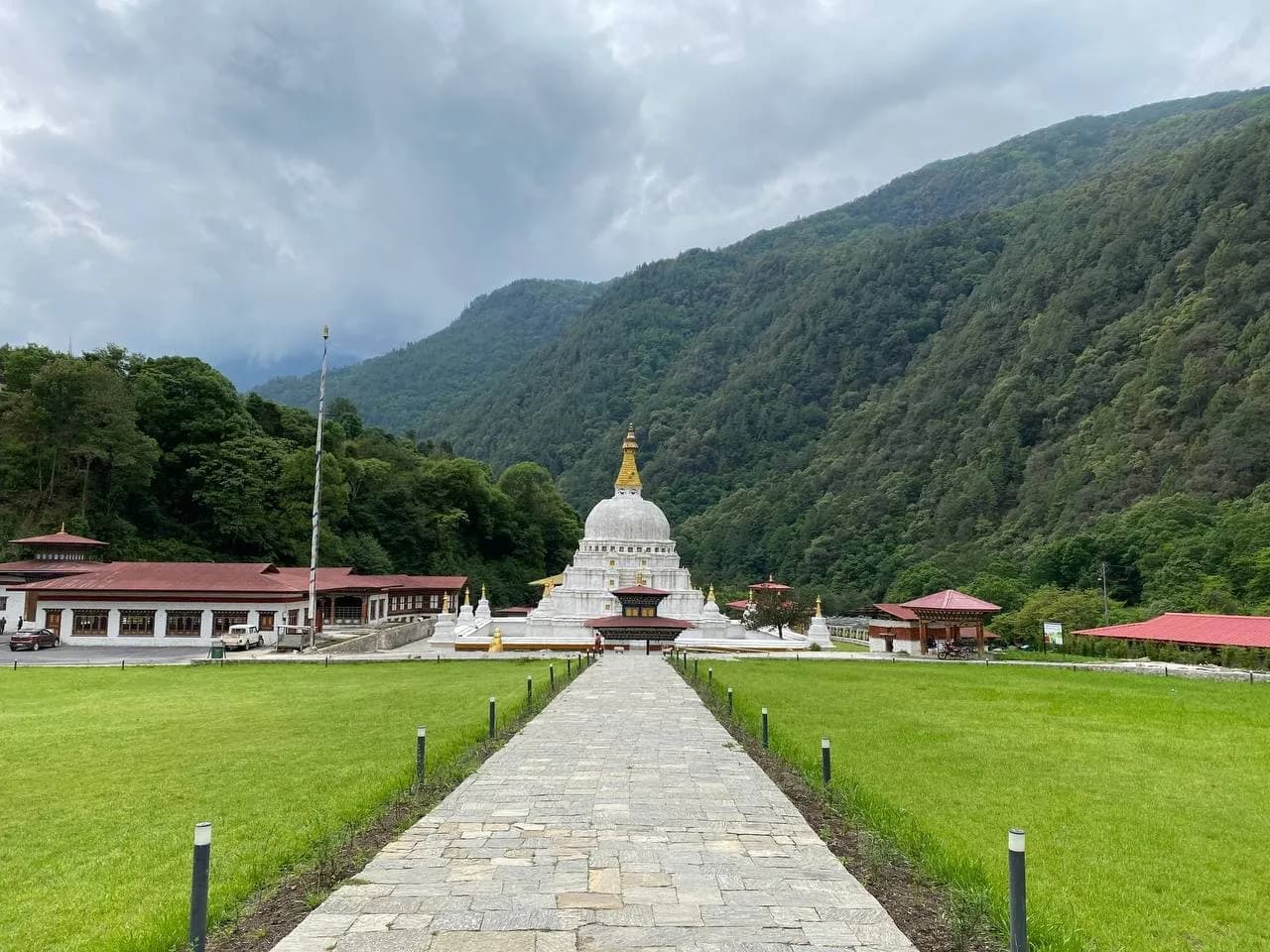 JourneyAn eight-night Bhutan journey paced for travellers in their seventies and eighties — and for the adult children travelling with them.An eight-night Bhutan journey paced for elderly parents and their adult children. Luxury tier, low-altitude pacing, ground-floor villas, optional Tiger's Nest.
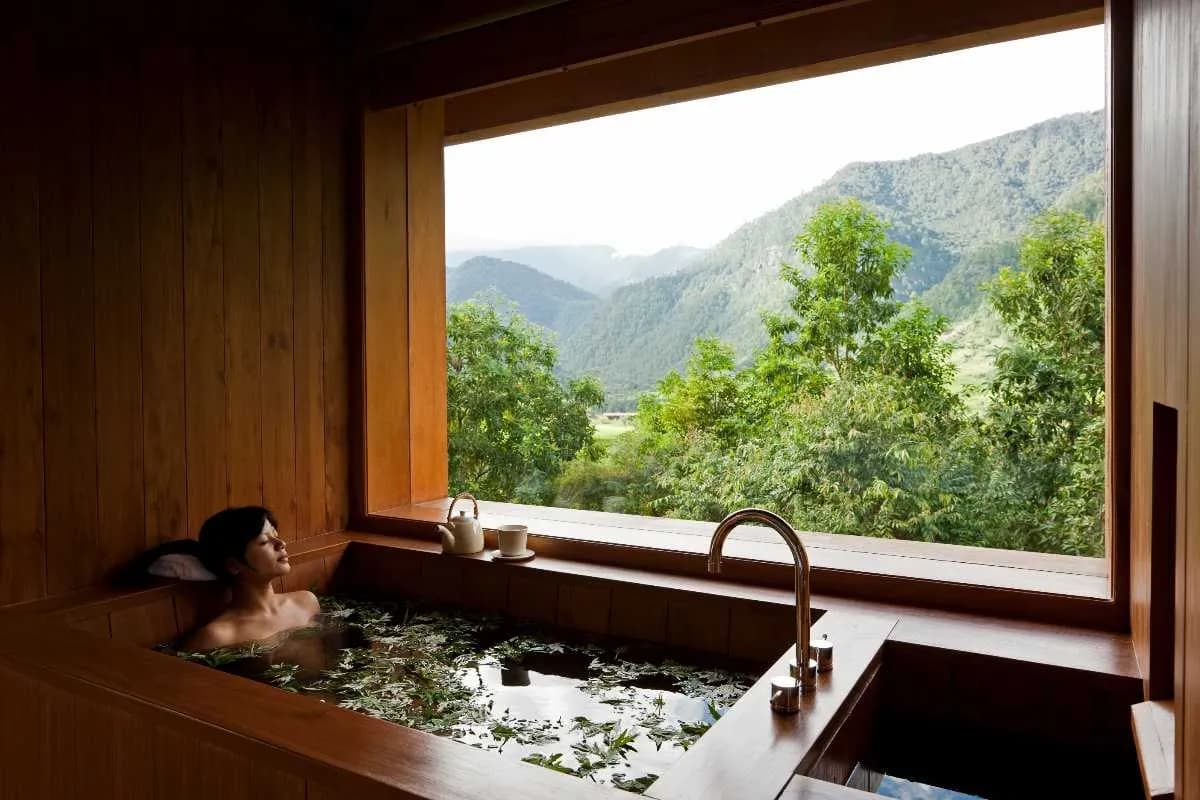 JourneySeven nights in Bhutan, on your terms.A private seven-night Bhutan honeymoon for couples flying from Singapore. Bhutanese lodges, a matched guide, transparent all-inclusive pricing.
Frequently asked
- Is Bhutan safer than Nepal? India? Tibet?
- On the principal international safety indices: yes. Bhutan holds the US State Department Level 1 rating; Nepal is Level 2 ('Exercise Increased Caution' — primarily for Maoist-era residual risks + trekking safety); India is Level 2 ('Exercise Increased Caution' — primarily for air quality + crime in specific regions); Tibet is administratively part of China (PRC Level 3 'Reconsider Travel' historically; currently Level 2). The Bhutanese safety record is substantive.
- Are there any current security concerns I should know about?
- No. Bhutan has no active security concerns. The 2003 ULFA/NDFB military operation (see 2003-ulfa-ndfb-military-operation) resolved the principal 1990s-era security threat (Indian-insurgent encampments in southern Bhutan). No insurgency, no terrorism, no armed conflict in the contemporary period. Bhutan-China border peaceful but undelineated in the northern sectors; no implications for tourism.
- Do I need vaccinations?
- Routine vaccinations (MMR, tetanus, influenza) recommended. Hepatitis A and Typhoid recommended for any South Asian travel. Japanese Encephalitis recommended if visiting the southern districts in monsoon. Yellow Fever required only if arriving from Yellow Fever-endemic countries. Malaria present only in the southern districts at specific monsoon times — most Bhutan visitors do not need prophylaxis. Discuss with your travel-medicine specialist 4-6 weeks before the trip.
- How does the licensed-operator framework affect safety?
- Significantly positive. The licensed-operator framework means every international visitor is booked through a Royal Government-licensed Bhutanese tour operator who assumes responsibility for the visitor's safety throughout the trip. The matched knowledgeable guide accompanies the visitor continuously; the lodge concierge handles medical / emergency coordination; the Royal Bhutan Police responds to any incidents promptly. The structural safety framework is considered.
- What about safety for LGBTQ+ travellers?
- Same-sex relations were decriminalised in Bhutan in 2021. The Bhutanese cultural framework accepts international LGBTQ+ visitors respectfully — lodge accommodation, matched-guide framework, social spaces all non-discriminatory. public displays of affection at the Bhutanese cultural threshold (same threshold applied to all visitors — Bhutanese cultural tradition is reserved). No specific LGBTQ+ travel advisories for Bhutan.
- What if I get sick during the trip?
- The matched-guide-and-lodge-concierge framework manages the medical coordination. Lodge-side contact with the local health centre is the first step for any medical event. The JDWNRH hospital in Thimphu handles more serious cases. The medical-evacuation framework via Drukair handles truly serious cases (~4-8 hours from incident to evacuation flight). Pre-arranged international medical insurance with evacuation coverage strongly recommended; your matched guide briefs the specific framework before the trip.
- Is the Tiger's Nest climb safe?
- Yes for most reasonably-fit travellers. The principal risks: altitude (3,120m max), fatigue, trail-surface (switchback descent on packed earth + stone steps). The matched guide monitors throughout and carries water + oxygen + light medical kit. Falls / twisted ankles rare; serious medical events very rare. See how-hard-is-tigers-nest-really for the climb-specific assessment.

