Bhutanese monuments
Dzongs
The fortified administrative and monastic complexes that give Bhutanese architecture its distinctive form, each set on a high point above a river or a confluence.
- In this group
- 9
- Dzongkhags
- 7
- Earliest founding
- 1216
Dzongs9
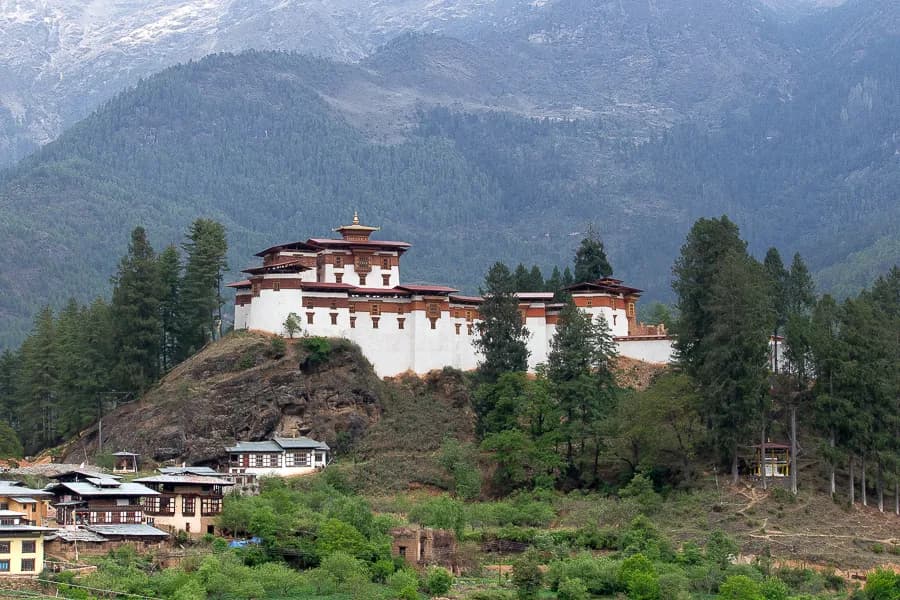
dzong · Paro · 2,500 m · founded 1649
Drukgyel Dzong
Drukgyel Dzong sits at the head of the upper Paro valley at 2,500 metres elevation, on a low ridge with an open view north to the snow peak of Chomolhari (7,326 m). Founded in 1649 by Tenzin Drukda to commemorate Bhutan's victory over a Tibetan invasion, the dzong was destroyed by fire in 1951 and stood as a romantic ruin for over six decades. Royal Government restoration commenced in 2016 and is ongoing.
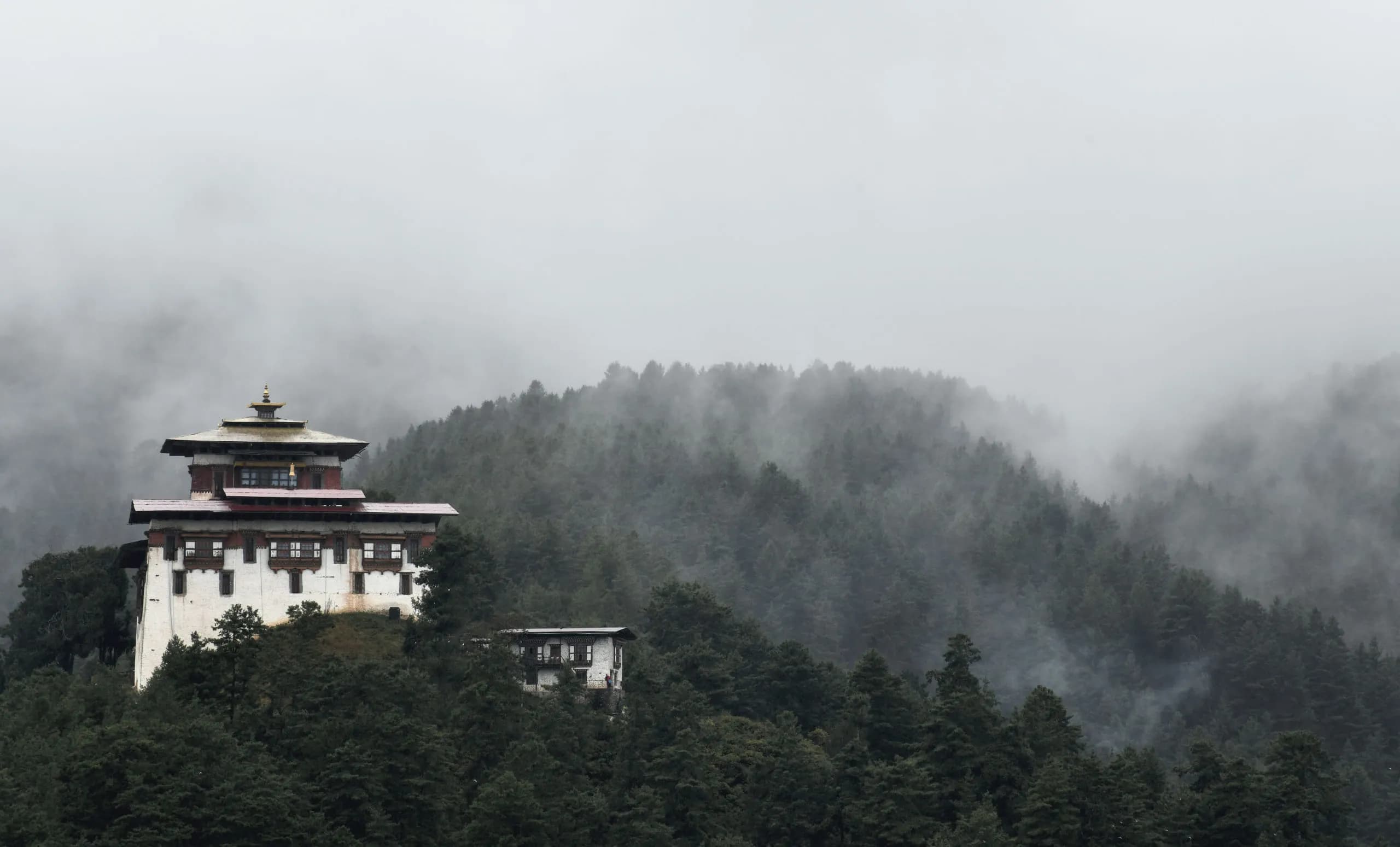
dzong · Bumthang · 2,700 m · founded 1549
Jakar Dzong
Jakar Dzong sits on a low ridge above the Chamkhar Chhu in the Choekhor valley of Bumthang at 2,700 metres elevation. Founded in 1549 by Ngagi Wangchuck, a great-grandson of Pema Lingpa, the dzong's name 'Jakar' (white bird) derives from a white-bird omen at the site selection. The dzong is the administrative and monastic centre of Bumthang dzongkhag and a notable architectural example of the Bhutanese fortress tradition.
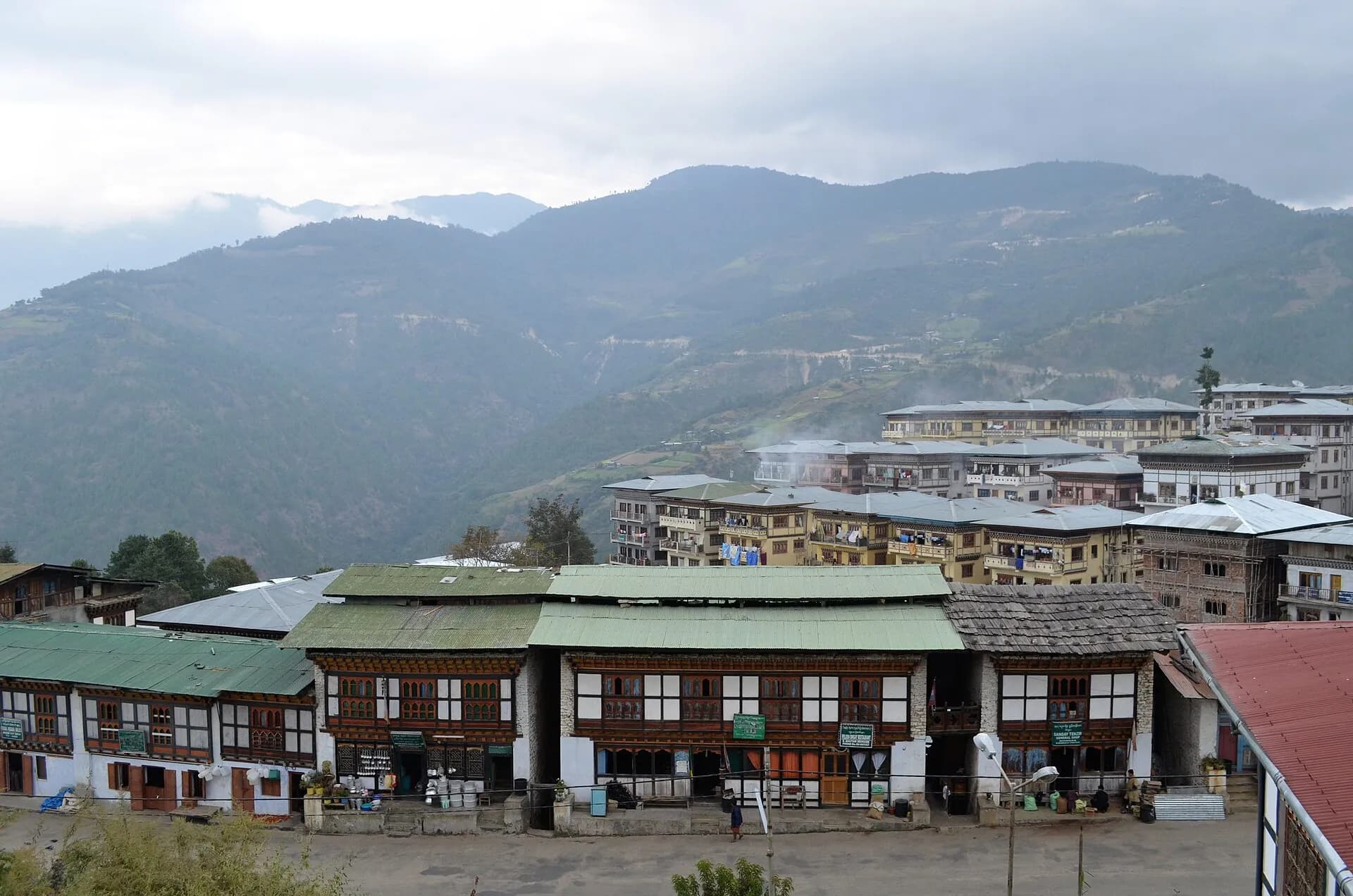
dzong · Mongar · 1,600 m · founded 1930
Mongar Dzong
Mongar Dzong was built in 1930 — one of the youngest principal dzongs in the country, replacing the older Zhongar Dzong that had been damaged by earthquake and fire in the early 20th century. The dzong was commissioned under the direction of His Majesty the Second Druk Gyalpo Jigme Wangchuck and follows the traditional Bhutanese dzong architectural framework at a moderate scale. The dzong houses both the Mongar dzongkhag administrative offices and the regional monk body; the architectural gives visitors a clear sense of how Bhutanese builders maintained dzong-construction continuity through the 20th century.
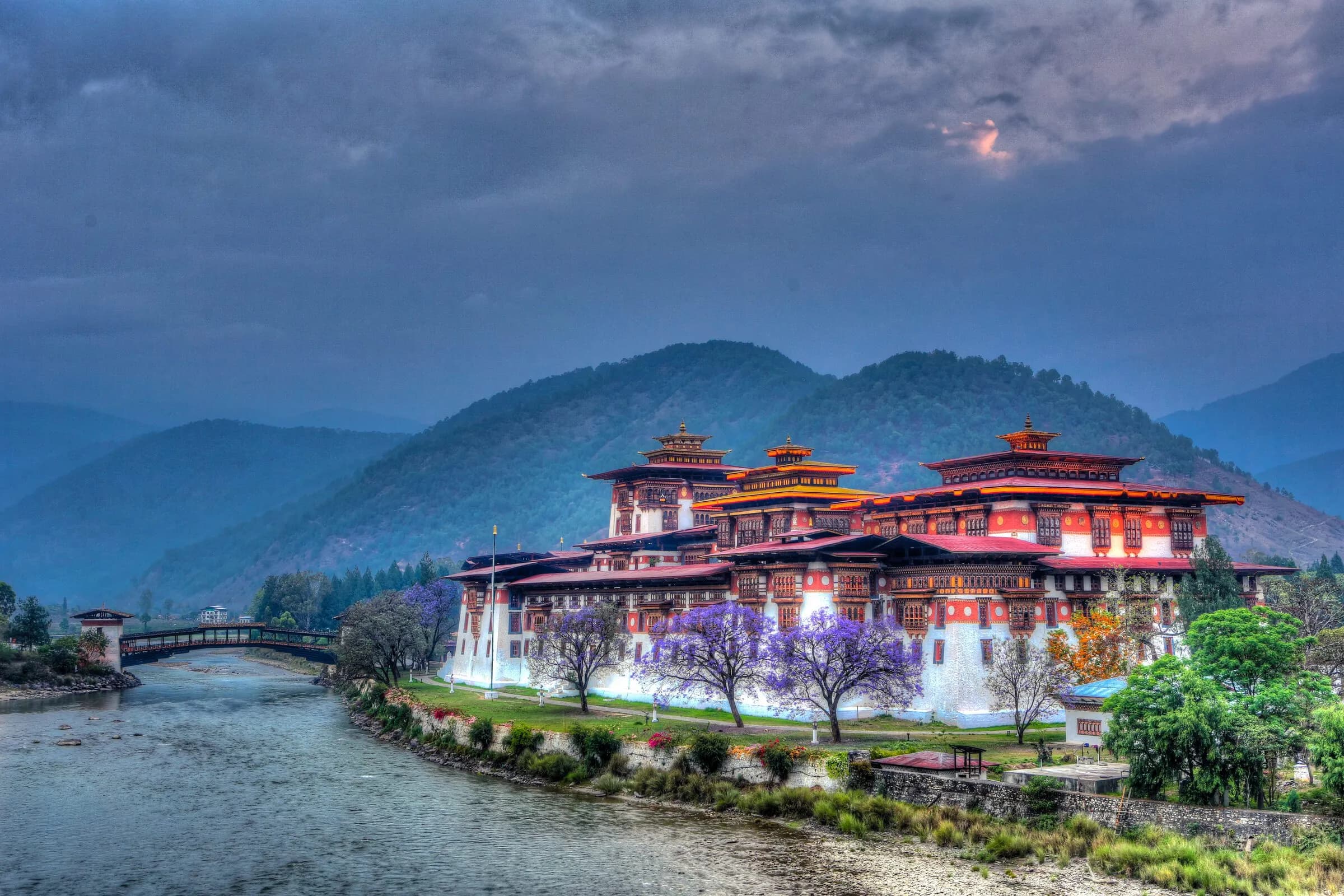
dzong · Punakha · 1,200 m · founded 1638
Punakha Dzong
Punakha Dzong — known formally as Pungtang Dechen Phodrang Dzong, the Palace of Great Happiness — sits at the confluence of the Pho Chhu (father river) and the Mo Chhu (mother river) in the Punakha valley at 1,200 metres elevation. Founded in 1638 by Zhabdrung Ngawang Namgyal, it served as the capital of Bhutan until 1955 and remains the winter residence of the Je Khenpo (the Chief Abbot) and the principal venue for state ceremonies.
dzong · Paro · 2,280 m · founded 1644
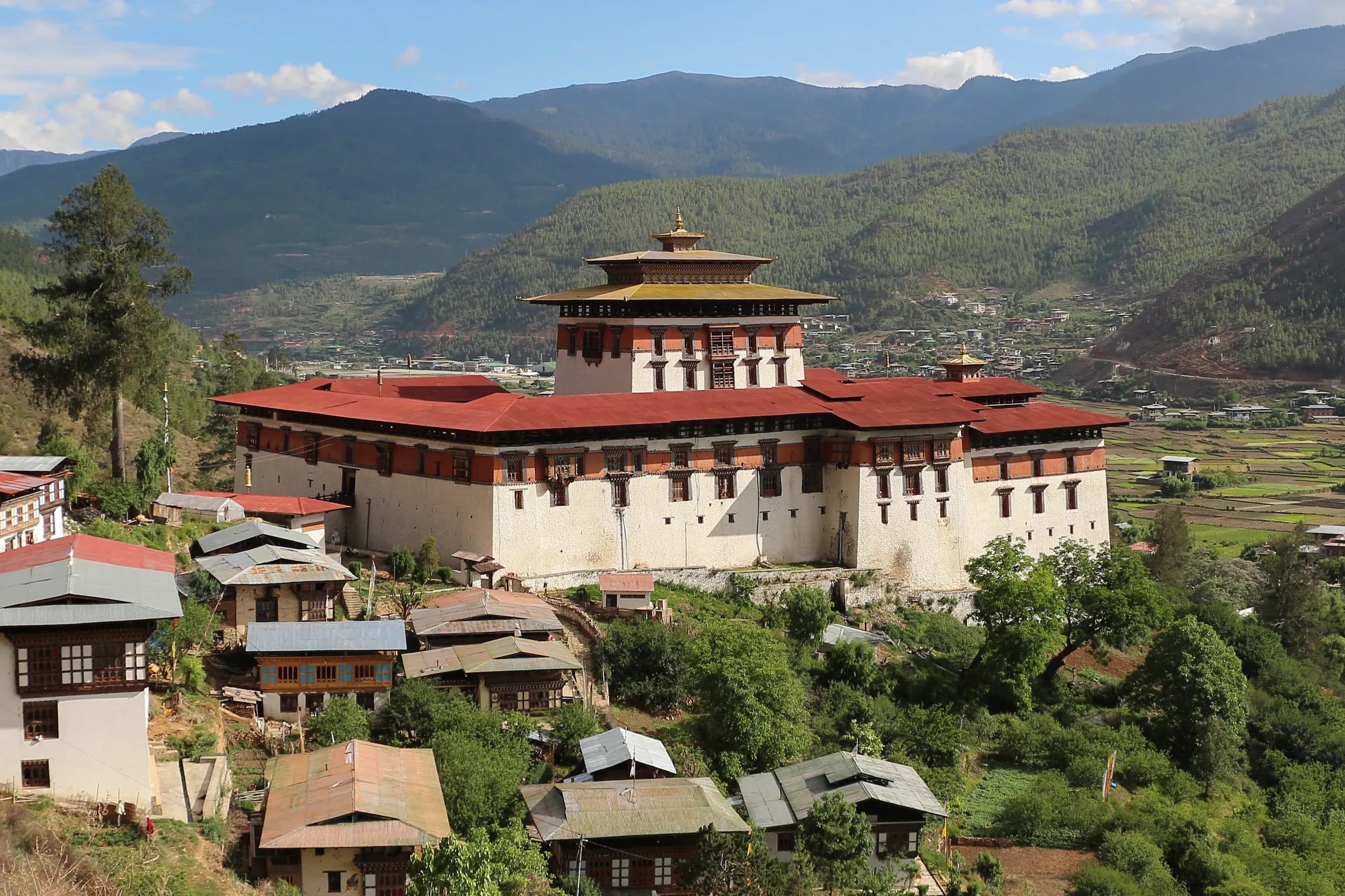
Rinpung Dzong (Paro Dzong)
Rinpung Dzong — commonly called Paro Dzong by international visitors — sits on a low hill above the Pa Chhu in the Paro valley at 2,280 metres elevation. Founded in 1644 by Zhabdrung Ngawang Namgyal on the foundations of an earlier 15th-century fort, the dzong is the administrative and monastic centre of Paro dzongkhag and the venue of the Paro Tshechu, the country's most-internationally-attended festival.
dzong · Thimphu · 2,350 m · founded 1629
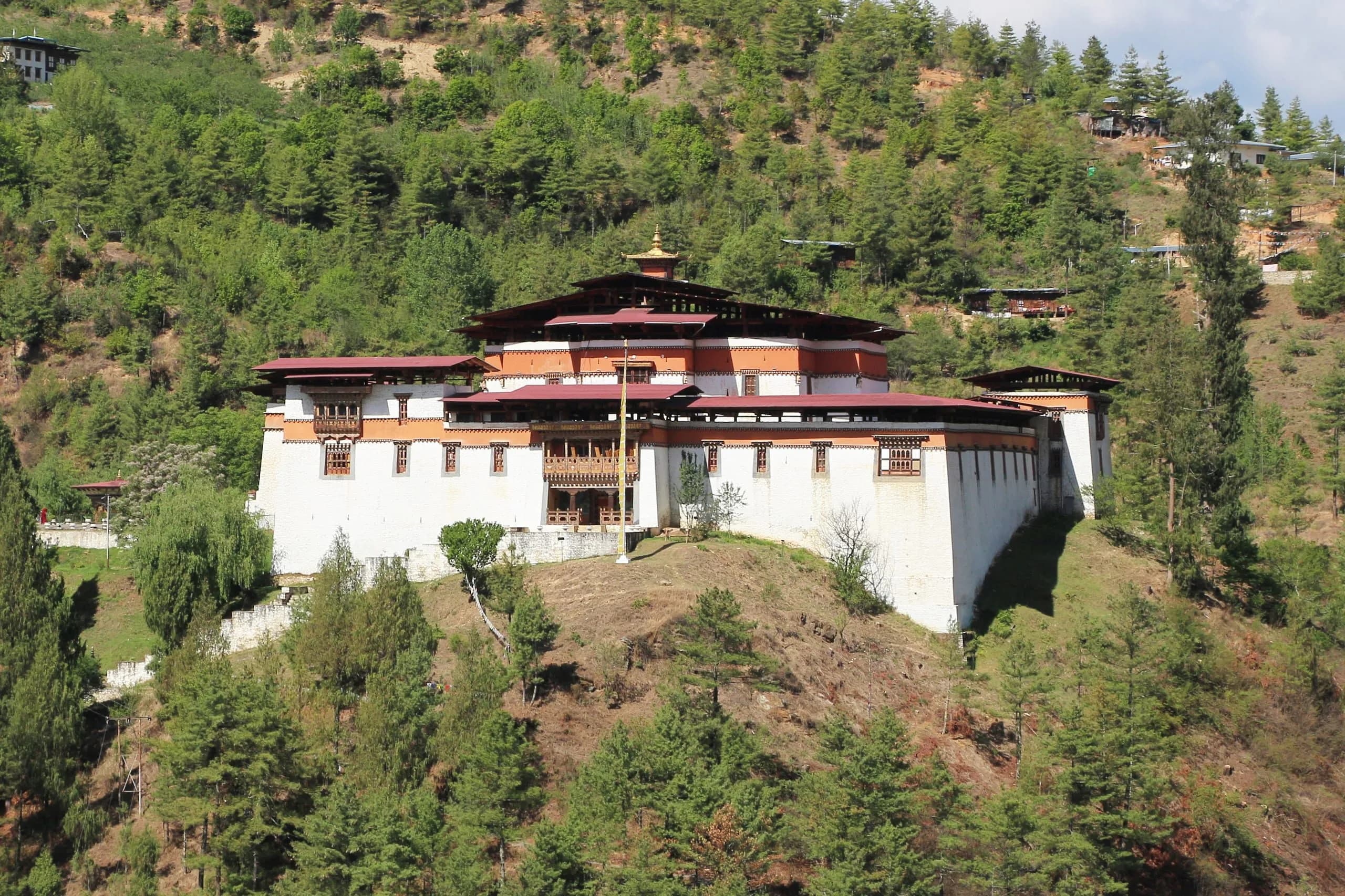
Simtokha Dzong
Simtokha Dzong, on a ridge a few kilometres south of Thimphu, is the oldest surviving dzong in Bhutan — the first that Zhabdrung Ngawang Namgyal built, in 1629, as he began to unify the country. Its formal name, Sangak Zabdon Phodrang, means 'the palace of the profound meaning of secret mantras'; its strategic site once guarded the junction of the routes from Paro, Thimphu, and the south. Today it houses an institute of language and cultural studies, and a visitor comes for its place at the very beginning of the dzong tradition — and for the celebrated carved-slate reliefs set into its inner gallery.
dzong · Thimphu · 2,330 m · founded 1216
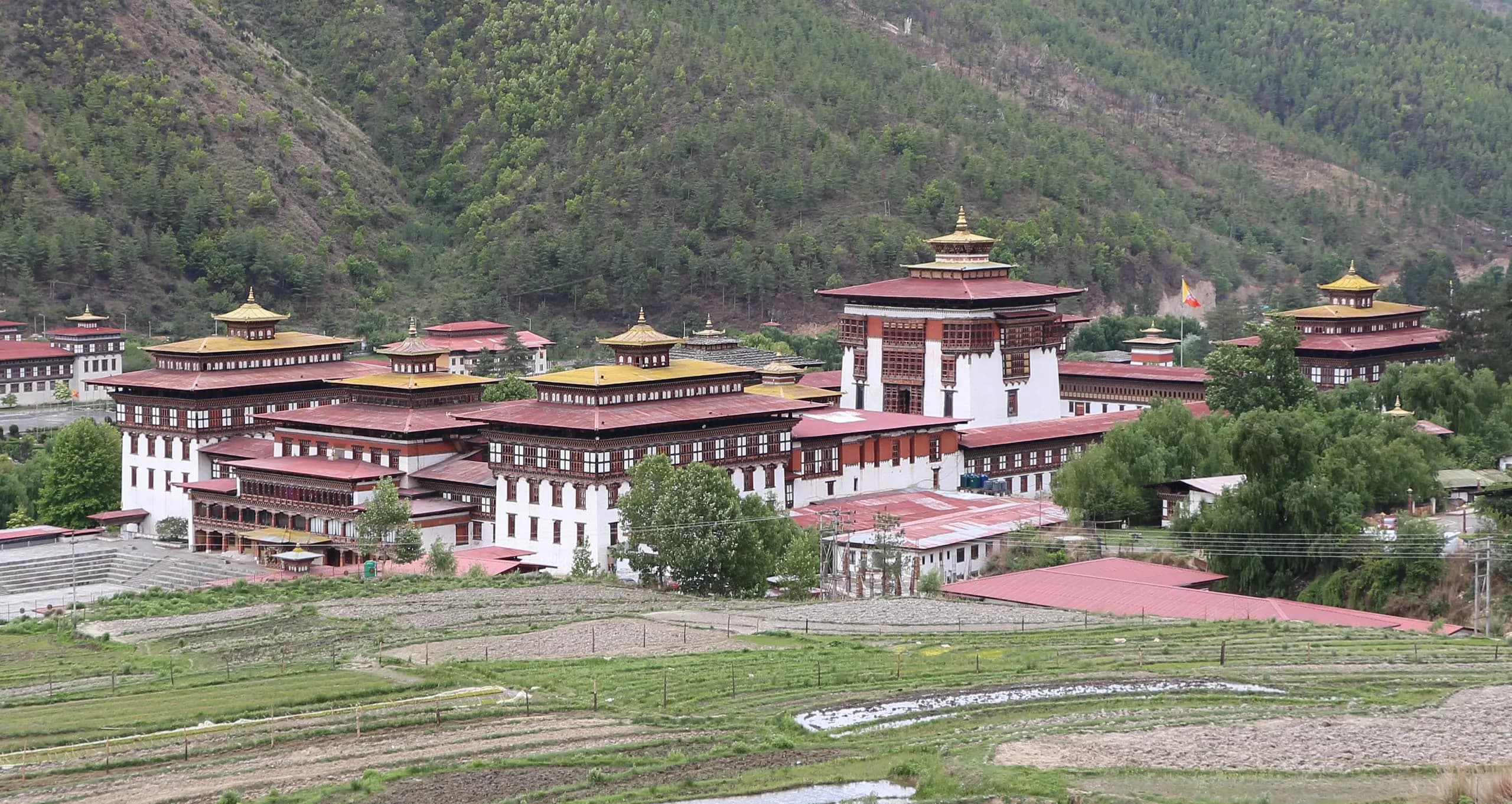
Tashichho Dzong
Tashichho Dzong sits on the western bank of the Wang Chhu in Thimphu at 2,330 metres elevation. The original dzong was founded in 1216; the present structure was reconstructed under His Majesty the 3rd King in the 1960s as the seat of the central government and the summer residence of the Je Khenpo (the Chief Abbot). It is the principal civic and religious institution of modern Bhutan.
dzong · Trongsa · 2,200 m · founded 1648
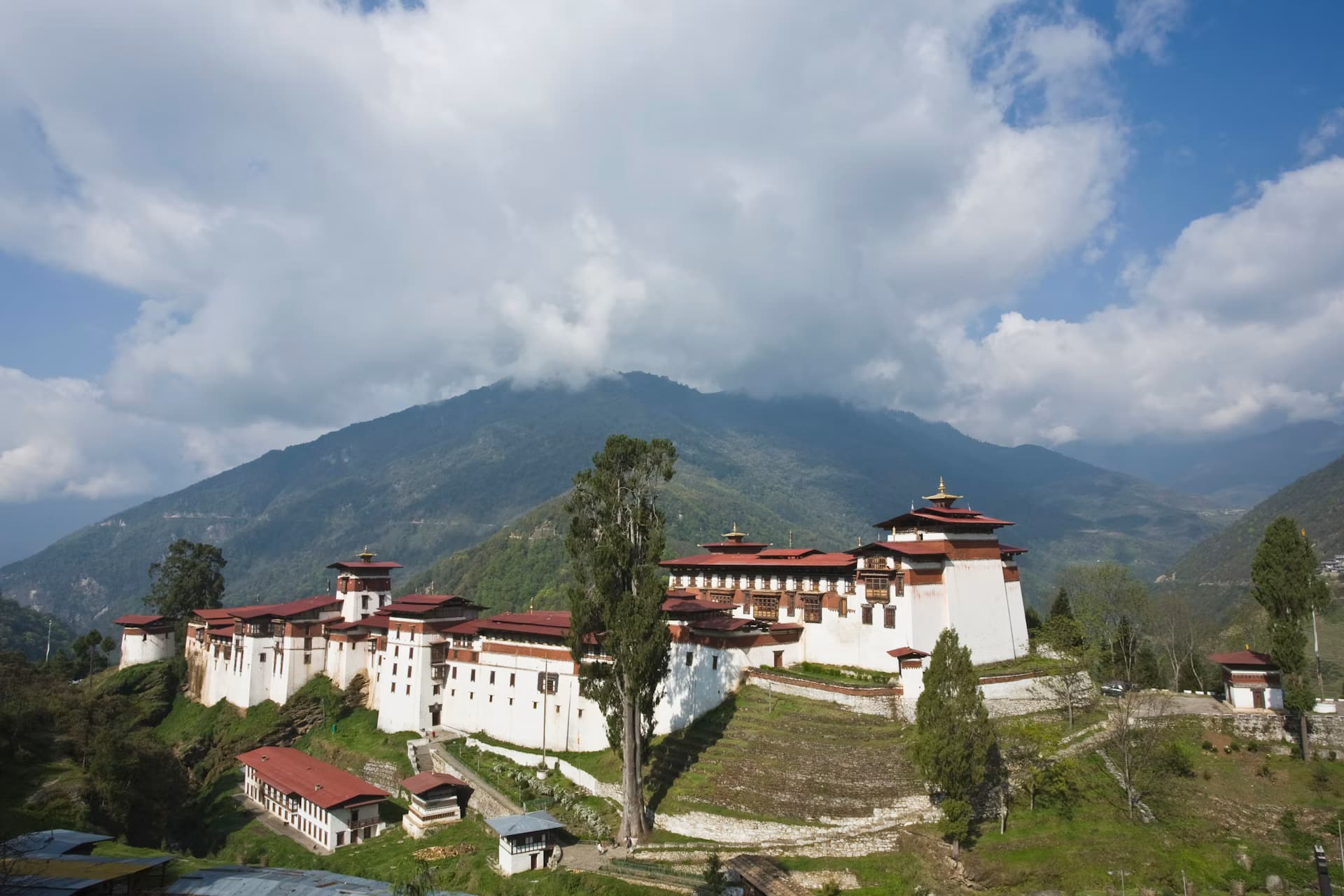
Trongsa Dzong
Trongsa Dzong sits on a high ridge above the Mangde Chhu gorge in central Bhutan at 2,200 metres elevation. It is the largest dzong in the country by floor area, founded in 1648 by Chogyel Mingyur Tenpa as the seat of the Trongsa Penlop — the Governor of central Bhutan. The Wangchuck dynasty arose from this position; every Crown Prince of Bhutan serves as Trongsa Penlop before ascending the Golden Throne.
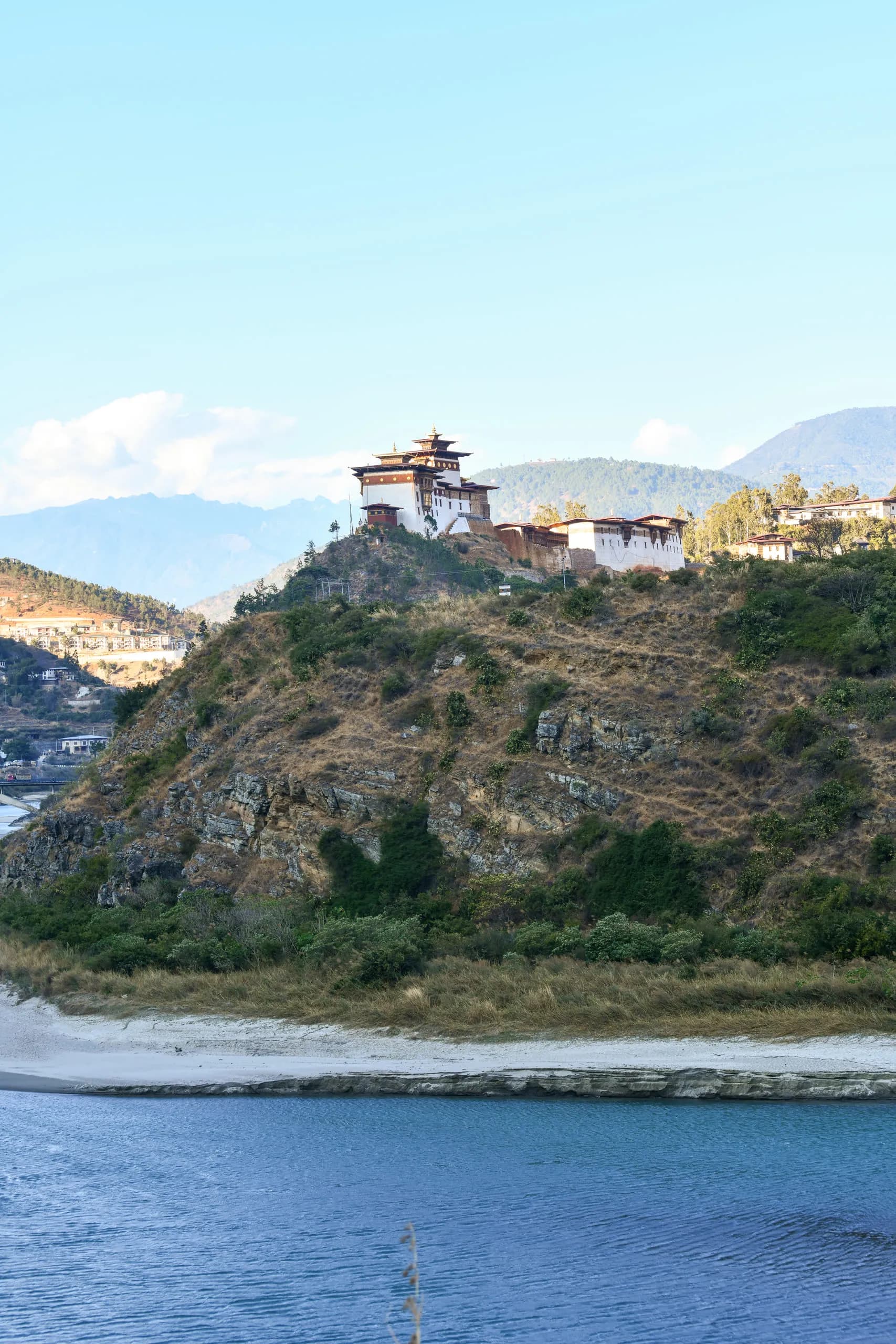
dzong · Wangdue Phodrang · 1,300 m · founded 1638
Wangdue Phodrang Dzong
Wangdue Phodrang Dzong sits on a ridge above the confluence of the Punatsang Chhu and the Dang Chhu in central-western Bhutan at 1,300 metres elevation. Founded in 1638 by Zhabdrung Ngawang Namgyal, the dzong burned to the ground in 2012 in an electrical fire. The Royal Government's decade-long restoration was completed and the dzong reopened on 11 November 2022 — the birthday of His Majesty the 4th King.

