A Bhutanese national museum
The Folk Heritage Museum at Kawajangsa — the restored 19th-century farmhouse and the traditional-rural tradition.
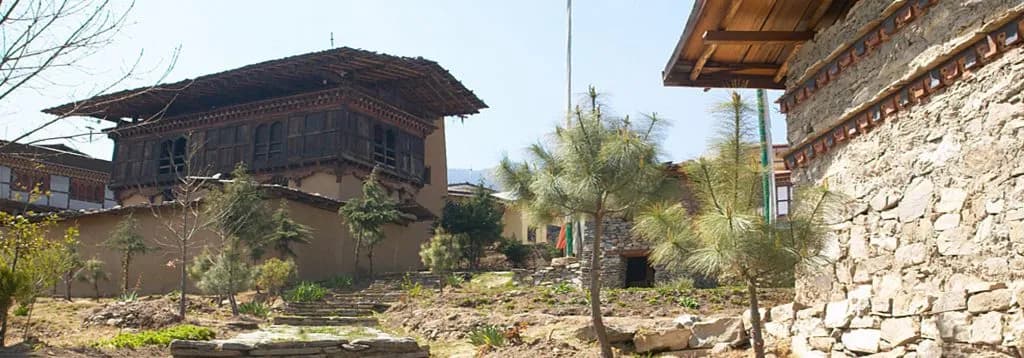
The Folk Heritage Museum sits in the Kawajangsa neighbourhood of Thimphu — a restored 19th-century three-storey traditional Bhutanese farmhouse that the National Commission for Cultural Affairs operates as the principal Thimphu cultural museum. The museum presents the traditional rural-Bhutanese household register at full scale — the farmhouse architecture, the period furnishings, the working agricultural and household implements, the demonstration kitchen with regular traditional-cooking sessions. For visitors with serious interest in everyday Bhutanese life beyond the dzong-and-monument, the Folk Heritage Museum is the principal Thimphu venue.
Also known as Folk Heritage Museum · Kawajangsa Museum · Phelchey Toenkhyim
- Location
- Kawajangsa, north Thimphu, Thimphu
- Founded
- 2001
- Founder
- National Commission for Cultural Affairs
- Elevation
- 2,400 m
- Kind
- museum
The restored farmhouse
The Folk Heritage Museum is housed in a restored three-storey traditional Bhutanese farmhouse, built in the late 19th century and restored in the 1990s under the patronage of Her Majesty the Queen Mother Ashi Dorji Wangmo Wangchuck. The substantial three-storey architectural tradition is the canonical traditional Bhutanese farmhouse layout: ground floor for livestock storage and grain (the historical winter housing for the family's livestock alongside the food storage); first floor for the family living quarters, the chosham (household altar room), and the principal cooking-and-eating space with the bukhari (wood-burning stove); top floor under the steep traditional roof for the grain-drying and storage. The substantial rammed-earth wall construction, the elaborate hand-painted window frames, the hand-cut wooden flooring — the restoration register preserves the canonical traditional farmhouse architecture.
What is on display
The museum presents the traditional rural-Bhutanese household register through the principal period furnishings and working implements. Period furnishings — the low Bhutanese wooden tables, the traditional bedding, the chosham altar with the principal religious imagery and the daily butter-lamp, the Bhutanese textile work at the principal household touchpoints. Working implements — the agricultural tools (the traditional Bhutanese ploughs, the principal harvest implements, the milling-and-grain-processing register), the cooking implements (the traditional iron-and-clay vessels, the principal butter-tea churning equipment, the fermentation registers), the textile-production implements (the hand-looms, the principal weaving accessories). The demonstration kitchen operates regular traditional-cooking sessions — visitors can observe the ema datshi, momo, and red-rice preparation in the traditional kitchen. The matched guide arranges the visit including the demonstration-session tradition where the timing aligns.
The substantial cultural depth
The Folk Heritage Museum is one of the more rewarding Thimphu cultural visits because it presents the everyday Bhutanese tradition that visitors do not typically access elsewhere. The substantial dzong-and-monument tradition that visitors typically encounter shows the institutional Bhutanese register — the religious-and-administrative principal sites. The substantial premium-lodge register shows the contemporary luxury Bhutanese. The substantial homestay register shows the contemporary rural-family. The Folk Heritage Museum shows the 19th-century traditional-rural register — the household-and-agricultural foundation of the country's substantial cultural-and-economic life across the centuries. Allow 60-90 minutes for the visit; the matched guide briefs visitors on the principal exhibits and the underlying cultural context.
Visiting
- Getting there
- The Folk Heritage Museum is in the Kawajangsa neighbourhood of north Thimphu, approximately 10-15 minutes' drive from central Thimphu. The matched guide arranges the visit; typically combined with other principal Thimphu cultural visits (the National Museum, the Royal Textile Academy, the Tashichho Dzong).
- Opening hours
- Open Monday-Saturday 9am-5pm; closed Sundays and major national holidays. Allow 60-90 minutes for the visit; the demonstration-kitchen sessions typically run morning (10-11am) and afternoon (2-3pm) — the matched guide briefs on the current schedule.
- Dress and protocol
- Standard cultural-site protocol — modest dress, shoes removed in the principal living-quarters, no flash photography in the principal exhibit registers. The chosham altar register requires the standard religious-site respect protocol.
- Best time to visit
- Year-round. The museum is fully indoor and weather-independent. October-May is the typical Thimphu visiting window; June-September monsoon does not affect the indoor experience but affects the broader Thimphu cultural register.
Journeys featuring this site
 JourneyThe signature-tier Bhutan journey — private knowledgeable guide, the most considered lodge curation, helicopter or charter between valleys, exclusive-use arrangements where the season allows.The signature-tier Bhutan journey. Private knowledgeable guide, the most considered lodges, helicopter or PC-24 charter, exclusive-use arrangements. By invitation, from USD 14,000.
 JourneyNine nights in Bhutan, for a family from London.A nine-night Bhutan family trip from London for autumn half-term. Bhutan including Phobjikha; teenager-friendly light treks; matched knowledgeable guide.
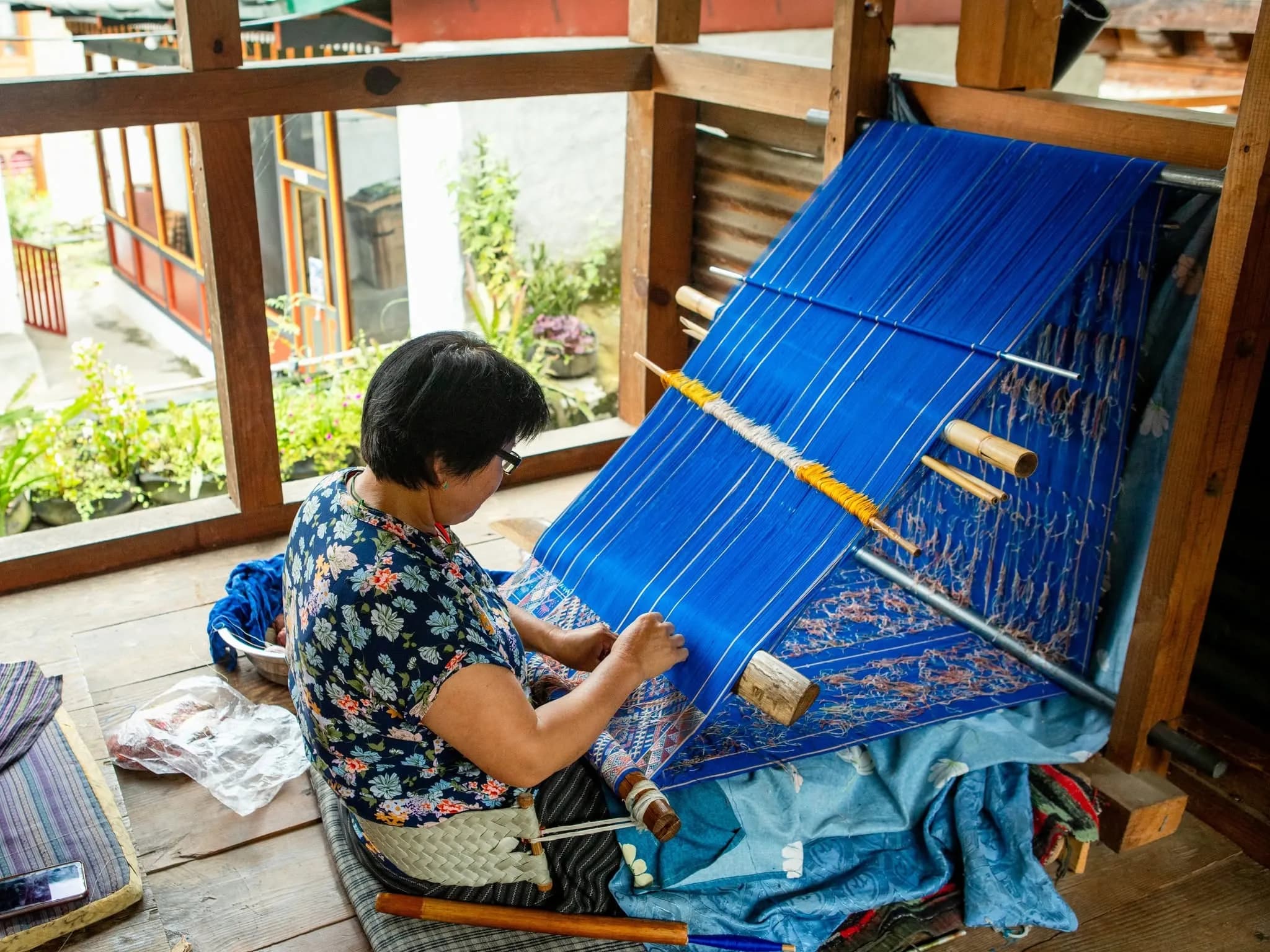 JourneyBhutan, read through its weaving.A seven-night Bhutan textile tour — Bhutanese workshop visits, master weaver introductions, and a guide who reads cloth the way an art historian reads brushwork.
Journeys that visit The Folk Heritage Museum
Frequently asked
- Is this worth a visit if I am only briefly in Thimphu?
- Yes — particularly for visitors with serious interest in everyday Bhutanese life beyond the dzong-and-monument. The Folk Heritage Museum provides the traditional rural-Bhutanese household tradition that the principal Thimphu cultural visits (Tashichho Dzong, National Memorial Chorten, Buddha Dordenma) do not access. Allow 60-90 minutes; the matched guide arranges the visit within the broader Thimphu cultural day.
- Can I observe traditional Bhutanese cooking?
- Yes. The demonstration kitchen runs regular sessions on most days the museum is open — typically morning and afternoon. The substantial ema datshi, momos, and the principal red-rice preparation is demonstrated by senior staff in the traditional kitchen. Visitors can typically taste the prepared food at the conclusion of the session; the cultural-and-culinary context is rewarding.
- How does this compare to a homestay?
- Different registers. The Folk Heritage Museum presents the 19th-century traditional farmhouse register at museum scale — the period furnishings, the working implements, the demonstration. The homestay presents the contemporary Bhutanese rural-family register at full lived-in scale. Both are rewarding; the museum is the entry-point to the traditional, the homestay is the deeper lived-in. See the homestay experience for the lived-in alternative.

