A Bhutanese national institution
The National Library of Bhutan — guardian of the country's Buddhist scriptures, manuscripts, and printing blocks.
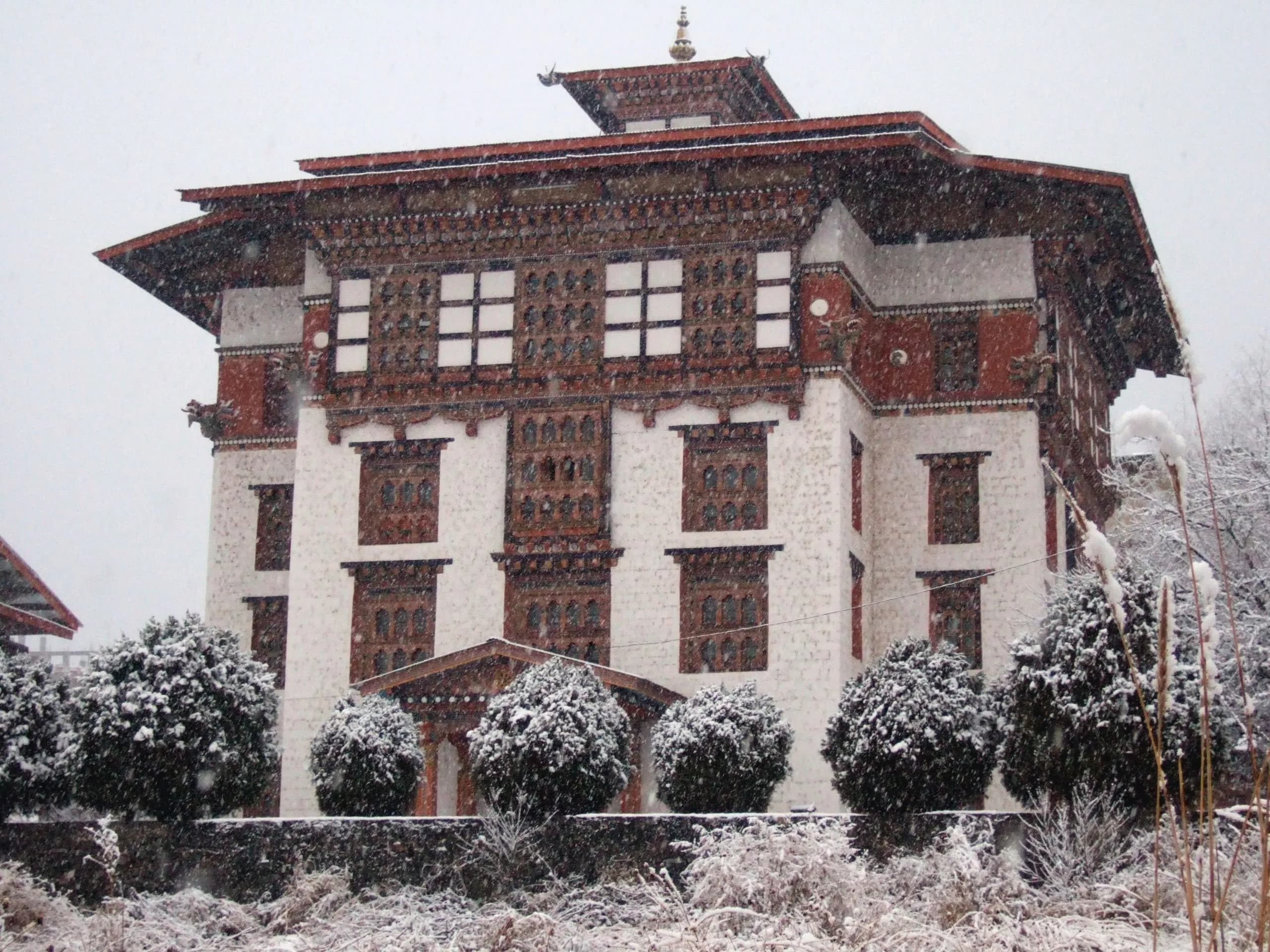
The National Library of Bhutan, in Thimphu, is the keeper of the written soul of the country — a great collection of Buddhist scriptures, manuscripts, and the carved wooden printing blocks from which sacred texts have been hand-printed for centuries. Housed in a tall traditional building of its own, it preserves works in classical Tibetan and Dzongkha, some of them rare or unique, alongside a modern reference collection. For the visitor it offers a quiet window onto the textual tradition that underlies everything else in Bhutan — and, by happy fame, a look at one of the largest published books in the world.
Also known as National Library · National Library and Archives of Bhutan
- Location
- Kawajangsa, Thimphu, Thimphu
- Elevation
- 2,380 m
- Kind
- library
The written tradition
Bhutanese Buddhism is a tradition of the book as much as of the image and the rite — its teachings carried across the centuries in carefully copied and hand-printed texts, kept wrapped in cloth on temple shelves and read aloud in the dzongs. The National Library exists to preserve this written inheritance: it holds a great collection of scriptures and treatises in classical Tibetan (Choekey) and Dzongkha, including the canonical Kanjur and Tenjur — the words of the Buddha and the commentaries — alongside rare manuscripts, biographies, and ritual texts, some of them unique survivals. To stand among the cloth-wrapped volumes is to be in the presence of the country's accumulated learning, kept as a living archive rather than a closed vault.
The printing blocks
Among the library's particular treasures is its collection of xylographs — the carved wooden printing blocks from which Bhutanese texts have traditionally been printed, each page a block hand-cut in reverse and inked to press onto handmade paper. The art of woodblock printing is one of the oldest of the country's crafts, and the library both preserves the old blocks and keeps the technique alive. For a visitor, seeing the blocks is to understand how a sacred text was made before the modern press — a labour of carving, inking, and pressing that was itself an act of devotion, multiplying the words of the teaching to send them out into the world.
The giant book
The library is widely known, too, for holding one of the largest published books in the world — an enormous volume of photographs and text on Bhutan, so large that turning its pages is a two-person task and it stands as an exhibit in its own right. It is a lighthearted counterpoint to the ancient manuscripts around it, and a favourite with visitors. Together, the rare scriptures, the printing blocks, and the famous giant book make the National Library a quietly rewarding stop — a place to glimpse the textual tradition that underlies the country's whole religious life, in a building that is itself a fine example of traditional Bhutanese architecture.
Visiting
- Getting there
- The library is in the Kawajangsa area of Thimphu, close to the National Institute for Zorig Chusum and the Folk Heritage Museum — the three make a natural cultural cluster for a Thimphu morning. The matched guide arranges the visit.
- What to see
- The collection of scriptures and manuscripts, the woodblock printing blocks, and the famous giant book, across the floors of the traditional tower building. Allow 30–45 minutes. The matched guide explains the textual tradition and the printing craft; serious scholars can arrange deeper access in advance.
- Protocol
- The texts are sacred and fragile; visitors handle nothing without invitation, keep their voices low, and follow the staff's and guide's lead. Photography rules vary by area; the guide confirms them. Shoes are removed where indicated, as in a temple.
- Best time to visit
- Year-round, during the library's opening hours (typically weekday daytime); it is indoor and weather-independent. It pairs naturally with the Zorig Chusum institute and the Folk Heritage Museum nearby into a single Thimphu cultural morning.
Journeys featuring this site
 JourneyThe signature-tier Bhutan journey — private knowledgeable guide, the most considered lodge curation, helicopter or charter between valleys, exclusive-use arrangements where the season allows.The signature-tier Bhutan journey. Private knowledgeable guide, the most considered lodges, helicopter or PC-24 charter, exclusive-use arrangements. By invitation, from USD 14,000.
 JourneyTen nights for the Buddhist pilgrim — the principal sites, with monastic context.A ten-night Bhutan Buddhist pilgrimage for Asian-Buddhist travellers. Monastic context; matched monastic-trained guide; Bumthang religious circuit.
Journeys that visit The National Library of Bhutan
Frequently asked
- What does the National Library hold?
- A great collection of Buddhist scriptures and treatises in classical Tibetan and Dzongkha — including the canonical Kanjur and Tenjur — along with rare manuscripts, biographies, and ritual texts, some unique. It also preserves a collection of carved wooden printing blocks (xylographs) used to hand-print sacred texts, and a modern reference collection. It is the keeper of the country's written tradition.
- What are the printing blocks?
- Xylographs — wooden blocks hand-carved in reverse, one per page, then inked and pressed onto handmade paper to print a text. Woodblock printing is one of Bhutan's oldest crafts, and the library both preserves the old blocks and keeps the technique alive. Seeing them shows how a sacred text was made before the modern press — itself an act of devotion.
- Is the giant book really there?
- Yes — the library holds one of the largest published books in the world, an enormous illustrated volume on Bhutan so big that turning its pages takes two people. It stands as an exhibit in its own right and is a favourite with visitors, a lighthearted counterpoint to the ancient manuscripts around it.

