The most-photographed monastery in the Himalaya
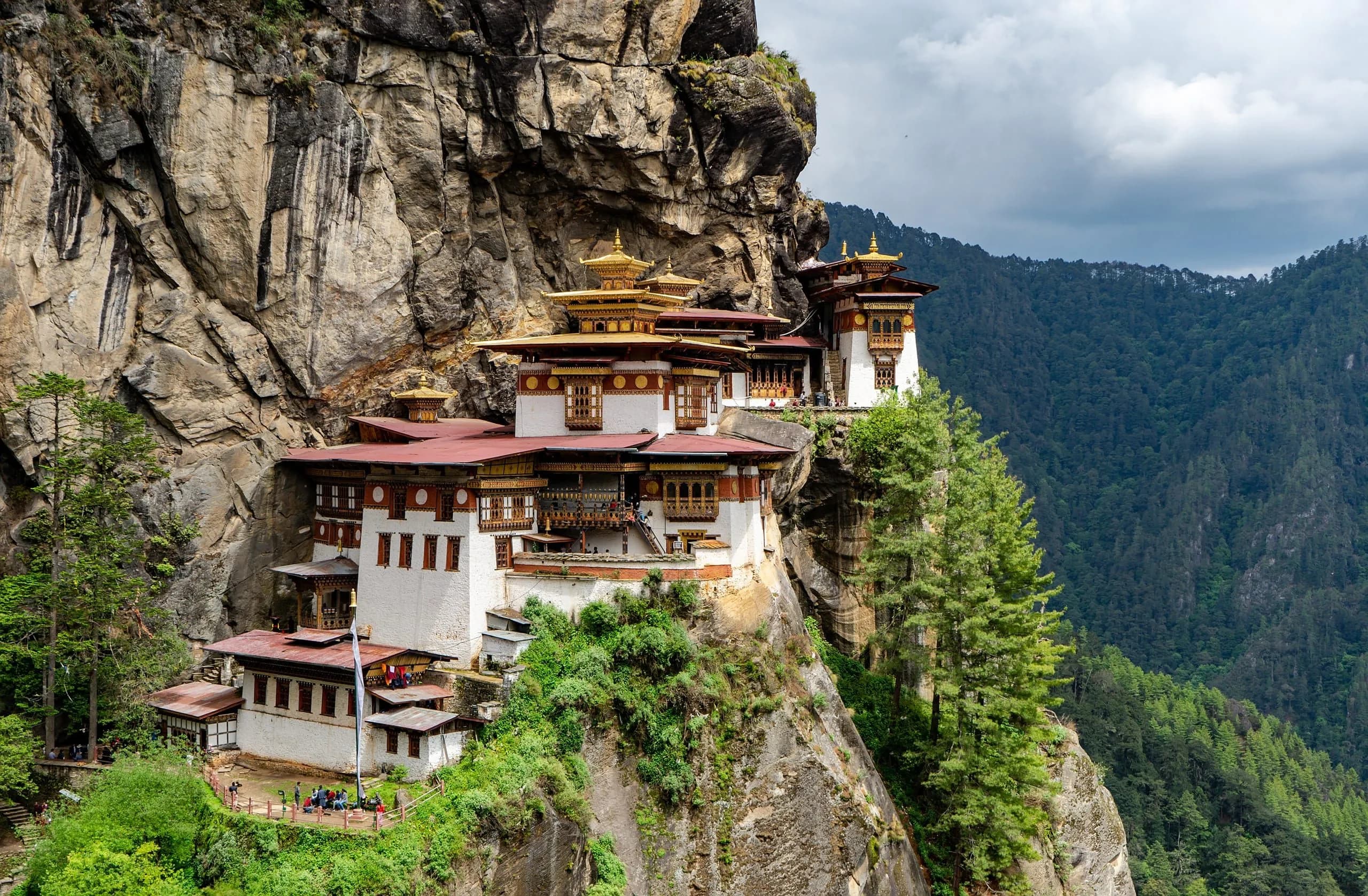
Paro Taktsang — Guru Rinpoche's meditation cave, perched at 3,120 metres on the cliff above the Paro valley.
Paro Taktsang — known internationally as Tiger's Nest — is the most sacred site in Bhutan and the country's most-photographed monument. The monastery clings to a 900-metre cliff face above the Paro valley at 3,120 metres elevation. Guru Rinpoche is held to have meditated in the cave behind the monastery for three years, three months, three weeks, three days, and three hours in the 8th century.
Also known as Tiger's Nest · Taktsang Palphug Monastery · Taktsang Lhakhang
- Location
- Paro valley (10 km north of Paro town), Paro
- Founded
- 1692
- Founder
- 4th Druk Desi Tenzin Rabgye (1692 monastery); Guru Rinpoche (8th-century cave)
- Elevation
- 3,120 m
- Kind
- lhakhang
The founding — Guru Rinpoche and the cave
Guru Rinpoche (Padmasambhava), the 8th-century Indian master who established Vajrayana Buddhism across the Himalaya, is held to have flown to this cliff face from Tibet on the back of a tigress — the consort of the deity Dorje Drolo, his wrathful manifestation. The tigress is the source of the international name: 'Tiger's Nest.' Guru Rinpoche meditated in the cave behind the present monastery for three years, three months, three weeks, three days, and three hours, subduing the local demons and consecrating the site for the Buddhist dharma. The cave (Drubkhang) remains the monastery's most sacred interior, accessible to pilgrims a few days each year.
The 1692 monastery — Tenzin Rabgye's construction
The monastery building was constructed in 1692 by Tenzin Rabgye, the 4th Druk Desi (Temporal Ruler) of Bhutan, around the original Guru Rinpoche cave. The construction was a vast undertaking — every beam, every block of stone, every painted slate was carried by hand up the cliff face. The Royal Government of Bhutan undertook a substantial restoration after a 1998 fire damaged the principal lhakhang; the restoration was completed in 2005. The monastery's current form is faithful to the 1692 original.
The 8th century and the present-day pilgrimage
Paro Taktsang is one of thirteen 'Tiger's Nests' across the Himalaya — sites where Guru Rinpoche is held to have meditated in his tiger form. The Bhutanese site is the most-visited of the thirteen. Bhutanese pilgrims undertake the hike up to the monastery as a once-in-a-lifetime religious obligation; international visitors undertake it as the centrepiece of any Bhutanese journey. The atmosphere is reverent — the monastery is an active religious institution with resident monks, not a museum; respectful clothing is required throughout, and photography is prohibited inside the lhakhang.
Visiting
- Getting there
- The trailhead is at the Ramthangka car-park (2,600 m), a 15-minute drive from Paro town or 20 minutes from the Paro lodges. The hike up to the monastery takes 2.5–3 hours; the descent 1.5–2 hours. The trail is well-maintained but climbs continuously through pine and rhododendron forest. The mid-route Taktsang Cafeteria (2,920 m) is the principal rest stop, with a view of the monastery from across the gorge; many visitors break for lunch on the descent.
- Pace and altitude
- Most reasonably-fit visitors complete the round trip comfortably. The principal difficulty is altitude (3,120 m at the monastery, on top of having flown in from sea level). We build a minimum two-night Paro acclimatisation profile into every itinerary that includes the hike. Hiking poles are recommended; horses or mules are available for the lower section as far as the cafeteria (no animals beyond the cafeteria on conservation grounds). The hike is undertaken in any weather; we provide rain shells in the spring and summer windows.
- Dress and protocol
- Respectful clothing — long trousers, shoulders covered. The monastery interior requires hats and shoes removed; photography is prohibited inside (the courtyard and exterior approach are photographically open). The Bhutanese pilgrimage tradition is to walk the kora (clockwise circumambulation) and to leave a small offering at the cave shrine; international visitors are welcome to do the same.
- When to visit
- The principal Tiger's Nest pilgrimage windows are spring (March–May) and autumn (September–November), with the most-photographed weather in early-spring clear skies. Summer (Green Bhutan, June–August) is monsoon-affected; the cliff face is dramatic but the trail can be muddy. Winter (Clear-Sky Bhutan, December–February) is cold but the trail is dry and the visitor count substantially lower.
Festivals held here
Journeys featuring this site
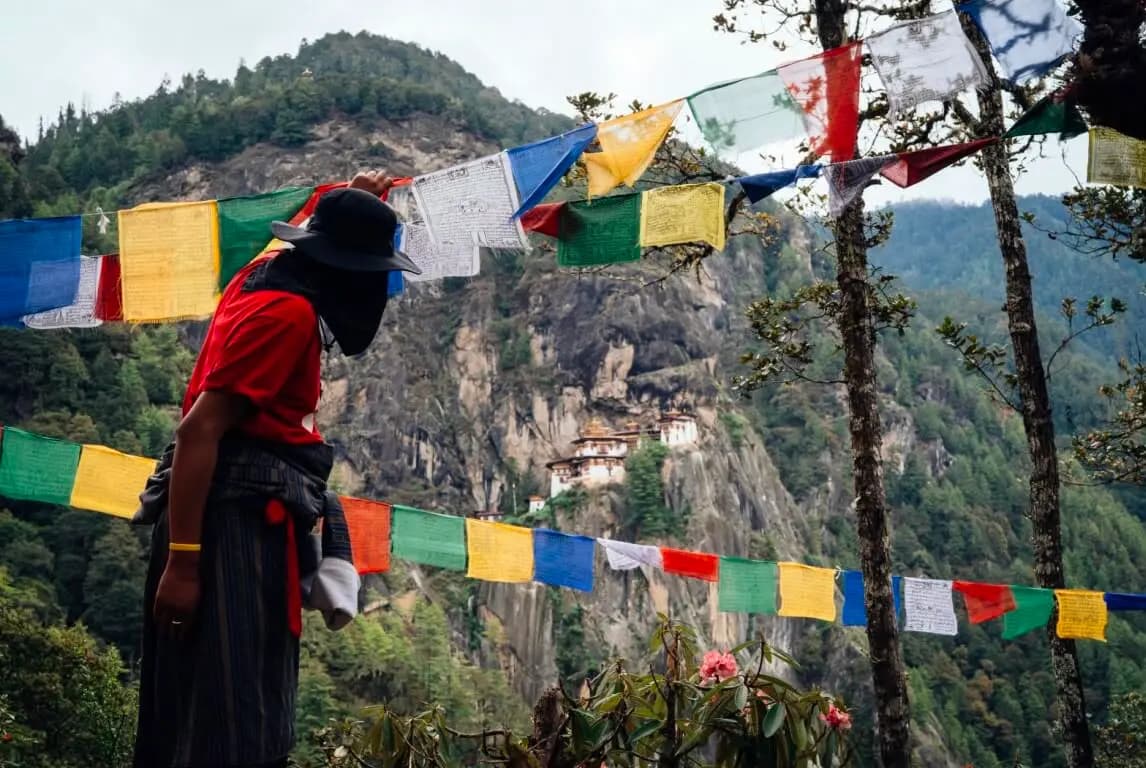 JourneySix nights through Paro, Thimphu, and Punakha — ending at the cliff above the Paro valley.A private six-night Bhutan journey for couples ending at Paro Taktsang (Tiger's Nest). Paro, Thimphu, Punakha; a matched guide; transparent all-inclusive pricing.
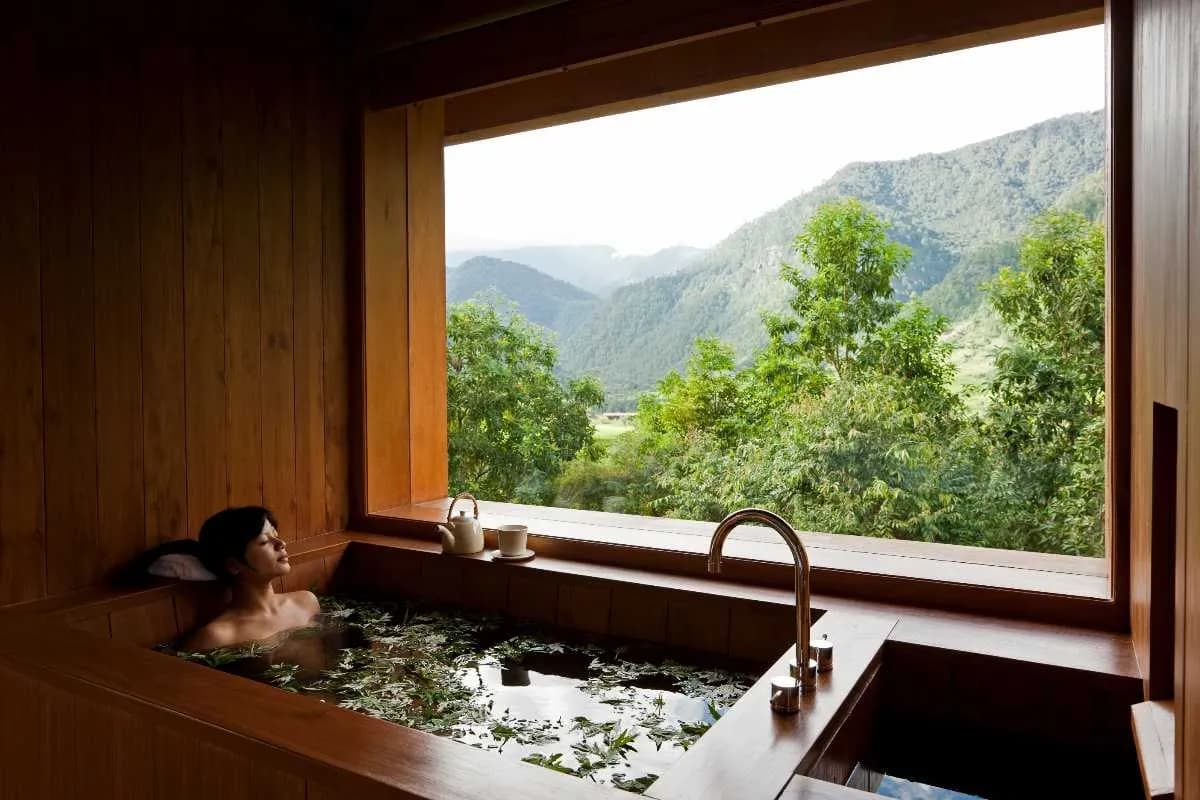 JourneySeven nights in Bhutan, on your terms.A private seven-night Bhutan honeymoon for couples flying from Singapore. Bhutanese lodges, a matched guide, transparent all-inclusive pricing.
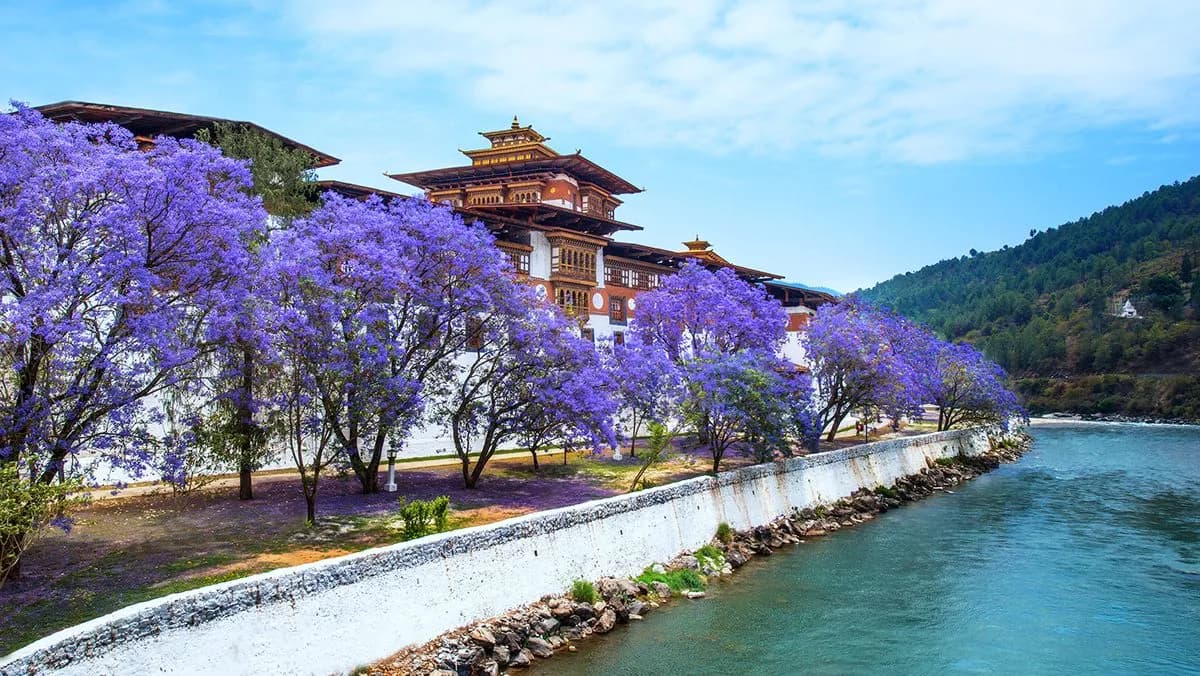 JourneyCherry blossoms over the Pa Chhu — April in Bhutan.A seven-night Bhutan journey in April — cherry blossom and rhododendron on Bhutan, Paro Tshechu if dates align, transparent pricing.
Journeys that visit Paro Taktsang
Frequently asked
- How long is the hike to Tiger's Nest?
- Approximately 2.5–3 hours up and 1.5–2 hours down, from the trailhead at 2,600 metres to the monastery at 3,120 metres. The total elevation gain is around 520 metres over 4 km of switchback trail. Most reasonably-fit visitors complete the round trip in 5–6 hours including time at the monastery and a lunch stop at the mid-route cafeteria.
- Is the hike difficult?
- Moderate. The trail is well-maintained but climbs continuously. The principal difficulty is altitude (3,120 metres at the top, on top of having flown in from sea level). We build a minimum two-night Paro acclimatisation profile into every itinerary that includes the hike. Hiking poles are recommended; horses or mules are available for the lower section.
- Can I take photographs?
- Yes — outside the monastery and across the approach trail. Photography is prohibited inside the lhakhang. The best photographic positions are from the mid-route cafeteria viewpoint and from the final ridge approach, where the full cliff-face context of the monastery is visible.
- What should I wear?
- Long trousers, layers, shoulders covered. The monastery interior requires hats and shoes removed; the courtyard and approach are less strict. The trail is on a cliff face; sturdy walking shoes or boots are essential, not trainers.
- Is there a way to see Tiger's Nest without the hike?
- The monastery is visible from multiple points across the Paro valley below — the Kyichu Lhakhang viewpoint and the road up to Drukgyel Dzong give the principal lower-valley views. For those who cannot hike, your guide will brief you on the best valley-floor vantage points. However the hike itself is the principal experience; we recommend it for any visitor in reasonable health.

