The principal Bhutanese figures
The Wangchuck dynasty, the Zhabdrung, Guru Rinpoche, and the principal lamas.
Bhutan is read most rewardingly through its principal figures: the Wangchuck royal dynasty since the unification of 1907; the Zhabdrung Ngawang Namgyal who established the modern Bhutanese state in the 17th century; Guru Rinpoche, who brought Vajrayana Buddhism to Bhutan in the 8th century; and the principal lamas of the religious and cultural lineages.
- People
- 17
All people, alphabetical
contemporary-cultural2
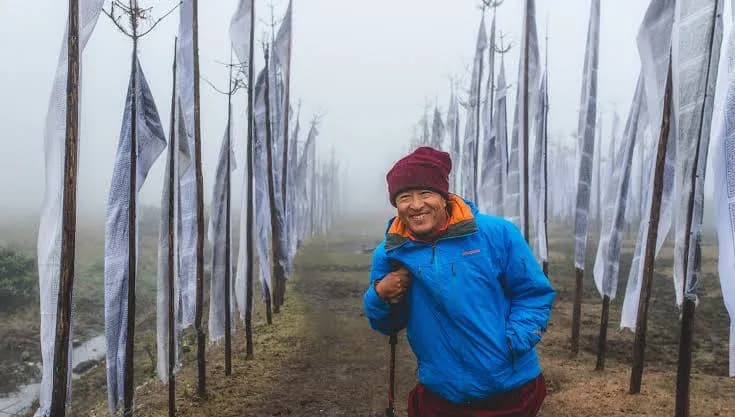
contemporary-cultural · Nyingma / Sakya / Khyentse lineage · 1961
Dzongsar Jamyang Khyentse Rinpoche
Dzongsar Jamyang Khyentse Rinpoche (also known as Khyentse Norbu) is one of the more-distinctive contemporary Bhutanese cultural figures — a senior Vajrayana-Buddhist lama in the Nyingma and Sakya traditions, an internationally-acclaimed filmmaker (director of The Cup, Travellers and Magicians, and other films), the author of Buddhist works for the contemporary international audience (What Makes You Not a Buddhist among others), and the founder of multiple Bhutanese cultural-and-religious institutions. Born in 1961, he is a bridge figure between the traditional Bhutanese religious register and the contemporary international cultural register.
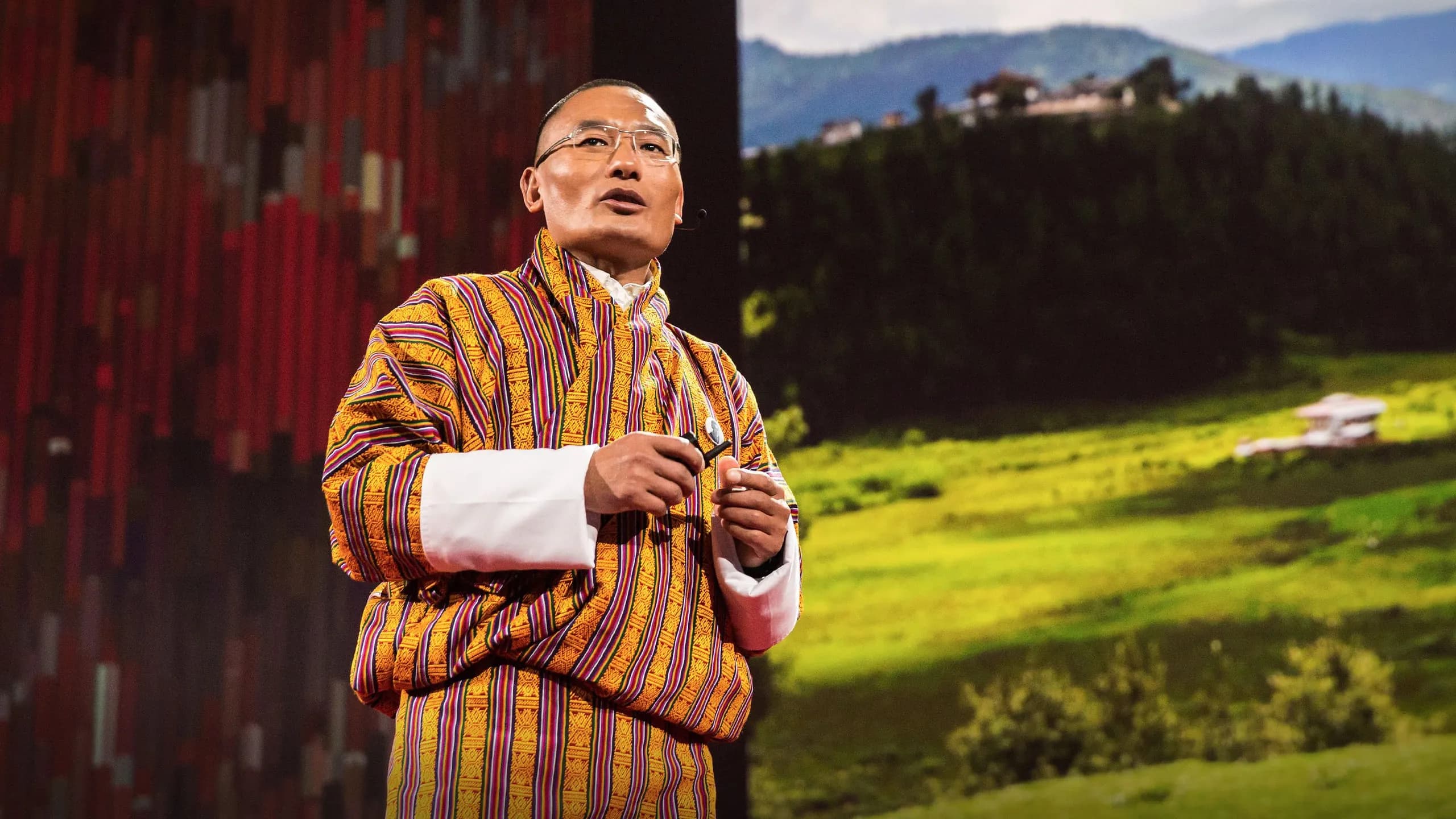
contemporary-cultural · People's Democratic Party (PDP) · 1965
Tshering Tobgay
Tshering Tobgay is one of the more-prominent contemporary Bhutanese political figures — Prime Minister of Bhutan across two terms (2013-2018, and again from January 2024), founder of the People's Democratic Party (PDP), the principal Bhutanese international voice on Gross National Happiness and the carbon-negative environmental. His 2016 TED Talk ('This country isn't just carbon neutral — it's carbon negative') brought the contemporary Bhutanese environmental position to international attention and remains one of the more-viewed pieces of contemporary Bhutanese international cultural-and-policy communication.
historical1
religious6
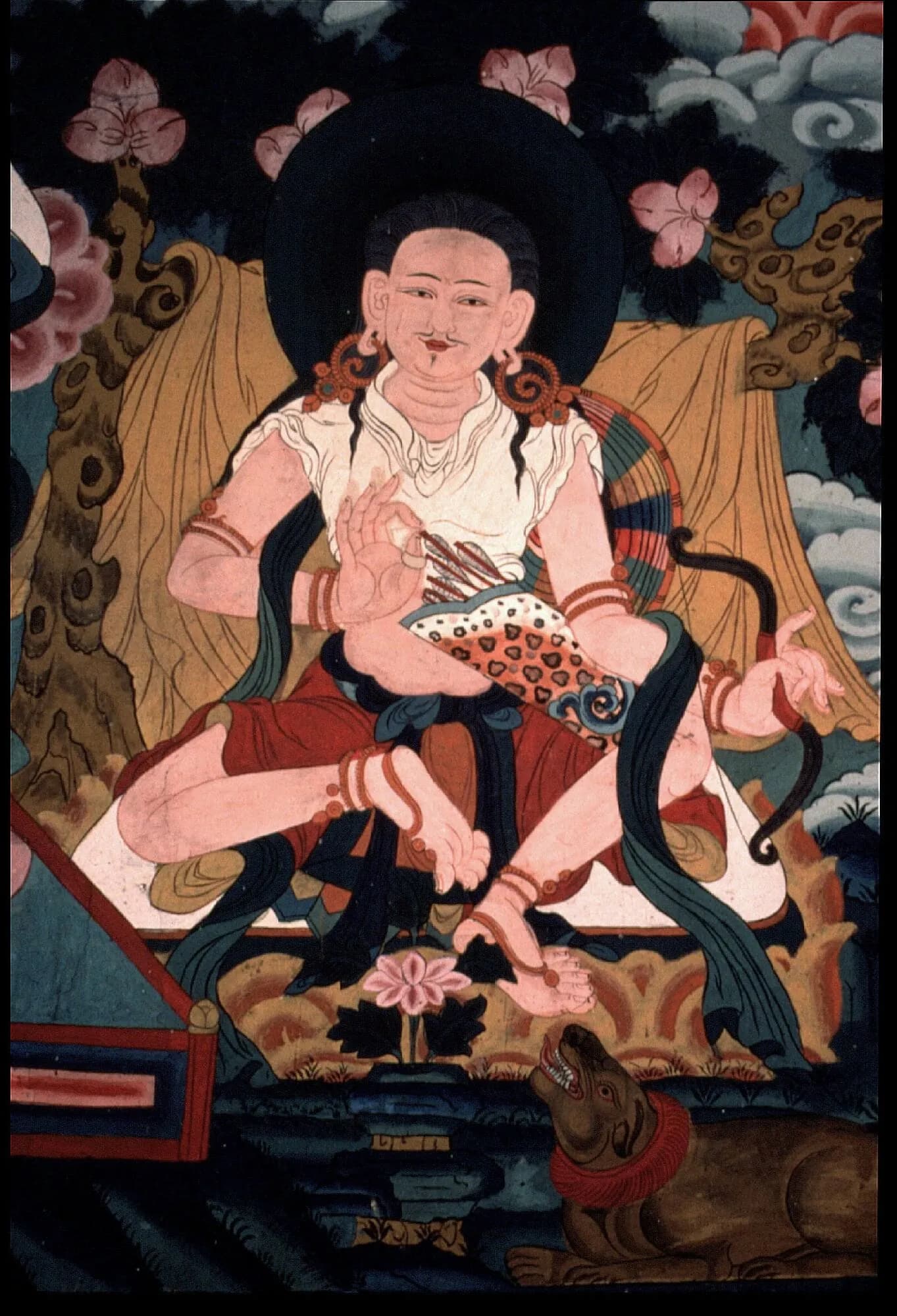
religious · 1455–1529
Drukpa Kunley
Drukpa Kunley (1455-1529) is one of the most-loved figures in the Bhutanese religious-folkloric register — the wandering 15th-16th century mahasiddha of the Drukpa Kagyu tradition, known as the 'Divine Madman' for his deliberate transgression of conventional religious decorum in service of the underlying tantric realisation. The phallic paintings on Bhutanese farmhouses are the principal contemporary visual register of his legacy; Chimi Lhakhang above the Punakha valley is his principal pilgrimage site.
religious · Nyingma school of Vajrayana Buddhism · 717–762
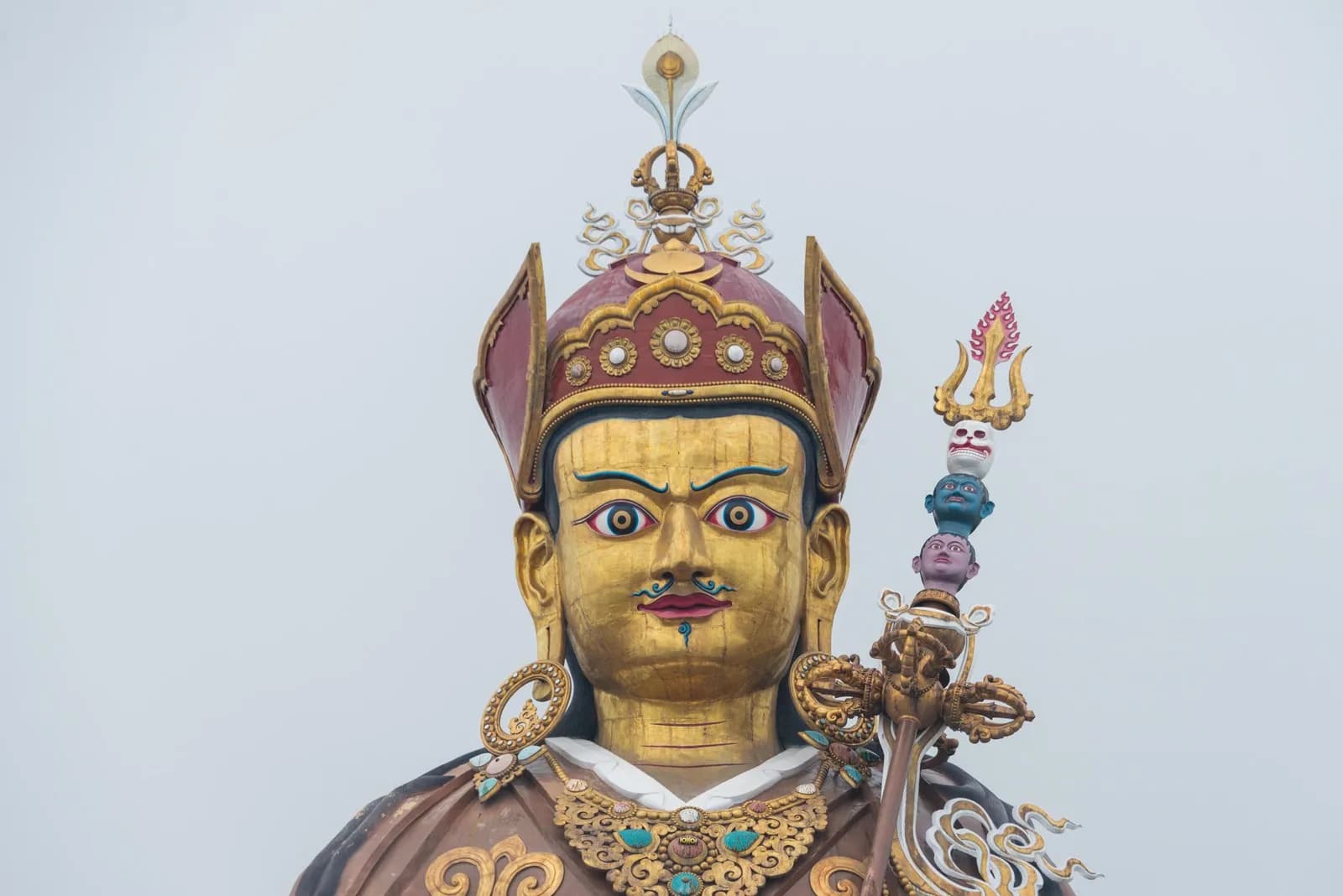
Guru Rinpoche
Guru Rinpoche — Padmasambhava in Sanskrit — is the 8th-century Vajrayana master credited with bringing Tantric Buddhism to the Himalayas, and the principal figure of religious veneration in Bhutan. The Bhutanese tradition holds Guru Rinpoche as the second Buddha; the eight manifestations of Guru Rinpoche are the iconographic spine of Bhutanese monastery art and the principal subject of masked dances at every tshechu festival. Most of the country's principal sacred sites — Paro Taktsang, Kurjey Lhakhang, Singye Dzong, the cliff caves of Bumthang — are associated with Guru Rinpoche's 8th-century journey.
religious · Drukpa Kagyu / Zhung Dratshang · 1955
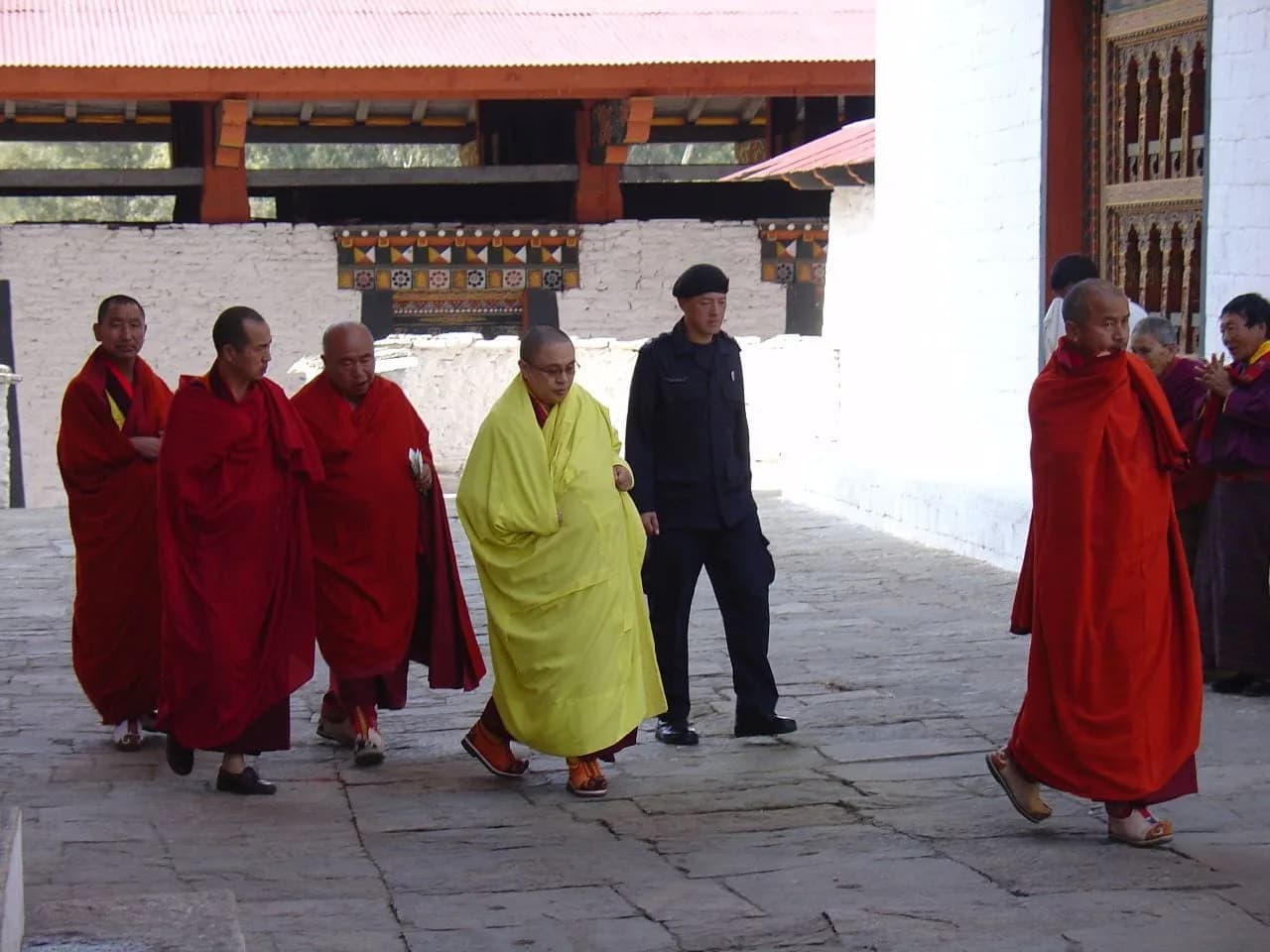
His Holiness the Je Khenpo
His Holiness the Je Khenpo is the Chief Abbot of the Zhung Dratshang (the central monk body of Bhutan) and the principal religious figure of the country — the religious counterpart of His Majesty the Druk Gyalpo in the contemporary Choesi institutional framework. The current Je Khenpo, His Holiness the 70th Je Khenpo Trulku Jigme Choedra (in office since 1996), heads the Bhutanese central monastic institution; the office is one of the most-revered in the country and is the principal Drukpa Kagyu institutional leadership role.
religious · Nyingma school of Vajrayana Buddhism · 1450–1521
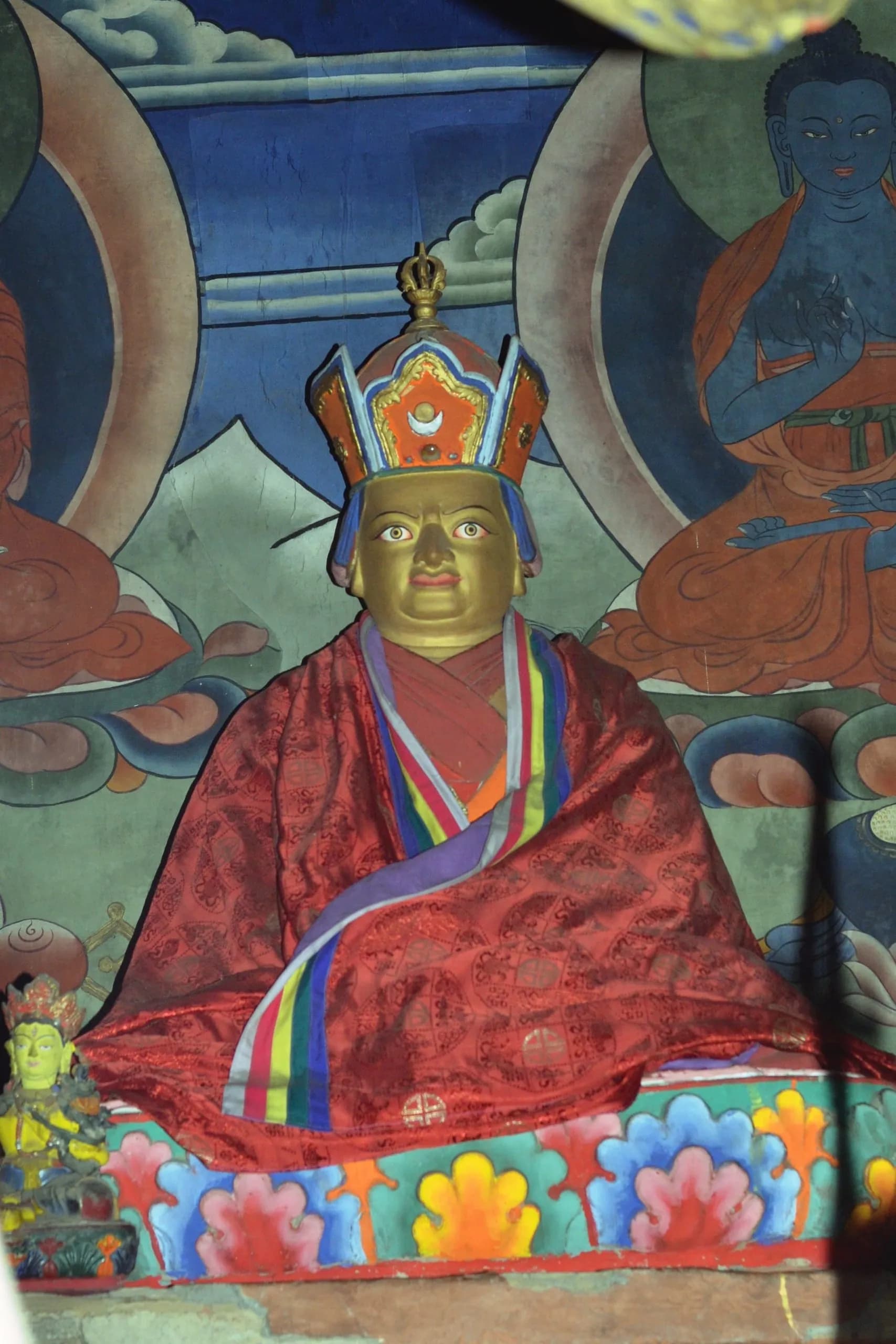
Pema Lingpa
Pema Lingpa (1450-1521) was the most important Bhutanese-born religious figure of the medieval period — a treasure-revealer (terton) in the Nyingma tradition, who recovered numerous terma (hidden religious teachings) left by Guru Rinpoche in the 8th century. Pema Lingpa's most famous public miracle at Mebar Tsho (the 'Burning Lake') in the Tang valley remains a foundational story of Bhutanese religious life; his three reincarnation lines — body, speech, and mind — continue to the present.
religious · Drukpa Kagyu · 1184–1251
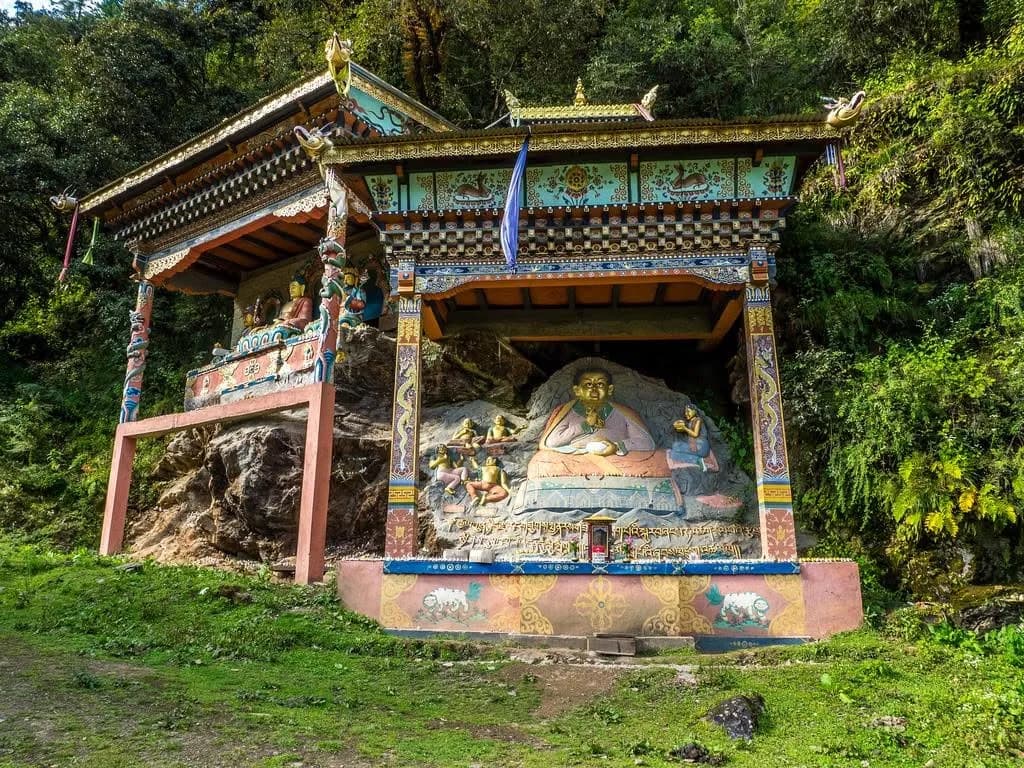
Phajo Drukgom Zhigpo
Phajo Drukgom Zhigpo (1184-1251) was the 13th-century Tibetan lama who brought the Drukpa Kagyu tradition to Bhutan — the foundational religious figure for the principal contemporary Bhutanese institutional religious tradition. He established the foundational Drukpa Kagyu sites at Tango Goemba and Cheri Goemba above the Thimphu valley; his transmission lineage was carried forward across the subsequent centuries and formalised by the Zhabdrung Ngawang Namgyal in the 17th century. The 'Druk' (dragon) lineage name that Phajo brought to Bhutan ultimately gives the country its name — Druk Yul, the Land of the Dragon.
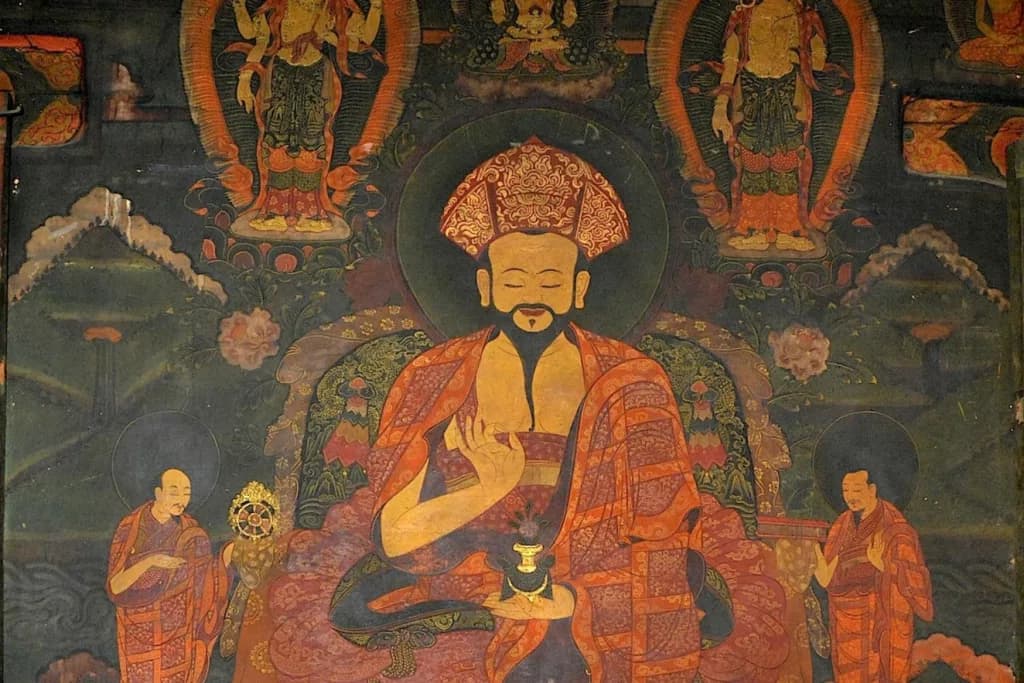
religious · Drukpa Kagyu school of Vajrayana Buddhism · 1594–1651
Zhabdrung Ngawang Namgyal
The Zhabdrung Ngawang Namgyal (1594-1651) was the Tibetan-born Drukpa Kagyu lama who unified Bhutan into a single state in the 17th century — establishing the dual-government system (the Je Khenpo as religious head, the Druk Desi as civic head) that endured until the 1907 Wangchuck monarchy, building the principal dzongs across the country (Punakha, Wangdue Phodrang, Paro Rinpung, Tashichho), and successfully repulsing five Tibetan invasions. The principal figure of the Bhutanese political-religious foundation.
royal8
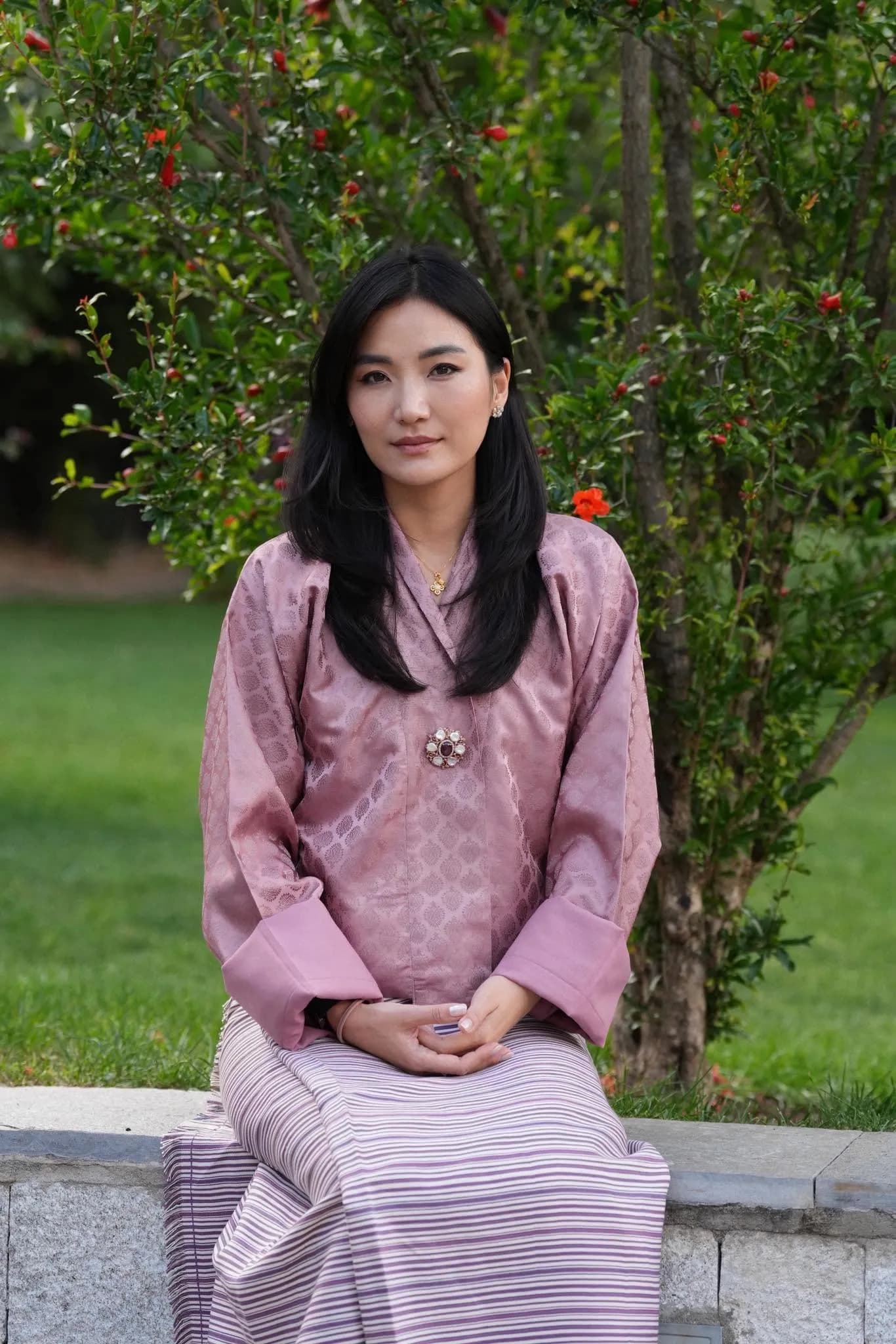
royal · 1990
Her Majesty Queen Jetsun Pema Wangchuck
Her Majesty Queen Jetsun Pema Wangchuck is the contemporary Bhutanese Queen — married to His Majesty the Fifth Druk Gyalpo Jigme Khesar Namgyel Wangchuck on 13 October 2011 at Punakha Dzong. Her Majesty is one of the most-loved figures in contemporary Bhutan; UNICEF Goodwill Ambassador since 2014; mother of the Royal Highnesses Crown Prince Jigme Namgyel Wangchuck (born 2016), HRH Prince Jigme Ugyen Wangchuck (born 2020), and HRH Princess Sonam Yangden Wangchuck (born 2023).
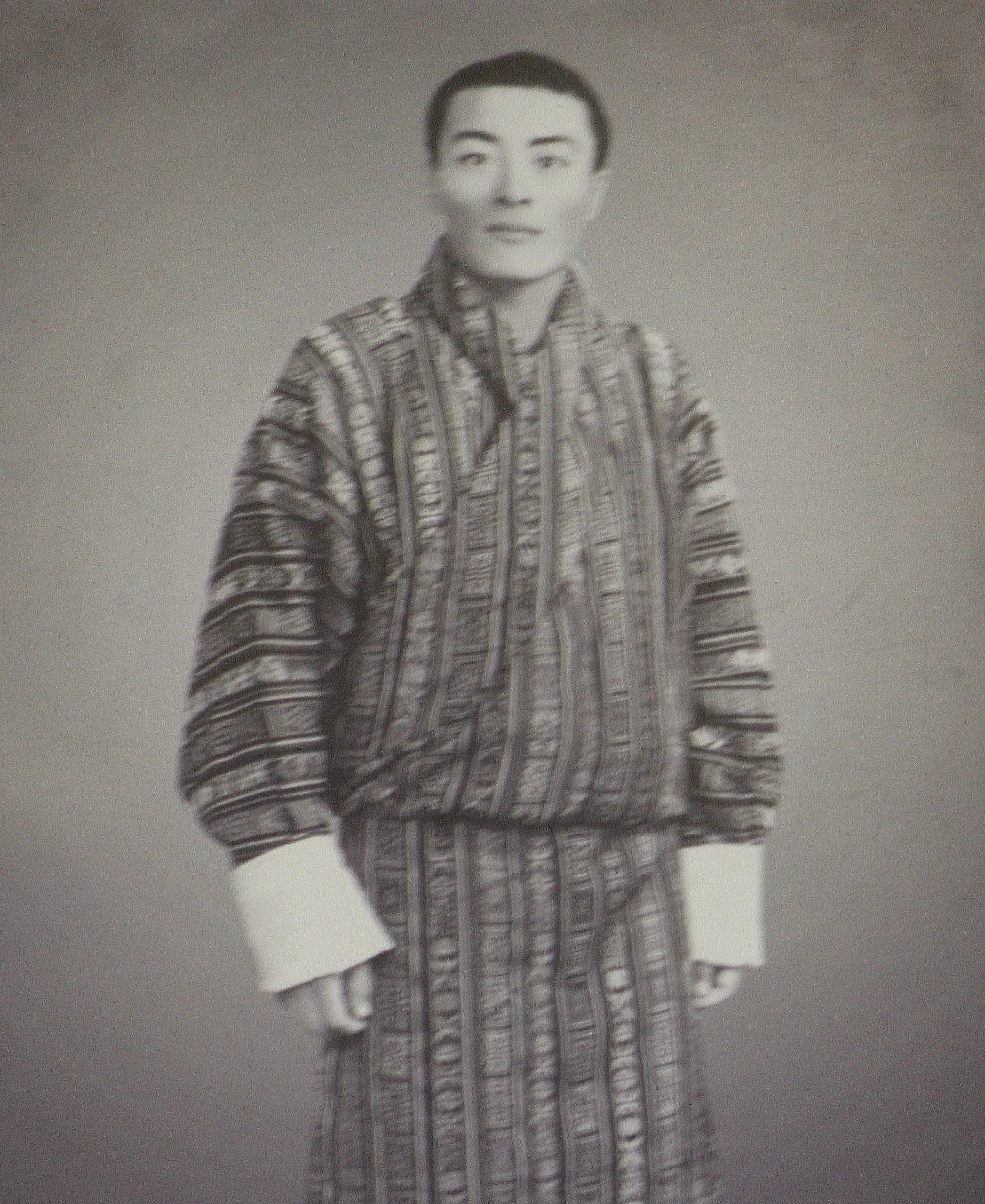
royal · Wangchuck Dynasty · 1929–1972
His Majesty Jigme Dorji Wangchuck
His Majesty Jigme Dorji Wangchuck (1929-1972) reigned as the Third Druk Gyalpo from 1952 to 1972 — the modernising king who emerged Bhutan from centuries of self-isolation, abolished slavery and serfdom, established the National Assembly, and led the country's admission to the United Nations in 1971. His Majesty's reign is widely regarded as the foundational period of the modern Bhutanese state.
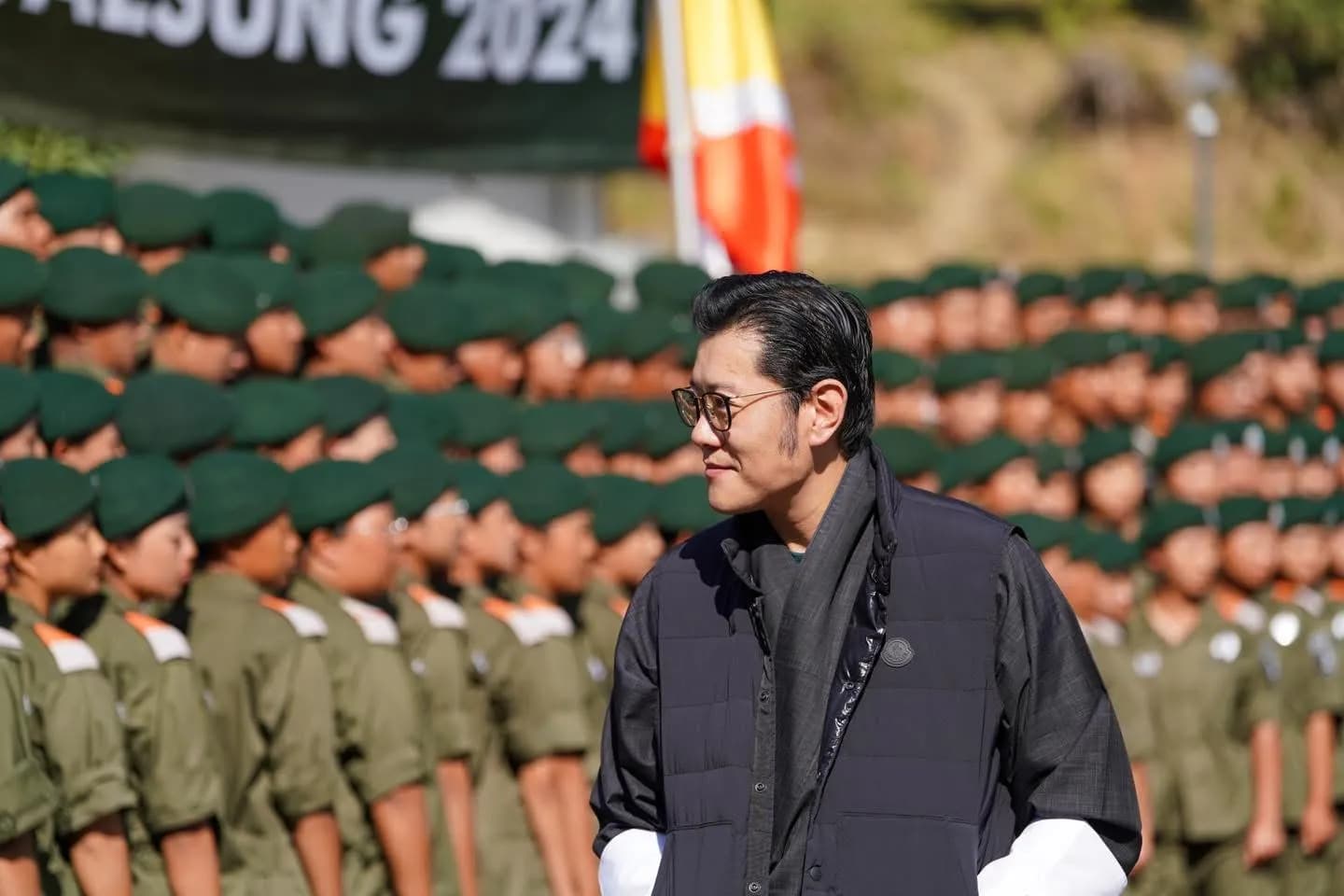
royal · Wangchuck Dynasty · 1980
His Majesty Jigme Khesar Namgyel Wangchuck
His Majesty Jigme Khesar Namgyel Wangchuck reigns as the Fifth Druk Gyalpo of Bhutan, having ascended the throne in 2006 (formally crowned 2008) on the voluntary abdication of His father, His Majesty the Fourth Druk Gyalpo. His Majesty leads the country through the contemporary period — operating the constitutional democracy established under His father, continuing the Gross National Happiness framework, and developing the country's contemporary international engagement.
royal · Wangchuck Dynasty · 1955
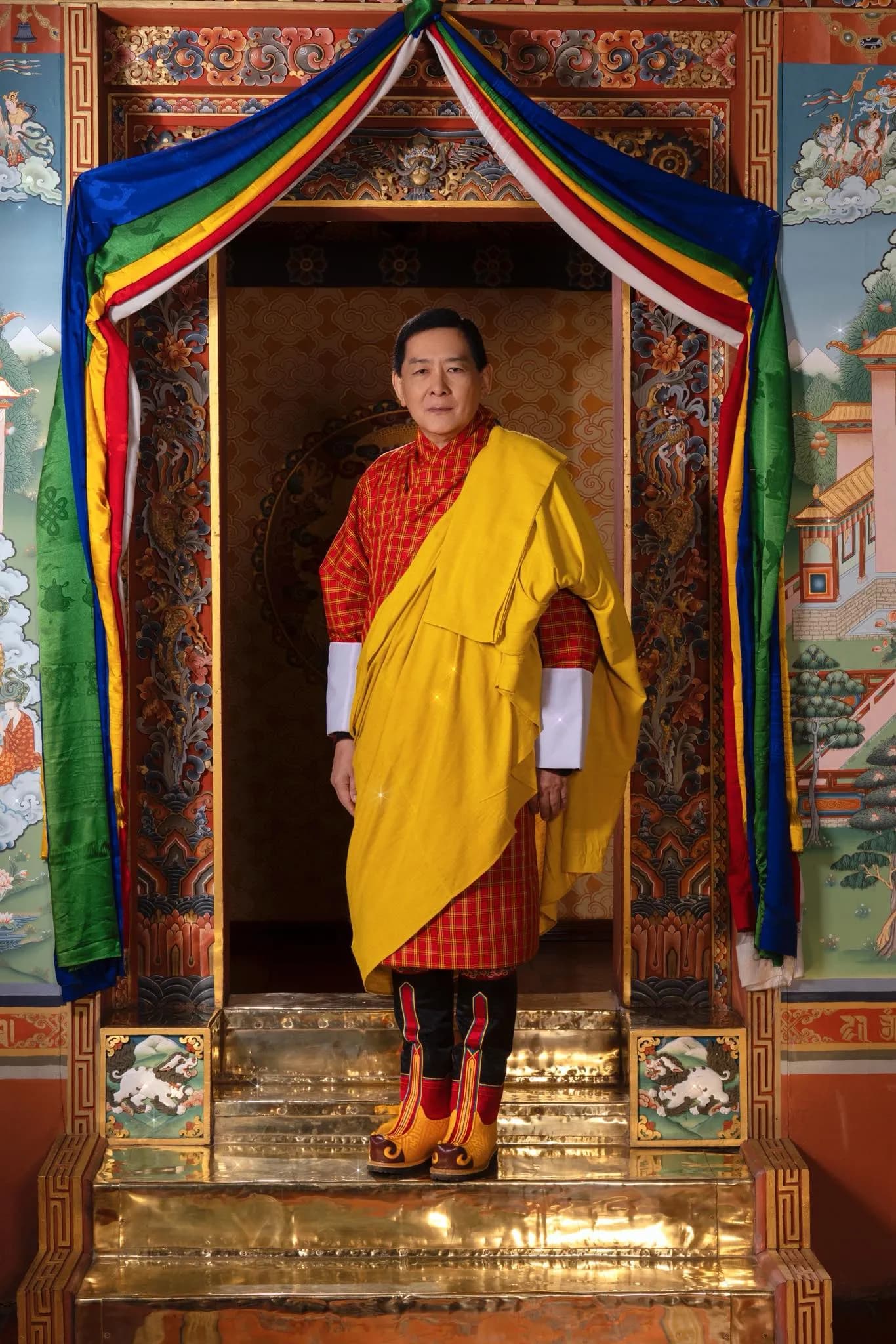
His Majesty Jigme Singye Wangchuck
His Majesty Jigme Singye Wangchuck reigned as the Fourth Druk Gyalpo of Bhutan from 1972 to 2006 (formally crowned 1974). His Majesty articulated the Gross National Happiness governance framework, deliberately opened Bhutan to international tourism on the high-value-low-impact model, and voluntarily abdicated in favour of His son to facilitate the constitutional democracy transition. His Majesty is widely regarded as the most consequential figure in modern Bhutanese history; today His Majesty holds the title of King Father (Druk Gyalpo Jigme Singye Wangchuck).
royal · 1905–1952
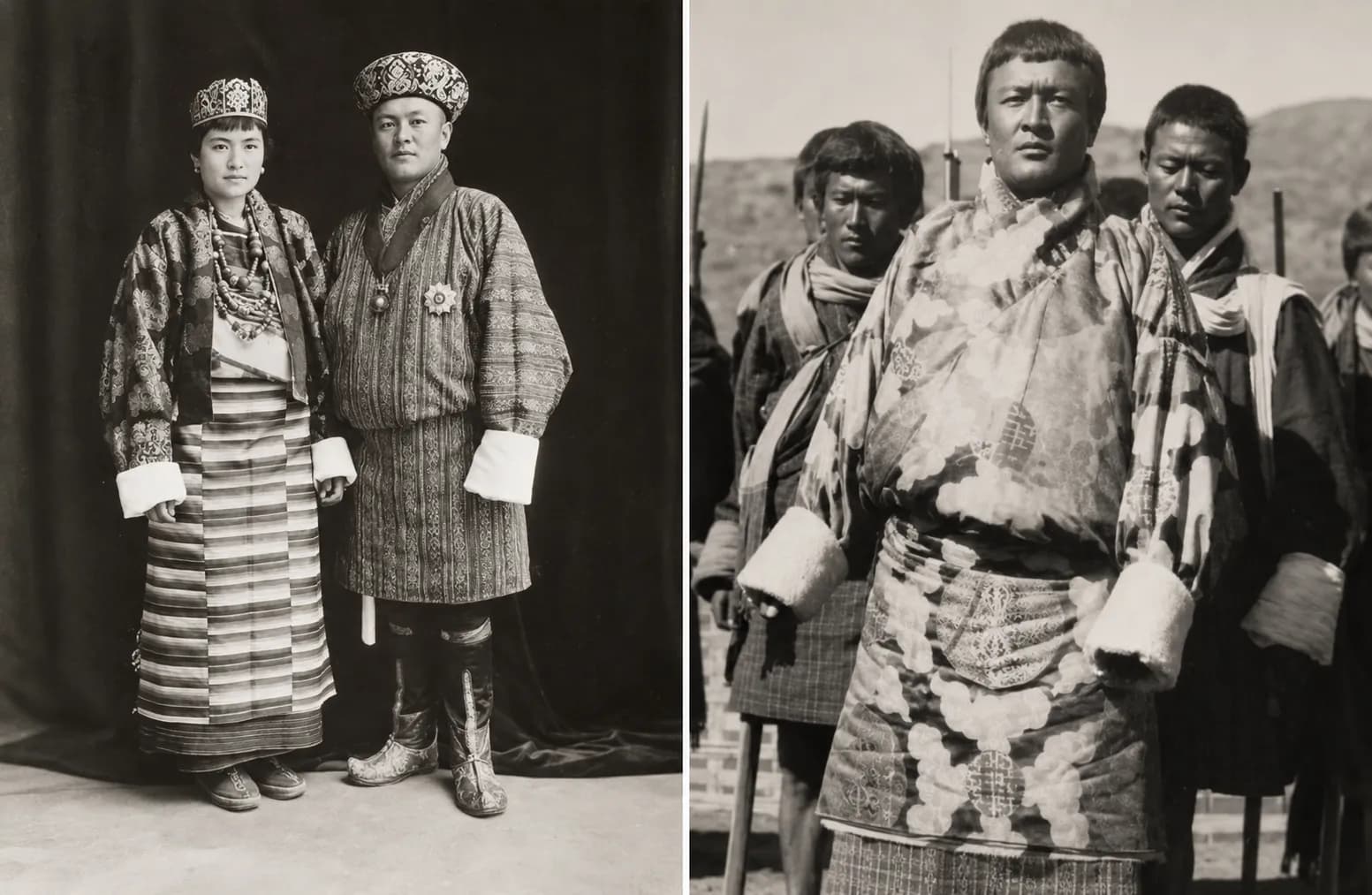
His Majesty the Second Druk Gyalpo Jigme Wangchuck
His Majesty the Second Druk Gyalpo Jigme Wangchuck reigned from 1926 to 1952, succeeding his father His Majesty Ugyen Wangchuck on the throne of the Wangchuck dynasty. His Majesty's reign was the principal period of institutional consolidation following the dynasty's foundation in 1907 — the consolidation of the central administrative, the building of the Wangduecholing summer palace at Bumthang, the cautious development of relations with British India and the broader region during the geopolitical upheavals of the 1930s and 1940s.
royal · Wangchuck Dynasty (founder) · 1862–1926
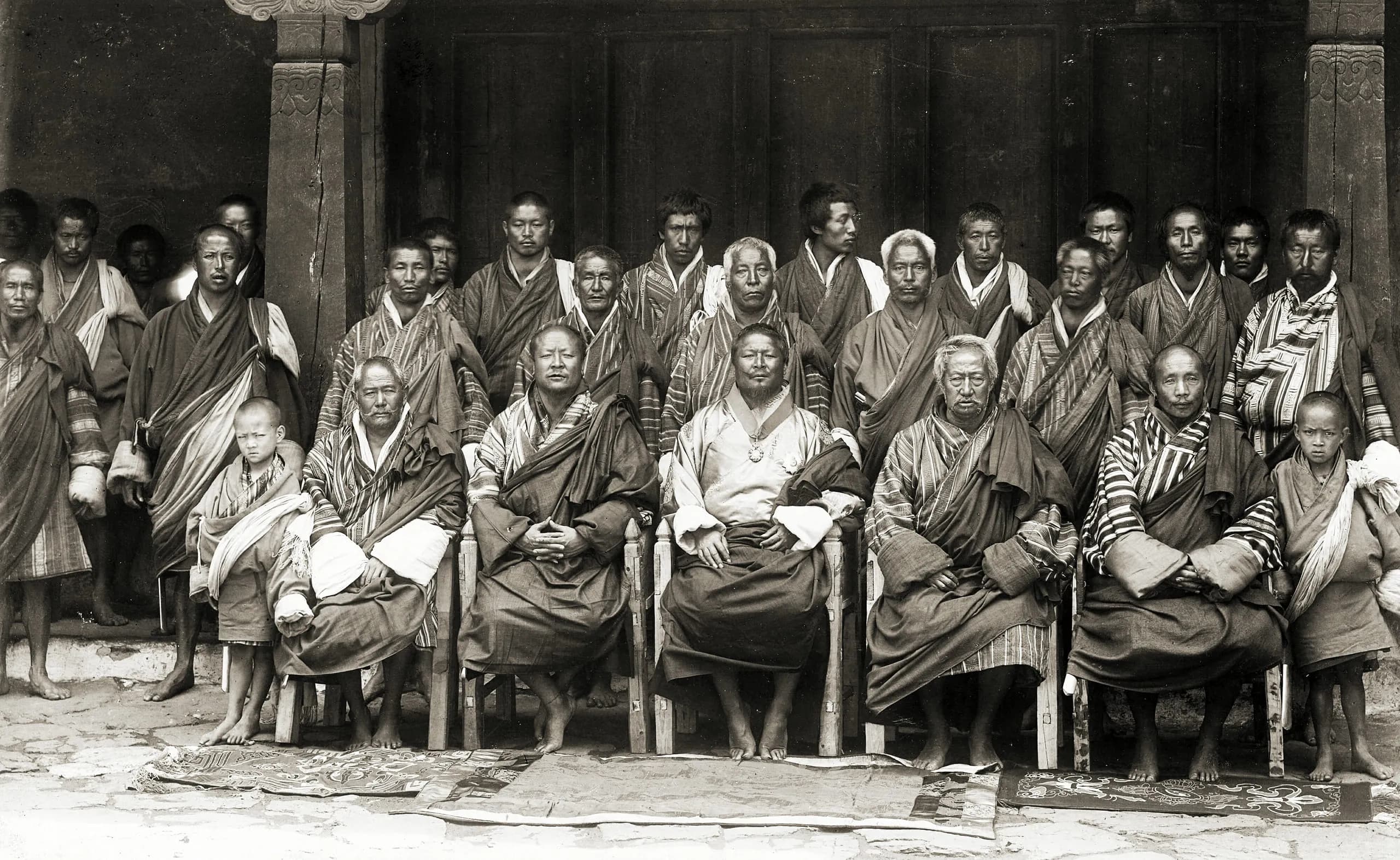
His Majesty Ugyen Wangchuck
His Majesty Ugyen Wangchuck (1862-1926) was unanimously elected the First Druk Gyalpo of Bhutan on 17 December 1907 at Punakha Dzong by an assembly of senior monks, government officials, and dzongpens (governors) — establishing the hereditary monarchy that continues to the present and consolidating the Bhutanese state after a period of internal civil conflict. His Majesty had served as Trongsa Penlop (governor of Trongsa) before the coronation; the strategic position made the role the principal power-base of the country in the late 19th century.
royal · Wangchuck dynasty · 2020
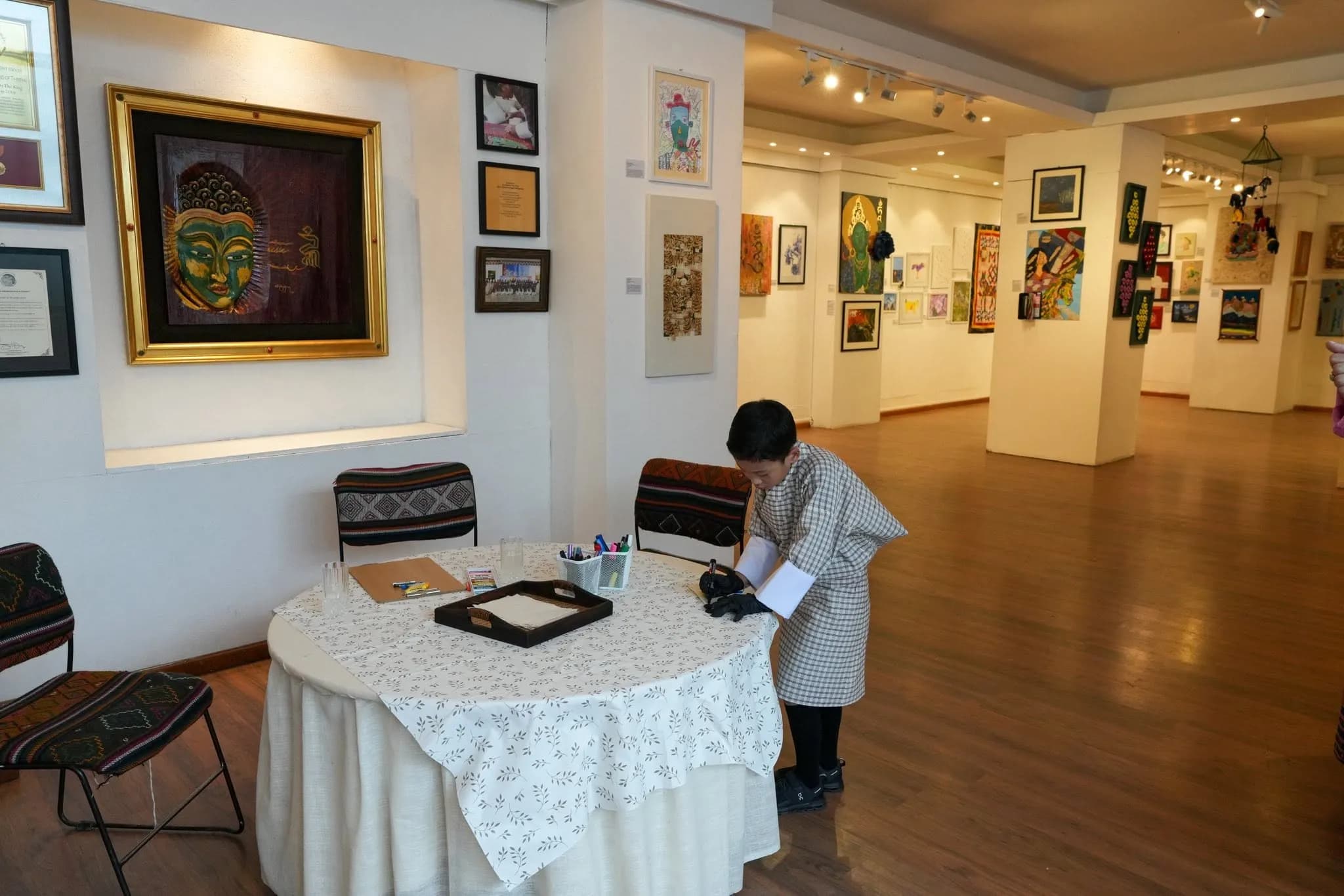
His Royal Highness Prince Jigme Ugyen Wangchuck
His Royal Highness Prince Jigme Ugyen Wangchuck is the second royal son of Their Majesties the Fifth Druk Gyalpo and Queen Jetsun Pema Wangchuck. Born on 19 March 2020, His Royal Highness is the younger brother of His Royal Highness Crown Prince Jigme Namgyel Wangchuck (born 2016) and the elder brother of HRH Princess Sonam Yangden Wangchuck (born 2023). The contemporary Bhutanese royal-family tradition that international visitors encounter through the royal-family portraits includes Their Majesties with the three royal children.
royal · Wangchuck dynasty · 2016
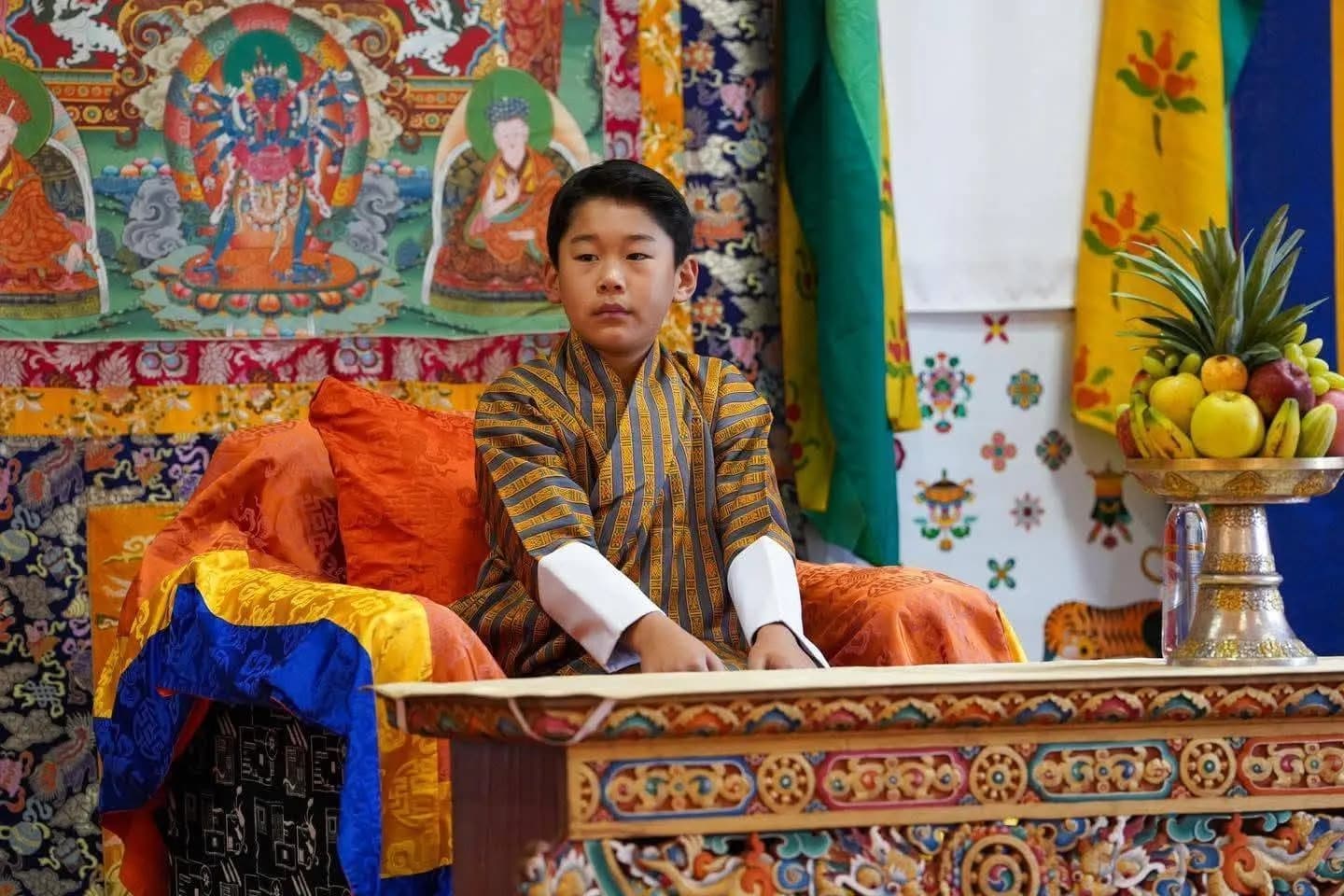
His Royal Highness the Crown Prince Jigme Namgyel Wangchuck
His Royal Highness the Crown Prince Jigme Namgyel Wangchuck — the Druk Gyalsey (Crown Prince of Bhutan) — is the eldest son of Their Majesties the Fifth Druk Gyalpo Jigme Khesar Namgyel Wangchuck and Queen Jetsun Pema Wangchuck. Born on 5 February 2016, His Royal Highness is the future Sixth Druk Gyalpo; the Bhutanese public affection for the Crown Prince is one of the more-distinctive contemporary cultural registers, with royal-family portraits including the young Crown Prince visible throughout the country.

