A Bhutanese religious figure
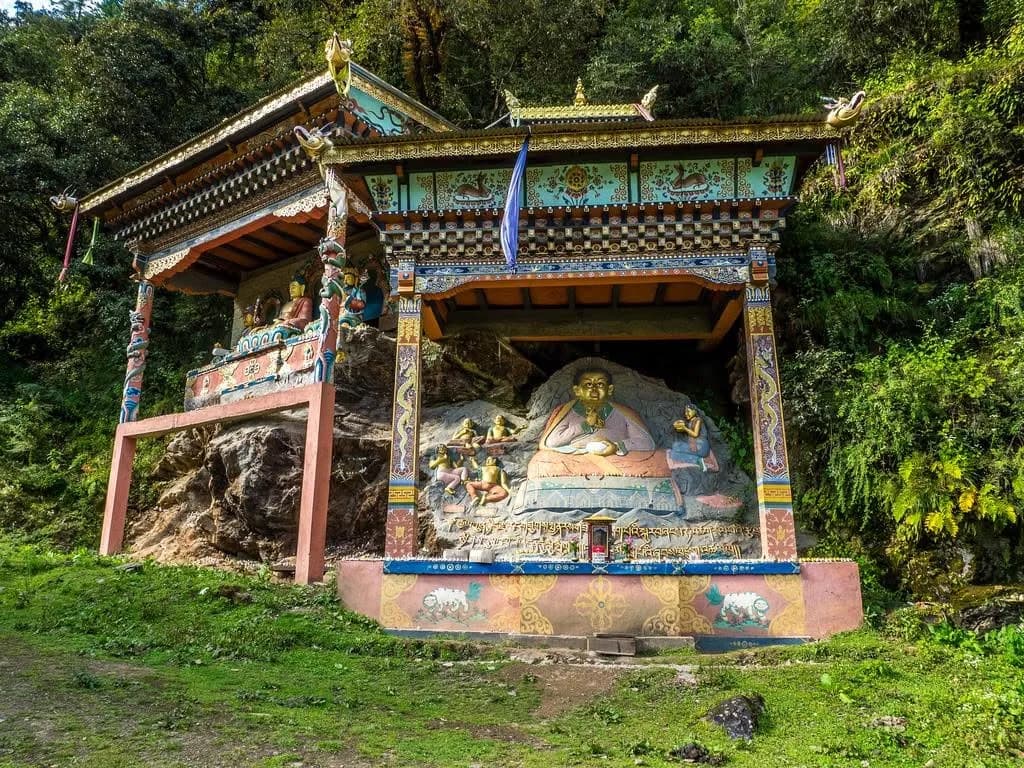
Phajo Drukgom Zhigpo — the 13th-century lama who brought the Drukpa Kagyu tradition to Bhutan.
Phajo Drukgom Zhigpo (1184-1251) was the 13th-century Tibetan lama who brought the Drukpa Kagyu tradition to Bhutan — the foundational religious figure for the principal contemporary Bhutanese institutional religious tradition. He established the foundational Drukpa Kagyu sites at Tango Goemba and Cheri Goemba above the Thimphu valley; his transmission lineage was carried forward across the subsequent centuries and formalised by the Zhabdrung Ngawang Namgyal in the 17th century. The 'Druk' (dragon) lineage name that Phajo brought to Bhutan ultimately gives the country its name — Druk Yul, the Land of the Dragon.
Also known as Phajo Drugom Zhigpo · Phajo Drugom Shigpo
1184 to 1251
- Full name
- Phajo Drukgom Zhigpo
- Honorific
- Lama
- Affiliation
- Drukpa Kagyu
- Register
- religious
His life and the transmission lineage
Phajo Drukgom Zhigpo (1184-1251) was born in eastern Tibet and trained in the principal Tibetan Drukpa Kagyu monastic tradition under Onre Dharma Senge (the principal Drukpa Kagyu master of his era). The Drukpa Kagyu lineage had been established by Tsangpa Gyare Yeshe Dorje (1161-1211) at Ralung Monastery in southern Tibet earlier in the same century; the name 'Drukpa' (literally 'of the dragon') derived from Tsangpa Gyare's sizable vision at the founding of Druk Sewa Jangchub Ling Monastery in which nine dragons rose from the earth. Phajo Drukgom Zhigpo received the Drukpa transmission from his master and, in his early adulthood, received the visionary instruction to bring the Drukpa lineage south across the Himalayan range to Bhutan.
Bringing the Drukpa Kagyu to Bhutan
Phajo arrived in Bhutan in the early 13th century — the foundational moment for the contemporary Bhutanese institutional religious tradition. He established the foundational Drukpa Kagyu sites at the principal locations above the Thimphu valley: Tango Goemba (literally 'horse-headed monastery', from the Hayagriva — the horse-headed deity — vision that Phajo had at the site) — established in 1222 on the hillside above the Thimphu valley; the principal Drukpa Kagyu shedra (monastic college) developed at this site across the subsequent centuries. Cheri Goemba — established as Phajo's meditation retreat site on the principal high hillside above the Thimphu valley. Phajo's four sons (collectively known as the Lhapa) extended the Drukpa transmission across multiple Bhutanese valleys; the transmission lineage was carried forward across the subsequent centuries until the Zhabdrung Ngawang Namgyal's institutional consolidation in the 17th century. See the Zhabdrung entry for the institutional consolidation.
His legacy and the country's name
Phajo Drukgom Zhigpo's legacy is the foundational Drukpa Kagyu tradition that the contemporary Bhutanese institutional religious framework operates within. The country's name — Druk Yul, literally 'the Land of the Dragon' — derives ultimately from Phajo's bringing of the Drukpa lineage to Bhutan; the linguistic-and-cultural identification of the country with the Drukpa lineage is one of the more striking features of contemporary Bhutanese national identity. The contemporary Drukpa Kagyu institutional framework — the Zhung Dratshang central monk body, the principal dzong-and-monastic establishments, the religious-and-cultural context that international visitors encounter — all operate within the transmission lineage that Phajo established eight centuries ago. The principal sites — Tango Goemba and Cheri Goemba above Thimphu — continue to operate as the Drukpa Kagyu teaching-and-retreat centres in contemporary Bhutan; the matched guide arranges visits for visitors with serious interest. See the Drukpa Kagyu theme for the broader institutional framework.
Others in this story
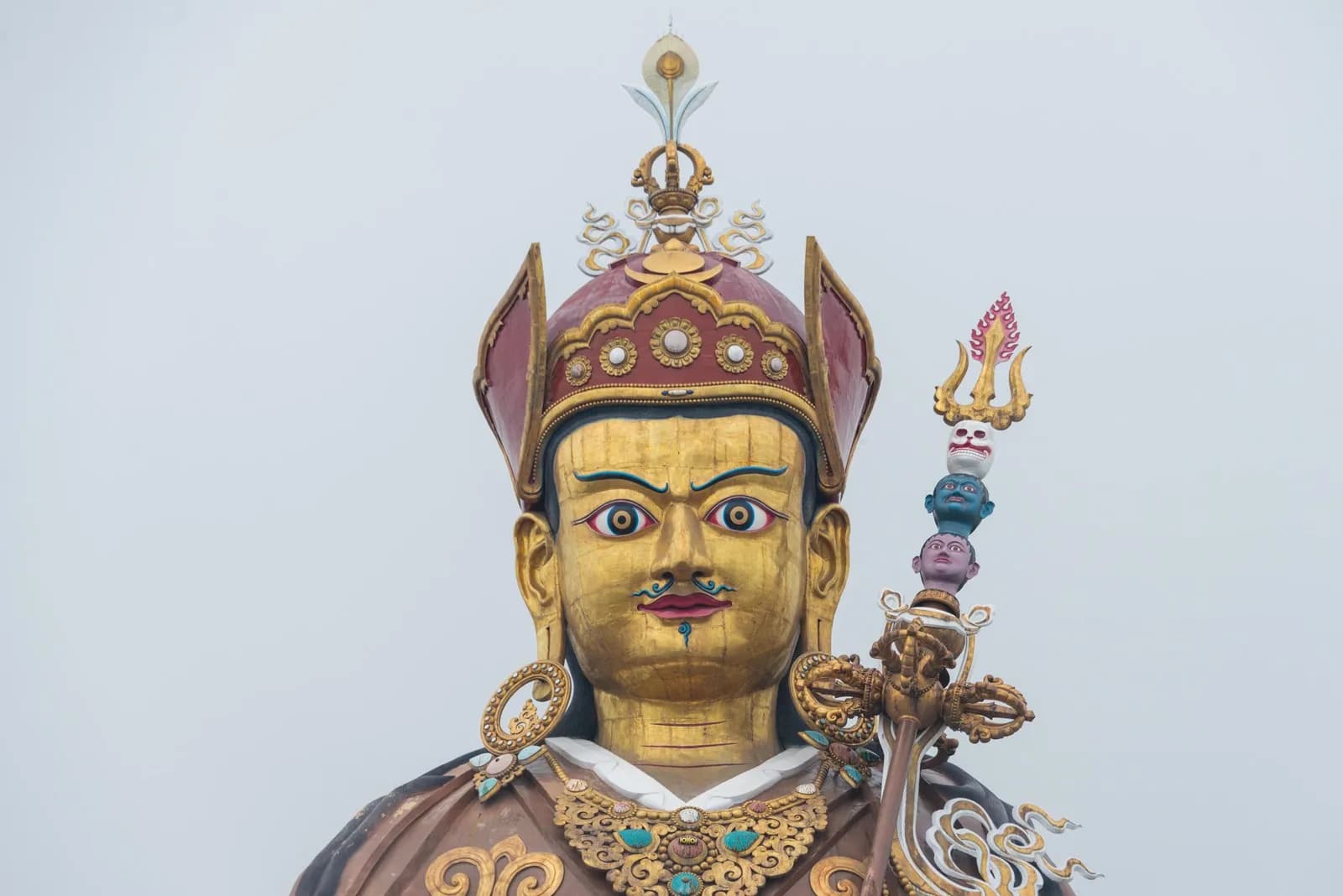 PersonGuru Rinpoche — Padmasambhava, the 8th-century Vajrayana master, the second Buddha of Bhutan.Guru Rinpoche — Padmasambhava, the 8th-century Vajrayana master, the principal religious figure of Bhutan. The eight manifestations, the principal sacred sites.
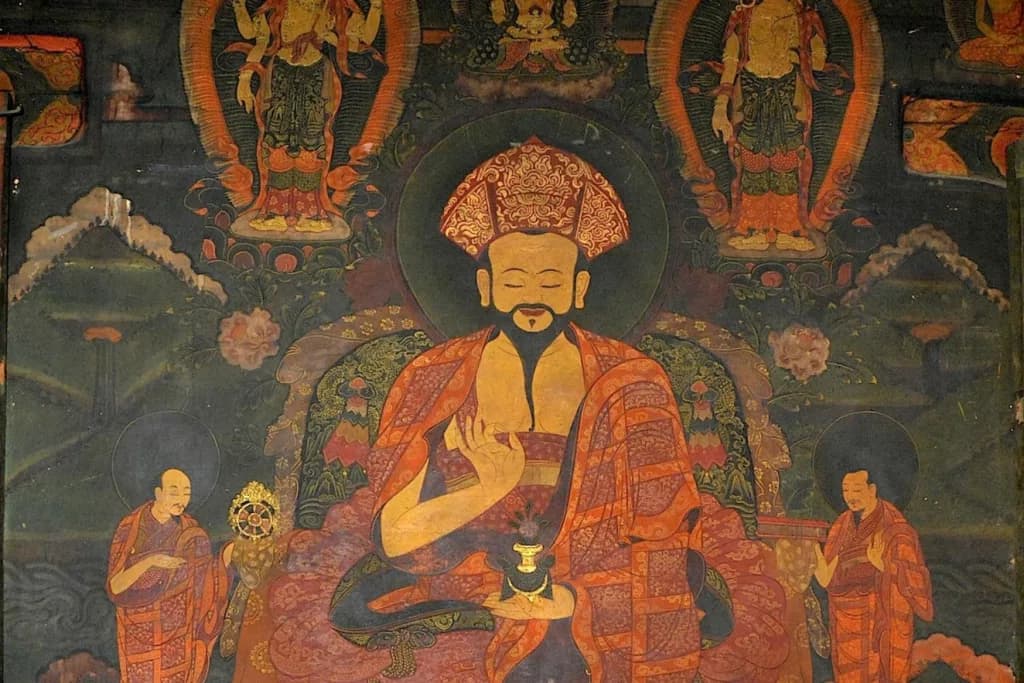 PersonThe Zhabdrung Ngawang Namgyal — the 17th-century unifier of Bhutan, the founder of the modern Bhutanese state.The Zhabdrung Ngawang Namgyal (1594-1651) — the founder of unified Bhutan. The 17th-century Drukpa Kagyu lama who built the dzong system and repulsed Tibetan invasions.
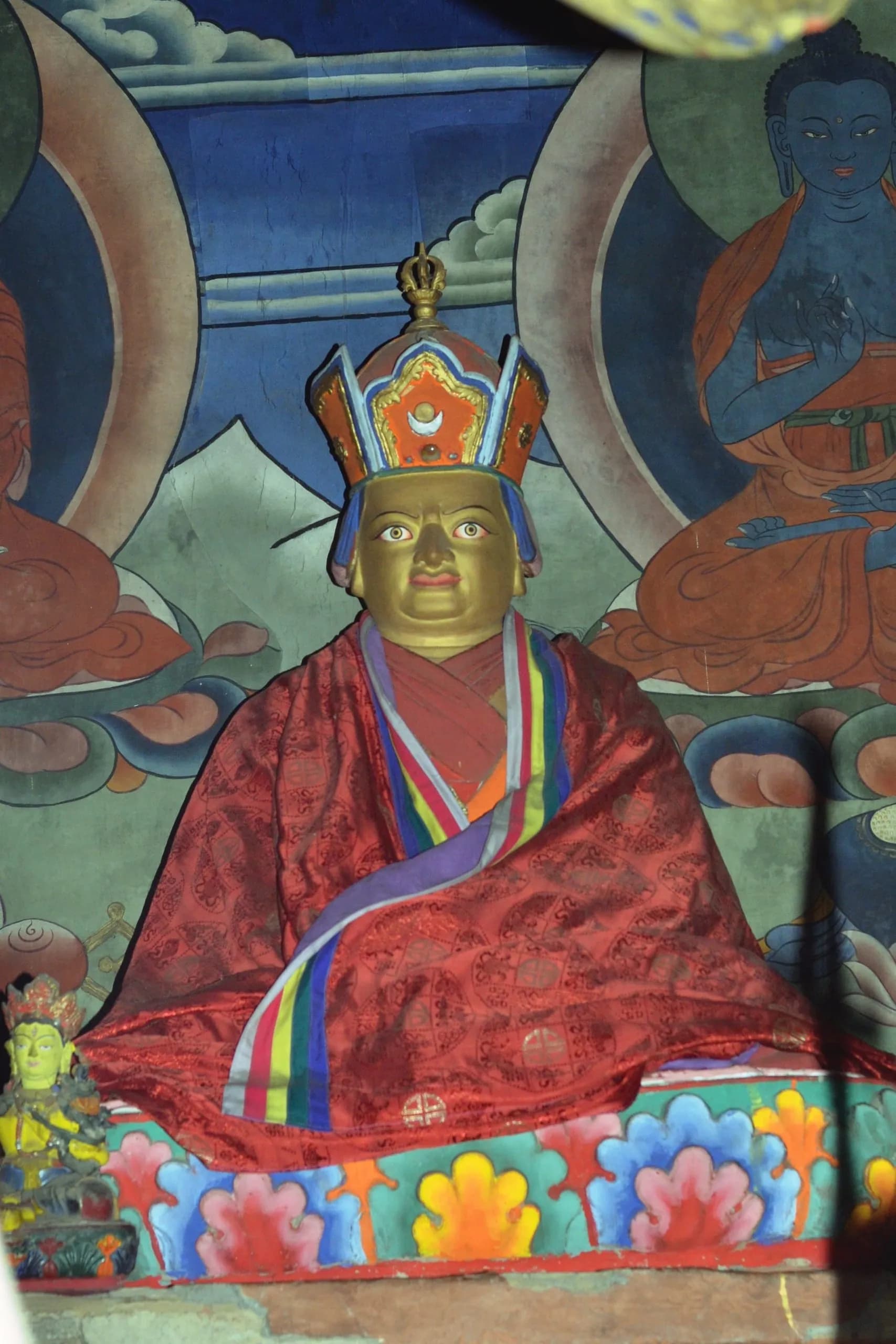 PersonPema Lingpa (1450-1521) — the great Bhutanese treasure-revealer, the principal terton of Bumthang.Pema Lingpa (1450-1521) — the great Bhutanese terton (treasure-revealer) in the Nyingma tradition. The Mebar Tsho miracle, Tamshing Lhakhang, the three reincarnation lines.
Journeys that touch this
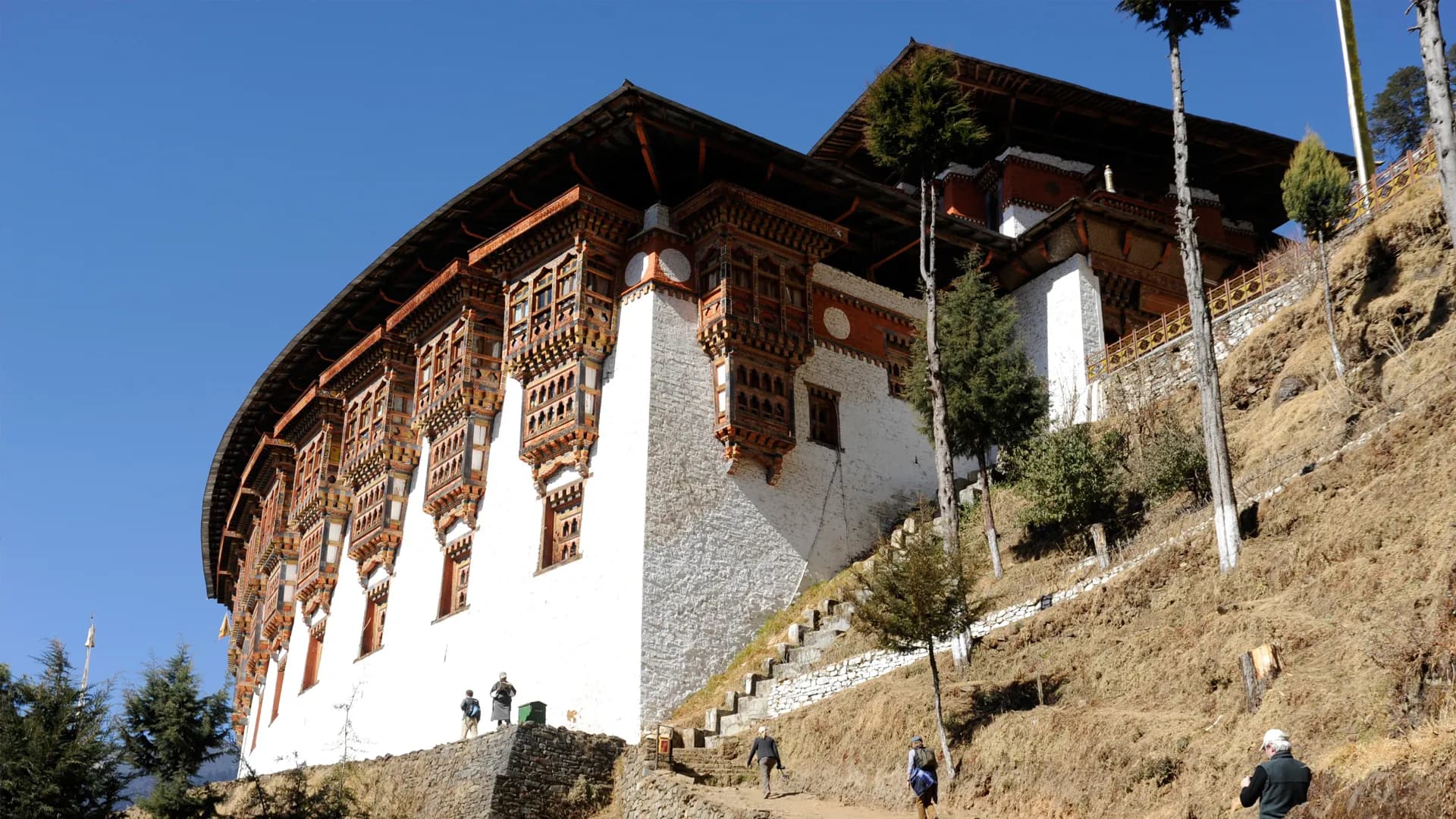 JourneyTen nights for the Buddhist pilgrim — the principal sites, with monastic context.A ten-night Bhutan Buddhist pilgrimage for Asian-Buddhist travellers. Monastic context; matched monastic-trained guide; Bumthang religious circuit.
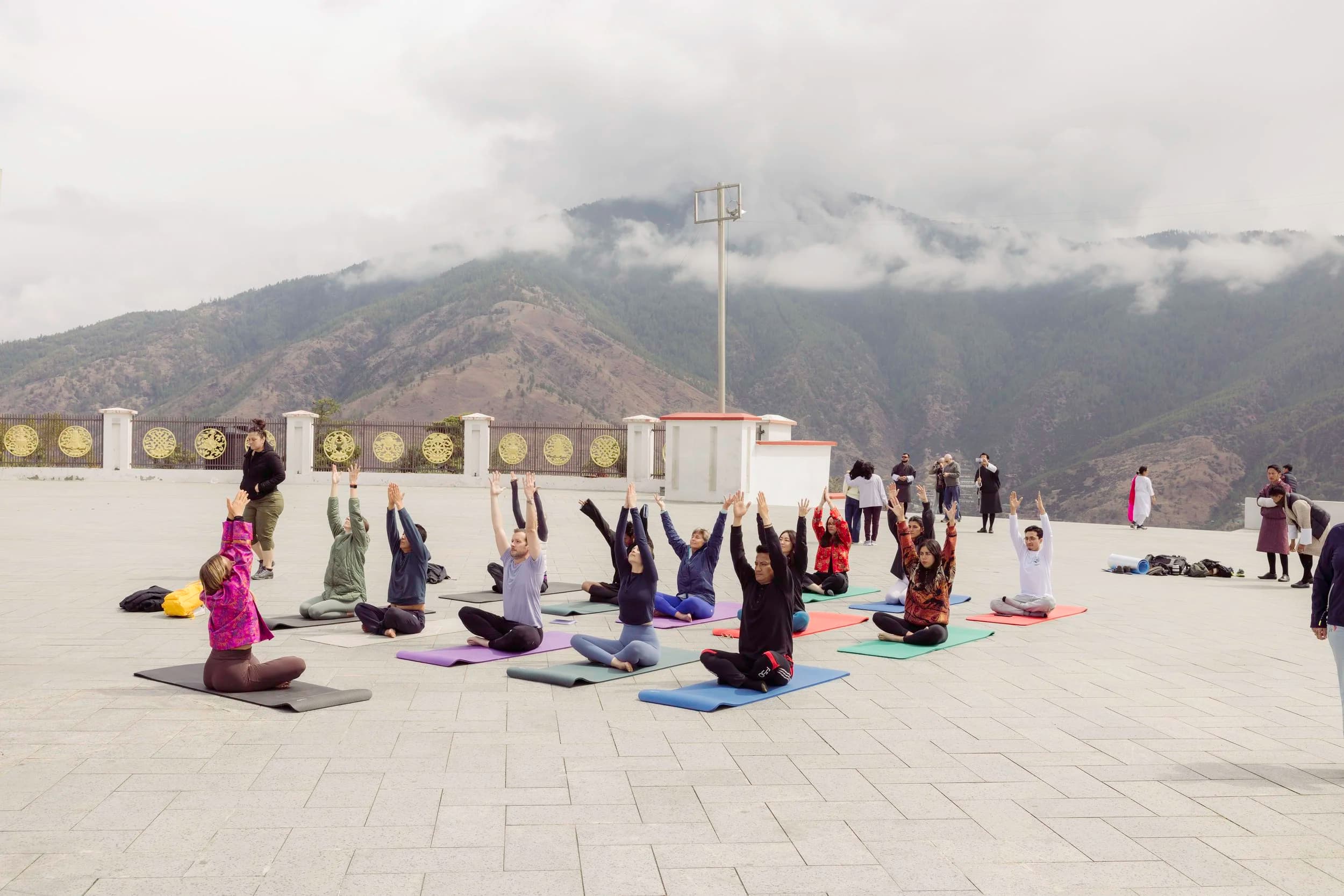 JourneySeven nights with a monastic guide, in the still season.A seven-night Bhutan meditation retreat through Clear-Sky Bhutan (Dec–Feb). Daily sittings with a monastic-trained guide, hot stone baths, no festival noise.
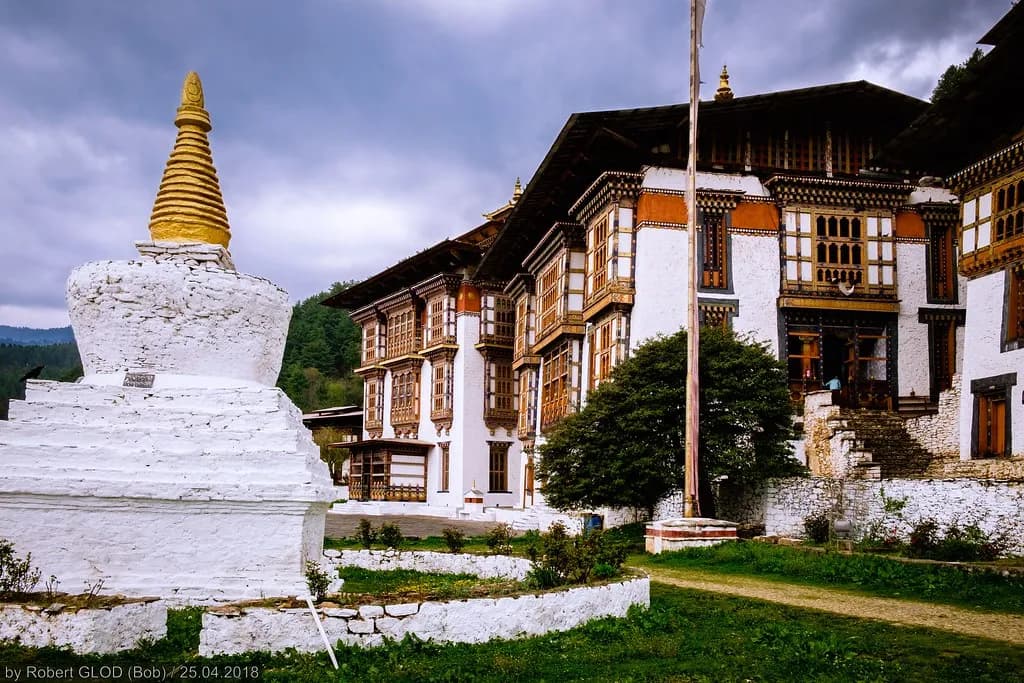 JourneyA nine-night Bhutan Buddhist journey for travellers from Thailand, Japan, and Korea — the Vajrayana tradition read comparatively against your own school, the principal monasteries, the knowledgeable monastic-trained matched guide.A nine-night Bhutan Buddhist journey for Thai, Japanese, and Korean travellers. Comparative Vajrayana / Theravada / Tendai / Zen / Seon. Knowledgeable monastic-trained guide.
Frequently asked
- Why is Bhutan called the Land of the Dragon?
- The country's name — Druk Yul, literally 'the Land of the Dragon' — derives from the Drukpa Kagyu Buddhist lineage that Phajo Drukgom Zhigpo brought to Bhutan from Tibet in the 13th century. The 'Druk' (dragon) name derives originally from Tsangpa Gyare's 12th-century vision at the founding of the Drukpa lineage's principal Tibetan monastery; Phajo carried the name and lineage south to Bhutan. The linguistic-and-cultural identification of the country with the Drukpa lineage is one of the more notable features of contemporary Bhutanese national identity. See the Drukpa Kagyu theme for the broader context.
- Can I visit Phajo's principal sites?
- Yes. Tango Goemba (founded 1222 by Phajo) is the principal Drukpa Kagyu shedra above the Thimphu valley; accessed by a 1-2 hour uphill walk from the trailhead road, with the monastic college visible at the site. Cheri Goemba — Phajo's meditation retreat site — is accessed by a 30-45 minute uphill walk from the road; the foundational Zhabdrung-era site as well as the Phajo-era retreat. Both are essential visits for visitors with serious interest in the foundational Bhutanese religious. See the meditation retreat experience for the contemplative-engagement tradition at these sites.
- Who came to Bhutan first — Guru Rinpoche or Phajo?
- Guru Rinpoche (Padmasambhava) came to Bhutan in the 8th century — five centuries before Phajo. Guru Rinpoche established the Nyingma tradition that operates principally at the household-and-village context in contemporary Bhutan (see the Guru Rinpoche entry). Phajo brought the Drukpa Kagyu tradition in the 13th century — the principal institutional religious tradition that the Zhung Dratshang and the principal dzong-monastic establishments operate within. The two traditions coexist in contemporary Bhutanese Vajrayana practice — the Nyingma at the household level, the Drukpa Kagyu at the institutional level. See the Vajrayana Buddhism theme for the broader framework.

