A Bhutanese valley
Thimphu — the capital, the country's only city, the unhurried administrative seat.
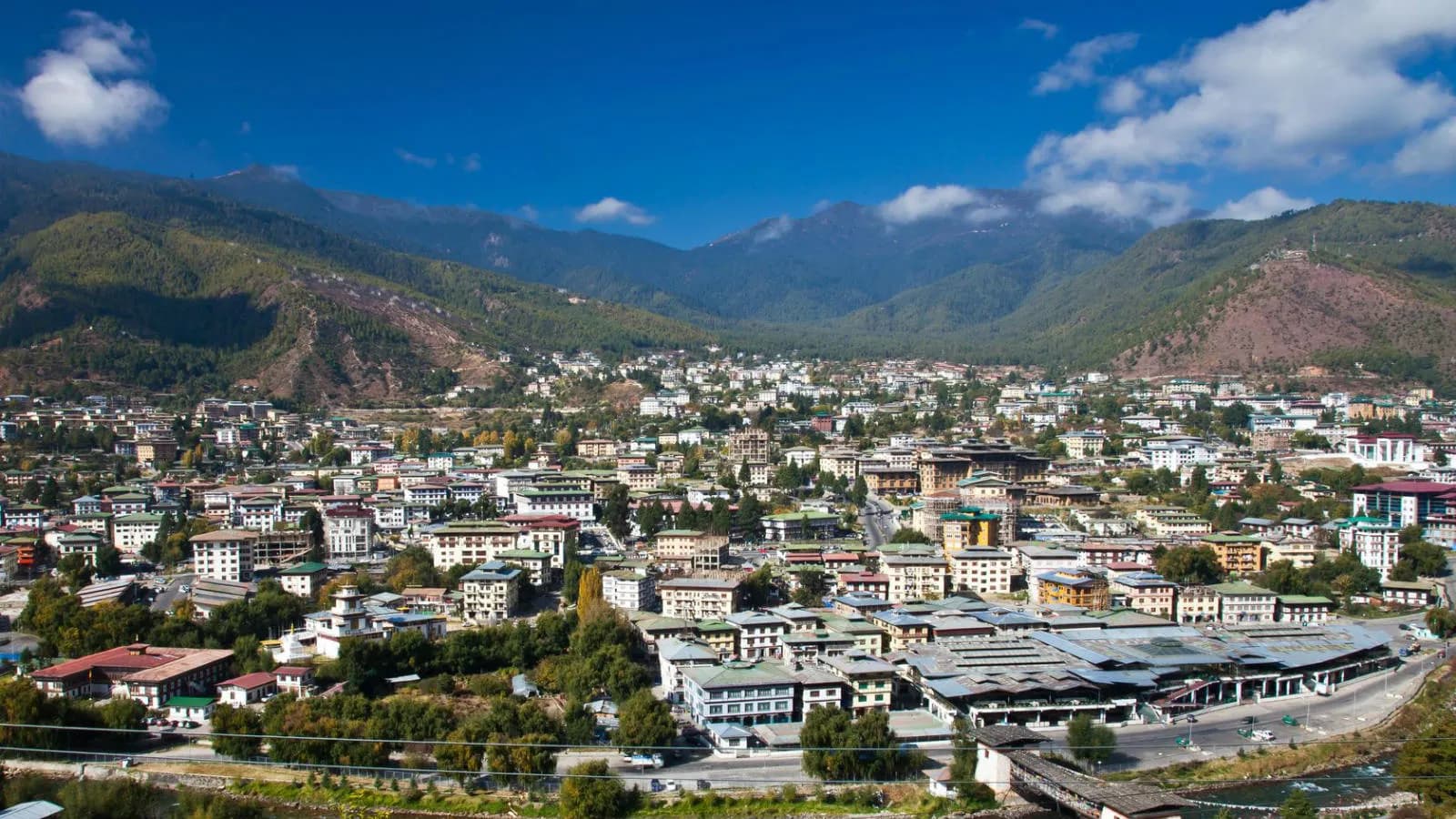
Thimphu is Bhutan's capital and the country's only city of any meaningful scale — the seat of the Royal Government, the Zhung Dratshang (the central monk body) in summer, the National Assembly, and the principal civic-cultural institutions. The city sits in the Wang Chhu valley at approximately 2,320 metres, an hour's drive from Paro. For a country its size, Thimphu carries an unusual register of unhurried civic life.
- District
- Thimphu
- Altitude
- 2,320 m
- Kind
- dzongkhag
- Coordinates
- 27.471, 89.634
- Also known as
- Thimphu Dzongkhag, Thimphu Valley, Capital of Bhutan
The principal sites
Tashichho Dzong — the principal dzong, summer seat of the Zhung Dratshang (the central monk body) and the working seat of the Royal Government; on the western bank of the Wang Chhu. Buddha Dordenma — the giant Buddha statue (51 metres, completed 2015) on the Kuensel Phodrang ridge above southern Thimphu, visible from much of the city. The National Memorial Chorten — built in 1974 in memory of His Majesty the Third Druk Gyalpo Jigme Dorji Wangchuck; the principal Thimphu pilgrimage site, with elders circumambulating from early morning. The Folk Heritage Museum — a traditional Bhutanese farmhouse-as-museum, the everyday life of pre-modern Bhutanese life. The Royal Textile Academy — the principal cultural-and-educational institution for Bhutanese textile, established under the patronage of Her Majesty the Queen Mother Sangay Choden Wangchuck. The Motithang Takin Preserve — the takin (Bhutan's national animal) viewing area on the Motithang ridge.
The Centenary Farmers' Market
The weekend Centenary Farmers' Market is the city's principal civic gathering. Bhutanese vegetables (the dried chillies, the ferns, the matsutake in season, the high-altitude greens), spices, butter, dried yak cheese, ara (the traditional rice spirit), textiles, dzi beads, prayer wheels, religious paraphernalia. The market runs Friday evening through Sunday afternoon. Goes deeper than any other single Thimphu site at conveying everyday Bhutanese commerce and family life.
The city as a place to spend time
Thimphu is the only Bhutanese city with traffic lights (and even there, the lights are operated by a hand-gesturing traffic policeman at the principal intersection — kept that way by deliberate civic choice). Population approximately 115,000. The city sits between forested ridges on both sides of the Wang Chhu valley. The principal premium lodges (Amankora Thimphu, Six Senses Thimphu) sit on the upper-ridge Motithang area; mid-tier hotels distributed through the central valley. Thimphu is the natural cultural-introduction stop on most Bhutan itineraries — typically two nights to cover the principal sites without rushing.
The contemporary royal-family register — Dechencholing and Changlimithang
Thimphu carries the principal contemporary royal-family register through two anchor sites. Dechencholing Palace at Kashinang, north of Thimphu Dzong, was built from 1952 by His Majesty the Third Druk Gyalpo and is the principal royal-family residence across three generations (born here: His Majesty the Fourth Druk Gyalpo in 1955; resided here today: His Majesty the Fifth Druk Gyalpo and Queen Jetsun Pema alongside Lingkana). Not open to visitors. Changlimithang Stadium in central Thimphu is the principal Bhutanese ceremonial ground — site of the 1885 consolidation that brought His Majesty Ugyen Wangchuck to paramount authority, of the 1974 and 2008 royal coronations, of the annual 17 December National Day, and of the country's major archery tournaments. The matched guide briefs visitors on the broader royal-family register where the conversation calls for it. See Dechencholing Palace and Changlimithang Stadium.
The Thimphu Tshechu
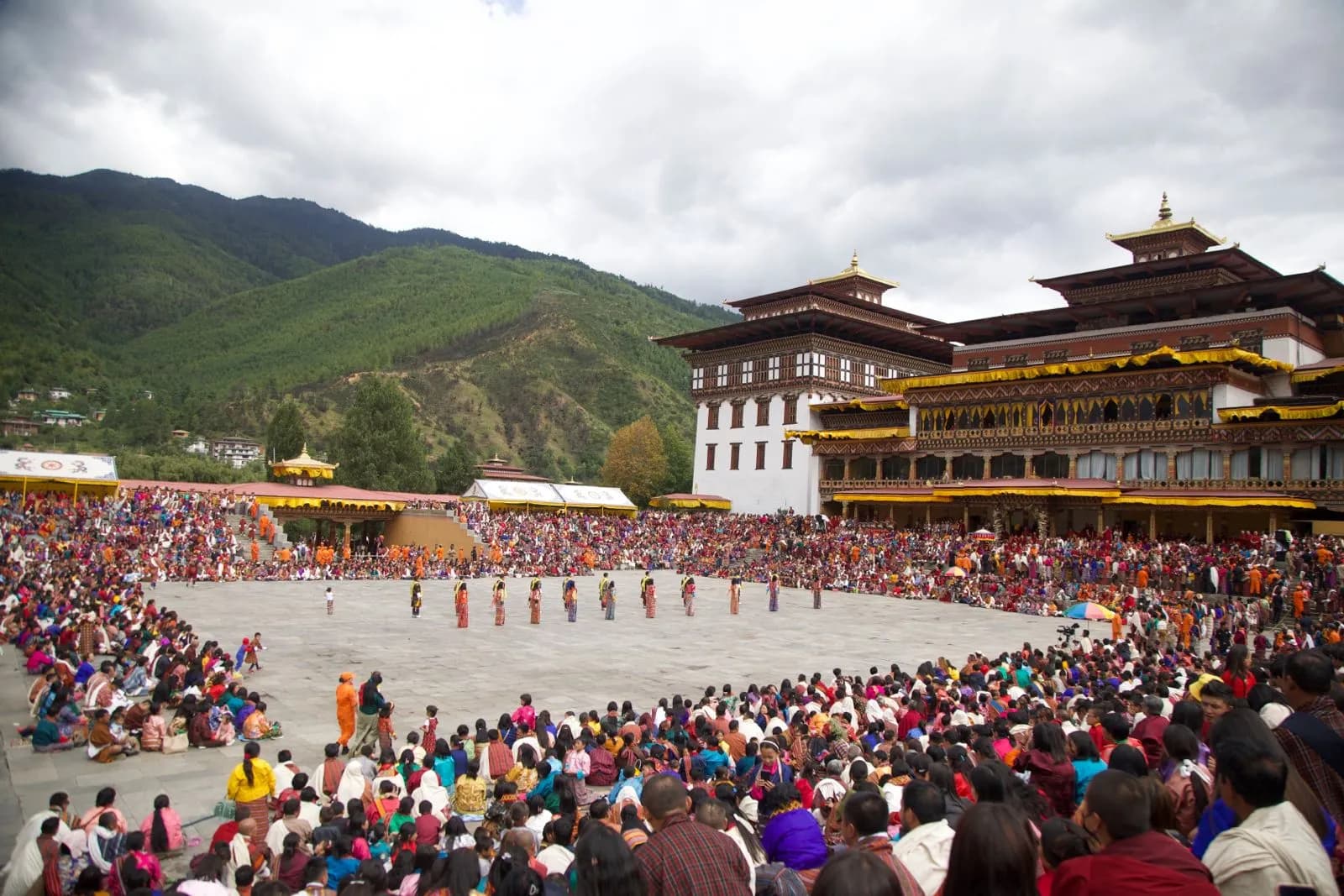
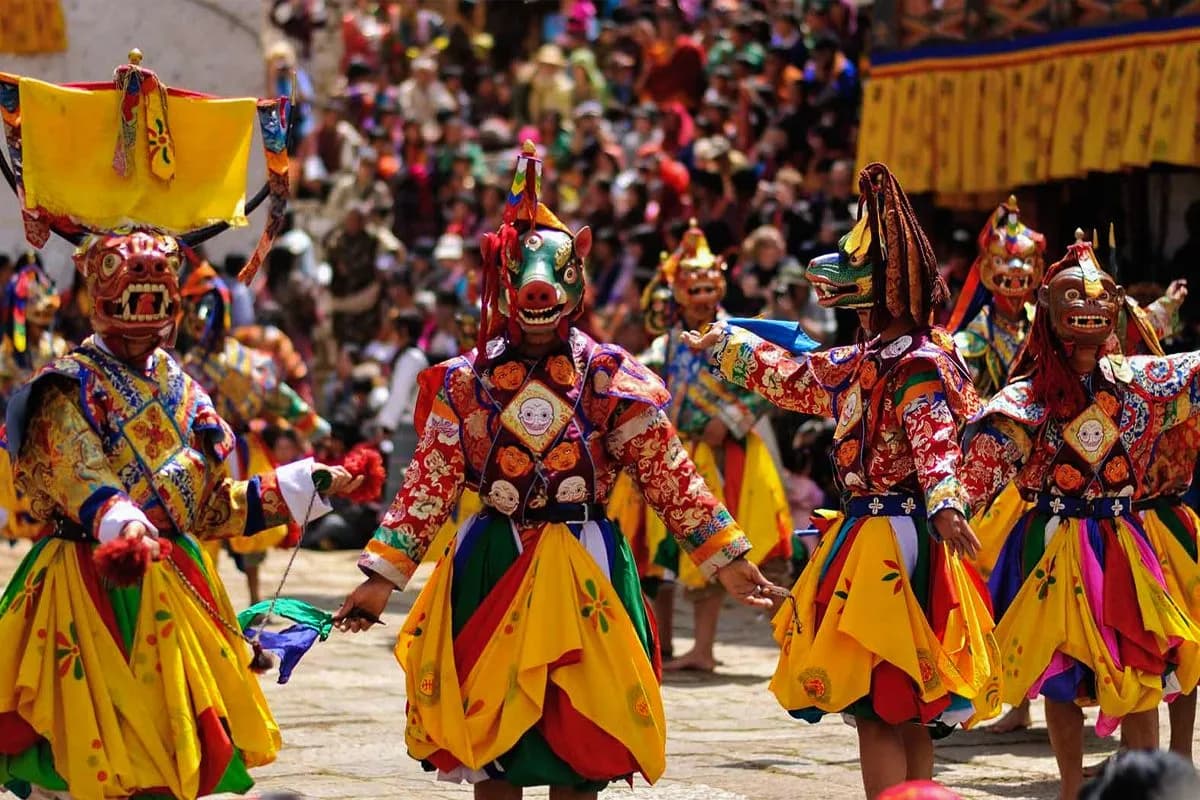
The annual Thimphu Tshechu in September-October is one of the country's largest, held in the Tashichho Dzong courtyards. Three days of masked dances; the final-day Thongdrel unveiling at dawn. The festival aligns with the autumn clear-sky window — many premium travellers plan their Bhutan trip around the dates. See bhutan-tshechu-festival-autumn for the full journey shape.
Visiting
- Drive from Paro
- 54 km / approximately 1 hour 15 minutes along the Pa Chhu valley. The drive itself is unremarkable but pleasant; the principal cultural register starts on arrival in Thimphu.
- How long to spend
- Two nights typically — one for the principal sites (dzong, chorten, Buddha Dordenma, market), one for the deeper (museum, textile academy, takin preserve, dinner at a local-sourcing chef). Founder pacing cap: ≤ 3 nights for first-timers.
What to see here
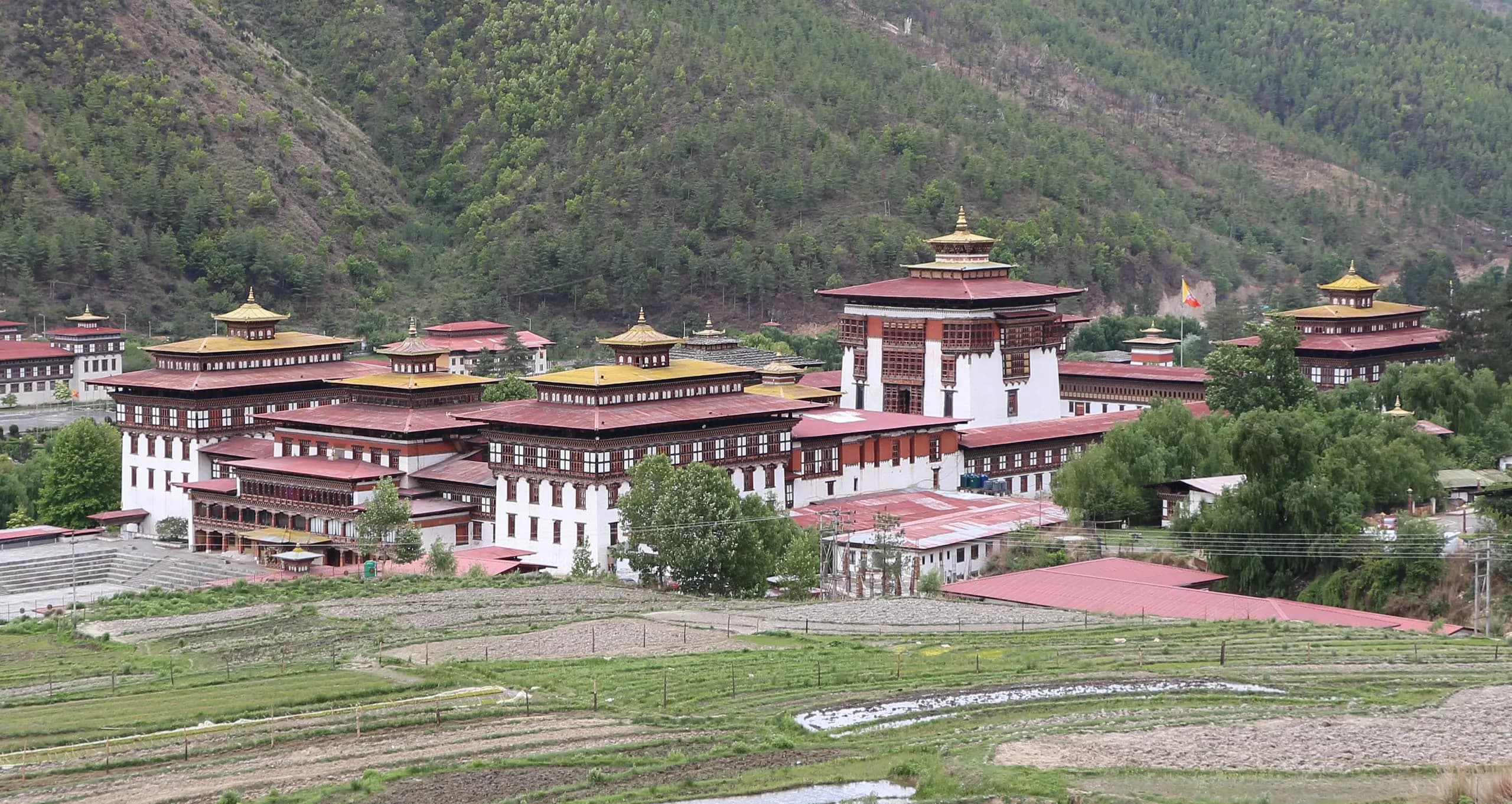 MonumentTashichho Dzong — the fortress of the auspicious religion, at the heart of Thimphu.Tashichho Dzong — the seat of Bhutan's central government and Je Khenpo summer residence in Thimphu. History, architecture, visiting.
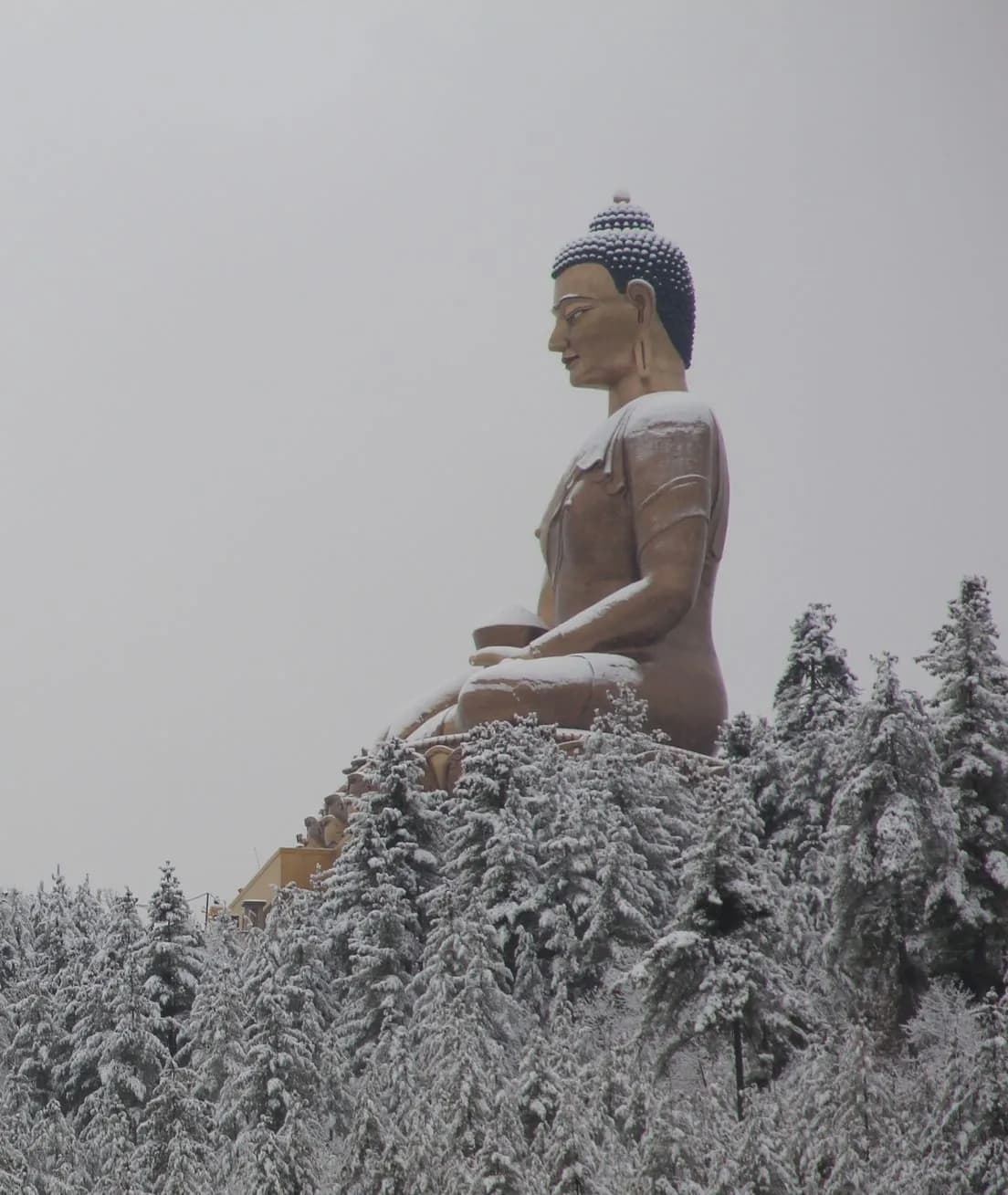 MonumentBuddha Dordenma — the great gold-plated Shakyamuni, fulfilling an 8th-century prophecy of Guru Rinpoche.Buddha Dordenma — the 51.5-metre seated Buddha above Thimphu. The prophecy, the construction, the 125,000 smaller Buddhas inside. Visiting.
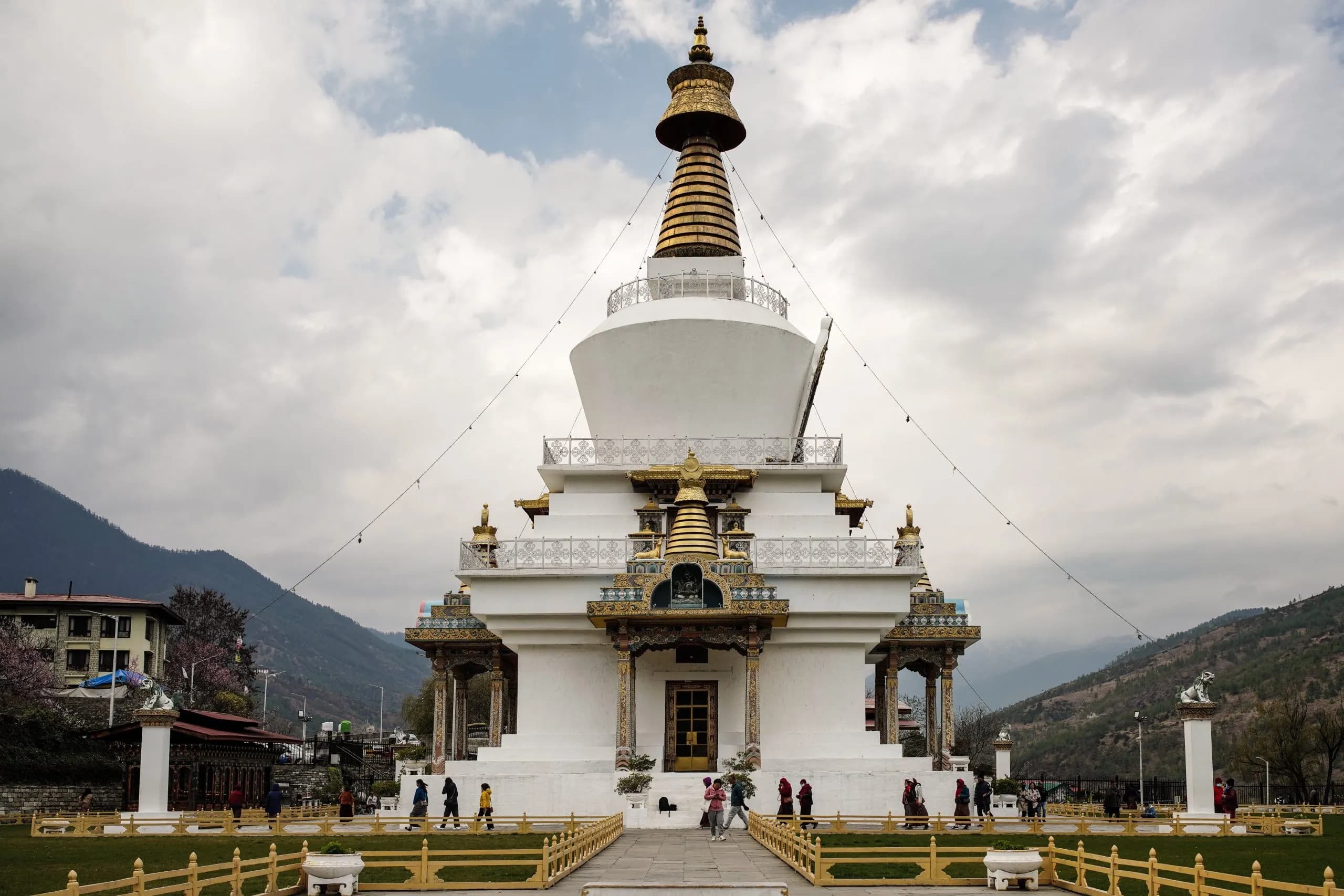 MonumentNational Memorial Chorten — the 1974 chorten in central Thimphu, dedicated to Druk Gyalpo Jigme Dorji Wangchuck.National Memorial Chorten — Thimphu, 1974, in memory of His Majesty the 3rd King. Architecture, daily pilgrimage, visiting.
- MonumentDechencholing Palace — built 1952+ by His Majesty the Third Druk Gyalpo, the principal contemporary royal-family residence.Dechencholing Palace — built 1952+ by His Majesty the Third Druk Gyalpo at Kashinang, north of Thimphu. The principal contemporary royal-family residence.
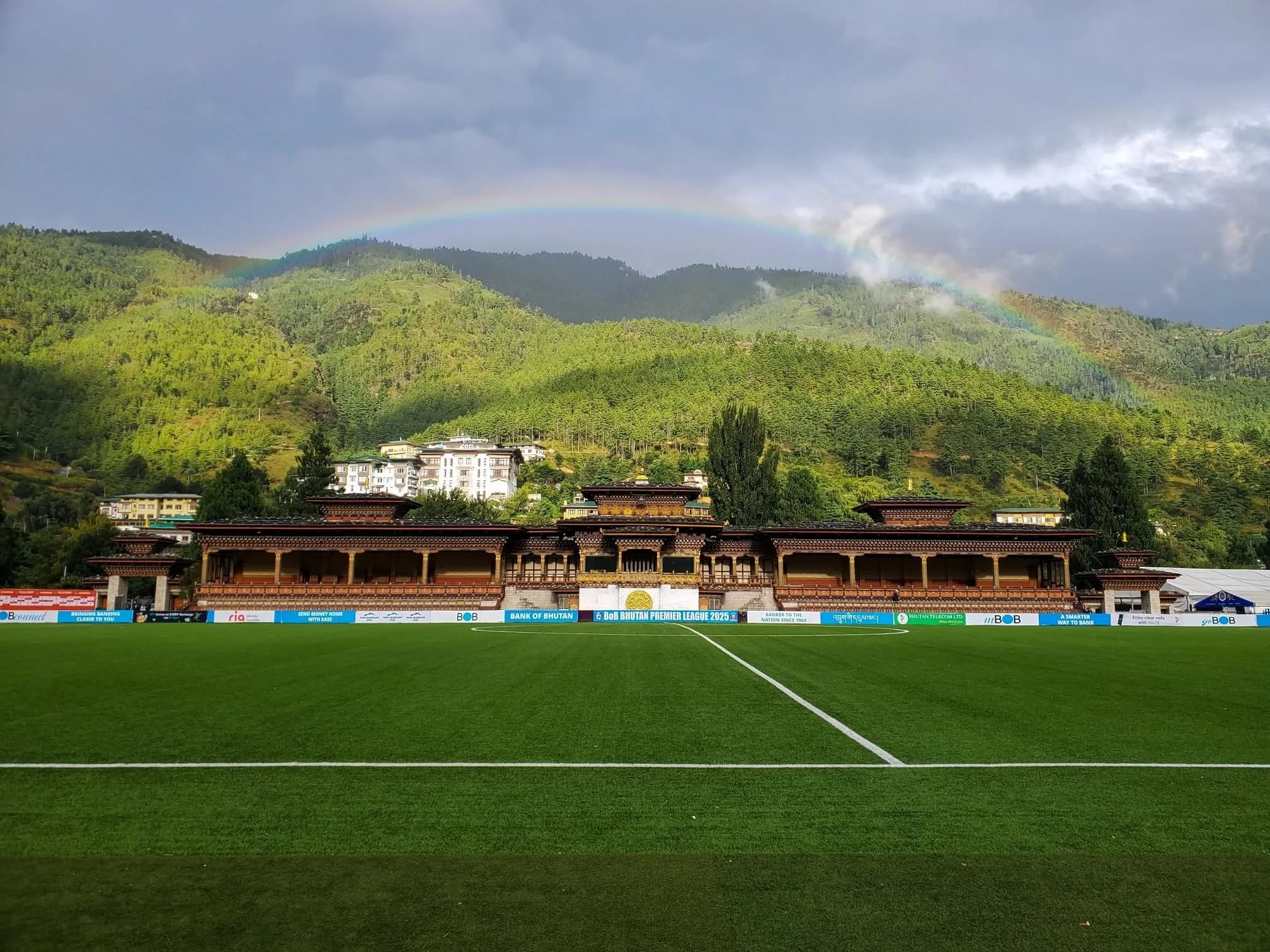 MonumentChanglimithang Stadium — the principal ceremonial ground of the Royal Kingdom of Bhutan.Changlimithang Stadium — the principal Bhutanese ceremonial ground in central Thimphu. Site of the 1885 consolidation, the royal coronations, the National Day.
When the valley gathers
Where to go next
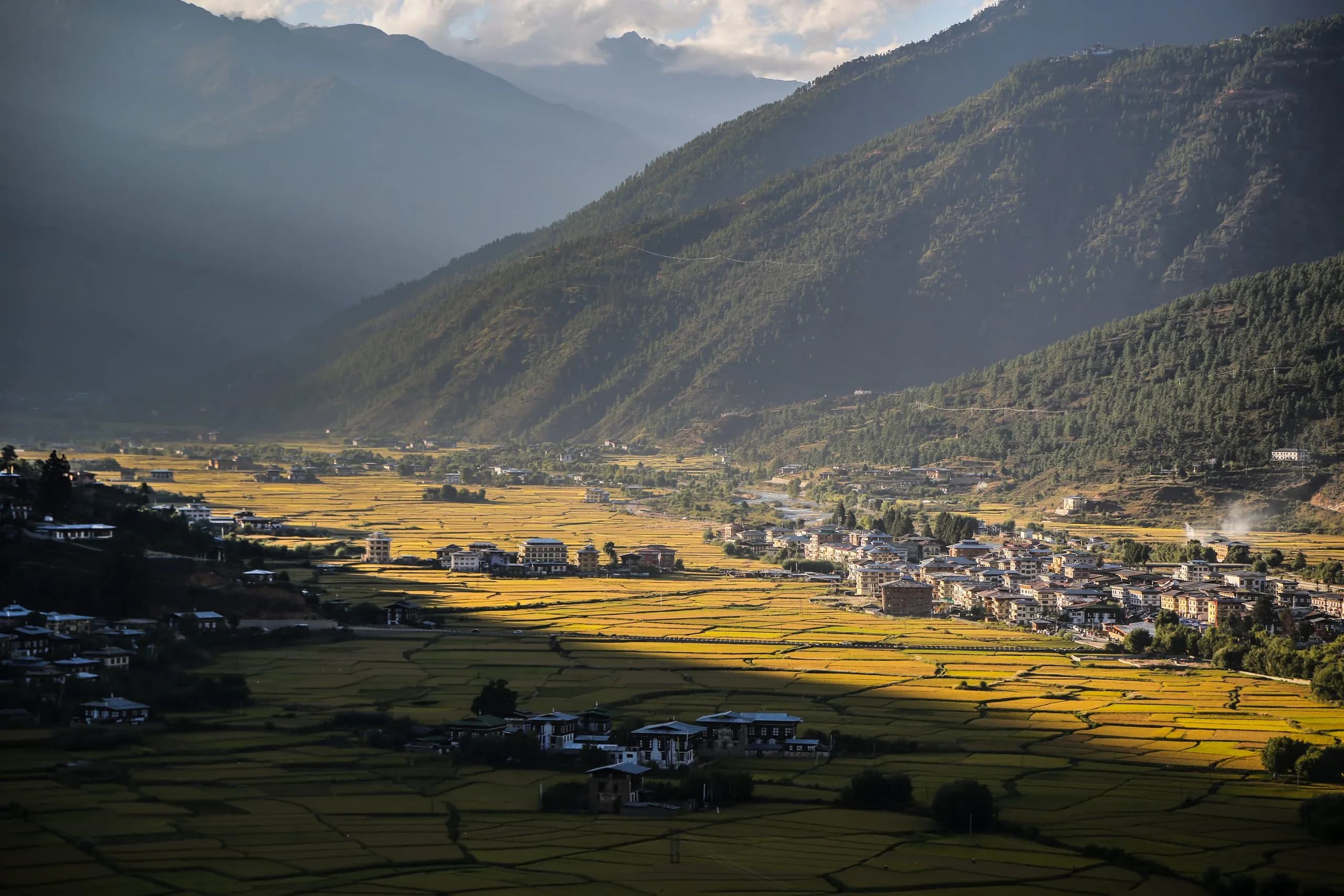 PlaceParo — Bhutan's gateway valley, the airport, the country's first impression.Paro valley — Bhutan's gateway, the only international airport, the Tiger's Nest monastery, Rinpung Dzong, Kyichu Lhakhang, the Chele La pass to Haa.
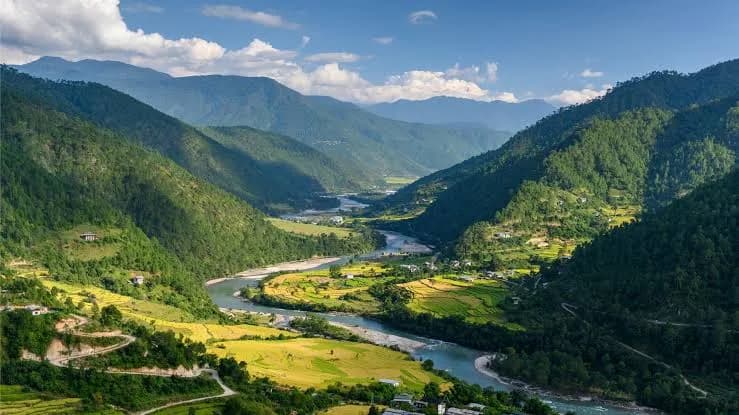 PlacePunakha — the warm valley, the country's historical winter capital, the Mo Chhu and Pho Chhu confluence.Punakha — Bhutan's warm valley at 1,200m, the historical winter capital, the dzong at the river confluence, Chimi Lhakhang (the Drukpa Kunley temple).
Journeys through here
 JourneyThimphu Tshechu, read properly.A seven-night Bhutan journey timed to Thimphu Tshechu in autumn — second-tier seating, a culturally fluent guide, Bhutanese lodges.
 JourneyThe signature-tier Bhutan journey — private knowledgeable guide, the most considered lodge curation, helicopter or charter between valleys, exclusive-use arrangements where the season allows.The signature-tier Bhutan journey. Private knowledgeable guide, the most considered lodges, helicopter or PC-24 charter, exclusive-use arrangements. By invitation, from USD 14,000.
 JourneySeven nights in Bhutan, on your terms.A private seven-night Bhutan honeymoon for couples flying from Singapore. Bhutanese lodges, a matched guide, transparent all-inclusive pricing.
Journeys that visit Thimphu
Frequently asked
- Is Thimphu worth more than two nights?
- For most visitors, no. Two nights covers the principal cultural sites; a third night adds depth at the textile academy, longer market time, or evening cultural programmes. Beyond three nights, the marginal return drops — better to add nights in Punakha or Gangtey.
- Does Thimphu have nightlife?
- Limited but present. A handful of restaurants stay open past 9pm; one or two clubs operate on weekends. Bhutan as a whole is not a nightlife destination. The matched guide can recommend the appropriate venues if requested.
- Where does the Royal Family live?
- Their Majesties' residence is at the Lingkana Palace area in southern Thimphu — not open to the public. Visitors do not encounter the Royal Family directly; royal sightings during the public festival days are occasional but not arranged.

