The accessible cultural trek
Bumthang Owl Trek — three days of moderate walking through Bumthang's pine forest and high meadow, named for the dawn-and-dusk owl chorus.
The Bumthang Owl Trek is the principal accessible multi-day trek of the central Bhutanese valleys — three days from Manchugang in the Choekhor valley over the ridge to the Tang valley, named for the substantial dawn-and-dusk chorus of owls that the surrounding pine forest holds. Maximum altitude 3,500 metres; moderate difficulty; substantial pine-forest character and notable encounter with the Bumthang religious landscape.
- Duration
- 3 days
- Max altitude
- 3,500 m
- Difficulty
- moderate
- Distance
- 43 km
- Region
- Bumthang (Choekhor, Tang valleys)
- Trailhead
- Manchugang, Choekhor valley (2,800 m)
- Trail end
- Mesithang, Tang valley (2,700 m)
- Best months
- March · April · May · September · October · November
- Walk type
- trek
The route, in brief
The trek begins at Manchugang in the Choekhor valley (a 30-minute drive from Jakar), climbs through pine and oak forest to Schonath (3,200m) on the ridge separating the Choekhor and Tang valleys, traverses the high pasture country with views into both valleys, and descends to Mesithang in the Tang valley near the head of the Mebar Tsho approach. Three days total; the principal altitude challenge is the Schonath ridge at 3,500 metres.
Why the Owl Trek is the Owl Trek
The trek's distinctive tradition is the substantial owl chorus that the surrounding pine forest holds — particularly at dawn and dusk on Days 1 and 2. Five species of owl are documented in the surrounding forest (the Himalayan Wood Owl, the Mountain Scops Owl, the Brown Wood Owl, and the Asian Barred Owlet are the most-heard), and the predawn chorus is one of the principal photographic and acoustic registers of the trek. The Bhutanese tradition holds owls as protector-spirits of the broader Vajrayana landscape; the abundance in this forest is held as auspicious. The trek's birding interest extends beyond owls — the lower forest holds the rufous-vented yuhina, the cutia, the spotted woodpecker, and on the high pasture days the Himalayan monal and the blood pheasant.
The Bumthang religious landscape
The Owl Trek crosses some of the most-revered religious landscape in Bhutan. The Choekhor valley below the trailhead is the home of jambay-lhakhang (the 659 CE Songtsen Gampo founding), kurjey-lhakhang (the Guru Rinpoche body-imprint cave), and tamshing-lhakhang (Pema Lingpa's principal seat). The Tang valley at the trek's conclusion holds Mebar Tsho — the burning lake where Pema Lingpa retrieved his first terma. Most itineraries combine the trek with two days of cultural-circuit visits before and after, giving the broader religious context the trek itself doesn't dwell on.
Day by day
- Day 1
Manchugang to Schonath
3,500 m · 15 km · 7 h walking
Climb through pine and oak forest to the Schonath ridge camp. Substantial dusk owl chorus.
- Day 2
Schonath to Tahung
3,200 m · 16 km · 7 h walking
Ridge traverse with views into both valleys; descent to Tahung high pasture.
- Day 3
Tahung to Mesithang, Tang valley
2,700 m · 12 km · 5 h walking
Final descent through pine forest to Mesithang. Vehicle pickup for the Tang valley.
Before you go
- Season
- March-May (spring rhododendron) and September-November (autumn clarity) are the principal windows. The trek is accessible year-round in clear-weather windows — even December-February the lower altitudes are not snow-affected, though the dawn temperatures drop substantially. June-August is monsoon; the trail can be muddy but the forest itself is at its dense-green peak.
- Fitness
- Moderate — accessible to most reasonably-fit walkers. Maximum altitude 3,500m; daily distances 12-16 km on well-defined trail. No prior multi-day trekking experience required. The trek is particularly well-suited as a first multi-day trekking experience; the moderate altitude and the cultural depth of the surrounding Bumthang circuit make this one of the more rewarding entry-level multi-day options in the country.
- Combine with the Bumthang circuit
- The Owl Trek pairs naturally with 2-3 days of Bumthang cultural-circuit visits — jambay-lhakhang, kurjey-lhakhang, tamshing-lhakhang, jakar-dzong, and Mebar Tsho. The full Bumthang stay including the trek is 5-7 days; this is the principal central-Bhutan deep-circuit experience.
- Combine with the festivals
- Bumthang's autumn festival window (late September - early October) includes tamshing-phala-choepa and jambay-lhakhang-drup. Trekkers who time the Owl Trek to the autumn festival window catch the principal religious events alongside the trek; demand is high in this configuration.
Monuments on the route
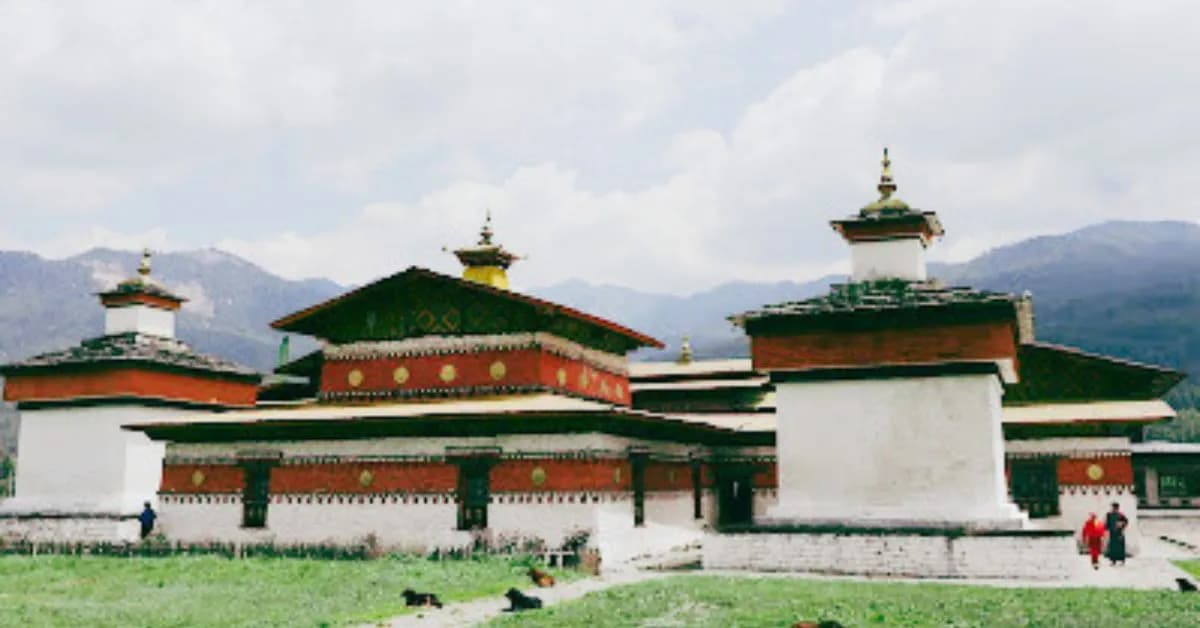 MonumentJambay Lhakhang — built by Songtsen Gampo to pin the left knee of the ogress whose body lay across the Himalaya.Jambay Lhakhang — Bhutan's oldest temple alongside Kyichu, founded by Songtsen Gampo in 659 CE. The Mewang fire ritual venue.
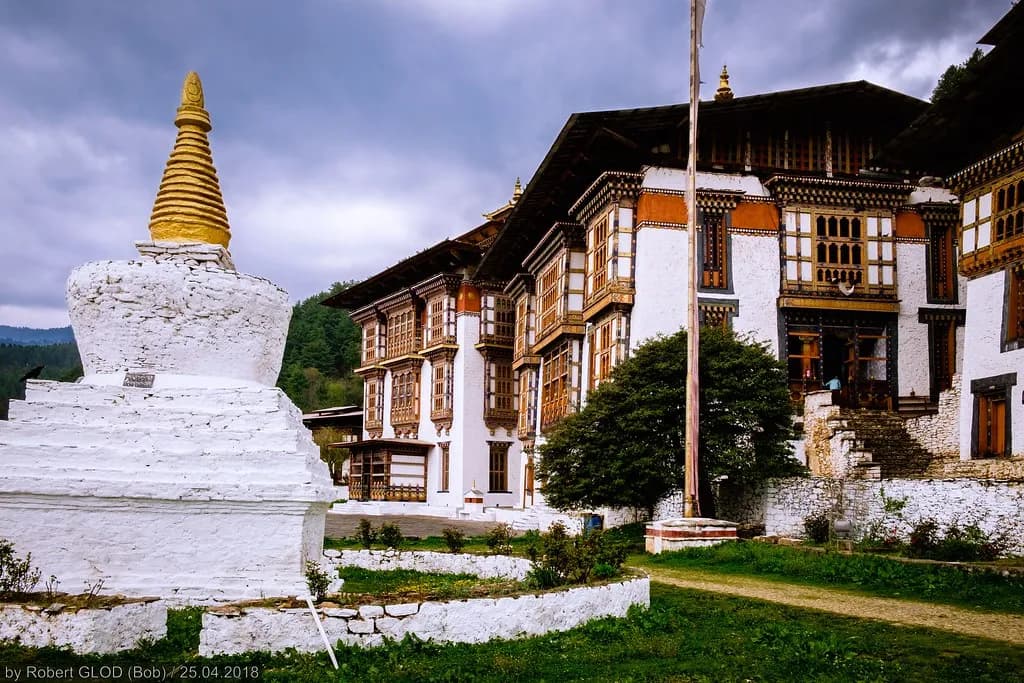 MonumentKurjey Lhakhang — the cliff cave bearing Guru Rinpoche's body imprint, in the Choekhor valley of Bumthang.Kurjey Lhakhang — the Bumthang cliff cave bearing Guru Rinpoche's body imprint. The three-temple complex, history, visiting.
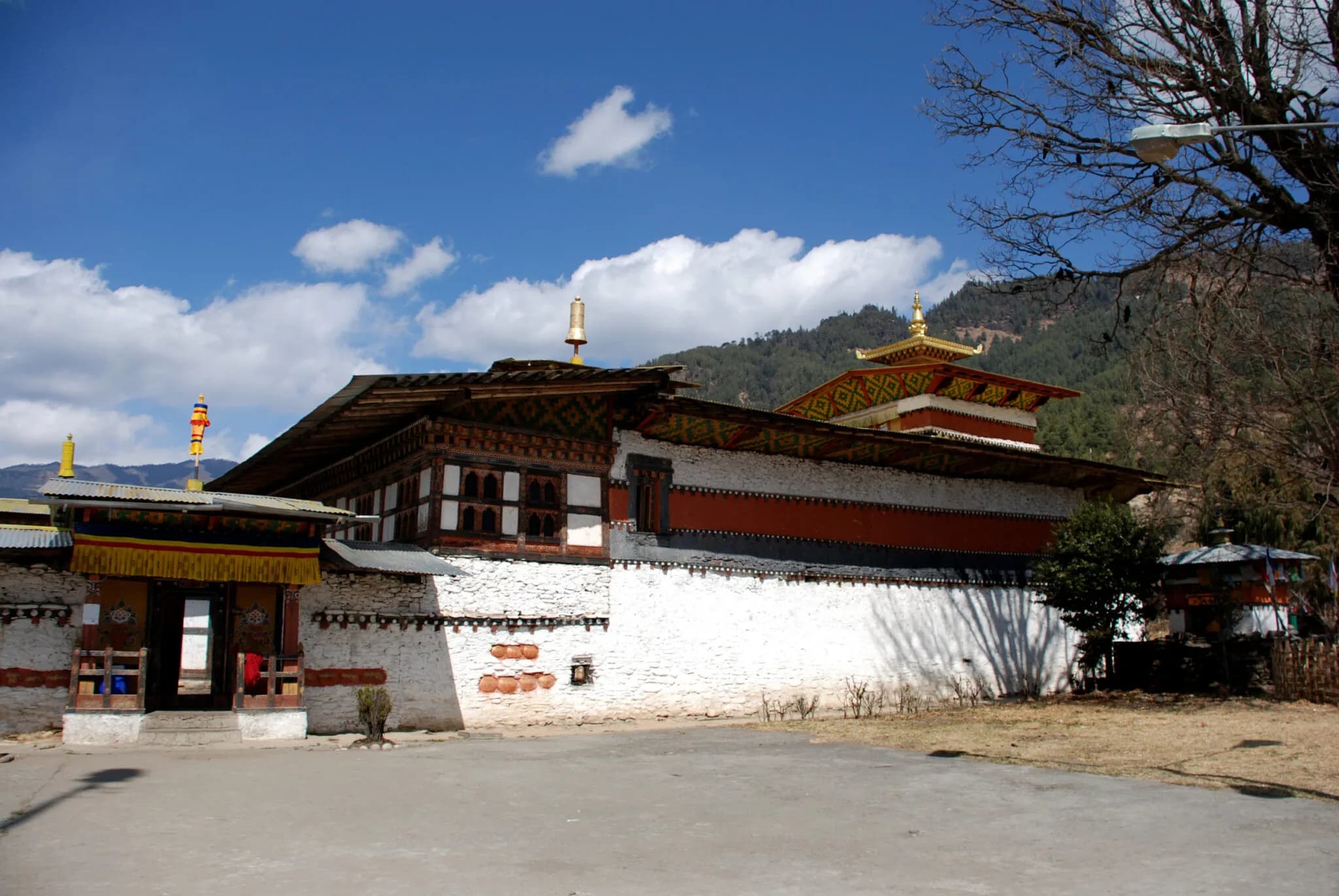 MonumentTamshing Lhakhang — founded in 1501 by the great Nyingma terton Pema Lingpa.Tamshing Lhakhang — the 1501 monastery of Pema Lingpa, in the Choekhor valley of Bumthang. History, the chain-mail vest relic, visiting.
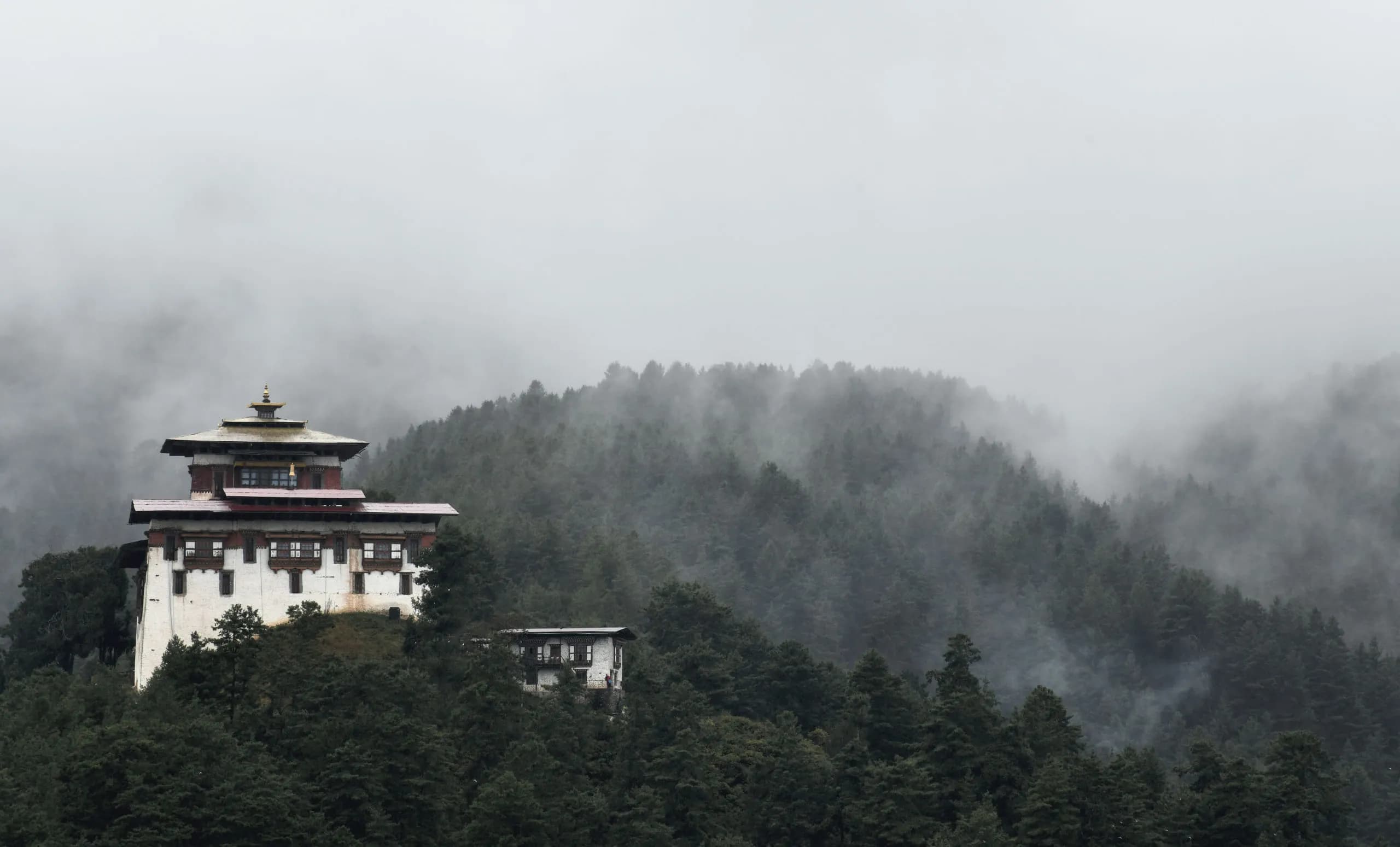 MonumentJakar Dzong — the 'dzong of the white bird,' founded 1549 by the Tibetan master Ngagi Wangchuck.Jakar Dzong — the dzong of the white bird, founded 1549. The administrative centre of Bumthang, history and visiting.
Festivals nearby
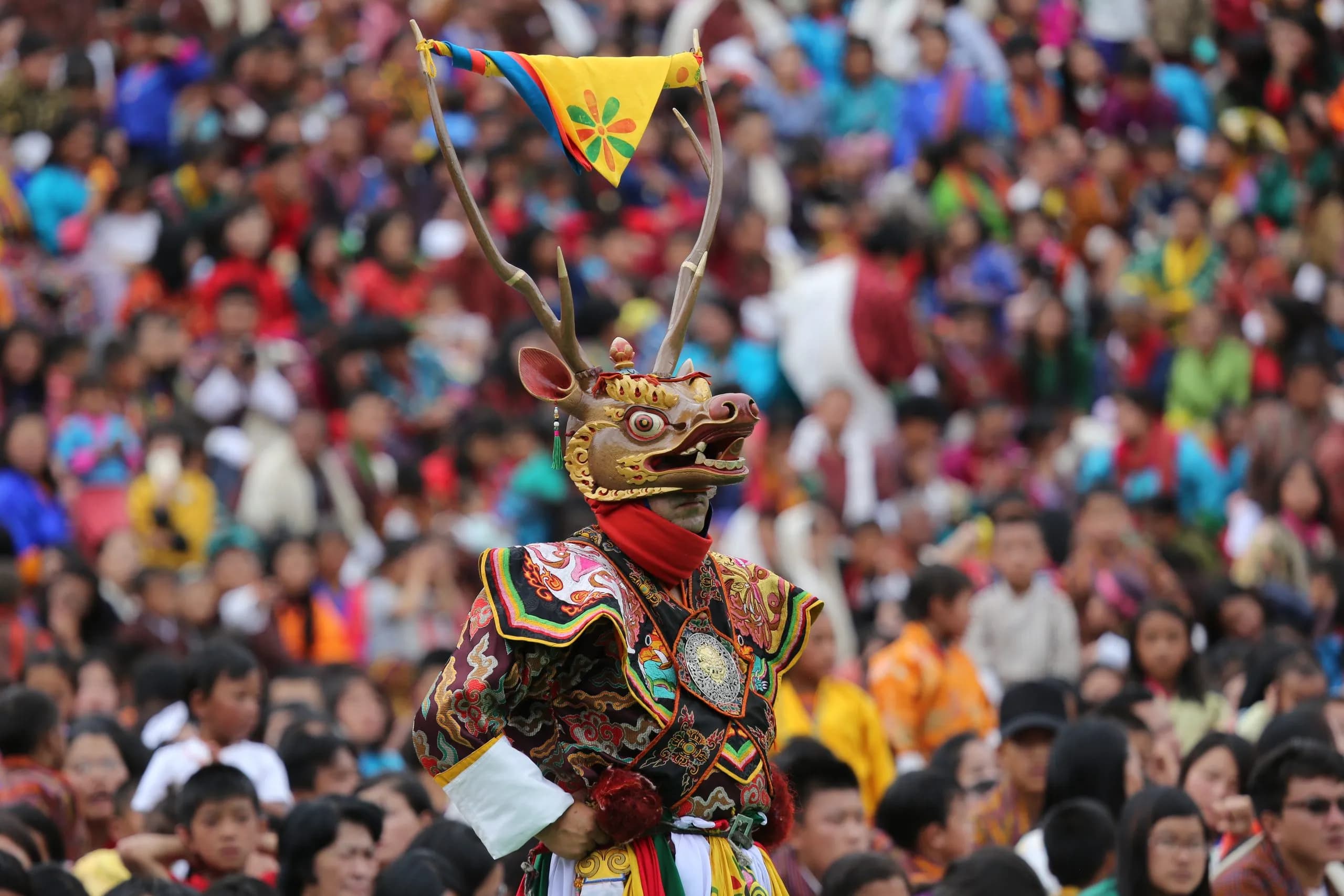 FestivalTamshing Phala Choepa — three days at the 15th-century Tamshing Lhakhang, founded by Pema Lingpa.Tamshing Phala Choepa — three days at the 15th-century Tamshing Lhakhang in Bumthang, founded by the terton Pema Lingpa. Dates, programme, what to expect.
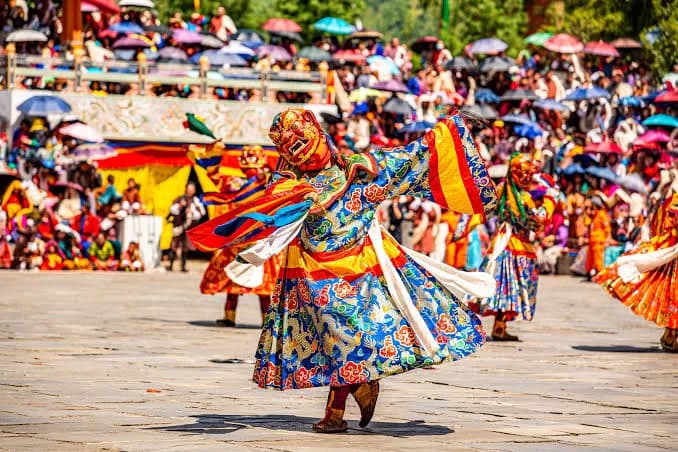 FestivalJambay Lhakhang Drup — five days in Bumthang, with the Mewang fire ritual.Jambay Lhakhang Drup — five days at Bumthang's oldest temple, including the Mewang fire ritual. Dates, programme, what to expect.
Journeys around this trek
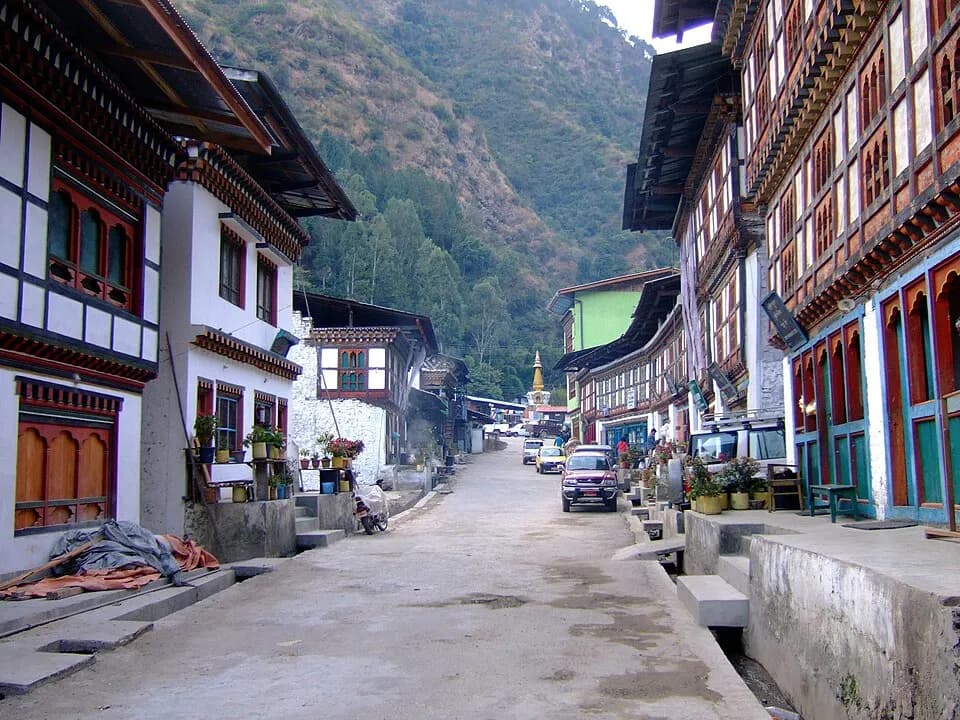 JourneyFourteen nights from Paro to Guwahati — the country as a single arc.A fourteen-night Bhutan east-to-west circuit exiting via Samdrup Jongkhar and Guwahati. The full eastern dzongkhags, the quieter half of the country.
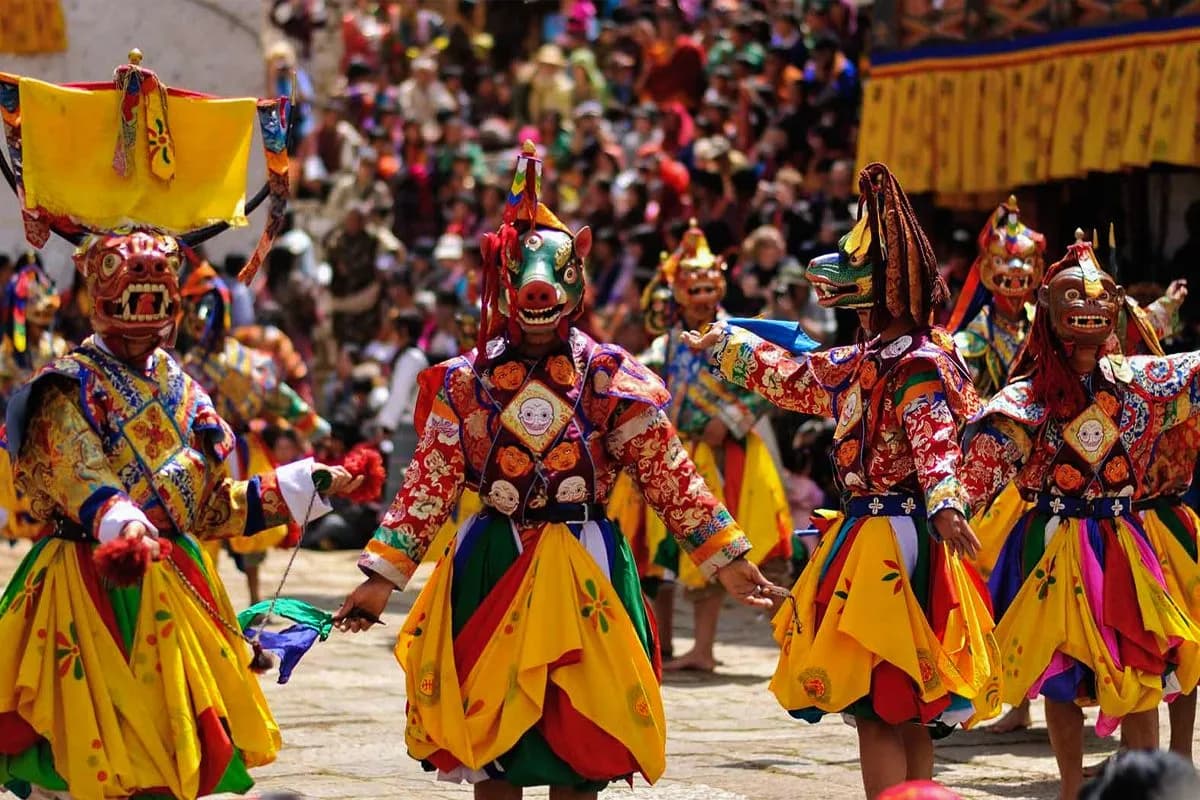 JourneyThimphu Tshechu, read properly.A seven-night Bhutan journey timed to Thimphu Tshechu in autumn — second-tier seating, a culturally fluent guide, Bhutanese lodges.
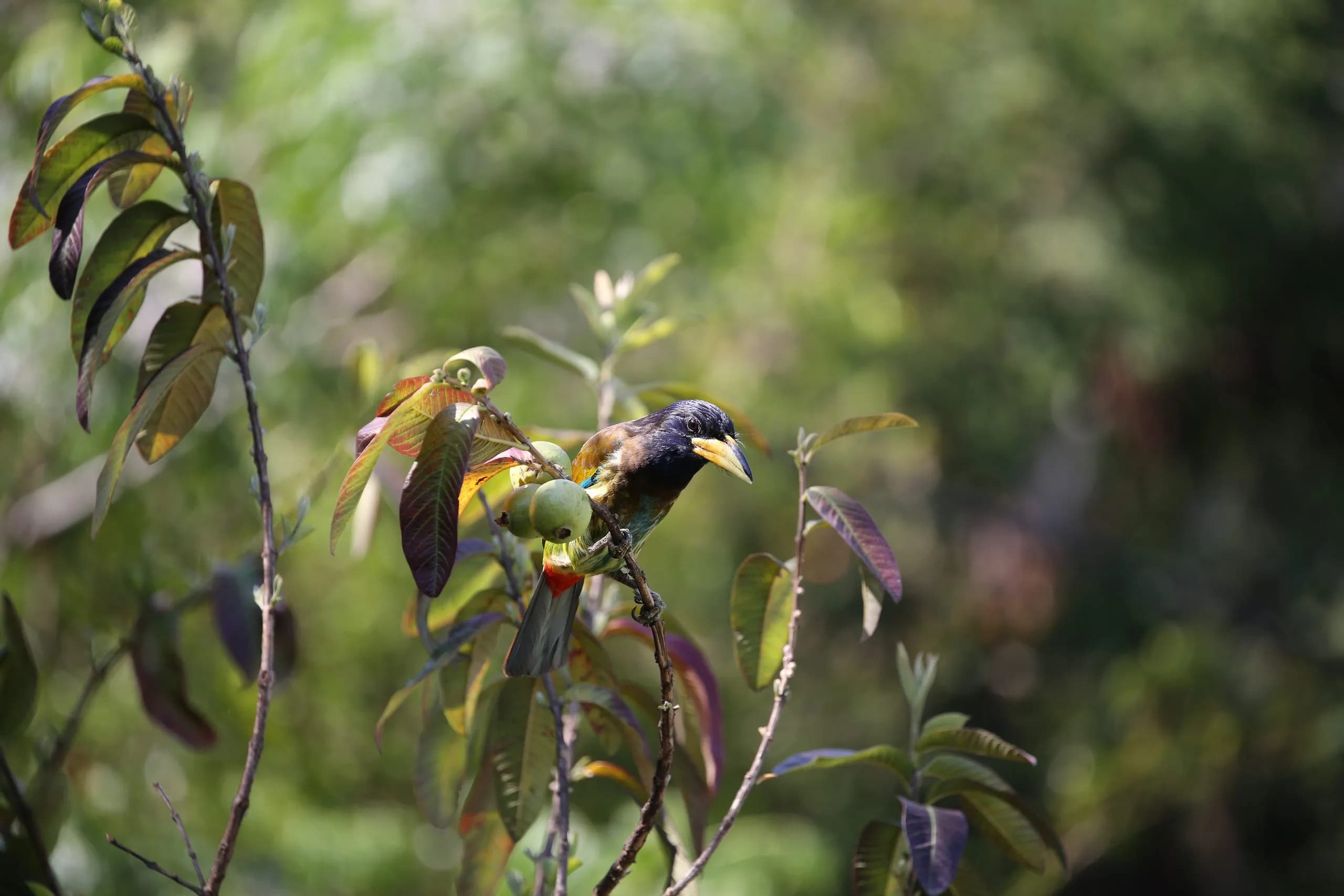 JourneyEight nights for the country's principal endemics — cranes at Phobjikha, the heron on the Punatsangchhu, the hornbills in the broadleaf belt.An eight-night Bhutan birding journey targeting the principal endemics — black-necked cranes at Phobjikha, white-bellied heron, hornbills, the beautiful nuthatch.
Frequently asked
- How difficult is the Bumthang Owl Trek?
- Moderate. Maximum altitude 3,500m; daily distances 12-16 km on well-defined trail; minimal exposure. The trek is accessible to most reasonably-fit walkers and is particularly well-suited as a first multi-day trekking experience or for visitors travelling with older or younger walkers.
- Will I see (or hear) owls?
- Hear, almost certainly. See, possibly. Five species of owl inhabit the surrounding pine forest; the dawn and dusk chorus is substantial on Days 1 and 2. The owls are heard more often than seen — they are forest birds active in low light — but the experienced trek leader will know the calling perches and can position for sighting if the visitor is interested.
- Can I combine the Owl Trek with the Bumthang cultural circuit?
- Yes — and we recommend it. The trek is in the same valleys as the Jambay, Kurjey, Tamshing religious circuit; the natural pairing is 2 days of cultural visits before the trek, 3 trek days, and 1-2 days of post-trek cultural in the Tang valley. The full Bumthang stay is 5-7 days.
- How do I get to Bumthang?
- Approximately 9 hours by road from Paro via Thimphu, Punakha, and Trongsa — typically broken across two driving days. There is also a domestic Drukair flight from Paro to Bumthang's Bathpalathang airport (operating in clear-weather windows). Many trekkers fly into Bumthang at the start of the trek and drive out via the central-valley route, or vice versa.
- Where do I sleep on the trek?
- Camp — two nights in expedition-grade insulated tent camps. Hot food at every camp. The lower-altitude profile of the Owl Trek means the camps are substantially warmer than the high-altitude treks; many trekkers find the trek a comfortable introduction to Bhutanese camp life.

