Planning your Bhutan journey
Bhutan vs Nepal — they are not the same trip; they are complementary trips.
Bhutan and Nepal are the two principal Himalayan-Buddhist destinations in Asia, frequently considered together by visitors planning a first Himalayan trip. They are not the same trip. Nepal is the principal trekking-and-altitude destination — Everest, Annapurna, the great trekking circuits, the chaotic-vivid Kathmandu cultural. Bhutan is the high-value-low-impact cultural-and-lodge destination — Tiger's Nest, the dzong tradition, the curated premium experience, substantially smaller visitor counts. The honest position: visit both, with Nepal first and Bhutan second.
- Register
- logistics
The short answer
They're complementary, not competitive. Nepal: trekking-first, lower-budget, chaotic-vivid Kathmandu, the great Himalayan trekking circuits (Everest, Annapurna). Bhutan: cultural-first, premium-tier, considered-quiet, the dzong tradition, exceptional lodges (Aman, Six Senses, COMO). Most visitors who do both prefer Bhutan as the second trip (after the trekking-heavy Nepal experience). Combined trips work — direct Drukair flights between Kathmandu and Paro make the connection straightforward.
The honest framing
Bhutan and Nepal are frequently asked-about together because both sit on the Himalayan Buddhist tradition, both have the high peaks, both are 'small Himalayan kingdoms' in the popular imagination. But the visitor experience is different. Nepal is the trekking destination: the Everest region, the Annapurna circuit, the great trekking infrastructure, the chaotic-vivid Kathmandu cultural, the substantial international visitor count (over 1 million arrivals per year). Bhutan is the cultural-and-lodge destination: the curated cultural circuit, the considered-quiet, the substantially smaller visitor count (~300,000 arrivals per year), the high-value-low-impact policy that keeps the country uncrowded. They're not competing trips; they're complementary ones, suited to different moments in a traveller's life.
When to choose Nepal
If you've come for the trekking — Nepal is the principal Himalayan trekking destination. The Everest Base Camp trek (12-14 days), the Annapurna Circuit (12-18 days), the Manaslu Circuit, the Upper Mustang trek — these are world-renowned routes with extensive lodge infrastructure (the 'teahouse' system) that makes the trekking economy genuinely accessible. If you want the chaotic-vivid cultural register — Kathmandu's Thamel district, the Durbar Squares of Kathmandu, Bhaktapur, and Patan, the dense urban Buddhist-Hindu syncretism — Nepal delivers a register Bhutan deliberately does not have. If your budget is moderate — Nepal's tourism is structured around a broad budget range (USD 50-200 per day per traveller is feasible for a comfortable mid-range trip); Bhutan is structurally a premium-tier destination (USD 500+ per day per traveller minimum). If you have a shorter window — Nepal accommodates 3-5 day visits comfortably (Kathmandu + a short hike); Bhutan's structural minimum is 5-7 nights.
When to choose Bhutan
If you've already done the Himalayan trekking in Nepal or elsewhere and are ready for the cultural depth — Bhutan delivers a Buddhist-cultural register that Nepal's trekking-heavy focus doesn't quite reach. The continuous Vajrayana tradition, the unbroken Royal dynasty, the dzong architecture, the festival cycle. If privacy and the quiet register matter — Bhutan's high-value-low-impact policy keeps the country uncrowded; even Tiger's Nest at peak visitor moment is a fraction of the density of Kathmandu's Durbar Square. If you value the lodge experience — the three principal global luxury brands (Aman, Six Senses, COMO) have their flagship Asian properties in Bhutan; Nepal's premium lodge infrastructure is substantially thinner. If you want a country that has consciously chosen a different development path — Bhutan's carbon-negative status, the Gross National Happiness framework, the constitutional monarchy that has actively transferred power to democracy — these are the country's distinctive substance, not its branding.
The combined trip
Many visitors do both, and the combined trip works well. Drukair operates direct flights between Kathmandu (KTM) and Paro (PBH) — approximately 1 hour, multiple times per week. The visa and SDF processes can be handled by the Bhutanese operator while the visitor is in Nepal. Standard combined-trip shape: 7-10 nights Nepal (Kathmandu + Pokhara + a short hike or Everest Base Camp trek) → 1-night Kathmandu transition → 7-10 nights Bhutan (Bhutan + Phobjikha or Bumthang). Total: 14-21 nights. Order: Nepal first, Bhutan second — works better than the reverse, because Nepal's chaotic-vivid energy and altitude exposure prepares the visitor for the cultural and altitude registers of Bhutan, and Bhutan's quiet considered close is a comfortable conclusion to a long Himalayan trip.
What each does better — the specific comparisons
Trekking: Nepal wins decisively. The trekking infrastructure (teahouse lodges), the route variety (Everest, Annapurna, Manaslu, Mustang, Langtang, dozens more), and the trekking-economy depth are all substantially deeper than Bhutan's. Cultural depth: a draw — different registers. Nepal's syncretic Buddhist-Hindu tradition is richer; Bhutan's continuous Vajrayana tradition is purer and more accessibly framed. Premium lodge experience: Bhutan wins decisively (Aman, Six Senses, COMO flagships). Photographic content: a draw — different subjects. Nepal's chaos-and-density vs Bhutan's quiet-and-considered. Crowding: Bhutan wins decisively (perhaps 1/4 the visitor density). Cost: Nepal wins decisively (USD 50-200/day mid-range vs Bhutan's USD 500+/day premium). Altitude exposure: Nepal goes higher (Everest Base Camp at 5,360m; standard Annapurna Circuit highest point at 5,416m vs Bhutan's standard cultural circuit at 3,000m and the high-altitude Snowman at 5,320m). Food: Nepal's dal-bhat tradition is more accessible; Bhutan's chilli-and-cheese cuisine is more distinctive but less varied.
Practical
- Bhutan visitor count (annual)
- ~300,000 international
- Nepal visitor count (annual)
- ~1,000,000+ international
- Bhutan typical daily cost
- USD 500+ per traveller (premium tier)
- Nepal typical daily cost
- USD 50-200 per traveller (mid-range)
- Direct flights Kathmandu ↔ Paro
- Yes — Drukair, ~1 hour, multiple per week
- Combined-trip standard length
- 14-21 nights total
- Order recommended
- Nepal first, Bhutan second
Walks it mentions
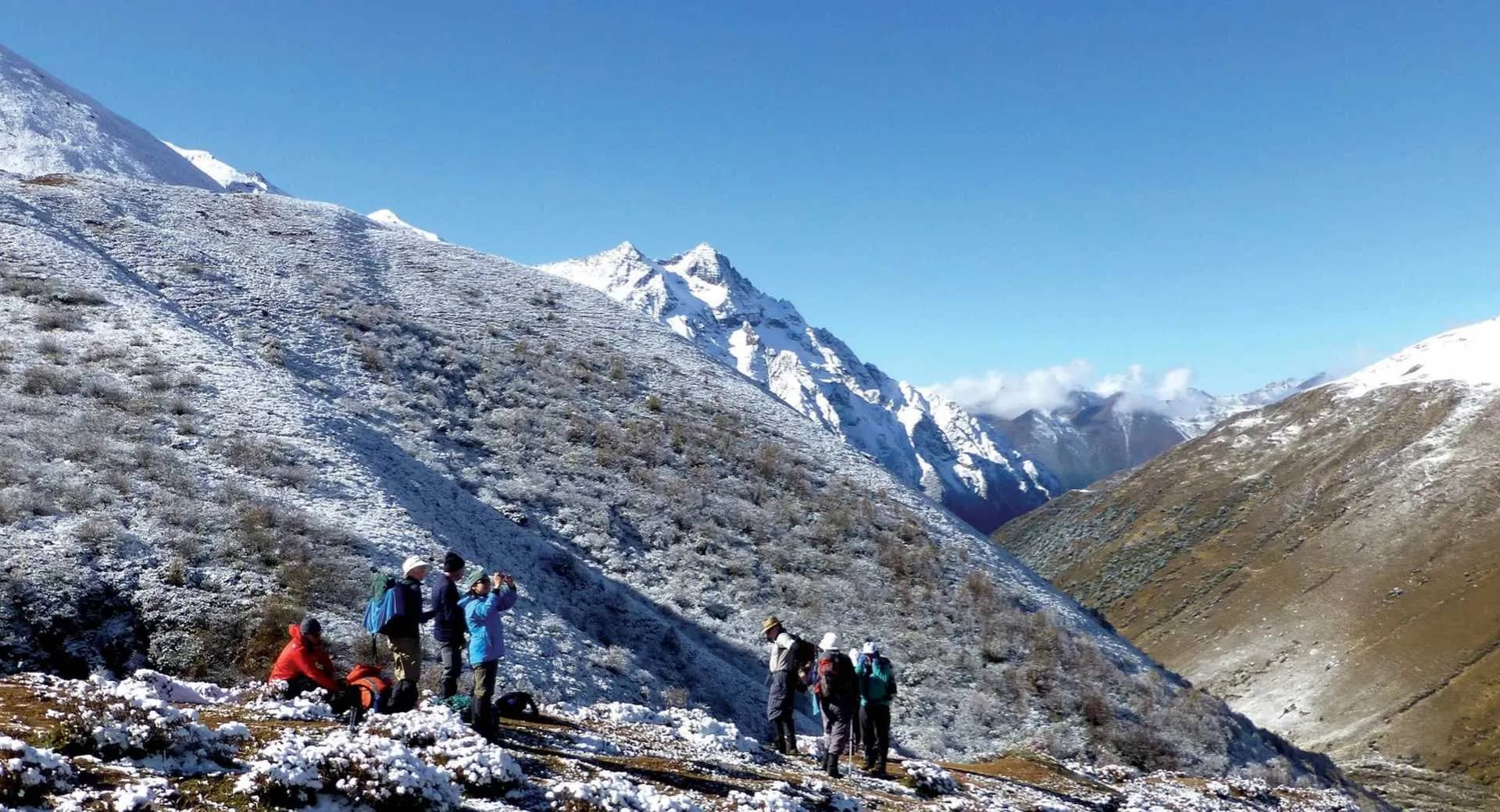 TrekSnowman Trek — 23 days across the Lunana glaciers, eleven high passes, the high-altitude expedition the Bhutanese tradition still calls a pilgrimage.Snowman Trek — 23 trekking days, ~345 km, 5,320m max altitude, eleven Himalayan passes across the high north of Bhutan. Route, season, preparation.
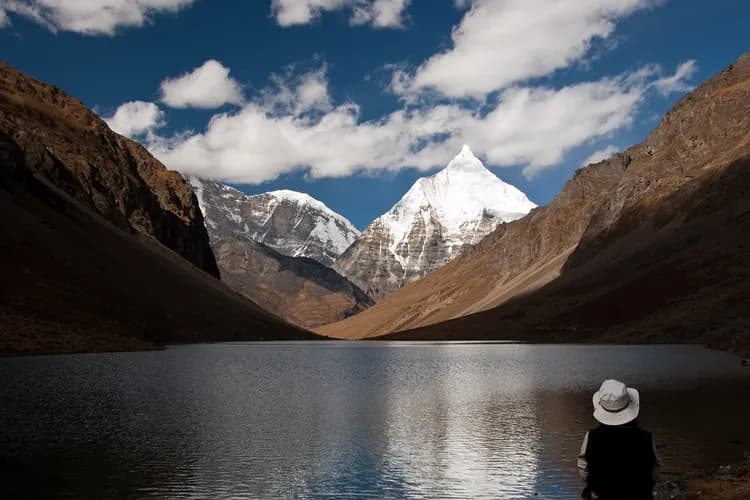 TrekChomolhari Lingshi Trek — six days, max altitude 4,900 m at Bonte La, the principal direct view of Chomolhari (7,326 m).Chomolhari Lingshi Trek — six days at 2,900–4,900 m, the principal view of Chomolhari, the high pasture country of Lingshi. Paro to Thimphu via Lingshi.
Journeys it informs
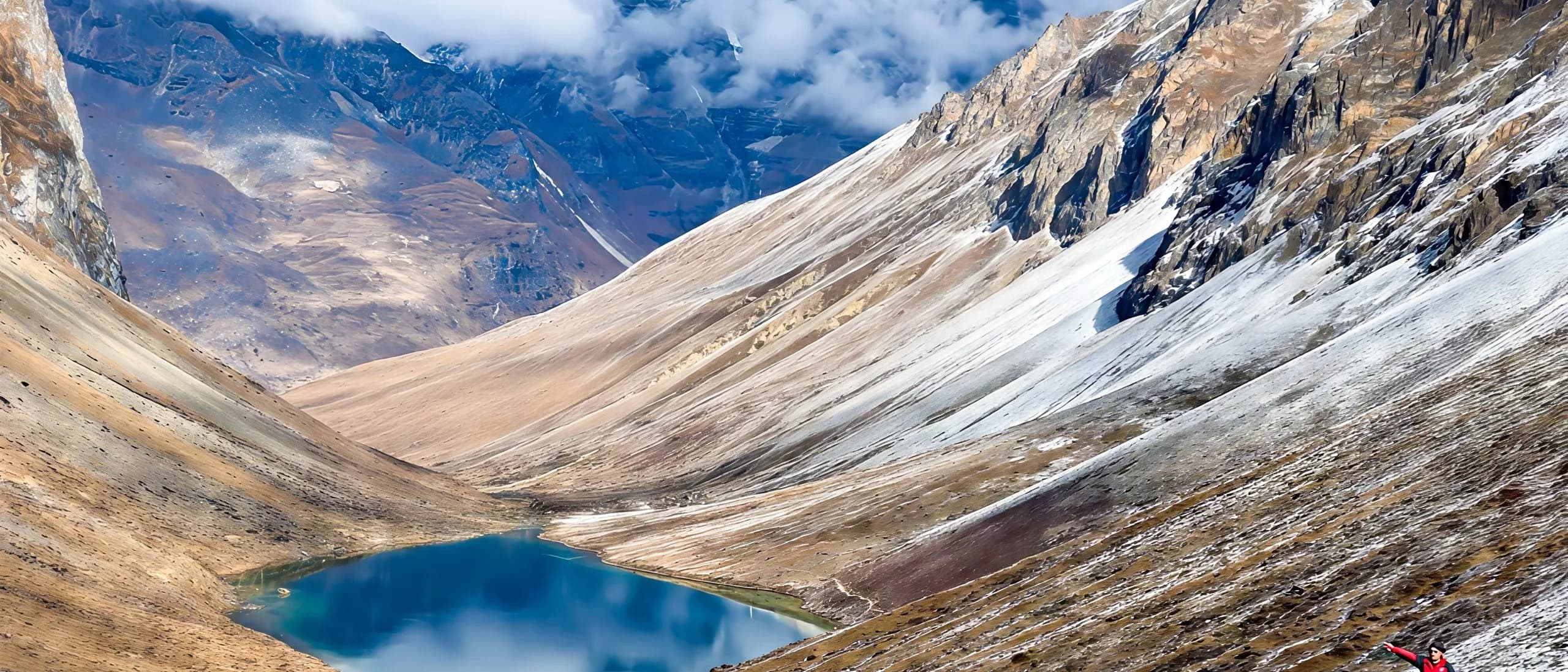 JourneyFourteen nights for the Chomolhari Trek — the Bhutanese alternative to Annapurna.A fourteen-night Bhutan Chomolhari Trek itinerary positioned as the Bhutanese alternative to Nepal's Annapurna Base Camp or Annapurna Circuit. Substantially less crowded.
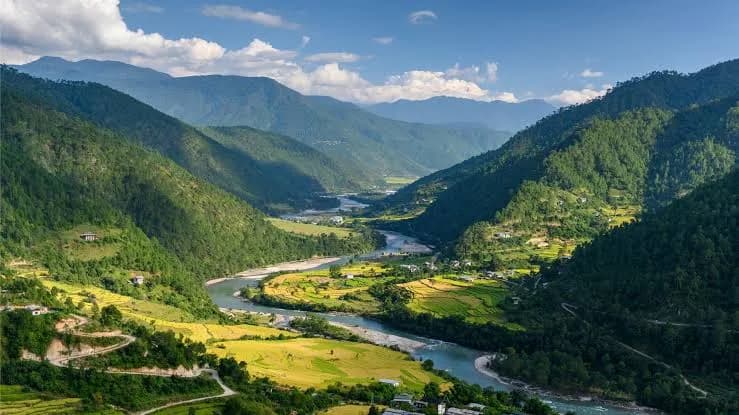 JourneySeven nights in Bhutan, for the traveller who has done Kyoto.A seven-night Bhutan journey for travellers who have done Japan and want the next-step Asian-Buddhist destination. Tokyo departure; cultural depth.
Frequently asked
- Should I visit Bhutan or Nepal?
- Both, if your travel arc allows — they're complementary, not competitive. If forced to choose one, the question is what you've come for. Trekking and the chaotic-vivid cultural register: Nepal. The considered premium cultural circuit, the dzong tradition, the substantially uncrowded register: Bhutan. If this is your first Himalayan trip and trekking is part of the interest, Nepal first. If you're already familiar with the Himalayan trekking and want depth: Bhutan.
- Is Bhutan more expensive than Nepal?
- Yes, substantially. Bhutan's high-value-low-impact tourism policy and the USD 100/night SDF structure mean the per-traveller-per-day cost starts at approximately USD 500 (premium tier) and runs to USD 2,000+ (luxury tier). Nepal's mid-range comfortable trip runs USD 50-200 per day per traveller. The difference reflects deliberate Royal Government policy in Bhutan to keep visitor counts moderate and revenue-per-visitor high.
- Can I do Everest Base Camp from Bhutan?
- Everest Base Camp itself is in Nepal — the EBC trek starts and ends in Nepal. The Royal Government of Bhutan has prohibited climbing all Bhutanese peaks above 6,000 metres since 1994, so there is no equivalent Everest-tier expedition in Bhutan. The closest Bhutanese trekking experience is the Snowman Trek (the highest, most-demanding multi-day route in Bhutan; max altitude 5,320m). For Everest Base Camp specifically, fly Kathmandu first and combine with Bhutan afterwards.
- Do I need a visa for both?
- Yes — separate visa processes for each country. Bhutan: USD 40 e-visa, processed by your Bhutanese tour operator, granted on arrival at Paro. Nepal: USD 25-50 visa-on-arrival at Kathmandu (Tribhuvan International Airport) or any land border; multiple-entry options available. The Bhutanese SDF (USD 100/night) is separate from the visa fee.
- Are the people similar?
- Not really. Bhutanese and Nepalese are distinct ethno-linguistic groups with different histories. Bhutanese identity is shaped by the Vajrayana tradition, the Wangchuck dynasty, and the country's deliberate cultural isolation; Nepalese identity is shaped by the syncretic Buddhist-Hindu tradition, the multi-ethnic Newar/Sherpa/Tamang composition, and the country's long history of being on the trade route between India and Tibet. The cultural registers feel notably different on the ground.
- What about combined Bhutan + Sikkim + Nepal trips?
- Possible and rewarding for the visitor interested in the full Himalayan Buddhist arc. Standard shape: Nepal (Kathmandu, Pokhara, optional EBC trek) → fly to Bagdogra → drive into Sikkim (Gangtok, Pelling, Yuksom for the West Sikkim trek) → drive back to Bagdogra and fly to Paro → Bhutan (Bhutan + optional Bumthang) → fly home. 21-28 nights total. The trips share the Vajrayana; the political and cultural specifics differ substantially.

