Planning your Bhutan journey
Bhutan with children — a notably family-friendly destination, with altitude as the principal consideration.
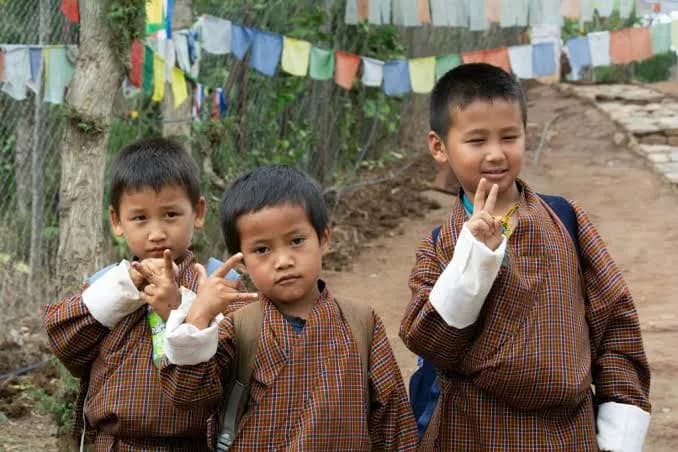
Bhutan is a notably welcoming destination for families with children — the Bhutanese cultural tradition is family-centred, lodges are equipped for multigenerational groups, monastery visits are tolerant of children, and the SDF concession (50% rate for ages 6–12, exempt under 6) materially reduces the cost. The principal consideration is altitude — Bhutan and the central valleys sit between 1,200 and 3,000 metres, well-tolerated by most children, but not without preparation.
- Register
- family
The short answer
Bhutan is family-friendly. Best ages: 7+ for the cultural circuit, 12+ for any high-altitude or trekking add-on. SDF concession: 50% for children 6–12, exempt under 6 (substantial cost reduction for families). Altitude is the principal consideration — Bhutan (Paro, Thimphu, Punakha, Phobjikha) is well-tolerated. School visits, traditional crafts workshops, and family-style meals are widely available. The Bhutanese cultural register welcomes children.
Best ages for Bhutan
Under 6: SDF-exempt and welcomed by lodges, but the cultural circuit's pace and content (monastery visits, history-heavy explanations, long drives) are challenging for very young children. Most operators steer families with under-6 children toward the abbreviated Bhutan (3-4 nights Paro + Thimphu) and recommend waiting until 7+ for the fuller experience. 7-12: the cultural works well — children at this age engage with monastery visits, the Tiger's Nest hike (with breaks and depending on fitness), the village walks, and the textile/painting workshops. The Bhutanese hospitality protocol is particularly warm at this age range. 12+: full cultural circuit, including the day-hikes (Tiger's Nest, Wangditse, Cheri/Tango). Family-friendly multi-day treks (Bumthang Owl Trek, Punakha Winter Trek) work from 14+ with reasonable fitness. Teenagers: the eastern circuit, the Bumthang religious depth, the high-altitude day-hikes — all open up. High-altitude treks (Druk Path, Chomolhari, Snowman): we recommend 16+ as a baseline.
The altitude consideration
Bhutan sits between 1,200 and 3,100 metres — well-tolerated by most children but worth approaching with care. Acclimatisation profile for families: 2 nights Paro (2,200m) on arrival, 1 night Thimphu (2,300m), then down to Punakha (1,200m, easier altitude) for 2 nights, then back up to Phobjikha (3,000m) only if the family is well. Skip Phobjikha for very young children or first-time high-altitude families. Symptoms to watch for: headache, nausea, sleep disruption, loss of appetite. Mild symptoms are common and manageable; significant symptoms (severe headache, vomiting, breathlessness at rest) need descent. The operator's guide carries a pulse oximeter and is trained in altitude assessment. High-altitude day-hikes (Tiger's Nest 3,120m, Wangditse 2,650m): suitable for children 8+ with good fitness; pace the hike, allow plenty of breaks, turn back at any signs of altitude distress.
What children find compelling
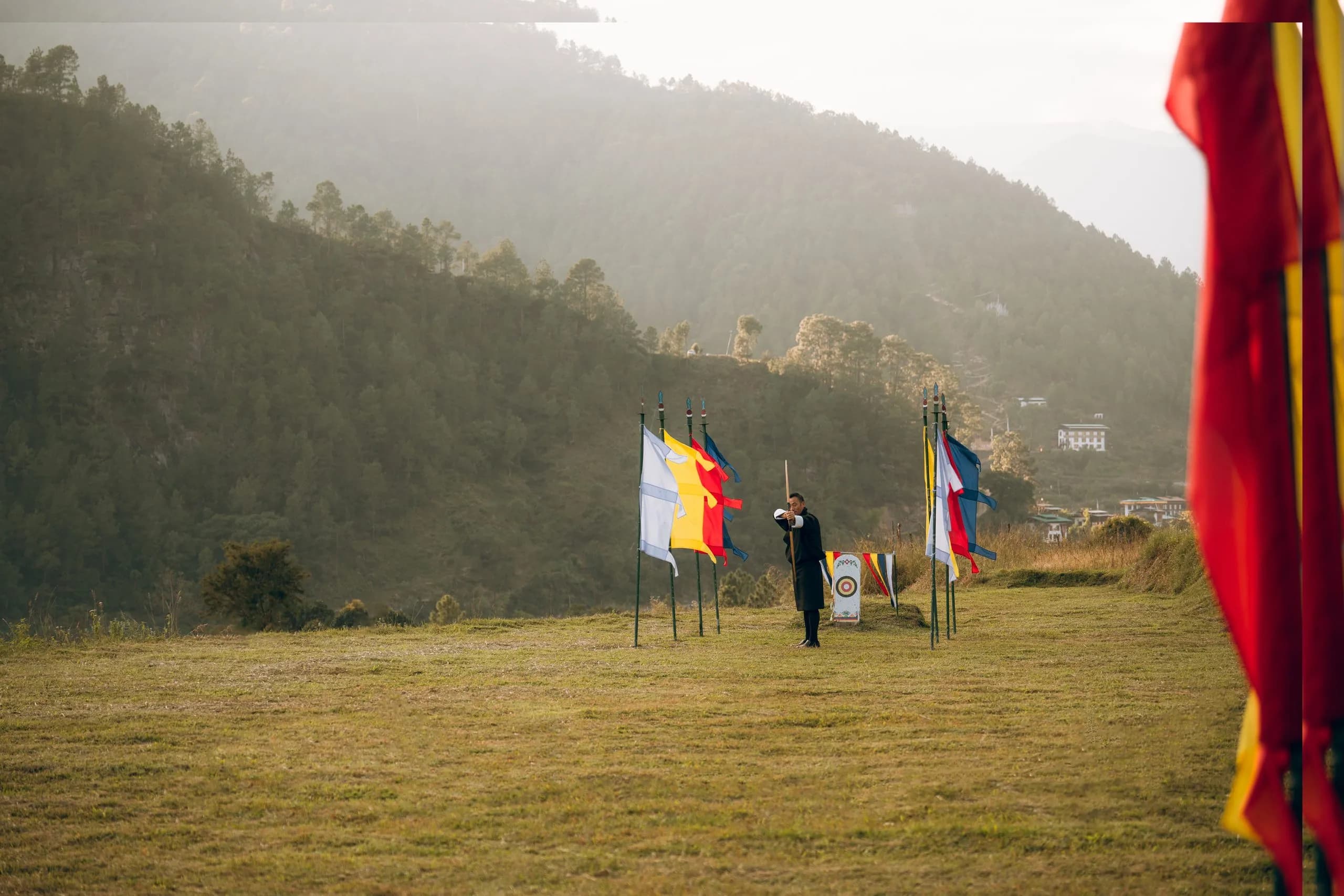
Bhutanese cultural content engages children differently than typical European or Asian cultural sites. The dzongs are large, dramatic, full of murals and statues — the visual scale catches attention. The Tiger's Nest hike is a tangible achievement; the cliff-face setting captures imagination. The Buddha Dordenma is enormous (51.5m) and visually striking. The textile and painting workshops (Choki Traditional Art School, Royal Textile Academy) offer hands-on engagement. The takin preserve above Thimphu — the takin is Bhutan's national animal, a goat-antelope hybrid that children find fascinating. The traditional Bhutanese hot stone bath at the lodges — children enjoy the novelty (heated river stones dropped into a wooden tub of water, surrounded by Artemisia herbs). Archery exhibitions — Bhutan's national sport, the long-distance archery format is dramatic to watch. Village walks with proper introduction — the Bhutanese village tradition is warm and the children of the village often welcome visiting children.
Family-friendly lodges
Premium lodges with strong family setups: Amankora properties (family suites at all five lodges), COMO Uma Paro (family suites + the children's activity programme), Six Senses Paro/Thimphu/Punakha (interconnected rooms, family-style dining), Zhiwa Ling Heritage in Paro (multi-bedroom suites in traditional Bhutanese architecture). Mid-range family-friendly: Bhutan Spirit Sanctuary in upper Paro (substantial property with grounds for children to explore), Dhensa Boutique Resort in Punakha (riverside setting with garden), Gangtey Lodge in Phobjikha (family suites with crane-valley views). All premium lodges in Bhutan have child-friendly menus, early-evening children's meals, and babysitting services on request.
Practical considerations — food, school visits, evening ritual
Food for children: Bhutanese cuisine is hot — premium lodges adjust the heat for children without difficulty. The standard family menu includes mild versions of the principal dishes (mild ema datshi, plain red rice, pork or chicken without chillies). Pasta and continental options are also widely available. School visits: a notable Bhutanese-cultural experience — most lodges arrange a visit to a local primary or secondary school. The children of the visiting family typically spend an hour in a classroom with their Bhutanese peers, share a meal, and exchange notes. Profoundly memorable for most families. Evening register: Bhutanese evenings are quiet by design — the towns close early (8-9 pm typical), and the cultural is family-dinner-and-early-bed rather than nightlife. This works well for families with younger children. Drive times: factor in the substantial driving days (Paro to Punakha 3 hours, Punakha to Phobjikha 3 hours, Phobjikha to Bumthang 5 hours). Children with motion sickness should pre-medicate; the mountain roads are winding.
Practical
- SDF children 6–12
- 50% of applicable rate (USD 50/night for international)
- SDF children under 6
- Exempt
- Visa fee
- USD 40 per person, all ages
- Best age for cultural circuit
- 7+
- Best age for Tiger's Nest
- 8+ with good fitness
- Best age for multi-day trek
- 14+ for low-altitude; 16+ for high-altitude
- Family suites
- Available at all premium lodges with advance booking
Walks it mentions
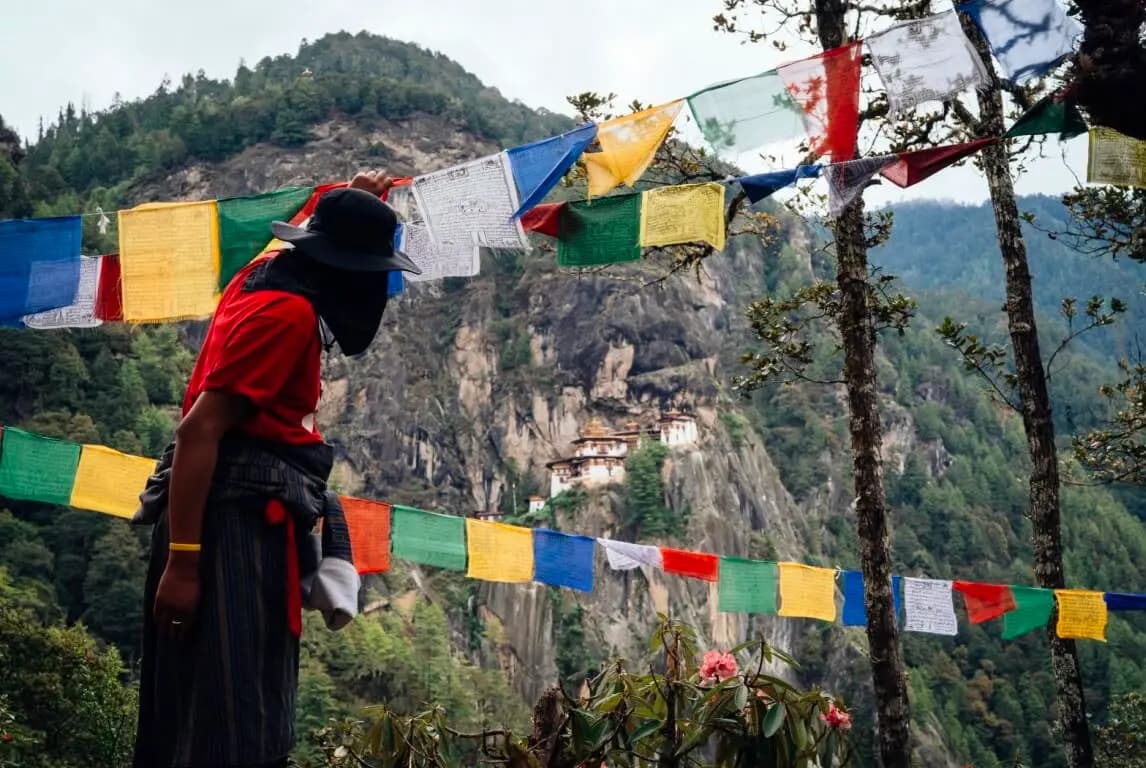 TrekTiger's Nest Day Hike — three hours up, two hours down, the cliff-face approach to Paro Taktsang.Tiger's Nest day hike — the route, the cafeteria stop, what to know. Three hours up, two hours down, 520m elevation gain. Trailhead, fitness, gear.
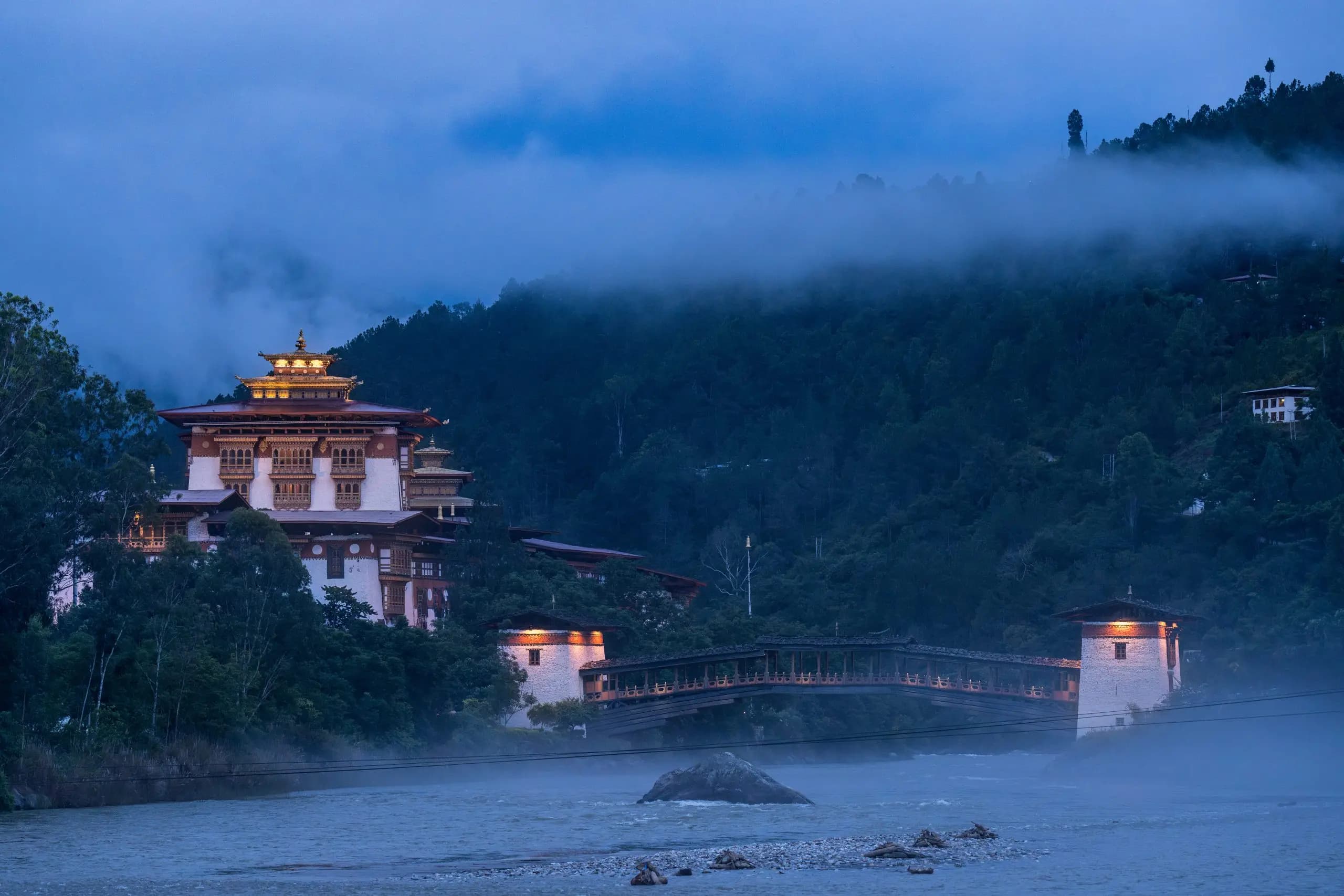 TrekPunakha Winter Trek — three days through the Punakha valleys at 1,200–2,000 metres, accessible in the deep clear-sky December-February window.Punakha Winter Trek — three days at 1,200–2,000 m in the warm Punakha valleys, accessible in the December-February window. Route, season, fitness.
- TrekBumthang Owl Trek — three days of moderate walking through Bumthang's pine forest and high meadow, named for the dawn-and-dusk owl chorus.Bumthang Owl Trek — three days at moderate altitude in central Bhutan. Pine forest, the owl chorus, Bumthang's religious landscape. Route, season.
Journeys it informs
 JourneyA family week in Bhutan, paced for everyone.A seven-night Bhutan family trip from Hong Kong. Bhutanese lodges, light treks for children 7+, a family-tested guide, transparent pricing.
- JourneyNine nights in Bhutan, for a family from London.A nine-night Bhutan family trip from London for autumn half-term. Bhutan including Phobjikha; teenager-friendly light treks; matched knowledgeable guide.
 JourneyNine nights in Bhutan, for a German family flying from Munich.A nine-night Bhutan family trip for German families from Munich. Bhutan including Phobjikha; child-appropriate light treks; matched knowledgeable guide.
Frequently asked
- Is Bhutan safe for children?
- Yes — exceptionally so. Bhutan is one of the safest destinations in Asia for children, with a culture that is genuinely welcoming to families, very low crime, and a tourism infrastructure built around personal guides and trusted operators. The Royal Government's high-value-low-impact tourism policy means children travel with their family group throughout; no crowded public transport, no chaotic markets, no anonymous large-group tours. The principal child-safety considerations are altitude (covered above) and the mountain roads (managed by the operator).
- What's the SDF for children?
- Children 6–12 pay 50% of the applicable adult SDF rate — USD 50 per night for international visitors. Children under 6 are exempt entirely. This is a substantial cost reduction for families: a 5-night Bhutan trip for two adults and two children (one 8 years old, one 4 years old) pays the SDF for the two adults + 50% for the 8-year-old + nothing for the 4-year-old, rather than four full SDFs.
- Will children be bored at the monasteries?
- Some will; most surprisingly aren't. The Bhutanese monasteries are dramatic spaces full of imagery — wrathful deities, gilded statues, mural cycles — that engage children visually. A good guide pitches the explanation at the child's age and includes the story-elements (the Guru Rinpoche flight on a tiger, the Drukpa Kunley legend, the founding of the dynasty). The pace matters: 30-45 minute monastery visits, not 2-hour ones; intersperse with outdoor walking, town visits, and active experiences.
- Can children do the Tiger's Nest hike?
- Children 8+ with reasonable fitness routinely complete the Tiger's Nest hike. The 4-km switchback trail with 520m elevation gain is moderate; the principal challenge is altitude (3,120m at the monastery). Plan a full day, multiple breaks, lunch at the mid-route cafeteria, and a possibility of turning back if needed. Horses are available for the lower section to the cafeteria. The hike is a substantial family achievement.
- Are there any places we shouldn't bring children?
- Very few. The Tercham (naked-dance) night session at the Jambay Lhakhang Drup festival is the one specific example — held in the small hours, restricted photography, religious in. Most visitors with children skip the small-hours session and attend only the daytime chams. The other consideration is the high-altitude trekking — multi-day treks are not recommended below age 14, and high-altitude treks (Druk Path and above) not below 16.
- What should I pack for children specifically?
- Layers (the altitude variation matters as much for children as adults), modest clothing for monastery visits, sturdy walking shoes, sun protection (the altitude makes UV strong), a small daypack for the child to carry on hikes, motion-sickness preparation for the long mountain drives, any prescription medications with documentation, a small bag of comfort items (familiar snack, favourite small toy). Lodges accommodate cribs and child-beds with advance notice.

