Planning your Bhutan journey
Buddhist pilgrimage in Bhutan — the Vajrayana lineage continuous from the 8th century to the present.
Bhutan is one of the principal living Vajrayana Buddhist countries — the lineage transmitted through the 8th-century arrival of [[guru-rinpoche|Guru Rinpoche]] (Padmasambhava), the 15th-century revelations of the terton [[pema-lingpa|Pema Lingpa]], the 17th-century state-founding of [[zhabdrung-ngawang-namgyal|Zhabdrung Ngawang Namgyal]], and the continuous monastic tradition through to the present. The principal pilgrimage sites — Tiger's Nest, Kurjey Lhakhang, Mebar Tsho, the dzong cycle — remain active religious institutions, visited by Bhutanese pilgrims daily. International visitors with a Buddhist interest are welcomed; the protocol is reverent rather than touristic.
- Register
- logistics
The short answer
The principal Vajrayana pilgrimage sites: Paro Taktsang (Tiger's Nest, Guru Rinpoche's meditation cave), Kurjey Lhakhang (the body-imprint cave), Kyichu Lhakhang and Jambay Lhakhang (the 7th-century Songtsen Gampo foundings), Tamshing Lhakhang (Pema Lingpa's principal seat), and Mebar Tsho (the burning lake where Pema Lingpa retrieved his first terma). The pilgrimage circuit pairs naturally with the festival calendar (Paro Tshechu, Thimphu Tshechu, the Bumthang autumn festivals). Modest dress, photography restrictions inside lhakhangs, and the reverent visitor protocol apply throughout.
The Vajrayana lineage in Bhutan
Bhutan's Buddhist tradition is principally Vajrayana — the 'diamond vehicle' tantric tradition that descended from the Indian masters of the 8th century, transmitted through the Tibetan plateau, and brought to Bhutan in three principal waves. The 8th century — Guru Rinpoche (Padmasambhava) crossed from northern India into the Bumthang valley at the invitation of King Sindhu Raja, meditated at multiple sites including the cave at Kurjey and the cliff at Paro Taktsang, and consecrated the Bhutanese landscape for the Vajrayana tradition. The 15th century — the terton (treasure-revealer) Pema Lingpa retrieved hidden teachings concealed by Guru Rinpoche, founded Tamshing Lhakhang as his principal seat, and established the lineage from which the Wangchuck dynasty traces ancestry. The 17th century — Zhabdrung Ngawang Namgyal arrived from the Drukpa Kagyu monastic establishment in Tibet, unified the small Bhutanese principalities, established the dzong-based dual-system of government, and consecrated the modern Bhutanese state. The lineage continues through to the current Je Khenpo (the Chief Abbot) and the broader monastic establishment.
The principal pilgrimage sites — by region
Paro valley: Paro Taktsang (Tiger's Nest, Guru Rinpoche's principal Bhutanese meditation site), Kyichu Lhakhang (the 659 CE Songtsen Gampo founding, with the Jowo Sakyamuni image), Rinpung Dzong (Paro Dzong, the Drukpa Kagyu administrative seat). Thimphu: Tashichho Dzong (the seat of the central government and the Je Khenpo summer residence), Buddha Dordenma (the contemporary expression — 51.5m gold-plated Shakyamuni, completed 2015), National Memorial Chorten (the most-attended Thimphu pilgrimage site, with the daily Bhutanese kora). Punakha: Punakha Dzong (the winter residence of the Je Khenpo, the Zhabdrung's principal religious centre), Chimi Lhakhang (the Drukpa Kunley fertility-blessing site). Bumthang: Jambay Lhakhang (the second Songtsen Gampo 659 CE founding), Kurjey Lhakhang (Guru Rinpoche's body-imprint cave), Tamshing Lhakhang (Pema Lingpa's principal seat with the 15th-century murals he painted himself), Mebar Tsho (the burning lake where Pema Lingpa retrieved his first terma). Trashiyangtse: Gom Kora Lhakhang (Guru Rinpoche meditation site), Chorten Kora (the Tibetan-style stupa modelled on Bodhnath in Kathmandu).
Pilgrimage circuits — by length and depth
The 5-day Bhutan pilgrimage: Paro Taktsang + Kyichu Lhakhang (Day 1-2 in Paro); Tashichho Dzong + Buddha Dordenma + National Memorial Chorten (Day 3 in Thimphu); Punakha Dzong + Chimi Lhakhang (Day 4-5 in Punakha). Hits the principal western Vajrayana sites; suitable for first-time pilgrims with a but not exhaustive interest. The 10-day deep-circuit pilgrimage: Bhutan + Phobjikha (Gangtey Goemba) + Bumthang (Jambay, Kurjey, Tamshing, Mebar Tsho). The principal Bhutanese pilgrimage circuit for visitors with a serious Buddhist interest; covers the principal sites of the 8th, 15th, and 17th-century lineages. The 14-day eastern pilgrimage extension: Bumthang + Mongar + Trashigang + Trashiyangtse (Gom Kora, Chorten Kora). The deep pilgrimage circuit for repeat visitors and committed Vajrayana practitioners; covers the sites of the older religious landscape east of the principal Bhutan. The festival-aligned pilgrimage: timed against the Paro Tshechu (late March/April), Thimphu Tshechu (late September/October), or Punakha Drubchen + Tshechu (February/March) — the cultural-and-religious peak of any pilgrimage circuit.
Protocol and the visitor register
Dress: modest throughout — long trousers or skirts below the knee, shoulders covered, no shorts or vests in any monastic site. Closed shoes (not sandals) for the principal lhakhang visits; shoes are removed inside the principal chapels. Photography: typically prohibited inside the principal lhakhang chapels (the Guru Rinpoche statues, the painted murals, the ritual implements). Courtyards and exterior architecture: permitted. Specific guidance varies by site; your guide knows the protocols and will surface them. Behaviour inside the lhakhangs: quiet conversation; no eating or drinking; circumambulation in the clockwise direction. Offerings: small offerings of butter (for the butter lamps), incense, or small sums (typically Nu 50-100) at the principal images are appropriate. Religious questions: the resident lamas and monks at the principal sites are generally happy to engage with sincerely-interested international visitors; the conversation pace is unhurried. Pilgrimage register: the Bhutanese visitor's pace at the principal pilgrimage sites is reverent, slow, and contemplative; international visitors are welcomed at the same register.
Pilgrimage with a teacher — the advanced
For international visitors with a Vajrayana practice — established connection with a specific lineage, ongoing retreat practice, defined teacher relationship — Bhutan offers depths beyond the standard pilgrimage circuit. Private blessing ceremonies with senior lamas are arranged through the operator (typically with 4-6 weeks lead time). Extended retreat stays at specific monastic institutions (Tango Goemba, Phajoding, the Bumthang retreat centres) can be arranged for visitors with established lineage credentials. Cremation-ground meditations and specific tantric protocols are accessible to advanced practitioners through their teacher's introduction to the relevant Bhutanese lineage holder. The Royal Government's Department of Religious Affairs administers the broader cultural-religious access framework; the operator coordinates the access for visitors with the appropriate credentials.
Practical
- Standard pilgrimage circuit length
- 5-10 nights for the principal circuit
- Deep pilgrimage circuit
- 14+ nights including eastern Bhutan
- Best festivals to align with
- Paro Tshechu (Apr), Thimphu Tshechu (Oct), Punakha Tshechu (Feb)
- Dress code
- Long trousers/skirts, shoulders covered, closed shoes
- Photography inside lhakhangs
- Prohibited
- Offerings
- Butter (for butter lamps), incense, Nu 50-100 at principal images
- Private blessing arrangement
- 4-6 weeks lead time via operator
Festivals it mentions
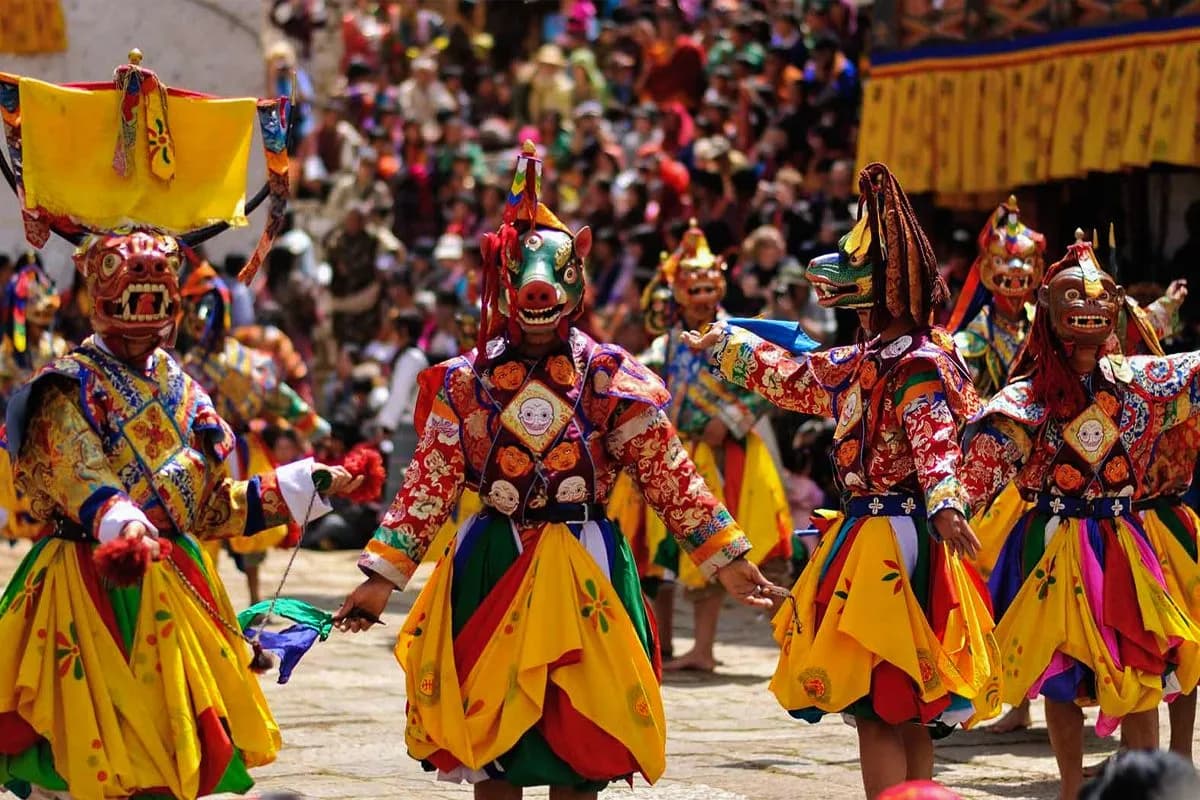 FestivalParo Tshechu — five days at Rinpung Dzong, with the pre-dawn thongdrel.Paro Tshechu — the principal spring festival at Rinpung Dzong. This year's dates, the programme, the pre-dawn thongdrel, what to expect for international visitors.
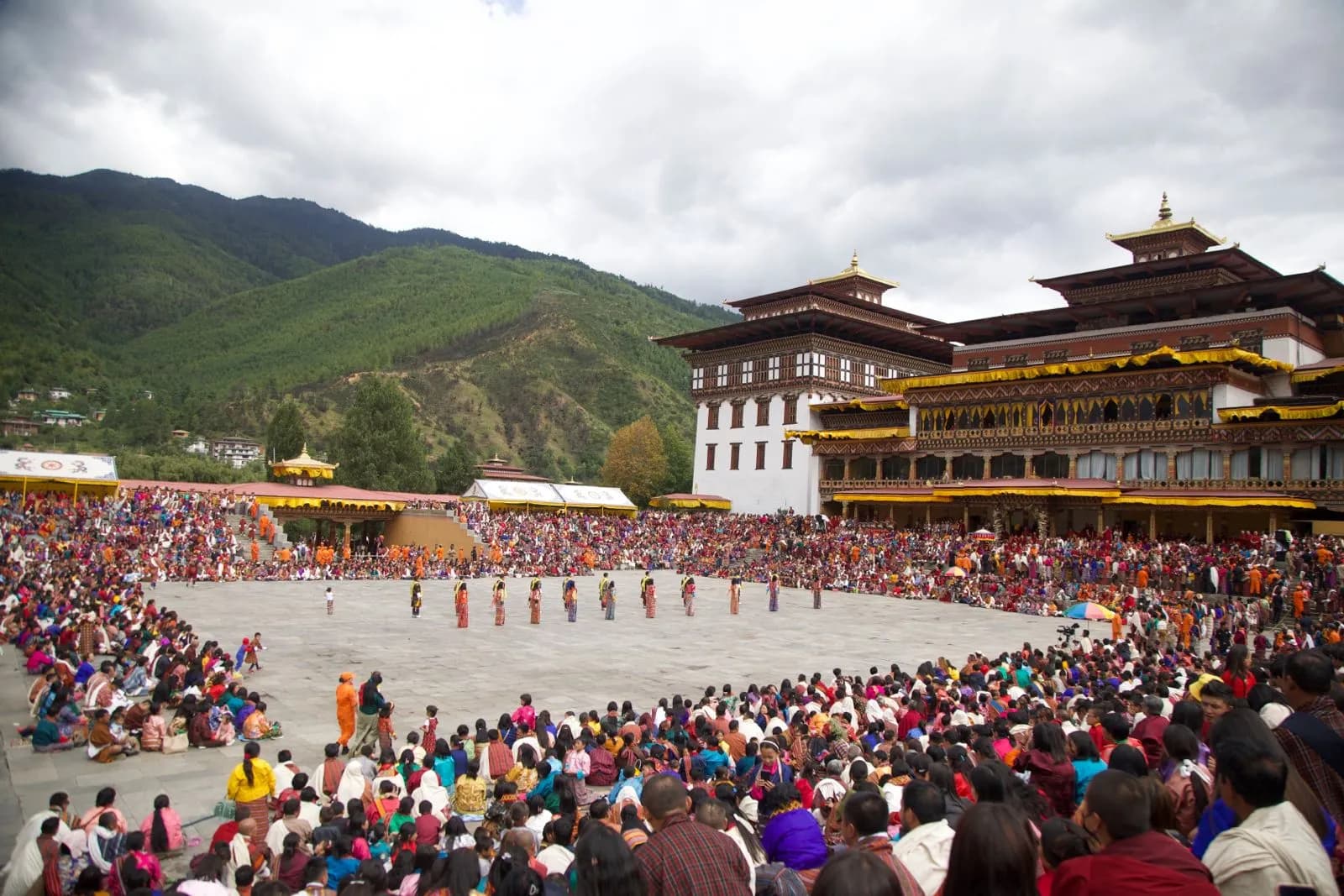 FestivalThimphu Tshechu — three days at Tashichho Dzong, the largest attendance of any Bhutanese festival.Thimphu Tshechu — the autumn festival at Tashichho Dzong, capital of Bhutan. This year's dates, the programme, what to expect as an international visitor.
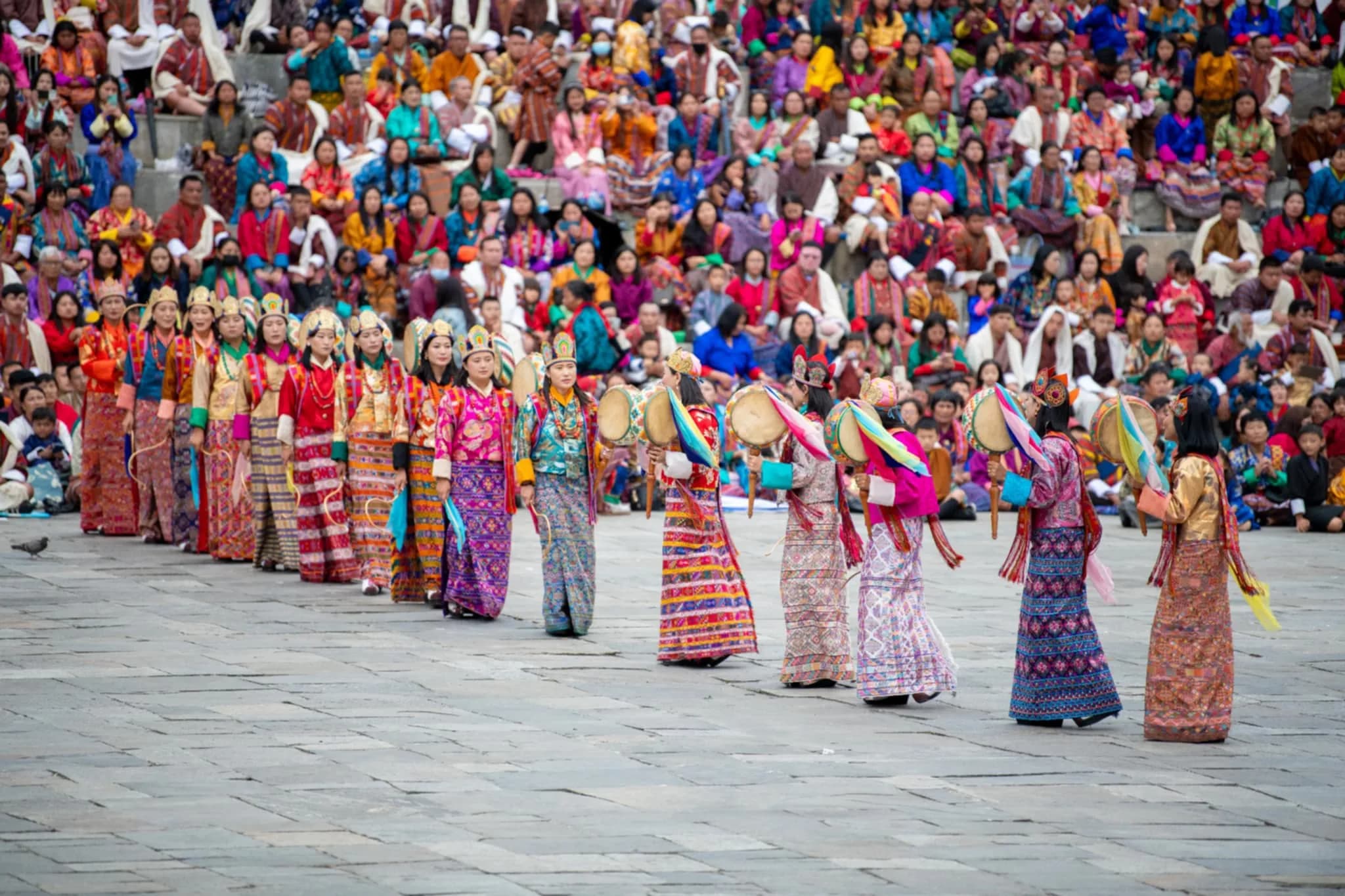 FestivalPunakha Drubchen & Tshechu — the Tibetan-invasion re-enactment, then the chams, at the most beautiful dzong in Bhutan.Punakha Drubchen & Tshechu — the late-winter festival pair at Punakha Dzong, with the Tibetan-invasion re-enactment. Dates, programme, what to expect.
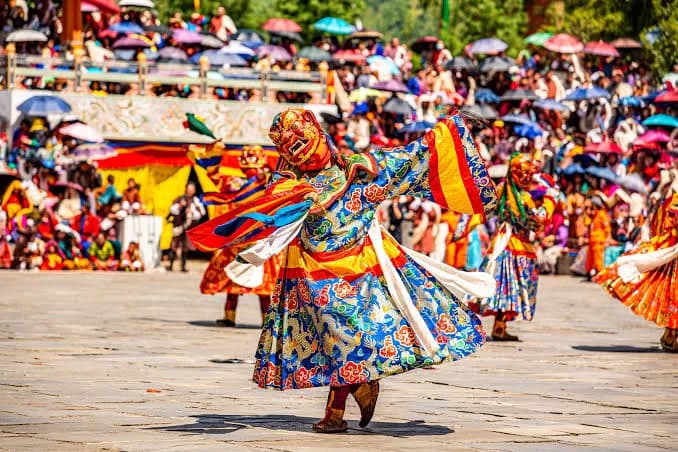 FestivalJambay Lhakhang Drup — five days in Bumthang, with the Mewang fire ritual.Jambay Lhakhang Drup — five days at Bumthang's oldest temple, including the Mewang fire ritual. Dates, programme, what to expect.
Places it mentions
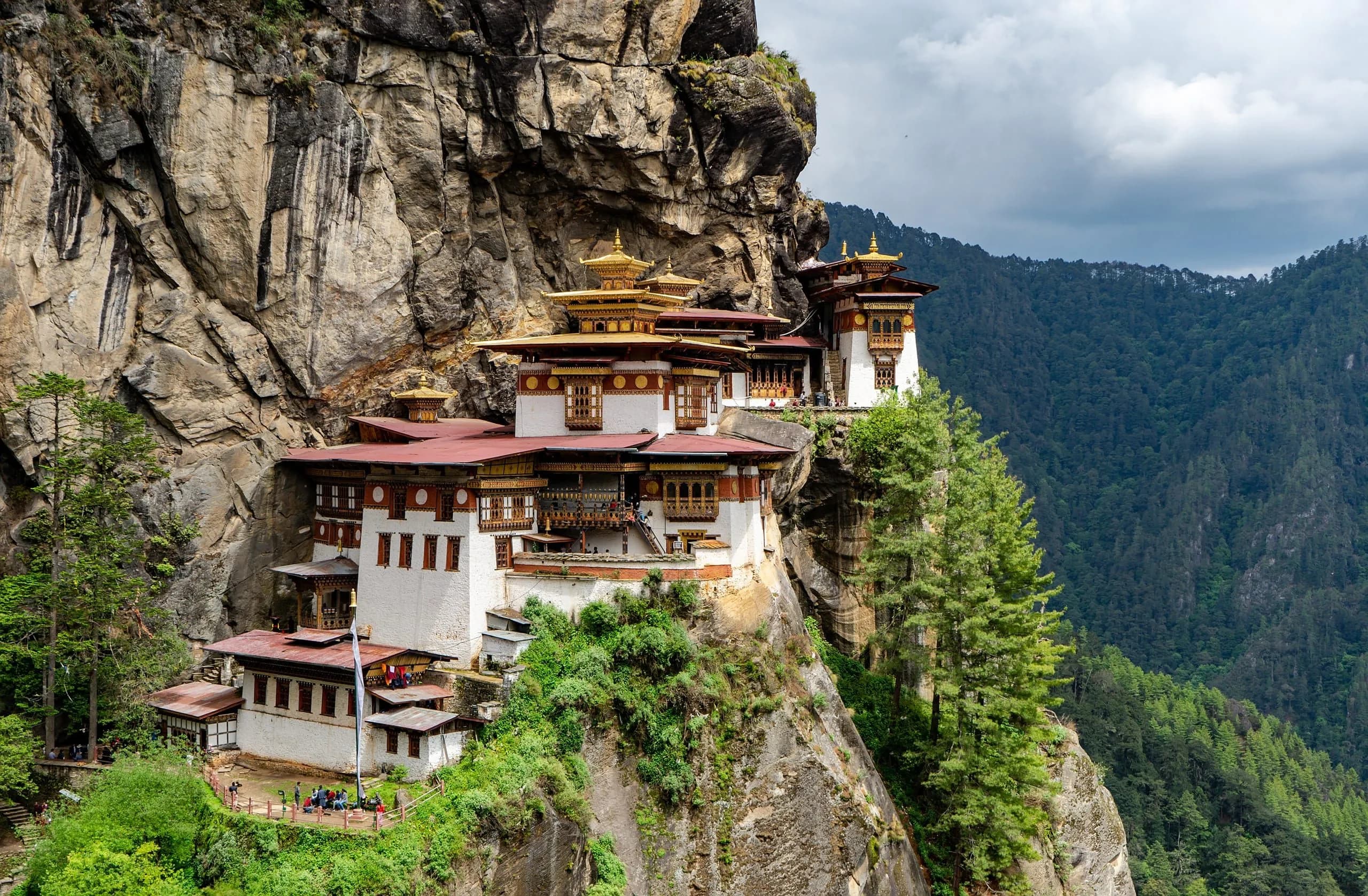 MonumentParo Taktsang — Guru Rinpoche's meditation cave, perched at 3,120 metres on the cliff above the Paro valley.Paro Taktsang (Tiger's Nest) — the founding by Guru Rinpoche, the 1692 monastery, the 2-hour hike, what to know before you visit.
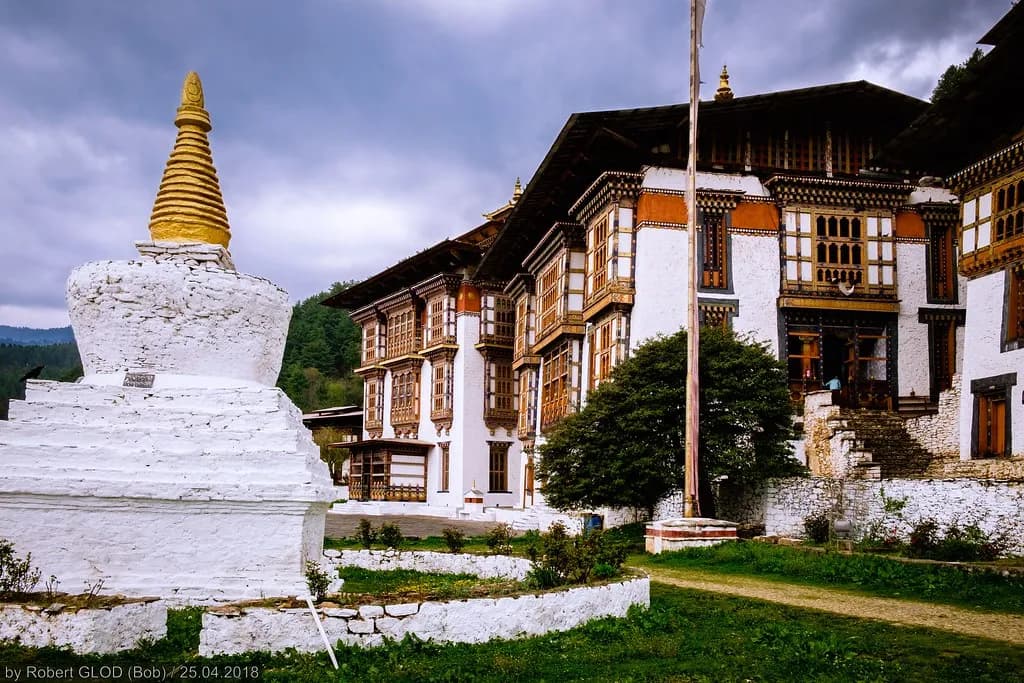 MonumentKurjey Lhakhang — the cliff cave bearing Guru Rinpoche's body imprint, in the Choekhor valley of Bumthang.Kurjey Lhakhang — the Bumthang cliff cave bearing Guru Rinpoche's body imprint. The three-temple complex, history, visiting.
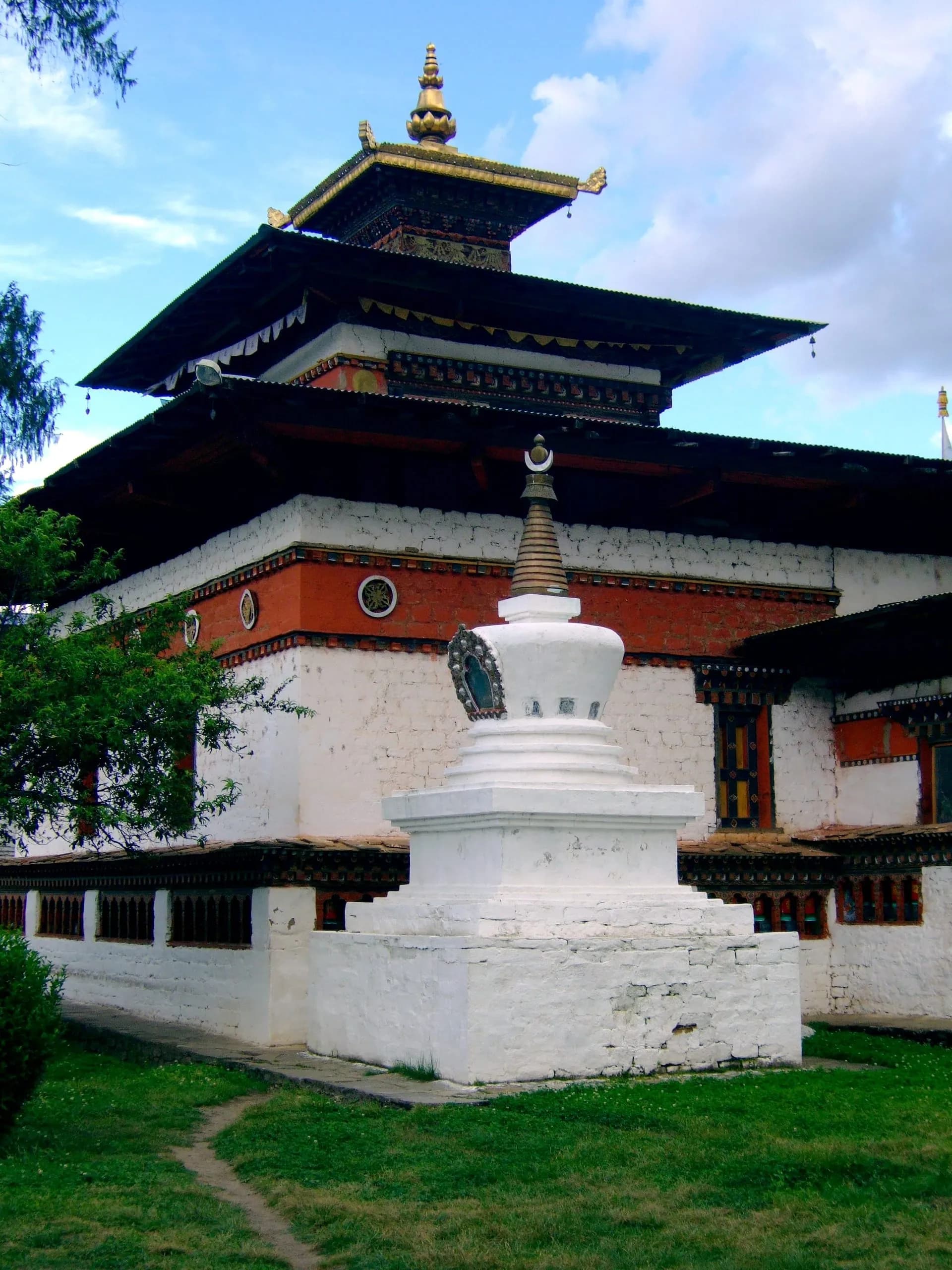 MonumentKyichu Lhakhang — founded by Songtsen Gampo in 659 CE, the oldest temple in Bhutan.Kyichu Lhakhang — the 7th-century temple of Paro, one of 108 Songtsen Gampo founded across the Himalaya. History, visiting.
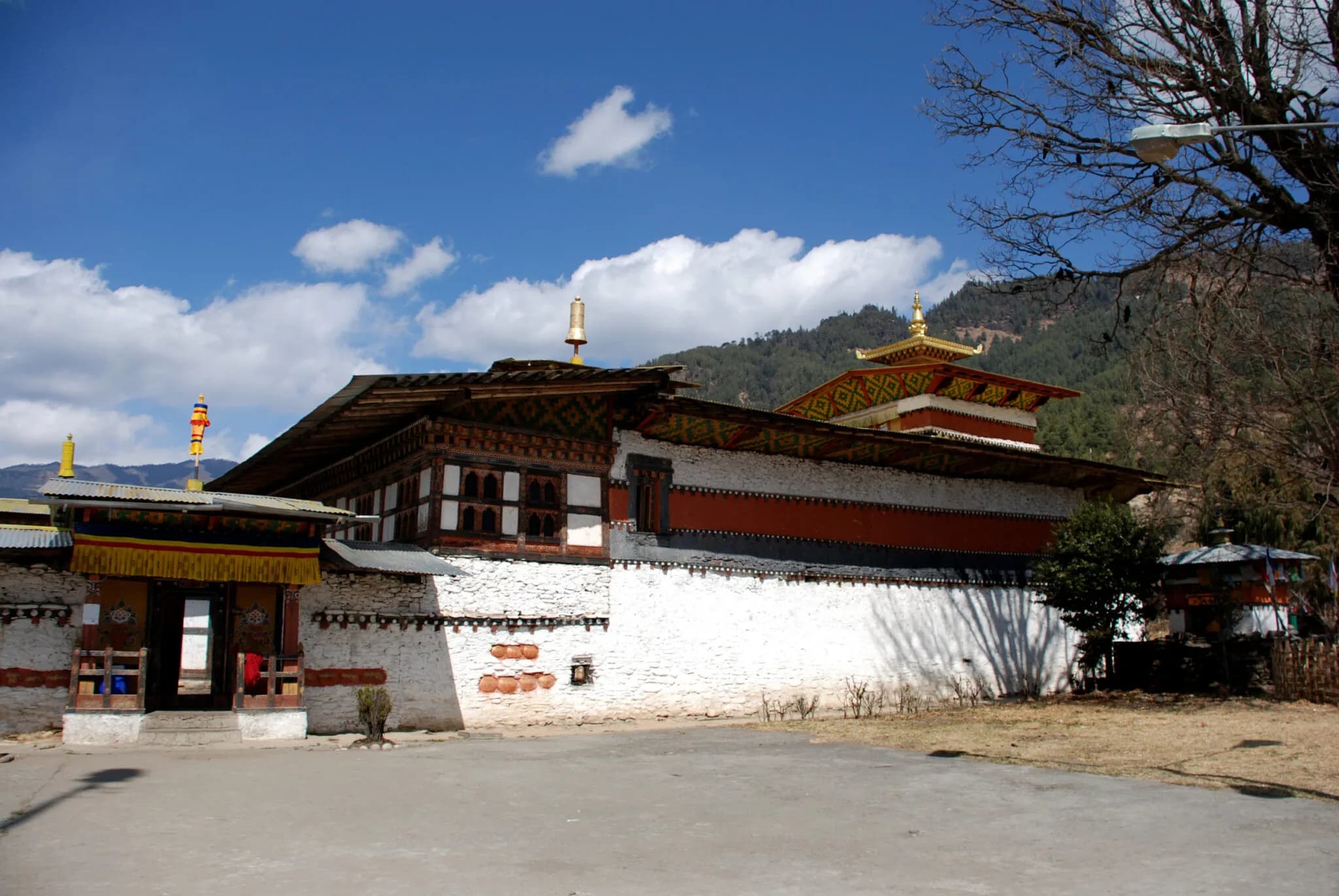 MonumentTamshing Lhakhang — founded in 1501 by the great Nyingma terton Pema Lingpa.Tamshing Lhakhang — the 1501 monastery of Pema Lingpa, in the Choekhor valley of Bumthang. History, the chain-mail vest relic, visiting.
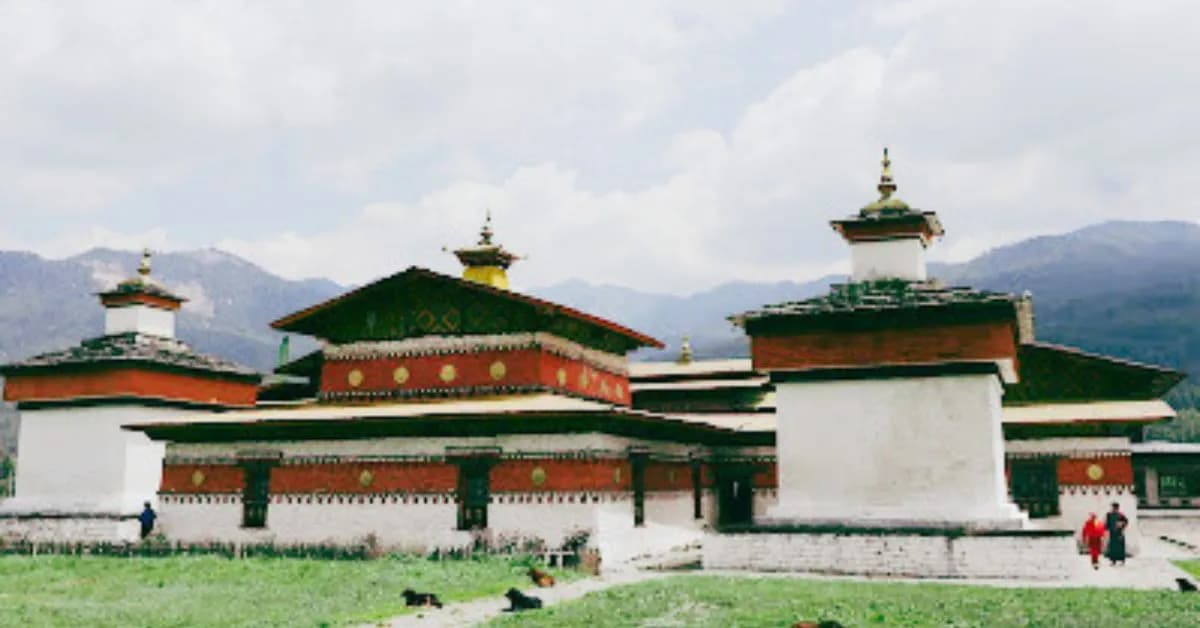 MonumentJambay Lhakhang — built by Songtsen Gampo to pin the left knee of the ogress whose body lay across the Himalaya.Jambay Lhakhang — Bhutan's oldest temple alongside Kyichu, founded by Songtsen Gampo in 659 CE. The Mewang fire ritual venue.
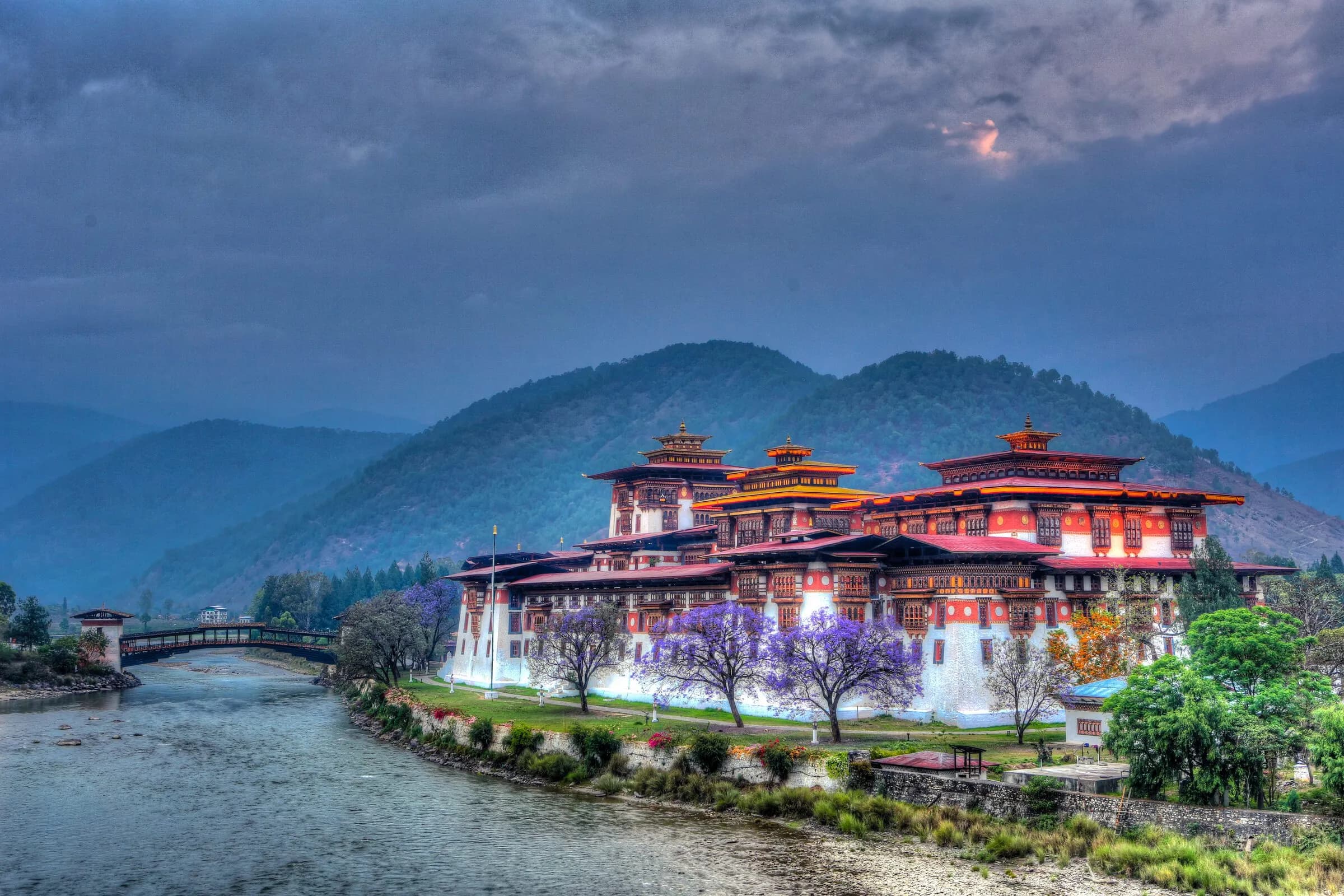 MonumentPunakha Dzong — Pungtang Dechen Phodrang, founded 1638 at the confluence of the father and mother rivers.Punakha Dzong — the Palace of Great Happiness, founded 1638. The history, the architecture, what to expect on a visit.
Journeys it informs
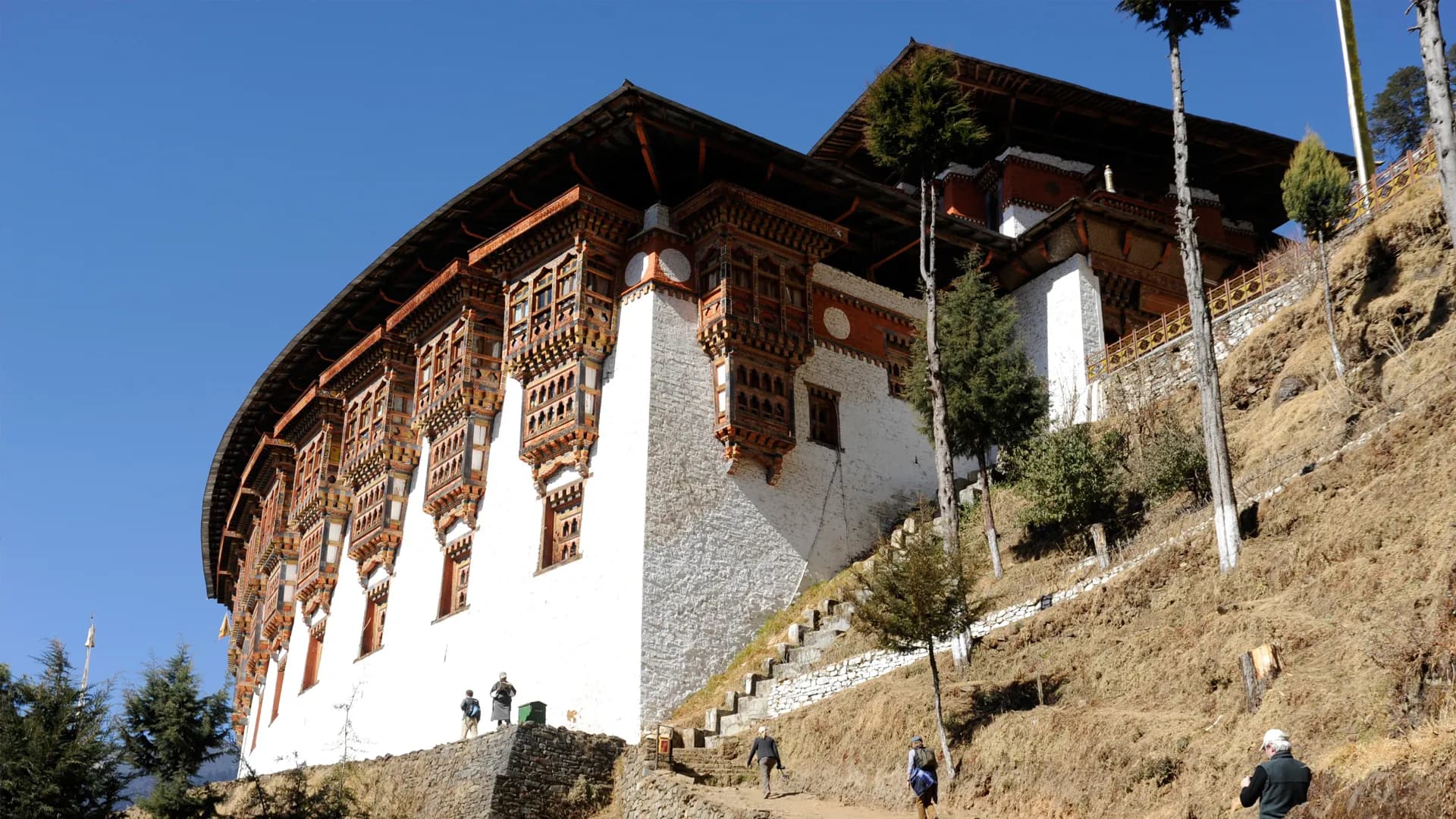 JourneyTen nights for the Buddhist pilgrim — the principal sites, with monastic context.A ten-night Bhutan Buddhist pilgrimage for Asian-Buddhist travellers. Monastic context; matched monastic-trained guide; Bumthang religious circuit.
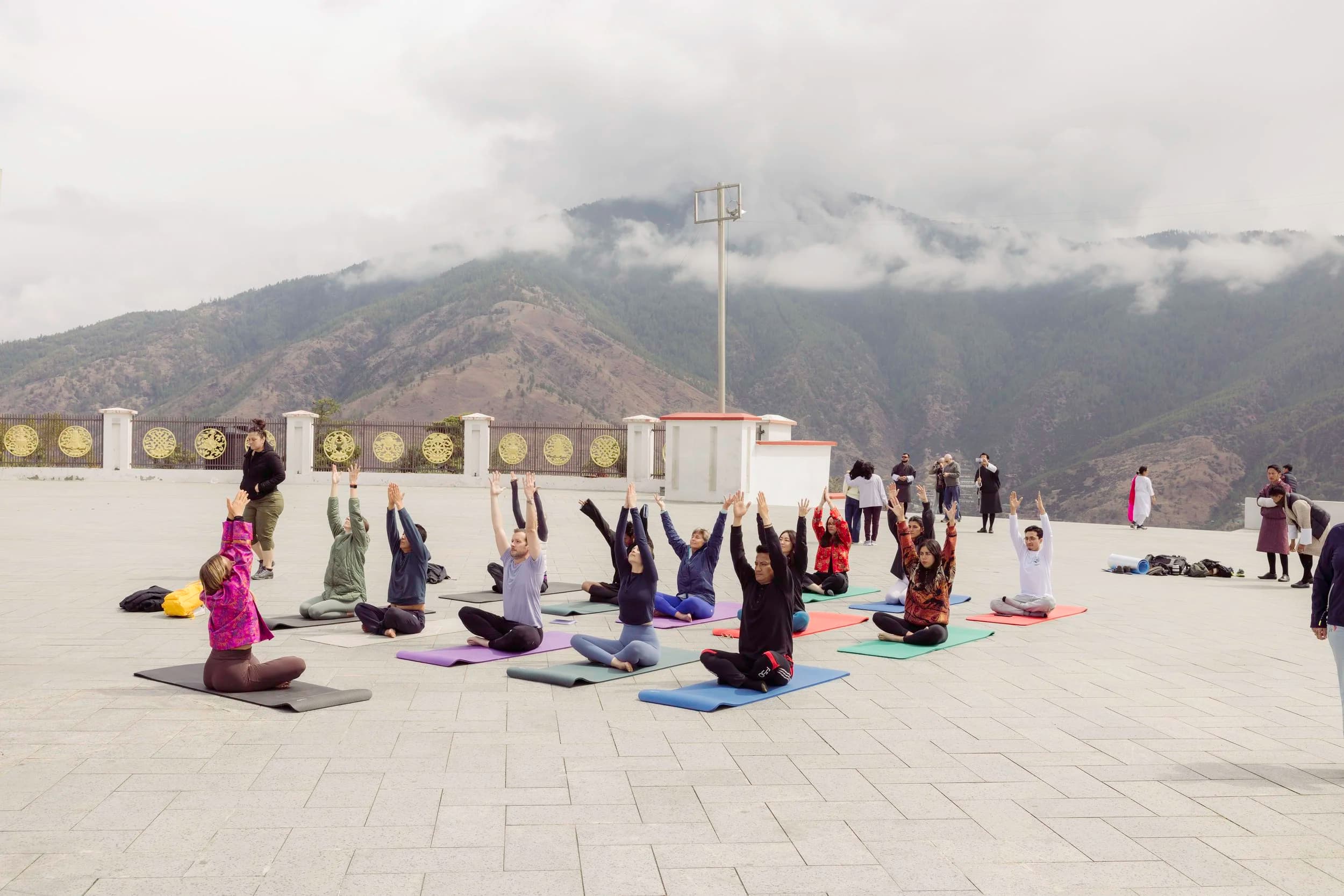 JourneySeven nights with a monastic guide, in the still season.A seven-night Bhutan meditation retreat through Clear-Sky Bhutan (Dec–Feb). Daily sittings with a monastic-trained guide, hot stone baths, no festival noise.
Frequently asked
- What's the most important Buddhist pilgrimage site in Bhutan?
- Paro Taktsang (Tiger's Nest) is the most-revered single site — Guru Rinpoche's principal Bhutanese meditation cave. The 1692 monastery built around the cave is one of the most-photographed monasteries in the Himalaya, but the religious significance is the cave itself (Guru Rinpoche is held to have meditated there for three years, three months, three weeks, three days, and three hours). The 4-km switchback hike from the trailhead is part of the pilgrimage.
- Can I do a meditation retreat in Bhutan?
- Yes, with the right credentials. The principal retreat centres (Tango Goemba, Phajoding, the Bumthang centres) accept international visitors with established Vajrayana lineage credentials — introduction from a recognised teacher, ongoing retreat practice, defined intention. Casual meditation retreats for visitors without lineage credentials are less common; the premium lodges (particularly Six Senses and Bhutan Spirit Sanctuary) offer secular wellness-meditation programmes that work as a softer alternative.
- Do I need to be Buddhist to visit the pilgrimage sites?
- No — Bhutanese pilgrimage sites are open to international visitors of all religious backgrounds. The protocol (modest dress, quiet behaviour, no photography inside the principal chapels, circumambulation in the clockwise direction) applies to all visitors regardless of religious background. Many international visitors with no Buddhist practice find the cultural-and-spiritual context of the Bhutanese sites substantially meaningful.
- What's the difference between the dzongs and the lhakhangs?
- Both are religious-architectural structures. A dzong is a fortified administrative-and-monastic complex — the seat of dzongkhag (district) administration alongside the monastic body of the region. The principal dzongs (Punakha, Tashichho, Rinpung, Trongsa, Wangdue Phodrang) house both the civil administration and the monastic community. A lhakhang is a temple or chapel — a religious structure without the administrative function. The principal lhakhangs (Kyichu, Jambay, Kurjey, Tamshing, Chimi) are pilgrimage destinations for their religious content alone.
- When is the best time for a Bhutanese pilgrimage?
- If aligned with a festival, the festival window (Paro Tshechu in April, Thimphu Tshechu in October, Punakha Tshechu in February) gives the cultural-religious peak. For the broader pilgrimage circuit without festival timing, October-November (autumn clarity) is the principal window. December-February gives the quietest pilgrimage circuit (lowest visitor counts at the principal sites). Avoid late July through early September (Indian Monsoon).
- Can I take a Vajrayana initiation in Bhutan?
- Yes, with established credentials and lineage connection. Initiations (wang in Tibetan; the principal Vajrayana empowerment) are typically given by senior lamas to students with prior lineage connection; visitors with a specific teacher relationship can be introduced to the relevant Bhutanese lineage holder through the operator. Initiations are not given casually to first-time visitors; the protocol is established and consistent across the principal lineages.

