Planning your Bhutan journey
Photography in Bhutan — the world's most photogenic Himalayan country, with specific protocols inside the lhakhangs.
Bhutan rewards substantial photographic effort. The combination of dramatic Himalayan landscapes, vivid traditional dress (the gho and kira), substantial religious architecture (the dzongs), and the country's clear-sky autumn and winter windows produces some of the most-photographed Himalayan content in the world. Specific protocols apply inside lhakhangs (photography typically prohibited); drones are strictly banned. October-November is the principal photographer's window.
- Register
- logistics
The short answer
October-November is the single best photographic window — post-monsoon clarity, autumn colour, the Himalayan panorama at its most reliable. Drones are banned (confiscated on arrival). Photography is permitted in dzong courtyards but typically prohibited inside the principal lhakhangs. A versatile zoom (24-105mm or 24-200mm) handles 80% of the visit; a long telephoto (400mm+) is useful for crane viewing in Phobjikha. Bring spare batteries; the cold morning windows drain batteries quickly.
The principal photographic windows
October-November is the photographer's window — post-monsoon air clarity, the Himalayan panorama at its most-reliable, the rice harvest gold in Paro and Punakha, the autumn rhododendron descent in the central valleys, the cranes arriving in Phobjikha. Single best month: October. Late March through April is the second window — spring rhododendron in the lower-forest range, the Paro Tshechu festival, the pre-monsoon clarity. December through February (Clear-Sky Bhutan) delivers the most-reliable Himalayan panorama of the year — cold and quiet, with the long shadows of the low winter sun adding a register the autumn doesn't quite reach. Avoid late July through early September (the Indian Monsoon) — sustained cloud cover obscures the Himalayan panorama and the principal photographic content.
Equipment — what works in Bhutan
Camera bodies: any modern mirrorless or DSLR is appropriate; a competent phone camera handles much of the cultural circuit. The Bhutanese photographic register rewards a good camera but doesn't require an extraordinary one. Lenses: a versatile zoom (24-105mm or 24-200mm) handles approximately 80% of the visit including the cultural-circuit landscapes, the festival chams from the courtyard distance, and the monastery exteriors. A wide-angle (16-35mm or similar) is useful for the dzong interiors where photography is permitted and for the Tiger's Nest cliff face from the viewing platform. A long telephoto (200-400mm or longer) is essential for the Phobjikha cranes (the birds keep distance from the observation points) and useful for the festival chams when shooting from across the courtyard. Tripod: rarely essential; can be useful for the pre-dawn Tiger's Nest light and for night-sky photography at Phobjikha or Bumthang. Spare batteries: bring more than you think — the cold morning windows drain batteries quickly, and charging access during long driving days is limited.
The drone ban and other restrictions
Drones are strictly banned by the Royal Government — confiscated at Paro airport on arrival, returned on departure. No civilian drone permits are issued for tourism purposes. Please leave drones at home; the cost of bringing one is the inconvenience of the airport-confiscation process. Inside monasteries and lhakhangs: photography is typically prohibited (the principal chapels with their Guru Rinpoche statues, painted murals, and ritual implements are not to be photographed). The courtyards and exterior architecture are open for photography. Religious figures: photography of monks and lamas during prayer or ritual requires permission; quiet observation from a distance is the considerate default. Photography of children, particularly in rural areas, should be done with parental consent. Festivals: photography is permitted across the dzong courtyards during the tshechus; flash is discouraged. Some lodges and private residences: photography restrictions apply, particularly in the heritage properties (Zhiwa Ling, the former-palace properties) — ask the lodge before shooting interiors.
Light and weather — the practical
The morning window (sunrise to ~10am) is the most-rewarding for landscape and architecture — clear light, low sun angles, the high peaks visible before the day's cloud builds. Cloud builds across the day in most months; the afternoon panoramic tradition is substantially less reliable than the morning. Plan early starts — 06:00 departures from the lodge are the standard photographer's discipline; many of the best Bhutanese photographs are taken before 09:00. The golden hour at sunset is shorter in Bhutan than at lower latitudes due to the surrounding peaks (the sun drops behind the ridge while the sky is still bright); plan accordingly. Weather changes quickly at altitude — what looks like a clear day at 07:00 can be cloud-wrapped by 10:00 in monsoon shoulders. Our concierge tracks the current forecast for each itinerary and surfaces the optimal photographic moments where they're predictable.
The signature subjects — what to plan for
Tiger's Nest from the cafeteria viewpoint is the principal photograph of any Bhutanese journey — the cliff-face monastery across the gorge. Best in morning light (07:30-09:30) before the cloud builds. Punakha Dzong with the confluence in spring (the jacaranda trees in late March-early April, the river-confluence reflection) is the second-most-photographed scene. The Dochu La panorama on a clear winter morning gives the broader Himalayan range. The Tshechu chams at any of the principal festivals — particularly the pre-dawn thongdrel unfurling at Paro Tshechu. The Bhutanese gho and kira at any festival — vivid colours, silver-and-turquoise jewellery, the considered cultural. The Phobjikha cranes at dawn or dusk between November and February. The Bumthang valleys in autumn — buckwheat fields turning red-pink, the surrounding pine forests, the painted Bhutanese village houses.
Practical
- Best month
- October
- Second-best window
- Late March – April
- Most-reliable Himalayan panorama
- December – February
- Drones
- Banned — confiscated on arrival
- Monastery interior photography
- Prohibited inside the principal chapels; permitted in courtyards
- Recommended versatile zoom
- 24-105mm or 24-200mm
- Crane / festival telephoto
- 200-400mm or longer
- Spare batteries
- Bring extra — cold mornings drain batteries quickly
Festivals it mentions
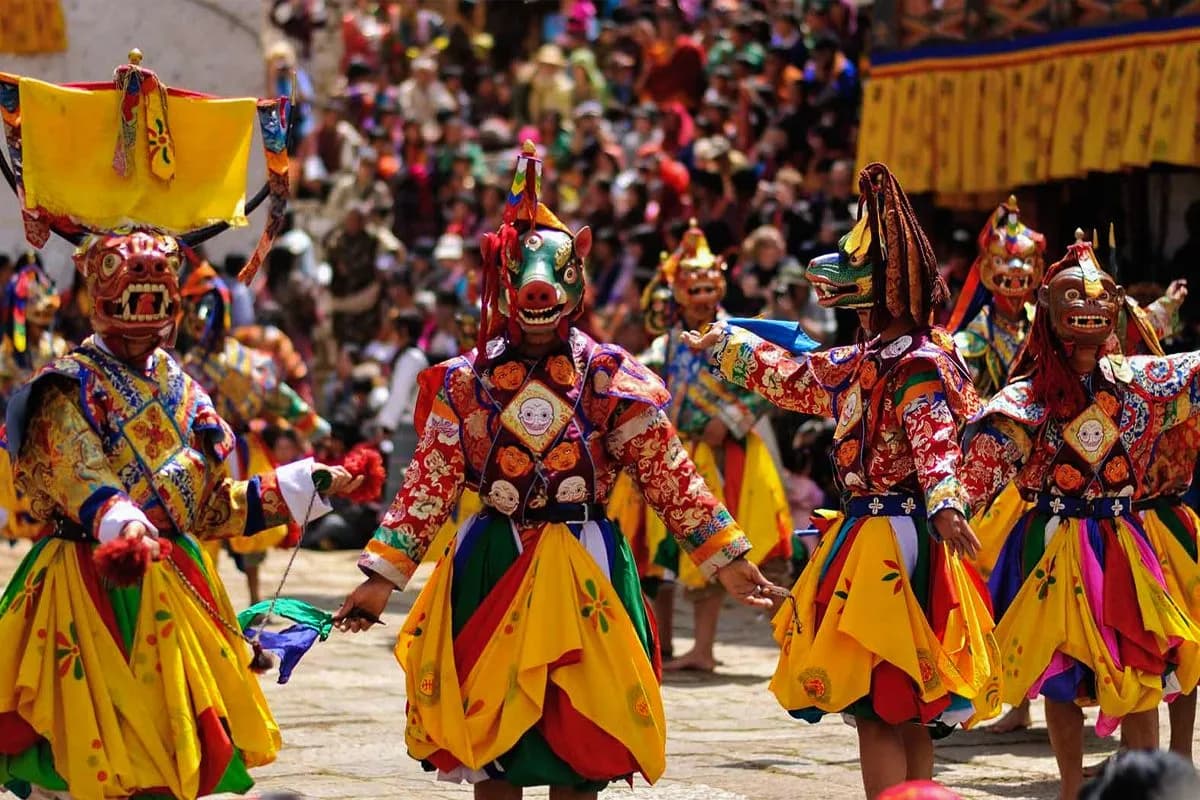 FestivalParo Tshechu — five days at Rinpung Dzong, with the pre-dawn thongdrel.Paro Tshechu — the principal spring festival at Rinpung Dzong. This year's dates, the programme, the pre-dawn thongdrel, what to expect for international visitors.
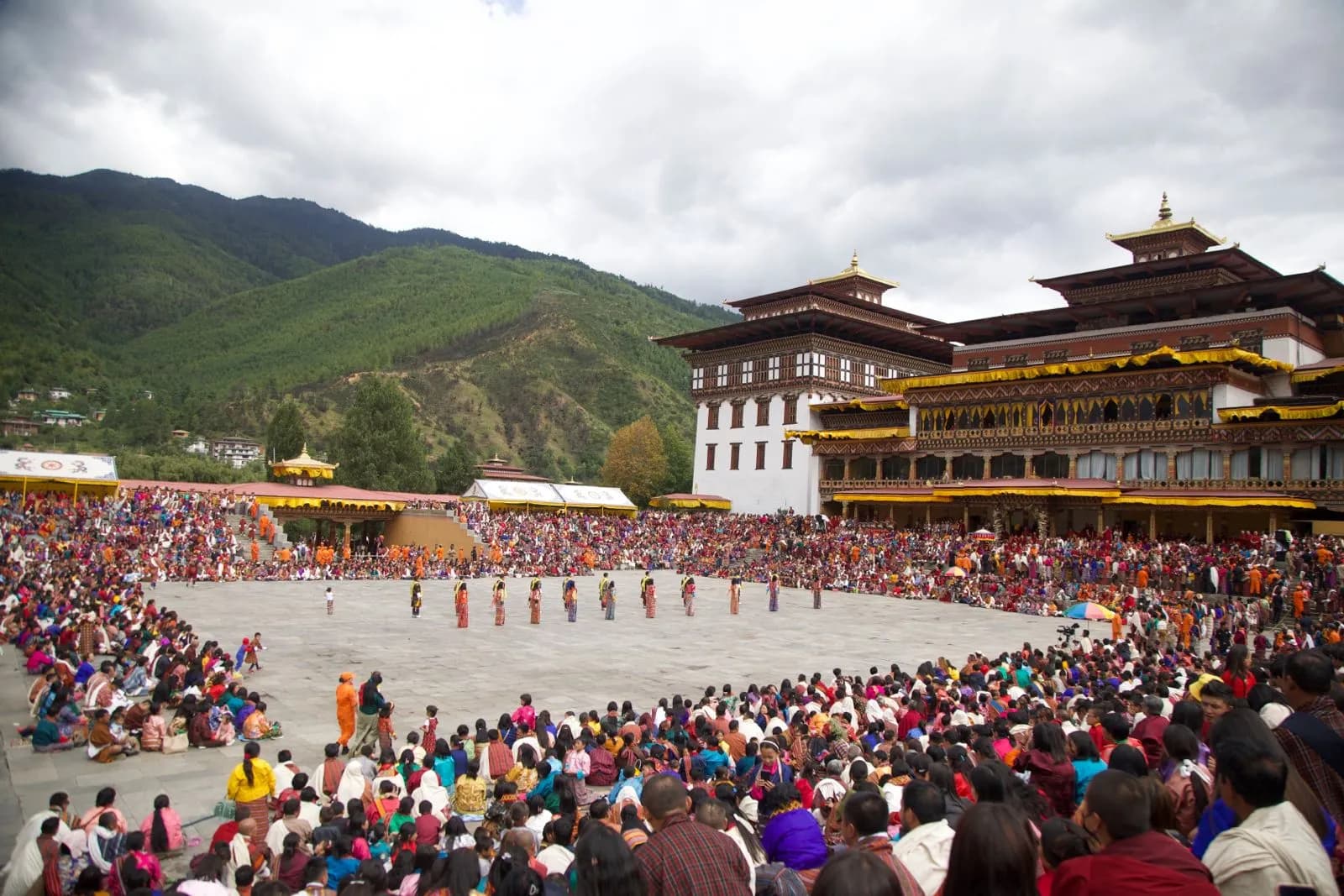 FestivalThimphu Tshechu — three days at Tashichho Dzong, the largest attendance of any Bhutanese festival.Thimphu Tshechu — the autumn festival at Tashichho Dzong, capital of Bhutan. This year's dates, the programme, what to expect as an international visitor.
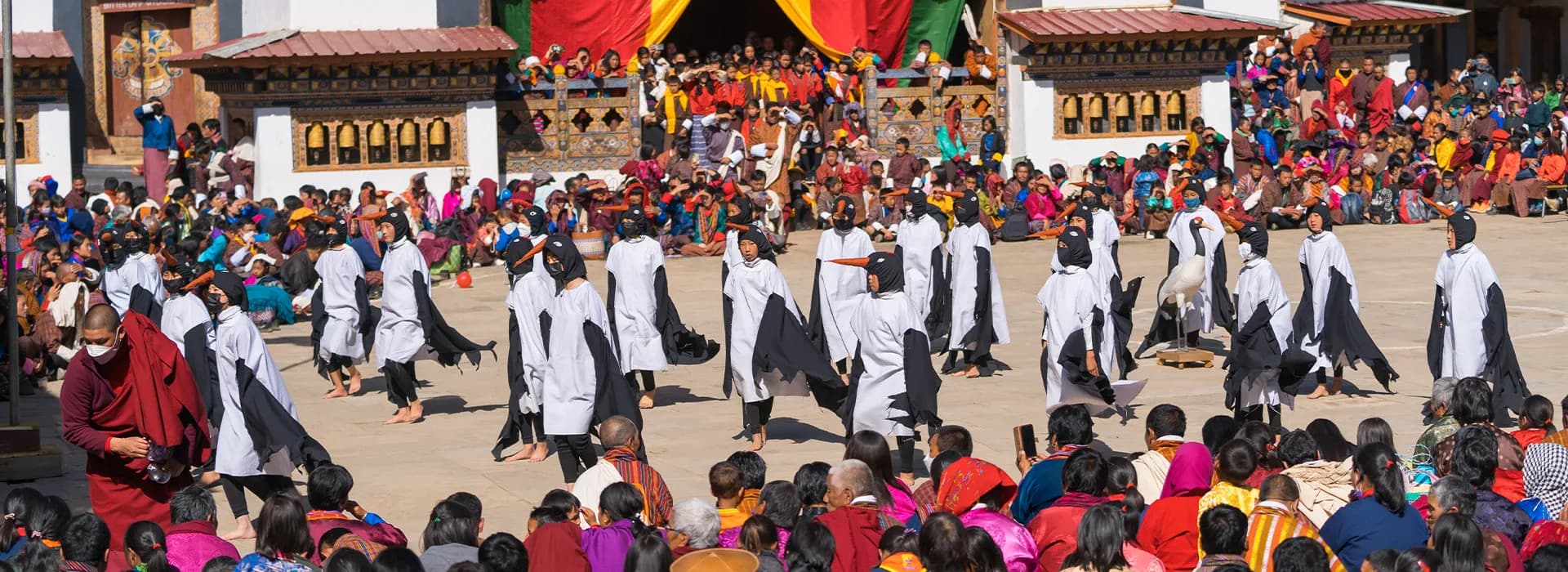 FestivalBlack-Necked Crane Festival — Phobjikha valley, 11 November, the cranes in the wintering meadows.Black-Necked Crane Festival — 11 November at Gangtey Goemba, Phobjikha. The cranes' return, the children's dances, the conservation register.
Places it mentions
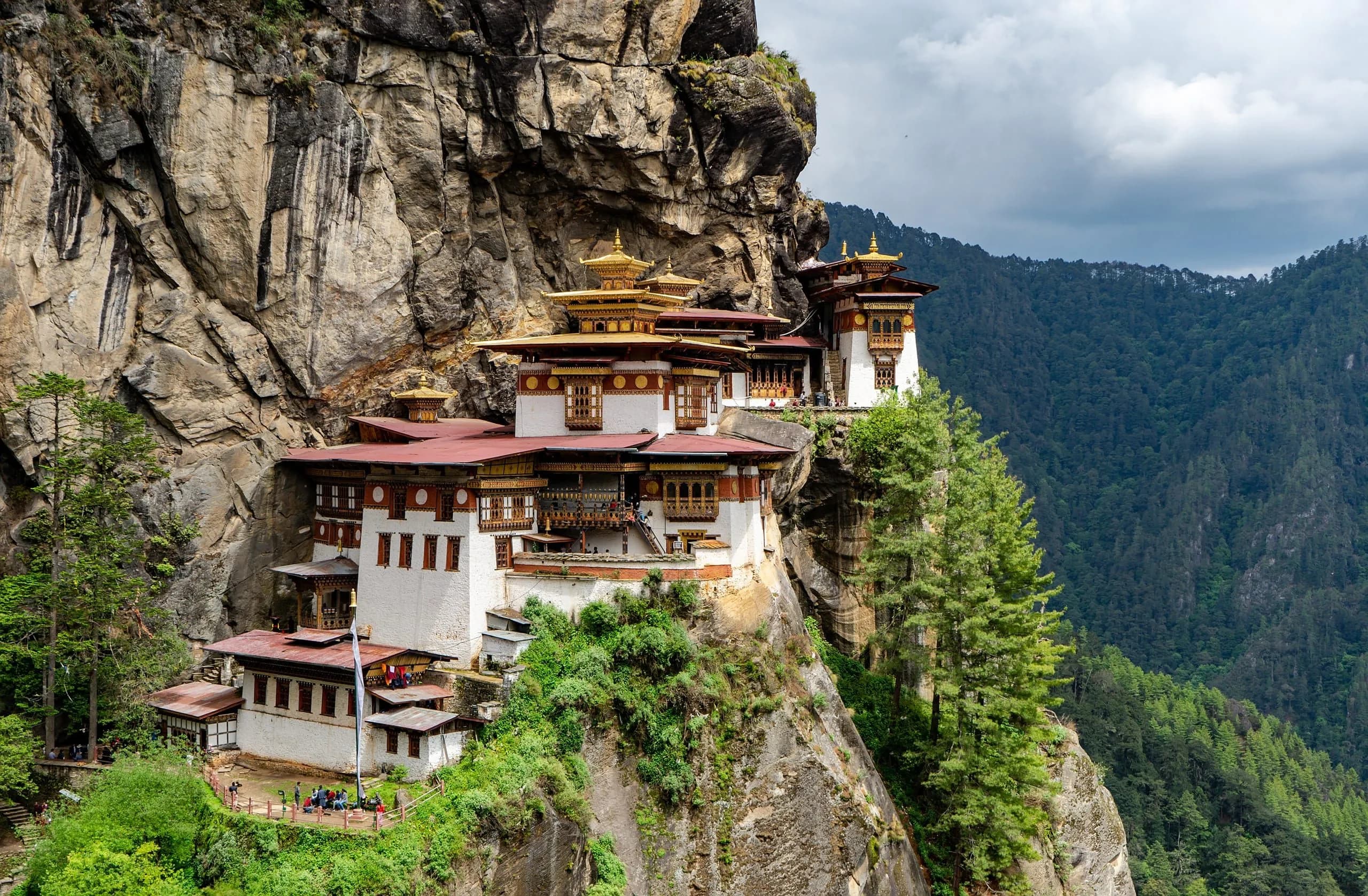 MonumentParo Taktsang — Guru Rinpoche's meditation cave, perched at 3,120 metres on the cliff above the Paro valley.Paro Taktsang (Tiger's Nest) — the founding by Guru Rinpoche, the 1692 monastery, the 2-hour hike, what to know before you visit.
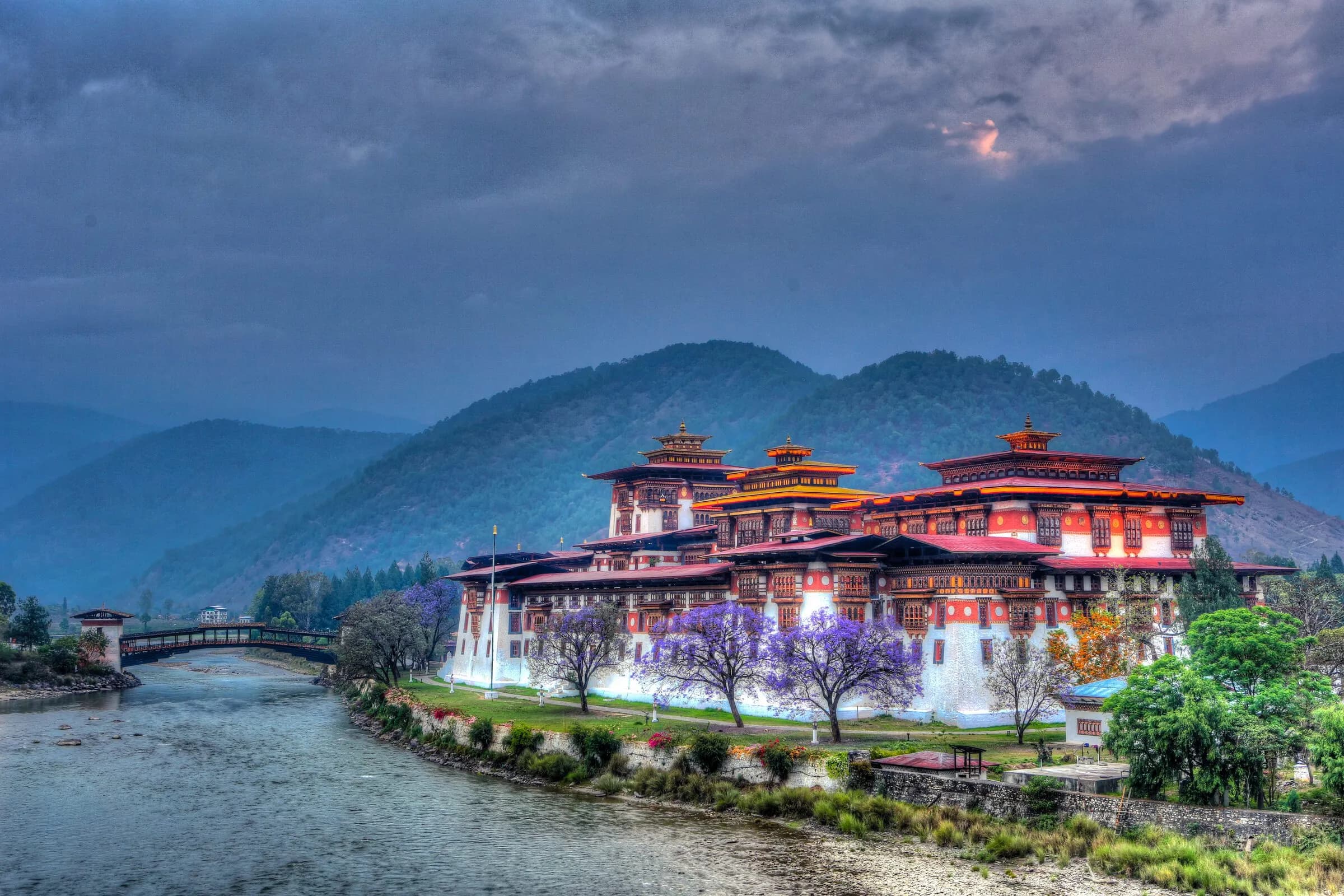 MonumentPunakha Dzong — Pungtang Dechen Phodrang, founded 1638 at the confluence of the father and mother rivers.Punakha Dzong — the Palace of Great Happiness, founded 1638. The history, the architecture, what to expect on a visit.
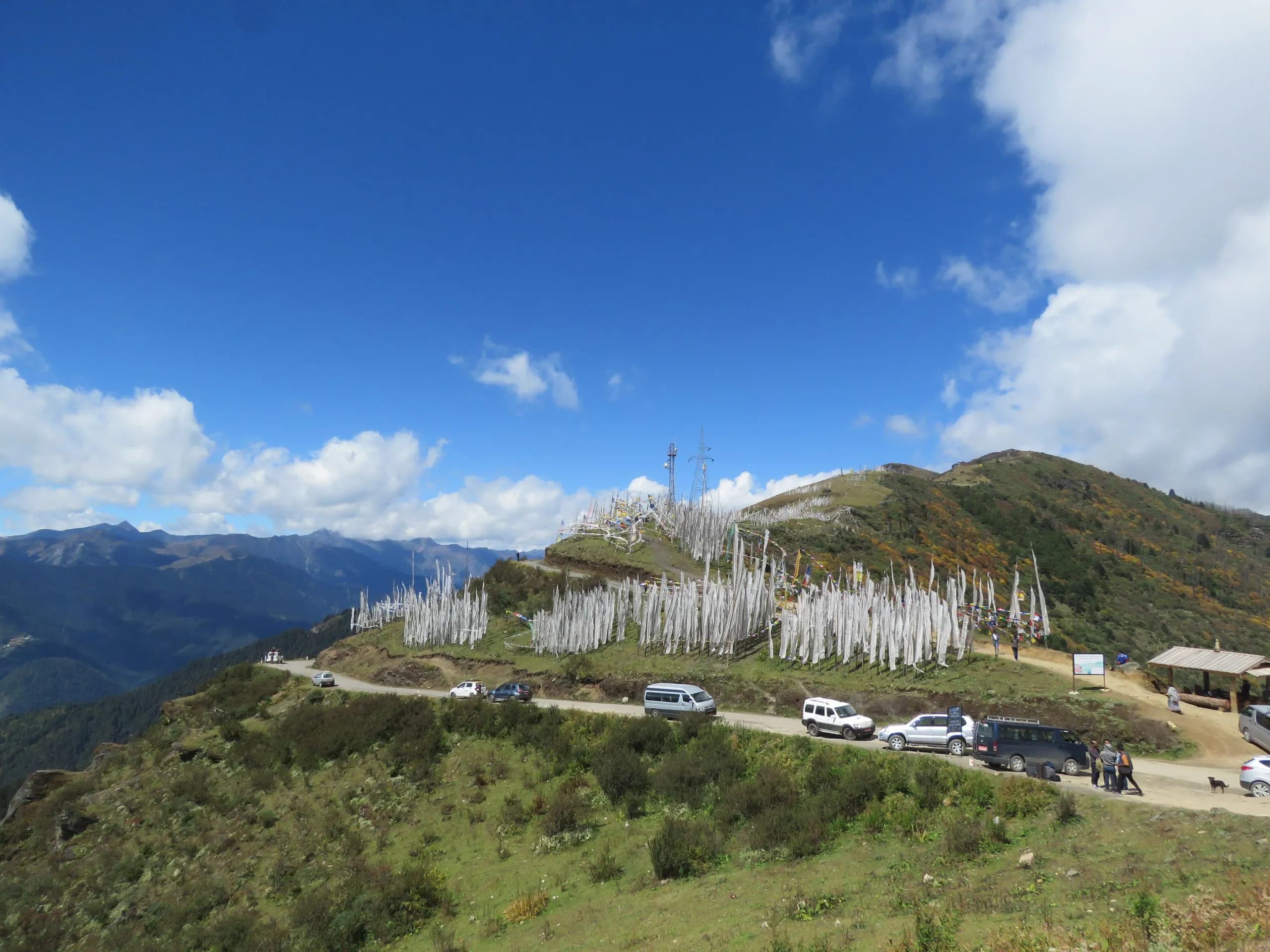
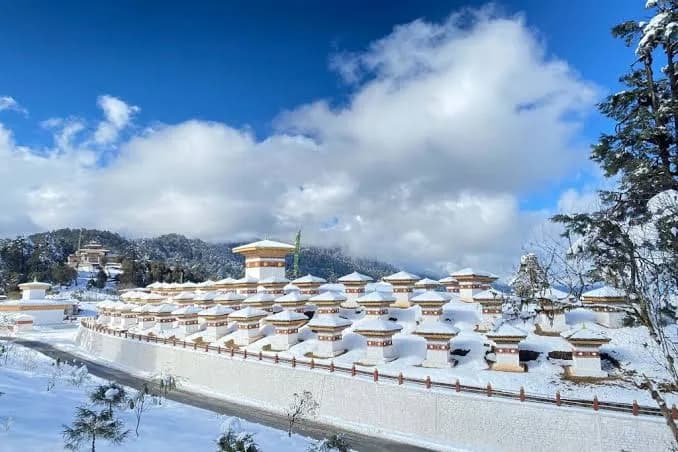 MonumentDochu La — the high pass between Thimphu and Punakha, with 108 chortens and the eastern-Himalayan panorama.Dochu La — the 108-chorten pass at 3,100 metres between Thimphu and Punakha. The Druk Wangyel Chortens and the Himalayan panorama.
Journeys it informs
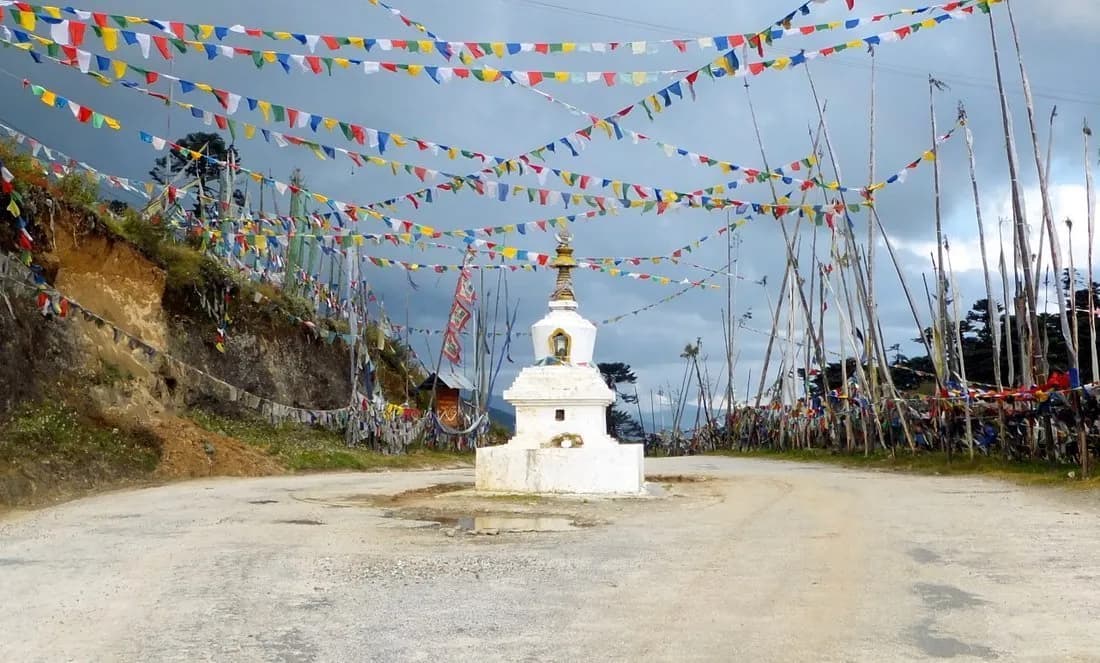 JourneyOctober light, Bhutan, a week.A seven-night Bhutan photography journey in October — Bhutan, golden-hour access at Punakha Dzong, a tripod-friendly guide, and transparent pricing.
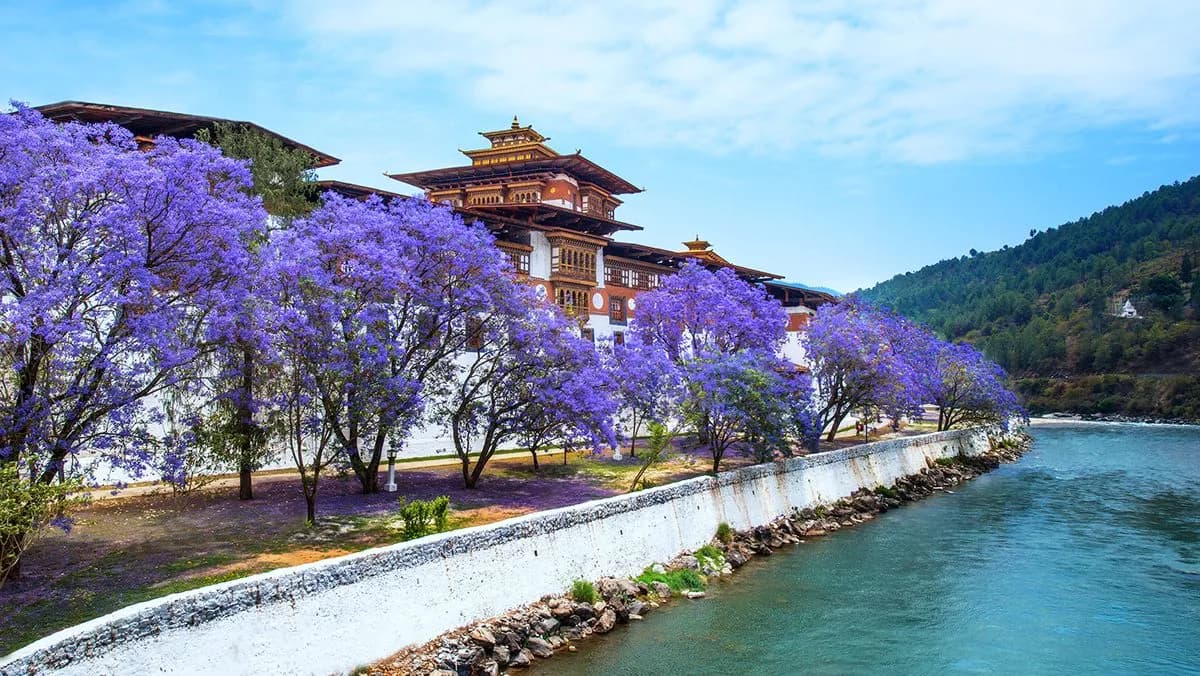 JourneyNine nights for the photographer's spring — cherry blossom, rhododendron, the Paro thongdrel at dawn.A nine-night Bhutan photography journey in the spring window — cherry blossom, rhododendron, the Paro Tshechu thongdrel unfurling at dawn at Rinpung Dzong.
 JourneyNine nights for a serious photographer flying from Beijing.A nine-night Bhutan photography journey for photographers flying from Beijing — autumn light, dzongs, Phobjikha cranes, Mandarin-speaking guide option.
Frequently asked
- Can I bring a drone to Bhutan?
- No — drones are strictly banned and will be confiscated at Paro airport on arrival. The Royal Government does not issue civilian drone permits for tourism purposes. Drones are returned on departure but the process is inconvenient; please leave drones at home.
- Can I photograph inside the monasteries?
- Generally no inside the principal chapels (the Guru Rinpoche statues, the painted murals, the ritual implements are typically not to be photographed). The courtyards and exterior architecture are open for photography; the painted galleries on the upper floors of some dzongs (Rinpung Dzong) permit photography. Specific guidance varies by site; your guide knows the protocols and will surface them.
- What's the best month for photography in Bhutan?
- October, by a small margin — the post-monsoon clarity, the autumn colour, the rice harvest in the western valleys, and the Thimphu Tshechu festival window combine to give the most-rewarding single month. November is the close second (cleaner air, the cranes arriving in Phobjikha). Late March-April is the spring window (rhododendron, Paro Tshechu).
- Do I need a tripod?
- Rarely essential. Modern cameras handle most Bhutanese light without one. A tripod can be useful for the pre-dawn Tiger's Nest light, for night-sky photography at higher-altitude camps (Phobjikha, Bumthang, the trekking camps), and for the slow shutter required to capture the prayer-flag movement against the mountain backdrop. Most photographers travel without.
- Can I photograph people?
- Yes, with normal courtesy. Asking before photographing individuals — particularly women, particularly children, particularly in rural villages — is the considerate default. Bhutanese subjects typically respond warmly to the request and engage with photographers comfortably. Photography of monks and lamas during prayer or ritual requires more deliberate permission.
- Are there photography tours in Bhutan?
- Yes — we offer photography-focused itineraries with extended time at the principal photographic sites, dawn departures for the optimal light windows, and the option of a professional photographer guide (Bhutanese photographers with substantial portfolios) for the technical-and-cultural. See the Bhutan Photography journey and our other photography-tagged itineraries.

