Planning your Bhutan journey
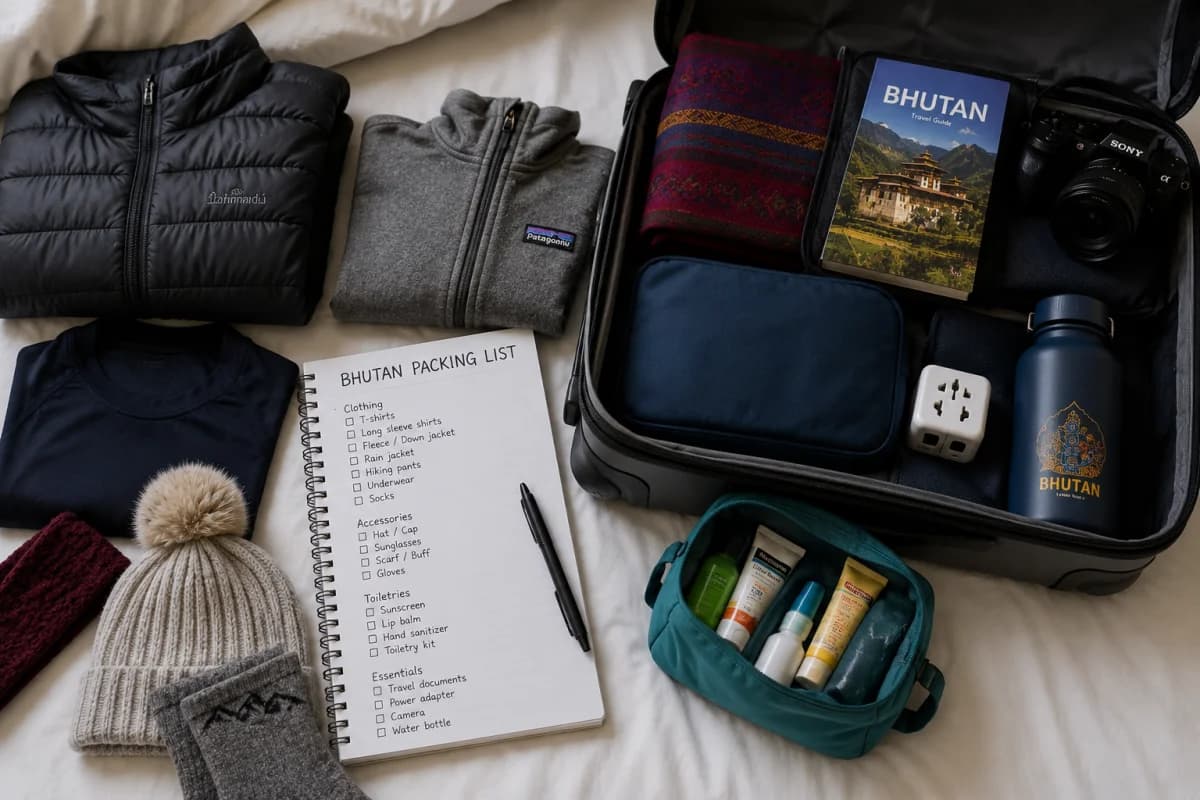
Packing for Bhutan — layers for the altitude range, smart casual for the monasteries, sturdy walking shoes for everything.
Bhutan's altitude range — from 200 metres in the southern foothills to 4,200 metres on the Druk Path ridge — means substantial temperature variation across a single trip. The packing list reflects the altitude profile rather than the calendar season. Modest dress is required at the monasteries and dzongs; sturdy walking shoes are essential for Tiger's Nest and the broader cultural circuit; a warm layer is essential even in summer.
- Register
- logistics
The short answer
Layers (the altitude variation is more important than the season). Sturdy walking shoes or hiking boots. Modest clothing covering shoulders and knees for monastery visits. Warm fleece + waterproof shell year-round. Sun protection (the altitude makes UV strong). Power adapter (Type D/F, 230V). What NOT to bring: drones (banned), prescription drugs without documentation, tobacco beyond personal allowance.
Clothing — layering for the altitude
The base layer: merino or technical-fabric long-sleeve shirts, breathable trousers. The mid layer: fleece or down sweater — essential year-round, particularly for early-morning monastery visits and lodge mornings before the sun warms the rooms. The outer layer: waterproof breathable shell (rain jacket and trousers) — required in summer monsoon, recommended year-round for unexpected weather. For monastery visits: long trousers (not shorts), shirts with sleeves (not vests or strappy tops), closed shoes (not sandals). Modest dress is the local norm; the visitor is dressed for the protocol of an active religious site, not a sightseeing site.
Footwear — sturdy walking shoes are non-negotiable
For the Tiger's Nest hike and the broader cultural circuit: hiking boots or sturdy trail shoes with ankle support. Trainers and lifestyle sneakers are not suitable for the cliff-face Tiger's Nest trail. For monastery and dzong visits: slip-on shoes are practical (you remove shoes at every interior chapel; laces become a daily delay). For lodge wear: comfortable indoor shoes or slippers; the premium lodges provide indoor slippers but a personal pair adds comfort. For trekking: dedicated waterproof hiking boots, broken in before the trip; do not bring brand-new boots to Bhutan.
Technical kit — for treks and high-altitude days
For the high-altitude day-hikes (Tiger's Nest, Cheri, Tango, Dochu La): a small daypack (20-30L), 1L water bottle, sun hat, sunglasses, sunscreen (SPF 50+, the altitude makes UV substantially stronger than at sea level), hiking poles (rentable at the lodges if not brought). For the multi-day treks: technical layered clothing (base, mid, outer), sleeping bag liner (the operator provides the sleeping bag), gaiters, gloves, warm hat, head torch with spare batteries, dedicated camp shoes. The premium operator provides the camp infrastructure (tents, mattresses, cooking) but personal kit is the visitor's responsibility.
Electronics — power and the camera question
Power: Bhutan uses 230V, 50Hz; the outlet types are predominantly Type D (the old three-pin round Indian standard) and Type F (the European two-pin round). Bring a universal adapter that covers both. Voltage converters typically not needed (most modern electronics handle 230V); high-current items (hair dryers, irons) may need a converter — most lodges provide both. Cameras: SLR or mirrorless is fine; the Bhutanese photographic register rewards a good camera. Drone use is strictly banned by the Royal Government — drones are confiscated at the airport. Mobile phone: international roaming works but is expensive; local SIM cards (Bhutan Telecom, TashiCell) are available at the airport on arrival for approximately USD 5-10.
Medical and personal kit
Altitude medication: discuss with your physician before travel — Diamox (acetazolamide) is the standard prophylactic for visitors going above 3,500m. The premium operator provides a pulse oximeter and altitude monitoring on every trek. Prescription drugs: bring a doctor's letter or prescription documentation; small quantities for personal use are fine. Travel insurance: required by the Royal Government for any visitor to Bhutan; must include high-altitude trekking coverage and emergency evacuation if you are doing any trek above 3,000m. First aid: minor kit (plasters, paracetamol, ibuprofen, anti-diarrhoeal); the operator carries a more substantial trek-medical kit. Toiletries: lodges provide standard amenities; specialty items (specific shampoo, contact-lens solution) bring from home.
What NOT to bring
Drones: banned by the Royal Government; confiscated on arrival. Tobacco beyond personal allowance: import limit is 200 cigarettes or 50 cigars per person; excess is dutiable. The Royal Government is committed to becoming a tobacco-free country and the social register around smoking is restrained. Certain prescription drugs: psychotropic medications, certain pain medications require documentation; check with the embassy before travel. Loud / revealing clothing for monastery visits: the protocol is modest and respectful. Large quantities of cash: USD or INR is accepted; small daily amounts at most lodges. ATMs available in Thimphu, Paro, and major towns.
Practical
- Power voltage
- 230V, 50Hz
- Power outlets
- Type D (Indian round 3-pin) + Type F (European round 2-pin)
- Drones
- Banned — confiscated on arrival
- Tobacco import limit
- 200 cigarettes or 50 cigars per person
- Cash currency
- USD, INR widely accepted; Nu (Ngultrum) for local purchases
- ATMs
- Available in Thimphu, Paro, major towns; sporadic in eastern Bhutan
- Travel insurance
- Required by Royal Government; trekking + evacuation coverage essential for treks above 3,000m
Walks it mentions
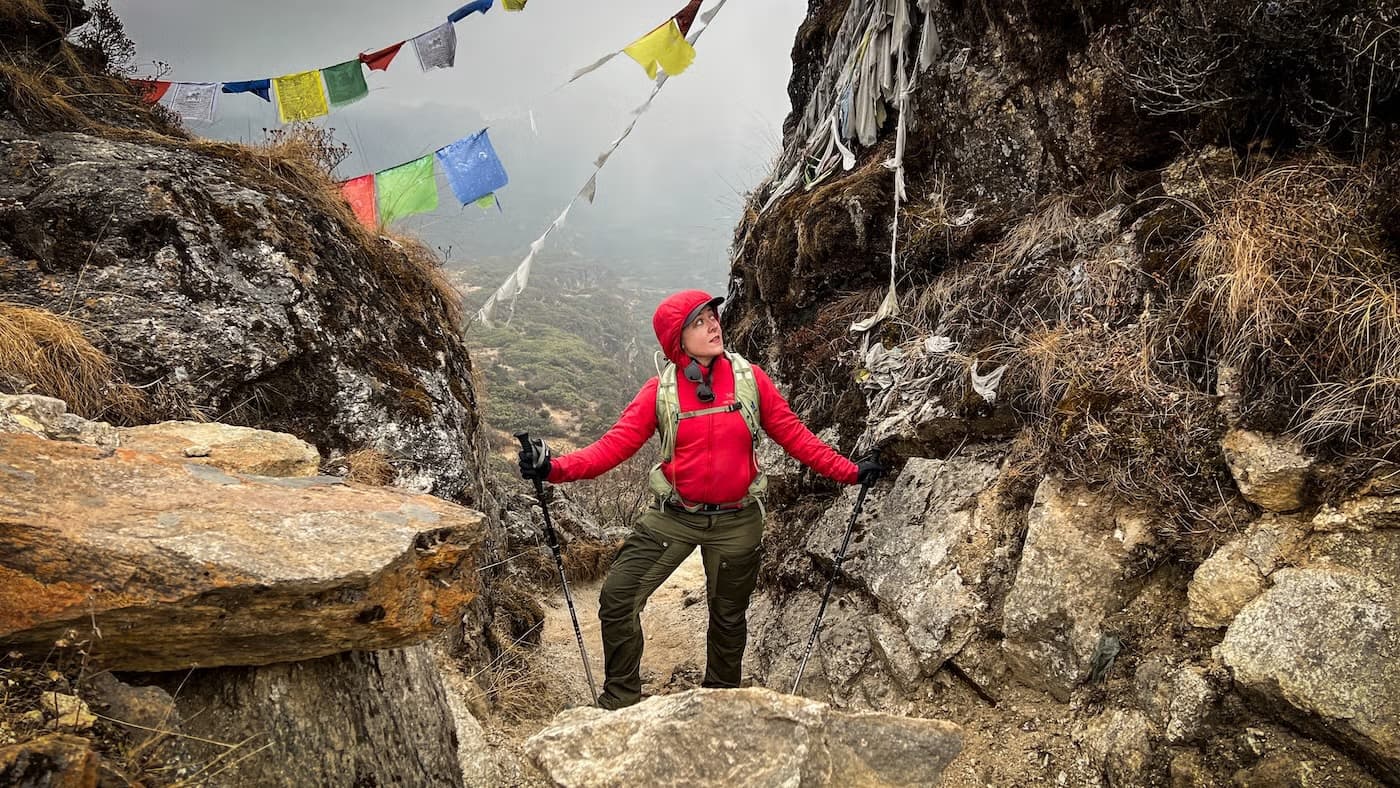 TrekDruk Path Trek — four days, Paro to Thimphu over the ridge, the alpine-lake landscape and the substantial first taste of Bhutanese trekking.Druk Path Trek — four days from Paro to Thimphu over the ridge, three high-altitude lakes (Jimilang Tsho, Janey Tsho, Simkota Tsho), max altitude ~4,200 m.
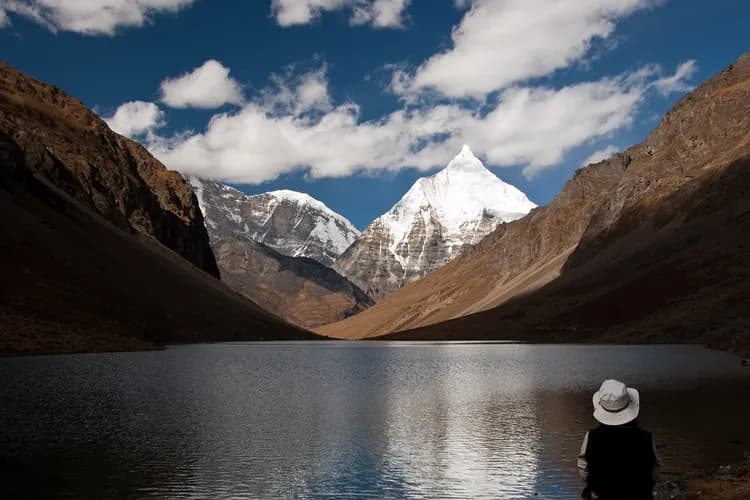 TrekChomolhari Lingshi Trek — six days, max altitude 4,900 m at Bonte La, the principal direct view of Chomolhari (7,326 m).Chomolhari Lingshi Trek — six days at 2,900–4,900 m, the principal view of Chomolhari, the high pasture country of Lingshi. Paro to Thimphu via Lingshi.
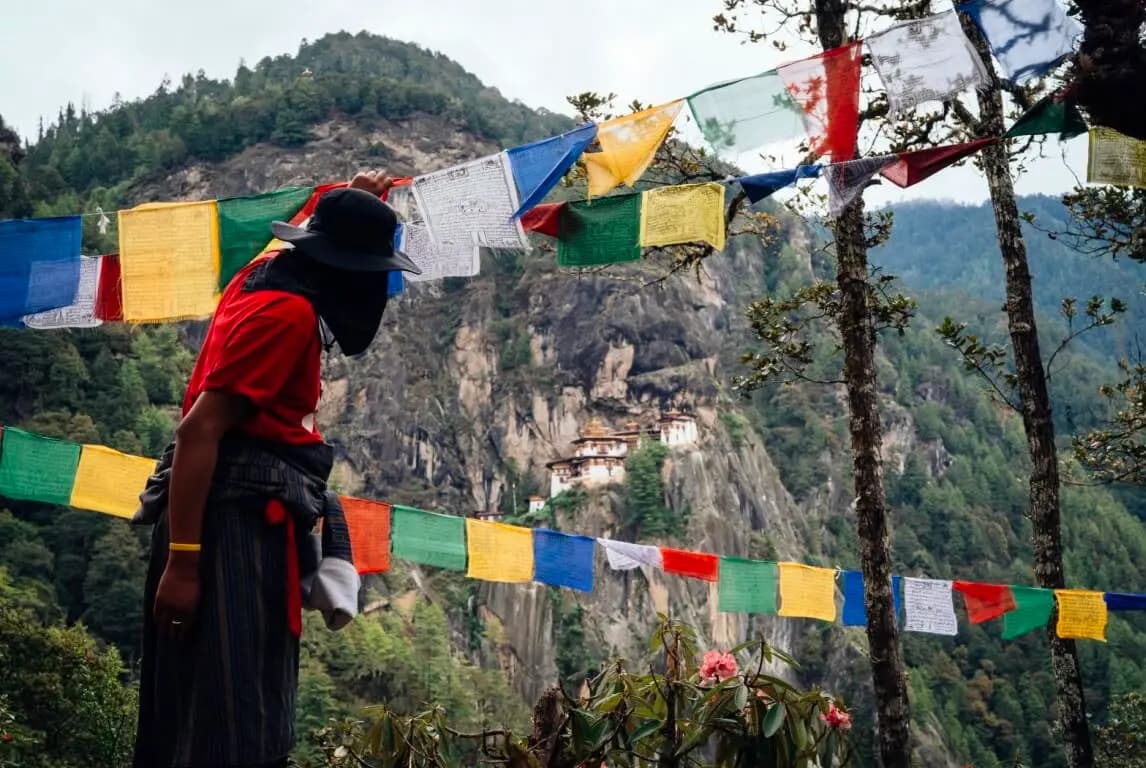 TrekTiger's Nest Day Hike — three hours up, two hours down, the cliff-face approach to Paro Taktsang.Tiger's Nest day hike — the route, the cafeteria stop, what to know. Three hours up, two hours down, 520m elevation gain. Trailhead, fitness, gear.
Journeys it informs
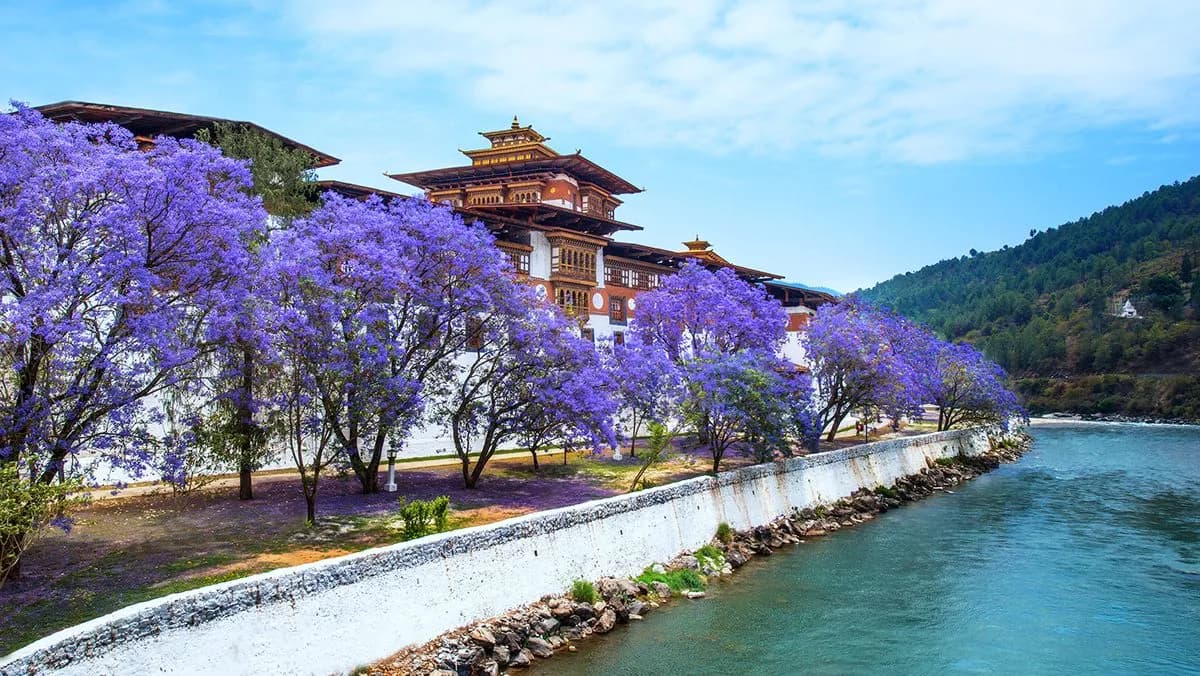 JourneyCherry blossoms over the Pa Chhu — April in Bhutan.A seven-night Bhutan journey in April — cherry blossom and rhododendron on Bhutan, Paro Tshechu if dates align, transparent pricing.
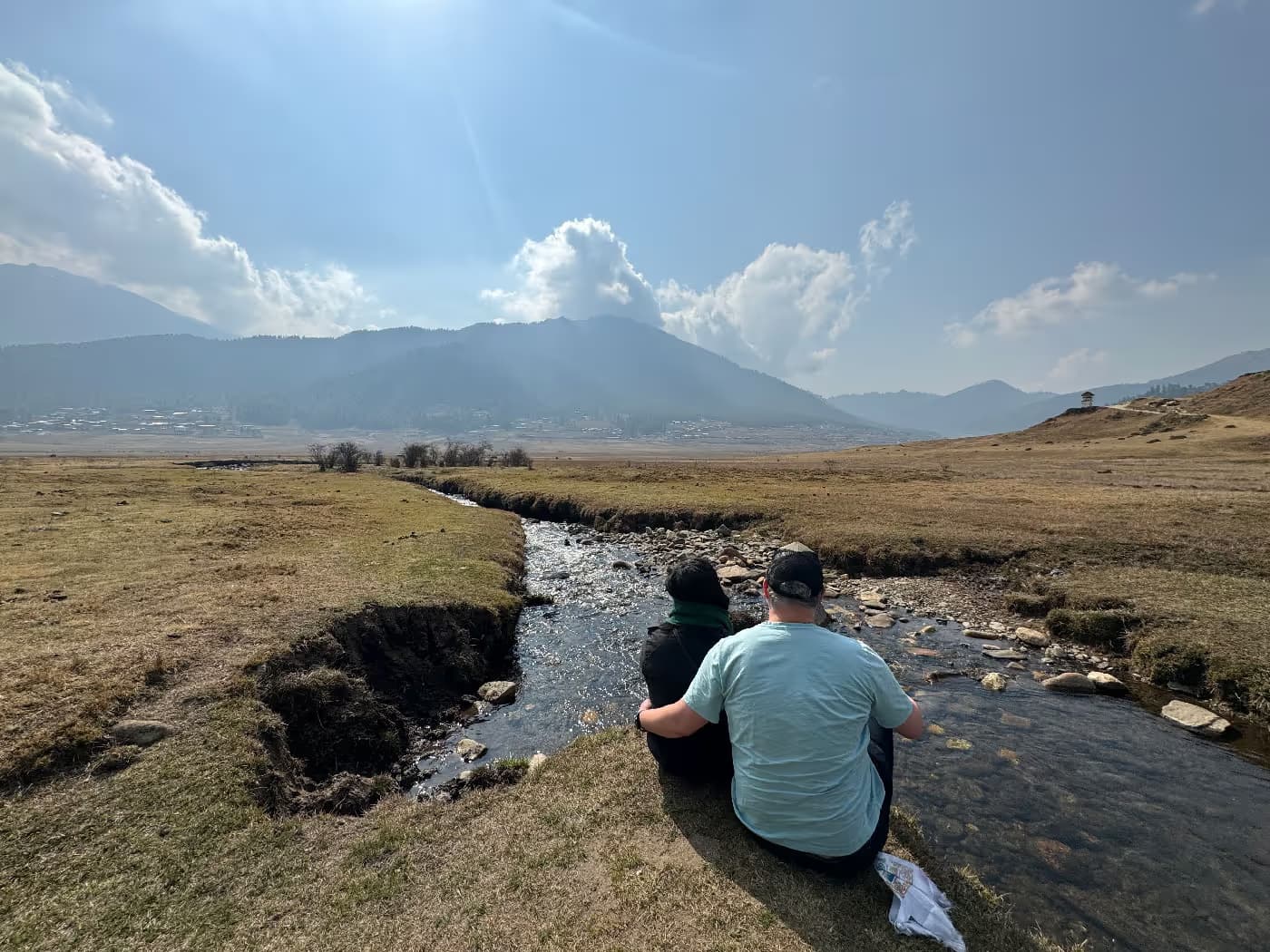 JourneyBhutan in January — the clearest skies of the year.A six-night winter journey through Bhutan in January — clearest Himalayan visibility, Punakha's warm valley, fewer travellers, and lodges by the fire.
Frequently asked
- Do I need a really warm coat in Bhutan?
- Yes, year-round — even in summer, monastery mornings and high-altitude visits are cold. A warm fleece or down sweater works for most of the year; a proper insulated down jacket is needed for December-February or for any high-altitude trek. The temperature variation by altitude is substantial — Paro at 2,200m is cool, Punakha at 1,200m is warm, Phobjikha at 3,000m is cold.
- Can I wear shorts in Bhutan?
- In the lodges and on the trails, yes. Inside monasteries, dzongs, and lhakhangs, no — the protocol requires long trousers or skirts below the knee and shoulders covered. You may be denied entry to religious sites in inappropriate dress. Bhutanese themselves attend in their finest gho and kira (the national dress); the visitor's smart casual coverage matches the register.
- Are drones really banned?
- Yes — strictly. The Royal Government bans civilian drone use without specific permit, which is rarely granted for tourism purposes. Drones are confiscated at Paro airport on arrival; the visitor reclaims them on departure. This is non-negotiable; please leave drones at home.
- What's the best camera for Bhutan?
- Whatever you're comfortable with. A modern mirrorless or DSLR rewards the photographic; a competent phone camera handles the cultural circuit. Bring a fast lens (f/2.8 or wider) for monastery interiors (often low-light); a longer lens (200mm+) for crane viewing in Phobjikha and birding generally. Tripod allowed but rarely essential.
- Do I need hiking boots if I'm not trekking?
- Yes — the Tiger's Nest hike is the principal walking moment of any Bhutanese journey and requires sturdy footwear with ankle support. Trainers and lifestyle sneakers are not suitable for the cliff-face trail. Even visitors not planning a multi-day trek will benefit from proper hiking boots or sturdy trail shoes for the day-walks (Cheri, Tango, Wangditse, Changangkha-to-Buddha).

