A Bhutanese national institution
The Royal Textile Academy of Bhutan — the principal Bhutanese weaving institution, the textile museum and active workshops.
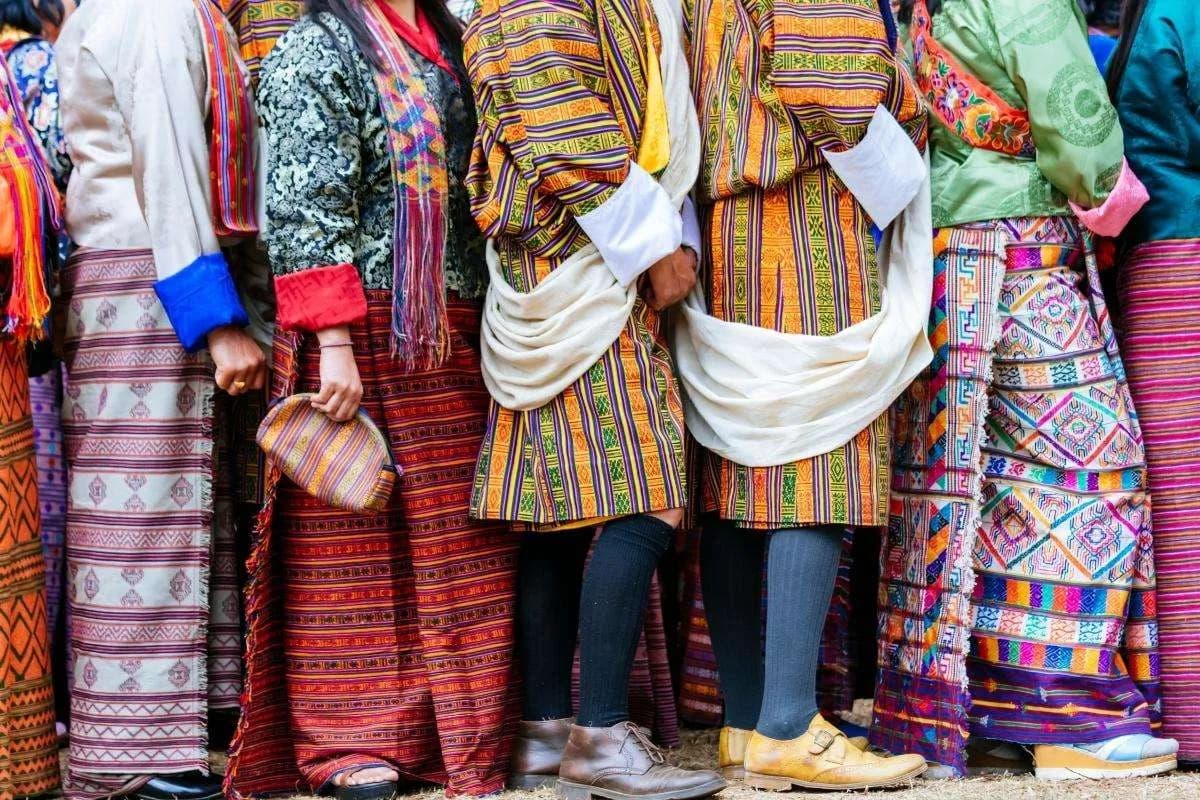
The Royal Textile Academy of Bhutan, established in 2005 under the patronage of Her Majesty Queen Mother Sangay Choden Wangchuck, is the principal institutional centre for Bhutanese weaving — combining a textile museum, active master-weaver workshops, and serious training programmes for Bhutanese apprentices. The institution preserves and develops the most-distinguished Bhutanese textile traditions including the Khoma valley kishuthara silk-brocade tradition (the most-prized form), the yathra wool-weaving tradition of Bumthang, and the broader Bhutanese textile. Essential for visitors with serious interest in the Bhutanese textile tradition.
Also known as RTA · Royal Textile Academy Bhutan · Textile Museum Thimphu
- Location
- Norzin Lam, central Thimphu, Thimphu
- Founded
- 2005
- Founder
- Her Majesty Queen Mother Sangay Choden Wangchuck
- Elevation
- 2,350 m
- Kind
- museum
The Academy's role
The Royal Textile Academy was established in 2005 under the patronage of Her Majesty Queen Mother Sangay Choden Wangchuck (one of His Majesty the Fourth Druk Gyalpo's queens) as the principal institutional centre for preserving and developing the Bhutanese textile tradition. The Academy operates across several registers: the textile museum with the principal Bhutanese textile collection from across the centuries; active master-weaver workshops where senior weavers produce contemporary kishuthara and yathra textiles; training programmes for Bhutanese apprentices in the principal weaving techniques and the decorative-tradition; the retail with the contemporary master-weaver pieces available for purchase. The Academy is one of the more significant cultural-institutional patronage projects of the contemporary Wangchuck dynasty.
The textile museum
The museum holds the principal Bhutanese textile collection — genuine period kira and gho pieces across the centuries, the most-distinguished kishuthara examples (the silk-brocade supplementary-weft kira tradition principally from the Khoma valley of Lhuentse), the yathra wool-weaving collection (the heavy patterned wool textiles principally from Bumthang), and the broader Bhutanese textile. The exhibits trace the evolution of Bhutanese textile traditions from the principal foundational forms through the contemporary; the royal-family pieces are particularly notable. Allow 90-120 minutes for the museum visit; the matched guide briefs visitors on the principal exhibits and the underlying tradition. See the Bhutanese textile theme for the broader cultural context.
Active workshops and master weavers
Alongside the museum, the Academy operates active workshops with senior master-weavers producing contemporary kishuthara and yathra textiles. Visitors can observe the weaving process at every stage — the silk-and-cotton preparation, the dyeing, the principal warping process, the supplementary-weft technique that gives the kishuthara its distinctive elaborate decorative. The sizable backstrap-loom tradition is the principal traditional Bhutanese weaving framework; the finest kishuthara pieces take 6-12 months to complete on the backstrap loom. The matched guide arranges extended visits with the master-weavers for visitors with serious interest in the tradition.
The retail offering
The Academy's considerable retail tradition includes contemporary master-weaver pieces across the price spectrum. Small textile items (table runners, small woven panels, kabneys) typically USD 100-500; standard-grade kira and gho typically USD 800-3,000; master-weaver kishuthara typically USD 5,000-20,000+. The commissioning tradition is also available for visitors who want a particular textile commissioned to specification; commission timelines are typically 6-12 months for significant pieces. The matched guide handles the purchase-and-shipping registers for visitors who acquire substantial pieces.
Visiting
- Getting there
- The Royal Textile Academy is on Norzin Lam in central Thimphu, approximately 5-10 minutes' drive from most Thimphu accommodations. The matched guide arranges the visit; typically combined with other principal Thimphu cultural visits (the National Museum at Paro Rinpung Dzong, the Folk Heritage Museum, the Tashichho Dzong).
- Opening hours
- Open Monday-Saturday 9am-5pm; closed Sundays and major national holidays. Allow 90-120 minutes for the visit; longer if engaging with the workshop or the retail.
- Dress and protocol
- Standard cultural-site protocol — modest dress, the textile-handling tradition operated by the Academy staff (visitors do not handle the principal museum pieces directly), no flash photography in the principal exhibit registers.
- Best time to visit
- Year-round. The Academy is fully indoor and weather-independent. October-May is the typical Thimphu visiting window; the workshop operates across the year. The Bhutanese textile-festival register in autumn provides substantial additional context where the trip aligns.
Journeys featuring this site
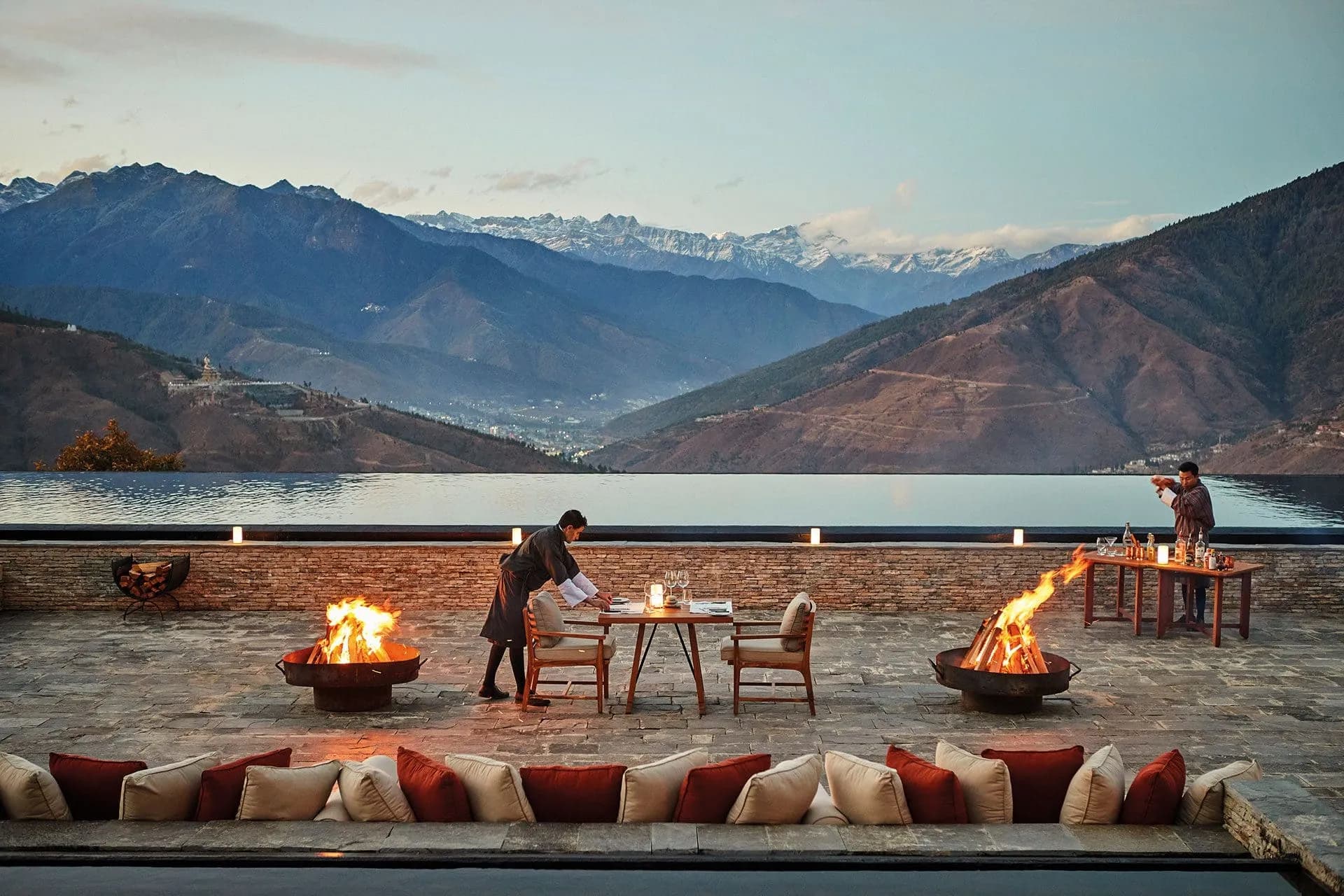 JourneyThe signature-tier Bhutan journey — private knowledgeable guide, the most considered lodge curation, helicopter or charter between valleys, exclusive-use arrangements where the season allows.The signature-tier Bhutan journey. Private knowledgeable guide, the most considered lodges, helicopter or PC-24 charter, exclusive-use arrangements. By invitation, from USD 14,000.
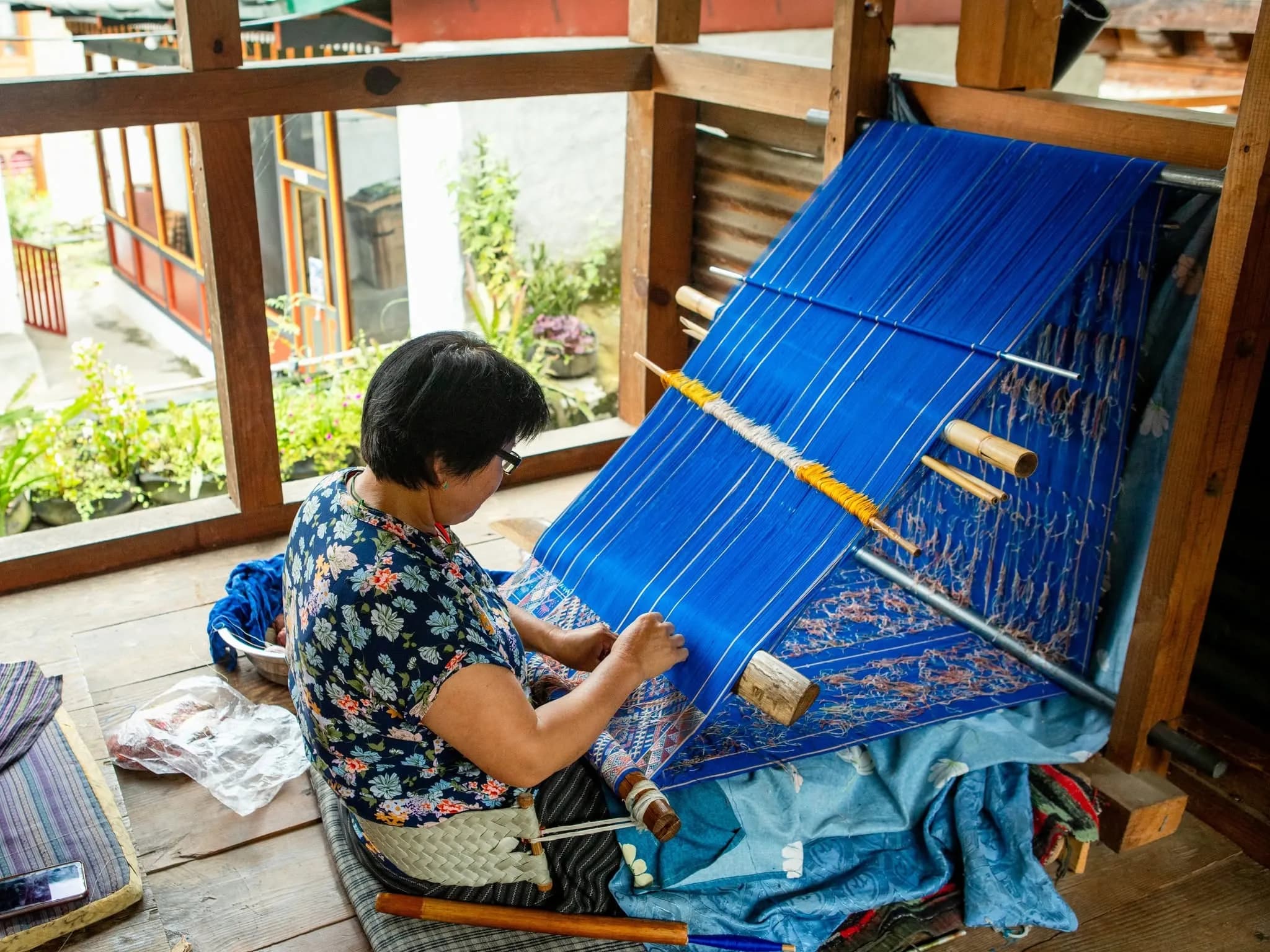 JourneyBhutan, read through its weaving.A seven-night Bhutan textile tour — Bhutanese workshop visits, master weaver introductions, and a guide who reads cloth the way an art historian reads brushwork.
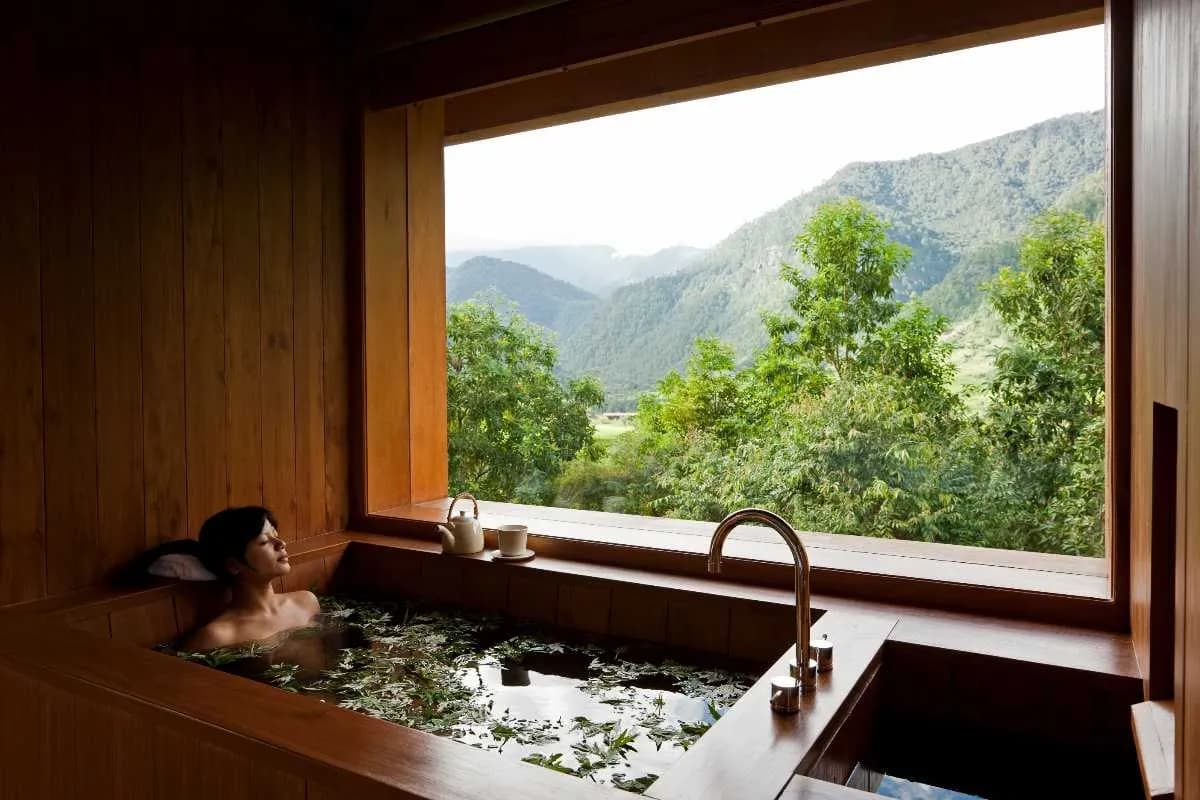 JourneySeven nights in Bhutan, on your terms.A private seven-night Bhutan honeymoon for couples flying from Singapore. Bhutanese lodges, a matched guide, transparent all-inclusive pricing.
Journeys that visit The Royal Textile Academy
Frequently asked
- Is the Royal Textile Academy worth a visit?
- For visitors with serious interest in the Bhutanese textile tradition, essential — the Academy is the principal institutional centre for the most-distinguished Bhutanese textile forms (kishuthara, yathra) and provides substantial access to the master-weavers and the commissioning. For general cultural visitors, the museum visit alone (90-120 minutes) provides excellent context on the Bhutanese textile tradition. The matched guide briefs visitors on the appropriate depth of engagement.
- Can I commission a kishuthara at the Academy?
- Yes. The Academy's commissioning register accommodates visitor commissions — typically 6-12 months for master-weaver pieces. Prices in the USD 5,000-20,000+ range for master-weaver kishuthara. The Academy handles the international shipping registers; the matched guide arranges the commission-and-delivery framework.
- How does this compare to the Khoma valley?
- Complementary registers. The Royal Textile Academy is the institutional centre in Thimphu — substantial museum, workshop access, retail-and-commission. The Khoma valley in Lhuentse is the weaving-community heartland — substantial direct family-weaver access in the traditional rural. Visitors with serious textile interest typically combine both; the Academy as the institutional entry-point in Thimphu, the Khoma valley as the deeper rural-community. See the Lhuentse entry for the Khoma valley context.

