The Chomolhari Circuit
Chomolhari Yaksa Trek — seven days, max altitude 4,890 m at Bhonte La, the loop route from Paro back to Paro.
The Chomolhari Yaksa Trek (also known as the Chomolhari Circuit or Jomolhari Loop) is the seven-day circuit variant of the Chomolhari trekking family — Shana to the Jangothang base camp at 4,080 m directly beneath Chomolhari (7,326 m), then a southern loop through Soi Yaksa, Thombu Shong, and Sharna Zampa back to Paro. The full Chomolhari mountain register without the long traverse north to Lingshi or Laya.
Also known as Chomolhari Circuit · Jomolhari Loop · Soi Yaksa Trek · Jomolhari II · Chomolhari Soi Yaksa
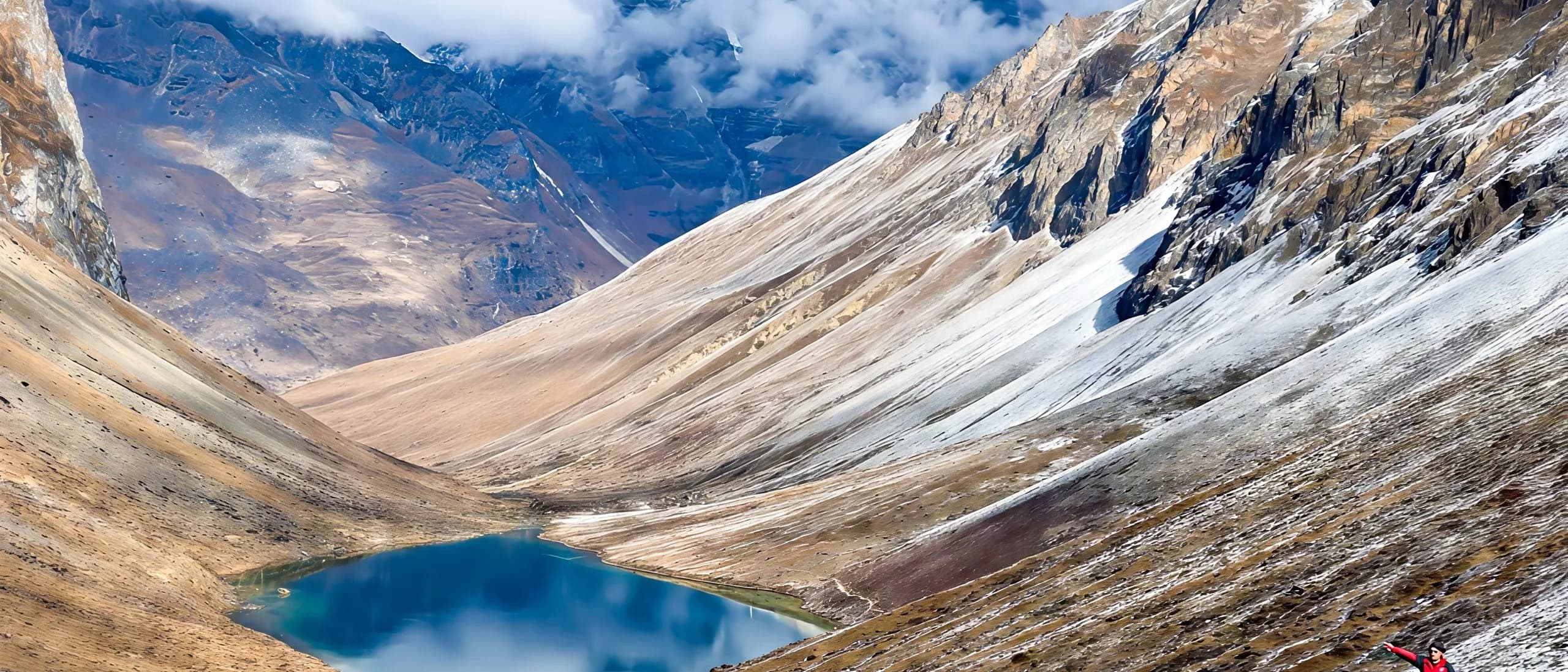
- Duration
- 7 days
- Max altitude
- 4,890 m
- Difficulty
- strenuous
- Distance
- 95 km
- Region
- Paro
- Trailhead
- Shana, upper Paro valley (2,870 m) — driven from Drukgyel Dzong on the now-motorable road, approximately 1 hour
- Trail end
- Sharna Zampa, upper Paro valley — vehicle pickup, drive back to Paro town (~1 hour)
- Best months
- April · May · September · October
- Walk type
- trek
The route, in brief
The Chomolhari Yaksa Trek is the southern-loop variant of the Chomolhari family. The first three days are shared with the Chomolhari Lingshi Trek and the Chomolhari Laya Lingshi Trek — Shana to Jangothang base camp via Thangthangkha. After the acclimatisation day at Jangothang, the Yaksa route diverges south over Bhonte La (4,890 m) (rather than continuing north via Nyile La into Lingshi country), descending to the Soi Yaksa camp; then over Takhung La (4,520 m) to Thombu Shong; finally over Thombu La (4,380 m) and out to Sharna Zampa with vehicle pickup back to Paro. Seven days total; loop back to the starting region (no need to drive across to Thimphu or Gasa).
Why the circuit — what it gives you that Lingshi doesn't
The Chomolhari Yaksa Trek is the right choice for trekkers who want the full Chomolhari mountain register but don't have time for the longer Lingshi-Thimphu route (8-9 days) or the considerably longer Laya-Lingshi route (13 days). The southern loop gives you: (1) the same Jangothang base camp days directly beneath the south face of Chomolhari; (2) the same acclimatisation day at the base; (3) a southern descent through the alternative valley country with the high pasture views; (4) a return to the start region without the logistical complexity of a one-way trek requiring a separate vehicle pickup deep in the country. The mountain itself is the principal reward; the southern loop holds the mountain at the centre of the trek and returns you cleanly to Paro for the rest of the Bhutanese cultural circuit.
Difficulty, season, and the realistic profile
Strenuous. Three high passes — Bhonte La (4,890 m), Takhung La (4,520 m), Thombu La (4,380 m) — across three consecutive days carry the principal altitude challenge. The terrain itself is well-defined and the gradient is moderate; the difficulty is the altitude, not the trail. A reasonably-fit walker with prior multi-day trekking experience (any 4+ day trek above 3,000m) is the realistic profile. Pre-trek conditioning over 2-3 months is the standard preparation. The two principal seasons are April-May (spring; rhododendron bloom on the lower trail; pre-monsoon clarity) and September-October (post-monsoon; the autumn clear-sky window). June-August is monsoon; November-March the high passes are snow-affected.
Day by day
- Day 1
Shana to Thangthangkha
3,610 m · 22 km · 8 h walking
Driven from Drukgyel Dzong to Shana on the motorable road (approximately 1 hour). Climb through pine and rhododendron forest along the Pa Chhu to the alpine meadow at Thangthangkha — the first camp.
- Day 2
Thangthangkha to Jangothang
4,080 m · 19 km · 6 h walking
Continued climb up the Pa Chhu valley to the Jangothang base camp at the foot of Chomolhari's south face. The first full view of the mountain.
- Day 3
Jangothang — acclimatisation day
4,080 m · 6 km · 4 h walking
Rest day at the base camp. Acclimatisation walks to the Tsophu lakes or up the Chomolhari ridge for the broader panorama. Brief offering to Aum Jomo per the Bhutanese trekking protocol.
- Day 4
Jangothang to Soi Yaksa via Bhonte La
4,890 m · 18 km · 8 h walking
South over Bhonte La (4,890m) — the trek's highest pass and principal altitude challenge. Long descent through alpine pasture to the Soi Yaksa camp.
- Day 5
Soi Yaksa to Thombu Shong via Takhung La
4,520 m · 16 km · 7 h walking
Cross Takhung La (4,520m), the trek's second high pass. Descend to the Thombu Shong camp in the high pasture country.
- Day 6
Thombu Shong to Sharna Zampa via Thombu La
4,380 m · 14 km · 7 h walking
Cross Thombu La (4,380m), the third and final high pass. Long descent through pine forest to Sharna Zampa in the upper Paro valley; vehicle pickup for the short drive back to Paro town.
Before you go
- Season
- Two windows. April-May catches the spring rhododendron bloom on the lower trail and clear pre-monsoon mountain views. September-October catches the autumn clear-sky window with the most-reliable Chomolhari visibility. November-March the high passes are snow-affected; June-August is monsoon.
- Fitness
- Strenuous. Six trekking days; three consecutive days with high pass crossings (Bhonte La 4,890m, Takhung La 4,520m, Thombu La 4,380m). Max altitude 4,890m at Bhonte La (Day 4). A reasonably-fit walker with prior multi-day trekking experience is the realistic profile. Pre-trek conditioning over 2-3 months is the standard preparation. The altitude — not the terrain — is the principal challenge.
- Crew and accommodation
- Camp-based trekking with a porter-and-yak crew, cook team, and trek leader. Insulated tent camps with proper kit; hot food at every camp. No lodge-based variants exist on this route.
- Adjacent routes — choosing between the three Chomolhari trek variants
- Three principal routes in the Chomolhari family: this Yaksa circuit (7 days; loop back to Paro; max 4,890m); the [[chomolhari-trek|Chomolhari Lingshi]] route (8-9 days; one-way through Lingshi to Thimphu; max 4,900m); and the [[chomolhari-laya-gasa-trek|Chomolhari-Laya-Lingshi]] route (13 days; the longer northward traverse through Lingshi to Laya and out at Gasa hot springs; max 5,005m). The Yaksa is the right choice for time-constrained trekkers; the Lingshi route for those who want the full west-to-east traverse to Thimphu; the Laya route for those who want the full Bhutanese high-trekking arc.
Monuments on the route
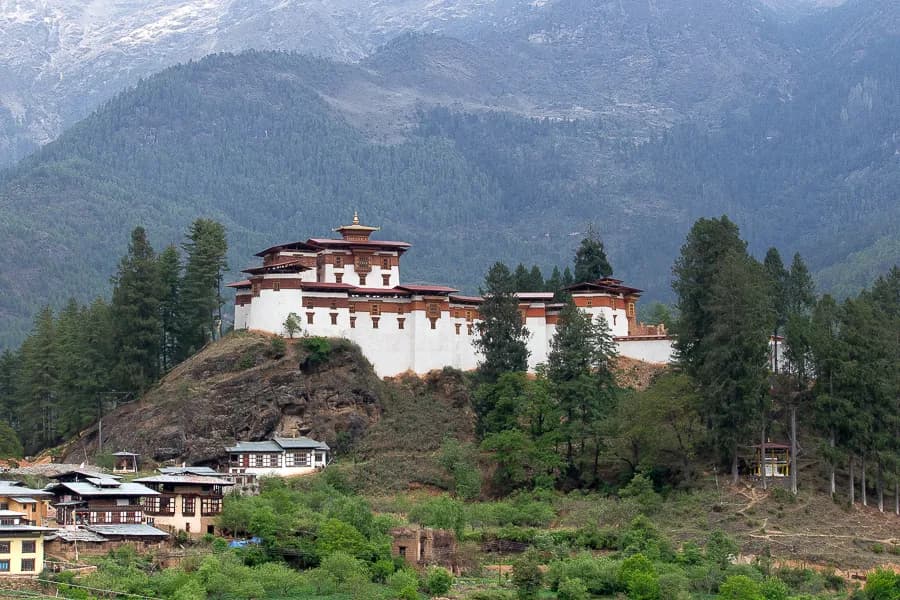 MonumentDrukgyel Dzong — the 1649 victory fortress, ruined by fire in 1951, under restoration since 2016.Drukgyel Dzong — the 1649 Bhutanese victory fortress, ruined by fire 1951, under restoration. The Chomolhari panorama and visiting.
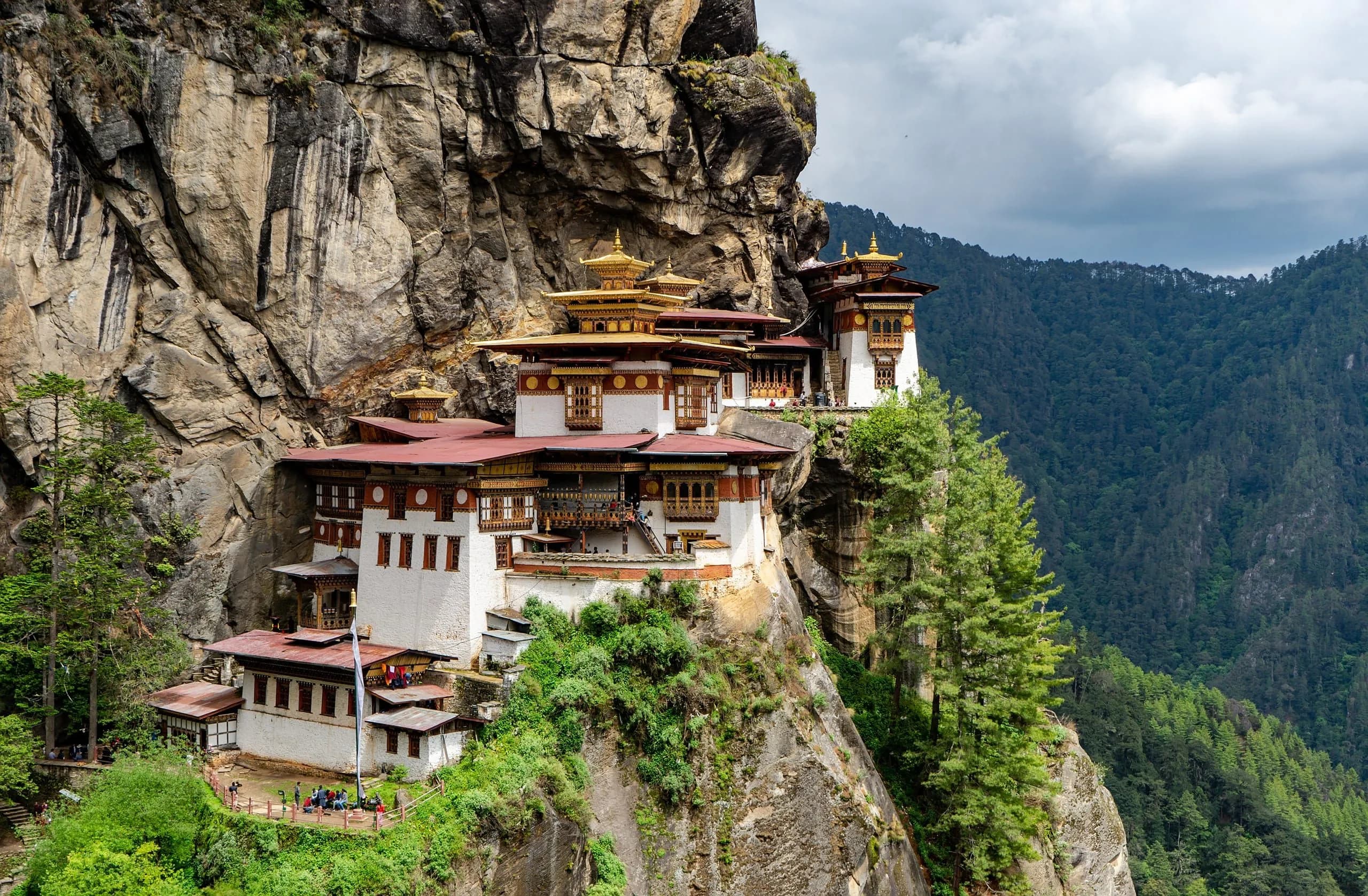 MonumentParo Taktsang — Guru Rinpoche's meditation cave, perched at 3,120 metres on the cliff above the Paro valley.Paro Taktsang (Tiger's Nest) — the founding by Guru Rinpoche, the 1692 monastery, the 2-hour hike, what to know before you visit.
Journeys around this trek
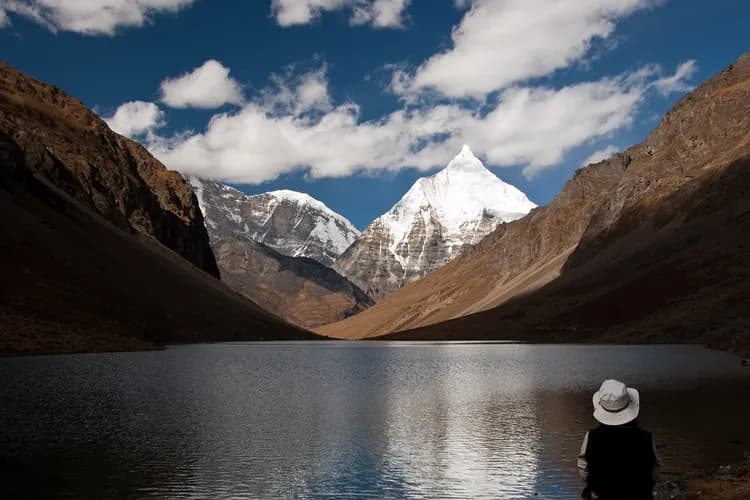 JourneyThe Chomolhari Base Camp trek, paced for the autumn window.A fourteen-night Bhutan Chomolhari Trek itinerary in the autumn clear-sky window. Five days at altitude, premium lodges either side, named trekking guides.
- JourneyFourteen nights for the Chomolhari Trek — the Bhutanese alternative to Annapurna.A fourteen-night Bhutan Chomolhari Trek itinerary positioned as the Bhutanese alternative to Nepal's Annapurna Base Camp or Annapurna Circuit. Substantially less crowded.
 JourneySeven nights in Bhutan, on foot — light treks from Sydney.A seven-night Bhutan light-trek journey from Sydney — first half-day trails, comfortable lodges, a guide who paces the day to you.
Frequently asked
- How is this different from the Chomolhari Lingshi Trek?
- The Yaksa route is a 7-day loop back to Paro. The Lingshi route is 8-9 days, one-way to Thimphu via Lingshi village and the high pasture country. Both share the first three days (Shana → Jangothang). On Day 4 the Yaksa goes south over Bhonte La; the Lingshi route goes north over Nyile La. The Yaksa is the simpler logistics (return to Paro); the Lingshi gives more of the high pasture country and the Lingshi Dzong views.
- Will I see Chomolhari?
- Yes — the Jangothang base camp (Days 2-3) gives the most direct view of Chomolhari (7,326m) accessible to non-mountaineers. Weather visibility is most reliable April-May and September-October. The first full view from Thangthangkha (Day 1 evening) is itself notable.
- Can I climb Chomolhari?
- No. The Royal Government has formally prohibited climbing of all Bhutanese peaks above 6,000 metres since 1994, in deference to the Bhutanese view of high peaks as abodes of protector deities (Aum Jomo for Chomolhari). The Jangothang base camp is the closest direct approach permitted under the current Royal Government policy.
- What about acclimatisation — is one day enough?
- For most reasonably-fit walkers with prior multi-day trekking experience, the single acclimatisation day at Jangothang (Day 3) is adequate. We strongly recommend a 2-3 night Paro acclimatisation stay before the trek begins (Paro at 2,250m gives a head start), and the matched trek leader carries oxygen, Diamox, and the standard altitude protocols. For first-time high-altitude trekkers or those with known altitude sensitivity, we add a second Jangothang acclimatisation day.
- Lodges or camp?
- Camp only. No lodge-based variants exist on this route. The premium operators provide insulated tent camps with expedition-grade kit, hot food at every camp, and a crew that handles all camp logistics. Camp life on the Yaksa circuit is more comfortable than many first-time trekkers expect.

