A Bhutanese dzongkhag
Trashiyangtse — the northern eastern dzongkhag, the Chorten Kora pilgrimage, the Bumdeling crane wintering site.
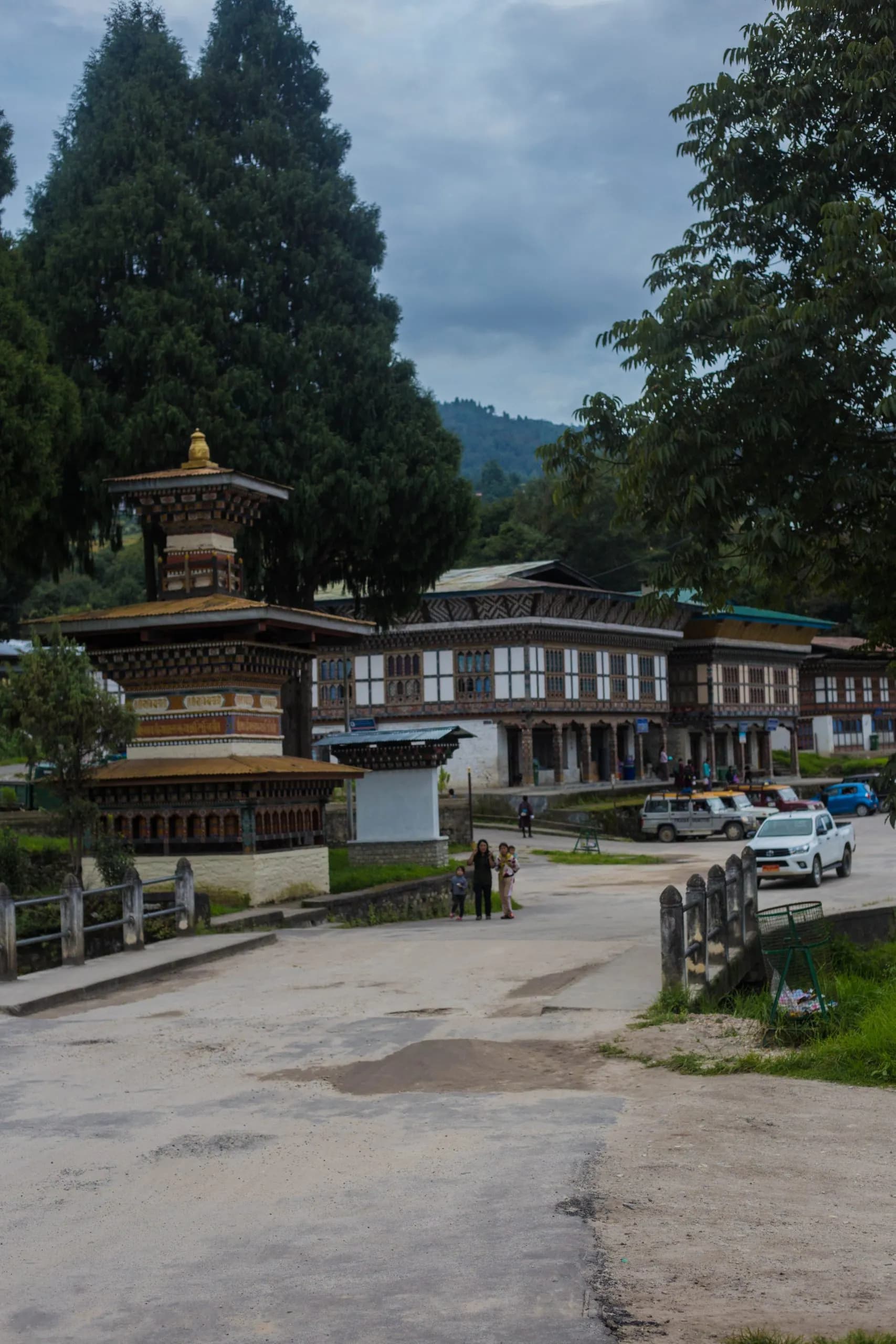
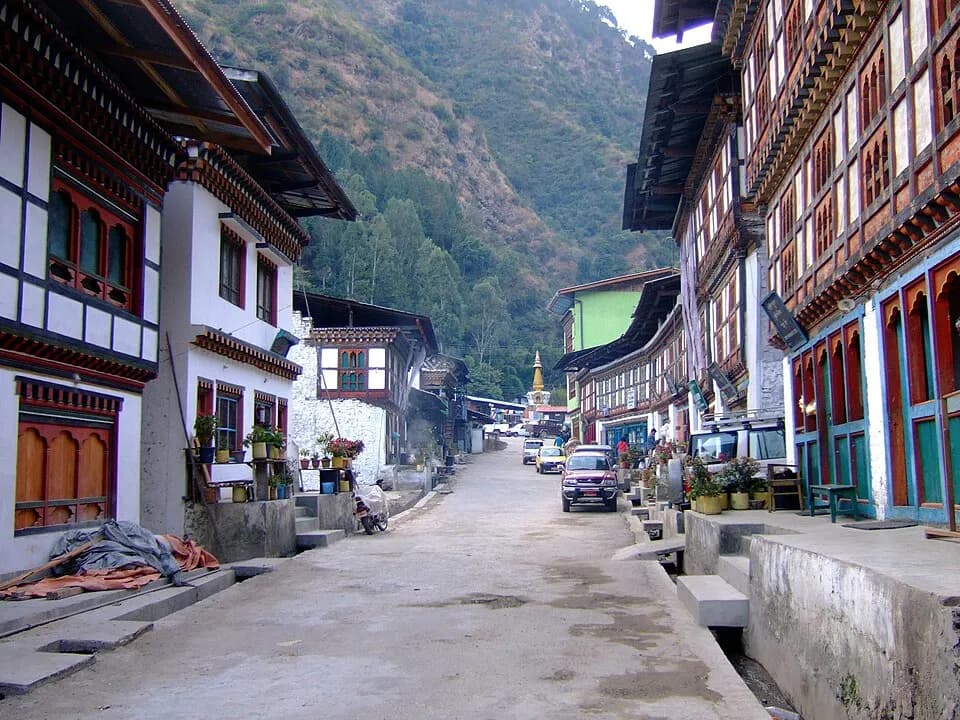
Trashiyangtse is the northern eastern Bhutanese dzongkhag — the principal home of the Chorten Kora pilgrimage (the Nepalese-style stupa, one of the most-distinctive Bhutanese religious monuments), the alternative crane-wintering site at Bumdeling Wildlife Sanctuary (the second-most-substantial black-necked crane population after Phobjikha), and the principal centre of Bhutanese woodturning and traditional paper craft. The dzongkhag is one of the more rewarding cultural-and-natural sites in the eastern circuit.
- District
- Trashiyangtse
- Altitude
- 1,750 m
- Kind
- dzongkhag
- Coordinates
- 27.611, 91.498
- Also known as
- Trashiyangtse Dzongkhag
Chorten Kora — the Nepalese-style stupa
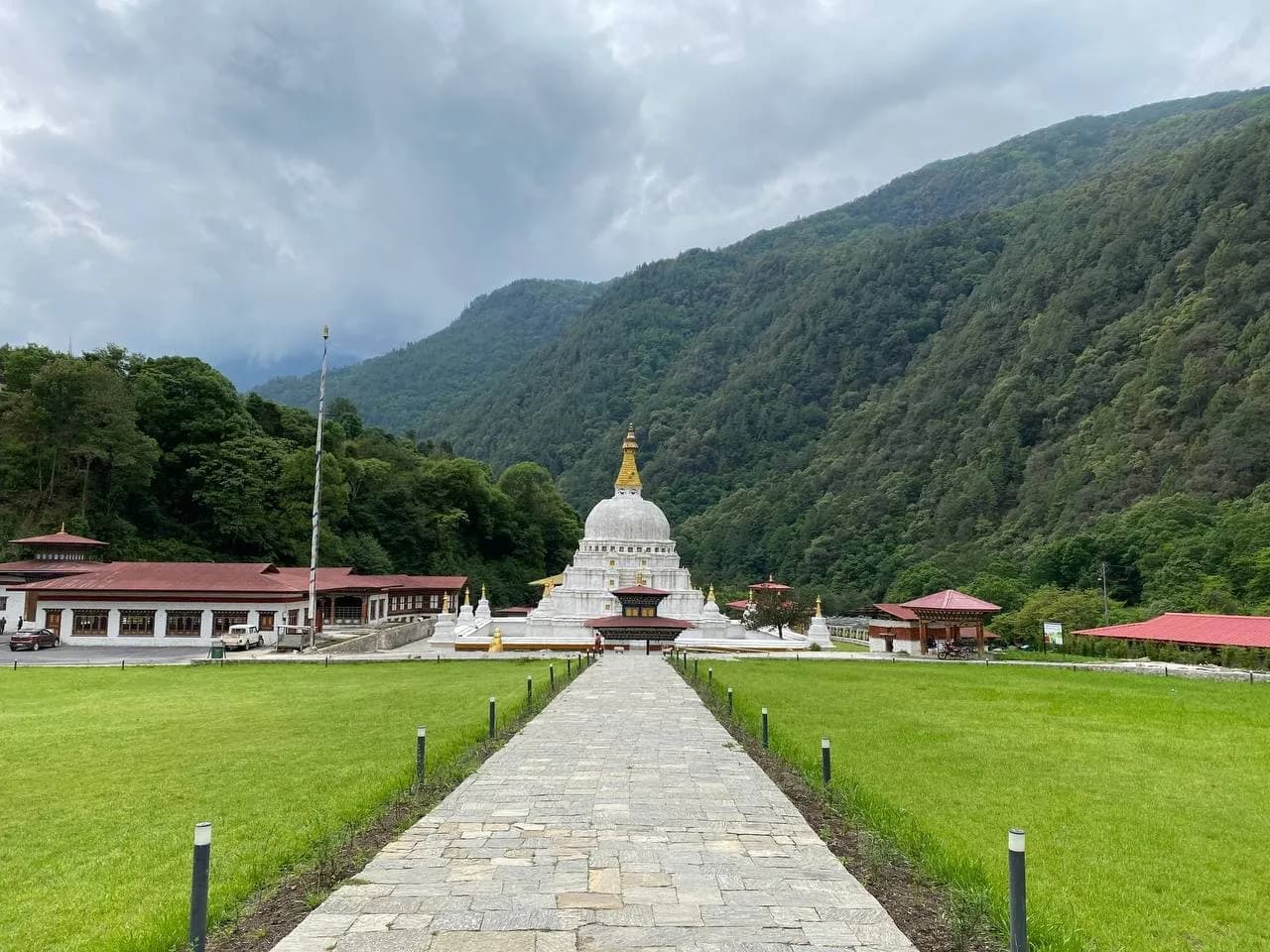
Chorten Kora is the Nepalese-style stupa at the centre of Trashiyangtse town — one of the most-distinctive Bhutanese religious monuments. The chorten was built in 1740 by Lama Ngawang Loday, modelled on the Boudhanath Stupa in Kathmandu. The architectural-and-religious tradition is Nepalese-style rather than the standard Bhutanese chorten tradition; the chorten is one of two principal Nepalese-style stupas in the country (the other being the older Chendebji Chorten near Trongsa). The Chorten Kora Tshechu in February-March is the principal annual festival — the combined Drukpa and Nyingma pilgrimage, with substantial Brokpa and Bhutanese-Indian-border visitor numbers. The chorten is held to confer significant merit on the pilgrim circumambulation (the kora — walking around the chorten as a devotional practice). See the Chorten Kora festival entry.
Bumdeling Wildlife Sanctuary — the second crane site
Bumdeling Wildlife Sanctuary in the Trashiyangtse dzongkhag is the second-most-significant black-necked crane wintering site in Bhutan after Phobjikha. The wetland-and-grassland register in the upper Bumdeling valley supports substantial migratory bird populations across the winter (November-February); approximately 100-150 black-necked cranes winter at Bumdeling in a typical year, alongside substantial Tibetan crane, falcated duck, and other waterbird populations. The conservation-and-monitoring work operates through the Royal Society for the Protection of Nature; visitor access is more limited than Phobjikha (less-developed visitor infrastructure, more deferential conservation protocols) but the natural setting makes the site rewarding for serious birders and conservation-interested visitors. See the Bhutan birding experience.
Woodturning and traditional paper
Trashiyangtse is the principal centre of Bhutanese woodturning (the production of the traditional turned-wood bowls and cups in the decorative) and traditional paper craft (the Bhutanese Daphne-paper tradition, used principally for religious-text printing and ceremonial purposes). The Institute of Zorig Chusum (the Thirteen Traditional Arts and Crafts) operates a satellite campus in Trashiyangtse town, training apprentices in the woodturning-and-paper context alongside the broader traditional-craft programme. The matched guide arranges visits to the working craft establishments for visitors with serious interest in the Bhutanese traditional-craft; the Trashiyangtse woodturning tradition is one of the more-distinctive features of the eastern Bhutanese material-craft tradition.
Visiting
- Access — via Trashigang
- Trashiyangtse is accessed by road from Trashigang (approximately 1.5-2 hours' drive on the northern road from Trashigang town). For visitors with eastern-Bhutan focus, Trashiyangtse is typically combined with Trashigang on a 2-3 day eastern-circuit anchor segment. Domestic flight to Yongphula then road transfer is the principal access route.
- Where to stay
- Standard government-rated hotels in Trashiyangtse town. No premium-tier lodgings as of 2026. Most visitors stay overnight at Trashiyangtse or combine with overnight at Trashigang.
- Best window
- October-May for the eastern routes. The Chorten Kora Tshechu (February-March) is the principal festival window; the Bumdeling crane window is November-February.
When the valley gathers
Where to go next
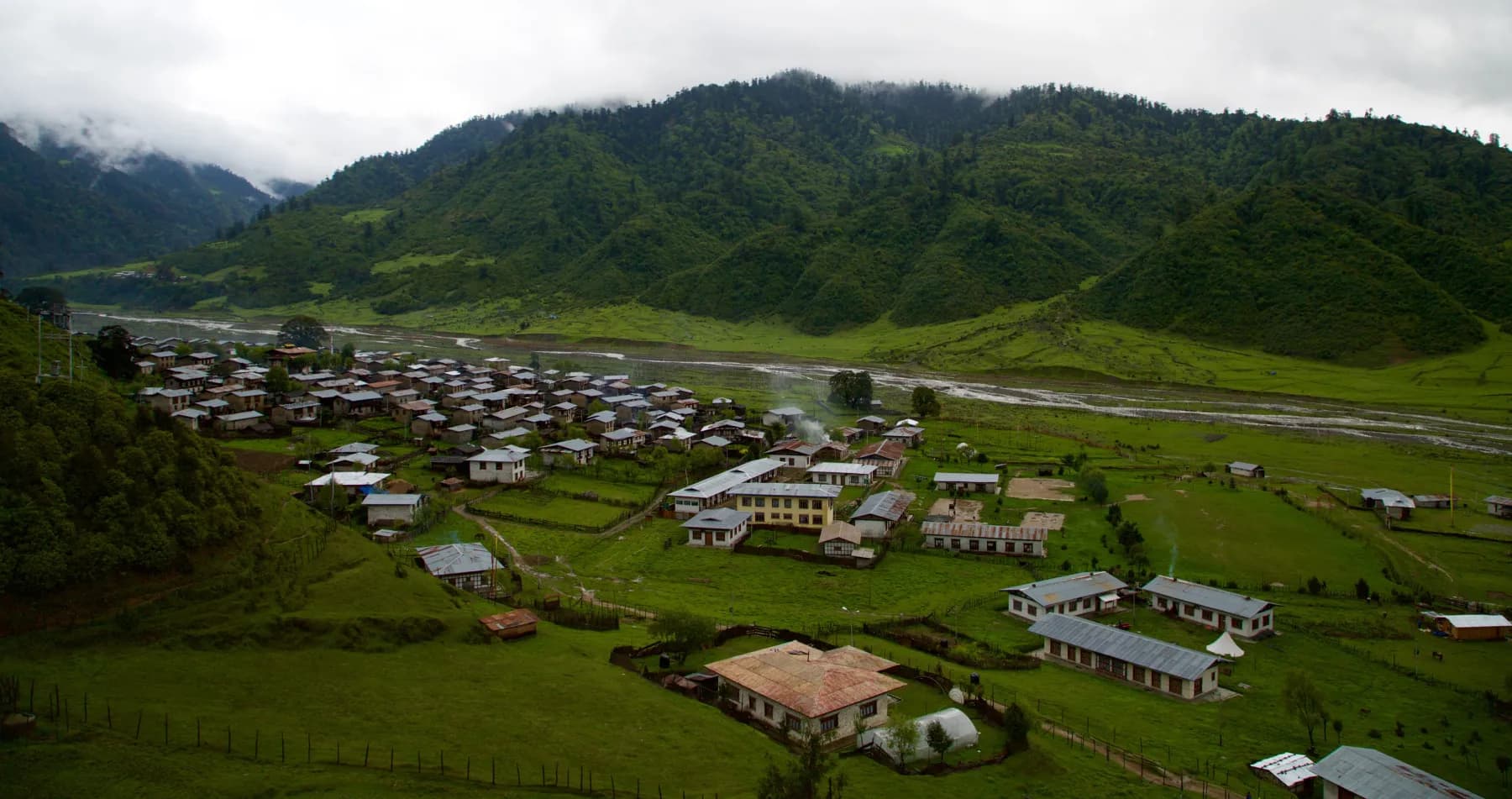 PlaceTrashigang — the easternmost Bhutanese dzongkhag, the gateway to Sakteng, the eastern cultural anchor.Trashigang — the easternmost Bhutanese dzongkhag. Trashigang Dzong above the Drangme Chhu confluence. Gateway to Sakteng. The eastern cultural anchor.
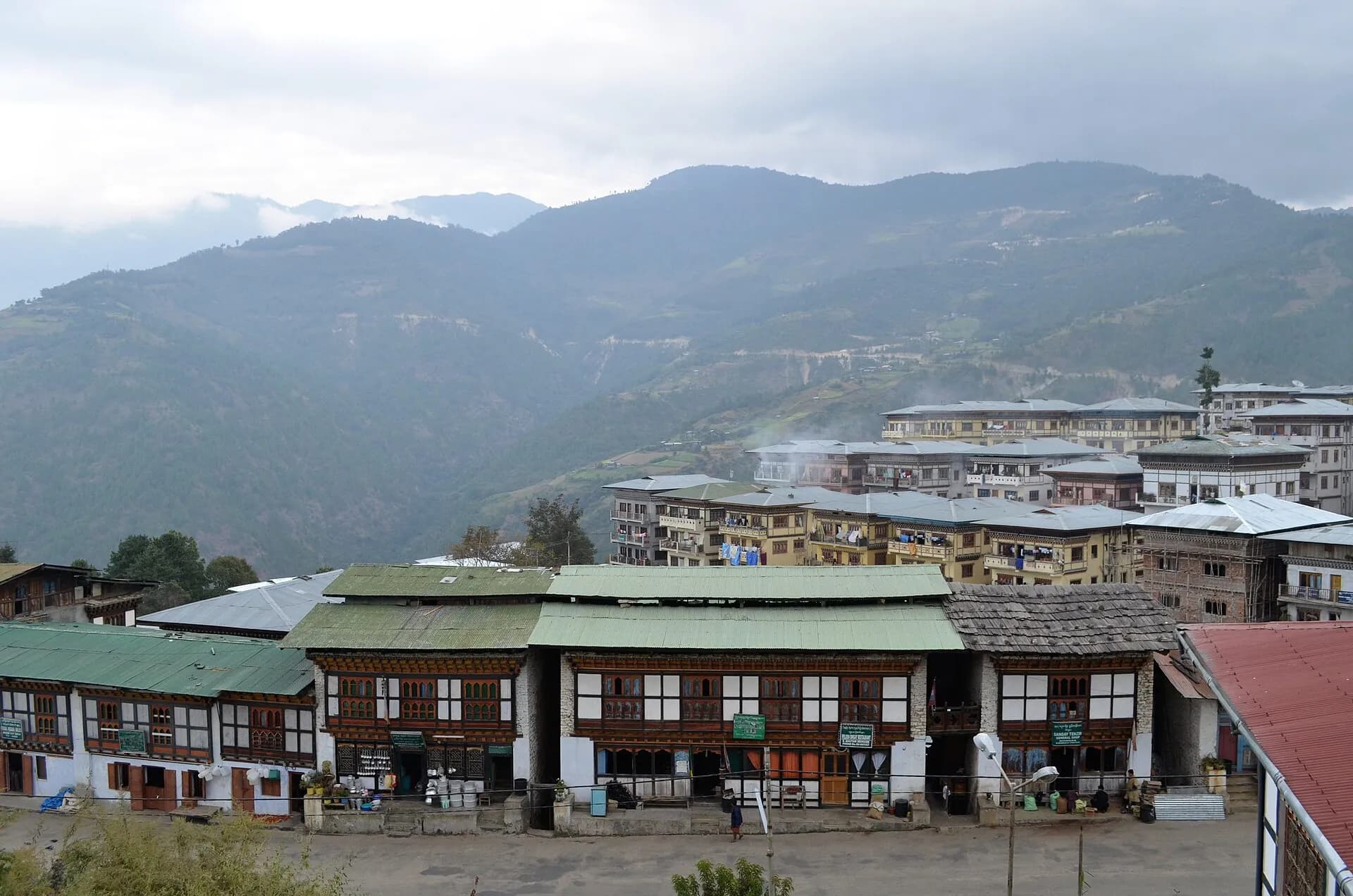 PlaceMongar — the eastern circuit anchor, the gateway to Lhuentse and Trashigang, the Yongkola birding corridor.Mongar — the eastern circuit anchor. Gateway to Lhuentse, Trashigang, Trashiyangtse, Royal Manas. The Yongkola birding corridor. Mongar Dzong (1930).
Journeys through here
 JourneyFourteen nights from Paro to Guwahati — the country as a single arc.A fourteen-night Bhutan east-to-west circuit exiting via Samdrup Jongkhar and Guwahati. The full eastern dzongkhags, the quieter half of the country.
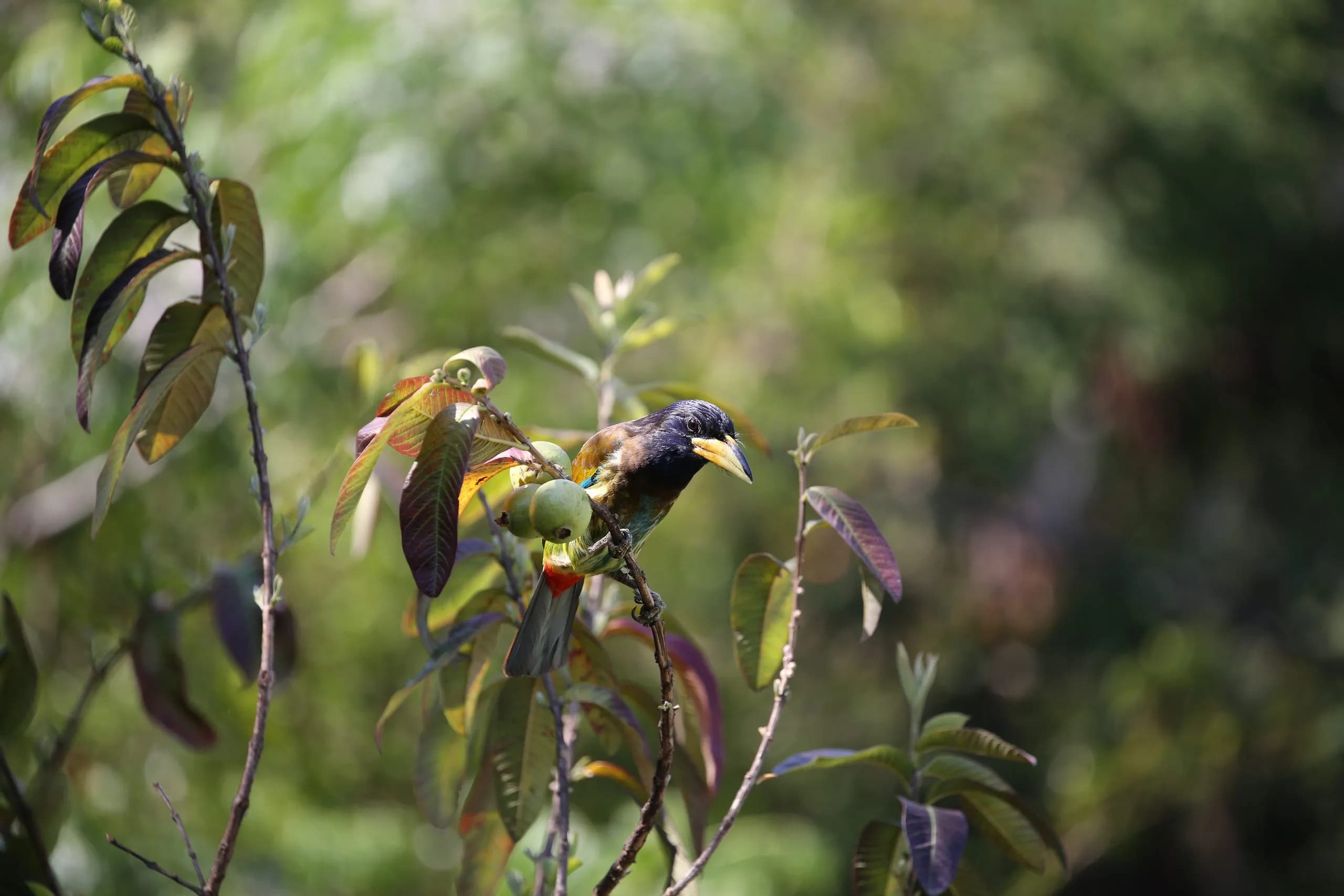 JourneyEight nights for the country's principal endemics — cranes at Phobjikha, the heron on the Punatsangchhu, the hornbills in the broadleaf belt.An eight-night Bhutan birding journey targeting the principal endemics — black-necked cranes at Phobjikha, white-bellied heron, hornbills, the beautiful nuthatch.
Journeys that visit Trashiyangtse
Frequently asked
- Should I visit Chorten Kora?
- For visitors with serious interest in the Bhutanese religious-monumental, yes — the Nepalese-style stupa is one of the more-distinctive features of the Bhutanese religious-architectural tradition. The Chorten Kora Tshechu (February-March) is one of the more-distinctive eastern festivals. The matched guide briefs visitors on the cultural-and-religious context.
- Can I see cranes at Bumdeling?
- Yes, November-February. The Bumdeling crane site is less developed than Phobjikha (fewer visitor facilities, more limited observation infrastructure) but the natural setting makes the site rewarding for serious birders. The matched guide arranges access with the principal Bhutanese conservation organisations.
- What is the woodturning register about?
- The Bhutanese tradition of turned-wood bowls and cups, principally produced in the Trashiyangtse area. The wood is principally from local hardwood species; the turning operates traditionally (foot-operated lathes, hand tools). The decorative tradition includes the lacquer finish in the principal Bhutanese-traditional colours. The matched guide arranges visits to working studios for serious visitors.

