A Bhutanese experience
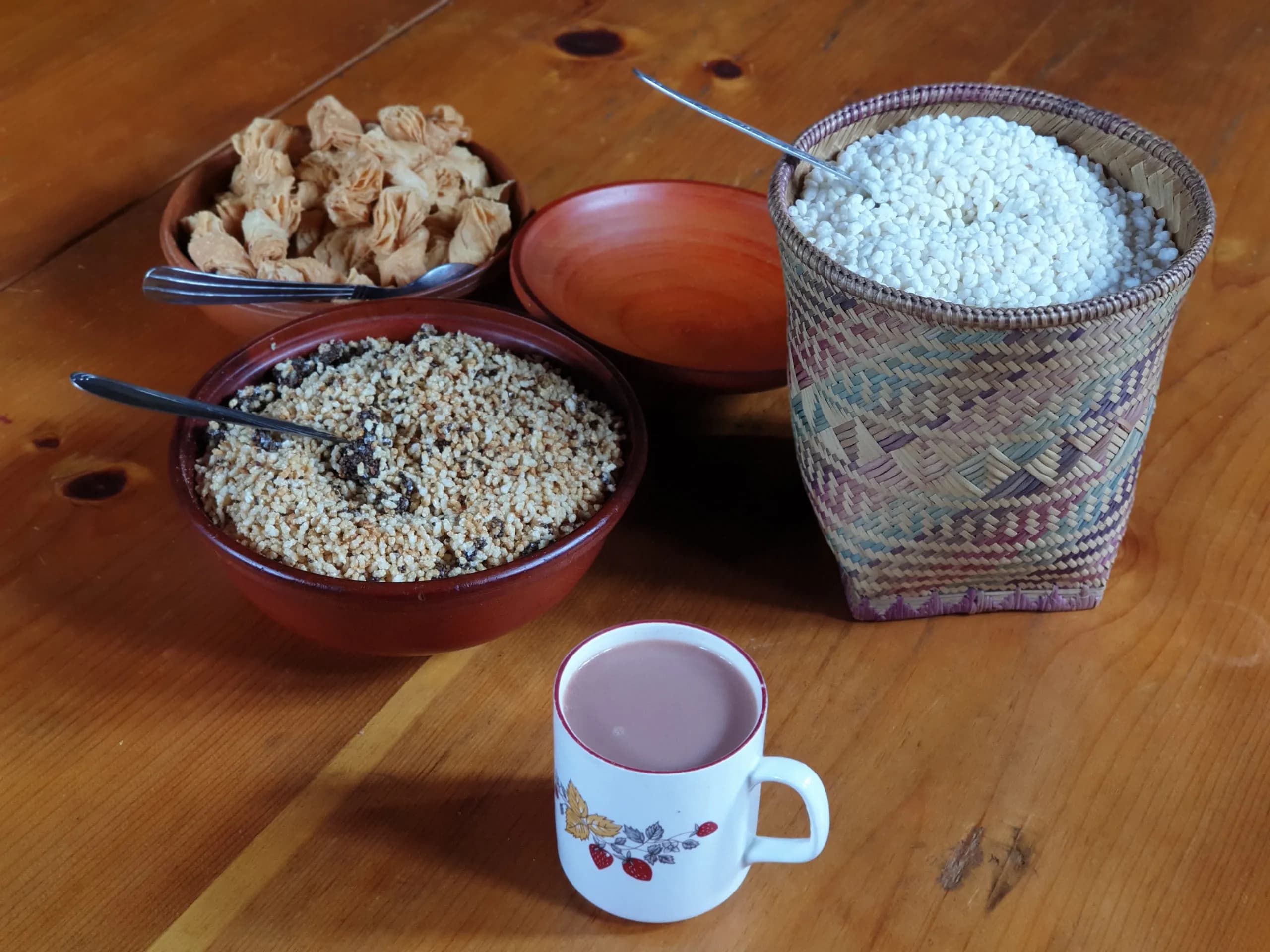
Butter tea — suja, the Bhutanese-Himalayan hot-drink tradition.
Butter tea — suja in Dzongkha — is the principal Bhutanese-Himalayan hot drink and one of the most-distinctive everyday cultural encounters a visitor has. The traditional preparation combines fermented black tea (typically Bhutanese or imported brick tea), Bhutanese butter (traditionally yak butter, now often cow butter), and salt, churned together in a wooden churn (the dongmo) until the emulsion forms. The salty-and-buttery flavour is initially unfamiliar to most international visitors but becomes more accessible across the principal Bhutanese cultural encounters. Premium lodges and host families across the country offer an introduction-and-preparation session.
Also known as Suja · Po cha · Bhutanese butter tea · Yak butter tea
- Duration
- 1 hour
- Effort
- easy
- Where
- Premium lodges, host-family homes, and the principal Thimphu cultural venues
- Best months
- October · November · December · January · February · March · April · May
- Register
- culture
What suja is
Suja is the principal Bhutanese-Himalayan hot-drink tradition. The traditional preparation: the tea base — fermented brick tea (traditionally compressed black tea from the Tibetan-and-eastern-Bhutanese tea trade; now often imported Indian or Chinese brick tea) is boiled in water to produce the concentrated tea base. The butter — traditional yak butter (the high-altitude yak-herding-tradition butter from the principal high-altitude communities; now often cow butter at lower altitudes) is added in generous quantity to the tea. The salt — salt is added to balance the butter-and-tea; the salty-and-buttery flavour is the distinctive feature of the traditional preparation. The churning — the combined ingredients are churned in a wooden dongmo (the cylindrical wooden churn) until the emulsion forms; the churning typically takes 2-3 minutes and produces the smooth-and-rich final tea. The everyday cultural practice is one of the most distinctive features of contemporary Bhutanese life.
The cultural register
Suja operates at every level of Bhutanese cultural life. The household register — most Bhutanese households consume daily suja, particularly during the colder months (October-April) and at the principal household-gathering moments. The hospitality protocol — Bhutanese hospitality offers visitors a cup of suja immediately on arrival at the household; the acceptance and consumption is part of the cultural-respect courtesy. The monastic life — Bhutanese monks consume daily suja as part of the principal monastic routine; the monastery butter-tea consumption is the high-volume usage that sustains the principal yak-butter production. The festival register — tshechu and other festival programmes include the public butter-tea offering. The matched guide briefs visitors on the cultural protocol around the suja tradition where relevant.
Where to encounter it
Premium lodges — Amankora, Six Senses, COMO Uma, and other principal premium lodges offer the suja preparation as part of the cultural programming; the morning-tea selection typically includes the suja option. Host-family homestays — the Bhutanese host-family welcome centres on the suja-and-snack arrival; visitors who stay in homestays will encounter daily suja consumption. The Folk Heritage Museum in Thimphu — the demonstration kitchen runs regular butter-tea preparation sessions. Roadside Bhutanese restaurants and tea houses — the principal Bhutanese restaurants offer the suja option alongside the international tea-and-coffee menu. The cooking-class offering typically includes butter-tea preparation training. See the cooking class experience for the principal cooking-class register.
Practical
- How to drink suja
- Sip the suja slowly; the salty-and-buttery flavour is intense at first taste. The Bhutanese cultural protocol is to accept the offered suja and consume at least one cup as part of the hospitality courtesy; subsequent cups are optional. Visitors who find the salty-and-buttery flavour challenging can dilute with additional hot water to taste preference.
- Demonstration sessions
- The matched guide arranges the suja preparation demonstration at the principal cultural venues (the Folk Heritage Museum, the principal premium-lodge cultural programming) or at a host-family home. The 30-45 minute demonstration session covers the principal preparation steps and includes the hands-on churning where appropriate. Visitors with serious cultural interest find the demonstration rewarding.
- Take-home options
- The brick-tea is exportable; the principal Bhutanese-and-Tibetan brick tea is available at the Thimphu markets and at the principal cultural-venue shops. The yak butter is not typically exportable (international customs restrictions on dairy products); the dongmo (wooden churn) is exportable but bulky for the typical visitor luggage. The matched guide briefs on the appropriate take-home selection.
More like this
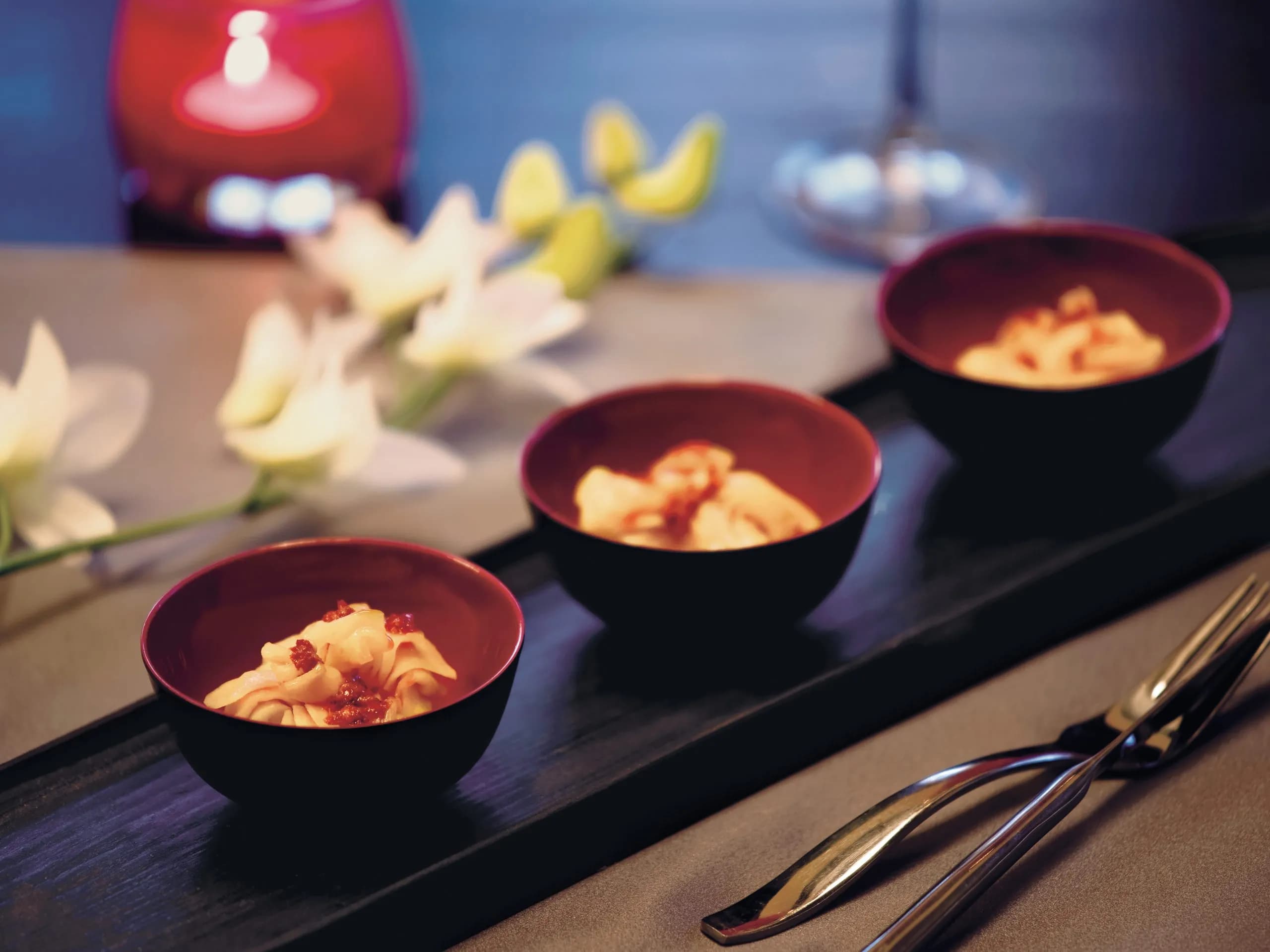 ExperienceBhutanese cooking class — learn ema datshi, momos, and the home-cooking tradition.Bhutanese cooking class — learn ema datshi, momos, phaksha paa, red rice. Premium lodge or host-family. The Bhutanese home-cooking tradition.
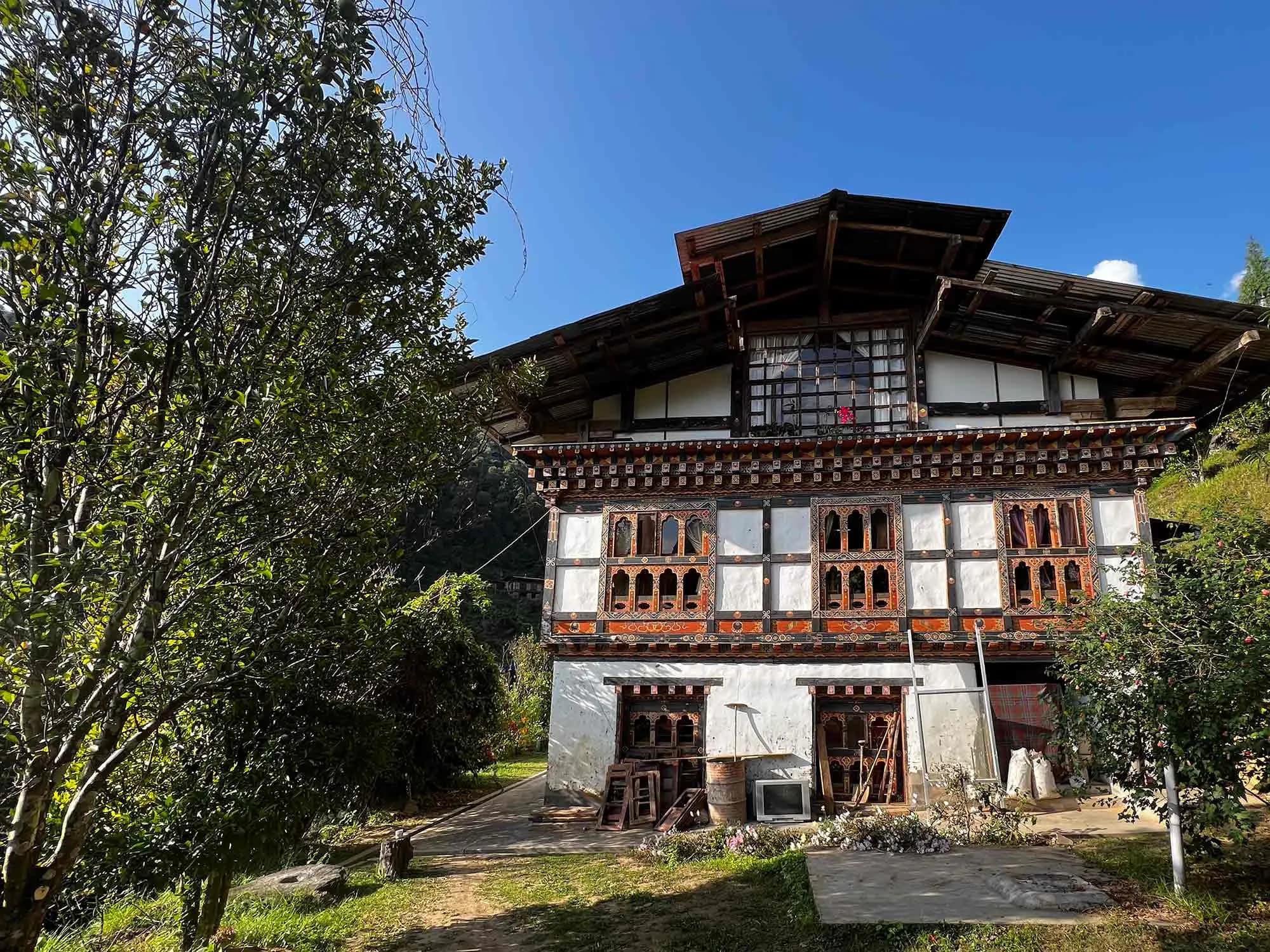 ExperienceBhutanese homestay — staying with a host family in a traditional Bhutanese farmhouse.Bhutanese homestay — overnight with a host family in a traditional farmhouse. Cultural depth beyond the lodge. Available across the principal dzongkhags.
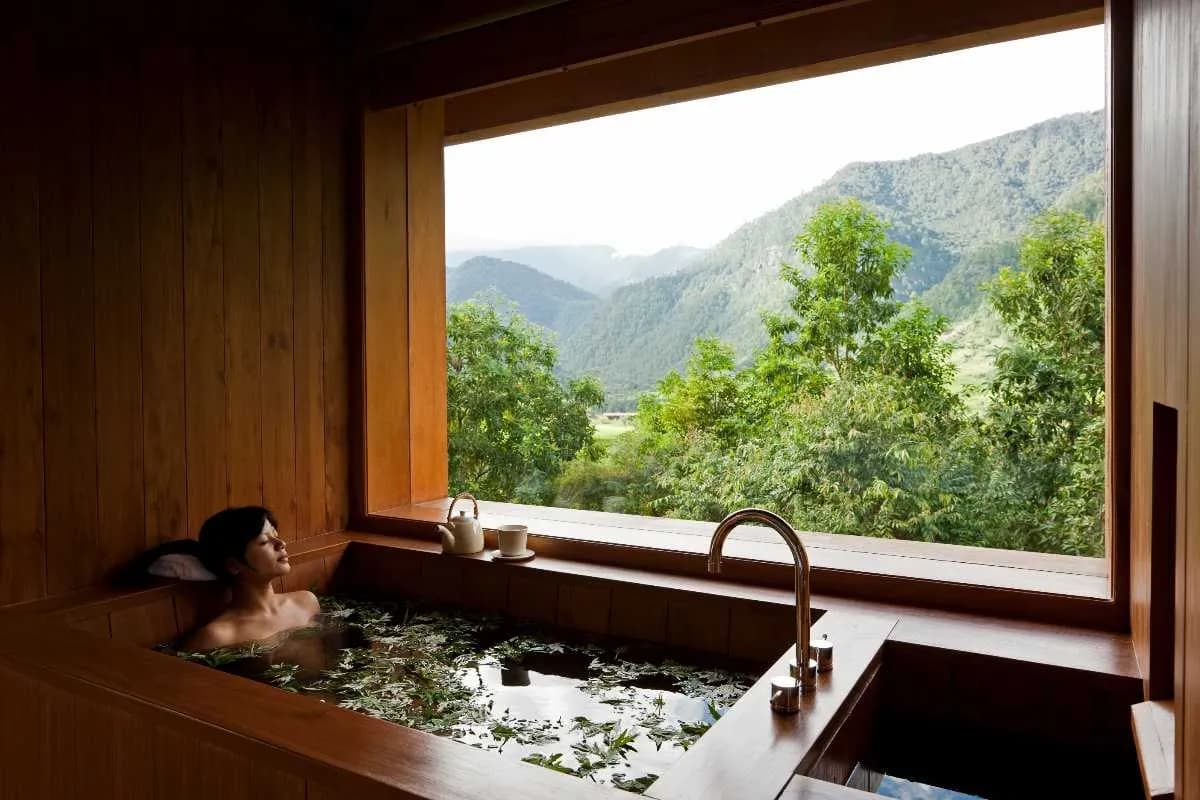 ExperienceThe Bhutanese hot stone bath — menchu, the river-stone soak at the end of a long day.The Bhutanese hot stone bath — menchu, river stones heated in a wood fire and dropped into wooden tub with mountain herbs. Premium-lodge and heritage-farmhouse register.
Where it belongs
The wider idea
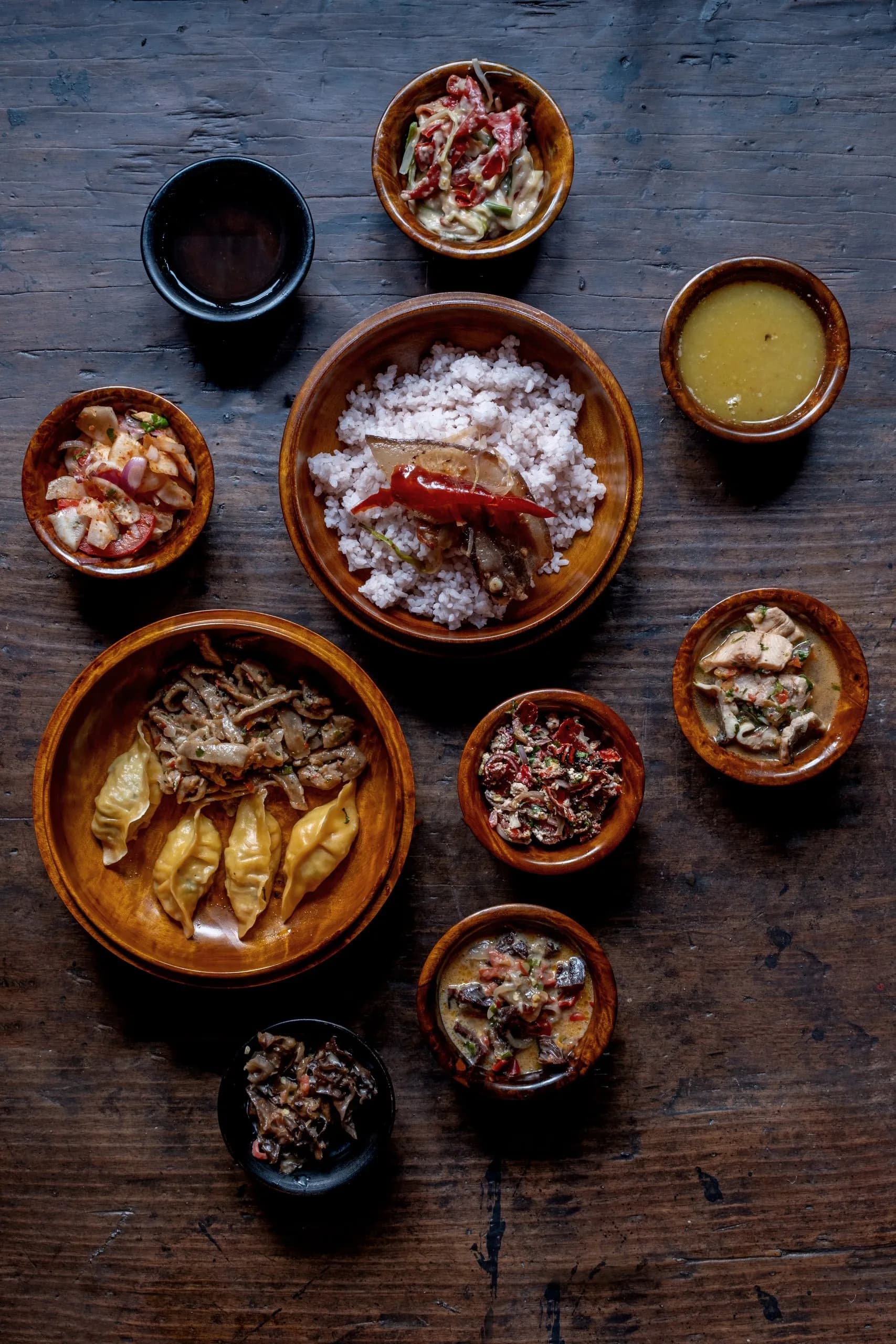 ThemeBhutanese cuisine — the most distinctive Himalayan food, treated as a vegetable rather than a spice.Bhutanese cuisine — ema datshi (chilli cheese), red rice, datshi, yak butter, the four geographic registers. The most distinctive Himalayan cuisine.
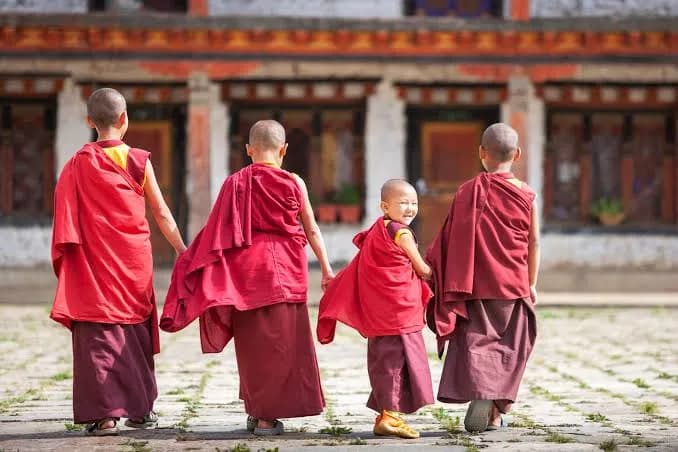 ThemeGross National Happiness — the framework that shapes the country a visitor encounters.Gross National Happiness — the Bhutanese development philosophy articulated by the Fourth Druk Gyalpo at His 1974 coronation as the first of nine guiding goals. Four pillars, nine measurement domains, constitutional grounding.
Journeys that include it
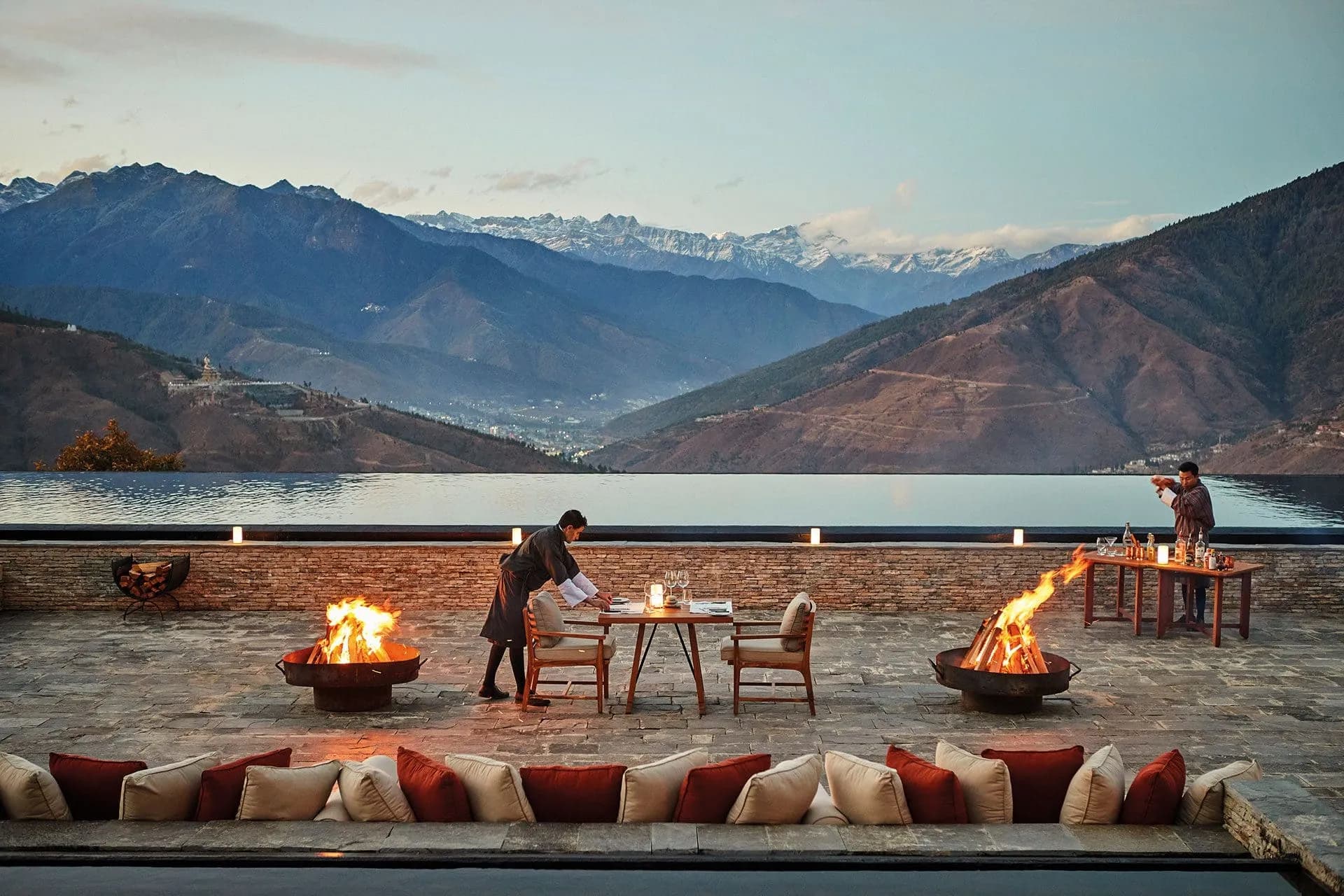 JourneyThe signature-tier Bhutan journey — private knowledgeable guide, the most considered lodge curation, helicopter or charter between valleys, exclusive-use arrangements where the season allows.The signature-tier Bhutan journey. Private knowledgeable guide, the most considered lodges, helicopter or PC-24 charter, exclusive-use arrangements. By invitation, from USD 14,000.
 JourneyNine nights in Bhutan, for a family from London.A nine-night Bhutan family trip from London for autumn half-term. Bhutan including Phobjikha; teenager-friendly light treks; matched knowledgeable guide.
- JourneySeven nights in Bhutan, on your terms.A private seven-night Bhutan honeymoon for couples flying from Singapore. Bhutanese lodges, a matched guide, transparent all-inclusive pricing.
Journeys that visit Butter tea
Frequently asked
- Is butter tea really salty?
- Yes — the salty-and-buttery flavour is the distinctive feature of the traditional Bhutanese suja preparation. The salt content (typically 1-2 teaspoons per cup) is higher than most international tea registers; the cultural-and-physiological function is to replenish electrolytes at high altitudes and during cold weather. The visitor adjustment to the salty register typically takes 2-3 cups of repeated exposure; some visitors come to prefer the salty register after adjustment.
- Is there a sweet alternative?
- Yes — sweet butter tea (the 'chai-style' Bhutanese variant) is available at premium lodges and contemporary Bhutanese restaurants. The 'ngaja' (sweet tea) variant substitutes sugar for the salt; the result is more accessible to most international visitor palates. The matched guide briefs visitors on the sweet-and-salty options; both variants operate in contemporary Bhutanese cultural life.
- Why use yak butter?
- The yak-butter tradition reflects the high-altitude yak-herding economy of the principal Bhutanese-Tibetan highland communities. Yak butter is richer than cow butter (higher fat content), more strongly flavoured, and the principal cold-climate energy-and-warming source for highland communities. Contemporary Bhutanese suja often uses cow butter at lower altitudes; the yak butter continues at the higher-altitude communities (Phobjikha, Gasa, Laya) and at the premium-lodge programmes that aim for the authentic preparation.

