A Bhutanese experience
Thangka painting — the Bhutanese sacred-painting tradition and the contemporary workshop offering.
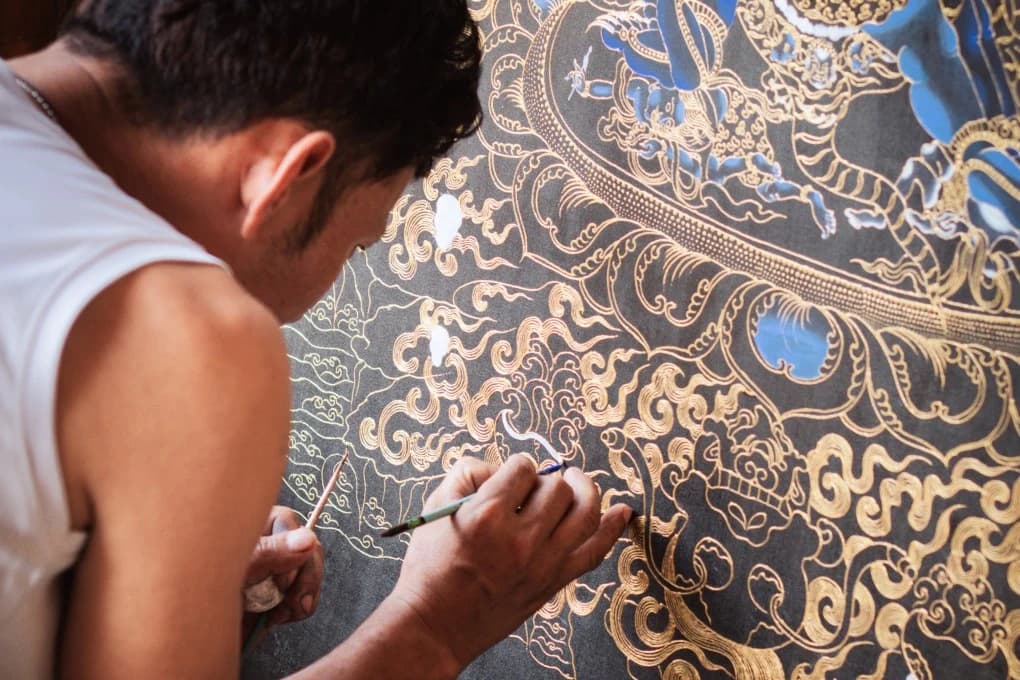
Thangka painting is the principal Bhutanese-Tibetan sacred-painting tradition — the elaborate hand-painted religious scrolls depicting the principal Vajrayana-Buddhist deities, mandalas, and lineage portraits that hang in every dzong and lhakhang. The workshop offering at the National Institute of Zorig Chusum (Thirteen Traditional Arts and Crafts) in Thimphu and at several Bhutanese lodges provides international visitors with serious interest the opportunity to engage with the painting tradition — typically through a single-session introduction to the iconographic tradition and the principal painting techniques.
Also known as Bhutanese thangka · Sacred scroll painting · Buddhist scroll painting
- Duration
- half-day to multi-day
- Effort
- easy
- Where
- National Institute of Zorig Chusum (Thimphu), premium-lodge craft programmes
- Best months
- October · November · December · January · February · March · April · May
- Register
- craft
The thangka tradition
Thangka — literally 'thing that one unrolls' — is the Bhutanese-Tibetan sacred-painting tradition that has operated continuously across the Himalayan region for over a thousand years. The principal canonical themes are the Vajrayana-Buddhist deities (the Buddhas, bodhisattvas, wrathful protectors), the mandala diagrams (geometric representations of the cosmos and the meditation register), the lineage portraits (the principal religious teachers across the transmission tradition), and the narrative cycles (the eight manifestations of Guru Rinpoche, the Wheel of Life, the Mahasiddha series). The painting is principally on prepared cotton or silk with mineral pigments (gold, lapis, malachite, cinnabar, and others); the preparation (the ground, the iconographic outline, the painting sequence) operates within tight traditional protocols. A thangka takes anywhere from weeks to many months to complete depending on the complexity and scale.
The National Institute of Zorig Chusum
The National Institute of Zorig Chusum in Thimphu — the institution for the Thirteen Traditional Arts and Crafts — is the principal Bhutanese training centre for thangka painting alongside the broader traditional-craft register (woodturning, embroidery, mask-making, sculpture, and others). The Institute operates a multi-year training programme for Bhutanese apprentices; visitor access to the principal workshops is available on most weekdays with the matched guide arrangement. Visitors can observe the apprentices at work, engage with the senior masters, and arrange short hands-on introductions to the iconographic conventions. The Institute is one of the more atmospheric Thimphu cultural visits and is essential for visitors with serious interest in the traditional-craft tradition.
The workshop offering
Half-day introductory workshop — typically taught at the Institute or at the premium-lodge craft programmes (Amankora and Six Senses both arrange thangka workshops); 3-4 hour session covering the iconography, the mineral pigments, and a hands-on session producing a small element (typically a single deity attribute or a small mandala element). Multi-day workshop — for visitors with serious interest, the Institute arranges 2-5 day workshops covering more substantial elements of the painting; advance arrangement (typically 30-60 days) required. Commission register — visitors with substantial interest in commissioning a thangka can arrange the commission through the Institute or through the matched guide's network of senior thangka painters; commissioned thangkas take weeks to months depending on scale-and-complexity, with the costs in the USD 500-10,000+ range.
What a visitor experiences
A typical thangka workshop session begins with the iconographic tradition — the senior teacher explains the principal deity-and-mandala protocols, the colour symbolism, the proportional grids that govern the figure construction. The hands-on element follows — typically starting with the outline preparation on prepared paper-or-cotton ground, then progressing to the mineral-pigment tradition on a small element. Most visitors complete a small painting (typically a single deity element or a small mandala element) to take home; the cultural-and-religious that the workshop opens is the principal souvenir rather than the small painting itself. The matched guide briefs visitors on the protocol and arranges the appropriate workshop for the visitor's interest level.
Practical
- Booking
- The matched guide arranges thangka workshops at the National Institute of Zorig Chusum or at premium-lodge craft programmes; 48-72 hour advance booking is the standard for introductory workshops. Multi-day workshops require 30-60 day advance arrangement.
- Fees
- Half-day introductory workshop — typically USD 80-200 per person at the Institute, USD 150-300 at premium-lodge programmes. Multi-day workshops — typically USD 400-1,500+ depending on duration and venue. Commissioned thangkas — pricing range from USD 500 for small simple pieces to USD 10,000+ for large complex pieces.
- Take-home register
- Visitors typically complete a small painting (a single deity element, a mandala element) to take home as the workshop's principal physical output. The cultural-and-religious context that the workshop provides is the deeper; the small painting is the principal token. The matched guide arranges any export-documentation register where required for commissioned pieces.
More like this
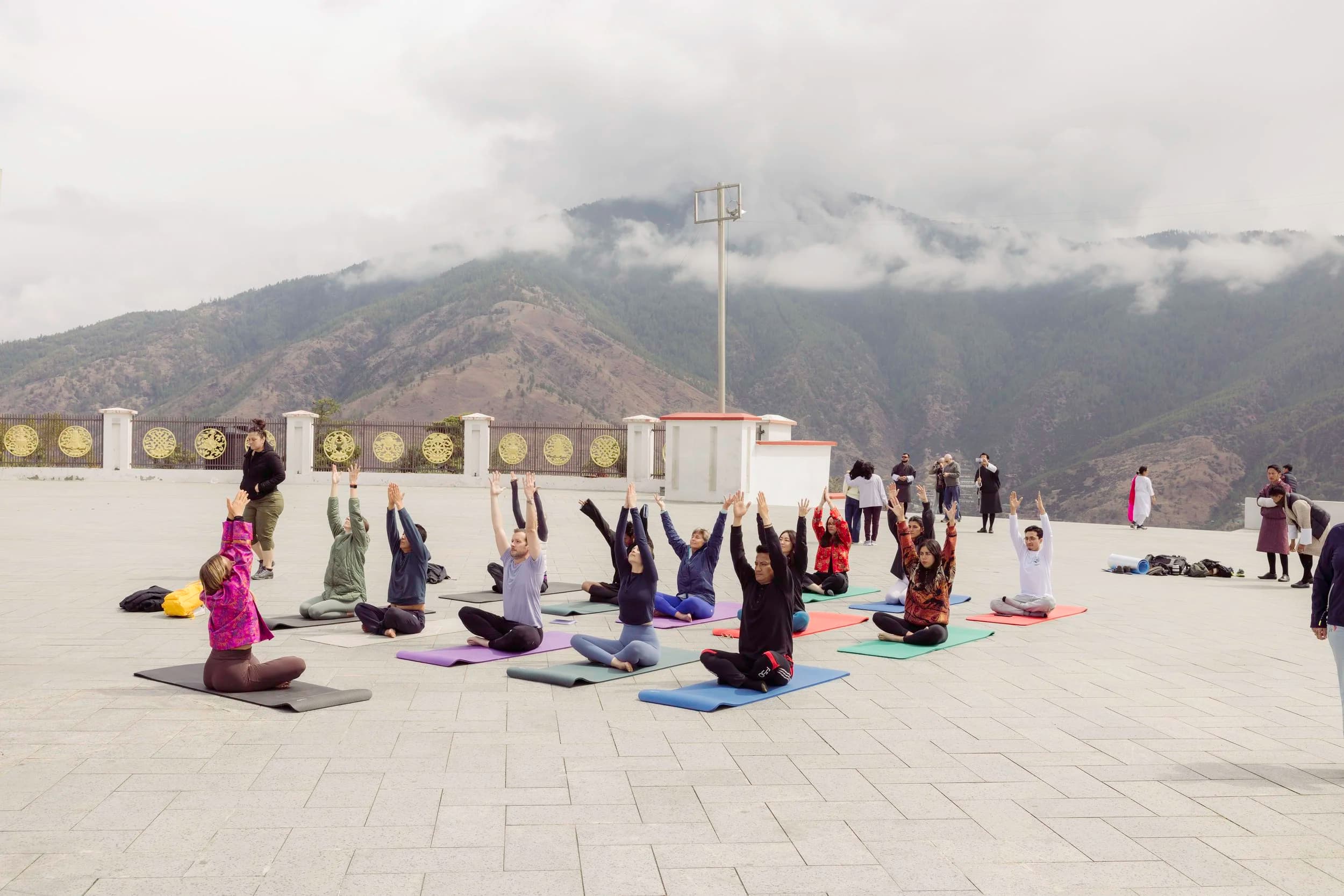 ExperienceBhutanese meditation retreat — guided contemplative practice in the working Drukpa Kagyu and Nyingma traditions.A Bhutan wellness retreat: guided Bhutanese meditation practice at working monastic centres and premium-lodge programmes. Living Drukpa Kagyu and Nyingma tradition.
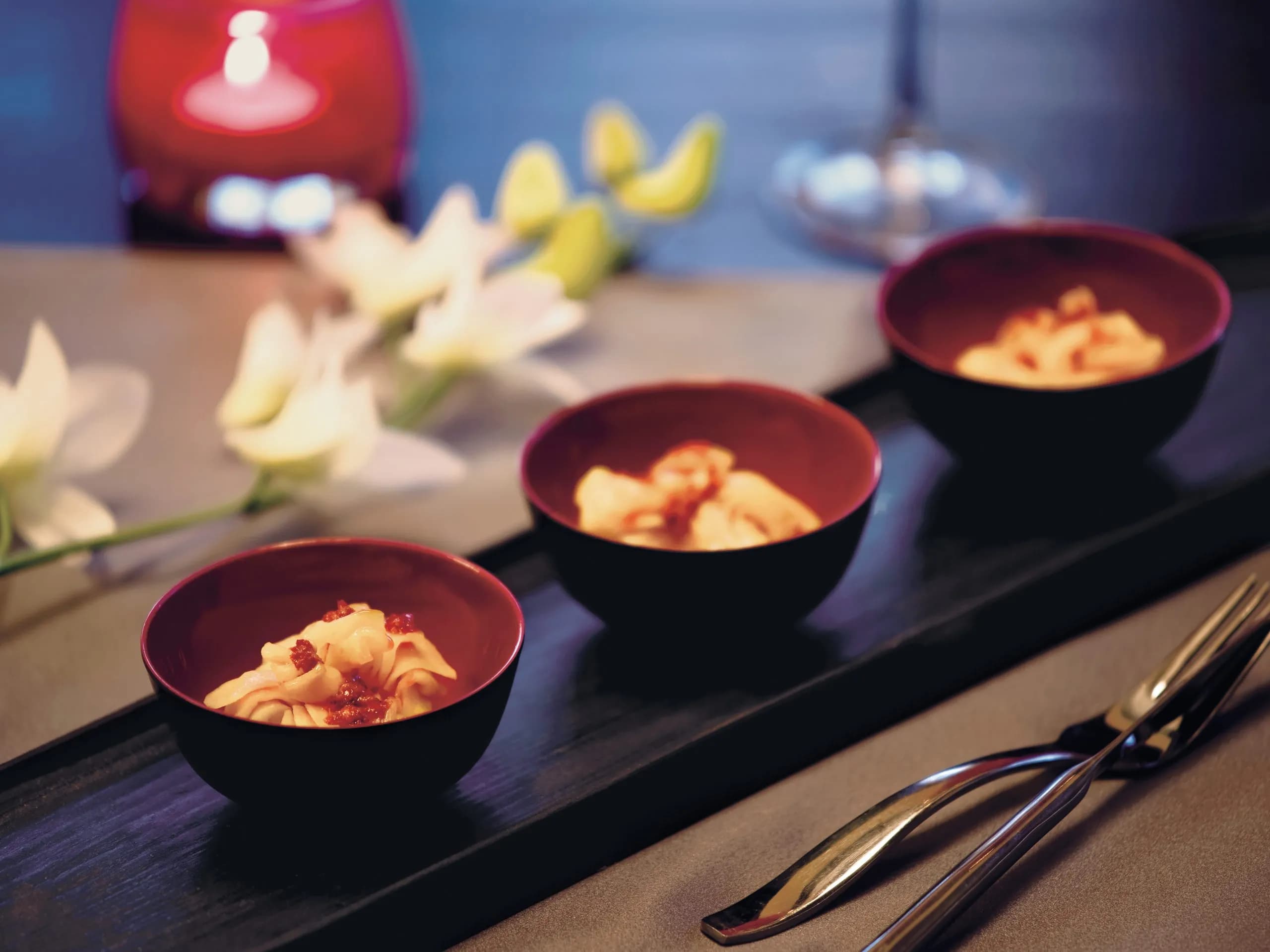 ExperienceBhutanese cooking class — learn ema datshi, momos, and the home-cooking tradition.Bhutanese cooking class — learn ema datshi, momos, phaksha paa, red rice. Premium lodge or host-family. The Bhutanese home-cooking tradition.
The wider idea
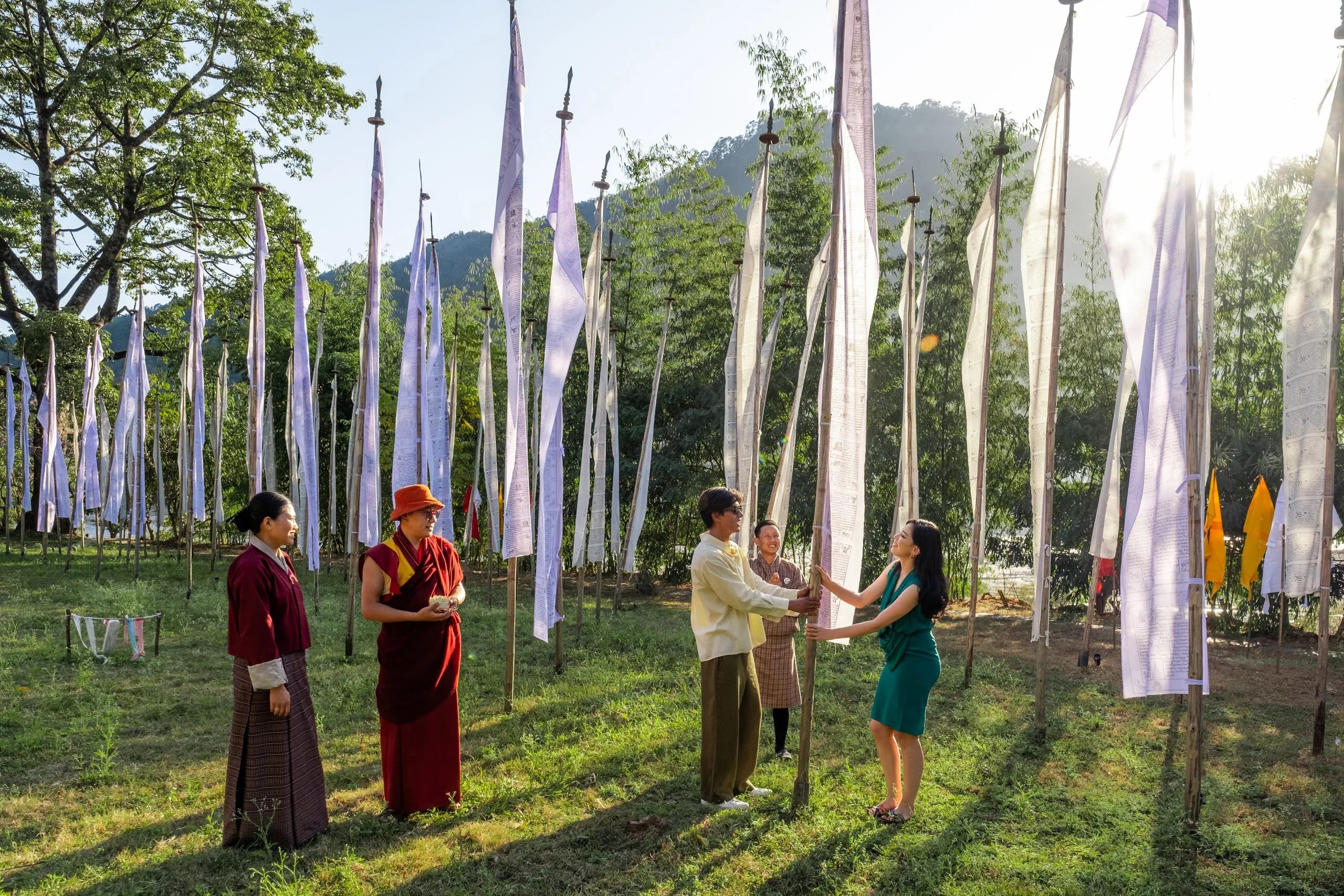 ThemeVajrayana Buddhism — the substance of every dzong, every monastery, every tshechu.Vajrayana Buddhism — the branch of Buddhism that shapes Bhutanese religious life. Drukpa Kagyu, Nyingma, Guru Rinpoche; mantra, mandala, deity yoga.
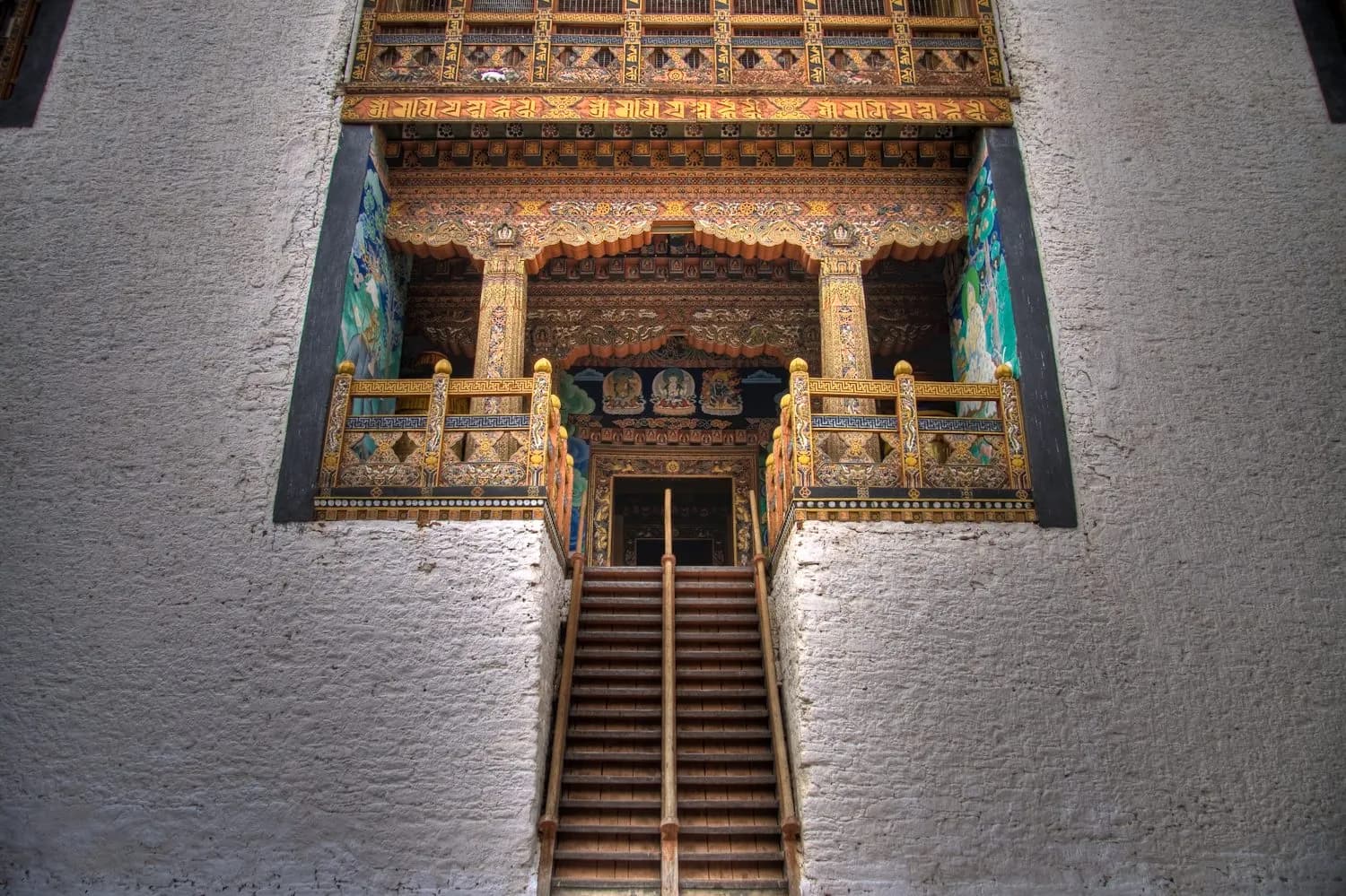 ThemeBhutanese architecture — the dzong, the lhakhang, the vernacular farmhouse register.Bhutanese architecture — the dzong, the lhakhang, the vernacular farmhouse. White-and-wood facade, steep roofs, decorative window frames, the courtyard register.
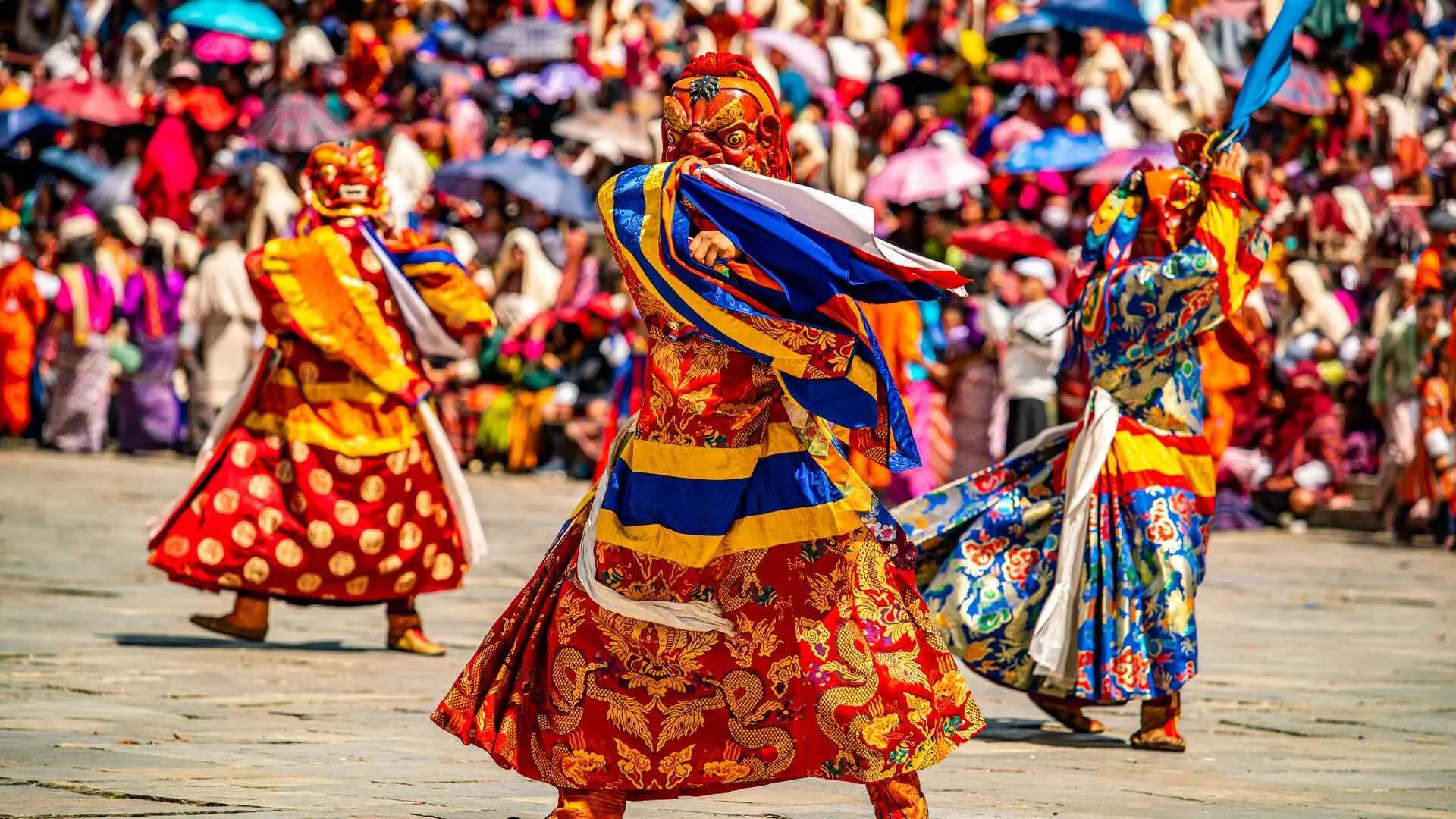 ThemeCham — the sacred mask dance, the principal expression of the tshechu festivals.Cham — the sacred mask dance tradition of Bhutan. The principal expression of the tshechu festivals. Drametse Nga Cham UNESCO Intangible Cultural Heritage 2008.
Journeys that include it
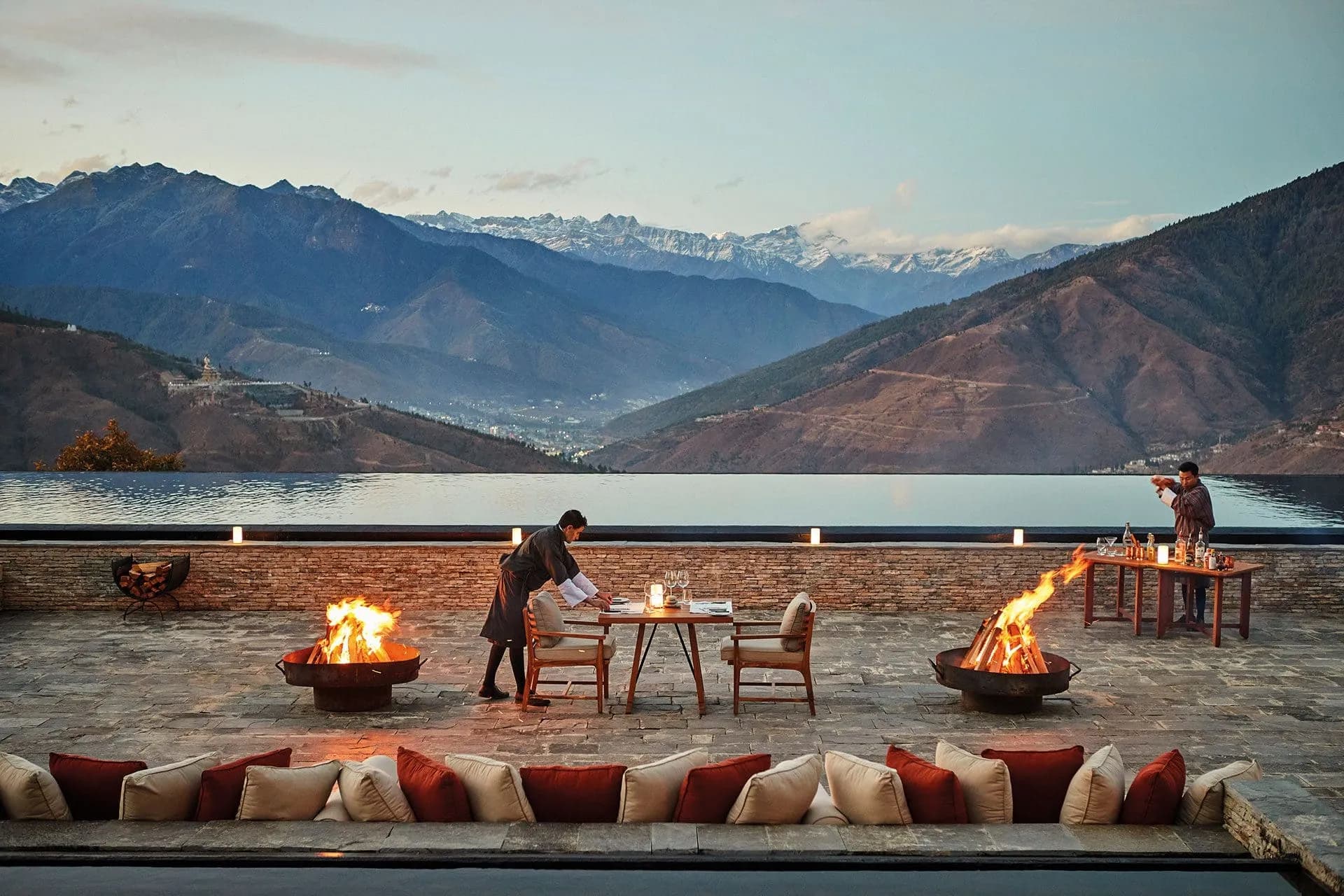 JourneyThe signature-tier Bhutan journey — private knowledgeable guide, the most considered lodge curation, helicopter or charter between valleys, exclusive-use arrangements where the season allows.The signature-tier Bhutan journey. Private knowledgeable guide, the most considered lodges, helicopter or PC-24 charter, exclusive-use arrangements. By invitation, from USD 14,000.
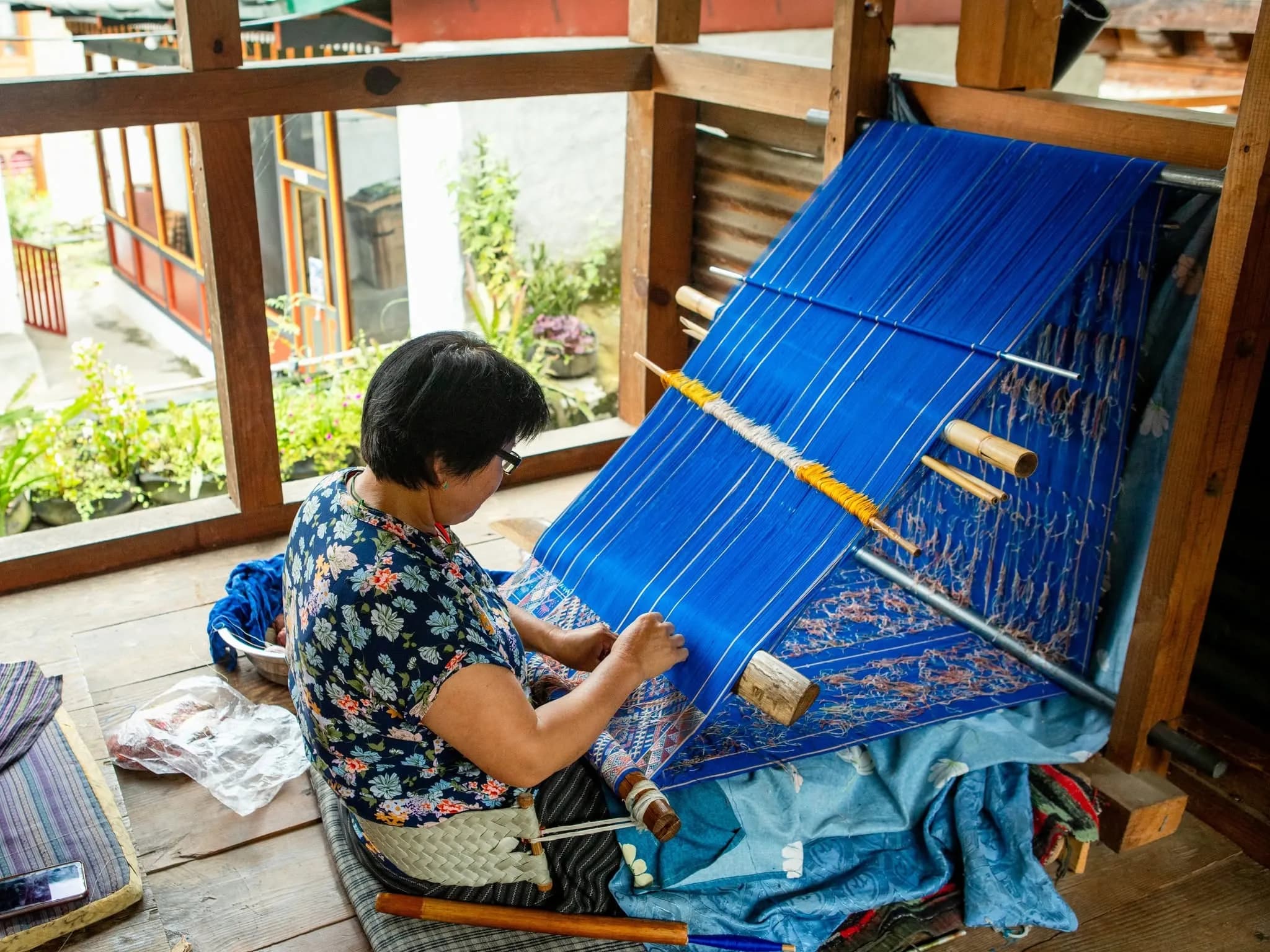 JourneyBhutan, read through its weaving.A seven-night Bhutan textile tour — Bhutanese workshop visits, master weaver introductions, and a guide who reads cloth the way an art historian reads brushwork.
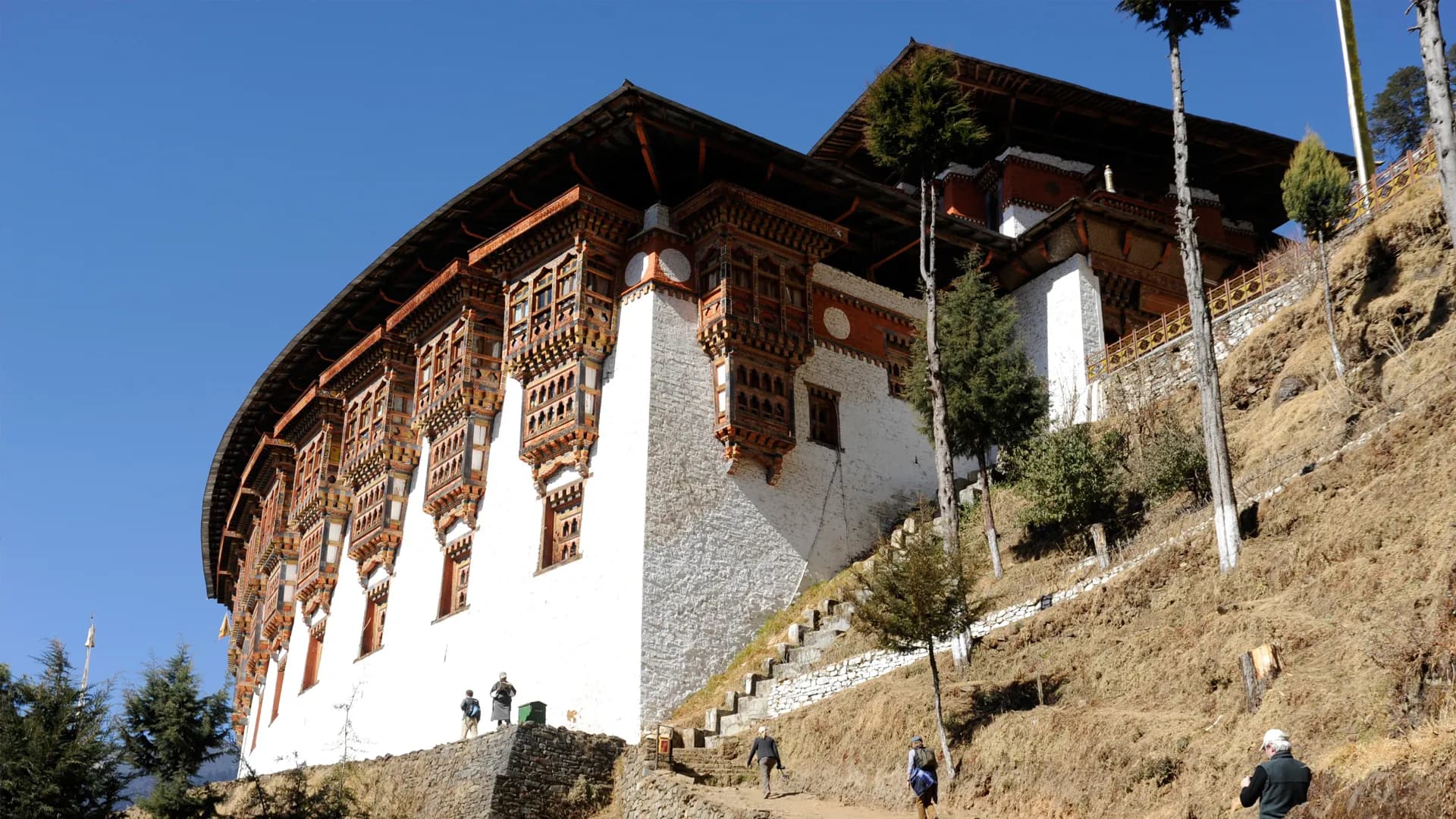 JourneyTen nights for the Buddhist pilgrim — the principal sites, with monastic context.A ten-night Bhutan Buddhist pilgrimage for Asian-Buddhist travellers. Monastic context; matched monastic-trained guide; Bumthang religious circuit.
Journeys that visit Thangka painting
Frequently asked
- Can I make a complete thangka in a day?
- No — a complete thangka takes weeks to months depending on scale and complexity, with substantial iconographic precision required throughout. The day-workshop offering typically completes a small element (a single deity attribute, a small mandala segment) rather than a complete painting. The workshop's value is the cultural-and-religious context rather than the production of a complete piece.
- Do I need to be Buddhist to take a thangka workshop?
- No. The Bhutanese tradition is welcoming to workshop participants from all backgrounds. The cultural-and-religious context is shared without requirement for personal religious commitment; visitors with Buddhist practice background can engage with the deeper iconographic, visitors without can engage with the cultural-and-craftsmanship. The matched guide briefs accordingly.
- Can I commission a complete thangka while in Bhutan?
- Yes. The matched guide arranges commissions through the Institute or through the network of senior thangka painters. Commission timelines are typically weeks to months; the completed piece can be shipped internationally after completion. Pricing depends on scale, complexity, and the painter's seniority. The matched guide handles the commission-and-shipping arrangement.

