Planning your Bhutan journey
When to visit Bhutan — the honest position: any time, with one narrow exception.
Bhutan rewards visitors year-round. The four seasons each carry a distinct register — Spring (March–May), Green Bhutan (June–August), Autumn (September–November), and Clear-Sky Bhutan (December–February) — and each window has its visitors who consider it the country at its best. The single window we actively discourage is **late July through early September**, when the heaviest Indian Monsoon rains arrive — sustained rainfall affects the roads, the cloud cover obscures the Himalayan panorama, and the high-altitude treks close. Our concierge checks the current monsoon forecast against every proposal's travel dates and adjusts the timing recommendation accordingly.
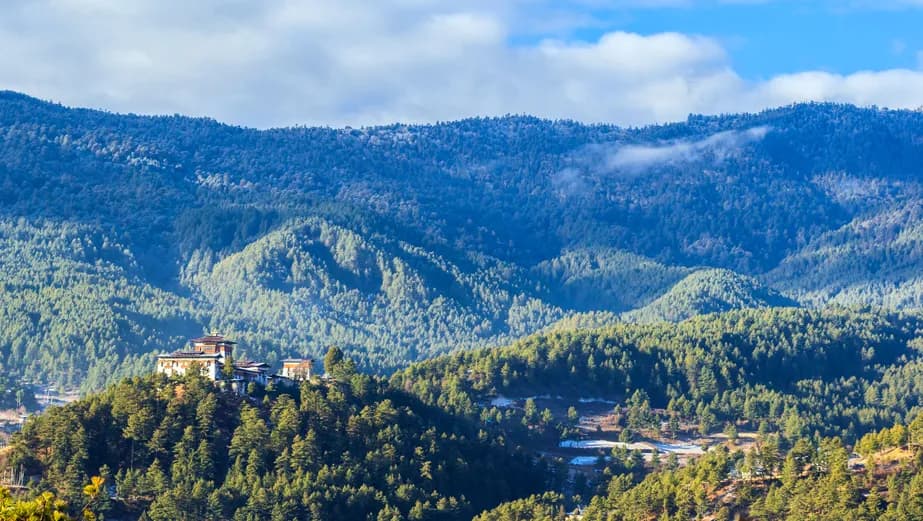
- Register
- season
The short answer
Any time — Bhutan rewards visitors year-round. The four seasons each carry a distinct character (Spring, Green Bhutan, Autumn, Clear-Sky Bhutan), and which is 'best' depends on what you've come for. We actively discourage only late July through early September, when the heaviest Indian Monsoon rains arrive. Our concierge monitors the current forecast and adjusts your timing recommendation against current conditions rather than against a static calendar.
The honest position — any time, with one exception
The Bhutanese tourism literature tends toward the guidebook framing of 'Spring and Autumn are best'. The operator-honest position is more permissive: Bhutan rewards visitors in every month of the year, and the best month for any specific visitor depends on what they have come for. The Himalayan-panorama photographer comes in October-November; the rhododendron-and-Paro-Tshechu visitor comes in April; the cranes-of-Phobjikha visitor comes in November-February; the matsutake-mushroom-and-quiet-monsoon visitor comes in August. Each window has its visitors who consider it the country at its best. The single window we actively discourage is late July through early September — the peak of the Indian Monsoon, when sustained rainfall genuinely affects the visitor experience.
The Indian Monsoon — the one window to watch
The Indian Monsoon is the principal weather event affecting the broader Himalayan region. Bhutan sits at the northern edge of the monsoon system; the heaviest rains arrive in late July and continue through August, tailing off by mid-September. In this window the consequences are tangible: road landslides on the principal highways (the East-West highway, the Paro–Thimphu corridor); cloud cover that obscures the Himalayan panorama for days at a time; high-altitude treks closed (Druk Path, Chomolhari, Snowman all suspended); lower visibility for the photographic. The compensating gifts — the deepest-green rice paddies, the cloud-forest atmosphere, the lowest visitor counts of the year — are real but specific to the visitor who values atmosphere over photography. The exact intensity varies year-on-year; our concierge checks the current forecast against every proposal.
Spring (March–May) — rhododendron, festivals, the awakening register
Spring catches Bhutan at its most photographic in the conventional sense. The rhododendron blooms move up the altitudinal range from late March (lower forest) through May (alpine zone, 3,500m+). The principal cultural moment is the Paro Tshechu in late March or early April — the country's most-internationally-attended festival, with the pre-dawn thongdrel unfurling at Rinpung Dzong. Daytime temperatures in the western valleys sit at 15-22°C; nights are 2-8°C. Skies are clear most mornings; afternoon cloud builds in May ahead of the monsoon. The Paro Tshechu week puts substantial pressure on lodge availability, Drukair seats, and ground transport — book 9-12 months in advance for the festival week specifically. Mid-May (after the festival, before the monsoon) is the quieter spring shoulder — similar weather, the alpine rhododendron at its peak, and better lodge availability. Increasingly preferred by considered visitors who want the spring window without the festival-week pressure.
Green Bhutan (June – mid-July, mid-September) — the shoulder-monsoon character
Green Bhutan is the monsoon's shoulders — late June and early July, and mid-September. Rain is present but not yet sustained; the country is at its most-vivid green; the high-altitude treks operate in the early-June and September windows. The Haa Summer Festival (July) and the Matsutake Festival (August) sit in this window. Daytime temperatures in the western valleys reach 22-28°C; nights are mild. The shoulder months reward the visitor who values atmosphere — the deepest green rice paddies, the cloud-wreathed monasteries, the lower visitor count. Late July through early September is the part of this window we discourage — see the Indian Monsoon section above.
Autumn (September–November) — the panoramic-clarity tradition
Autumn delivers the clearest Himalayan visibility of the year. The post-monsoon air is washed clean; high-peak views from Dochu La, Chele La, and the trekking routes are most reliable in October-November. The Thimphu Tshechu in late September or early October is the country's largest festival by attendance. The rice paddies in Paro and Punakha turn gold across October. Daytime temperatures sit at 12-20°C in the western valleys; nights are 0-6°C. The Thimphu Tshechu week puts substantial pressure on lodge availability, Drukair seats, and ground transport — book 9-12 months in advance for the festival week specifically. Mid-October through November is the quieter autumn window — the panorama is at its clearest, the harvest is in, and the visitor pressure is lower than the festival week. Many returning visitors specifically choose this window for the combination of weather quality and considered atmosphere.
Clear-Sky Bhutan (December–February) — the deep-winter tradition
Clear-Sky Bhutan is, in our view, the country's most-underrated window. The deep-winter sky is reliably clear (the post-monsoon air remains clean), the Himalayan panorama is at its most reliable, and the visitor count is at its lowest. Mornings are cold (0 to –5°C in Thimphu); days are bright and crisp (10-16°C). High passes can carry snow; high-altitude treks are closed but the Bhutan (Paro, Thimphu, Punakha, Phobjikha) operates fully. The 17 December National Day ceremony at Changlimithang and the 11 November Crane Festival in Phobjikha sit in the broader winter window. The black-necked cranes overwinter in the Phobjikha valley from late October through mid-March.
The quieter festival alternatives
The two principal-attendance tshechus (Paro in spring, Thimphu in autumn) are exceptional cultural moments — but their popularity means compressed lodge availability, tight Drukair seat capacity, and the broader visitor pressure of any festival peak. The smaller dzongkhag tshechus carry similar cultural weight with less demand pressure and a more intimate atmosphere. Worth knowing: [[punakha-tshechu|Punakha Drubchen + Tshechu]] (late February / early March) — the Zhabdrung's seat, the Tibetan-invasion re-enactment, the thongdrel at the most-beautiful dzong; [[wangdue-tshechu|Wangdue Tshechu]] (late September / early October) — the rebuilt dzong, the distinctive Raksha Mangcham; [[trongsa-tshechu|Trongsa Tshechu]] (late December / early January) — the ancestral Wangchuck seat, deep clear-sky winter, quietest; [[gangtey-tshechu|Gangtey Tshechu]] (September) — the Pema Lingpa lineage, intimate goemba scale; [[jambay-lhakhang-drup|Jambay Lhakhang Drup]] (October / November) — the Mewang fire ritual, Bumthang's principal autumn festival; [[tamshing-phala-choepa|Tamshing Phala Choepa]] (autumn) — Pema Lingpa's chams in their original 15th-century choreography. Each gives a different register from the two principal-attendance tshechus, and increasingly we see considered visitors specifically requesting them for the depth and the quieter atmosphere.
How we monitor conditions
The static seasonal calendar above is the broad pattern. The actual conditions in any given month vary year-on-year — the Indian Monsoon can be early or late by 2-3 weeks; the post-monsoon clear window can arrive in early September or late October; a winter cold snap can close high passes for a week unexpectedly. Our concierge monitors the current monsoon forecast and the daily conditions across the principal valleys, and adjusts each proposal's recommendations against current data rather than the static calendar. Where a visitor's flexible date range overlaps with a marginal window (late June, mid-September, early March), we surface the current forecast as part of the proposal conversation.
Month-by-month — the quick reference
March — spring rhododendron begins in the lower forest. April — Paro Tshechu (most years); clear daytime weather. May — alpine rhododendron in full bloom; pre-monsoon shoulder. June — early monsoon shoulder; lower-altitude valleys very green; Royal Highlander Festival window opens in Laya. July (first half) — early monsoon; Haa Summer Festival; manageable. Late July through August — heart of the Indian Monsoon, the window we discourage. Early September — monsoon tail; conditions improving but not yet reliable. Mid-late September — Thimphu Tshechu window; clearing skies. October — peak autumn clarity; harvest gold across the western valleys. November — autumn shoulder; Crane Festival on 11 November; Bhutan International Marathon shoulder. December — National Day on 17 December; deep clear-sky winter begins. January — coldest month; reliably clear; visitor count lowest. February — Punakha Drubchen + Tshechu pair; pre-spring shoulder.
Practical
- Window we actively discourage
- Late July through early September (peak Indian Monsoon)
- Peak visitor windows
- Paro Tshechu (Mar/Apr); Thimphu Tshechu (Sep/Oct)
- Most-reliable Himalayan panorama
- October–February
- Festival-light, quiet visitor count
- Mid-January and late November
- Trekking windows
- Apr–Jun, Sep–Nov for high-altitude routes
- Lowest hotel pricing
- Green Bhutan shoulder months; Clear-Sky Bhutan (Dec–Feb except festival days)
- Current-conditions check
- Concierge monitors forecast against every proposal
Walks it mentions
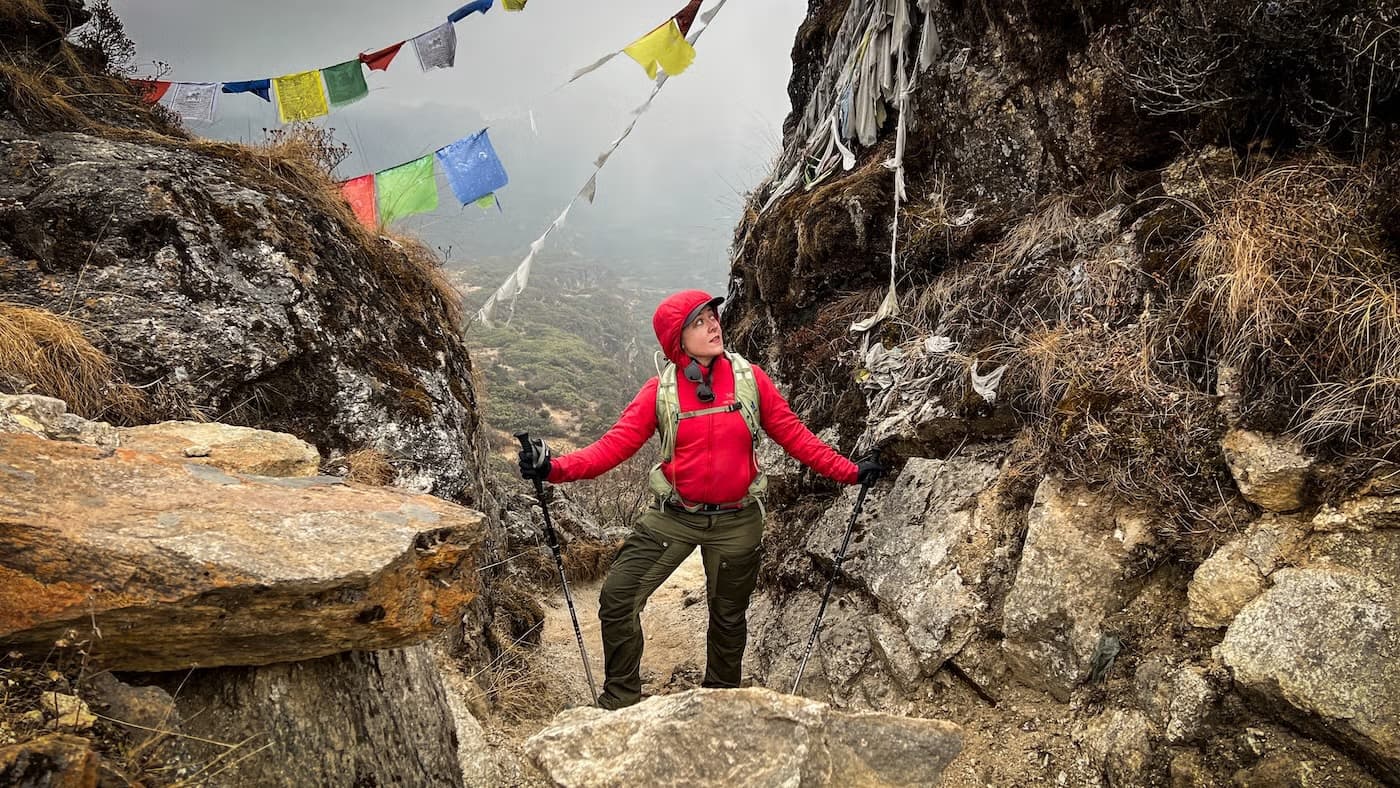 TrekDruk Path Trek — four days, Paro to Thimphu over the ridge, the alpine-lake landscape and the substantial first taste of Bhutanese trekking.Druk Path Trek — four days from Paro to Thimphu over the ridge, three high-altitude lakes (Jimilang Tsho, Janey Tsho, Simkota Tsho), max altitude ~4,200 m.
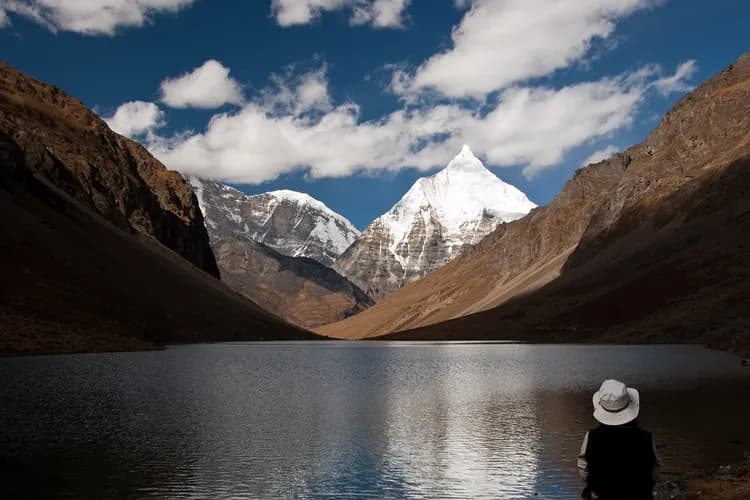 TrekChomolhari Lingshi Trek — six days, max altitude 4,900 m at Bonte La, the principal direct view of Chomolhari (7,326 m).Chomolhari Lingshi Trek — six days at 2,900–4,900 m, the principal view of Chomolhari, the high pasture country of Lingshi. Paro to Thimphu via Lingshi.
Festivals it mentions
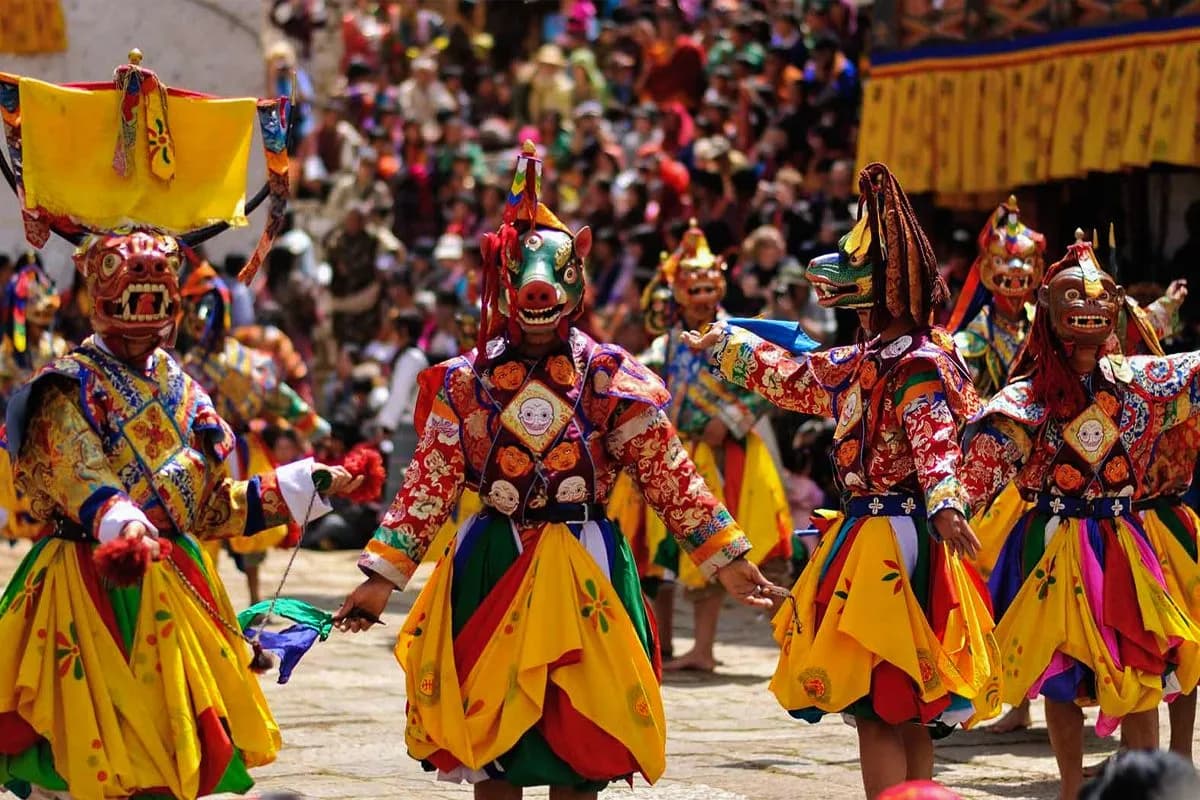 FestivalParo Tshechu — five days at Rinpung Dzong, with the pre-dawn thongdrel.Paro Tshechu — the principal spring festival at Rinpung Dzong. This year's dates, the programme, the pre-dawn thongdrel, what to expect for international visitors.
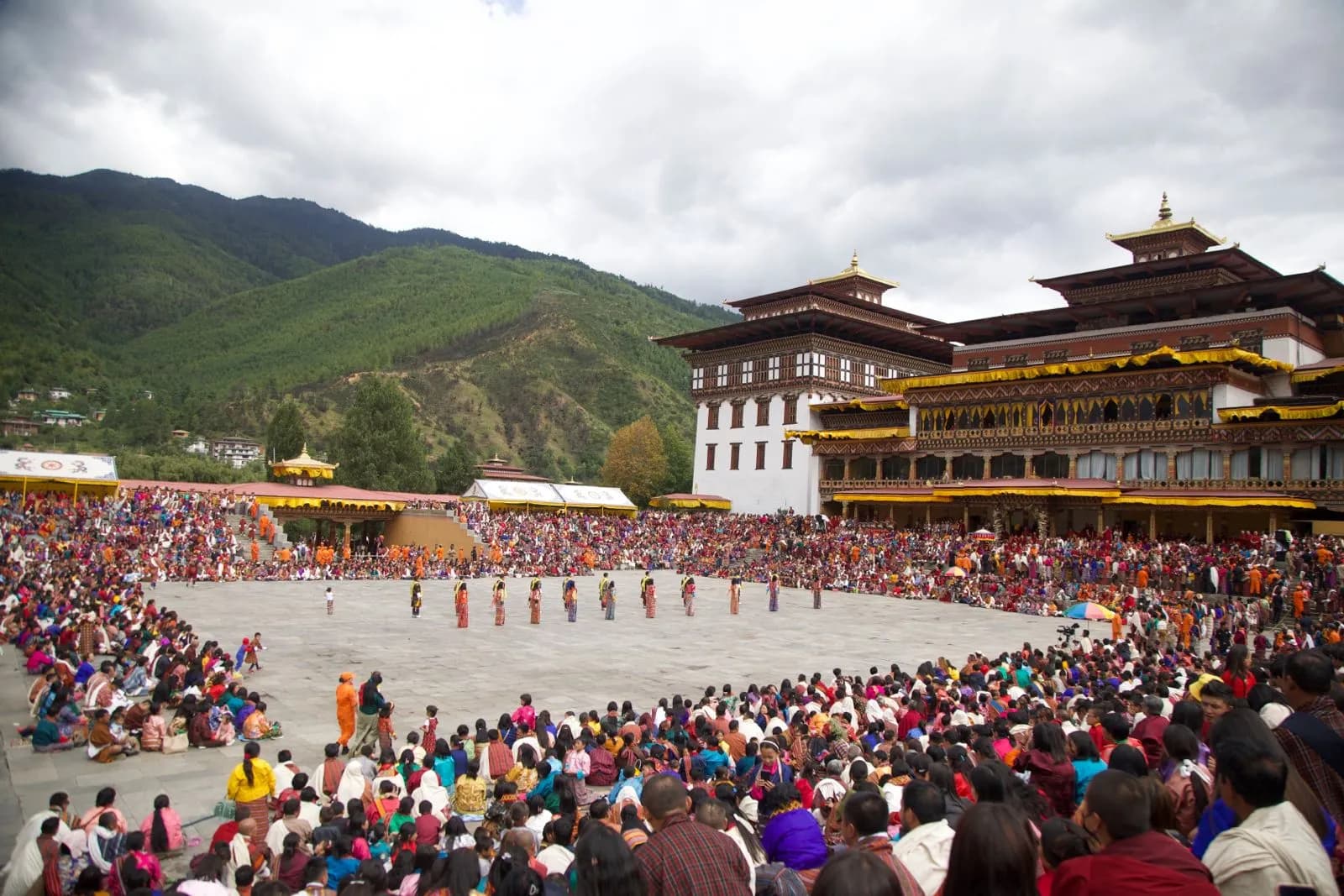 FestivalThimphu Tshechu — three days at Tashichho Dzong, the largest attendance of any Bhutanese festival.Thimphu Tshechu — the autumn festival at Tashichho Dzong, capital of Bhutan. This year's dates, the programme, what to expect as an international visitor.
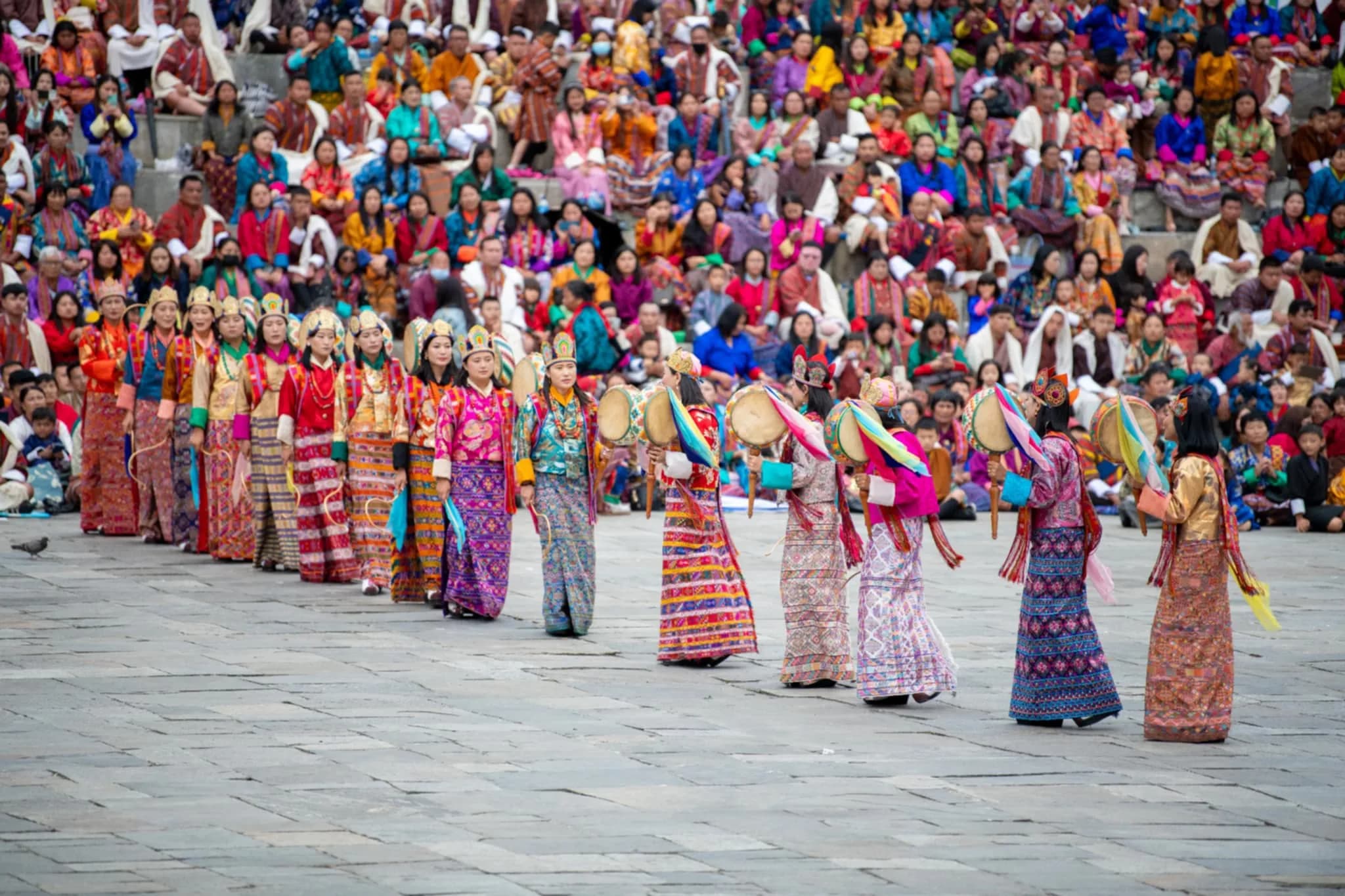 FestivalPunakha Drubchen & Tshechu — the Tibetan-invasion re-enactment, then the chams, at the most beautiful dzong in Bhutan.Punakha Drubchen & Tshechu — the late-winter festival pair at Punakha Dzong, with the Tibetan-invasion re-enactment. Dates, programme, what to expect.
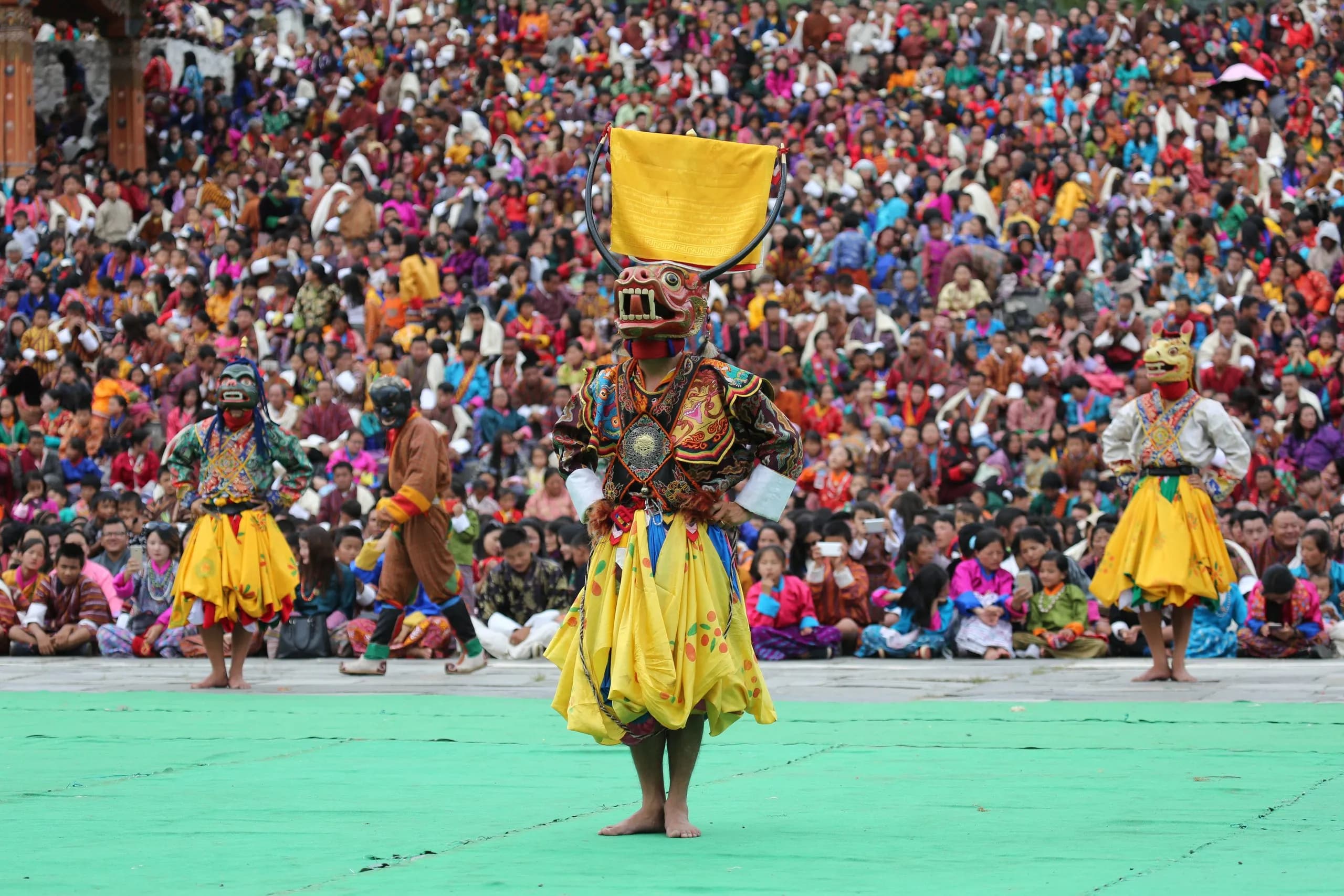 FestivalWangdue Tshechu — three days at Wangdue Phodrang Dzong, the principal autumn festival of central-western Bhutan.Wangdue Tshechu — three days at the rebuilt Wangdue Phodrang Dzong. Dates, programme, what to expect as a visitor.
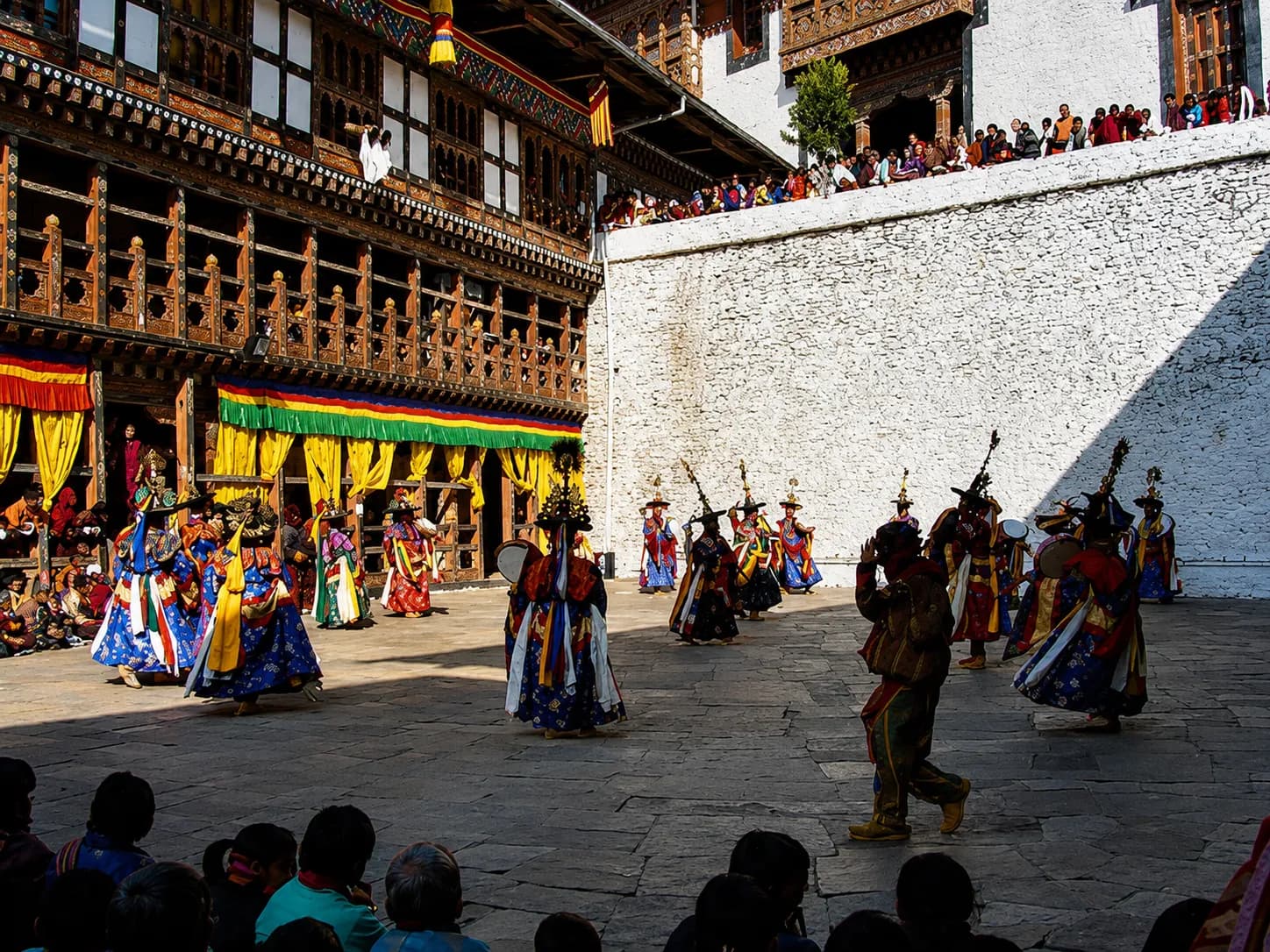 FestivalTrongsa Tshechu — four days at Trongsa Dzong, the most strategically positioned dzong in Bhutan.Trongsa Tshechu — winter festival at Trongsa Dzong, the ancestral Wangchuck seat. Dates, programme, what to expect as an international visitor.
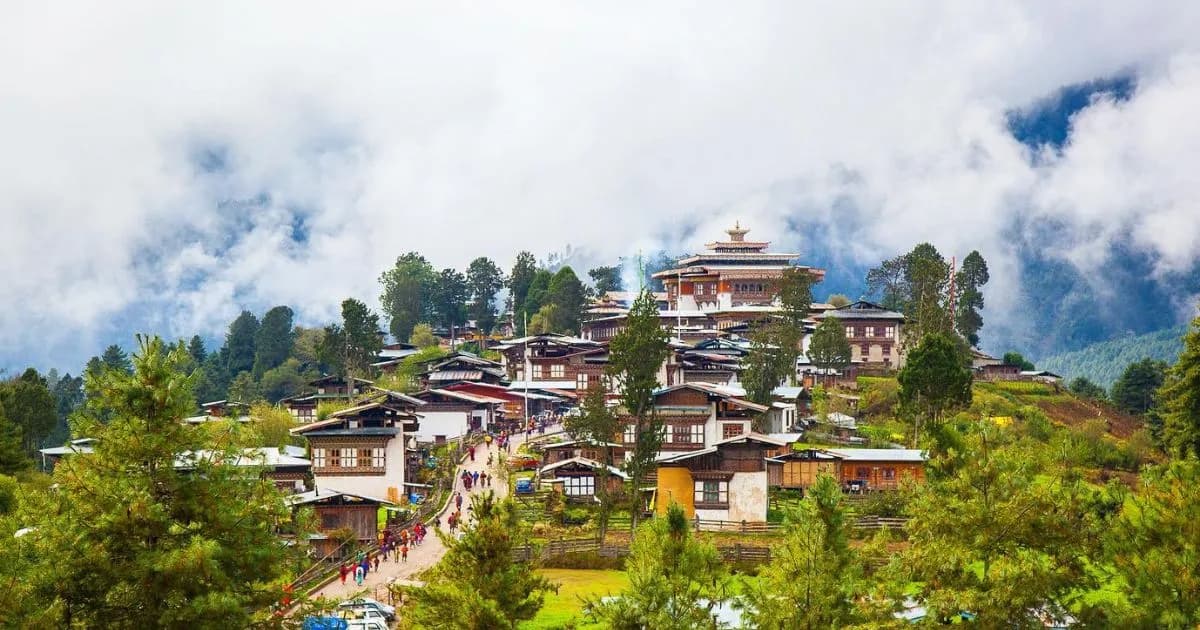 FestivalGangtey Tshechu — three days at the 17th-century Gangtey Goemba, in the wintering valley of the cranes.Gangtey Tshechu — three days at Gangtey Goemba in the Phobjikha valley. Dates, programme, what to expect as a visitor.
Places it mentions
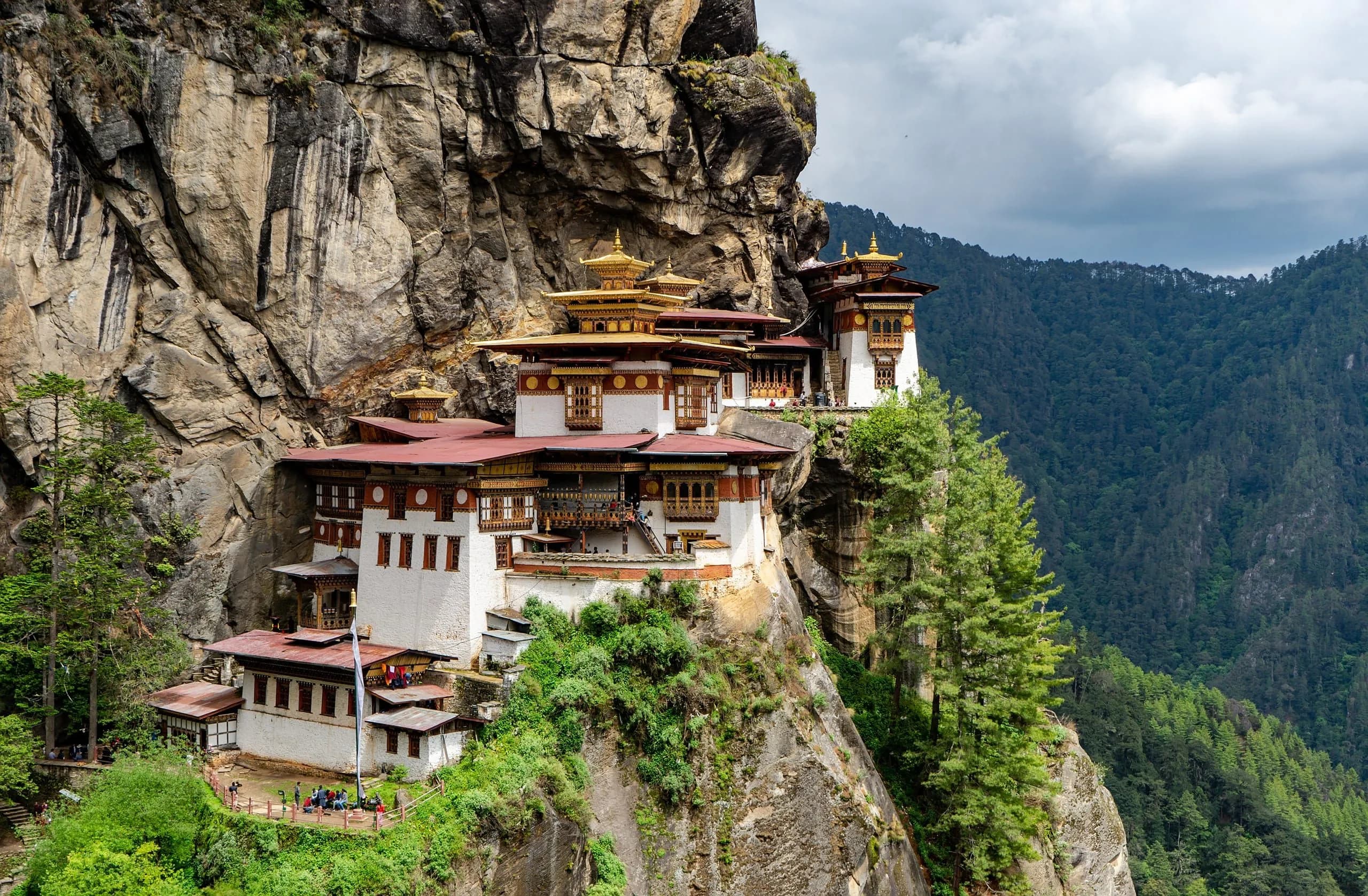 MonumentParo Taktsang — Guru Rinpoche's meditation cave, perched at 3,120 metres on the cliff above the Paro valley.Paro Taktsang (Tiger's Nest) — the founding by Guru Rinpoche, the 1692 monastery, the 2-hour hike, what to know before you visit.
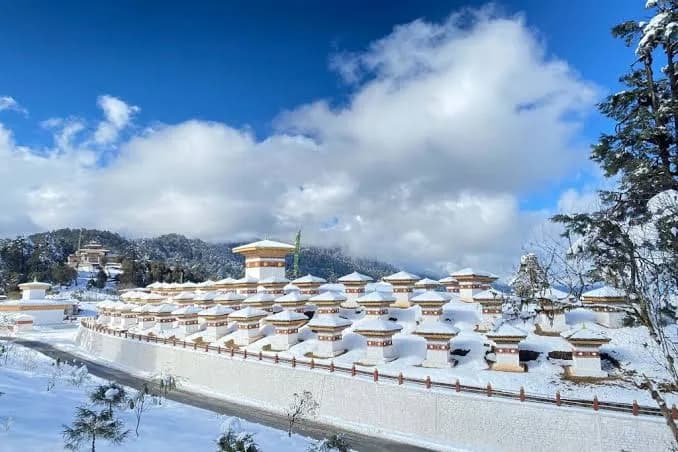 MonumentDochu La — the high pass between Thimphu and Punakha, with 108 chortens and the eastern-Himalayan panorama.Dochu La — the 108-chorten pass at 3,100 metres between Thimphu and Punakha. The Druk Wangyel Chortens and the Himalayan panorama.
Journeys it informs
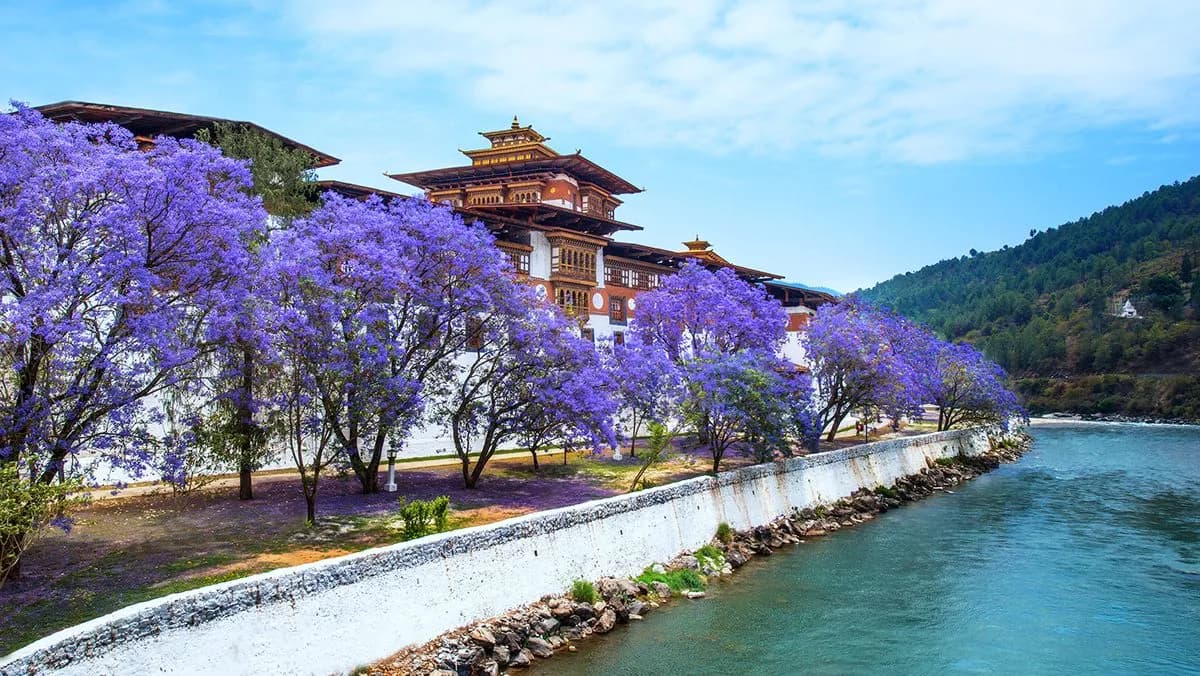 JourneyCherry blossoms over the Pa Chhu — April in Bhutan.A seven-night Bhutan journey in April — cherry blossom and rhododendron on Bhutan, Paro Tshechu if dates align, transparent pricing.
 JourneyBhutan in January — the clearest skies of the year.A six-night winter journey through Bhutan in January — clearest Himalayan visibility, Punakha's warm valley, fewer travellers, and lodges by the fire.
- JourneyNine nights for the photographer's spring — cherry blossom, rhododendron, the Paro thongdrel at dawn.A nine-night Bhutan photography journey in the spring window — cherry blossom, rhododendron, the Paro Tshechu thongdrel unfurling at dawn at Rinpung Dzong.
Frequently asked
- What's the single best month to visit Bhutan?
- Depends on what you've come for. October for the post-monsoon clarity and the autumn colour. April for spring rhododendron and the warmer cultural. November for the cleanest Himalayan panorama and the cranes' arrival in Phobjikha. January for the deepest Clear-Sky Bhutan register and the lowest visitor count. February for the Punakha Drubchen + Tshechu pair and the late-winter mountain views. The two principal-attendance festival weeks (Paro Tshechu in late March/April, Thimphu Tshechu in late September/October) carry the maximum cultural draw but also the maximum visitor pressure — the smaller dzongkhag tshechus and the quieter shoulder windows give similar depth with better lodge availability and a more intimate atmosphere.
- I've heard Paro Tshechu is unmissable — should I plan around it?
- It's exceptional, certainly — the country's most-internationally-attended festival, the pre-dawn thongdrel unfurling at Rinpung Dzong, the considered cultural depth. But the festival week puts substantial pressure on lodge availability and Drukair seats; book 9-12 months in advance specifically for that window. If your dates aren't locked to the festival itself, mid-May (the late-spring shoulder), the Punakha Tshechu in February, or the Wangdue Tshechu in late September give similar cultural depth with a quieter atmosphere and better availability. Considered visitors increasingly choose the alternatives.
- Is the monsoon really that bad?
- The monsoon shoulders (June and mid-September) are not bad — distinctive. The heart of the monsoon (late July through early September) is genuinely difficult: sustained rainfall, road landslide risk, cloud cover obscuring the Himalayan panorama, high-altitude treks closed. We actively discourage this window for first-time visitors. Returning visitors who value atmosphere over photography — the deepest-green rice paddies, the cloud-wreathed monasteries — sometimes prefer it; we accommodate where the visitor has informed expectations.
- How do you decide whether a borderline window is workable?
- By looking at the current data. The static seasonal calendar is the broad pattern, but the actual conditions in any given month vary year-on-year — the Indian Monsoon can be early or late by 2-3 weeks; a winter cold snap can close high passes unexpectedly. Our concierge checks the current monsoon forecast and the daily conditions across the principal valleys against each proposal's travel dates, and adjusts the recommendation accordingly. If your dates land in a marginal window, we surface the current forecast as part of the proposal.
- Will it be cold in winter?
- Yes — December and January are the coldest months. Thimphu mornings hit 0 to –5°C; days warm to 10-16°C. Paro is similar; Punakha (lower altitude) is warmer. Bumthang and the central valleys are cold. The high passes carry snow. Pack layers, a warm coat, gloves; lodge heating is reliable but rooms are not warmed during the day. The compensating gift is the most-reliable Himalayan panorama of the year.
- What about the Tshechu festivals?
- Bhutanese festival dates follow the Bhutanese lunar calendar (a distinct system, not Tibetan or Indian) and shift each Gregorian year. The Department of Tourism publishes the year's calendar 6–12 months in advance; we confirm dates against the official release before any itinerary is locked. See the festivals calendar for the full year's schedule with projected dates and the lunar pattern for each festival.
- How does altitude affect when to visit?
- Altitude is the principal seasonality lever beyond weather. The Bhutan (Paro 2,200m, Thimphu 2,300m, Punakha 1,200m) operates year-round. The Phobjikha valley (3,000m) is cold but accessible Dec–Feb. The high-altitude treks (Druk Path, Chomolhari, Snowman) operate only in Apr–Jun and Sep–Nov. Bumthang (2,600m) is accessible year-round but late December and January are cold.

