Bhutanese monuments
Passes & natural sites
The high passes, sacred lakes, and reserves — places whose significance is in the landscape rather than in anything built on it.
- In this group
- 9
- Dzongkhags
- 5
- Earliest founding
- 1968
Passes & natural sites9
nature-centre · Wangdue Phodrang · 2,900 m
Black-Necked Crane Information Centre
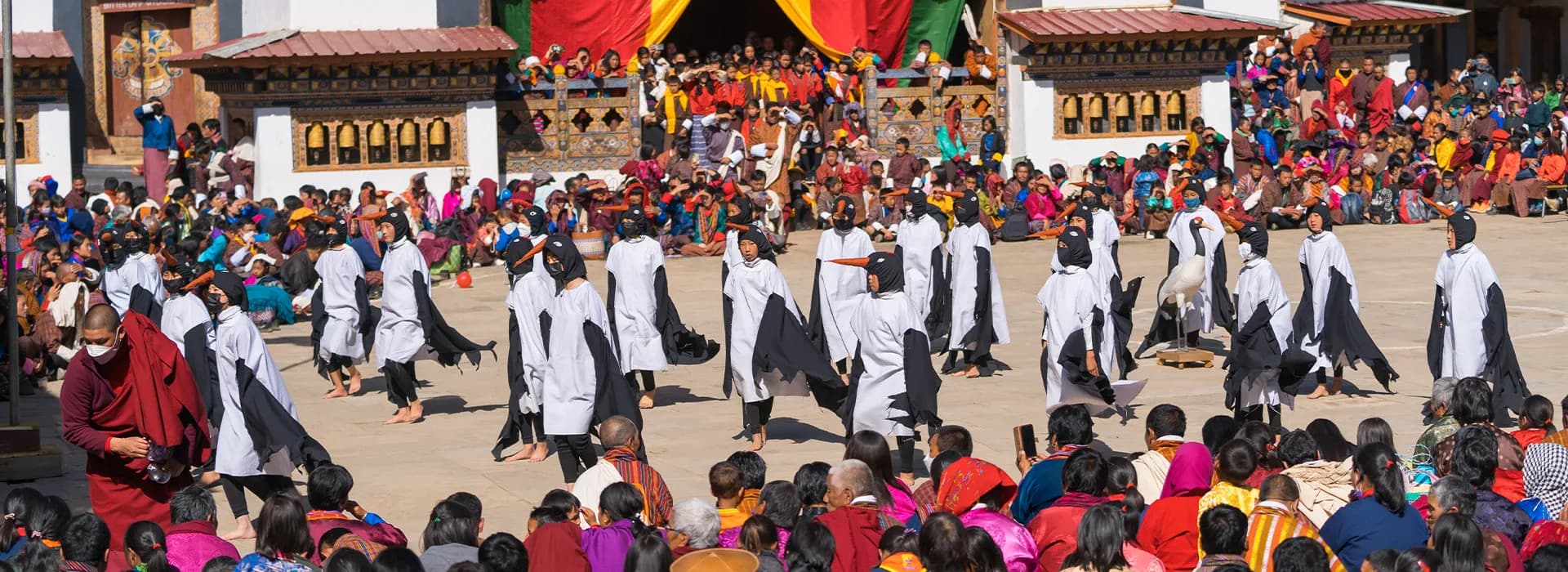
On the edge of the Phobjikha valley's wetland, the Black-Necked Crane Information Centre — run by the Royal Society for the Protection of Nature — is the place to understand and observe the valley's most celebrated visitors: the black-necked cranes that fly down from the Tibetan plateau each winter to roost in the marsh. From late autumn to early spring some hundreds of the rare birds make Phobjikha their season's home, and the Bhutanese revere them. The centre offers spotting scopes, exhibits on the cranes and the valley's ecology, and a viewing gallery over the wetland where the birds gather.
mountain-pass · Paro · 3,988 m
Chele La
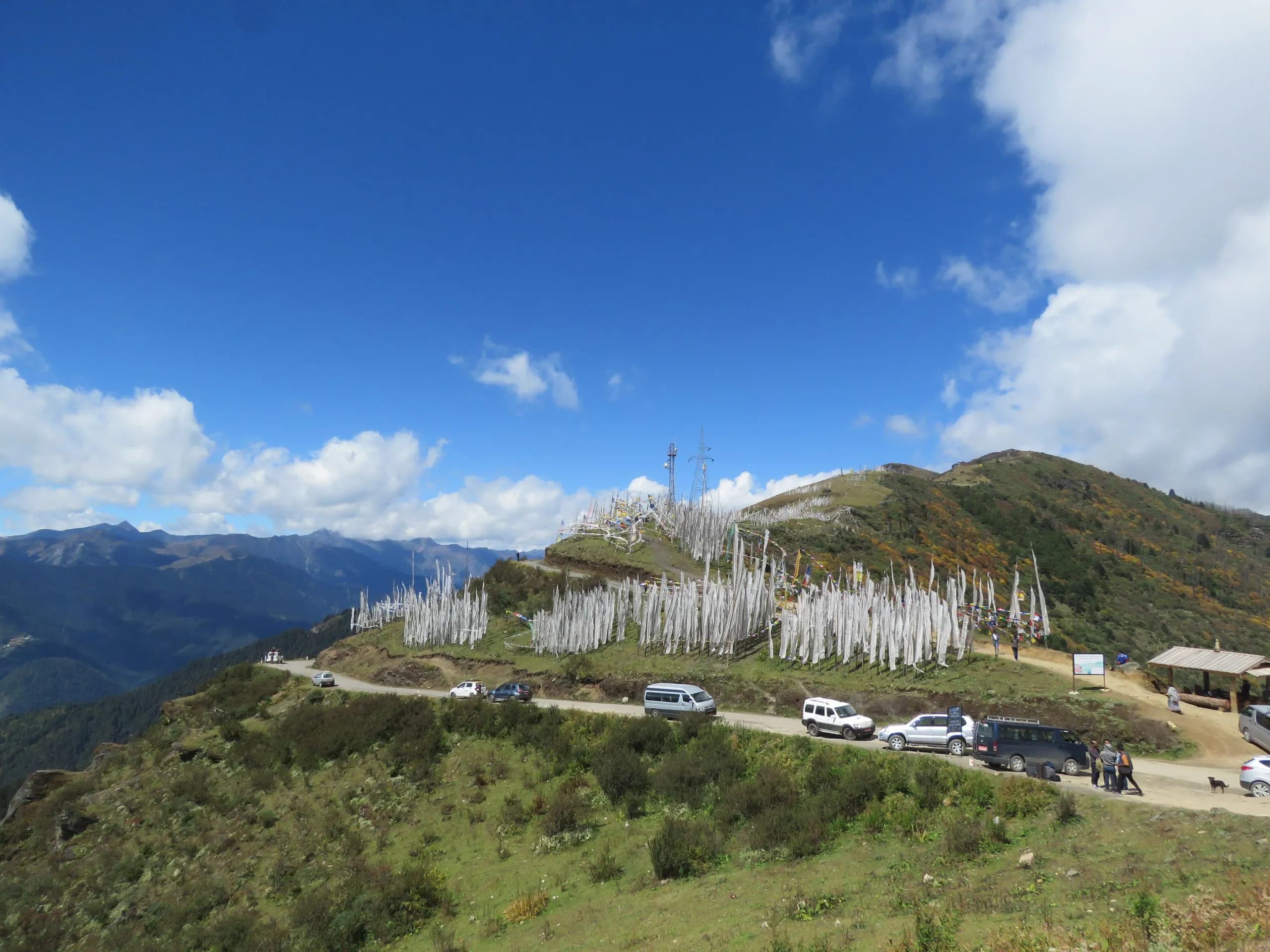
Chele La is the highest motorable pass in Bhutan — a windswept saddle at 3,988 metres on the road that climbs out of the Paro valley and drops over into the remote Haa valley beyond. The pass is a forest of prayer flags streaming in the high wind, and on a clear day it gives one of the country's great panoramas: the sacred peak of Jomolhari and the Himalayan wall to the north, the two green valleys falling away on either side, and alpine meadows that flush with rhododendron in spring. It is an easy drive up from Paro for a morning, and the trailhead for the walk down to the cliffside Kila Nunnery.
sacred-site · Bumthang · 2,700 m
Mebar Tsho
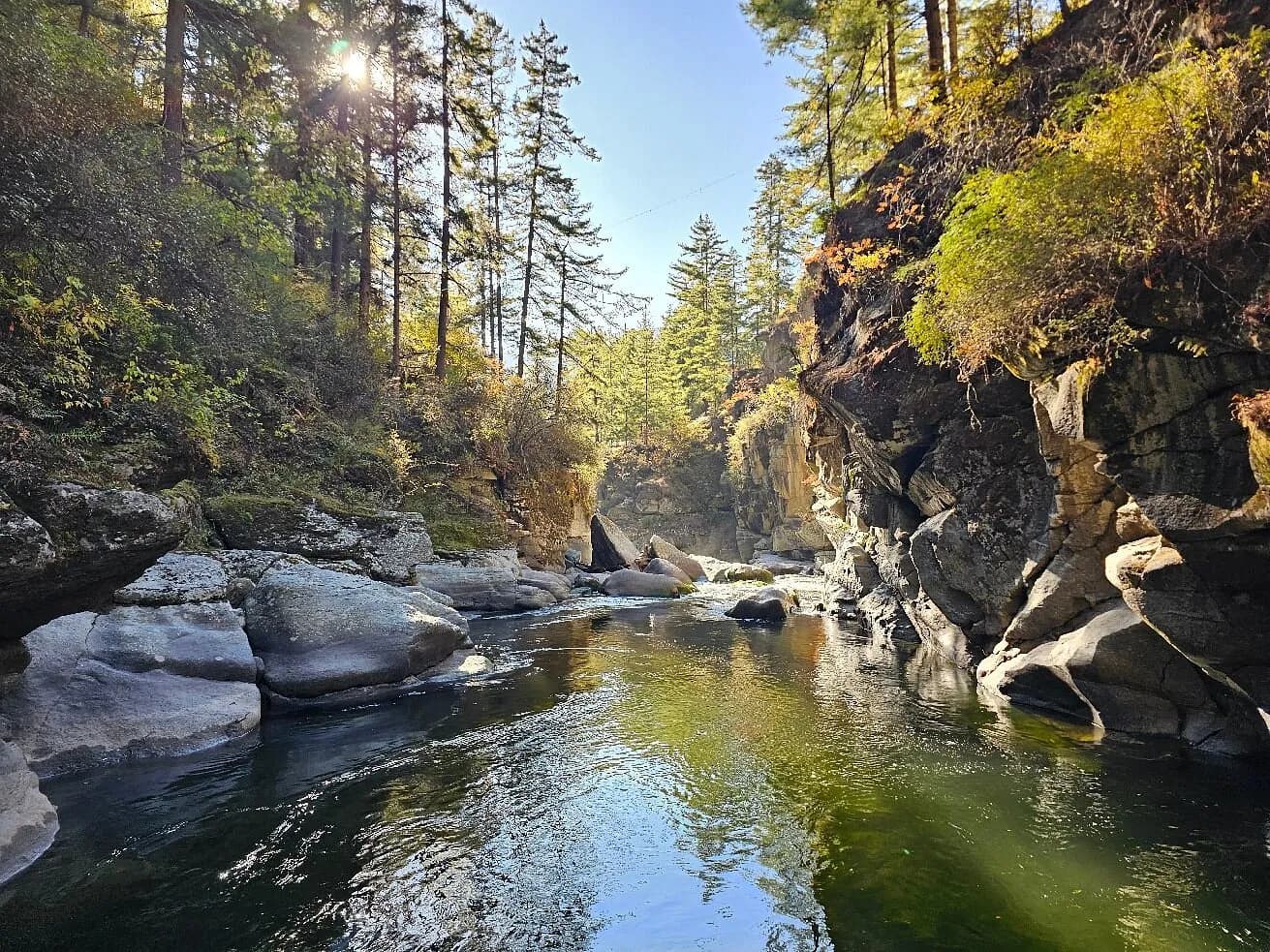
Mebar Tsho — literally 'the burning lake' — is one of the most-revered sacred sites in the Bhutanese tradition. The deep pool in the Tang Chhu of Bumthang's Tang valley is the principal location of Pema Lingpa's famous 15th-century 'burning butter lamp' miracle, in which the terton dove into the lake holding a butter lamp, retrieved a hidden treasure, and emerged with the lamp still alight. The site is the principal Pema Lingpa pilgrimage destination in Bhutan; the gorge-and-pool setting in the Tang valley is among the more atmospheric Bhutanese sacred sites.
nature-reserve · Thimphu · 2,600 m
Motithang Takin Preserve
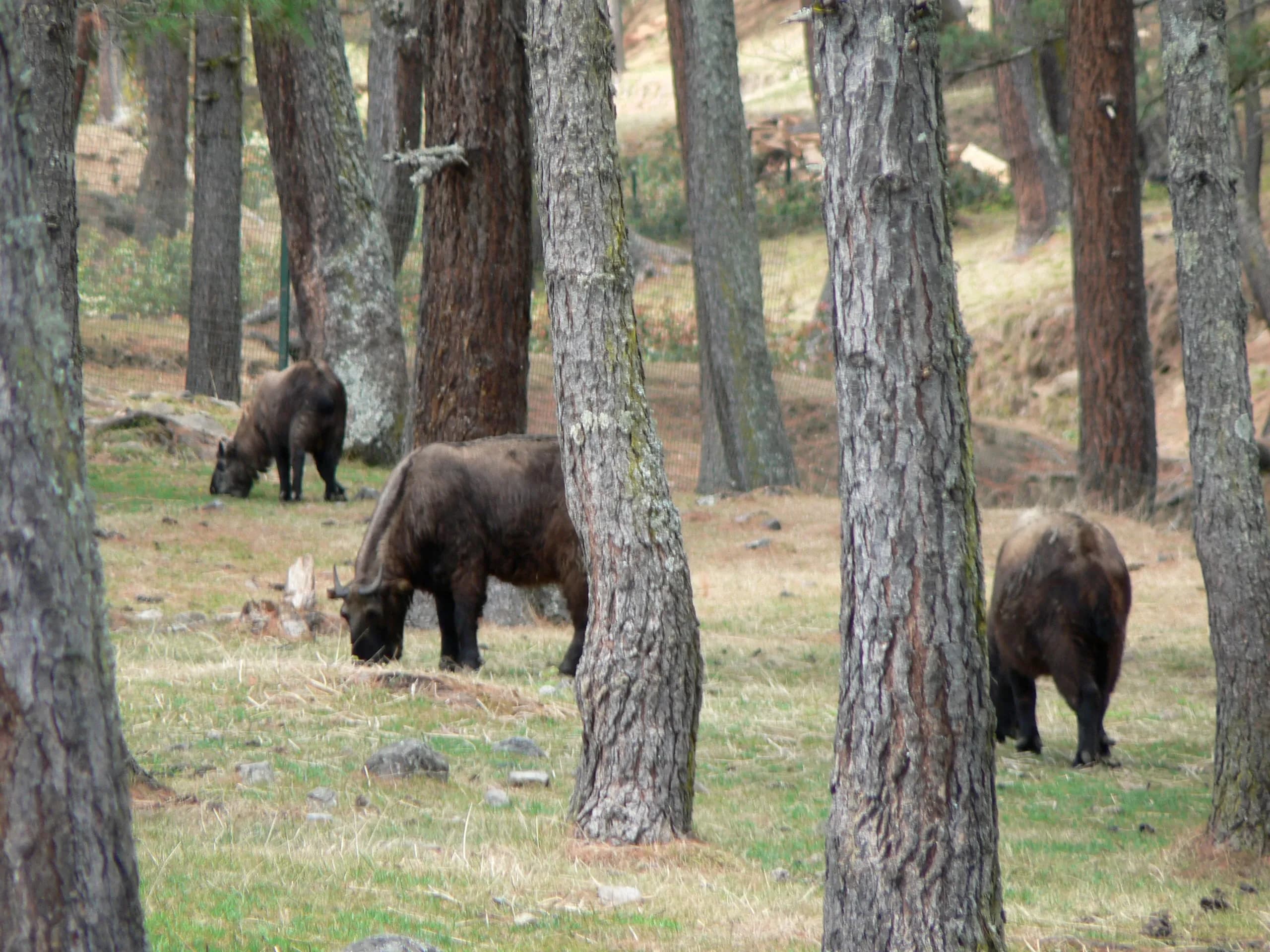
In the forested Motithang hills above Thimphu, a fenced reserve protects a small herd of takin — the national animal of Bhutan, and one of the oddest large mammals in the world: a heavyset, goat-antelope of the high Himalaya, often likened to a creature assembled from spare parts. The Bhutanese trace it to a miracle of the 'divine madman' Drukpa Kunley, who is said to have made it from a goat's head and a cow's bones. The preserve exists because of a very Bhutanese decision: when a small zoo was disbanded as unbecoming of a Buddhist country, the released takin would not leave, so a stretch of their own forest was given to them.
mountain-pass · Wangdue Phodrang · 3,420 m
Pele La
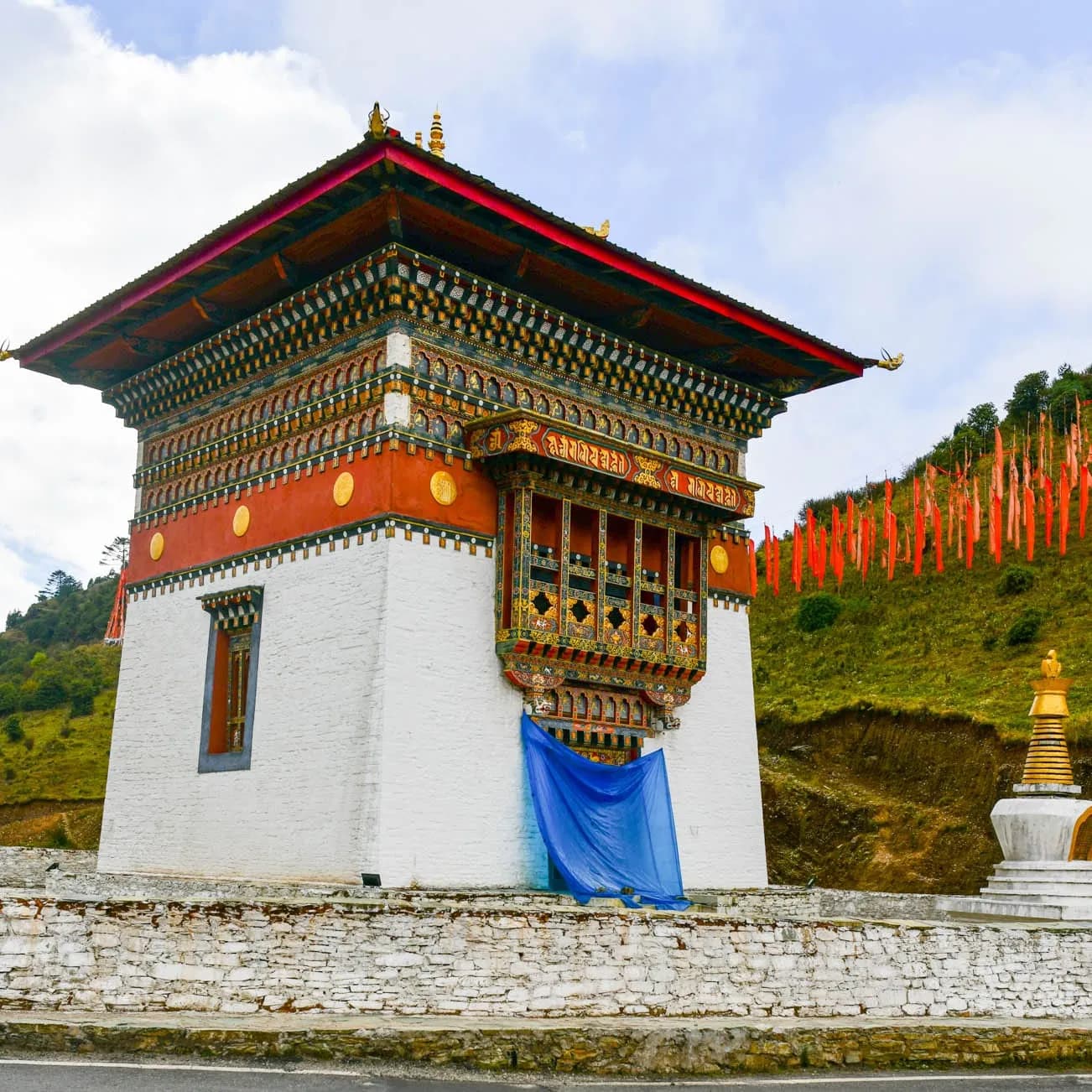
Pele La, at 3,420 metres, is the pass that carries the road over the Black Mountains from the Wangdue Phodrang valley into central Bhutan — the traditional dividing line between the west of the country and the centre, and the gateway to Trongsa, Bumthang, and the east. The crossing runs through the high pastures and dwarf-bamboo slopes of Jigme Singye Wangchuck National Park, often wrapped in drifting mist, grazed by yaks, and marked at the top by a chorten and a host of prayer flags. It is the moment a journey leaves the familiar western valleys behind and turns towards the deeper country beyond.
working-farm · Bumthang · 2,600 m · founded 1968
The Bumthang Swiss Farm
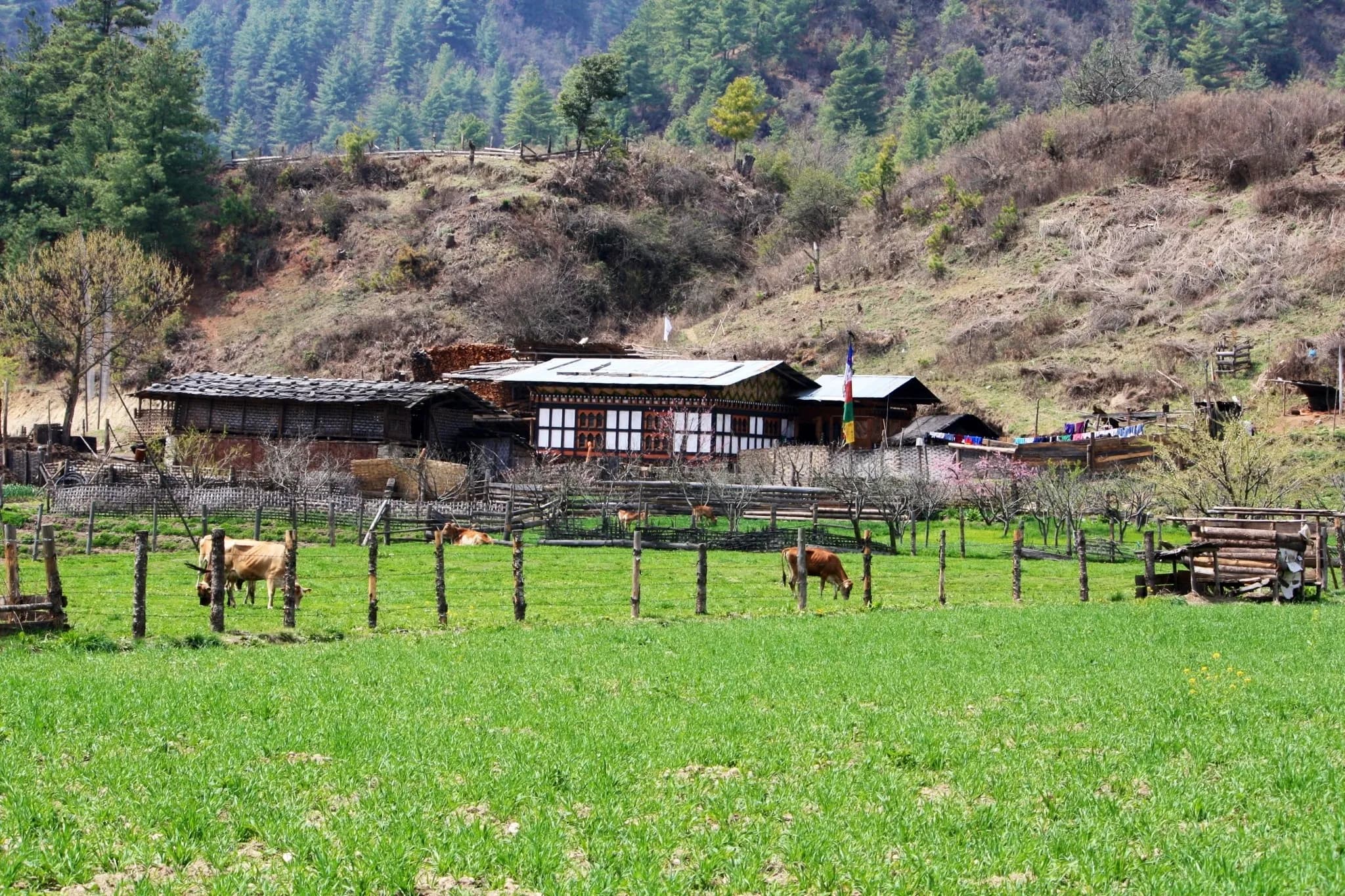
In the Choekhor valley near Jakar, the Bumthang Swiss Farm is the unlikely and charming legacy of Fritz Maurer, a Swiss agronomist who came to Bhutan as a development worker in the 1960s, settled in Bumthang, and never left. From his farm came the country's first Swiss-style cheeses, its first craft beer — the Red Panda weiss — and much of the apple and dairy development that shaped the modern Bumthang economy. A visitor can tour the dairy, taste the cheese, sample the unfiltered wheat beer, and hear one of the warmest stories of Bhutan's gentle opening to the world.
nature-trail · Wangdue Phodrang · 2,900 m
The Gangtey Nature Trail
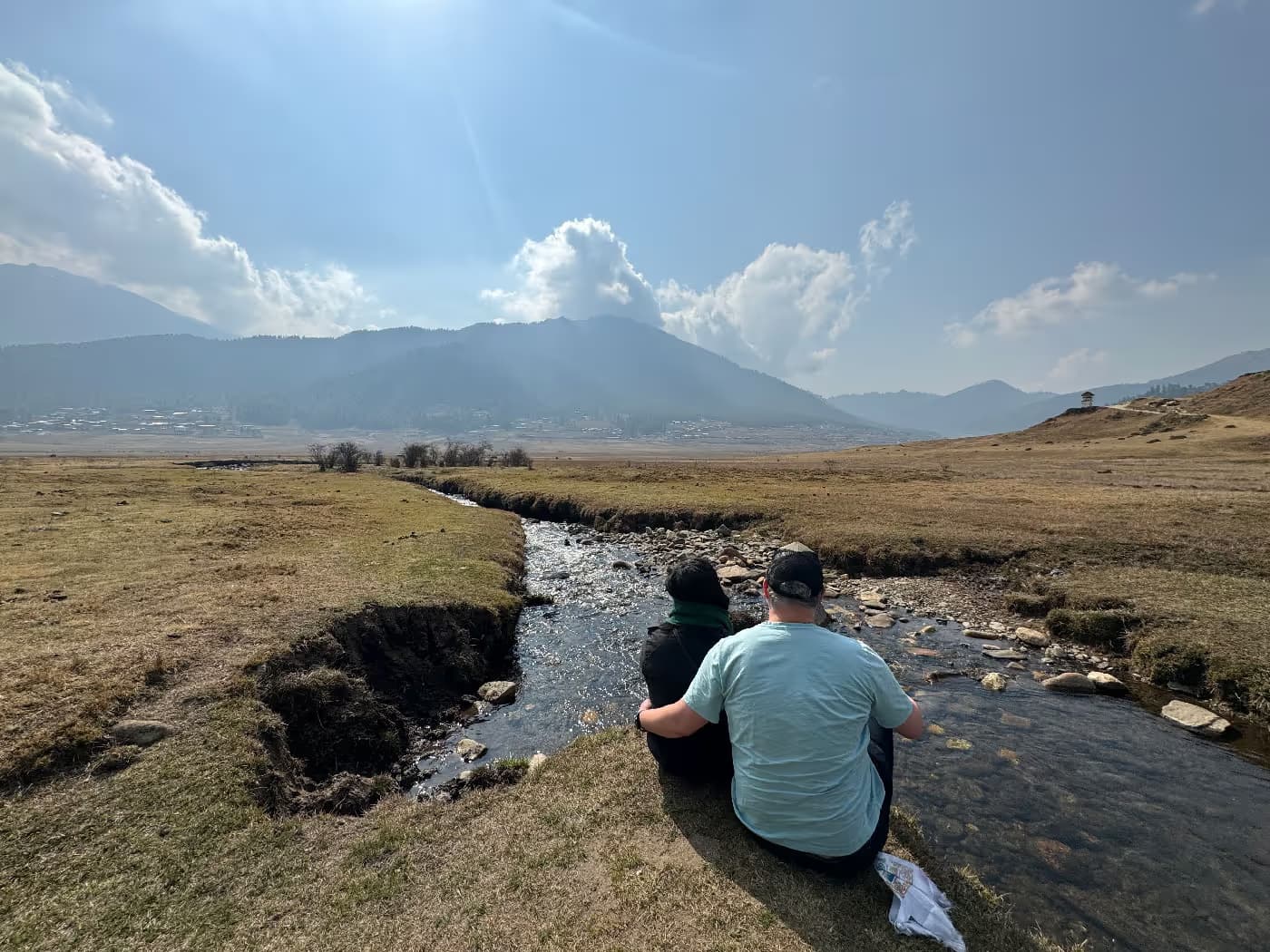
The Gangtey Nature Trail is the classic short walk of the Phobjikha valley — an easy, mostly downhill path that begins near Gangtey Goemba on its hilltop and winds down through pine forest, past a chorten and prayer-flag-strung mani wall, through the village of Semchubara, and out across the open floor of the glacial valley. It takes only an hour and a half or two, and asks little of the legs, but it gives the truest feel of Phobjikha: the wide marsh, the grazing cattle, the dwarf bamboo, and — in winter — the black-necked cranes feeding in the fields. Many visitors call it the most rewarding gentle walk in Bhutan.
mountain-pass · Bumthang · 3,780 m
Thrumshing La
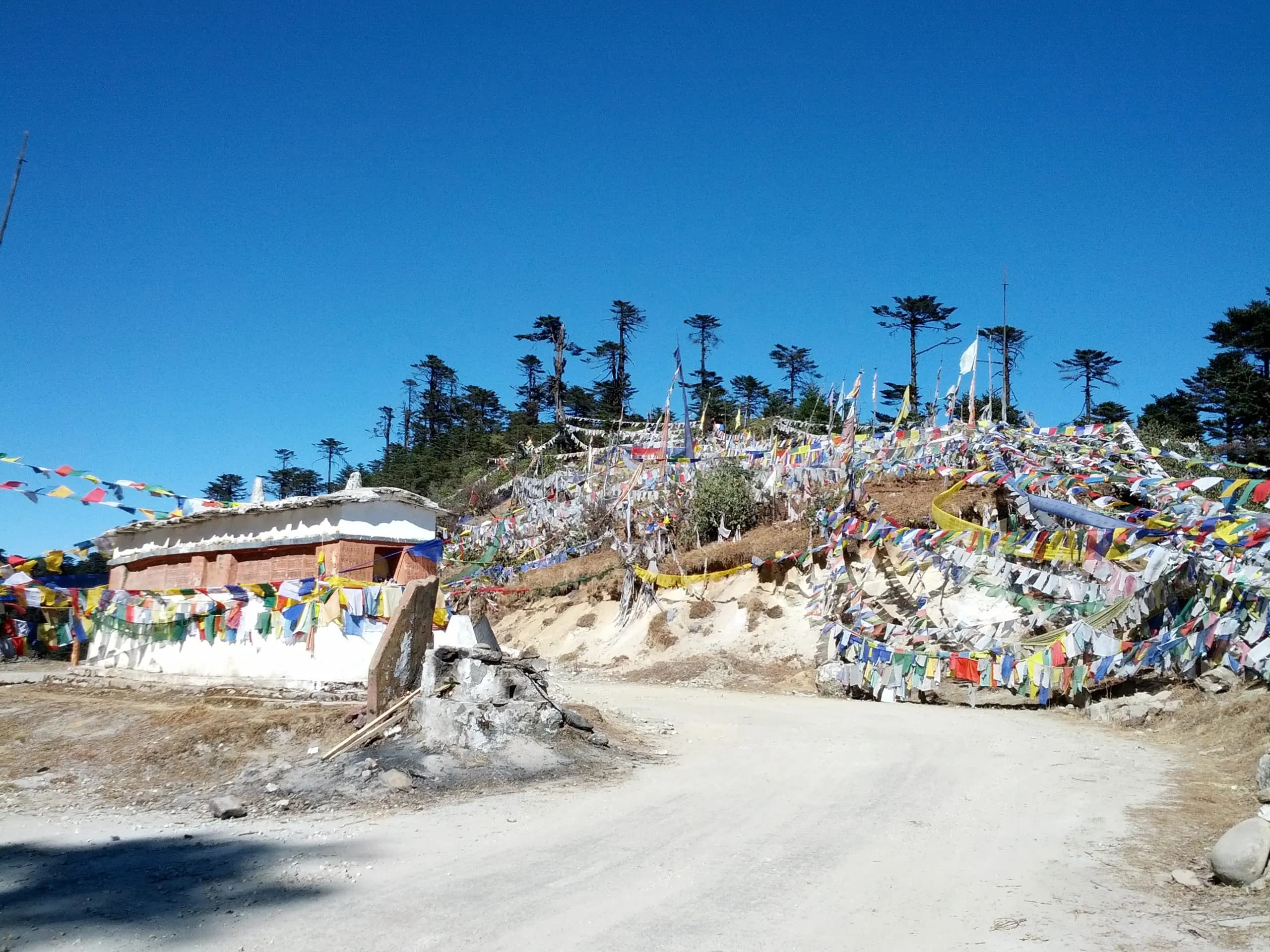
Thrumshing La, at 3,780 metres, is the second-highest pass a road crosses in Bhutan — the great height between Bumthang and Mongar that opens the way into the country's remote and little-travelled east. It crowns Thrumshingla National Park, a wilderness of fir and rhododendron forest famous for its birdlife, and the descent beyond is one of the most dramatic in the country: a vertiginous plunge of thousands of metres down through changing forest into the deep valleys of the east. For the few who travel beyond Bumthang, Thrumshing La is the threshold of a wilder, older Bhutan.
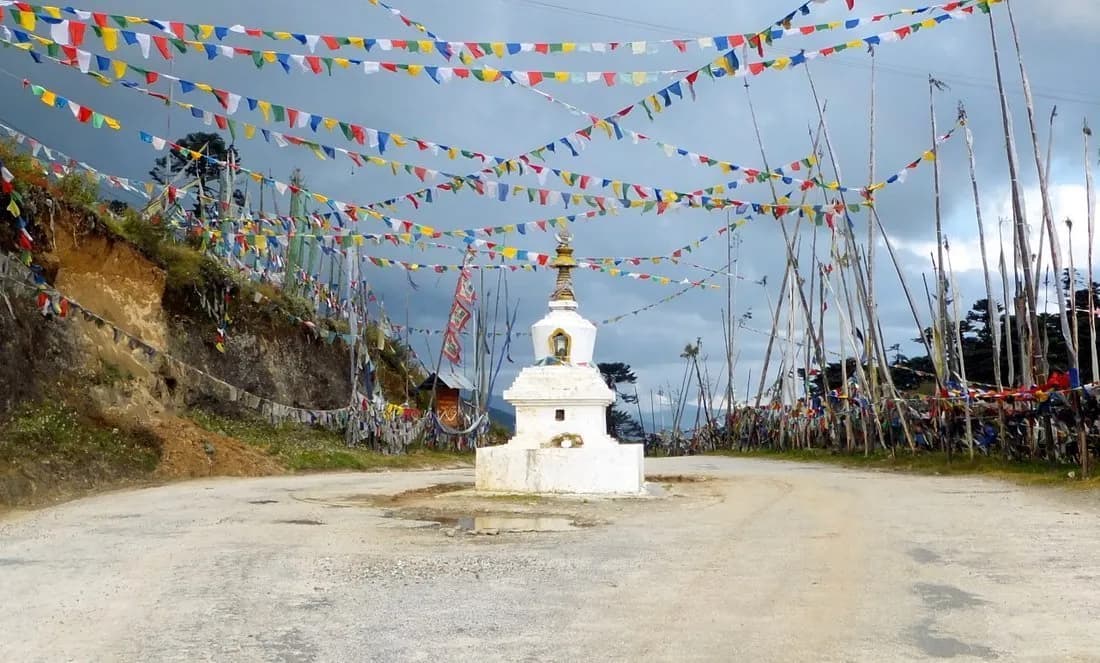
mountain-pass · Trongsa · 3,425 m
Yotong La
Yotong La, at 3,425 metres, is the pass that carries the road from Trongsa over into the Bumthang region — the last climb before a journey drops into the Chumey valley, the first of Bumthang's four spiritual heartland valleys. Quieter and more wooded than the high open passes, Yotong La runs through deep fir and rhododendron forest, marked at the top by prayer flags and a chorten, with the descent on the far side leading down past the yathra-weaving village of Zugney into the Bumthang valleys. It is the gateway to the most sacred country in Bhutan.

