Planning your Bhutan journey
How long to spend in Bhutan — five nights at the minimum, ten nights for the considered version.
Most international visitors spend between 5 and 10 nights in Bhutan. Five nights is the minimum for Bhutan (Paro, Thimphu, Punakha) at a considered pace. Seven nights adds Phobjikha or Bumthang. Ten nights opens the central valleys and the cultural depth most-considered visitors say they wish they had given themselves. Treks add 6 to 23 days on top of the cultural base. **The shapes below are our recommendations — not rules.** We design every itinerary against the visitor's specific preferences and constraints; if you want longer somewhere, or shorter, or a different sequence entirely, we adjust accordingly.
- Register
- logistics
The short answer
5 nights minimum (Paro–Thimphu–Punakha route). 7 nights with Phobjikha or Bumthang added. 10 nights for the considered version with central valleys. 14 nights for the Bumthang deep-circuit or eastern Bhutan via Mongar-Trashigang. 18-23 days for the high-altitude treks (Druk Path, Chomolhari, Snowman). Bhutanese travel is slow by design — the Royal Government's high-value-low-impact policy and the considered pace of the cultural circuit reward a longer stay.
5 nights — Bhutan minimum
Five nights gives you Bhutan at a comfortable pace: 2 nights Paro (arrival, Tiger's Nest hike, Rinpung Dzong), 1 night Thimphu (Tashichho Dzong, the Buddha Dordenma, the Memorial Chorten), 2 nights Punakha (Punakha Dzong, Chimi Lhakhang, riverside walks). This is the standard short trip and accounts for roughly half the international bookings. The pace is brisk but not rushed; the Royal Government's high-value-low-impact policy and the considered Bhutanese cultural register reward a longer stay where the budget permits.
7 nights — Bhutan plus one central valley
Seven nights opens one of the central valleys. The two principal options: Phobjikha (the wintering valley of the black-necked cranes, 5 hours' drive from Paro, the Gangtey Goemba above the valley) — 2 nights. Or Bumthang (the religious heartland of Bhutan, 9 hours' drive from Paro, Jambay Lhakhang and Kurjey Lhakhang) — 3 nights. Both options give the cultural depth that the 5-night version doesn't quite reach. October-November for Phobjikha with the cranes; September-October for Bumthang's festival season.
10 nights — the considered version
Ten nights is the version we recommend to any visitor whose schedule permits. The 10-night profile: 2 nights Paro, 1 night Thimphu, 2 nights Punakha, 2 nights Phobjikha, 2 nights Bumthang, 1 night Paro return. This opens the central valleys properly, gives time for the Bumthang religious circuit, and includes the Dochu La viewpoint and the broader cultural depth. The 10-night version is the principal premium-tier Bhutanese journey and accounts for substantial repeat-visitor bookings.
14 nights — Bumthang deep-circuit or eastern Bhutan
Fourteen nights opens either a deeper Bumthang stay (the Tang and Ura valleys, the Tamshing and Pema Lingpa circuit, multiple day-walks) or the Eastern Circuit via Mongar, Trongsa, and into Trashigang. The Eastern Circuit requires the long drive across the country (3-day driving with overnights at Trongsa and Mongar) but rewards with a different Bhutanese register — older religious sites, fewer international visitors, the Brokpa communities of the far east. Combined with a domestic flight back from Bumthang or Yongphula, the 14-night Eastern Circuit is the principal repeat-visitor product.
18-25 days — adding a trek
High-altitude treks add 6 to 23 days on top of the cultural base, depending on the route. [[druk-path-trek|Druk Path Trek]]: 4 days, accessible entry-level. [[chomolhari-trek|Chomolhari Trek]]: 6 days, base camp of the sacred mountain. [[chomolhari-laya-gasa-trek|Chomolhari-Laya-Gasa]]: 13 days, cross-Himalayan with Layap community and Gasa hot springs. [[snowman-trek|Snowman Trek]]: 23 days, the expedition-grade flagship. Trek itineraries are typically bracketed by 3 nights of pre-trek acclimatisation in Paro and 2 nights of post-trek recovery — adding 5 nights to the trek duration.
The honest per-valley time allocations — for first-timers
Visiting Bhutan is not the easiest trip to plan — the route options are substantive, the lodges fewer than at comparable destinations, and the per-valley character is genuinely distinct. For first-time visitors, our considered per-valley caps — what each place gives you before the marginal day starts to lose value: Paro — not more than 3 days. Day 1 for arrival acclimatisation; Day 2 for the cultural circuit (Rinpung Dzong, Ta Dzong / National Museum, Kyichu Lhakhang, the upper valley); Day 3 for the Tiger's Nest hike. Beyond 3 days, the visitor content tapers and the marginal day adds substantially less. Wellness-focused visitors at the Bhutan Spirit Sanctuary or COMO Shambhala at Uma Paro are the exception — the spa programme can justify a 4th or 5th day. Thimphu — not more than 3 days. Day 1 for the cultural circuit (Tashichho Dzong, Memorial Chorten, Buddha Dordenma, the Folk Heritage Museum); optional Day 2 for the day-hikes (Cheri Goemba, Tango Goemba, Wangditse, Changangkha-to-Buddha); optional Day 3 for the markets and the artisan-and-craft visits (Royal Textile Academy, Choki Traditional Art School, the Centenary Farmers' Market). Thimphu is the capital but a small one — population around 100,000 — and the content beyond Day 3 tapers off. Punakha — not more than 2 days. Day 1 for Punakha Dzong + Chimi Lhakhang; Day 2 for the riverside (the Mo Chhu suspension bridge, optional rafting, the Khamsum Yulley Namgyal Chorten walk). Beyond 2 days the cultural-content runway is largely exhausted. Punakha's principal value is the dzong, the warm valley climate, and the riverside lodge experience. Phobjikha — 1 to 2 days. A single overnight on the drive to or from Bumthang works for visitors not specifically tracking the cranes. 2 days for visitors who want the dawn-and-dusk crane viewing (late October through mid-March) or a valley walk. Beyond 2 days, the valley is too quiet for most. Bumthang — up to 3-4 days. The religious heartland; the per-valley cap here is softer because the cultural depth is genuinely greater. The Choekhor valley (Jambay, Kurjey, Tamshing, Jakar Dzong) alone justifies 2 days; the Tang valley (Mebar Tsho, Ogyen Choling) adds 1 day; the Chumey valley (textile traditions) adds 1 more. Repeat-visitor Bumthang stays go longer; first-timer Bumthang stays 3-4 days is the considered range.
Our recommendations are flexible — and we mean it
Every shape on this page is a recommendation, not a rule. We design Bhutanese itineraries to the specific visitor — and we adjust everything against your preferences and constraints. If you want longer in one valley: we make it work; we'll flag where the marginal day adds less. If you want a different sequence: Bhutan can be done Paro→Thimphu→Punakha or the reverse; the Phobjikha-Bumthang extension can be done in either order. If you want to skip somewhere because it isn't your interest (skip Phobjikha if the cranes aren't your draw; skip Thimphu's day-walks if the cultural visits suffice): we cut the day count accordingly and credit the time elsewhere. If you want a deep-Paro wellness stay rather than the standard circuit: we structure around Bhutan Spirit Sanctuary or COMO Shambhala for 5+ days at Paro. If you want a deep-Bumthang religious immersion at the expense of Punakha and Thimphu: we adjust. The per-valley caps above are the considered first-timer guidance; for repeat visitors and visitors with specific deep interests, the shape evolves with the conversation.
Practical
- Minimum stay (Bhutan)
- 5 nights
- Considered cultural stay
- 10 nights
- Eastern Circuit
- 14 nights
- Paro — first-timer cap
- Not more than 3 days
- Thimphu — first-timer cap
- Not more than 3 days
- Punakha — first-timer cap
- Not more than 2 days
- Phobjikha — typical
- 1-2 days
- Bumthang — typical
- 3-4 days
- Druk Path Trek added
- +4 days walking, +5 nights total trip
- Chomolhari Trek added
- +6 days walking, +7 nights total trip
- Snowman Trek added
- +23 days walking, +25 nights total trip
Walks it mentions
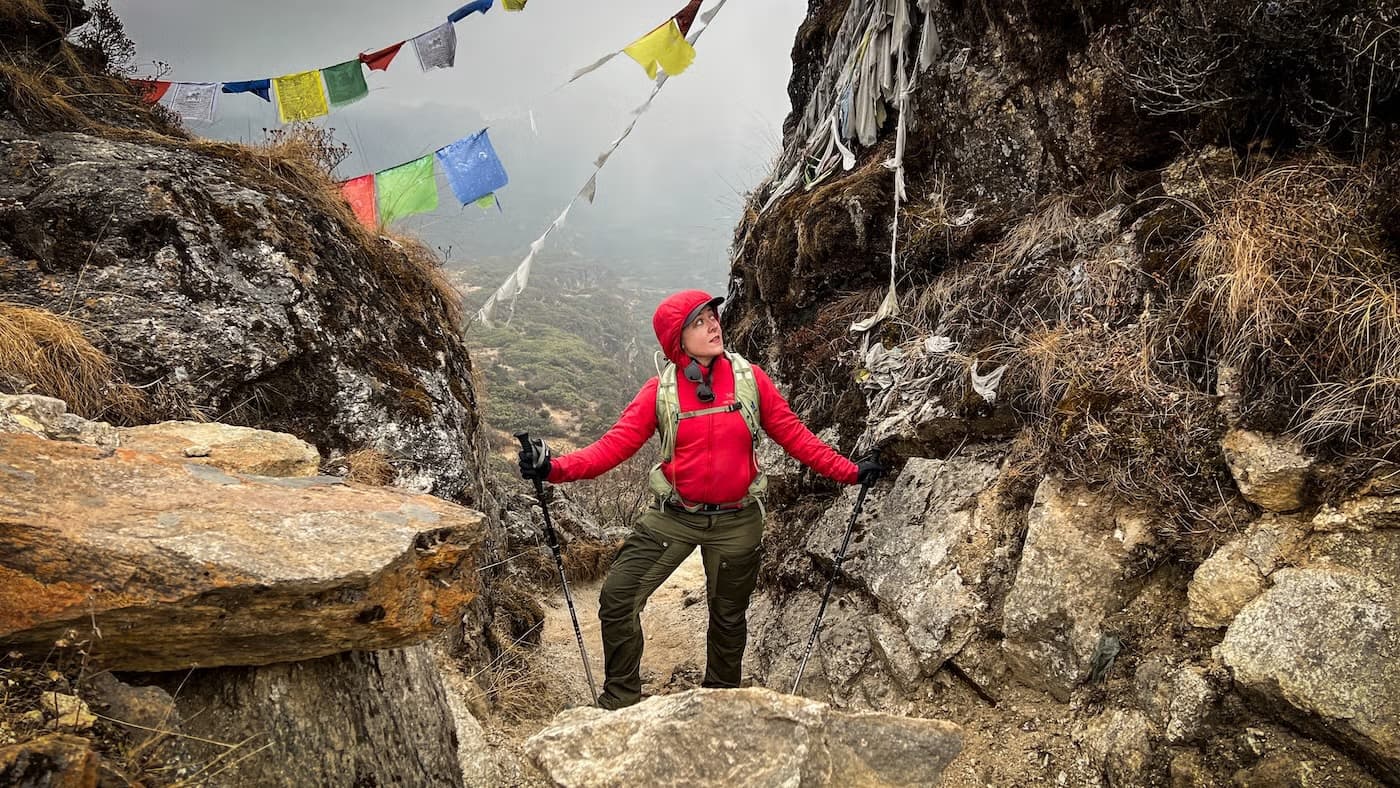 TrekDruk Path Trek — four days, Paro to Thimphu over the ridge, the alpine-lake landscape and the substantial first taste of Bhutanese trekking.Druk Path Trek — four days from Paro to Thimphu over the ridge, three high-altitude lakes (Jimilang Tsho, Janey Tsho, Simkota Tsho), max altitude ~4,200 m.
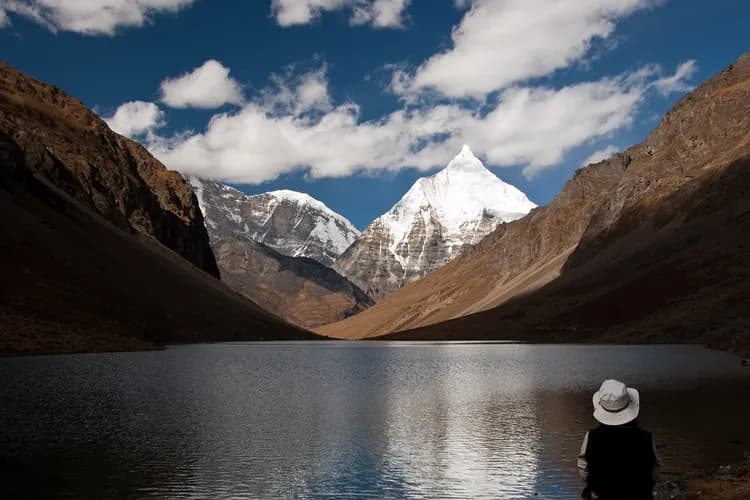 TrekChomolhari Lingshi Trek — six days, max altitude 4,900 m at Bonte La, the principal direct view of Chomolhari (7,326 m).Chomolhari Lingshi Trek — six days at 2,900–4,900 m, the principal view of Chomolhari, the high pasture country of Lingshi. Paro to Thimphu via Lingshi.
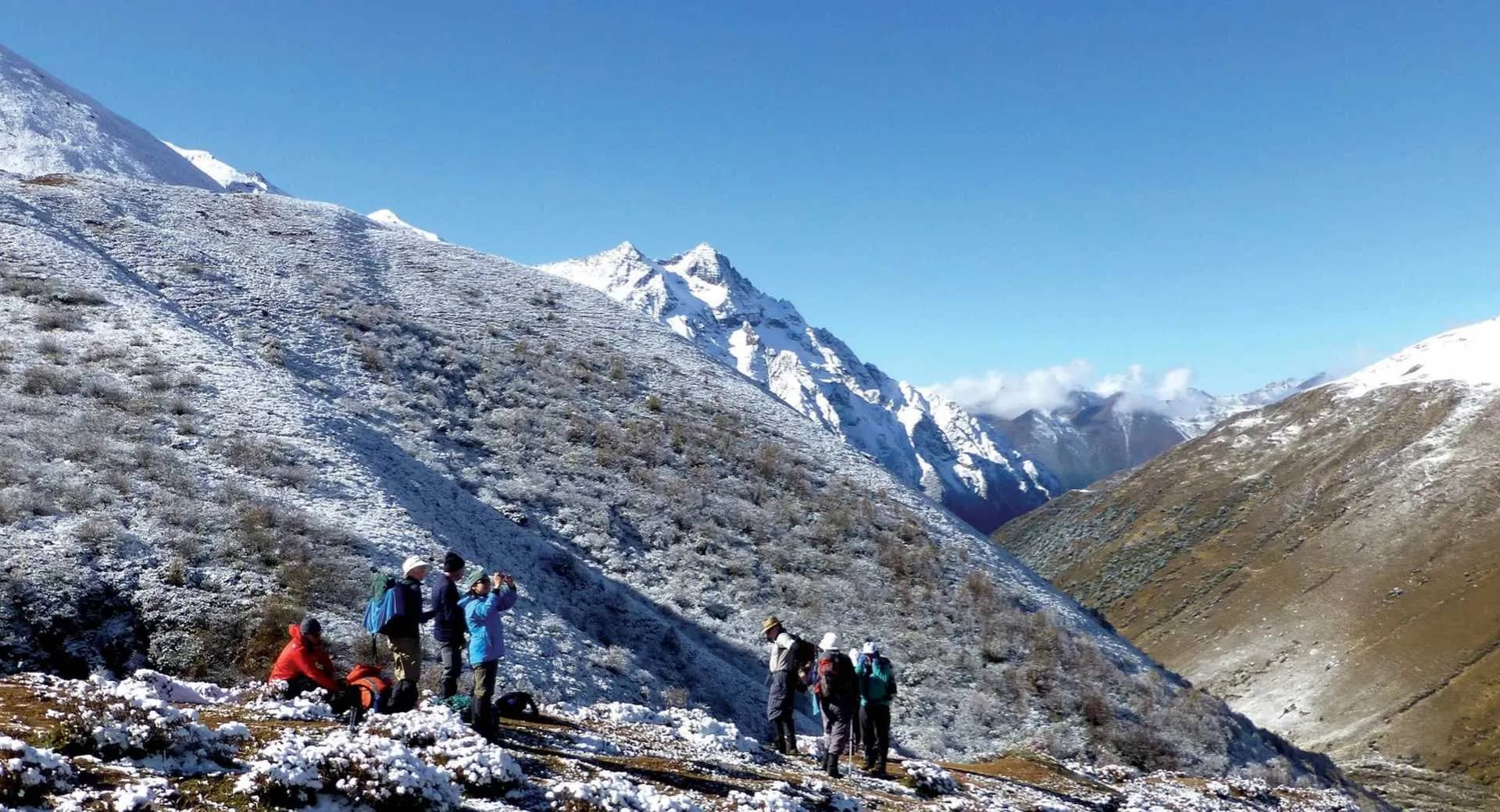 TrekSnowman Trek — 23 days across the Lunana glaciers, eleven high passes, the high-altitude expedition the Bhutanese tradition still calls a pilgrimage.Snowman Trek — 23 trekking days, ~345 km, 5,320m max altitude, eleven Himalayan passes across the high north of Bhutan. Route, season, preparation.
Festivals it mentions
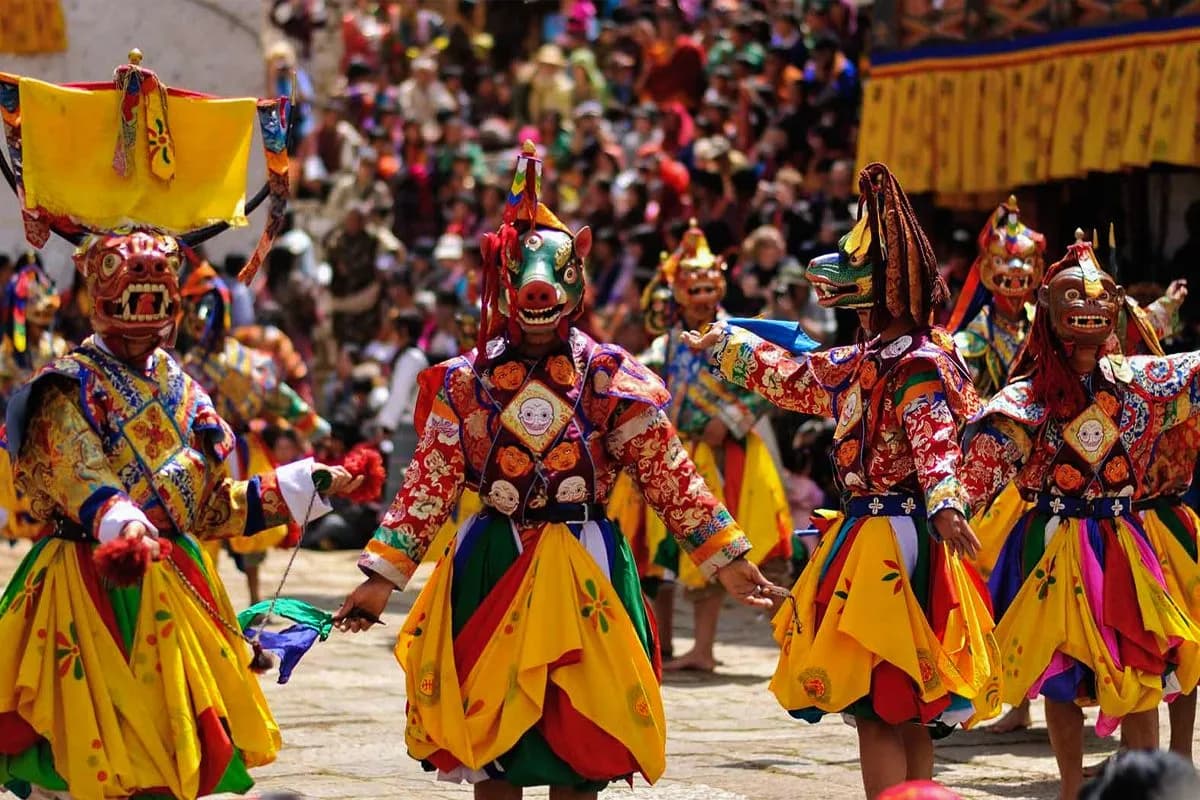 FestivalParo Tshechu — five days at Rinpung Dzong, with the pre-dawn thongdrel.Paro Tshechu — the principal spring festival at Rinpung Dzong. This year's dates, the programme, the pre-dawn thongdrel, what to expect for international visitors.
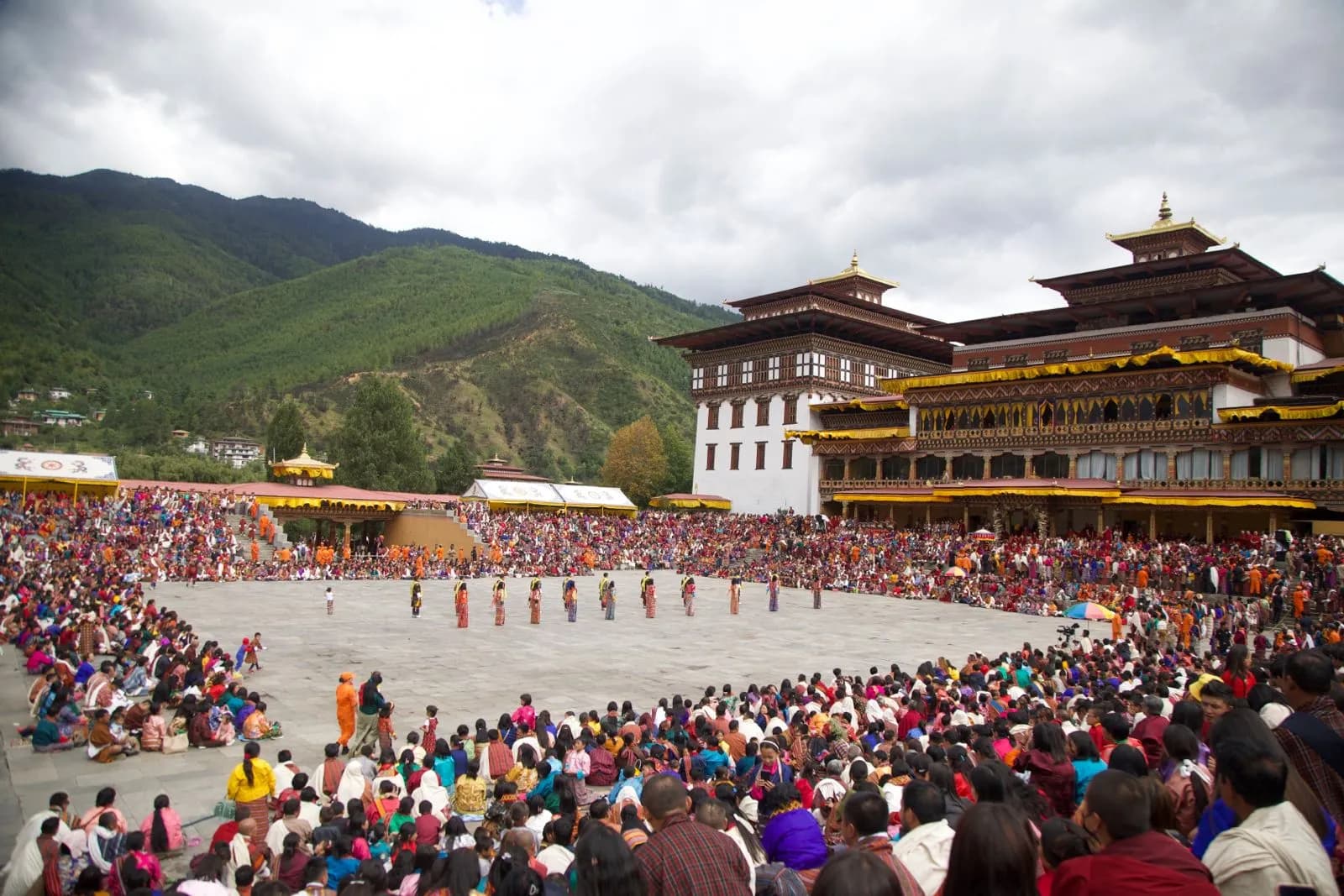 FestivalThimphu Tshechu — three days at Tashichho Dzong, the largest attendance of any Bhutanese festival.Thimphu Tshechu — the autumn festival at Tashichho Dzong, capital of Bhutan. This year's dates, the programme, what to expect as an international visitor.
Places it mentions
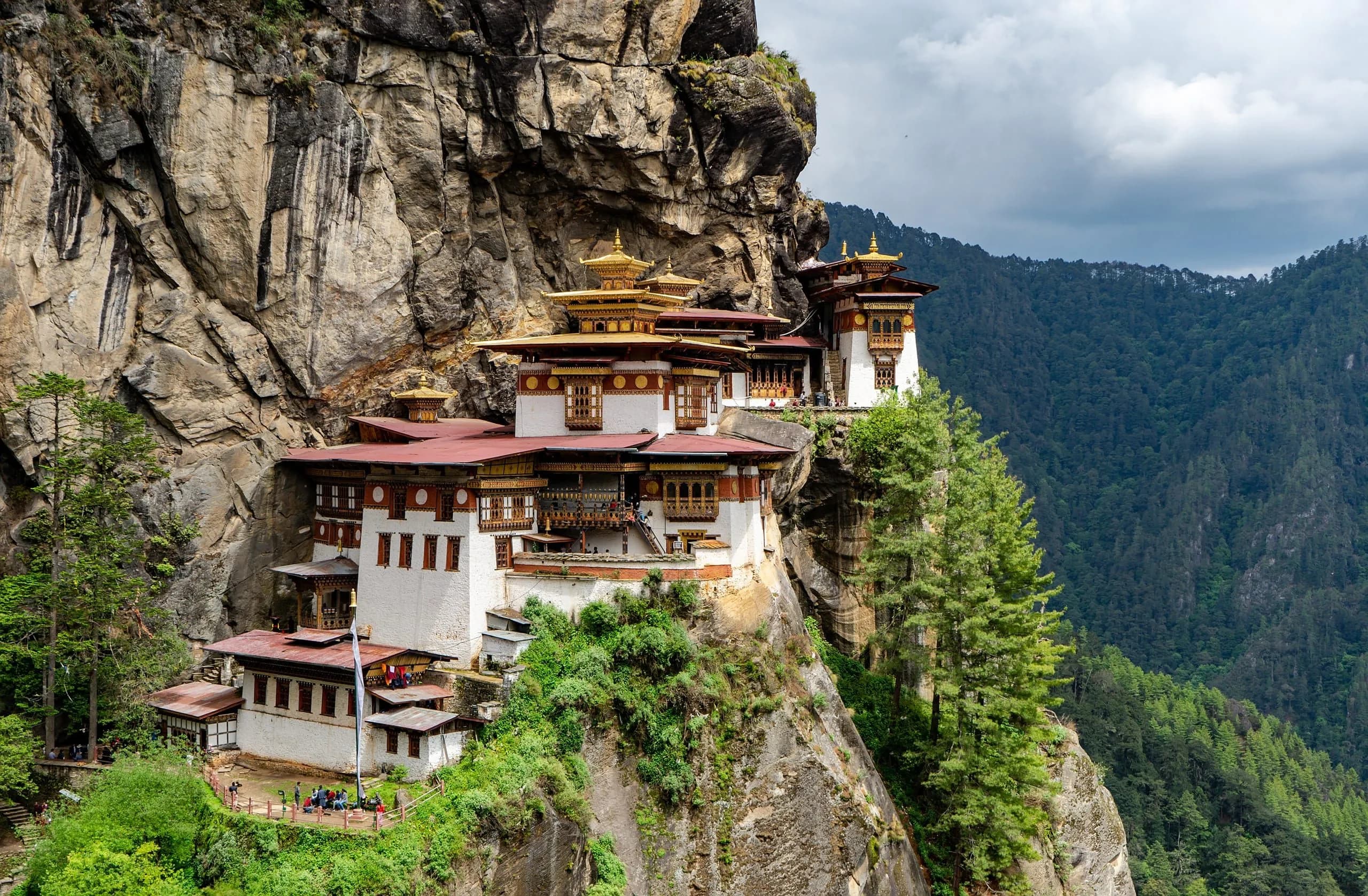 MonumentParo Taktsang — Guru Rinpoche's meditation cave, perched at 3,120 metres on the cliff above the Paro valley.Paro Taktsang (Tiger's Nest) — the founding by Guru Rinpoche, the 1692 monastery, the 2-hour hike, what to know before you visit.
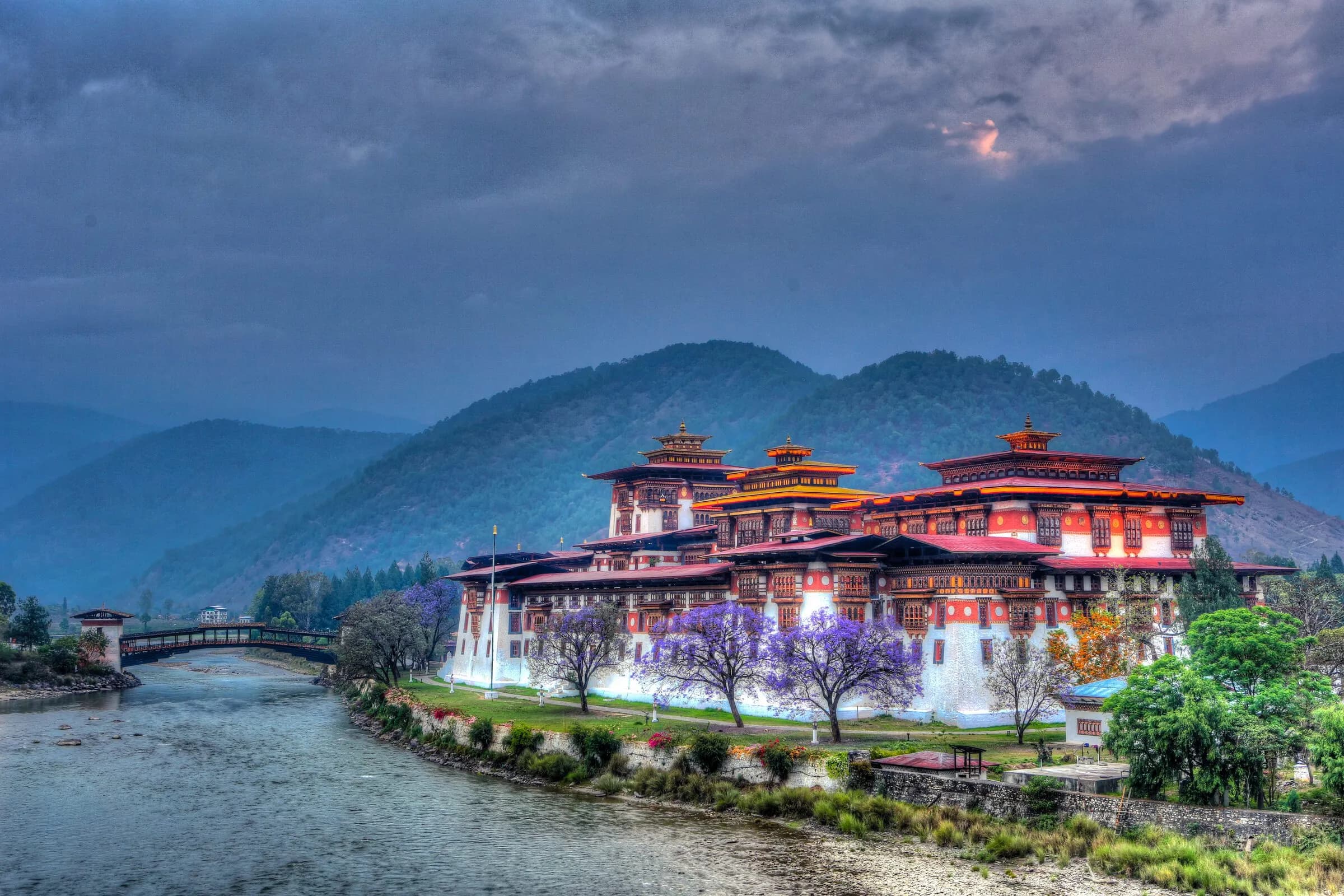 MonumentPunakha Dzong — Pungtang Dechen Phodrang, founded 1638 at the confluence of the father and mother rivers.Punakha Dzong — the Palace of Great Happiness, founded 1638. The history, the architecture, what to expect on a visit.
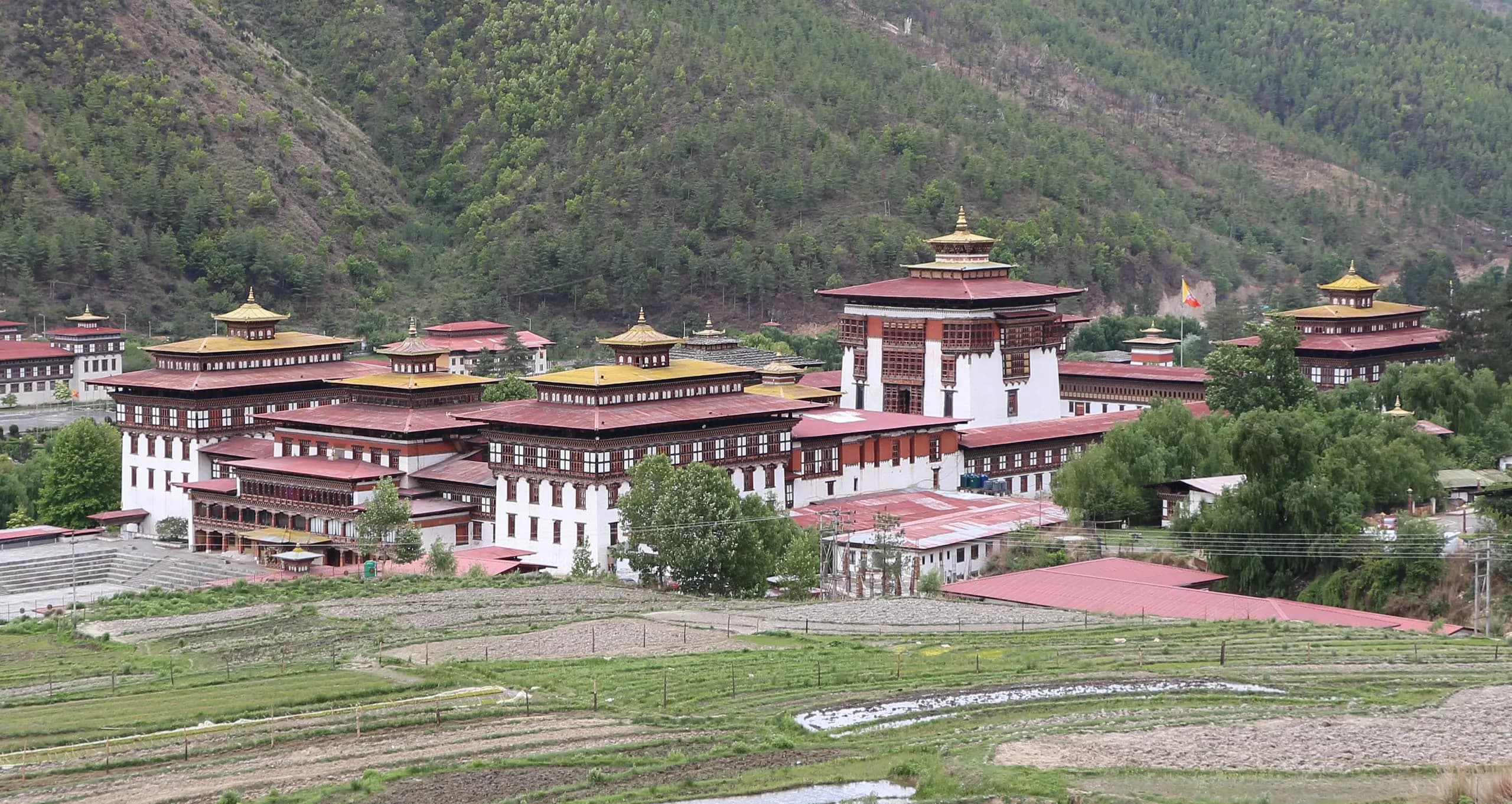 MonumentTashichho Dzong — the fortress of the auspicious religion, at the heart of Thimphu.Tashichho Dzong — the seat of Bhutan's central government and Je Khenpo summer residence in Thimphu. History, architecture, visiting.
Journeys it informs
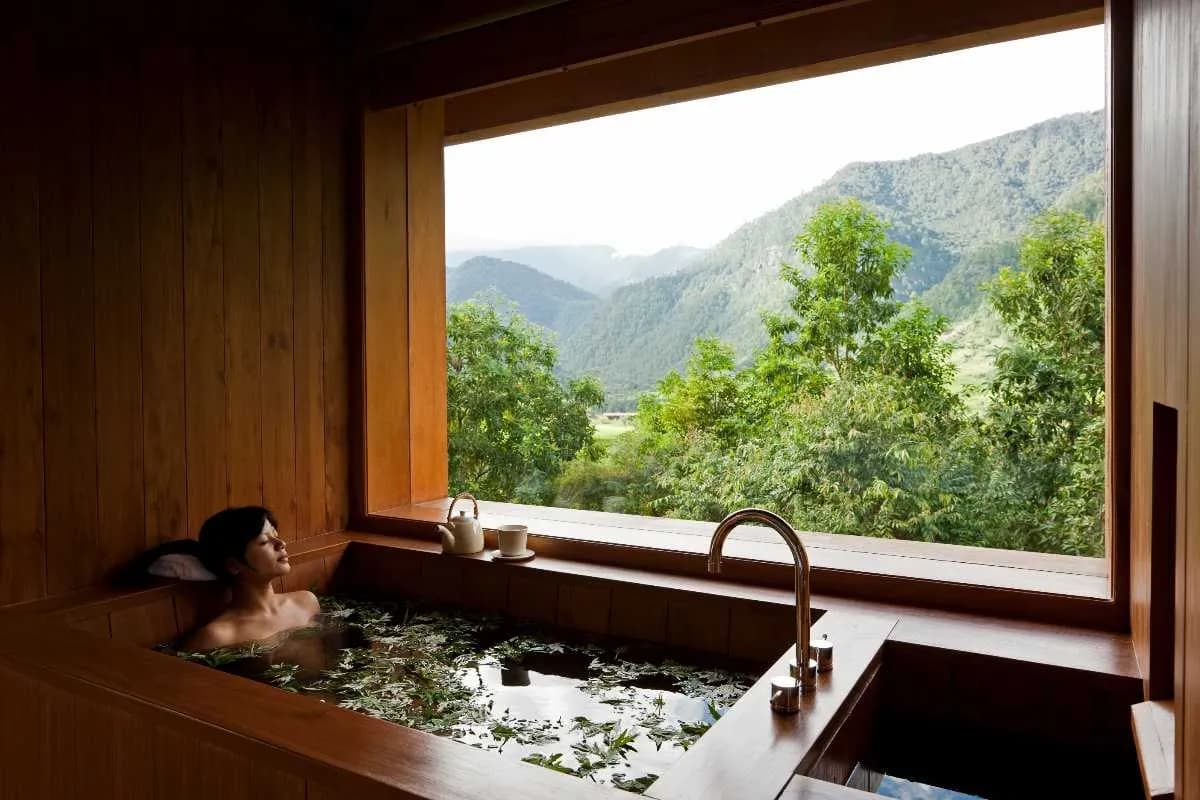 JourneySeven nights in Bhutan, on your terms.A private seven-night Bhutan honeymoon for couples flying from Singapore. Bhutanese lodges, a matched guide, transparent all-inclusive pricing.
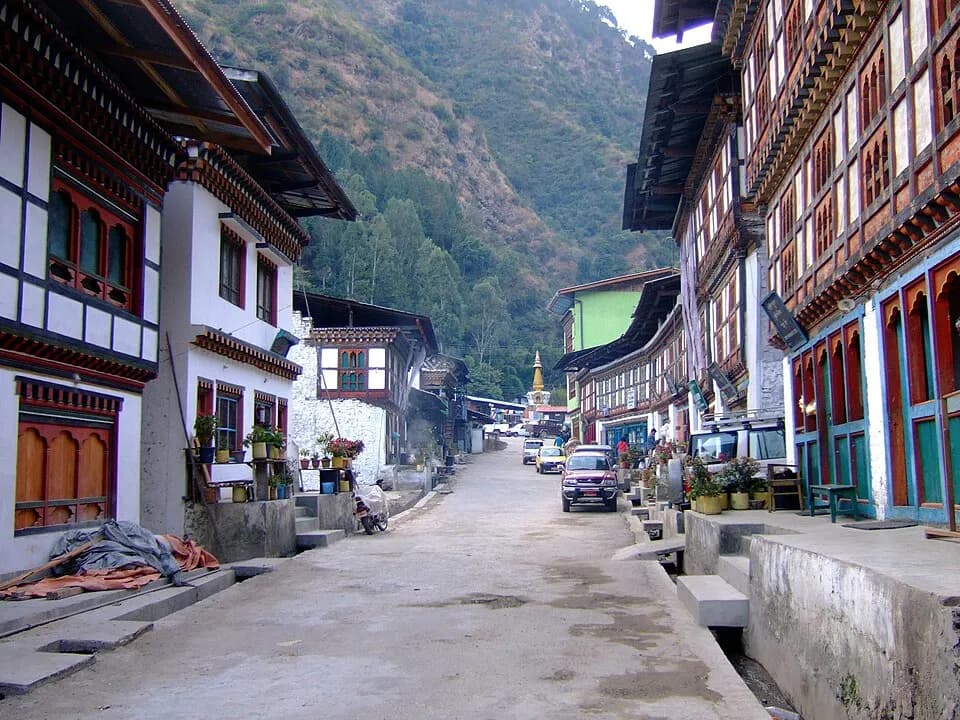 JourneyFourteen nights from Paro to Guwahati — the country as a single arc.A fourteen-night Bhutan east-to-west circuit exiting via Samdrup Jongkhar and Guwahati. The full eastern dzongkhags, the quieter half of the country.
Frequently asked
- What's the absolute minimum stay in Bhutan?
- Four nights is technically feasible — Paro arrival night, Tiger's Nest hike day, Thimphu day, Paro departure. Five nights is more comfortable. Three-night stays are rarely accepted by operators because they don't give enough time to do the country justice and risk a poor visitor experience. The Royal Government's high-value-low-impact policy is grounded in the assumption that the visitor stays long enough to engage meaningfully with the culture.
- How many days should I spend in Paro?
- For a first-time visitor, not more than 3 days. Day 1 for arrival and altitude acclimatisation. Day 2 for the Paro cultural circuit (Rinpung Dzong, the Ta Dzong / National Museum, Kyichu Lhakhang, the upper valley including Drukgyel Dzong). Day 3 for the Tiger's Nest hike — typically the final day to use the acclimatisation benefit. Beyond 3 days the marginal day in Paro adds substantially less; the exceptions are wellness-focused visitors at the Bhutan Spirit Sanctuary or COMO Shambhala at Uma Paro, where the spa programme can justify a 4th or 5th day.
- How many days should I spend in Thimphu?
- For a first-time visitor, not more than 3 days. Day 1 for the cultural circuit (Tashichho Dzong, the Memorial Chorten, the Buddha Dordenma, the Folk Heritage Museum). Optional Day 2 for the day-hikes (Cheri Goemba, Tango Goemba, Wangditse, Changangkha-to-Buddha). Optional Day 3 for the markets and the artisan-and-craft visits. Thimphu is the capital but a small one (population around 100,000) and the visitor content beyond 3 days tapers off.
- How many days should I spend in Punakha?
- Not more than 2 days for a first-time visitor. Day 1 for the Punakha Dzong + Chimi Lhakhang. Day 2 for the riverside — the Mo Chhu suspension bridge, optional rafting, the Khamsum Yulley Namgyal Chorten walk. Beyond 2 days the cultural-content runway in Punakha is largely exhausted; the lodge-luxury tradition (Aman, Six Senses, COMO, Dhensa, Six Senses) is the principal reason to stay longer.
- Can I customise these recommendations?
- Yes —. Every itinerary shape on this page is a recommendation based on what works for most first-time visitors, not a rule. We design every Bhutanese trip to the specific visitor's preferences and constraints. Want longer in one valley because the lodge or the specific cultural depth holds you? We adjust and flag where the marginal day adds less. Want to skip somewhere because it isn't your interest? We cut the day count and credit the time elsewhere. Want a wellness-focused stay rather than the standard cultural circuit? We restructure around Bhutan Spirit Sanctuary, COMO Shambhala at Uma Paro, or the Six Senses programmes. The per-valley caps are honest first-timer guidance — the actual itinerary evolves with the conversation.
- Is one week enough for Bhutan?
- Yes — seven nights gives the Bhutan plus one central valley (Phobjikha or Bumthang). It is the most-common booking duration for international visitors and a comfortable introduction to the country. A 7-night first-timer trip naturally distributes within our per-valley caps: 2-3 nights Paro, 1-2 Thimphu, 2 Punakha, 1-2 Phobjikha or 3 Bumthang. If your schedule permits more, ten nights opens the country more thoroughly; if not, seven is well-chosen.
- How long for a trek?
- Add the trek's walking days plus 5 nights for acclimatisation and recovery. Druk Path = 4 walking days + 5 nights = ~10 nights total. Chomolhari = 6 walking days + 5 nights = ~12 nights. Chomolhari-Laya-Gasa = 13 walking days + 5 nights = ~19 nights. Snowman = 23 walking days + 5 nights = ~28 nights. The Royal Government recommends the longer profile for any high-altitude trek.
- How long for Bhutan + Nepal combined?
- 10 nights minimum for the combined trip — 5 in Bhutan, 5 in Nepal. We typically recommend longer: 7+7 = 14 nights for the considered version, or 10+7 = 17 nights for a deep Bhutan stay paired with a Kathmandu and Pokhara introduction. Direct Drukair flights between Kathmandu and Paro make the combination straightforward.
- Can I visit Bhutan on a layover?
- No — Bhutan does not offer a transit visa or a layover-tourism option. The minimum operational stay is the booked itinerary (typically 4-5 nights minimum). Visitors are not permitted to leave Paro Airport without an operator and a confirmed itinerary.
- Does the Drukair schedule affect how long I should stay?
- Yes, especially from certain departure markets. Singapore: Drukair operates Sun SIN→PBH outbound, Sat PBH→SIN return — once weekly each direction. The natural Singapore-Bhutan blocks are 6 nights (Sun arrival, Sat departure) or 13 nights (Sun to next Sat). Odd-length trips from Singapore require a hub-city stopover (typically Bangkok) for the scheduling flexibility. See the Bhutan from Singapore guide for the specific shape. Other departure markets have different Drukair schedules with more frequent rotations (Delhi daily, Bangkok daily, Kathmandu multiple per week).

