Bhutanese monuments
Monasteries & goembas
Monastic institutions and the goembas of the hillsides, where the teaching lineages are held and the annual practice is kept.
- In this group
- 7
- Dzongkhags
- 3
- Earliest founding
- 1222
Monasteries & goembas7
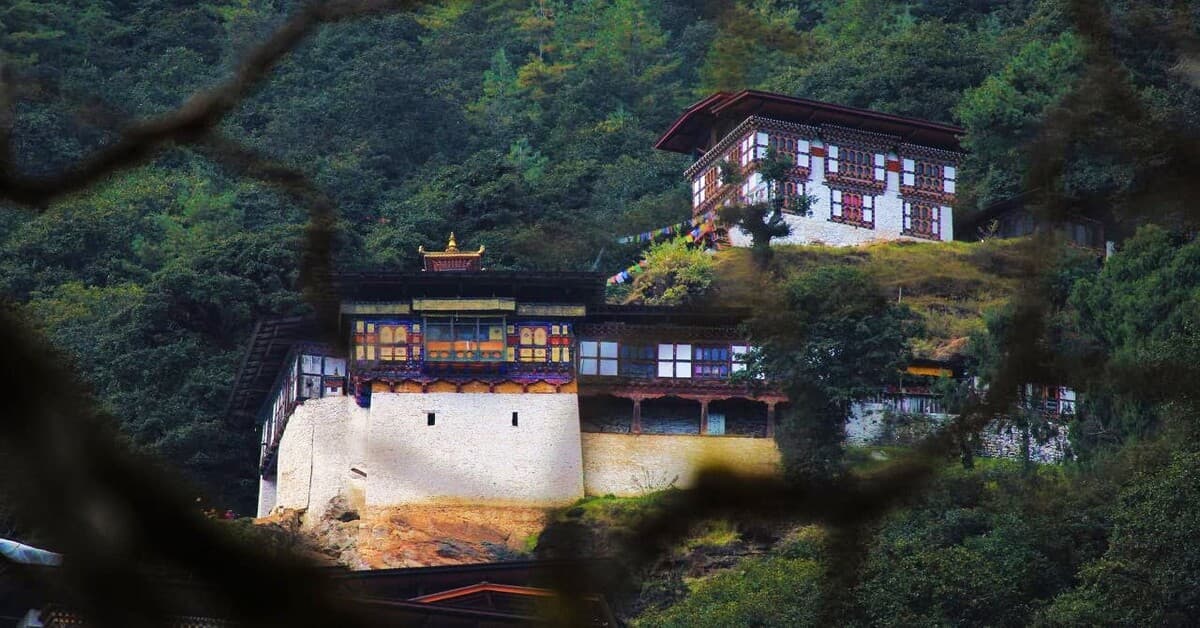
monastery · Thimphu · 2,850 m · founded 1620
Cheri Goemba
Cheri Goemba — Chagri Dorjeden — sits high on a forested hillside at the northern head of the Thimphu valley, reached by a walk up from the valley floor across a covered bridge over the rushing Thimphu Chhu. It was here, in 1620, that Zhabdrung Ngawang Namgyal established the first organised monastic community of Bhutan — the seed of the central monk body that endures to this day. A working retreat monastery still, where monks undertake the traditional three-year meditation, Cheri rewards the visitor who is willing to climb with one of the most serene and historically resonant settings within reach of the capital.
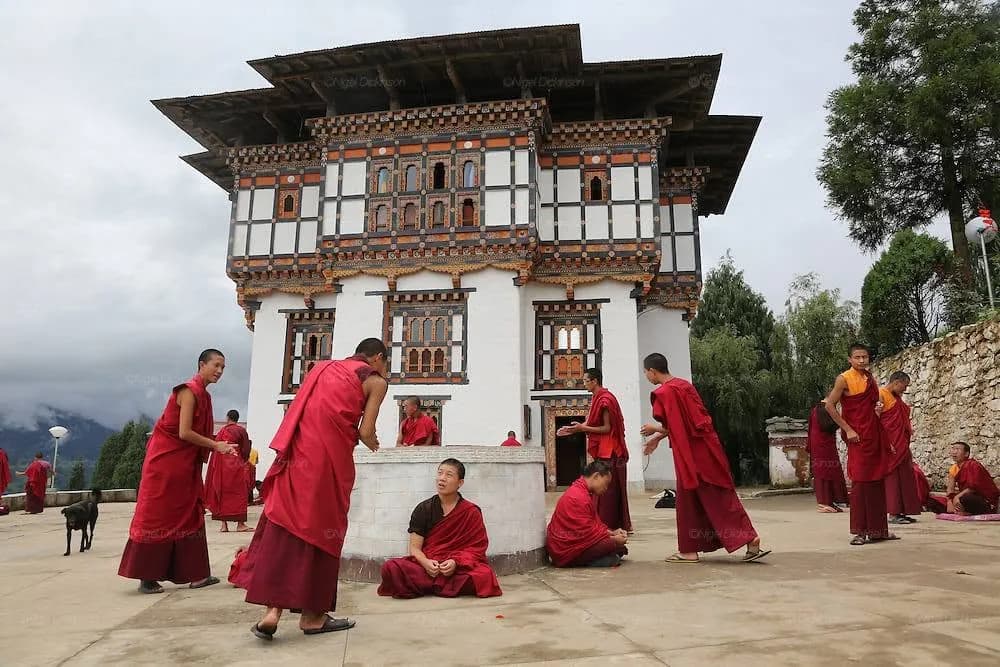
monastery · Punakha · 1,600 m · founded 1757
Nalanda Buddhist Institute
On a quiet ridge above the Punakha valley stands the Nalanda Buddhist Institute — Daley Goenpa — a monastic college founded in the 18th century by Bhutan's ninth Je Khenpo, Shakya Rinchen, and named for the great Nalanda university of ancient India, the fountainhead of Buddhist learning. It is a working shedra, where young monks pursue the long course of philosophical study, set in a peaceful, little-visited spot away from the valley's busier sights. For visitors drawn to the scholarly tradition of Bhutanese Buddhism — and to the quieter corners of the Punakha countryside — it is a rewarding and serene stop.
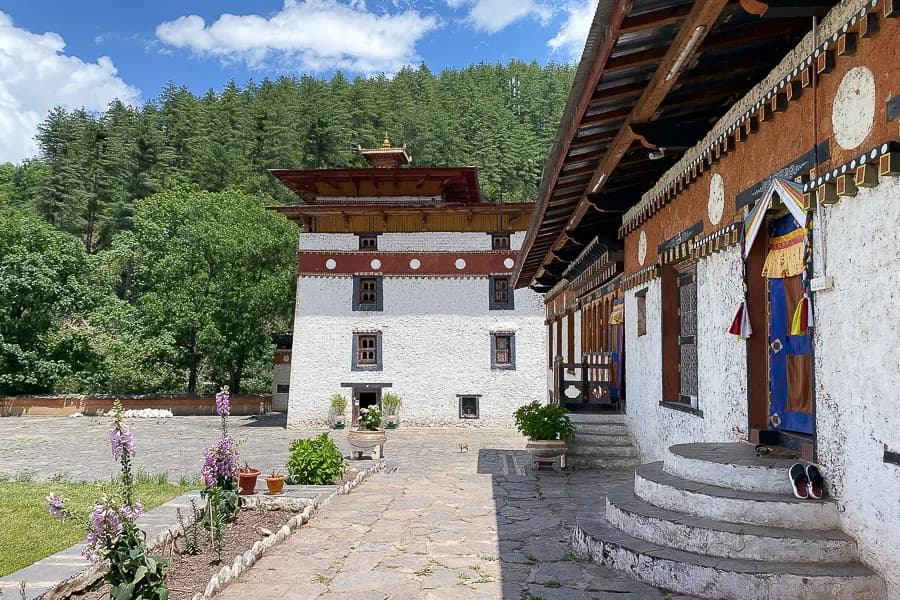
monastery · Thimphu · 2,420 m · founded 1529
Pangri Zampa
North of Thimphu, beyond Dechencholing on the way up the valley, two tall cypress trees mark Pangri Zampa — a monastery founded in the early 16th century, and the place where, by prophecy, Zhabdrung Ngawang Namgyal is said to have first settled on arriving in Bhutan. Today it is the country's principal college of astrology, where young monks train for years in the intricate Bhutanese system of astrological calculation that still governs the timing of weddings, journeys, ceremonies, and the naming of children. A visitor finds a quiet riverside monastery and a living tradition of cosmic reckoning that shapes Bhutanese life to this day.
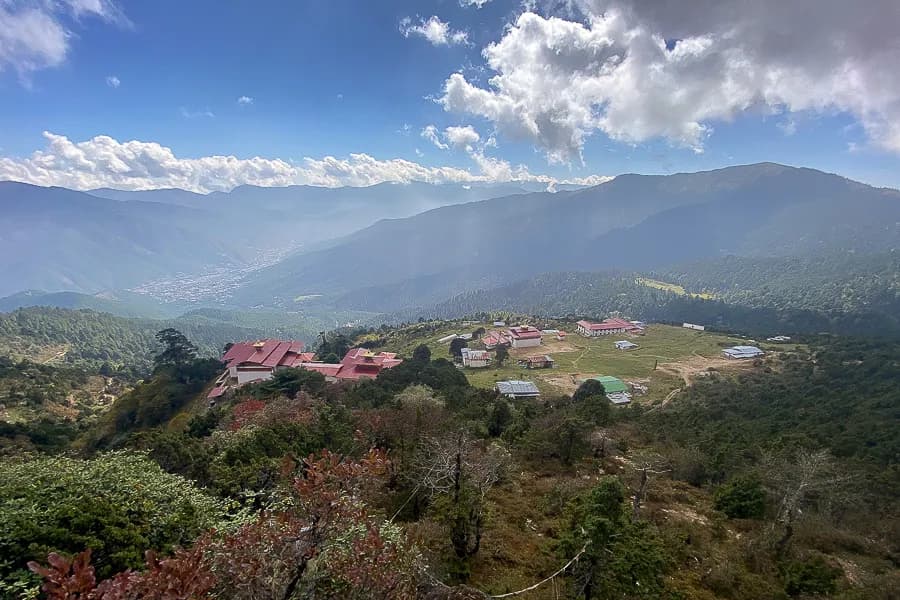
monastery · Thimphu · 3,600 m
Phajoding Goemba
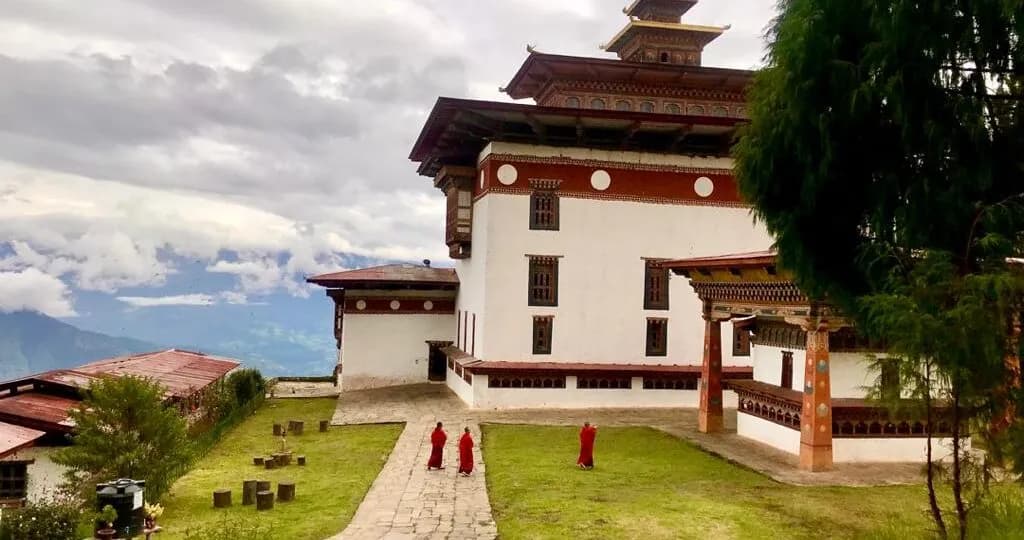
High on the mountainside above Thimphu, at around 3,600 metres, Phajoding is a scattered cluster of temples, shrines, and meditation retreats — once among the wealthiest monasteries in the country, named for Phajo Drukgom Zhigpo, the master who brought the Drukpa Kagyu tradition to Bhutan and meditated on this slope. Reached only by a steady climb of several hours through blue-pine and rhododendron forest, it rewards the walker with one of the great views over the Thimphu valley, the quiet of a working retreat far above the city, and the sense of a place where serious practice has been carried on for centuries. It is the capital's classic day hike, and a fine gentle taste of trekking.
monastery · Punakha · 2,800 m
Talo
Talo sits high on a terraced shoulder above the Punakha valley, at around 2,800 metres — a village long admired across Bhutan for its order and cleanliness, its houses and fields arranged in neat steps up the hillside, with the Talo Sangngacholing monastery crowning the ridge above. The air is cool and clear after the warm valley floor, the views run for miles down the Punakha and Wangdue valleys, and the pace is entirely rural. Talo is the quiet, pastoral counterpoint to the grand dzong below: a place to walk, to see ordinary Bhutanese hill life, and to take in one of the great valley panoramas.
monastery · Thimphu · 2,920 m · founded 1222
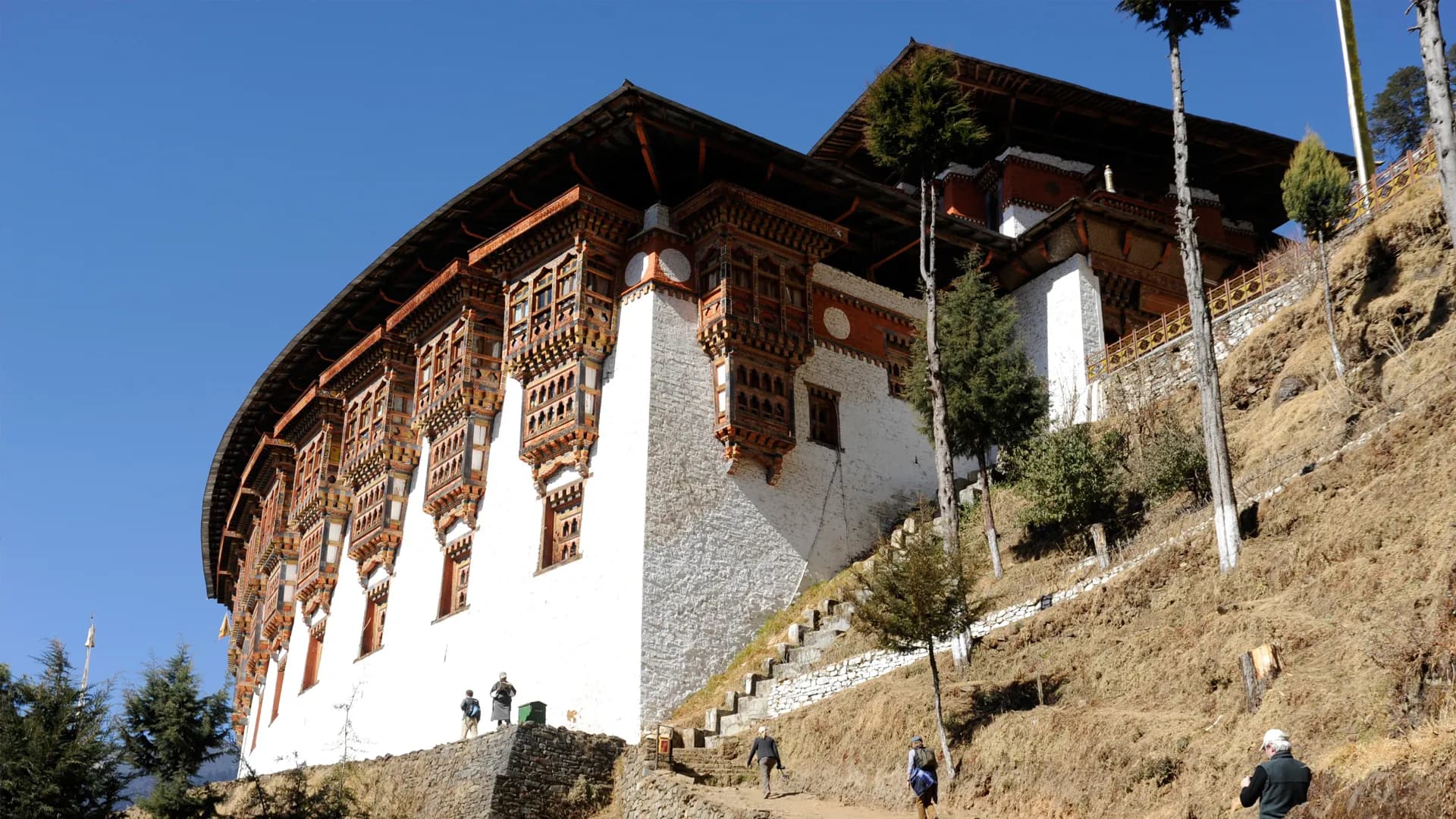
Tango Goemba
Tango Goemba stands on a forested spur at the northern head of the Thimphu valley, across the river from Cheri — the principal seat of higher Buddhist study in Bhutan, where monks undertake the long years of philosophical training. Its name means 'horse head', for the self-manifested image of Hayagriva, the horse-headed wrathful form of Chenrezig, around which the monastery grew. Founded in the 13th century by Lama Phajo Drukgom Zhigpo and rebuilt in its present form in the 15th, Tango is reached by a forest climb and carries a particular weight as a place of deep study and of royal retreat.
monastery · Bumthang · 3,600 m
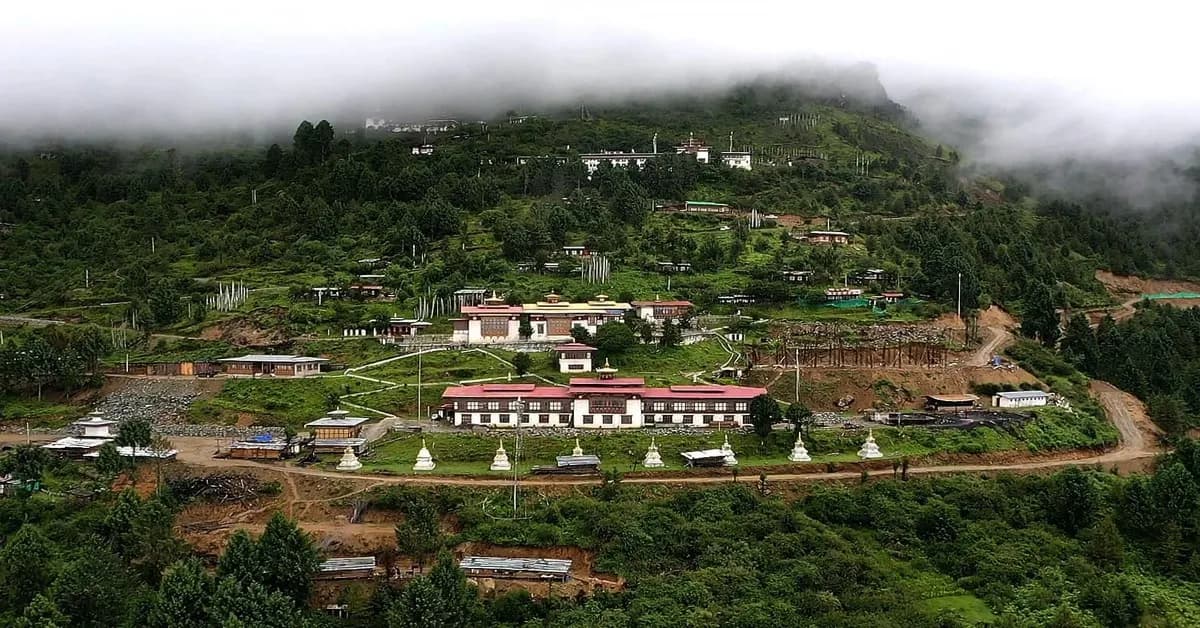
Tharpaling Monastery
High on the mountainside above the Chumey valley of Bumthang, at around 3,600 metres, Tharpaling is one of the principal Nyingma monasteries of Bhutan — the seat established by Longchen Rabjam, the towering 14th-century master known as Longchenpa, who meditated, wrote, and taught here during his years in the country. A large and active monastic community still studies on the slope, the white buildings stepping up the mountain beneath the peak, with the whole Chumey valley falling away below. For visitors drawn to the contemplative tradition and the high places, Tharpaling is among Bumthang's most rewarding and least-crowded sites.

