Bhutanese monuments
Museums & institutes
Where the material record is kept and the crafts are taught: national collections, libraries, and the institutes of the thirteen arts.
- In this group
- 9
- Dzongkhags
- 4
- Earliest founding
- 1649
Museums & institutes9
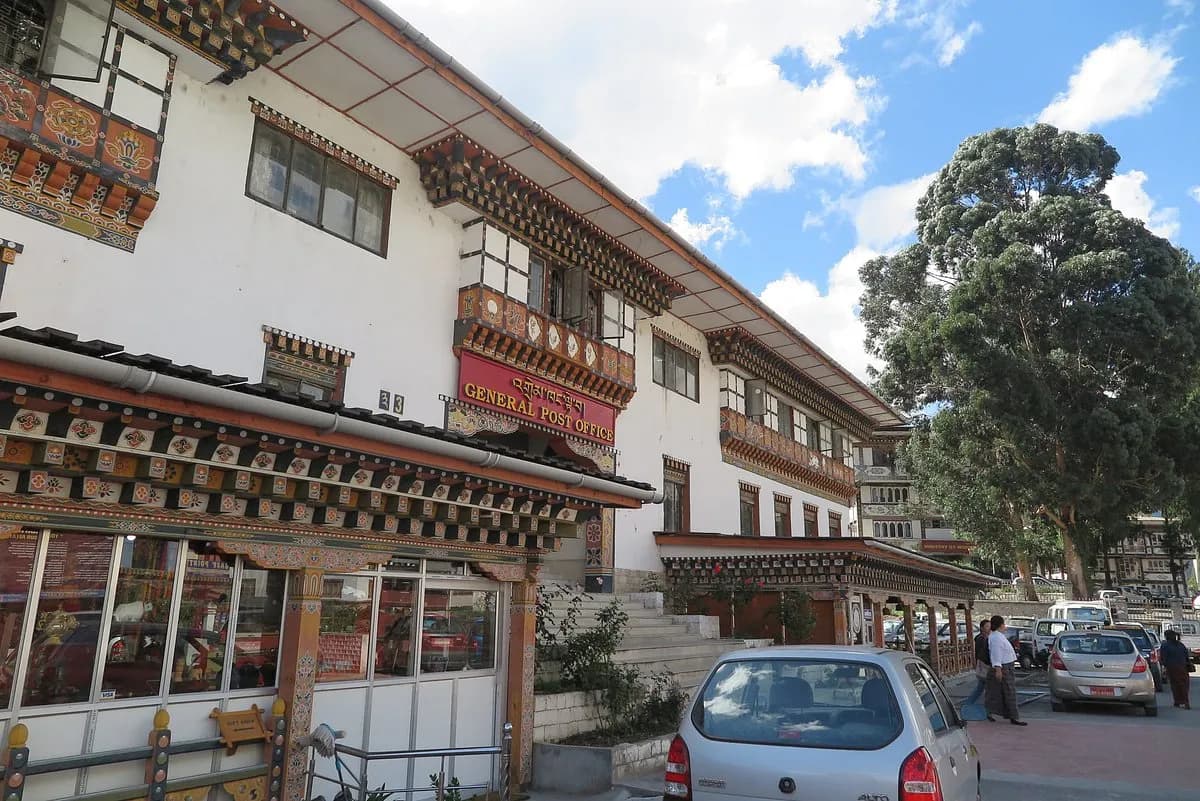
museum · Thimphu · 2,330 m
The Bhutan Postal Museum
In the heart of Thimphu, beside the main post office, the Bhutan Postal Museum tells the unlikely and charming story of how a once-isolated Himalayan kingdom built its links to the world — through runners, mule trains, the first roads, and above all through its postage stamps, which became famous far beyond the country for their sheer inventiveness. Bhutan has issued stamps printed on silk, embossed in three dimensions, moulded as miniature records that actually play, and the first CD-ROM stamp in the world. A visitor can learn the story, see the stamps, and — best of all — make a personalised stamp bearing their own photograph, valid for posting a card home.
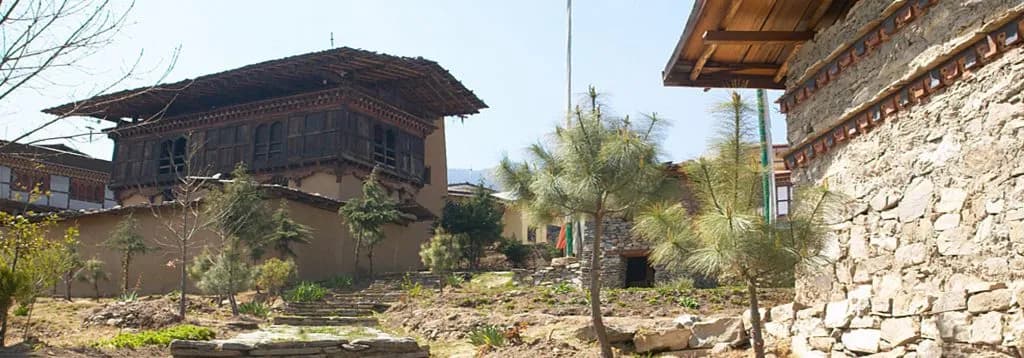
museum · Thimphu · 2,400 m · founded 2001
The Folk Heritage Museum
The Folk Heritage Museum sits in the Kawajangsa neighbourhood of Thimphu — a restored 19th-century three-storey traditional Bhutanese farmhouse that the National Commission for Cultural Affairs operates as the principal Thimphu cultural museum. The museum presents the traditional rural-Bhutanese household register at full scale — the farmhouse architecture, the period furnishings, the working agricultural and household implements, the demonstration kitchen with regular traditional-cooking sessions. For visitors with serious interest in everyday Bhutanese life beyond the dzong-and-monument, the Folk Heritage Museum is the principal Thimphu venue.
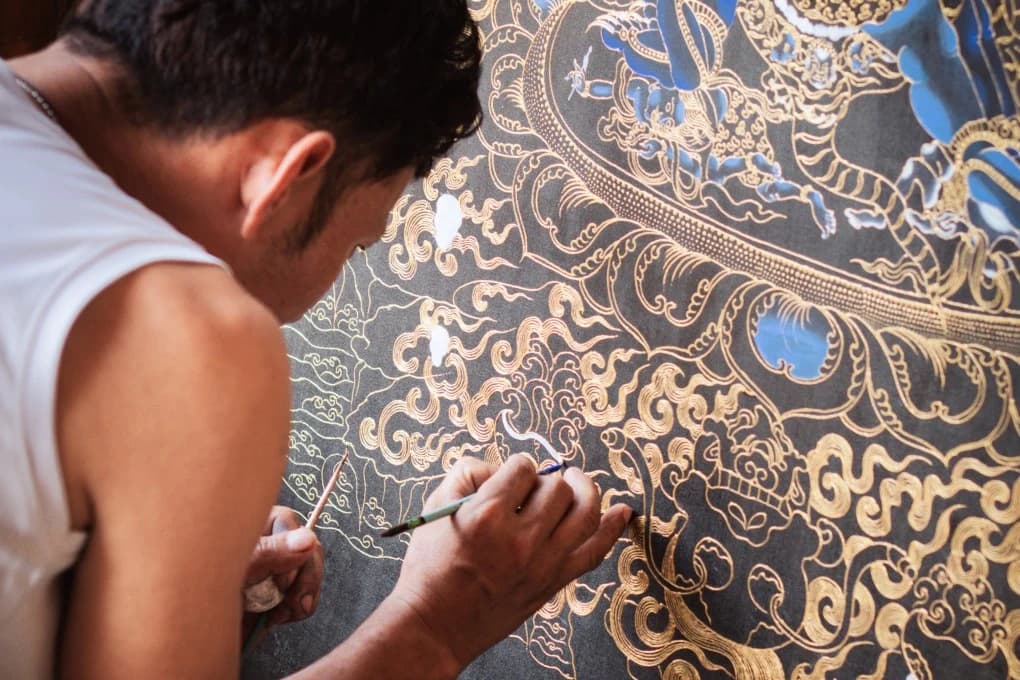
craft-institute · Thimphu · 2,330 m
The National Institute for Zorig Chusum
In Thimphu, the National Institute for Zorig Chusum — often called simply 'the painting school' — is where the country's traditional arts are kept alive, taught to young Bhutanese across the long years of apprenticeship that mastery demands. Zorig Chusum, 'the thirteen arts and crafts', is the formal canon of Bhutanese skilled craft: painting, sculpture, wood-carving, embroidery, weaving, metalwork, and more. A visitor may walk the studios and watch the students at work — drawing the proportioned deities of a thangka, carving a mask, casting a bronze — and see the unbroken transmission of a living tradition rather than a museum's relics.
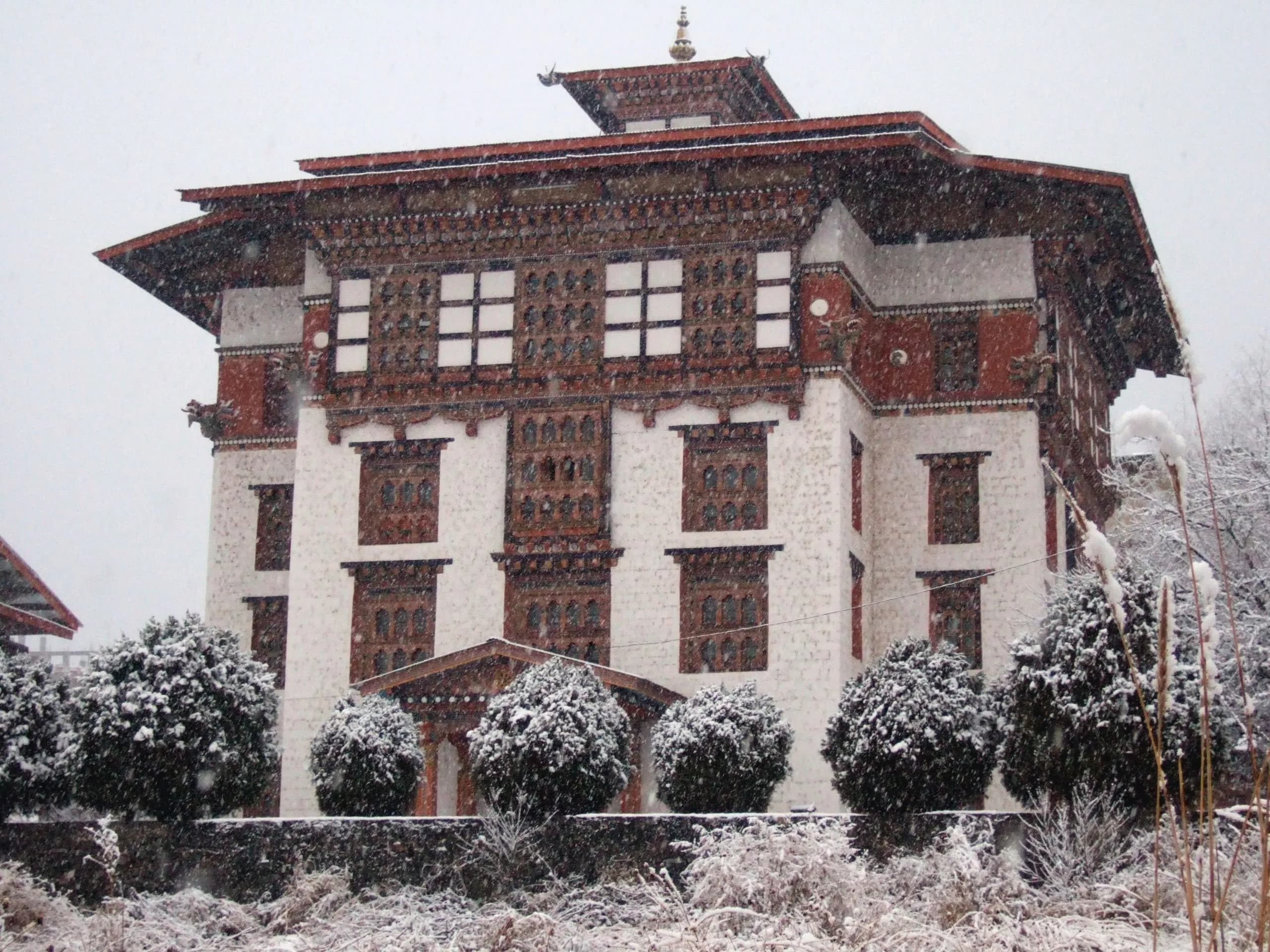
library · Thimphu · 2,380 m
The National Library of Bhutan
The National Library of Bhutan, in Thimphu, is the keeper of the written soul of the country — a great collection of Buddhist scriptures, manuscripts, and the carved wooden printing blocks from which sacred texts have been hand-printed for centuries. Housed in a tall traditional building of its own, it preserves works in classical Tibetan and Dzongkha, some of them rare or unique, alongside a modern reference collection. For the visitor it offers a quiet window onto the textual tradition that underlies everything else in Bhutan — and, by happy fame, a look at one of the largest published books in the world.
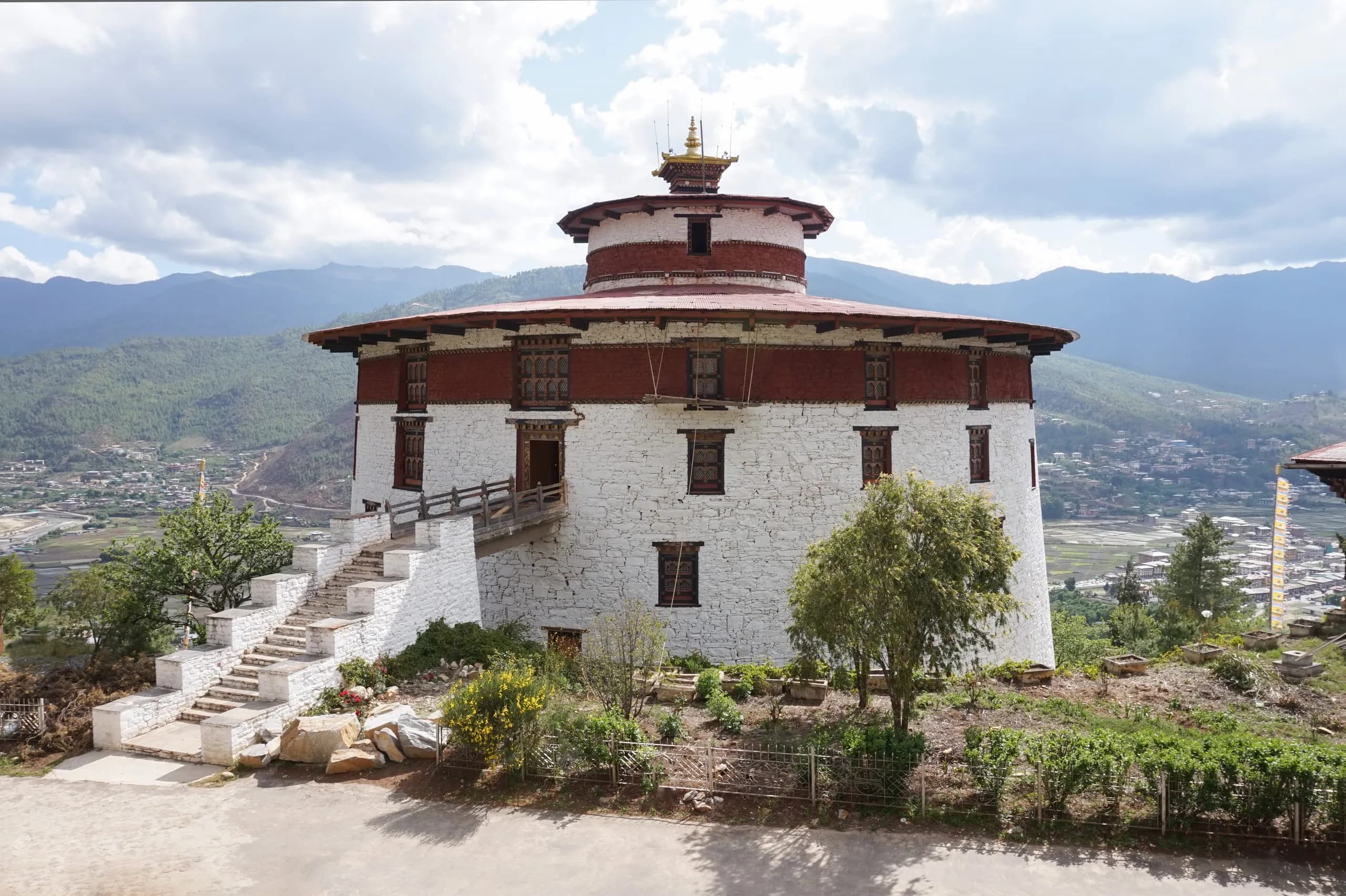
museum · Paro · 2,480 m · founded 1649
The National Museum of Bhutan
The National Museum of Bhutan occupies the Ta Dzong — the cylindrical watchtower built in 1649 on the ridge above Rinpung Dzong to guard the Paro valley. Converted into the national museum in 1968 under His Majesty the Third Druk Gyalpo, it holds the principal national collection: thangka paintings, bronze statuary, textiles, arms and armour, ritual objects, natural-history specimens, and the celebrated Bhutanese postage stamps. For a visitor arriving in Paro, it is the single best half-day introduction to the whole arc of Bhutanese art and history.
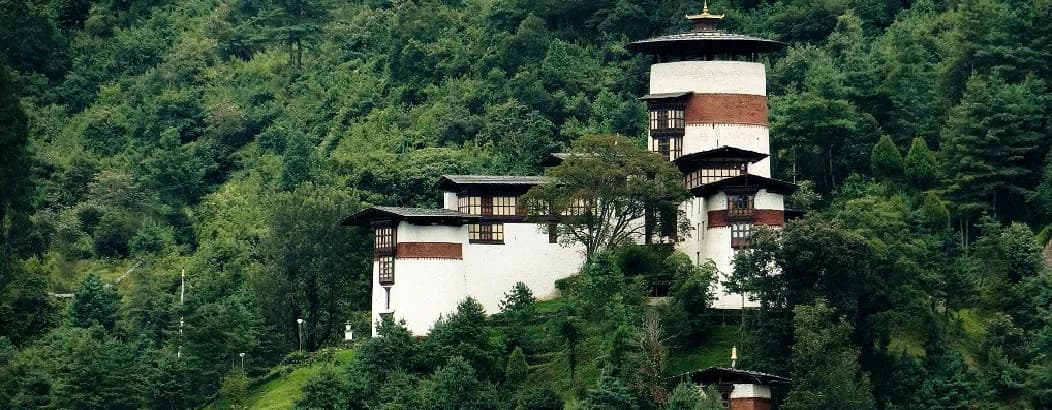
museum · Trongsa · 2,200 m · founded 2008
The Royal Heritage Museum at Trongsa Ta Dzong
The Royal Heritage Museum is housed in the Trongsa Ta Dzong — the watchtower built in the 17th century above Trongsa Dzong, now restored as the principal Bhutanese royal-history museum. Opened in 2008 to mark the centenary of the Wangchuck dynasty, the museum traces the dynasty from its 1907 founding through the contemporary period across five floors of curated exhibits. The royal-family artefacts, the personal effects of the principal Druk Gyalpos, and the contextual exhibits make this the essential visit for visitors with serious interest in the dynastic narrative.
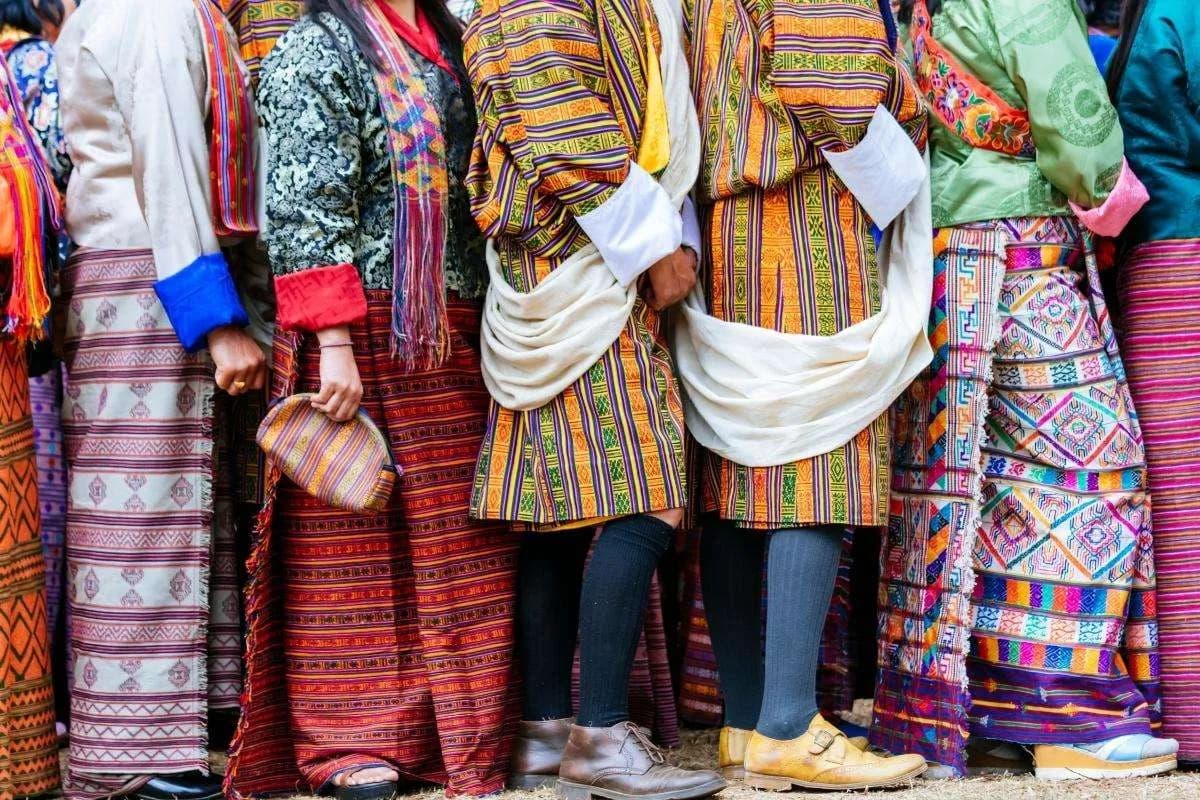
museum · Thimphu · 2,350 m · founded 2005
The Royal Textile Academy
The Royal Textile Academy of Bhutan, established in 2005 under the patronage of Her Majesty Queen Mother Sangay Choden Wangchuck, is the principal institutional centre for Bhutanese weaving — combining a textile museum, active master-weaver workshops, and serious training programmes for Bhutanese apprentices. The institution preserves and develops the most-distinguished Bhutanese textile traditions including the Khoma valley kishuthara silk-brocade tradition (the most-prized form), the yathra wool-weaving tradition of Bumthang, and the broader Bhutanese textile. Essential for visitors with serious interest in the Bhutanese textile tradition.
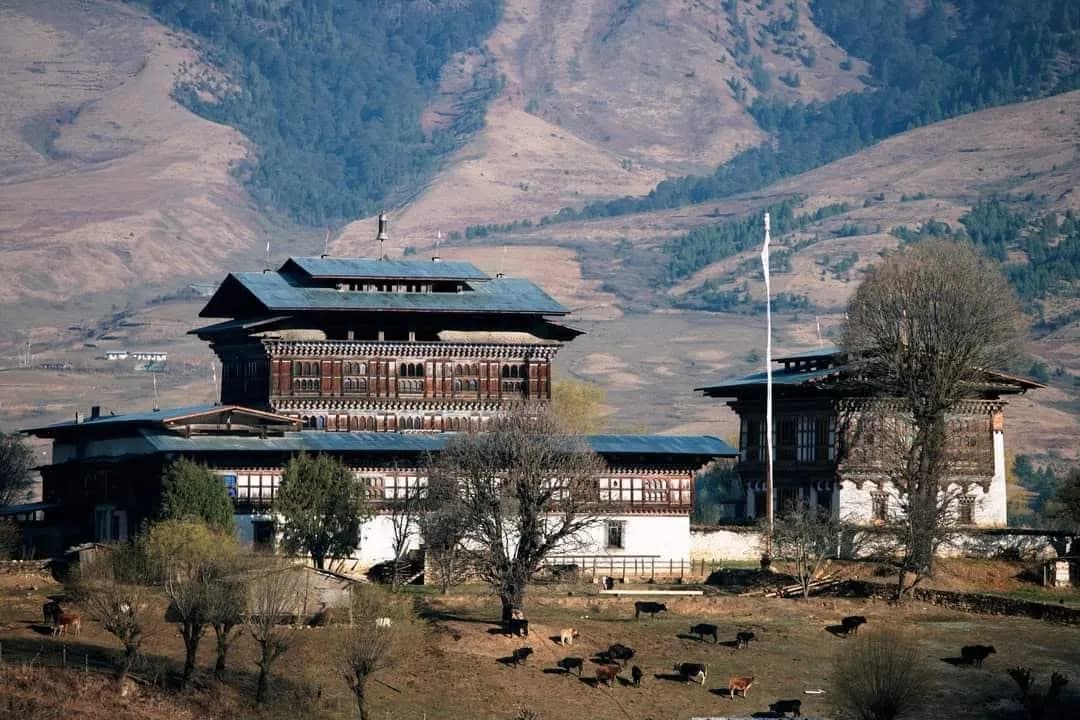
manor-museum · Bumthang · 2,900 m
Ugyen Choling
On a hill above the remote Tang valley of Bumthang stands Ugyen Choling, the manor seat of a family descended from the great treasure-revealer Dorji Lingpa. Rather than let the old house empty out as the modern world arrived, the family turned it into a private museum — preserving intact the rooms, objects, tools, books, and religious treasures of a Bhutanese noble household across the centuries. It is one of the very few places in the country where a visitor can step inside the domestic and administrative world of the old aristocracy: the kitchen, the granary, the master's quarters, the temple, the printing blocks — daily life made visible.
craft-village · Bumthang · 2,700 m
Zugney
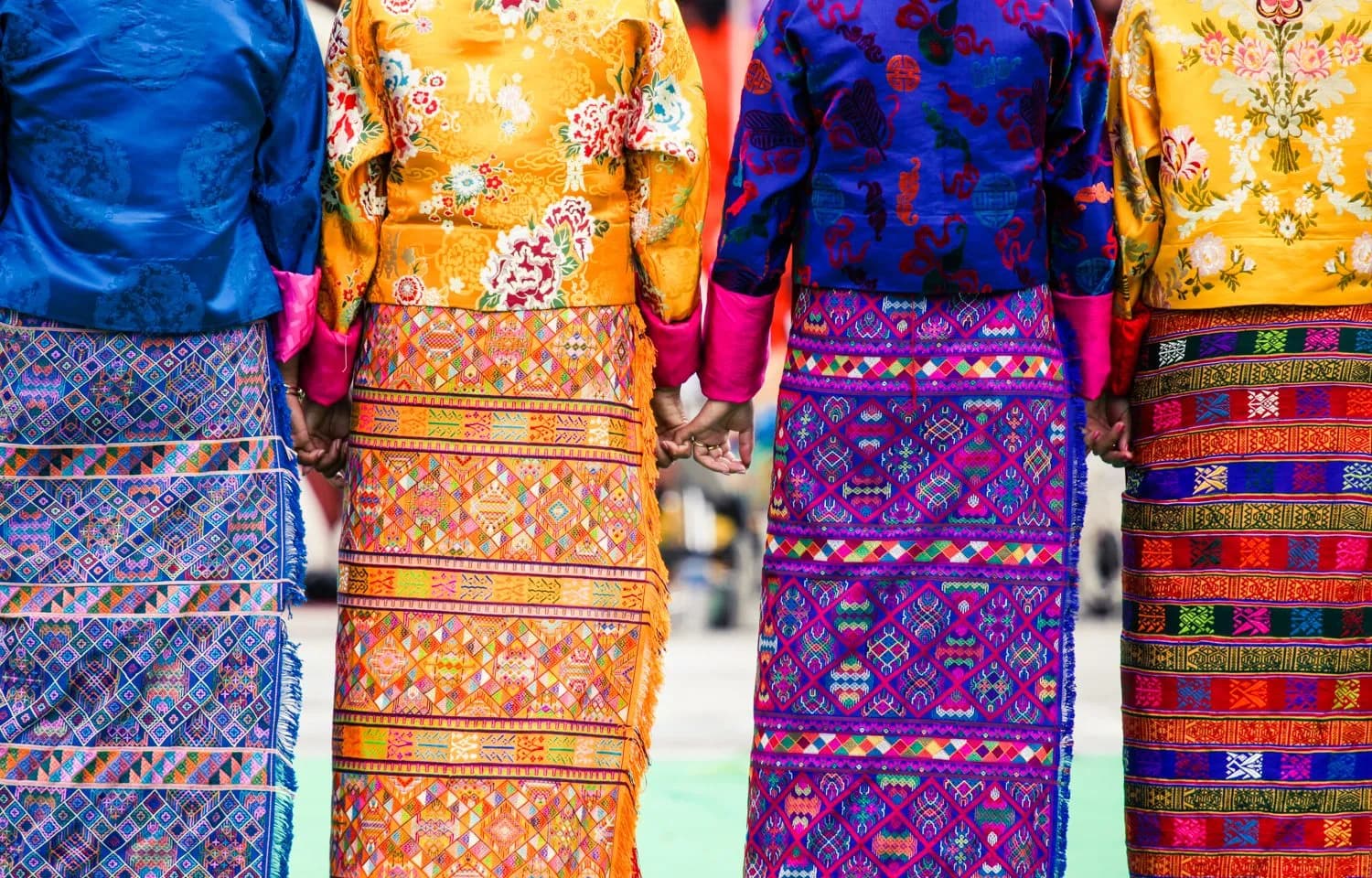
In the Chumey valley of Bumthang, strung along the road that descends from the Yotong La, the village of Zugney is the home of yathra — the brightly patterned woollen cloth that is one of central Bhutan's signature crafts. Woven from sheep's and yak's wool, dyed in bold colours and geometric designs, yathra has clothed and warmed the people of the high Bumthang valleys for generations, and at Zugney a visitor can watch it made on the clacking looms in the roadside workshops, and buy it straight from the weavers. It is a working craft village, not a display — one of the most rewarding hands-on stops in Bumthang.

