A Bhutanese experience
Mask painting — the Bhutanese cham mask workshop tradition.
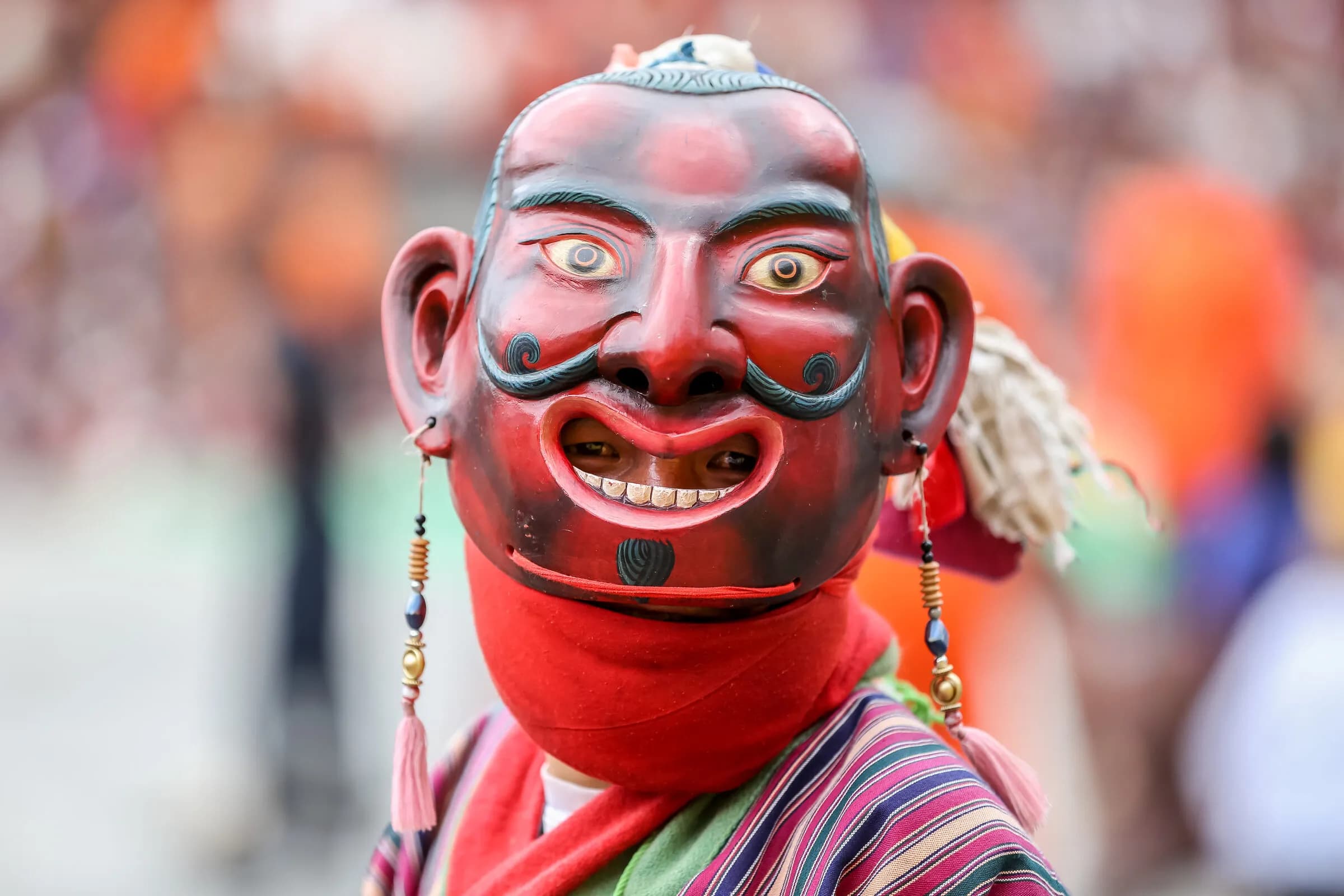
Mask painting is the Bhutanese sacred-mask tradition that produces the elaborate cham masks worn by the monk-dancers at the tshechu festivals. The papier-mâché-and-wooden-frame masks are hand-built across weeks to months and then hand-painted with the principal protective-deity iconography in mineral pigments. The workshop offering at the National Institute of Zorig Chusum in Thimphu provides international visitors with serious interest the opportunity to engage with the tradition — typically through a single-session introduction to the iconographic conventions and the principal painting techniques.
Also known as Bhutanese mask making · Cham mask painting · Tsa lhakhang
- Duration
- half-day to multi-day
- Effort
- easy
- Where
- National Institute of Zorig Chusum (Thimphu), premium-lodge craft programmes
- Best months
- October · November · December · January · February · March · April · May
- Register
- craft
The mask tradition
Bhutanese cham masks are one of the most-distinctive features of the country's sacred-art tradition. The mask construction — substantial papier-mâché over hand-cut wooden frames; the frame provides the structural foundation, the papier-mâché provides the principal surface and detail, the mineral-pigment painting provides the final decorative-and-iconographic finish. The weight — typical cham masks weigh 5-10 kg (heavier for the principal large wrathful-deity masks); the dancer's vision operates principally through the mask mouth opening rather than the eye apertures (which are typically decorative-rather-than-functional). The principal types — the wrathful-deity masks (Yama, Mahakala, the Black Hat dancer mask), the peaceful-deity masks (the Guru Rinpoche eight-manifestations set), the animal-deity masks (the yak, deer, lion principal forms), and the atsara clown-dancer masks (red colour, comic iconography). See the Cham mask dance theme for the broader dance-and-festival context.
The workshop at the National Institute of Zorig Chusum
The National Institute of Zorig Chusum in Thimphu is the principal Bhutanese training centre for mask-making alongside the broader Thirteen Traditional Arts and Crafts. The mask-making apprenticeship operates within the multi-year traditional-craft training programme; the senior mask-makers handle workshop production for the principal contemporary tshechu mask-replacement work (the dzong cham mask collections require periodic maintenance-and-replacement). Visitors can observe the apprentices at work, engage with the senior masters, and arrange short hands-on introductions to the painting techniques. See the Royal Textile Academy and the Folk Heritage Museum for the principal companion Thimphu cultural visits.
The workshop offering
Half-day introductory workshop — typically taught at the Institute or at premium-lodge craft programmes; 3-4 hour session covering the iconographic conventions, the mineral pigments, and a hands-on session painting a small element on a prepared mask base. Multi-day workshop — for visitors with serious interest, the Institute arranges 2-5 day workshops covering more elements of the painting tradition; advance arrangement (typically 30-60 days) required. Commissions — visitors with interest in commissioning a Bhutanese cham mask can arrange the commission through the Institute or through the matched guide's network of senior mask-makers; commissioned masks take weeks to months depending on scale-and-complexity, with costs in the USD 300-3,000+ range. The take-home option — visitors typically complete a small painted element to take home; the cultural-and-religious context is the principal souvenir rather than the physical object.
Practical
- Booking
- The matched guide arranges mask-painting workshops at the National Institute of Zorig Chusum or at premium-lodge craft programmes; 48-72 hour advance booking is the standard for introductory workshops. Multi-day workshops require 30-60 days' advance arrangement.
- Fees
- Half-day introductory workshop — typically USD 60-150 per person at the Institute, USD 100-250 at premium-lodge programmes. Multi-day workshops — typically USD 300-1,200+ depending on duration and venue. Commissioned masks — pricing range from USD 300 for small simple pieces to USD 3,000+ for large complex pieces.
- Cultural protocol
- Cham masks are sacred objects in the Bhutanese tradition. Visitors should approach the mask-painting session with cultural-and-religious respect; the iconography operates within the living Vajrayana-Buddhist tradition. The matched guide briefs visitors on the appropriate cultural protocol; the workshop is welcoming to visitor engagement but maintains the sacred-art atmosphere that the Bhutanese tradition operates within.
More like this
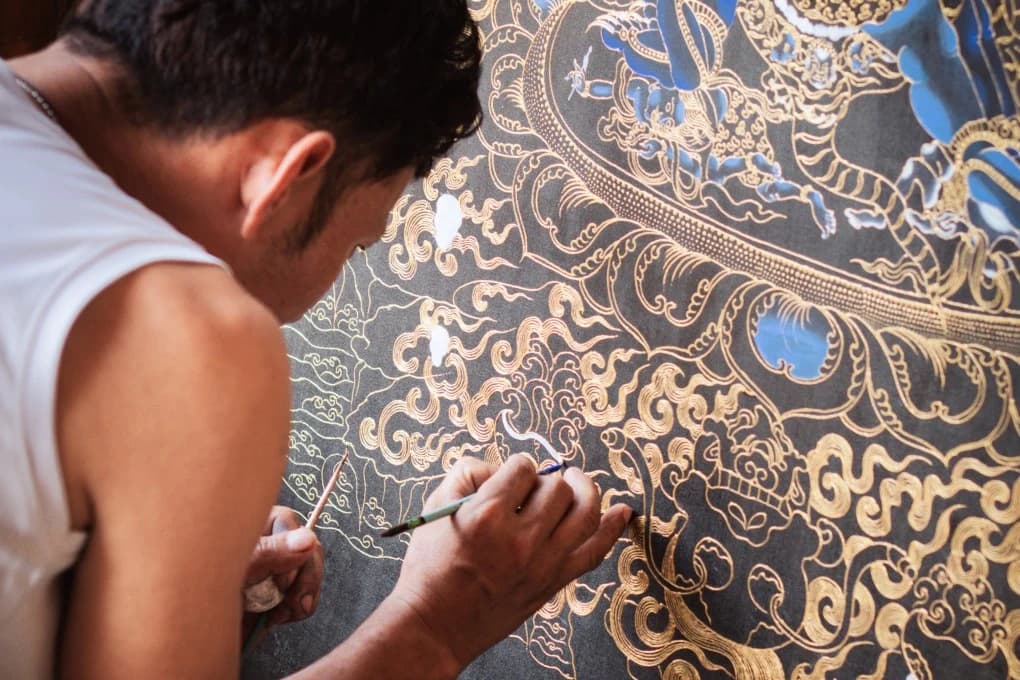 ExperienceThangka painting — the Bhutanese sacred-painting tradition and the contemporary workshop offering.Thangka painting — the Bhutanese sacred-painting tradition. National Institute of Zorig Chusum workshops, premium-lodge programmes. Half-day to multi-day registers.
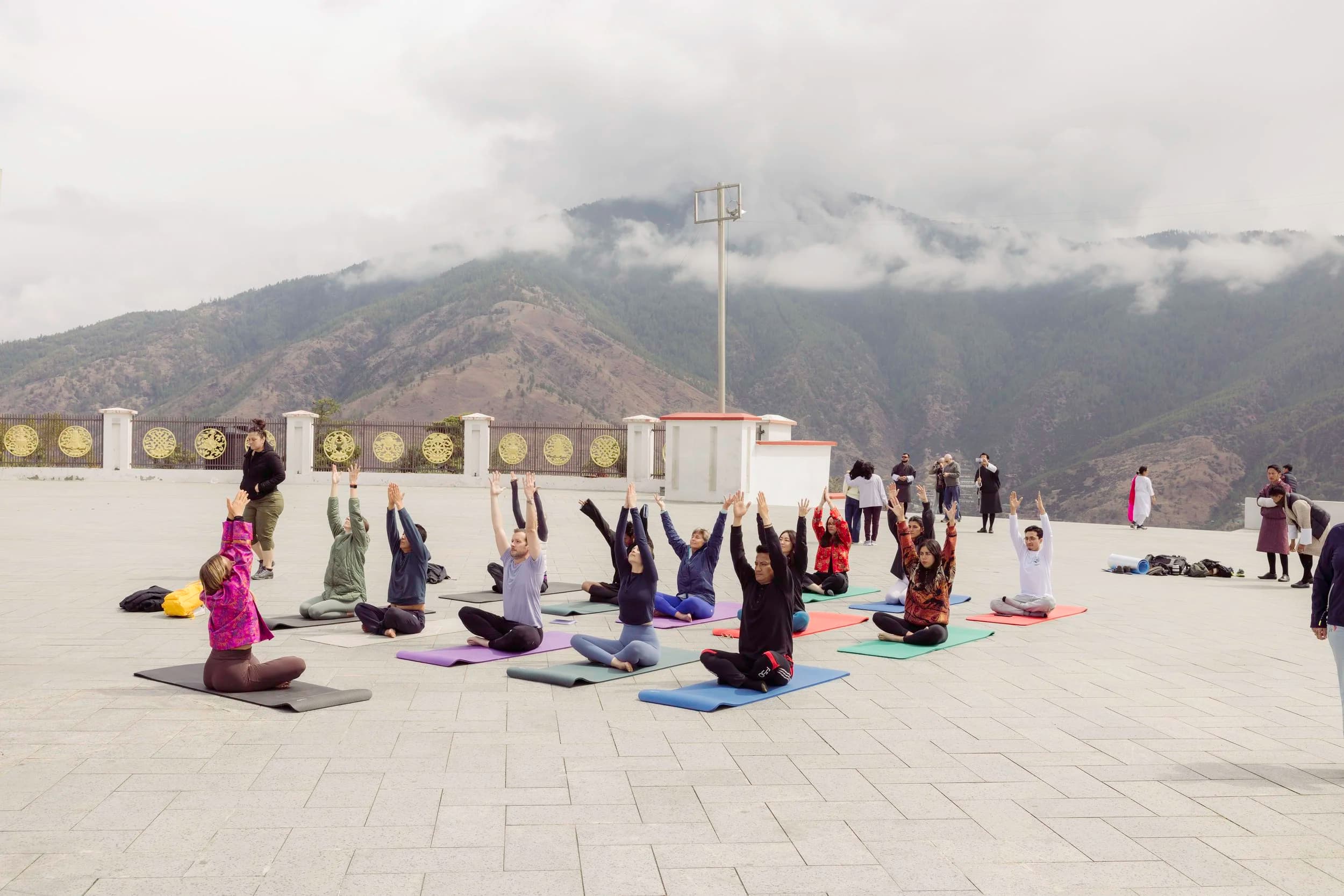 ExperienceBhutanese meditation retreat — guided contemplative practice in the working Drukpa Kagyu and Nyingma traditions.A Bhutan wellness retreat: guided Bhutanese meditation practice at working monastic centres and premium-lodge programmes. Living Drukpa Kagyu and Nyingma tradition.
Where it belongs
The wider idea
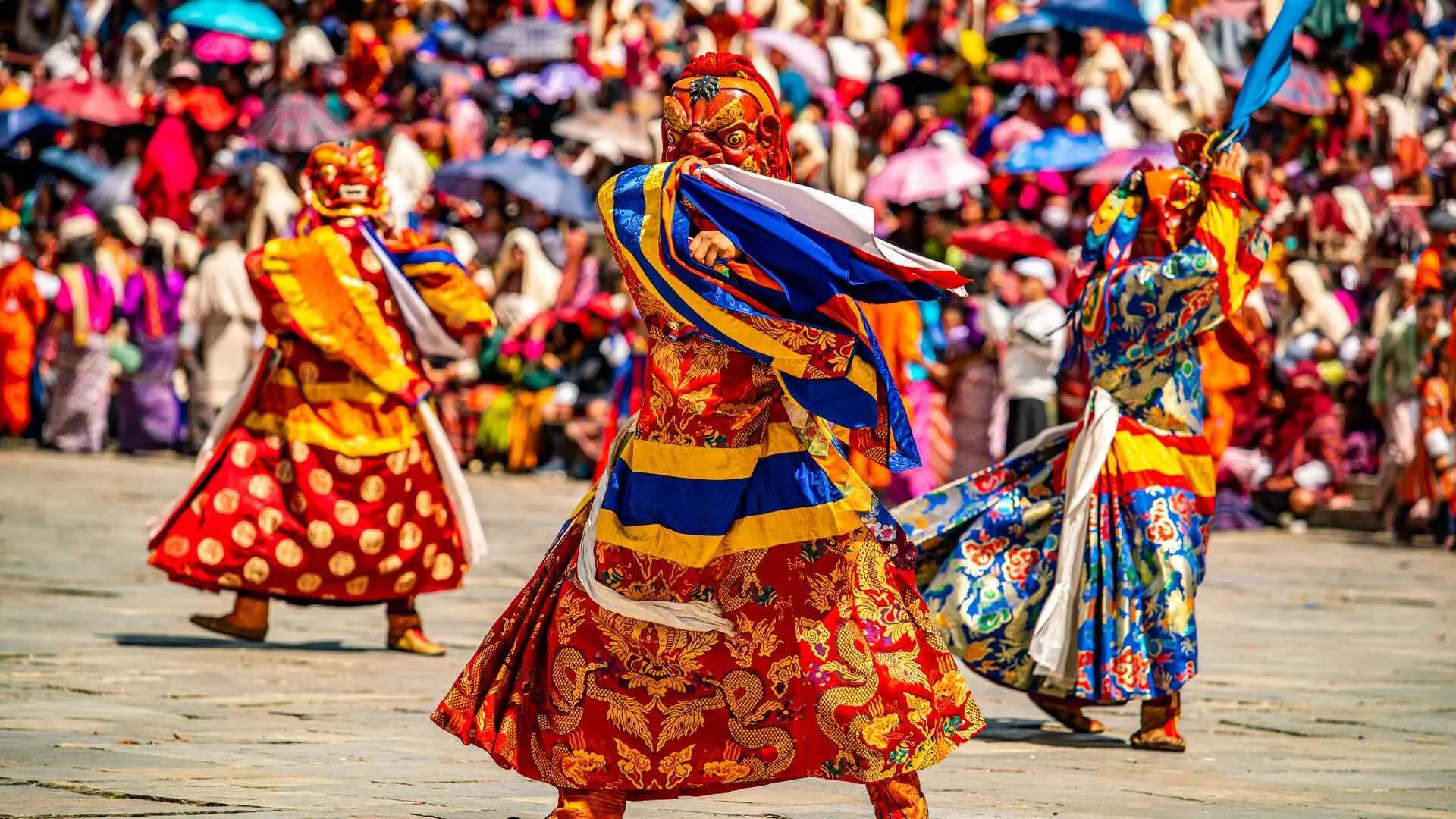 ThemeCham — the sacred mask dance, the principal expression of the tshechu festivals.Cham — the sacred mask dance tradition of Bhutan. The principal expression of the tshechu festivals. Drametse Nga Cham UNESCO Intangible Cultural Heritage 2008.
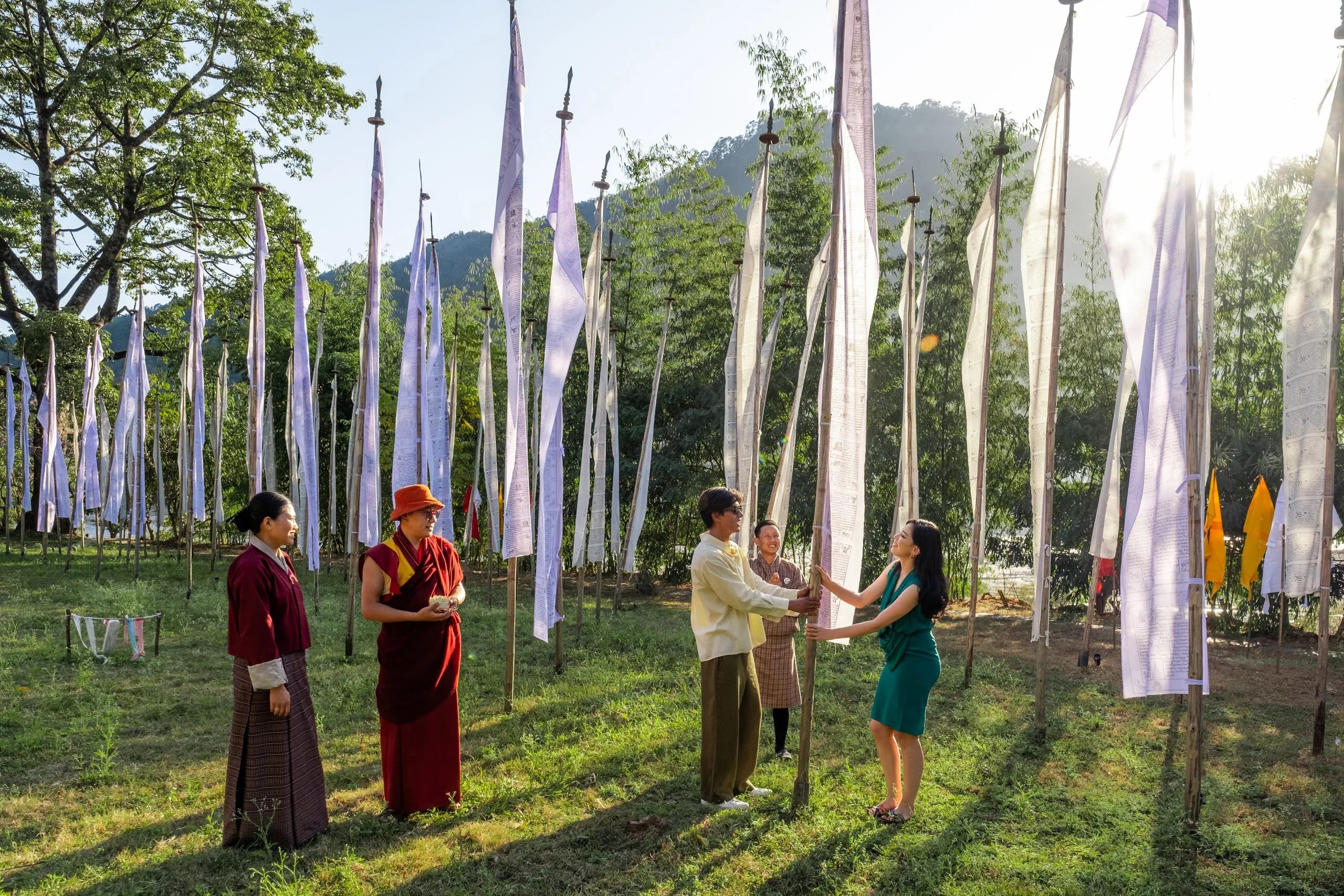 ThemeVajrayana Buddhism — the substance of every dzong, every monastery, every tshechu.Vajrayana Buddhism — the branch of Buddhism that shapes Bhutanese religious life. Drukpa Kagyu, Nyingma, Guru Rinpoche; mantra, mandala, deity yoga.
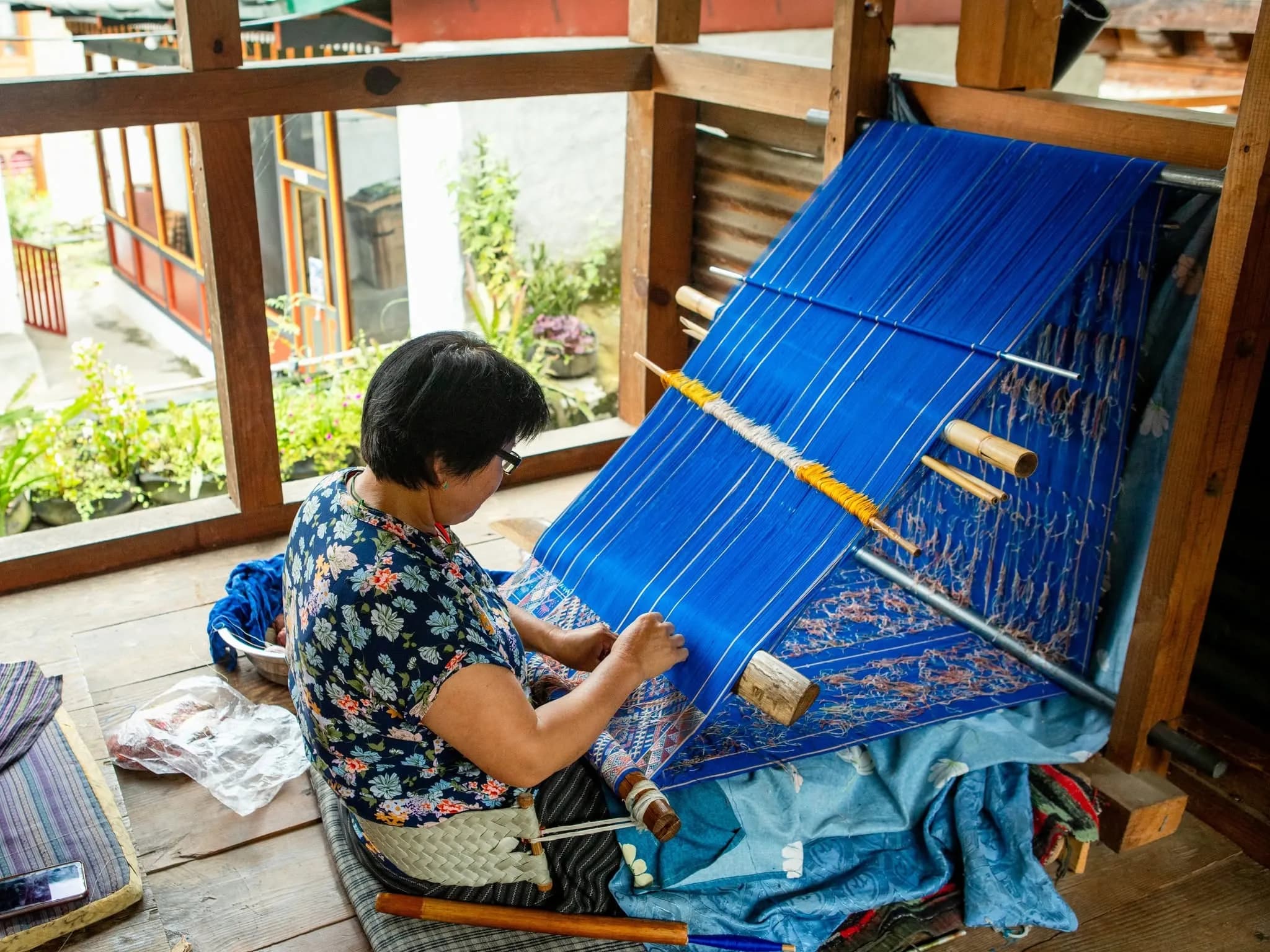 ThemeBhutanese textiles — the weaving tradition that clothes the country and survives largely intact.Bhutanese textiles — kira, gho, kushuthara, the weaving tradition by region. Lhuentse silk, Bumthang yathra wool, Haa wool, the Royal Textile Academy.
Journeys that include it
 JourneyThe signature-tier Bhutan journey — private knowledgeable guide, the most considered lodge curation, helicopter or charter between valleys, exclusive-use arrangements where the season allows.The signature-tier Bhutan journey. Private knowledgeable guide, the most considered lodges, helicopter or PC-24 charter, exclusive-use arrangements. By invitation, from USD 14,000.
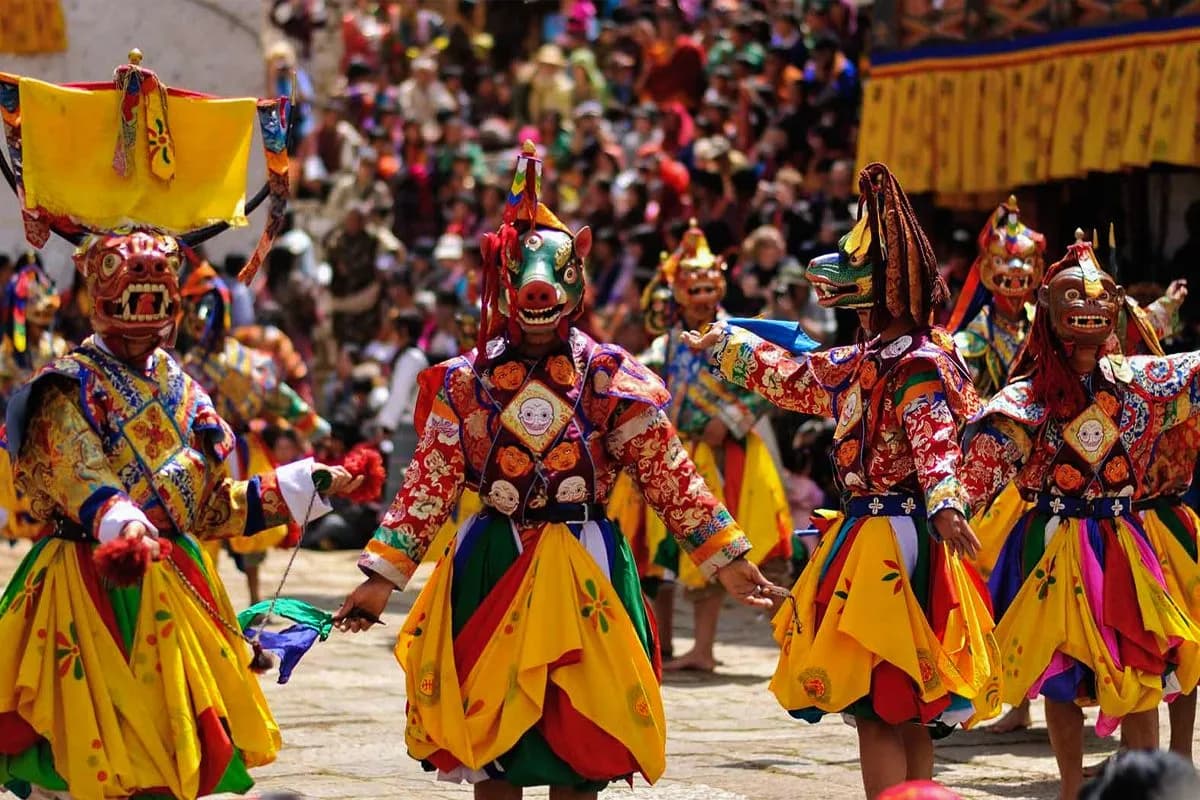 JourneyThimphu Tshechu, read properly.A seven-night Bhutan journey timed to Thimphu Tshechu in autumn — second-tier seating, a culturally fluent guide, Bhutanese lodges.
- JourneyNine nights for the Paro Tshechu — the festival and the country around it.A nine-night Bhutan itinerary built around the Paro Tshechu — the spring mask-dance festival at Rinpung Dzong, with six days for the wider country.
Frequently asked
- Can I make a complete cham mask in a workshop?
- No — a complete cham mask takes weeks to months to produce, with papier-mâché construction, frame work, and multi-stage painting. The workshop offering typically completes a small element (a deity detail, a small surface section on a prepared mask base) rather than a complete mask. The workshop's value is the cultural-and-religious context rather than the production of a complete piece.
- Can I take a cham mask home as a souvenir?
- Yes, with cultural-respect considerations. The commissioned-mask route provides the principal take-home option for visitors with serious interest; the Institute retail shop includes smaller mask-form pieces suited to the international visitor. Visitors should treat the mask respectfully (these are sacred-art objects, not decorative trinkets); the appropriate display at the visitor's home is part of the cultural-respect framework. The matched guide briefs on the appropriate take-home selection.
- Are these the same masks used at the tshechus?
- Closely related. The workshop masks are produced through similar techniques as the sacred cham masks worn at the tshechu festivals; the principal difference is the intended use — the tshechu masks are produced for monk-dancer use at the sacred festival programmes (the consecration ritual is part of their creation), the workshop-and-commission masks are produced for international visitor takeaway (the consecration is not typically part of their creation). The visual form is essentially identical; the sacred context differs.

