Bhutanese monuments
Lhakhangs
Temples, from the seventh-century foundations of the border-taming series to the village lhakhang that anchors a valley.
- In this group
- 17
- Dzongkhags
- 5
- Earliest founding
- 659
Lhakhangs17
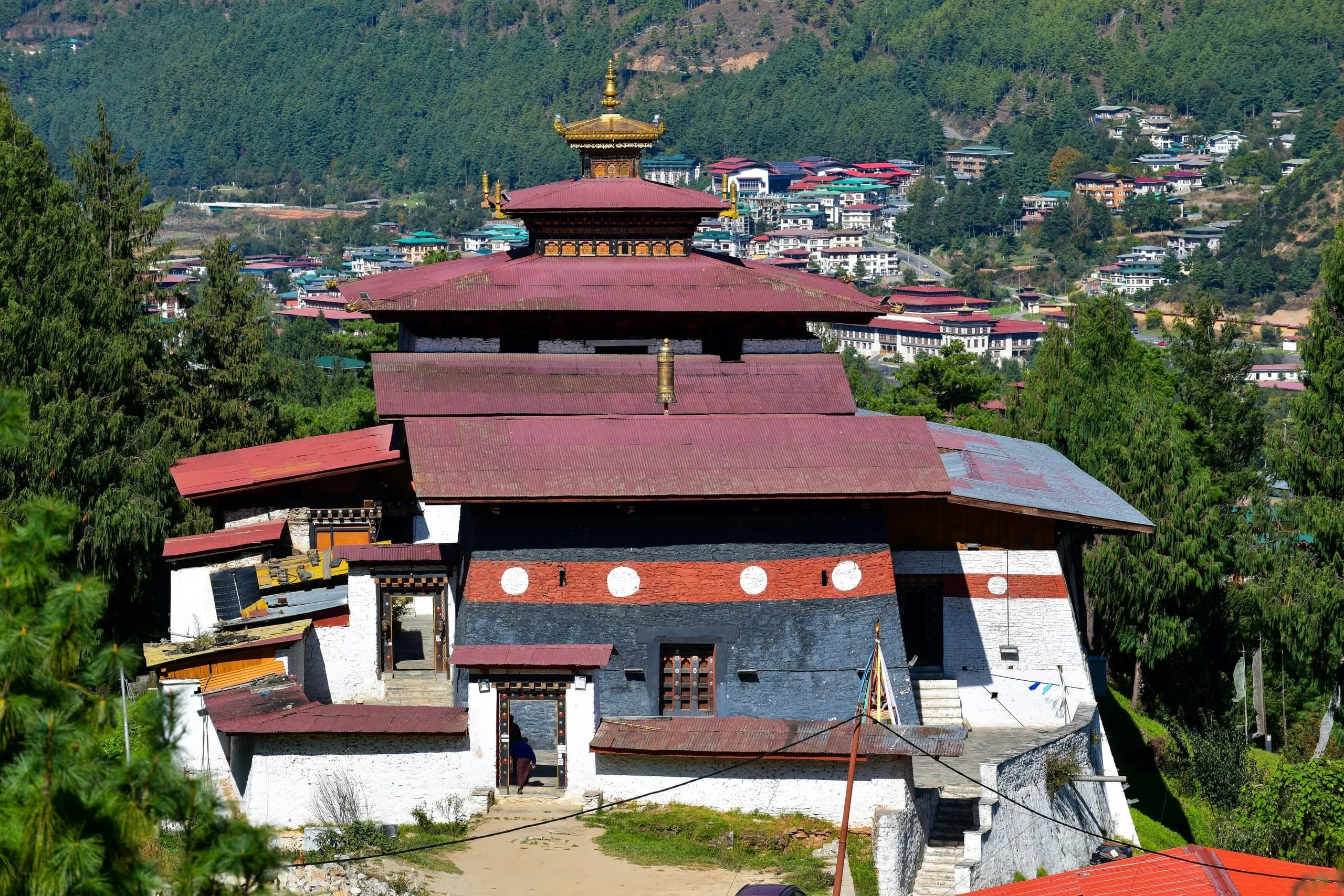
lhakhang · Thimphu · 2,400 m
Changangkha Lhakhang
Changangkha Lhakhang stands on a ridge above the Thimphu valley, fortress-like, the oldest temple in the capital — established in the 12th to 13th century by the family of Lama Phajo Drukgom Zhigpo, the master who first brought the Drukpa Kagyu tradition to Bhutan. Its central image is Chenrezig, the bodhisattva of compassion, in the eleven-headed, thousand-armed form. For the families of Thimphu it is the temple of beginnings: newborns are carried up to Changangkha to be blessed, to receive a name from the astrologer-lama, and to be given a protective thread — which makes it not a relic but a living part of the city's daily life.
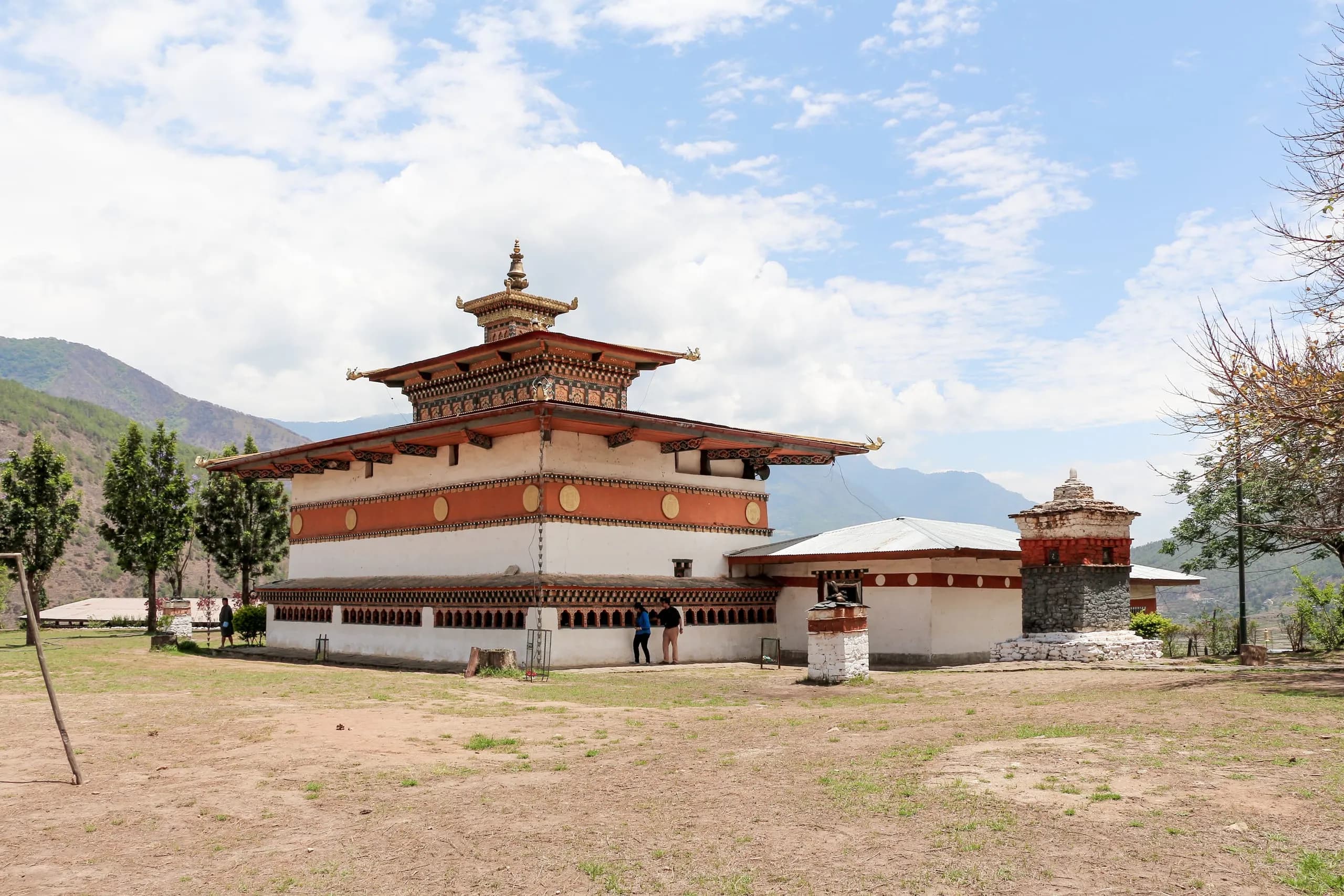
lhakhang · Punakha · 1,280 m · founded 1499
Chimi Lhakhang
Chimi Lhakhang sits on a low hillock above the Lobesa rice fields, a 20-minute walk from the road south of Punakha. Built in 1499 by Lam Ngawang Choegyel and dedicated to the great 'Divine Madman' Drukpa Kunley, the lhakhang is the country's principal fertility pilgrimage site and the source of the phallus iconography seen on Bhutanese village houses.
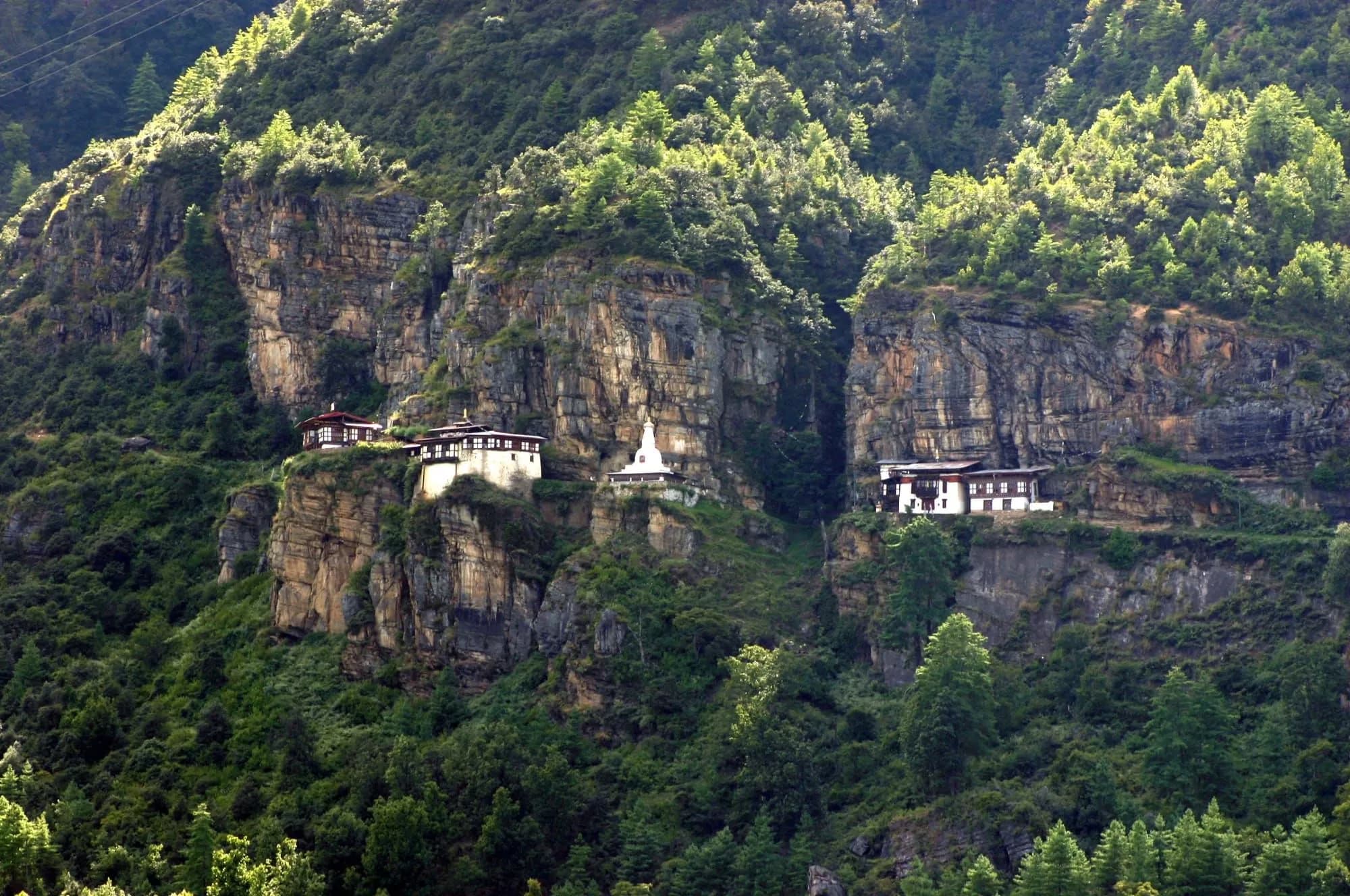
lhakhang · Paro · 2,550 m
Dzongdrakha Goemba
Dzongdrakha Goemba is a cluster of temples set into the cliff face above Bondey village in the lower Paro valley — sometimes called the 'mini Tiger's Nest' for the way the white shrines cling to the rock. Where Taktsang demands a steep half-day climb, Dzongdrakha is reached by an easy walk through fields and pine, which makes it a rewarding alternative for visitors who want the cliff-temple atmosphere without the altitude and the effort. The four shrines are dedicated to Drolma (Tara), Guru Rinpoche, Tsheringma, and the future Buddha Maitreya.
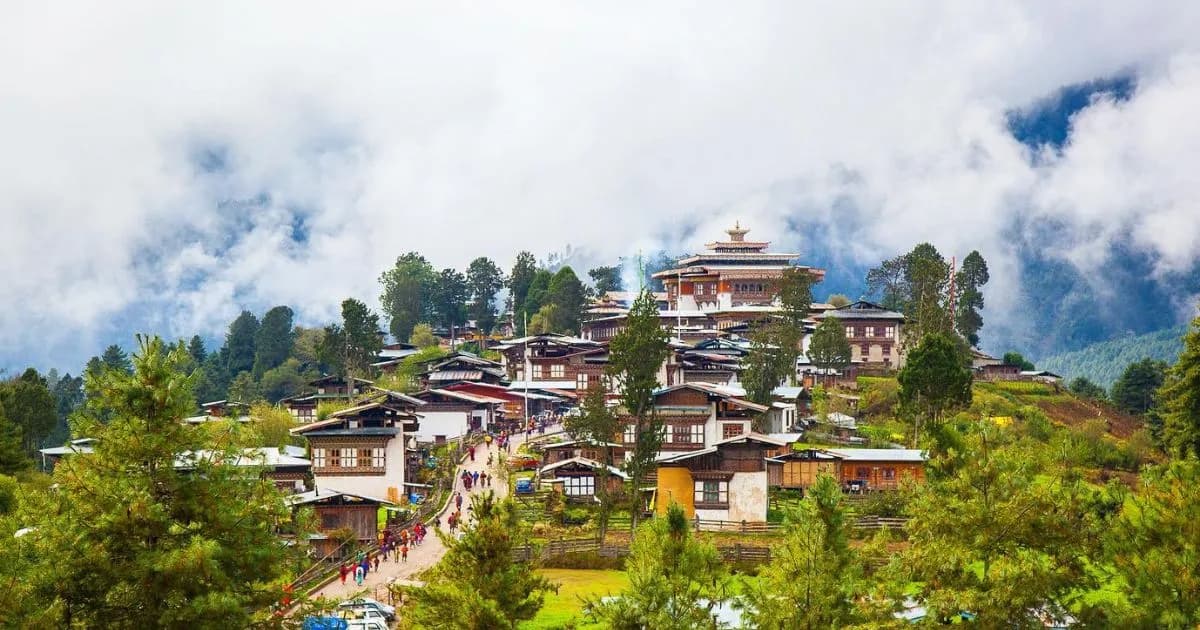
lhakhang · Wangdue Phodrang · 3,000 m · founded 1613
Gangtey Goemba
Gangtey Goemba sits on a hillock overlooking the Phobjikha valley at 3,000 metres elevation. Founded in 1613 by Pema Trinley — the grandson and reincarnation of the great Nyingma terton Pema Lingpa — the goemba is the principal Nyingma monastery of western Bhutan and overlooks the wintering grounds of the black-necked cranes.
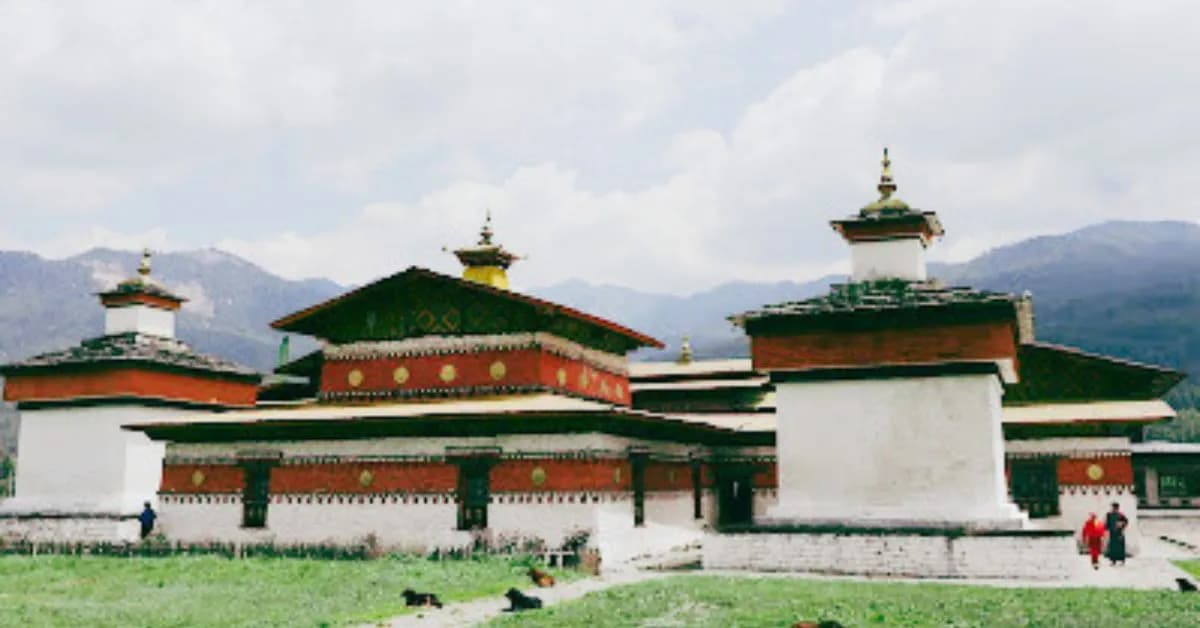
lhakhang · Bumthang · 2,600 m · founded 659
Jambay Lhakhang
Jambay Lhakhang sits in the Choekhor valley of Bumthang at 2,600 metres elevation. Like Kyichu Lhakhang in Paro, it is one of 108 temples built by the Tibetan king Songtsen Gampo in 659 CE — Jambay pinning the left knee of the giant ogress whose body lay across the Himalayan landscape. The temple has been continuously active for over thirteen centuries and is the venue of the famed Jambay Lhakhang Drup with its Mewang fire ritual.
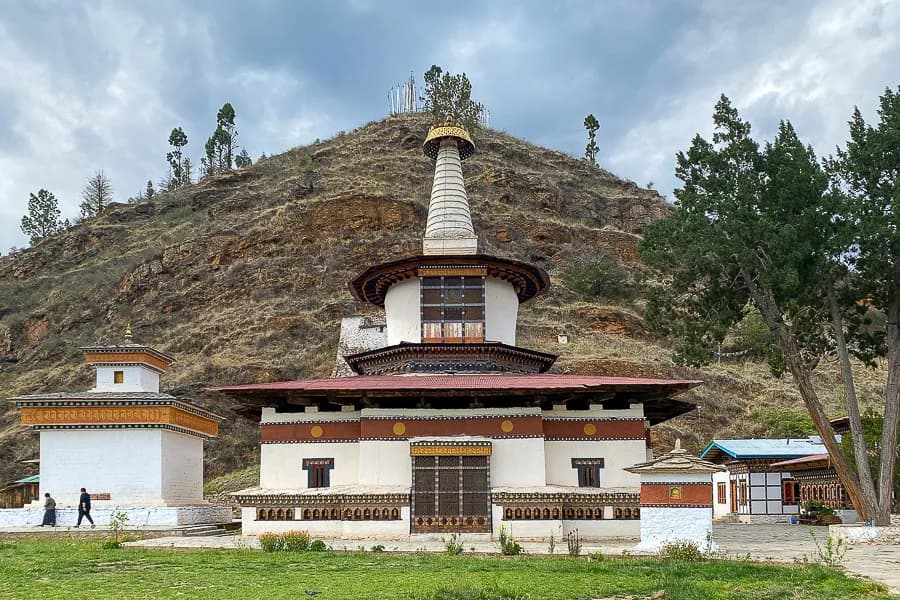
lhakhang · Paro · 2,280 m · founded 1421
Jangtsa Dumtseg Lhakhang
Jangtsa Dumtseg Lhakhang — usually shortened to Dumtseg — is one of the very few temples in Bhutan built in the form of a chorten (a stupa), rising in three diminishing storeys near Paro town. It was founded in the early 15th century, commonly dated 1421, by Thangtong Gyalpo, the great Tibetan adept, engineer, and builder of iron-chain suspension bridges. The three storeys represent ascending realms of Buddhist cosmology, and the interior holds one of the finest surviving collections of lineage and tantric wall paintings in the country — which makes Dumtseg a quiet treasure for visitors with a serious interest in Bhutanese sacred art.
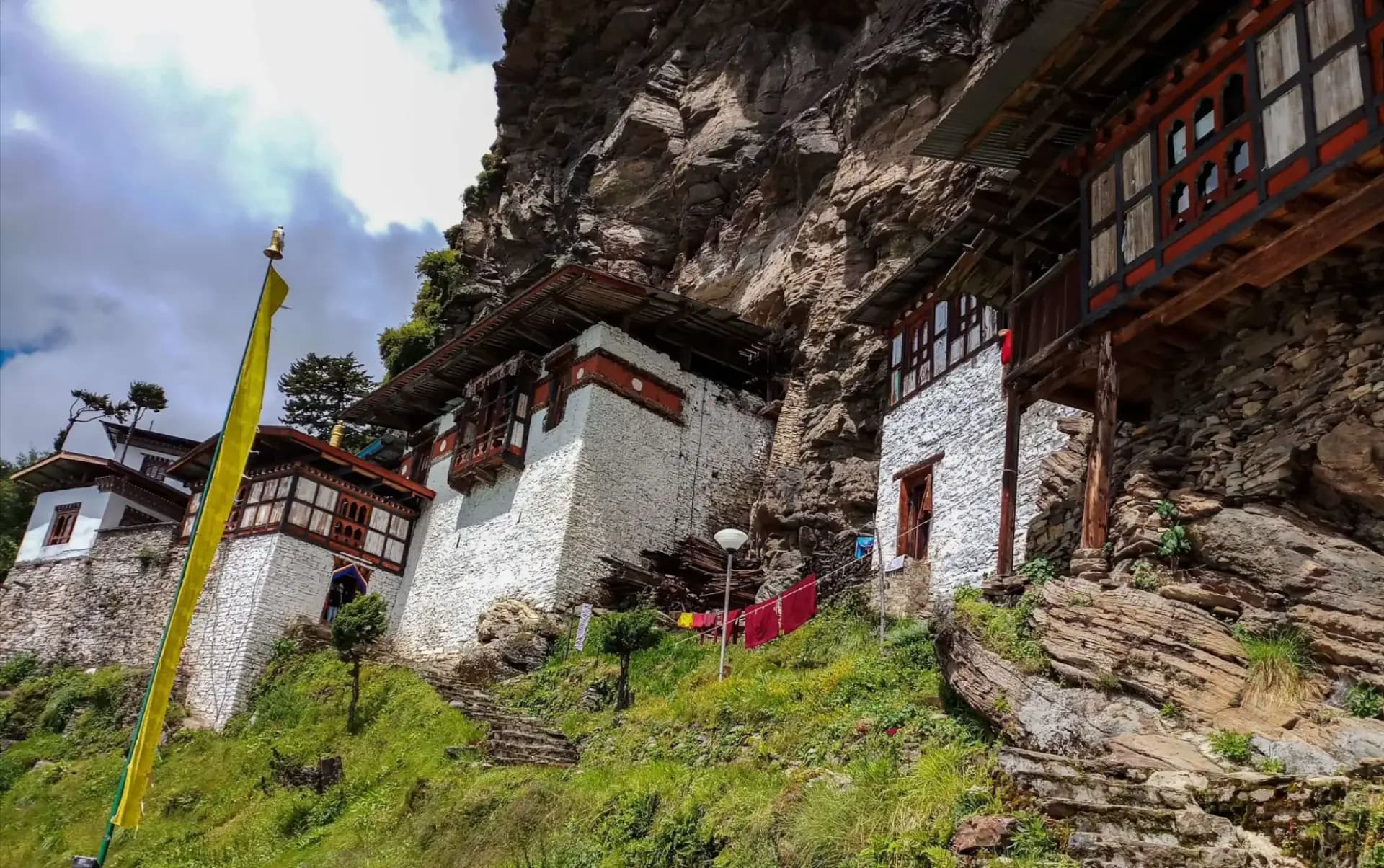
lhakhang · Paro · 3,500 m
Kila Nunnery
Kila Goemba — Kila Nunnery — clings to a series of rock ledges on the mountainside below the Chele La pass, between the Paro and Haa valleys. Among the oldest nunneries in the country, it is home to a community of anim (Buddhist nuns) who live and meditate in the cliff-set retreat huts and shrines. Reached by a forest walk down from the Chele La road, it is one of the most serene and least-visited religious sites within reach of Paro — a place of quiet devotion rather than spectacle.
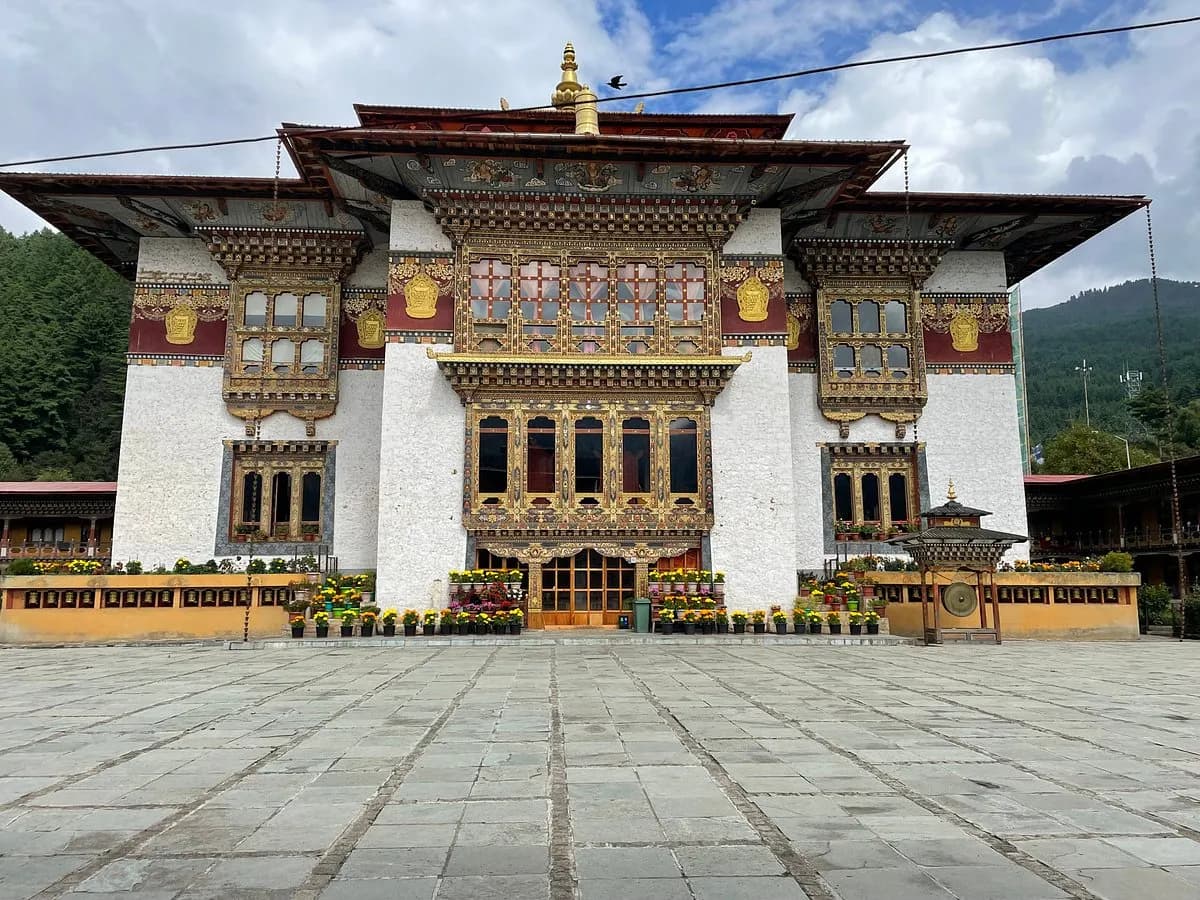
lhakhang · Bumthang · 2,680 m
Konchogsum Lhakhang
Near Jakar in the Choekhor valley of Bumthang stands Konchogsum Lhakhang, among the oldest temples in the region — its origins reaching back to the early spread of Buddhism, later restored and bound to the legend of the Bumthang treasure-revealer Pema Lingpa. Its most famous relic was a great bell, said to have rung so powerfully that its sound was heard all the way in Lhasa, the Tibetan capital. Damaged by fire and carefully rebuilt, the temple remains a place of deep antiquity and devotion, a quiet stop close to the main Bumthang sights for the visitor drawn to the valley's oldest layers.
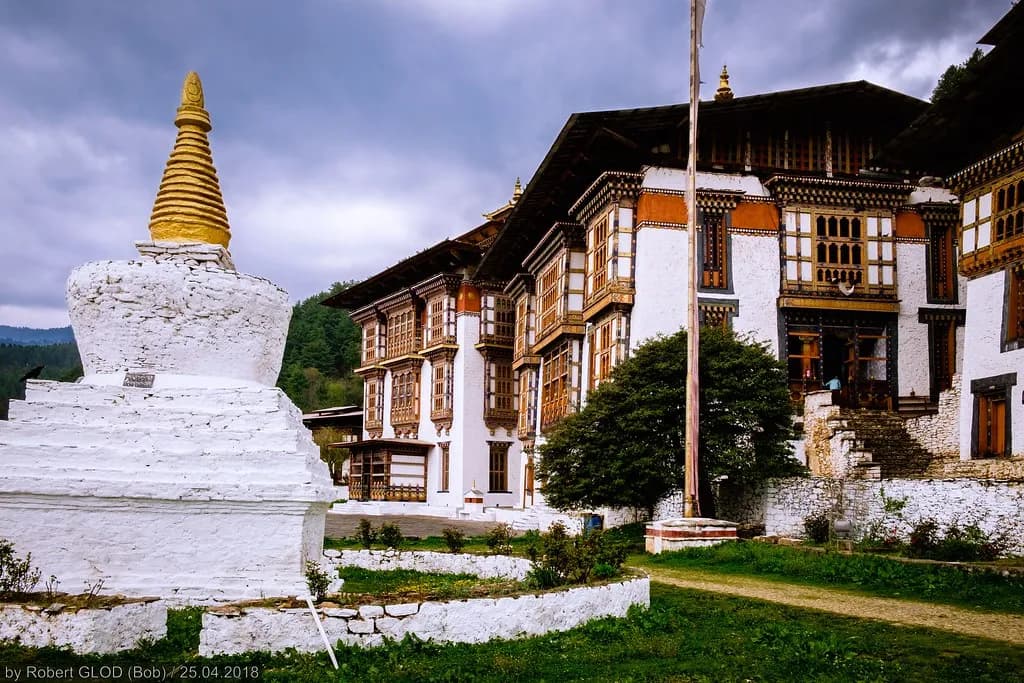
lhakhang · Bumthang · 2,600 m · founded 1652
Kurjey Lhakhang
Kurjey Lhakhang sits in the Choekhor valley of Bumthang at 2,600 metres elevation. The temple complex grew around a cave on the cliff face that Guru Rinpoche is held to have entered in the 8th century, leaving his body imprint (kur jey) on the rock — the impression is still visible inside the principal chapel and remains one of the most-revered devotional sites in the Bhutanese Buddhist tradition.
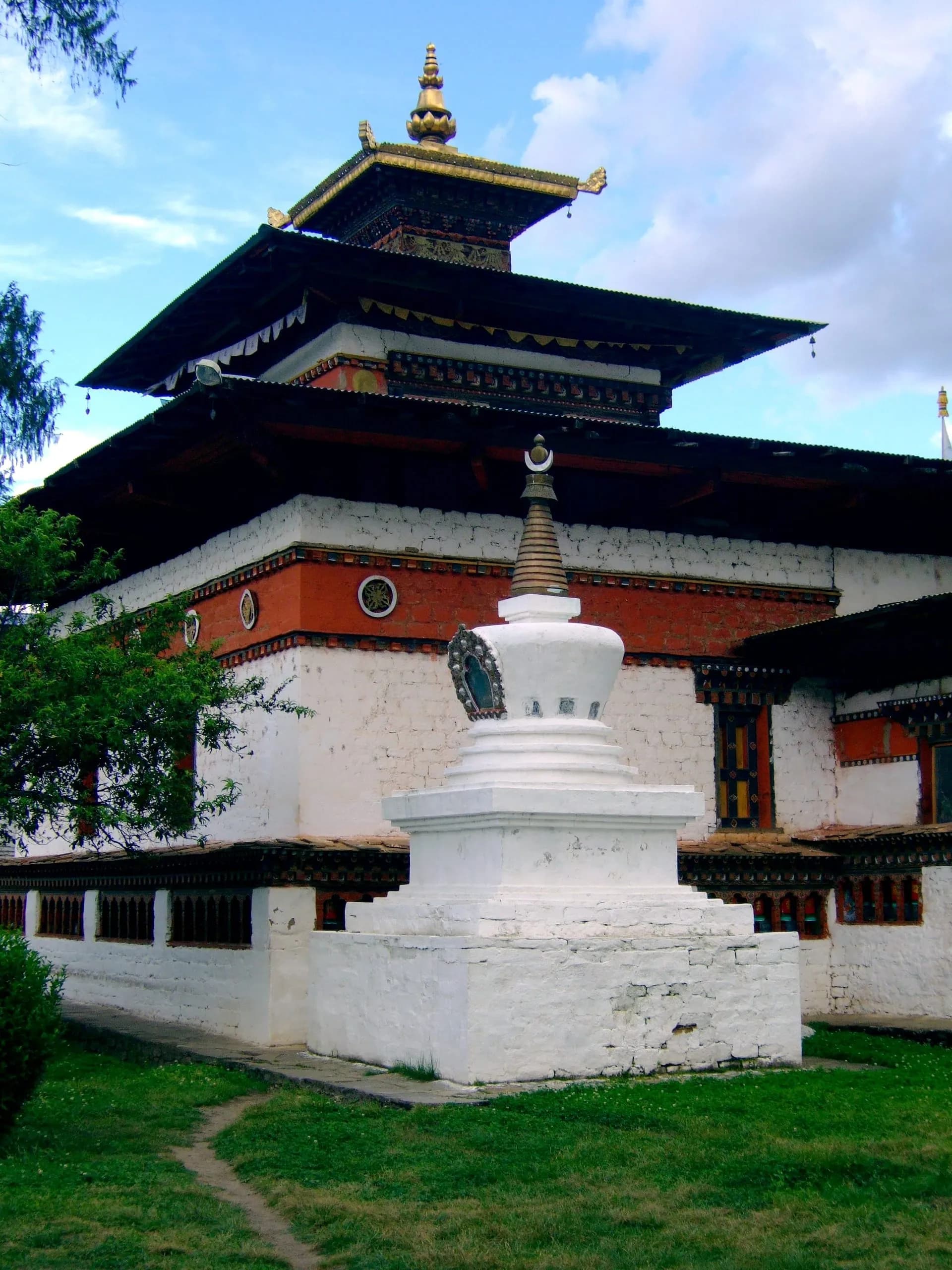
lhakhang · Paro · 2,300 m · founded 659
Kyichu Lhakhang
Kyichu Lhakhang sits in the Paro valley at 2,300 metres elevation — the oldest temple in Bhutan, founded in 659 CE by the Tibetan king Songtsen Gampo as one of 108 temples built across the Himalayan region to pin the limbs of a giant ogress whose body lay across the landscape. The temple has been continuously active for over thirteen centuries.
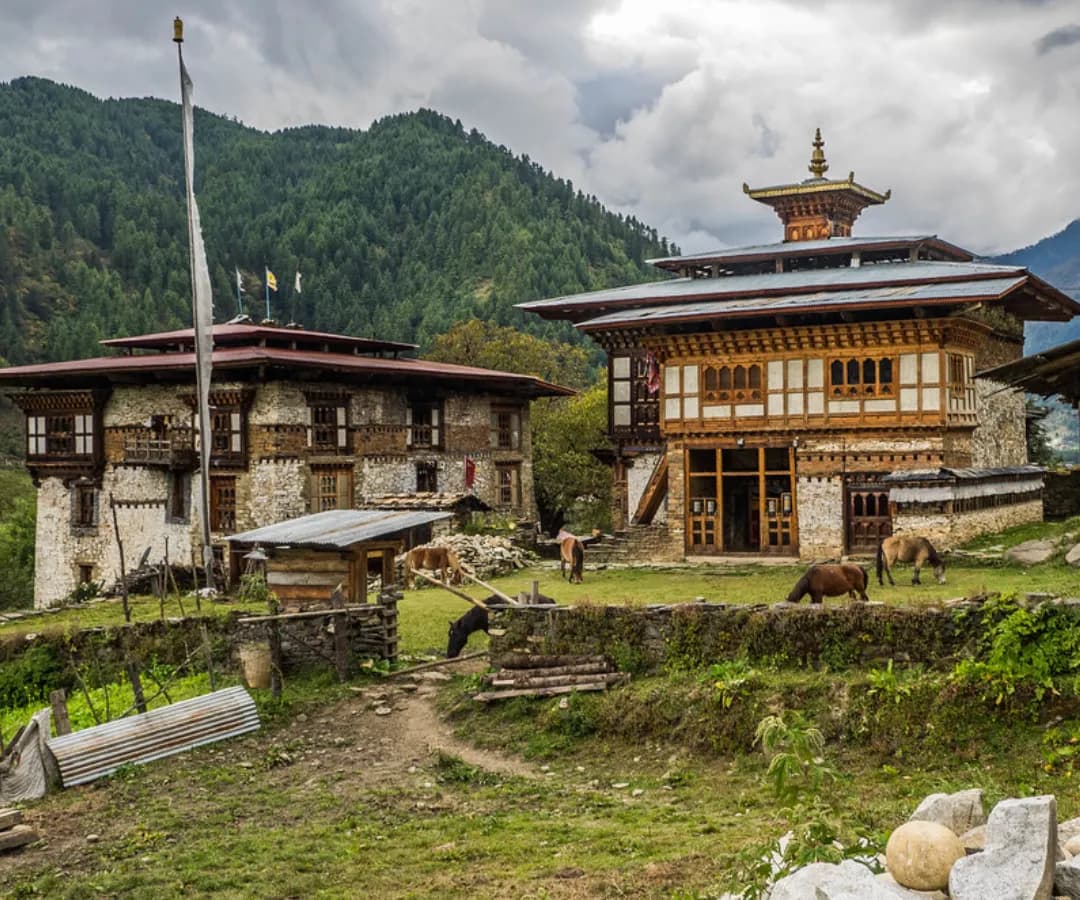
lhakhang · Bumthang · 2,800 m
Ngang Lhakhang
High in the upper Choekhor valley of Bumthang, beyond the farms and the river, stands Ngang Lhakhang — the 'Swan Temple', named for the swans that once frequented the place. Built in the 15th or 16th century on a site sanctified by Guru Rinpoche, it is one of the remote and atmospheric temples of the upper valley, the kind a visitor reaches by a walk through the fields and feels they have earned. Its festival, the Ngang Bi Rabney, fills the quiet temple with masked dance each winter, and it sits at the start of the gentle Bumthang Owl Trek into the hills beyond.
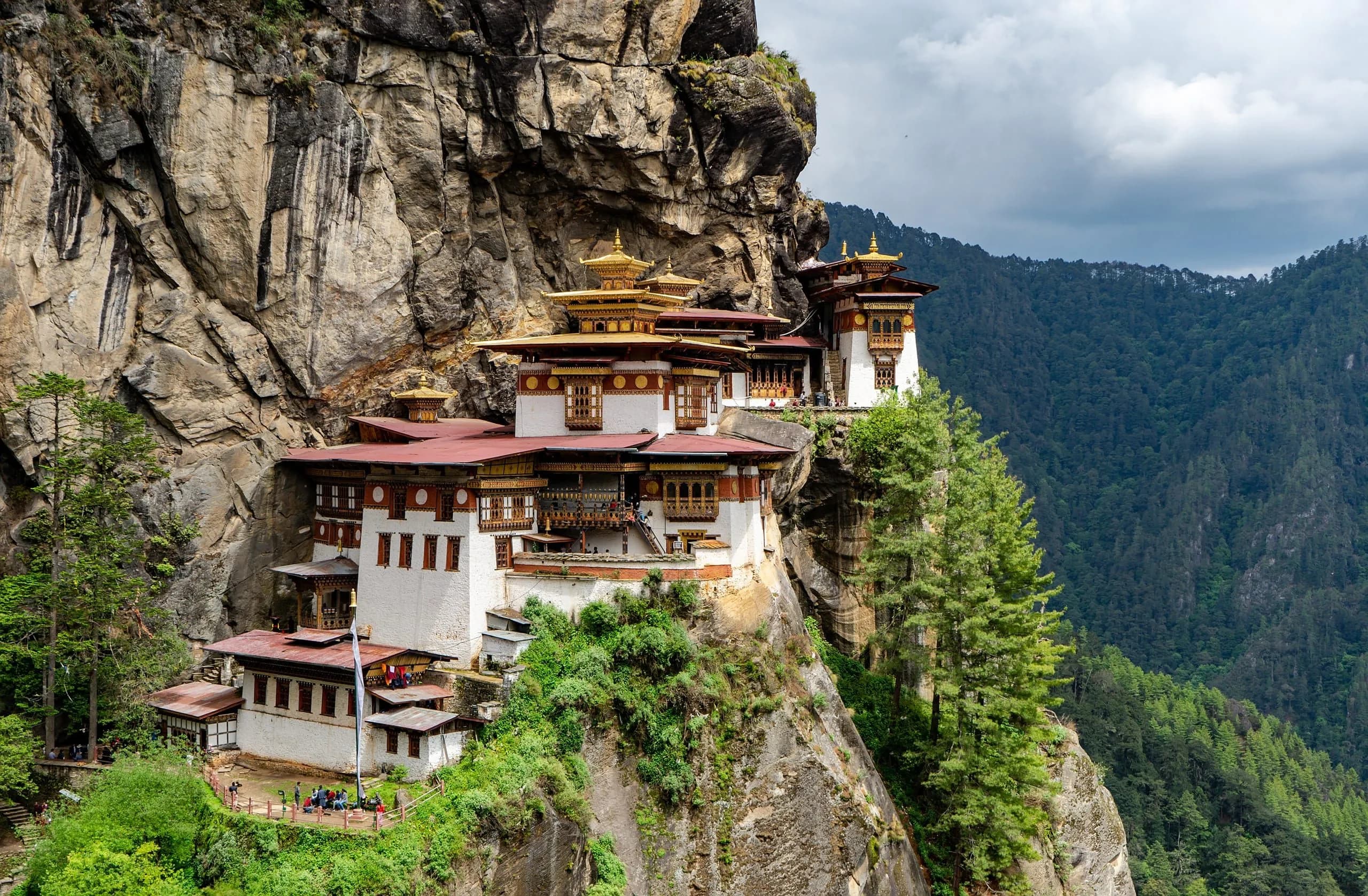
lhakhang · Paro · 3,120 m · founded 1692
Paro Taktsang
Paro Taktsang — known internationally as Tiger's Nest — is the most sacred site in Bhutan and the country's most-photographed monument. The monastery clings to a 900-metre cliff face above the Paro valley at 3,120 metres elevation. Guru Rinpoche is held to have meditated in the cave behind the monastery for three years, three months, three weeks, three days, and three hours in the 8th century.
lhakhang · Bumthang · 2,700 m
Prakhar Goemba
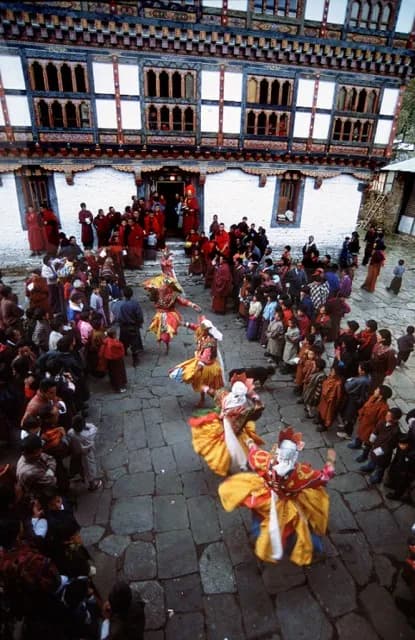
On a rise above the Chumey river in Bumthang, the warm ochre walls of Prakhar Goemba — Prakhar Lhakhang — stand among the fields, a temple founded in the 16th century by a descendant of the great treasure-revealer Pema Lingpa. Its distinctive earth-red colour sets it apart from the usual whitewashed temples, and its annual festival, the Prakhar Duchhoed, is one of the loved village celebrations of the Chumey valley, drawing the surrounding farms to its courtyard each autumn. Close to the weaving village of Zugney, it is a quiet, atmospheric stop in the gateway valley of Bumthang.
lhakhang · Paro · 2,150 m
Tachogang Lhakhang
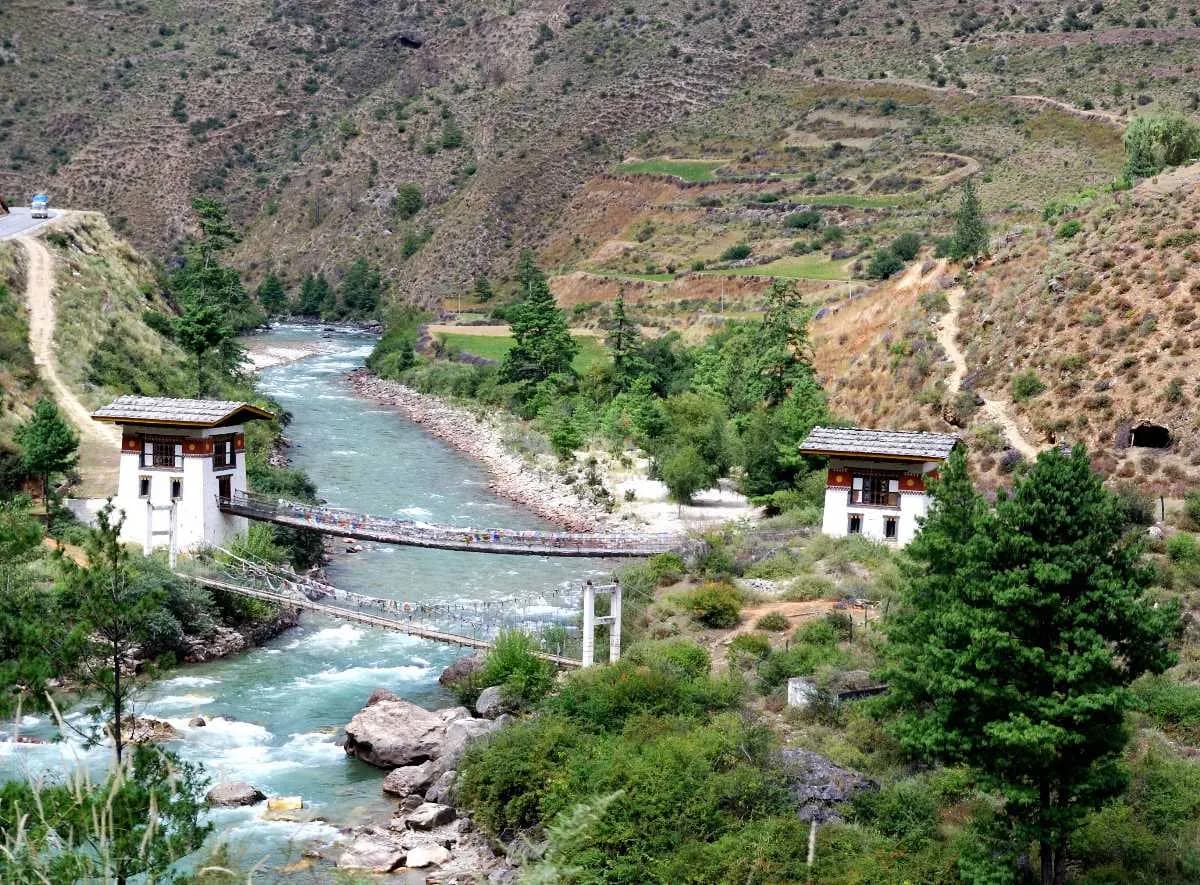
On the road between Paro and Thimphu, where the river runs in a gorge, an iron-chain suspension bridge hung with prayer flags crosses the water to the Tachogang Lhakhang on the far bank — a temple founded by Thangtong Gyalpo, the 15th-century saint, physician, and engineer who strung iron bridges across the rivers of the Himalaya. He is said to have raised the temple after a vision of Avalokiteshvara on a hill shaped like a horse, which gave the place its name. To cross the swaying chain bridge to the temple is to walk, in living form, into one of the most remarkable engineering and spiritual legacies in Bhutan.
lhakhang · Bumthang · 2,600 m · founded 1501
Tamshing Lhakhang
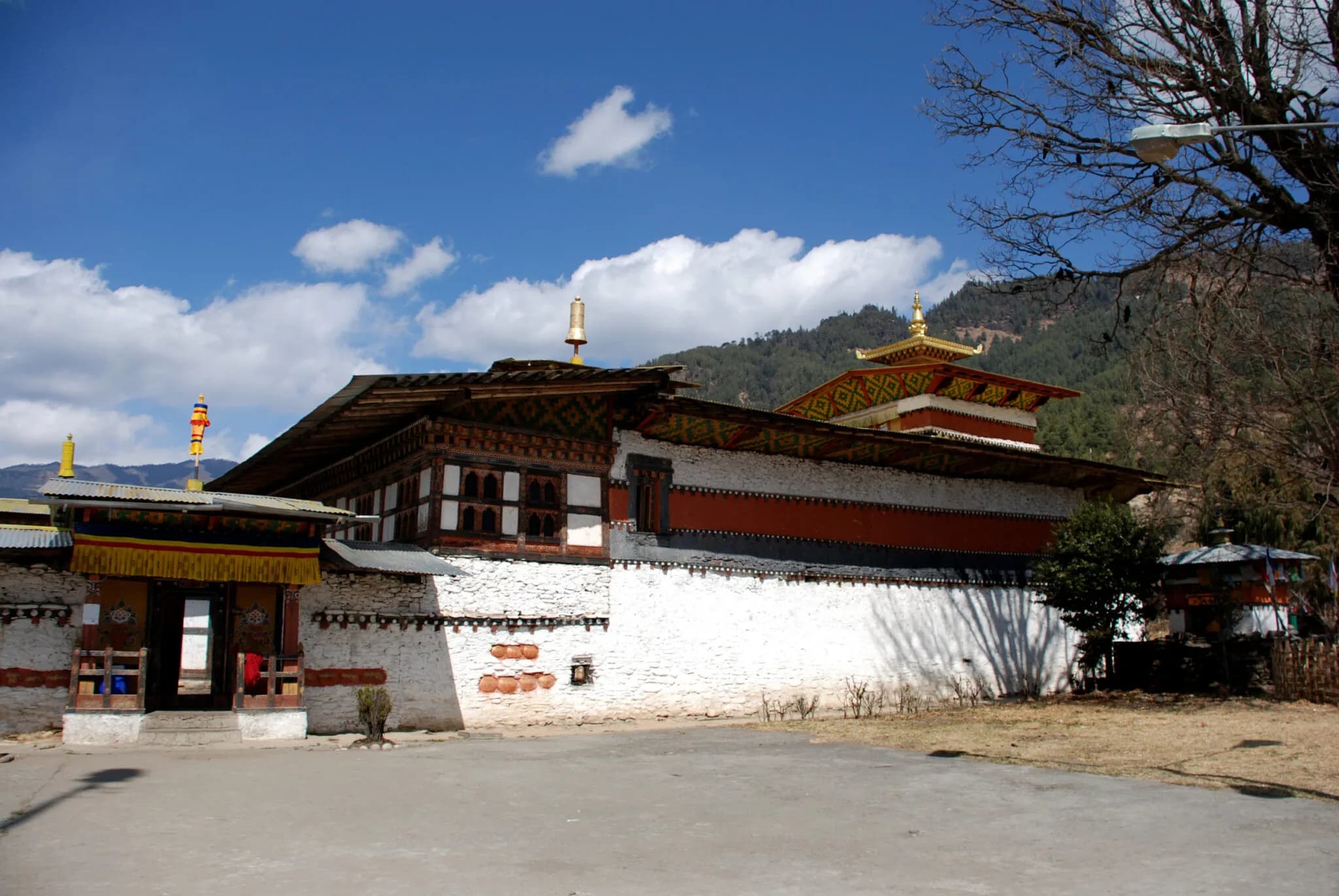
Tamshing Lhakhang sits in the Choekhor valley of Bumthang at 2,600 metres elevation, across the Chamkhar Chhu from Jakar Dzong. The monastery was founded in 1501 by Pema Lingpa — one of the five sovereign tertons of the Nyingma tradition — as his principal seat. The Royal Family of Bhutan traces ancestry through Pema Lingpa's descendants, and the monastery holds a continuous lineage through more than five centuries.
lhakhang · Bumthang · 2,840 m
Tang Rimochen Lhakhang
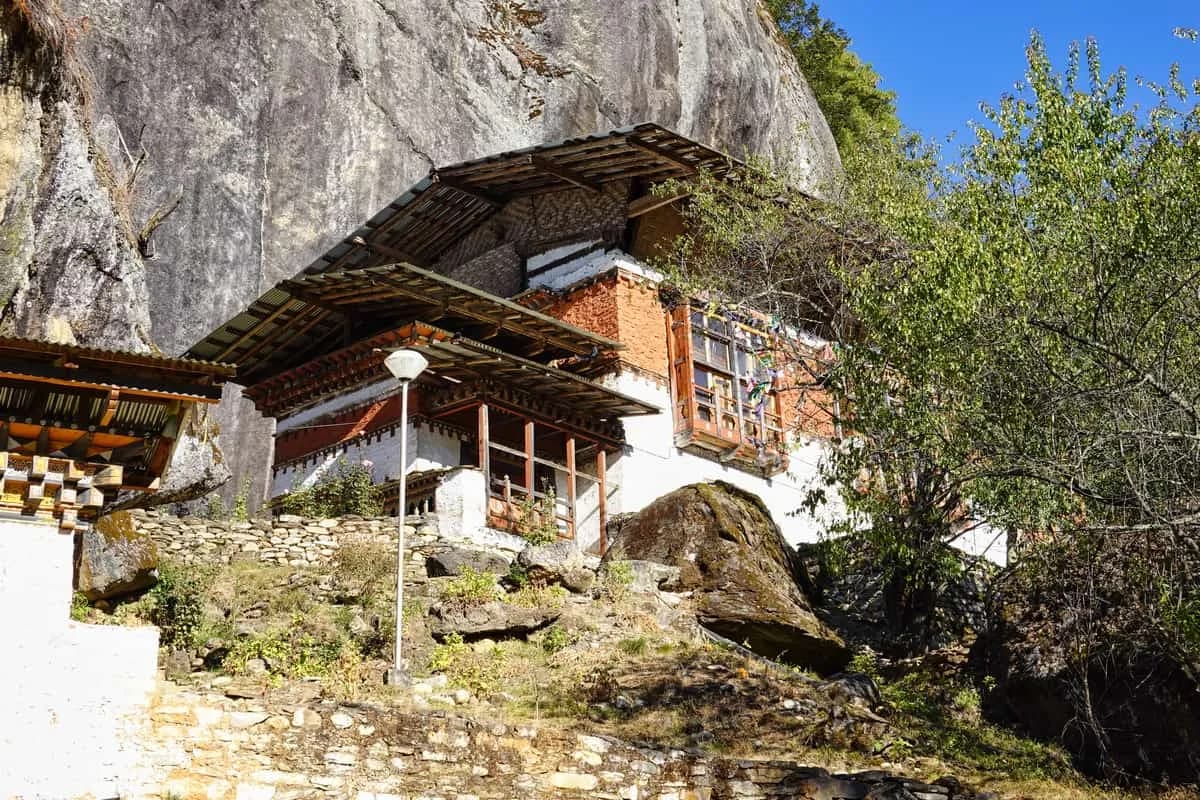
In the remote Tang valley of Bumthang, Tang Rimochen Lhakhang stands against a great rock face streaked with natural markings — 'Rimochen' means 'the one with marks', and the stripes are read as the print of the tiger-skin robe of Guru Rinpoche, who meditated here in the 8th century. The temple, associated with the treasure-revealer Pema Lingpa, marks one of the valley's most sacred sites, and below it, set in and beside the river, are boulders bearing what the faithful hold to be the body imprints of Guru Rinpoche and his consorts. It is a place of pilgrimage and quiet power rather than grandeur.
lhakhang · Bumthang · 2,700 m · founded 1470
Thangbi Lhakhang
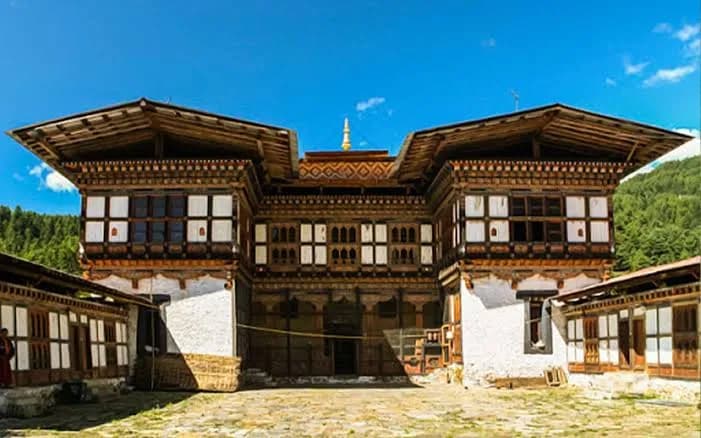
North of Kurjey Lhakhang in the Choekhor valley of Bumthang, across the Chamkhar river and among the fields, Thangbi Lhakhang is a serene 15th-century temple founded by a master of the Karma Kagyu tradition and later linked to the great Bumthang treasure-revealer Pema Lingpa. It is best known for its winter festival, the Thangbi Mani, which culminates in a fire-blessing — the worshippers running through a gateway of flame to be cleansed of the year's misfortune. A quiet, old, and atmospheric temple away from the busier Bumthang sights, it rewards the visitor who reaches it.

